






Hair styling begins with shape and comfort
Choose the detail that matters most: a defined parting, a softer outline, visible volume or keeping hair away from the face. Tell the stylist what you dislike as well as what you like. Your own hair length, layers and texture help determine a workable design, while reference photographs help explain proportions rather than guarantee a replica.
A useful starting point is how you want the hair to sit when you look straight ahead. Would you like both ears visible, a fringe left in place or a little height above the crown? Next consider the side view and where the ends should fall. A loose finish can keep the familiar feel of your everyday hair while changing its direction and movement. Gathering the back can create a more noticeable change without cutting the length.
Do not choose a complicated structure simply because the appointment is for a special day. If your aim is a refreshed parting and gently shaped ends, explain that first. If you want pinned sections or a sculpted outline, identify those details instead of calling the whole request a blowdry. The simpler service may be enough when you mainly need washing and a finished dry shape.
Review blow dry to check its service scope and the details to share before arranging the related work.
Describe your priorities for hair styling
Point to the feature you like in each reference rather than asking to combine every photograph. You might prefer the parting in one image and the low gathering in another. Explain whether a soft finish means loose face-framing pieces, an airy crown or waves through the ends. Mention anything that feels unlike you, such as a fully exposed forehead or very firm product hold. This gives the conversation a clear direction without requiring technical hairstyling vocabulary.
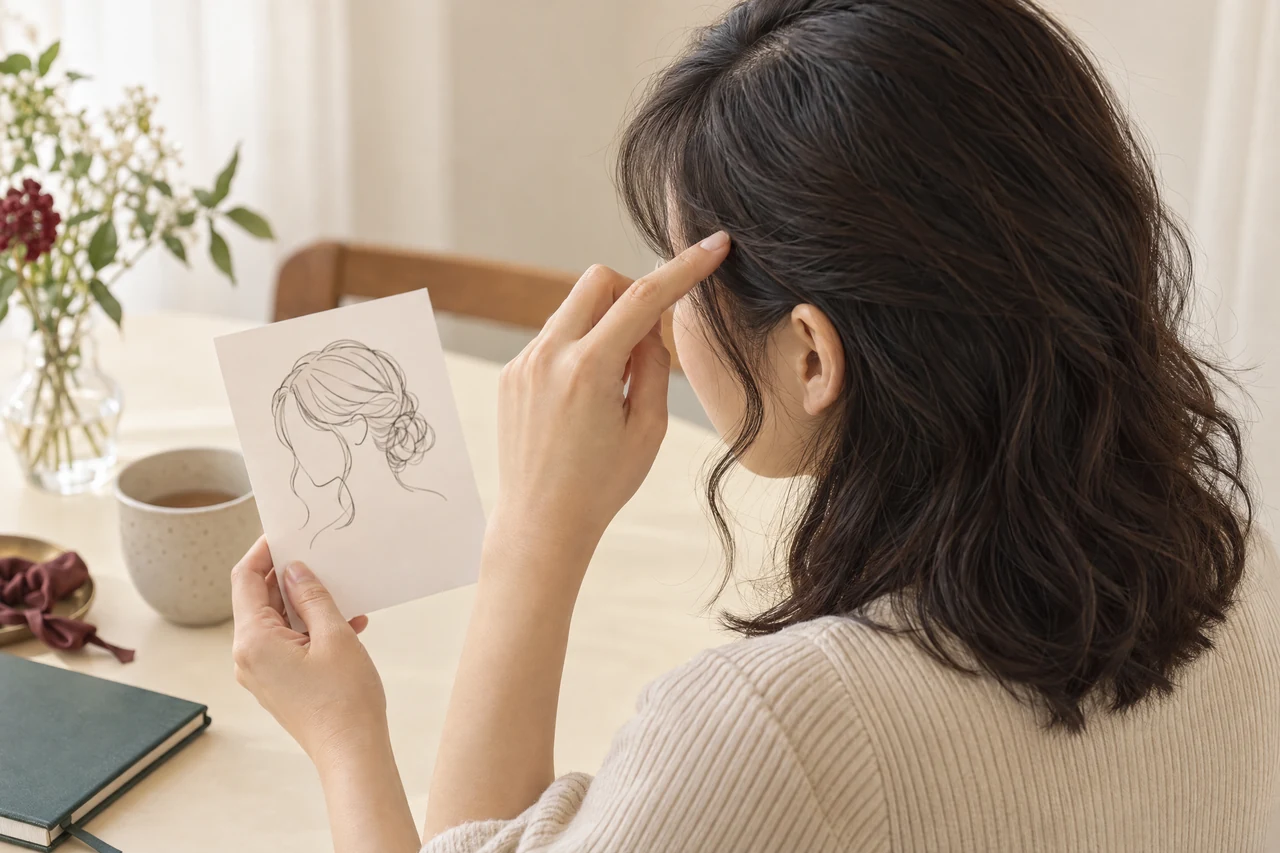
Distinguish temporary curls from a perm
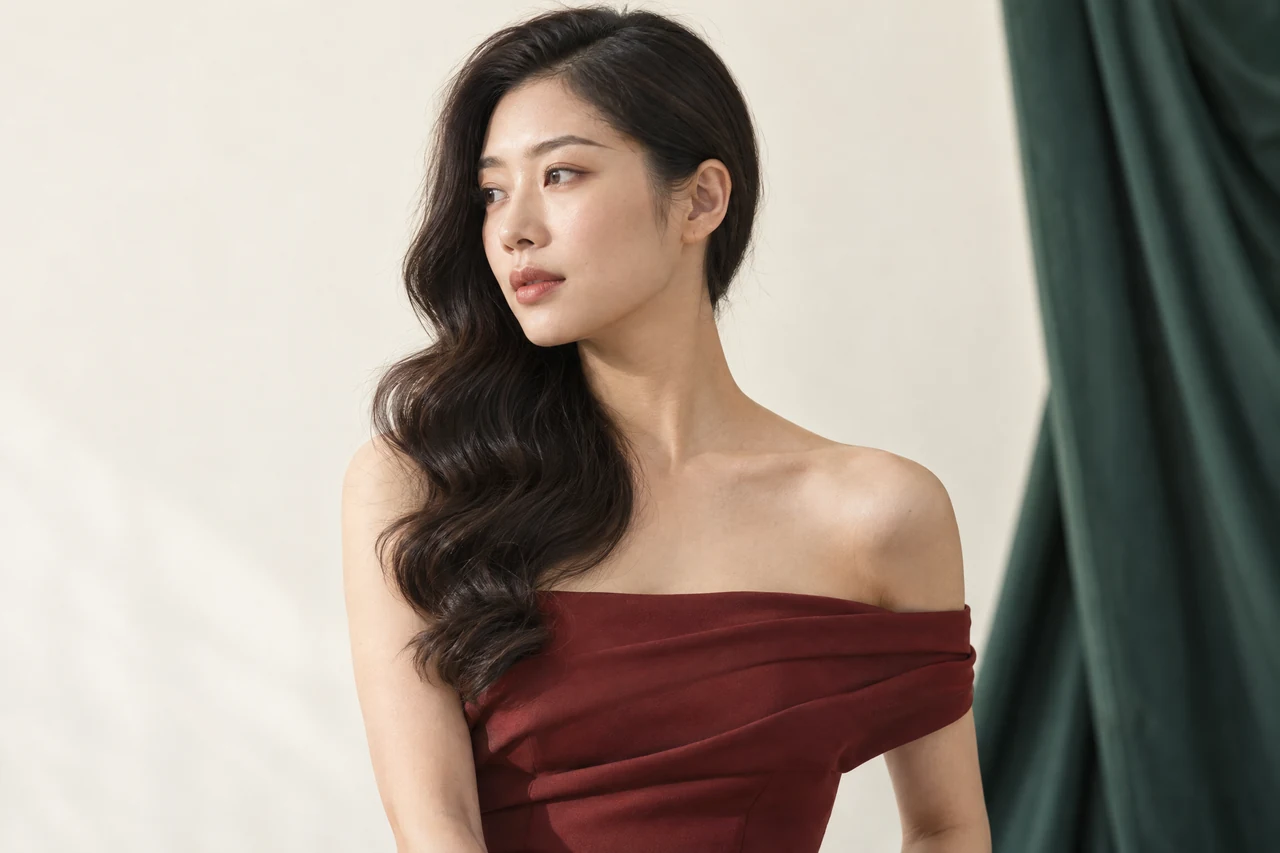
If you want a blow dry and curls, show how loose or defined you would like the bends to look. This is a temporary styling request, unlike changing the hair's texture with a perm. Ask which preparation and tools would be suitable and whether the extra shaping is part of the agreed appointment and quote.
Describe where the movement should begin. Bends near the cheek create a different face outline from curls concentrated below the shoulders. A turned-under end can look tidy without forming a visible ringlet, while separated curls look different from waves arranged into a continuous line. If your hair already has natural waves or curls, say whether you want to retain that pattern or discuss changing its appearance temporarily.
Hair condition matters when choosing the approach. Share recent bleaching, colouring, straightening or perming, and mention ends that snap or tangle easily. The American Academy of Dermatology's styling guidance recommends using flat irons on dry hair at low or medium heat and warns that excessive heat can damage any hair type. These are care considerations, not a guarantee of a particular finish or proof that every tool is suitable for your hair.
For your own routine after the appointment, read how to protect hair from heat styling before relying on frequent reheating to maintain the look.
Discuss a loose finish before choosing a method
When enquiring about a hair curling service, describe the finished effect rather than naming a particular iron. Ask whether the intended shape calls for drying, further section-by-section work or another approach. Dry styling is a preparation question, not evidence of a separately priced service. Temporary movement should also be discussed as a finish for this occasion, rather than a promise that the same pattern will remain after washing.
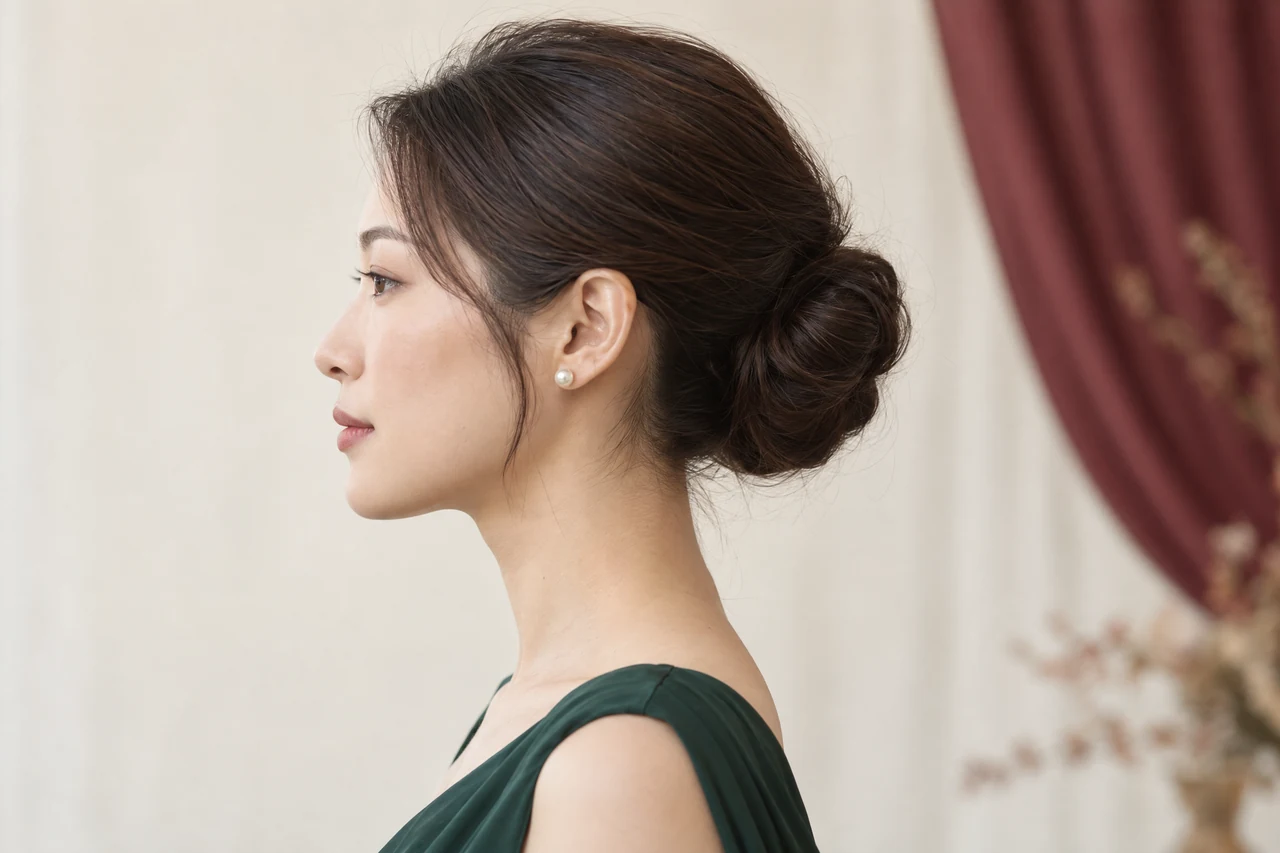
Hair up changes the neckline and visible balance
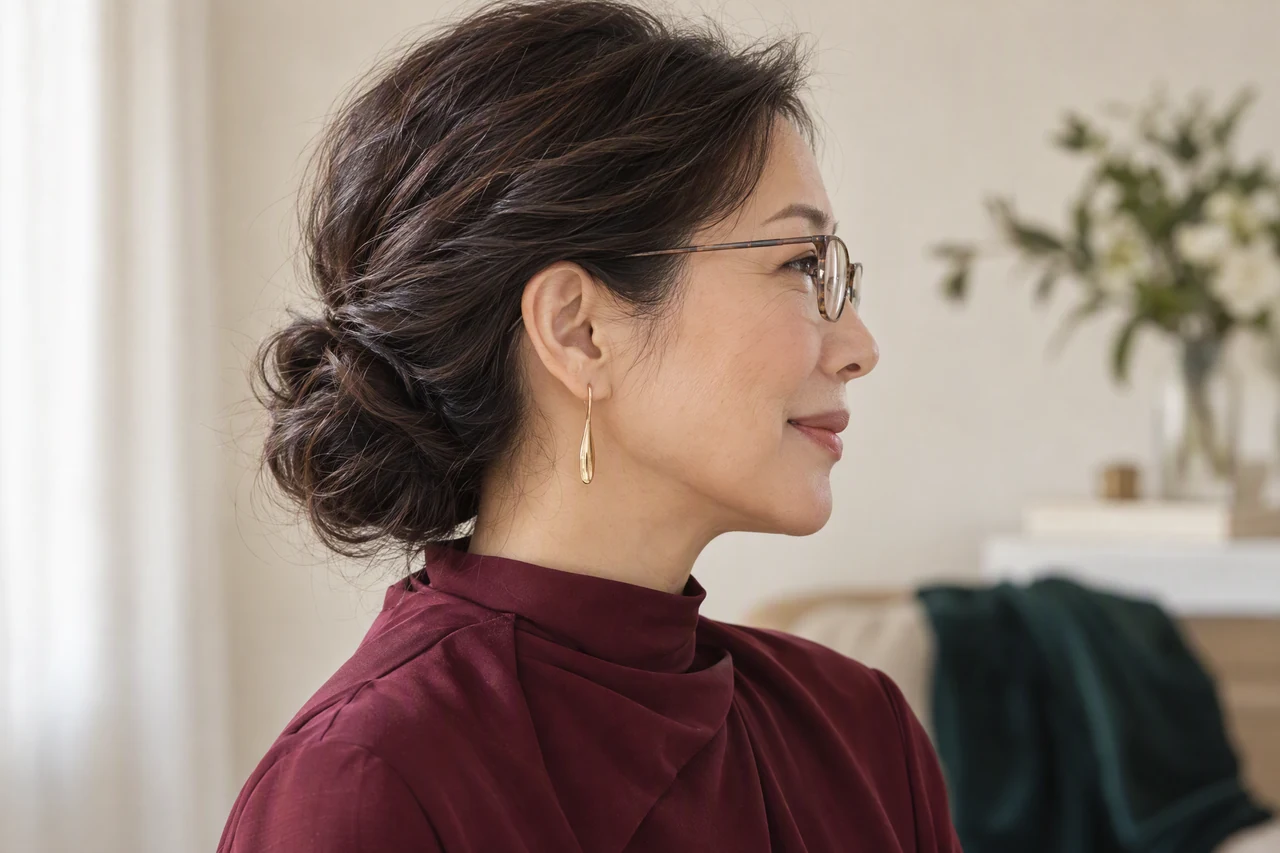
Gathering the hair changes what is visible around your ears, neck and shoulders. Shorter layers may need a different outline from a full bun, and a heavy accessory can influence where the shape sits. Discuss movement and comfort as well as appearance; the exact structure needs assessment rather than being assumed from the name alone.
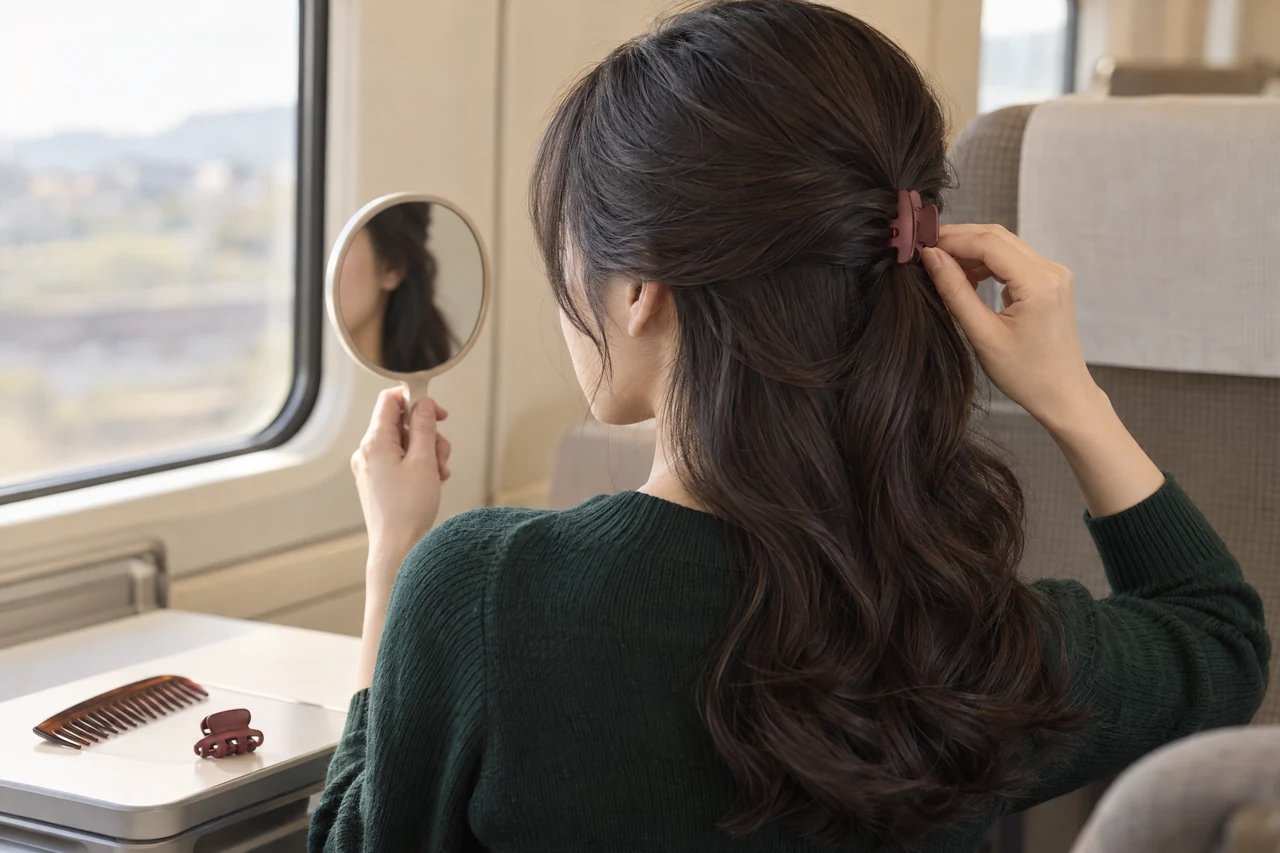
A low gathering places the visible shape near the nape, whereas a higher gathering shifts attention upwards. Neither is automatically more flattering or more formal. Look at the relationship with your collar and earrings, and decide where you want clear space. A half-up outline can keep some length visible while moving selected sections away from the face. It is a separate shape choice, not necessarily a faster or cheaper version of an updo.
Short front layers may not reach the proposed fastening point. Leaving a deliberate face-framing piece, changing the gathering position or choosing a partly pinned outline can be more realistic than forcing every strand into a distant bun. Ask what will remain loose and what needs support. A photograph showing a large bun should prompt a discussion about your available length and density, rather than an assumption that extra hair or accessories are included.
Check hair up against layers, accessories and comfort
A secure-looking outline should not depend on enduring pain. The American Academy of Dermatology's advice on hairstyles that pull explains that repeated tension can lead to hair loss and advises changing a hairstyle immediately if tightly pulled hair causes pain or scalp stinging. Tell the stylist promptly if a section pulls or a pin presses into your scalp. Turning your head and sitting normally can also reveal a gathering that catches on your collar.
Confirm preparation and the quoted scope
Explain whether your hair will be freshly washed, what products are already in it and how much time you have before leaving. The published hair-design range is HK$480–HK$680, but this does not establish the price of every named technique. Confirm the style, required preparation and any separate steps before agreeing to the appointment.
Ask for preparation advice before washing or adding product for the visit. Mention dry shampoo, oils or firm-hold products already present, as well as whether the hair will arrive damp or dry. There is no need to assume that every gathered style requires unwashed hair, or that arriving dry removes all preparation work. Describe your starting condition so the proposed service can be assessed against the actual request.
Use the hair salon price list to check the published hair-design entry, then ask what your proposed quote includes. Clarify washing and drying, extra shaping and any accessory-related work together. If your hair extends below the chest, ask whether the published long-hair supplement applies to the service being discussed; do not add or dismiss it yourself. A reference picture alone does not define the total charge.
Ask about washing, drying and finishing requirements
Give your required departure time, not only the time of the occasion. If you will travel, change clothes or apply makeup afterwards, make that clear before an appointment is agreed. Request an estimate for the assessed work rather than relying on a fixed duration for all styles. Should your idea change from loose bends to a pinned structure, reconfirm the preparation and scope instead of treating the change as an automatic addition.
Match the published entry to the assessed work
For hair styling at Vit So in Sheung Wan, the listed hair-design price is HK$480–680. Appointments take place at 252 Hollywood Road. Describe the finish, your hair length and the occasion, and ask which service scope applies. Styling is distinct from a routine wash and blowdry; the listed range does not establish accessories, every elaborate style or a fixed appointment duration.
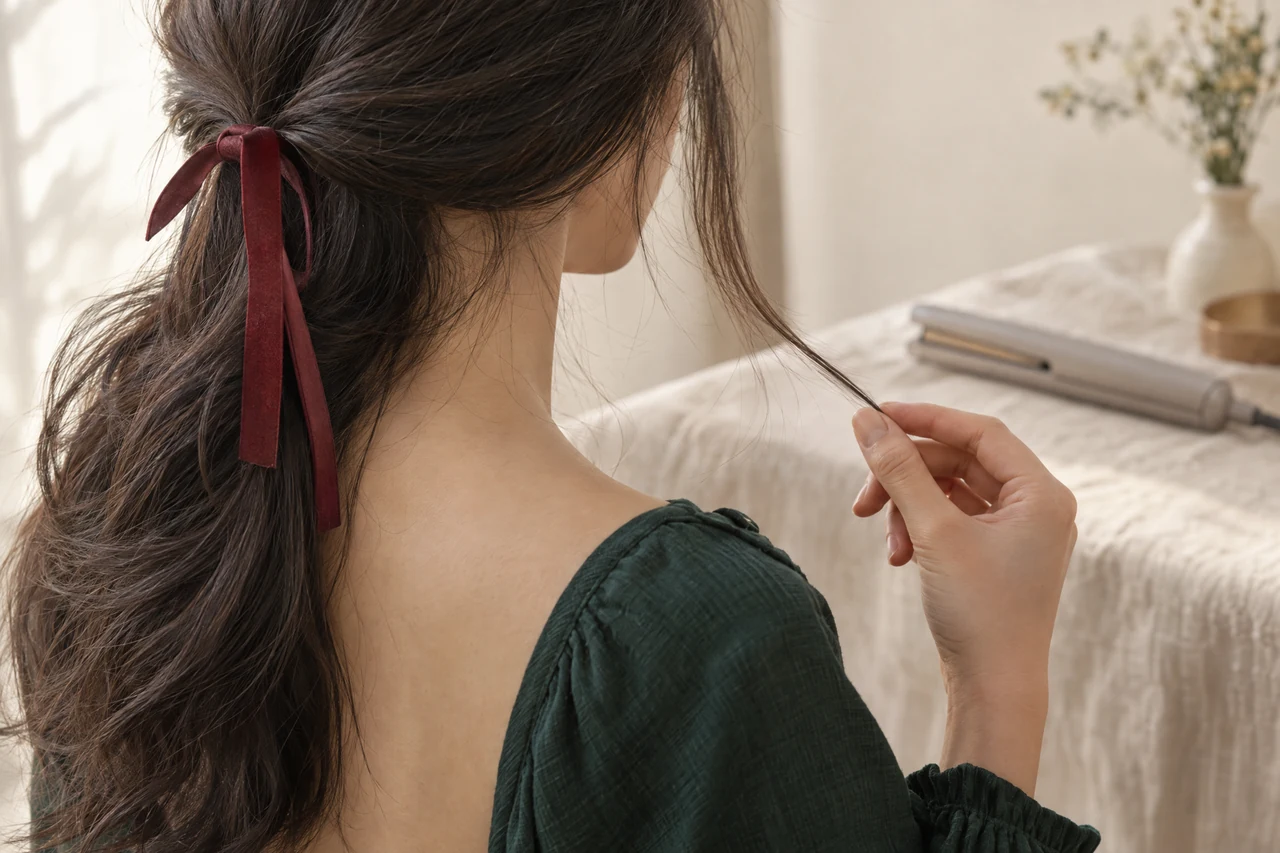
Check the finish with the things you actually wear
Glasses can change how a face-framing section sits. Bring the pair you will wear and check that the arms can be put on and taken off without disturbing the gathered hair. Earrings may catch on loose curls, while a raised collar may meet a low bun. These practical details are worth discussing even when the request is simply an evening out rather than an elaborate occasion.
Show an accessory from the side and back as well as the front. A decorative clip's visual size does not reveal its weight or fastening method. Ask whether it can be used with the proposed outline, and bring the actual item if its placement matters. If it will be removed later, discuss whether removing it changes the support or only the decoration. Do not assume accessory fitting is included in every styling appointment.
Review event hair styling to check its service scope and the details to share before arranging the related work.
Review bridal hair to check its service scope and the details to share before arranging the related work.
Keep ordinary shape choices separate from detailed occasion planning
This page helps you compare a loose or gathered temporary finish. When the request depends on an event timetable, outfit changes or the bride's own wedding requirements, explain that context through the relevant service enquiry. A familiar bun name does not establish a bridal package, a trial or on-location work. For a simpler visit, the key information remains your current hair, preferred outline and what you will wear around it.
Leave knowing what to adjust and what to leave alone
Before leaving, look at the front, side and back rather than judging only a close-up mirror view. Ask which loose pieces are intentional and which fastening points should remain untouched. If you want to tuck a section behind your ear or move a clip later, check whether that is compatible with the finished structure. This is more useful than carrying tools you do not know how to use.
Ask how to remove any pins or fastenings gently at the end of the day. Avoid trying to brush through a firm-held structure while its supports are still in place. The American Academy of Dermatology's styling guidance on long-lasting hold products cautions that combing after applying these products can cause breakage. Follow product-specific handling advice and stop if the hair resists rather than pulling harder.
Prioritise a manageable finish over constant corrections
Discuss which feature matters most if the finish softens during wear: the parting, an open ear area or the gathered outline. A temporary style can change with movement and handling, so ask for realistic touch-up guidance instead of expecting an unchanged appearance. If comfort deteriorates, address the pulling or pressure rather than preserving the photograph at any cost. A successful choice is one you can wear naturally, not one that requires avoiding ordinary movement.
Compare temporary styling outlines before discussing the preparation and quote
| Finish to discuss | Visible effect | Practical trade-off | What to clarify |
|---|---|---|---|
| Loose shaped finish | Keeps length visible around the face and shoulders | Leaves more hair in contact with clothing and accessories | Where bends begin, how the ends sit and whether extra shaping is included |
| Half-up outline | Gathers selected sections while retaining falling length | Needs enough suitable length at the chosen fastening point | Which layers stay loose and whether an accessory adds support or decoration |
| Low gathered outline | Opens the neckline and places the shape near the nape | May meet a raised collar or seated head position | Bun position, pin comfort and available length |
| Higher gathered outline | Moves the visible focus upwards and clears shoulder-level hair | Short layers and accessory weight may affect the structure | Suitable support, face-framing pieces and comfortable tension |
Your preparation checklist
- Choose the main outline: loose, partly gathered or fully up, and identify the detail that matters most.
- Share current photographs showing the front, sides and back, including your shortest layers and present texture.
- Select reference details and explain what you do not want, rather than expecting an exact replica.
- Describe recent chemical services, fragile ends, existing products and whether you expect to arrive with damp or dry hair.
- Bring or show the glasses, collar, earrings and hair accessory that could affect placement or comfort.
- Confirm preparation, included work, the assessed charge and your required departure time before agreeing to the appointment.
- Check comfort with ordinary head movement and ask about safe touch-ups and removal before leaving.
Frequently asked questions
Is dry styling available as a separate appointment?
Ask whether your requested style can start with dry hair and what preparation is needed. A standalone dry-hair appointment and its price should not be assumed.
Is a hair curling service the same as a perm?
No. Temporary styling creates a finish for the occasion; a perm changes texture through a separate chemical service. Confirm the proposed method for your request.
Can a reference style be reproduced exactly?
Length, layers, density and accessories can change the result. Use a photograph to discuss the features you like and agree on a realistic version for your hair.
Find a loose or gathered finish that feels like you
Enquire with Vit So in Sheung Wan with your current hair photographs, preferred outline, relevant accessories and required departure time. Ask which preparation and service scope suit the request and confirm the charge before agreeing to an appointment. An enquiry is a conversation about availability and the proposed work, not a confirmed booking.
Start your WhatsApp enquirySources & further reading
- Hair styling without damage
General advice on dry-hair flat-iron use, excessive heat and breakage risks when combing after long-lasting-hold products.
- Hairstyles that pull can lead to hair loss
Repeated tension from tight gathered styles and the need to change a hairstyle that causes pain or scalp stinging.



