







Vit So and DT HUB have the same owner. The DT HUB links in this article are promotional links to related-brand service and product information, not independent recommendations or evidence of stage-performance suitability.
Choose clip-in extensions for stage rehearsals around the everyday cut
Begin with what the stage image actually needs. Is it a longer silhouette when you turn, fuller ends in a half-up style, or simply hair kept clear of your face? Ask the production's hair or costume lead which features are essential and which can change. A reference image may suggest long hair without making that length necessary. Trying a version with your own cut first gives you a useful baseline and may avoid adding an attachment task to every rehearsal.
Clip-ins make sense when you want to return to your usual haircut between sessions and are willing to fit and remove the pieces repeatedly. Installed extensions involve a different commitment: the extra hair and attachment points remain part of washing, sleep and daily styling. DT HUB's hair extensions kwun tong page describes tape-in, keratin-bond and clip-in options. Use that distinction to discuss the rehearsal calendar, not to assume that an installed method is more suitable for energetic choreography.
Vit So's hair extensions page is a starting point for discussing length, volume and upkeep alongside your existing cut. Explain whether you need an everyday change or a rehearsal-only one. Keeping natural hair is a valid design choice if it meets the production brief; removable length is not automatically better, and keeping extensions installed is not a shortcut around assessing comfort or visibility.
Identify the actual set before planning attachment
Before a trial, check what you have rather than relying on the seller's general product category. Look at the fibre information, the width and arrangement of each weft, and how its clips open. Confirm the manufacturer's care and styling instructions. A piece borrowed from a costume store may have previous cutting or styling that changes its shape. If material or attachment details are unknown, ask for help identifying them before applying heat, altering the piece or trying to improvise a fastening method.
The page reached through clip in hair extensions hong kong is titled “Clip-in & Tape-in Extensions” and discusses both removable clipped wefts and professionally applied tape systems. Those are not interchangeable at the end of rehearsal. Ask which actual item is being proposed, whether its application and removal can be demonstrated, and how it blends with your shorter layers. A product description about discreet clips does not establish how that set will behave on your head during movement.
Start with the production's agreed silhouette rather than the fullest available set. Compare the added hair with your natural ends in daylight, then revisit the match under available rehearsal lighting. Note texture and shine as well as colour: a similar shade can still look separate when the hair moves. The trial should show whether the required shape can be achieved without repeatedly tightening the same area to keep it in place.
Keep a placement record you can reproduce
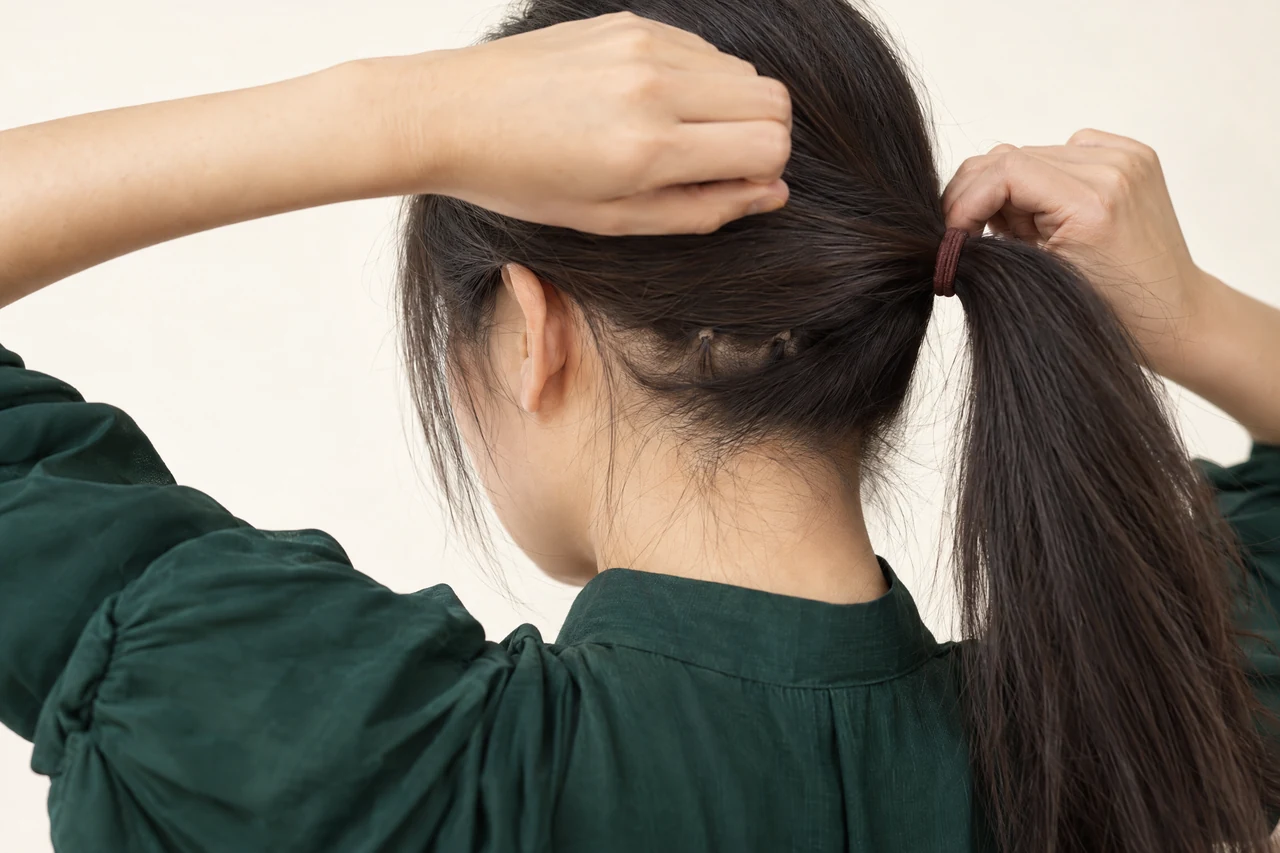
With the fitter's permission, record which piece belongs where and how the surrounding natural hair covers it. Use your own clear photographs or a simple sketch, not a generic placement diagram. Record the agreed style and any accessories too, because changing the parting can change coverage.
Run attachment checks through the rehearsal sequence
Useful rehearsal hairpiece attachment checks follow the actions you actually perform. Begin with comfortable standing and ordinary head turns, then work through agreed blocking with the rehearsal lead. Include looking down, raising an arm, turning away from the audience and any contact between the hairstyle and costume. Do not invent strenuous tests to prove the piece is secure. If choreography includes lifts, floor work or rapid movement, have the relevant production lead decide how to assess it within the rehearsal's safety arrangements.
Ask someone to view the hairstyle from the front, side and back, including the moments when natural hair separates over an attachment. Check whether length obscures your face or catches a collar, whether a headpiece presses on a clip, and whether a microphone arrangement overlaps the fastening area. Make microphone or costume changes only with the responsible crew member. A phone recording can help locate an issue, but its lighting and close viewpoint do not establish what every audience member will see.
Review comfort separately from appearance. The American Academy of Dermatology warns that repeated pulling can lead to hair loss and says a painful hairstyle is too tight.[1] If the trial causes pain or stinging, stop and address the style rather than pulling it tighter. If a clip opens or a piece shifts, report it and pause for assessment. A trial that reveals a problem has done its job; it is not an invitation to add unapproved tape or extra fastening.
Separate a visual problem from a handling problem
An exposed edge may need a different parting or silhouette; a shifting piece needs its fit and attachment assessed. Write down the action that triggered the issue. Changing one agreed feature at a time makes the next trial easier to interpret than simultaneously adding hair, tightening the style and changing accessories.
Confirm styling and fitting support without assuming theatre services
A salon appointment can help with shape and blending, but its scope needs to match the item. DT HUB's wig styling hong kong page describes cutting and styling according to wig material and construction. Ask whether that service accepts your specific removable extension set, particularly if you bought it elsewhere. Explain any proposed trimming before authorising it: removed length cannot be put back, and cutting the added hair should not silently become a change to your everyday haircut.
The wig fitting hong kong destination describes private consultation, sample try-on and attachment discussion, and mentions performers. That makes it relevant to ask about fitting support, but does not confirm choreography testing or secure performance wear. Ask whether you can bring the actual set, practise applying and removing it, and discuss the production's restrictions. Get confirmation of the appointment scope and any chargeable work; do not infer backstage attendance from a general consultation offering.
For planning the overall finish, Vit So's event hair styling page gives a relevant route for discussing outfit, accessories and timing. Bring costume references and explain that this look must be recreated across rehearsals, not just photographed once. Distinguish studio preparation from production support. Vit So is based in Sheung Wan, while these DT HUB pages concern Kwun Tong; a shared owner does not make the venues or their service arrangements interchangeable.

Rehearse gentle removal and the return to natural hair
Do the first removal practice in good light with time to spare, following the actual set's instructions and the demonstrated method. Identify styling pins and accessories so they are not mistaken for extension clips. Support the piece while releasing its clips, and check that natural hair is free before lifting it away. If something catches, stop rather than drag the weft down the hair. Ask the fitter to demonstrate again if you cannot tell whether a clip is fully open or hair is tangled around it.
A clip-in removal routine is not a method for taking out installed extensions. DT HUB's hair extensions hong kong service page discusses several systems, maintenance guidance and professional removal. Before choosing an installed system, establish who can remove it, what follow-up it needs and what to do if the rehearsal schedule changes. Do not peel tape, cut bonds or use a clip-in technique on an installed attachment. Ask for instructions specific to the system rather than combining advice from different methods.
After unclipping, separate care for your own hair from care for the removed set. AAD specifically advises removing clip-ins before washing natural hair.[2] Follow the item's instructions for cleaning, drying and storage; being removable does not mean it needs no care. Vit So's hair extension aftercare article can help frame washing, brushing and sleep questions, but the exact routine must fit the attachment and fibre. Note whether removal left a knot or whether restoring your everyday style took more handling than expected.

Review the result before repeating the next rehearsal
Make a short record after removal while the sequence is fresh. Describe the style worn, the movement or costume change that exposed a problem, and what the performer felt. Record the next action plainly: keep the current arrangement, ask the fitter about a placement change, try less added hair, or return to the natural-hair version. “Looked fine at the start” is less useful than knowing whether the same arrangement remained workable through the actual scene and could be removed without force.
Consider the repetition cost as well as the finished look. If applying and removing the set crowds out warm-up or repeatedly needs help that is not available, a simpler silhouette may be more practical. Installed length could be considered if you also want it between rehearsals and can manage its maintenance, but it still needs individual assessment. There is no universal clip count, fitting time or rehearsal frequency that proves a method suitable; use your own trial record and the production's requirements.
Do not dismiss new discomfort because an earlier rehearsal went well. AAD advises seeking dermatology assessment for hair loss, which can have causes beyond hairstyle pulling.[1] Persistent, sudden or patchy loss, or ongoing scalp pain or inflammation, belongs with a healthcare professional rather than a cosmetic fitting discussion. Keep the next rehearsal hairstyle simple while getting appropriate advice. The purpose of trial, removal and review is to make a considered choice, including choosing not to add extensions.
Compare the rehearsal commitment, not a promise of stage security
| Option | When to consider it | Repeated-rehearsal limitation | Next check |
|---|---|---|---|
| Clip-in length | Extra length is needed only for rehearsals | Application, coverage and removal must be repeated | Trial the actual set through agreed blocking |
| Installed tape-in length | You also want added length between sessions | Attachments remain through daily care; removal differs from clips | Confirm upkeep and professional removal |
| Installed bonded length | A longer-term change fits everyday styling goals | System-specific fitting, care and removal are required | Discuss hair condition and the rehearsal calendar |
| Natural-hair adaptation | The stage silhouette can be redesigned | May not reproduce the reference image's length | Agree essential features with the production lead |
Your preparation checklist
- Agree which stage-hair features are essential and trial a natural-hair version first.
- Identify the actual set, its fibre and its attachment and care instructions.
- Record the demonstrated placement and check coverage with the agreed parting.
- Include costume, headpiece and microphone interactions with the responsible crew.
- Stop for pain, stinging, shifting or snagging rather than tighten or improvise.
- Practise removal in good light and check that your natural hair releases freely.
- Store the piece as instructed and record what to keep or change next time.
Frequently asked questions
Are clip-ins automatically the best choice for dance rehearsals?
No. Removability helps if you want your everyday cut back afterwards, but it does not establish suitability for the choreography. Test the actual set within the production's rehearsal arrangements. A natural-hair adaptation may be more workable if added hair catches, shifts or demands unavailable help.
Should I wear the full set to every rehearsal?
Not necessarily. Agree the required silhouette and which sessions need the finished hairstyle. Use the fitting advice for the actual set; do not add pieces merely because they were supplied. Recheck a changed arrangement rather than assume a previous trial covers it.
Can a quick-change removal be planned from a salon's published timing?
No. A general fitting time does not measure your costume change or careful removal. Practise the complete sequence with the responsible crew, in the conditions they approve. If the change cannot be done without rushing or pulling, revise the style or change plan.
Does a consultation mean the studio will attend backstage?
No. Fitting, styling, work on an outside item and attendance at a rehearsal venue are separate service questions. Ask what is accepted and included before booking, and confirm any production support directly rather than infer it from a wig-service page.
Bring a rehearsal brief, not just a long-hair reference
Prepare your natural-hair photos, the actual piece and its instructions, costume references and the actions that need checking. Ask Vit So whether a consultation can compare removable length with adapting your existing cut. Confirm item acceptance and appointment scope before travelling; if the trial does not work comfortably, keep the simpler option available.
Start your WhatsApp enquirySources & further reading
- Hairstyles that pull can lead to hair loss — American Academy of Dermatology
Repeated pulling can cause damage; pain or scalp irritation is a reason to stop and change the hairstyle, not tighten it further. Hair loss warrants dermatology assessment. No diagnosis or treatment recommendation is made.
- How to prevent hair damage from a weave or extensions — American Academy of Dermatology
Remove clip-ins before washing natural hair; keep natural hair clean and do not regard painful tightness as acceptable fitting. This is general care guidance, not evidence for a particular product or stage-performance attachment.



