







Map a fringe haircut with curly roots and straightened ends before cutting
Start with the centre fringe and the pieces beside each temple, rather than treating the whole front as one uniform section. Notice where the hair begins to bend, where it becomes straighter and where the tips currently finish. The change may be subtle or sit at different heights across the front. Do not pull the strands taut to make the boundary easier to see: that hides the shape you need to assess for everyday wear.
Your previous service matters. In its permanent-straightening FAQ, Schwarzkopf Professional explains that treated hair normally remains straight until cut out, while regrowth returns curly or wavy. That supports a grow-out distinction, not a promise about every service called smoothing or straightening. Bring the treatment name if you know it, and say when you are uncertain. A softened finish, temporary heat styling and a permanent change should not be assumed to have identical histories.
Plan a fringe haircut with curly roots and straightened ends by zones
Think of two separate reference points: the texture boundary within the strand and the place where you want its tip to land when dry. If those points cannot meet without losing too much length, keep a transition plan rather than demanding an all-curly fringe immediately. The guide to how long does hair straightening last explains the different histories of new roots and treated lengths; here, use that distinction to decide what can reasonably be removed.
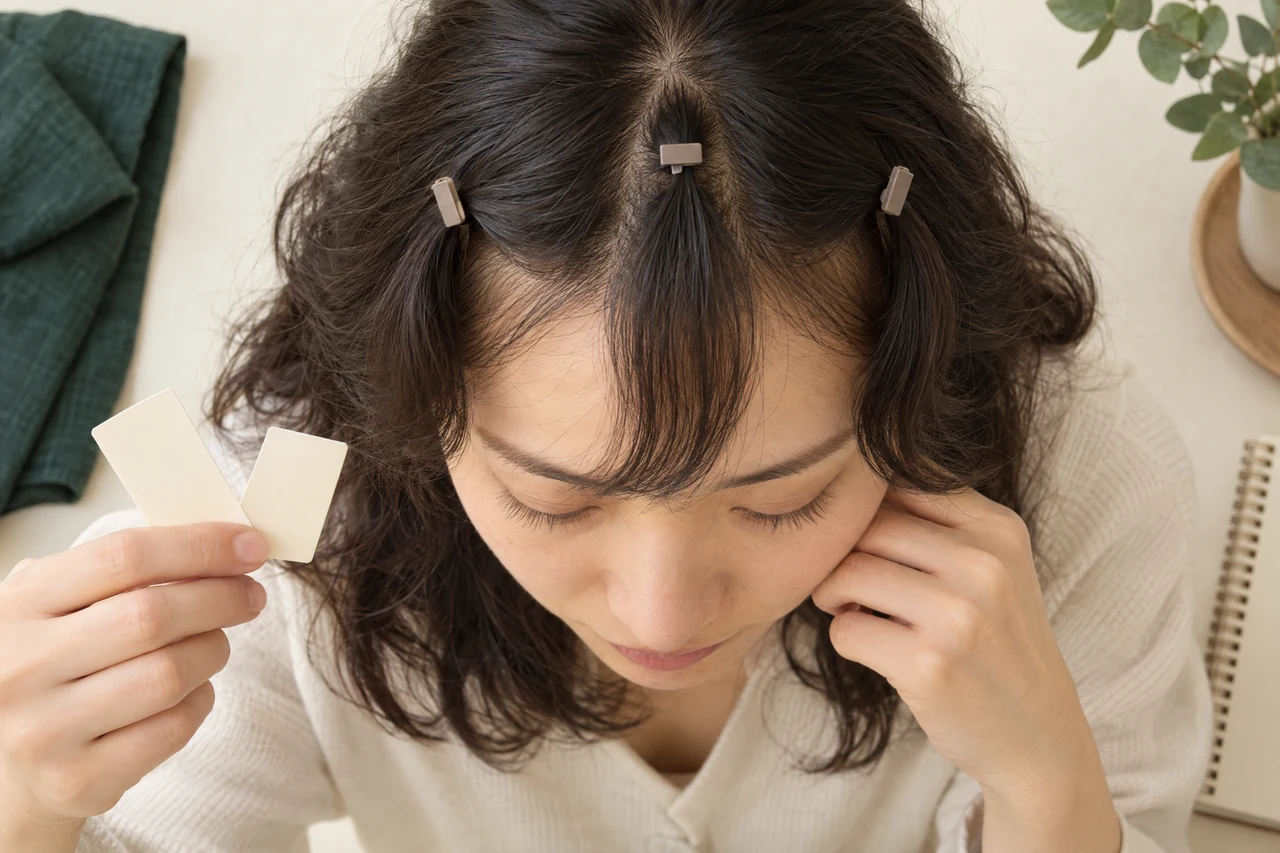
Keep the straighter tips if they still provide useful length
Retaining the straighter tips can be a deliberate choice, not a failed attempt to return to curls. They may still reach a comfortable brow-level position or help the front move to the side. Ask which pieces are interfering with your eyes and which still contribute to the outline you want. A small adjustment to those ends may improve wearability without committing the entire front to the much shorter length of the untreated growth.
The trade-off is that the upper part can bend while the lower part hangs differently. A tidy edge does not make those sections share the same movement. Judge the combined shape from the side as well as the front: you may dislike a turn near the roots even when the tips look even. Decide whether that variation is tolerable in your ordinary routine before choosing a cut that relies on keeping the processed portion.
Keep length for a reason, not simply to postpone a decision
For a hypothetical wearer who still wants a fringe below the brows, the natural growth might not yet reach that position when allowed to curl. Keeping some straighter length would protect the preferred coverage while the roots grow. Another person might find those same ends awkward against stronger root movement. Neither preference establishes a universal rule. Explain what the retained length does for you, and accept that its appearance may need reassessing as the texture boundary moves.
Shorten towards the returning curls only within your dry-length limit
Moving towards a curly fringe means asking how much untreated hair is available, not merely how much old straightening you would like gone. If the natural section is still short, cutting away all the straighter length could expose a front shape above your acceptable line. Establish that limit with relaxed, dry strands. Show where you would be happy for the shortest curl to finish, and where you would consider the cut too short.
A partial move towards curls can be more realistic than a single decisive chop. Some processed ends may remain after the first cut, and different front sections may need different allowances. Avoid asking for identical stretched lengths solely to make the cut sound precise. For more on the natural landing point, read bangs for curly hair; apply that dry-length thinking to the returning section without assuming its final curl shape is already fully visible.
Removing straightened ends is not a reversal treatment
A trim cannot undo processing in hair that remains. It can only remove part of the strand and change the outline and amount of length left. Nor can a photograph tell you exactly how much a shortened, mixed-texture fringe will lift. Discuss whether a conservative first change and a check after normal drying would suit the situation. Do not make the target 'all natural today' if that conflicts with the length you need to feel comfortable.
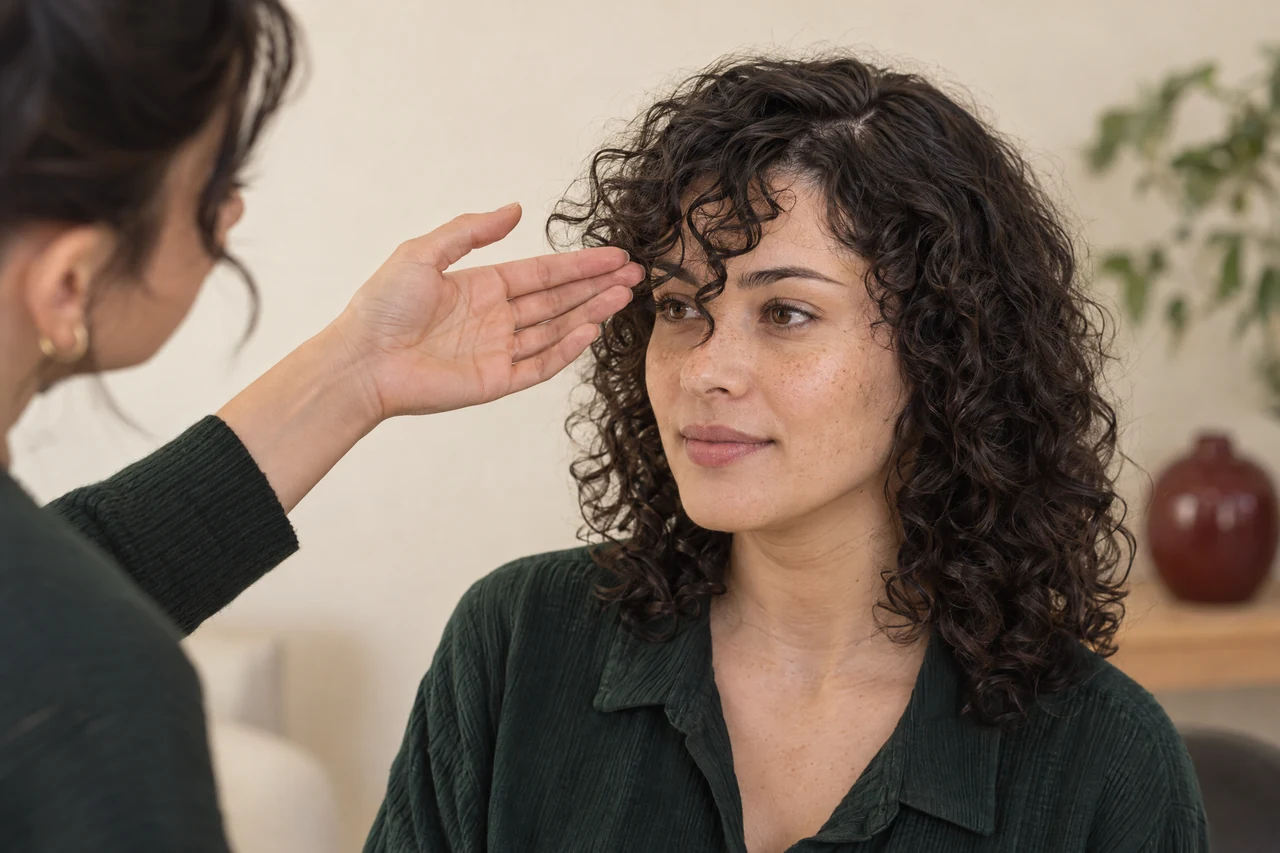
Open the front when neither texture makes a comfortable closed fringe
Opening the centre can provide another direction while curly roots and straighter ends coexist. Instead of aiming for one continuous line across the forehead, discuss a front that separates around your usual parting and connects with longer side pieces. This does not require calling it a particular fashionable fringe. What matters is whether the hair can move away from the eyes without losing the length needed to fall or sweep comfortably to each side.
Test the idea with your existing length before requesting shorter centre pieces. Gently place the hair where you normally part it, release it and see what stays without constant holding. Check the temples, glasses if worn and the side connection. An open front is not automatically effortless: a strong growth direction may favour one side, and processed tips may still point differently. Describe the placement you can manage, rather than asking the haircut to erase every difference.
Protect the side length that makes an open shape possible
It can be tempting to shorten the sides to match a centre piece that feels uneven. First ask whether those longer pieces are what allow the front to sweep back, sit beside the face or be held loosely away. Removing them may eliminate your easiest grow-out option. The comparison below is a decision aid, not a prediction of the finished haircut. Choose the compromise you can live with during ordinary wear, including days when you do less styling.

Keep the transition from becoming a cycle of heat and repeat processing
A mixed-texture fringe does not have to be straightened every morning to qualify as presentable. The American Academy of Dermatology's damage-prevention guidance recommends air drying where possible, the lowest heat setting and less frequent hot-tool use. It also advises gentle combing rather than tugging. Make your usual level of styling part of the cutting decision. If the proposed shape only works when you repeatedly force the roots straight, compare retaining more length or opening the front instead.
Another straightening service is a separate decision, not an automatic addition to a fringe cut. Ask for a condition assessment before discussing it, especially if earlier colouring or straightening is uncertain. Schwarzkopf Professional's hair-quality assessment advice says to postpone its permanent straightening on very porous hair until condition improves. That is product-specific professional guidance, not a diagnosis of your hair or confirmation of a suitable Vit So treatment. A cutting enquiry can remain a cutting enquiry.
Know when the concern goes beyond the fringe shape
If you are concerned about thinning or hair loss, do not interpret every short front strand as ordinary regrowth or solve it with a shorter fringe alone. AAD advises seeing a dermatologist where care changes do not help, particularly with those concerns. Put further chemical work on hold while an unexplained problem is assessed. This article cannot diagnose breakage, scalp conditions or hair loss; a hairstyle discussion should not replace appropriate healthcare.
Prepare an enquiry that makes the texture choice clear
Bring photographs of your front in its ordinary dry state, with a side view and the parting you actually use. A reference image can describe a preferred outline, but your own pictures show the current length available for it. Tell the hairdresser which priority comes first: keeping coverage, removing processed tips or making the front easier to open. If all three cannot be achieved together, say which compromise you would accept rather than leaving that decision implicit.
Before requesting only a front change, review the women's haircut service scope and confirm what appointment is appropriate. The confirmed price for women’s wash, cut & blow-dry is HK$480. That does not establish a separate fringe-only price or appointment. Explain your intended change and ask for the applicable scope and charge to be confirmed. If you need a particular consultation language, enquire about it directly; an English-language website does not guarantee that language at the appointment.
Agree on what should remain after the first change
End the conversation with a clear retained-length boundary, not just a request to remove the straight hair. Ask which centre and side pieces will stay longer and what texture the finished front is intended to show. If the boundary is hard to identify, or the curls do not yet provide your preferred length, deferring a major cut is a valid option. A modest adjustment can be the whole plan; no fixed timetable for the next step is necessary.
Compare the length each grow-out option needs to preserve
| Cutting direction | Length to protect | Main compromise |
|---|---|---|
| Retain straighter tips | Enough processed length to reach your preferred dry outline | The root bend and straighter lower section remain visibly different |
| Shorten towards curls | Enough untreated growth for an acceptable curled landing point | Removing all treated tips may leave the front shorter than wanted |
| Open the centre | Centre and side length that can move around your usual parting | The front may not stay open equally on both sides |
| Defer a major change | The length needed to keep several options available | The mixed texture remains while you assess a future cut |
Your preparation checklist
- Photograph the ordinary dry fringe from the front and side without pulling it straight.
- Record the previous straightening method and other processing, noting anything you cannot identify.
- Show the shortest dry centre position you would genuinely accept.
- Identify side pieces that you still need for sweeping back or opening the front.
- Explain how much daily drying or styling you are realistically willing to do.
- Confirm the appointment scope, applicable charge and whether any proposed chemical work is separate.
Frequently asked questions
Does cutting a fringe while old straightening grows out bring the curls back?
Not in the processed hair that remains. Cutting can remove straightened portions and leave more of the new natural growth visible, but it does not reverse a permanent change in retained lengths. Identify the previous method before assuming that every straighter tip is permanently altered. Choose the cut around available dry length, not a promised restoration.
Should I remove all the straightened ends from my fringe at once?
Only if the remaining natural section can support a front length you are happy to wear and its condition is appropriate for the intended cut. If removing everything would put the curls above your acceptable line, discuss retaining some ends, opening the front or delaying the larger change. There is no requirement to make the entire fringe one texture immediately.
Can the fringe stay longer on the sides during grow-out?
That is a useful option to discuss when side length helps the front separate, sweep back or connect with the rest of the haircut. It is not a guarantee that the pieces will behave symmetrically. Show your usual parting and let the strands fall freely so the hairdresser can assess what those longer sections contribute before shortening them.
Ask about a fringe that works with your grow-out
Send a WhatsApp enquiry to +85253057561 with front and side photos, your straightening history and the dry length you want to protect. Ask whether retaining the tips, shortening towards curls or opening the front is worth discussing. Vit So is at 252 Hollywood Road, Sheung Wan, Hong Kong. Appointment suitability, scope and charge require confirmation; sending an enquiry is not a confirmed booking.
Start your WhatsApp enquirySources & further reading
- Strait Styling Glatt — Schwarzkopf Professional
The professional FAQ distinguishes permanently straightened lengths from curly or wavy regrowth and discusses assessing hair quality before processing. This is terminology and condition guidance, not a product recommendation or a statement about Vit So's product use.
- 10 hair care habits that can damage your hair — American Academy of Dermatology
Dermatologists explain reducing heat exposure, handling hair gently and seeking assessment where care changes do not help, especially with thinning or hair loss. These points inform care during grow-out, not a guaranteed styling result.



