







Trim or treatment for split ends: define the outcome
Removing damaged tips and caring for the remaining hair address different needs. A product may make the surface feel smoother without permanently repairing an existing split. A trim can remove selected ends, but does not remove the need for gentle handling. Compare the actual problem and your length priorities rather than asking one option to do both jobs.
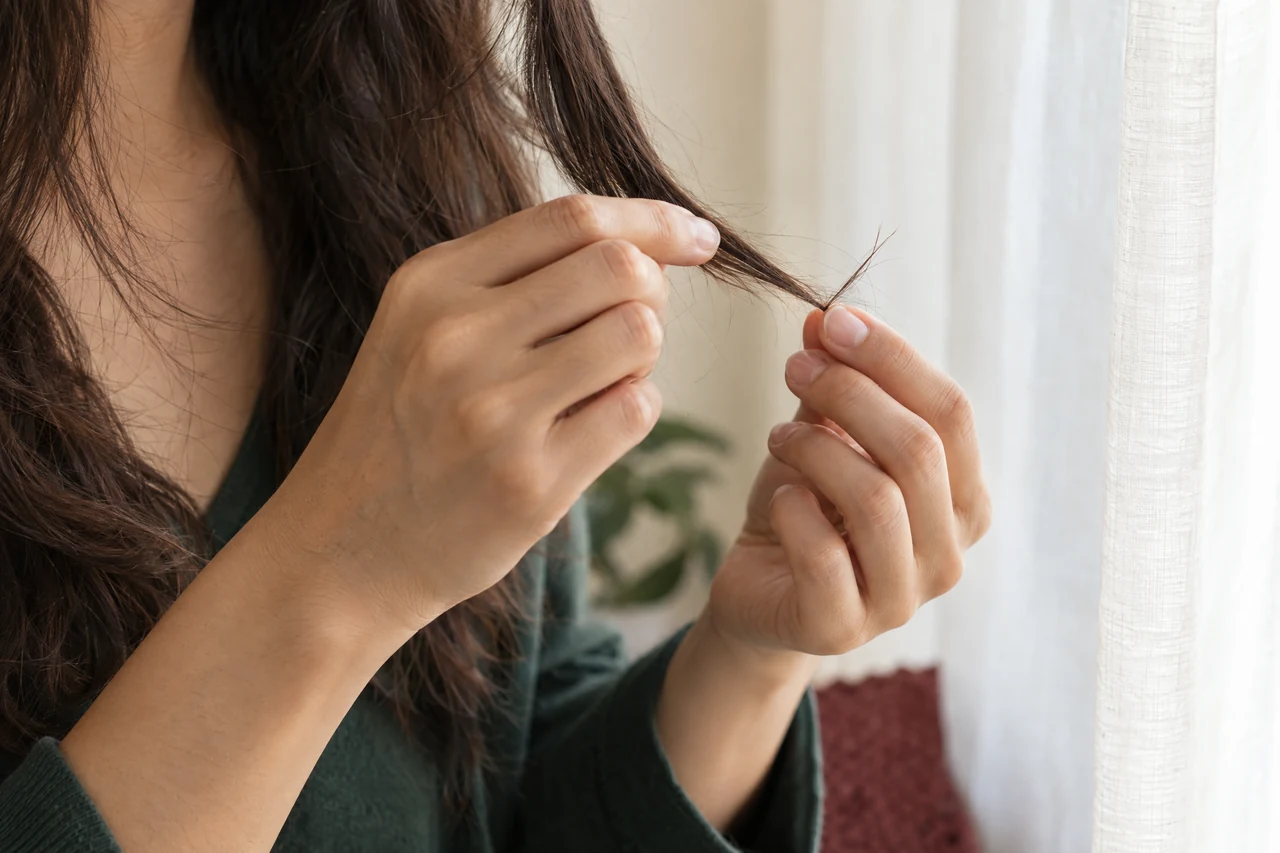
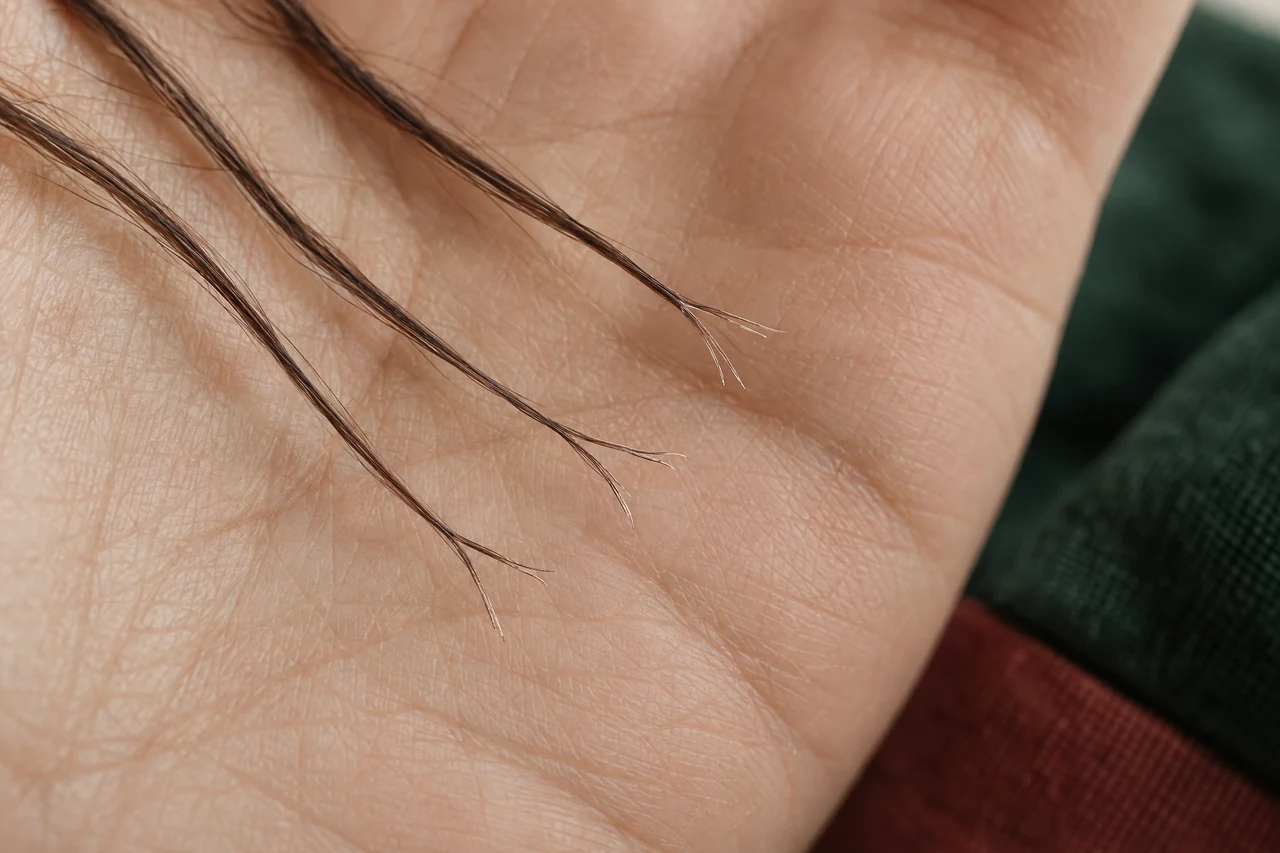
Gently support a small section in good light. A tip separating into branches is different from a strand bending outward. Do not pull a suspected split apart. Explain whether your concern is visible forks, persistent knots, a sparse bottom edge or a dry feel. These observations guide the discussion without establishing every strand's condition.
The Canadian Dermatology Association's hair-care guidance identifies trimming as the remedy for split ends and notes that they make hair prone to breakage farther up the shaft. That supports discussing removal, not a promise that all hair needs the same amount cut off. The proposed amount still depends on where the affected ends sit and what length you are willing to lose.
Why trim or treatment for split ends is not an either-or cure
Ask for an outcome rather than a service name alone: 'I want to remove the most troublesome tips while keeping enough length for my usual ponytail.' If roughness remains along the hair above those tips, conditioning can have a separate purpose. Conversely, choosing care because you are not ready to cut does not mean the existing splits have been removed. You can postpone a length change while acknowledging that limit, rather than spending repeatedly on an expectation the service cannot meet.
Can a hair treatment fix split ends?
Can a hair treatment fix split ends? Conditioning may temporarily improve appearance and handling, but it should not be presented as permanently joining the separated tips. If splits keep catching or tangling, include a trimming discussion. A smoother salon finish is not proof that the split has disappeared or that further wear is impossible.
Conditioner can help hair move through a comb with less resistance. The Canadian Dermatology Association describes its usefulness for combing wet hair, which is a practical benefit even when some damaged tips remain. Judge that benefit by ordinary handling after washing, not only by shine in a photograph. Notice whether you need less force to loosen knots and whether the ends feel comfortable without becoming heavily coated. An attractive finish can be worthwhile, but it answers a different question from whether separated tips are still present.
If a product is described as repairing, sealing or rebuilding, ask what that wording means for your particular concern. Does the claim refer to easier combing, reduced breakage under specified conditions, or temporary surface smoothness? For the distinction between product categories, bond repair vs deep conditioning explains why a repair label should not be treated as a promise to permanently rejoin a visibly split tip.
Review hair treatment to check its service scope and the details to share before arranging the related work.
Temporary smoothness is not permanent joining
Treatment alone may suit you when immediate manageability matters and you have chosen to keep your length for now. Ask which home products to continue and how to use them. Extra product, processing time or heat should not replace instructions. If the same tips still catch despite feeling softer, revisit trimming instead of simply adding another product.
Discuss the length you want to preserve
Explain the shortest length you would accept and whether tying your hair up matters. Ask which areas look most affected and how a proposed trim changes the outline or layers. A photograph helps communicate a length preference, but should not replace a discussion of the actual ends or imply that every split can be removed without visible shortening.
'A little', 'dusting' and 'just the ends' can mean different things. Ask to see the proposed bottom line before cutting. Discuss front pieces and shorter layers separately: keeping the longest back section does not automatically protect their length. For waves or curls, ask how the proposal will look when dry in your usual pattern.
You might say: 'Keeping the back below my shoulders matters more to me than removing every affected strand today. Please show me the proposed change and explain what would remain.' That is a preference, not a demand for an impossible result. If the assessment suggests a larger cut than you accept, ask what a smaller trim would achieve and what it would leave unresolved. The preparation checklist below has 6 steps.
Review women's haircut to check its service scope and the details to share before arranging the related work.
Agree the visible change before cutting
Also check the shape you want to retain. A dense bottom edge, a tapered outline and softly layered ends are different visual priorities. Removing uneven damaged areas may change fullness as well as length. Before agreeing, establish whether the proposal adjusts the perimeter only or also includes layers and face-framing pieces. If you do not want thinning or a restyle, say so directly. A length-preserving request is clearer when it includes what should stay unchanged, not just what should be removed.

Care for the remaining ends
After trimming or conditioning, follow product directions and handle the ends gently. Avoid dragging a brush through resistance and reduce unnecessary heat passes. Notice where knots repeatedly form so later care can focus on those areas. If strands are snapping farther up the lengths, that needs a broader hair-condition discussion rather than only an end trim.
Keep washing and drying gentle enough that the newly trimmed edge is not immediately exposed to the same avoidable handling. The American Academy of Dermatology's advice on preventing hair damage recommends conditioner after shampoo, avoiding aggressive rubbing through the lengths and absorbing water with a towel instead of rubbing. Apply your chosen product according to its directions, including where it belongs and whether it should be rinsed out. A salon treatment does not make everyday conditioner or careful handling irrelevant.
Check everyday contact points. Free ends trapped under a shoulder-bag strap rather than sliding them out under tension. If your style requires repeated brushing until the ends lie perfectly flat, discuss a less demanding finish. The aim is fewer forceful corrections, not a rule to always wear hair loose.
Continue with damaged hair care for that specific comparison and the preparation questions it raises.
Review friction, detangling and repeated heat
A useful routine change is one you can maintain during a busy morning. Keep a suitable comb where you get ready, allow time to loosen knots and avoid tightening a ponytail simply because the ends feel untidy. Review the problem area after normal washing and styling. If less pulling helps but a particular patch still catches, report that location at your next discussion instead of describing the whole head as equally damaged.

Detangle without testing the strength of your ends
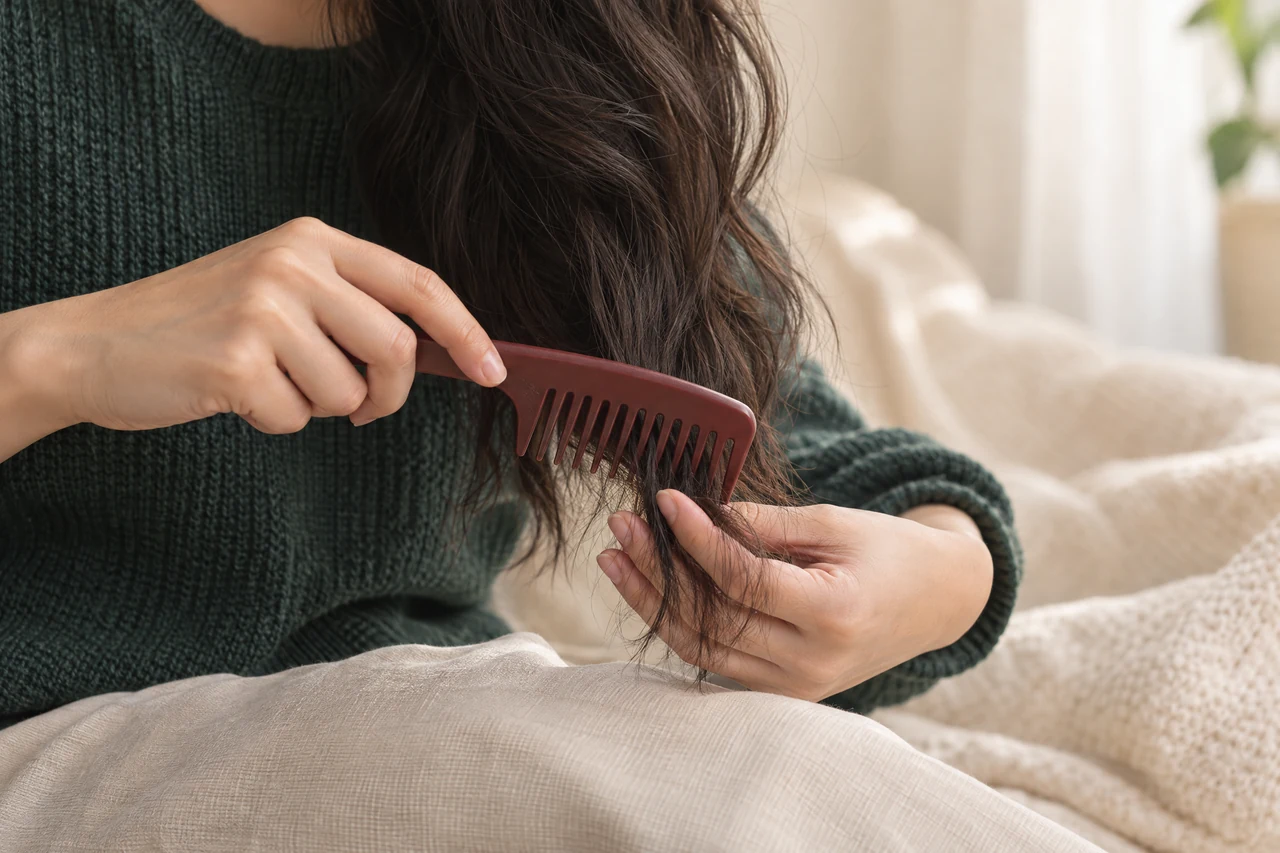
Support a small section and begin below the knot, gradually working upwards as it loosens. This follows the Canadian Dermatology Association's advice to use a wide-toothed comb from the ends towards the scalp. Do not begin with a full-length stroke through a resistant section. If you meet a stubborn knot, pause, separate what you can gently and follow the directions for a suitable conditioning product. The goal is to reduce resistance, not to prove that the hair can withstand a harder pull.
For more detail on handling a difficult section, how to detangle damaged hair helps you plan the order of combing without repeatedly dragging through the same ends. Stop if handling causes pain or you find yourself pulling at the scalp. A knot that cannot be loosened comfortably is worth asking about rather than attacking with a brush or cutting into a hidden section at home.
Choose the combing stage for your texture
There is no useful blanket instruction to comb all hair only when completely dry. The American Academy of Dermatology advises letting straight hair dry a little before gentle wide-tooth combing, while textured hair or tight curls should be combed while damp. Match the stage to your texture and product directions. Whatever the stage, repeated force through a knot is not the objective. Keep the section supported and work slowly enough to notice resistance before you pull harder.
Review heat habits and decide when to reassess
The American Academy of Dermatology recommends the lowest heat setting and limiting hot-tool contact; the Canadian Dermatology Association advises against straighteners or curling irons on wet hair. Avoid repeatedly clamping the tips for a perfectly smooth edge. Ask whether your finish can use fewer passes or less frequent tool use.
Reassessment should relate to what happens in your routine. Notice renewed catching, visible forks, changes in the bottom outline or increased snapping. These observations can inform the next length discussion without turning a calendar interval into a universal prescription. Keep a simple note of what changed after the trim, treatment or gentler handling, so your next enquiry describes the remaining issue rather than starting again with a vague request to repair everything.
Separate end maintenance from wider concerns
If shorter broken pieces appear well above the ends, share your colour, bleaching, perming and straightening history before considering further services. Removing a narrow bottom strip will not address every affected area. If the concern includes unexplained thinning, hair loss or persistent scalp discomfort, seek medical advice rather than relying on a trim or cosmetic treatment alone. For ordinary end maintenance, the next decision can remain simple: identify the affected area, agree on any visible shortening and choose care that makes daily handling gentler.

What each choice can realistically do for split ends
| Choice | Useful purpose | Length and outcome trade-off |
|---|---|---|
| Selective trim | Remove the affected tips included in the agreed cut. | Shortens those areas; some splits may remain if the cut is deliberately limited. |
| Conditioning without a cut | Improve slip, softness and everyday manageability. | Keeps the current length but should not promise permanent joining of separated tips. |
| Trim plus suitable conditioning | Remove selected ends and care for the remaining lengths. | Requires separate agreement on the cut and care; neither prevents all future wear. |
| Broader assessment | Consider snapping above the ends and the history of processed areas. | A perimeter trim alone may not cover the affected lengths; the next step depends on assessment. |
Your preparation checklist
- Look at a gently supported section in good light and note where visible forks or recurring knots appear, without pulling the tips apart.
- Choose your shortest acceptable dry length and explain whether the front pieces must still reach a ponytail or tuck behind your ears.
- Bring a reference image that shows your preferred outline, then identify which features should remain rather than expecting the photograph to assess damage.
- Share your recent colour, bleaching, perming and straightening history, along with the tools and products you use on the ends.
- Ask to see the proposed cut line, clarify whether layers are included and establish what a smaller trim would leave unresolved.
- Confirm the service scope, quote and home-care instructions before agreeing; make sure any treatment is discussed separately from permanent split-end repair.
Frequently asked questions
Can I keep every centimetre and remove every split?
Those goals may conflict. Discuss where the splits occur and the visible length change before agreeing to a trim; do not assume all affected tips can be removed without shortening.
Should I trim on a fixed schedule?
There is no single schedule for everyone. Consider the condition of the ends, your length goal and how the hair behaves during ordinary handling.
Why do my ends still catch after conditioning?
Existing splits, rough areas and friction can still cause catching even when the surface feels softer. Review the ends and discuss whether trimming should be part of the plan.
Does a shinier finish mean my split ends are gone?
No. Shine and softness describe the finish, not whether all separated tips have been removed. Look at how the ends behave after ordinary washing and handling, and ask which areas were actually trimmed.
Make your length boundary clear before changing the ends
Enquire with Vit So in Sheung Wan about the ends that trouble you and the length you want to keep. Share current photographs, your processing history and whether tying your hair up matters. Ask to discuss the proposed trim and the purpose of any conditioning separately. An enquiry is not a confirmed booking; service scope, price and appointment availability need confirmation.
Start your WhatsApp enquirySources & further reading
- How to stop damaging your hair
American Academy of Dermatology advice on conditioner, gentle combing by hair texture, towel handling and limiting hot-tool heat and contact.
- Hair Care
Canadian Dermatology Association guidance identifying trimming as the remedy for split ends and describing conditioner-assisted detangling from the ends upwards.



