







Slick back haircut length from front to crown
Very short front pieces may spring forwards rather than sit back with the longer top. Show where the hair resists the backward direction and explain the amount of length you want to keep. The useful length depends on texture and growth; a single measurement does not predict the same sweep for everyone.
Look at the route from the hairline over the top, rather than asking for a long fringe in isolation. The front needs to sit within the backward shape without leaving short pieces standing at its edge. Behind it, the top should not form an unexpected ledge or a heavy bunch at the crown. A side view helps you explain whether the sweep should follow the head closely or curve away from it.
If your current front is too short, discuss a transitional shape that preserves it while tidying the outline elsewhere. Cutting everything shorter to make the lengths match may move you further from the backward sweep you want. With naturally wavy hair, also compare the length when dry: a bend can change where the ends settle even when the hair looks long enough while stretched.
Slick back haircut length must reach the intended direction
Ask the stylist to assess the front, central top and crown together before removing length. Point out any corner that turns forward or divides into a natural part. The question is not simply whether the hair can be pushed back with a hand, but how it settles when released and what drying will be needed. Keep the distinction between retaining useful length and leaving unwanted bulk: weight can be adjusted without treating every long area as a problem.

Smooth or loose backward movement
For a men's slicked-back hairstyle, compare a smooth, close finish with a softer backward sweep that keeps movement. Product and drying can make the same cut look different. Ask what your usual routine can support rather than assuming a polished photograph represents how the hair will sit without styling.
Separate direction from height when reading a reference. In a close sweep, the front turns backwards near the hairline and stays relatively near the head. In a looser version, some root lift and visible spaces between hair bundles remain. A dramatic raised front may be what you like about a photograph, but that is a different priority from keeping the whole top moving backwards with restrained height.
Continue with pompadour vs quiff for that specific comparison and the preparation questions it raises.
The Forte Series slick back guide illustrates variations with tapered sides, an undercut and a glossy wet-look surface. These are useful visual distinctions, rather than proof that a particular product will deliver the same result on your hair. Choose the surface you actually want to wear at work or on weekends, instead of treating the shiniest image as the default.
Shine and tightness are finish choices
A low-shine finish can still have a clear backward direction; a glossy finish need not be pressed completely flat. Discuss whether you want fine comb lines or broader, finger-shaped sections. Also explain whether you like the hair feeling flexible or dislike a firm surface. Ask to see the product amount and application stage used during your finish so that the routine is understandable, without assuming that adding more hold is always the answer.
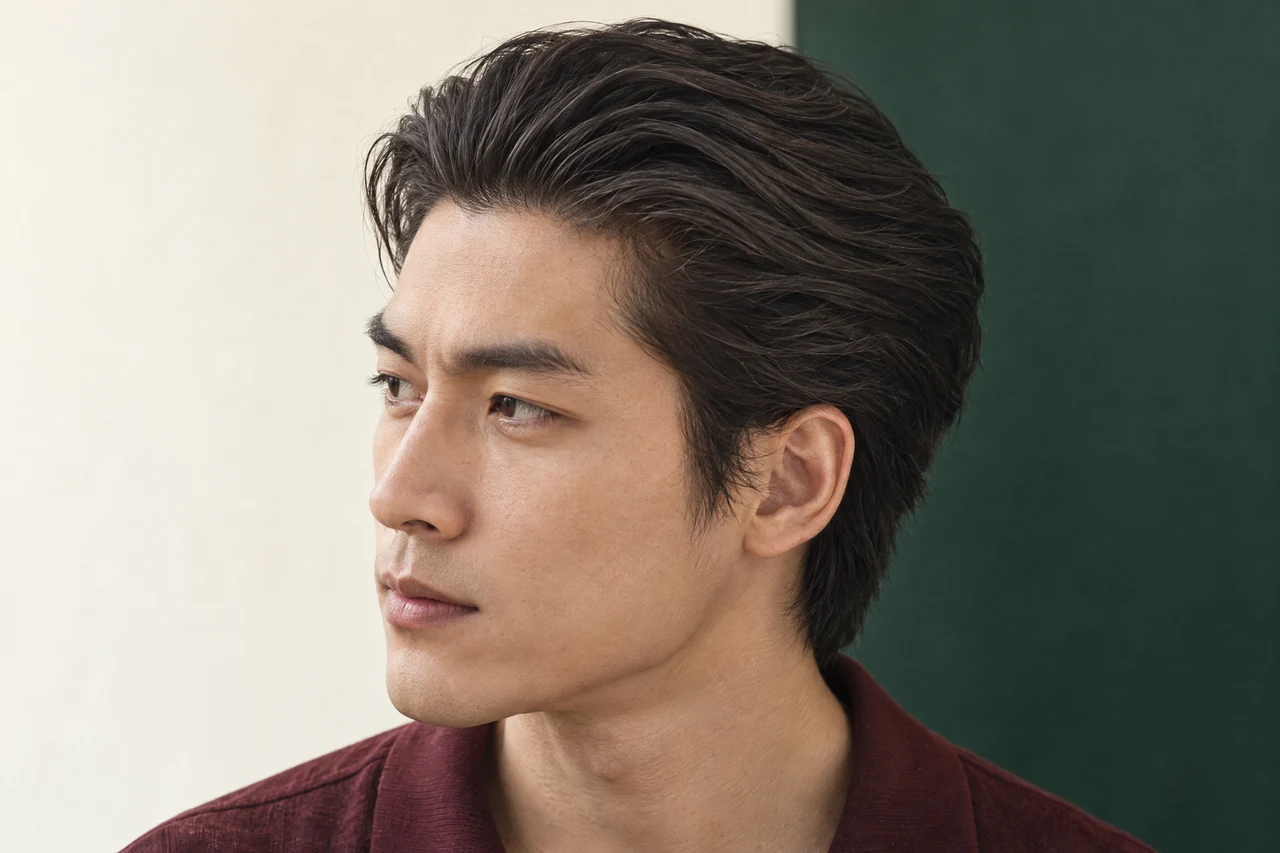
The sides frame the backward top
Close sides expose more of the backward top, while fuller, connected sides create a softer silhouette. Consider how much contrast you want at the temples and behind the ears. A slick back can be discussed with different side outlines; the direction on top does not require one universal fade or undercut.
Connected sides let the upper side hair join the sweep, which can make the outline feel less divided. A disconnected undercut creates a more obvious difference between the longer top and the short area beneath it. Neither choice tells you how high the short area should extend. Mark that boundary on your reference, especially if you want to keep coverage at the temples rather than exposing the entire side.
Continue with undercut haircut for that specific comparison and the preparation questions it raises.
If you prefer a gradual change instead of a separated top, compare a taper haircut by its retained side coverage. Look behind the ears as well as above them: a broad back outline can remain even with neat ear edges. Mention glasses, sideburn preferences and whether you dislike hair sitting against the ears, because those details help define the side shape more clearly than simply asking for short sides.
Strong contrast or a connected outline
With thick, outward-growing sides, ask which area creates the width you want to reduce. Removing length everywhere may produce a different outline from selectively controlling weight near the upper sides. With finer hair, very close sides can make the difference in density more visible. Review the top and side relationship from the front and rear as well as the profile, then decide whether the contrast itself is a feature you want.

Check the unstyled shape before committing
Think about how you will wear the haircut on days when you do not want a smooth backward finish. Explain whether it must also part, fall naturally or look softer. Retained length and connection should be chosen for those alternatives as well as the reference, without promising effortless movement in every direction.
Bring a photo of your hair after your usual wash and drying routine, with no attempt to force it backwards. It can show a front corner that drops, a natural part or a crown that opens differently from the reference. There is no need to make this photo flattering. Its purpose is to show the starting pattern that a polished image usually hides.
For a Hong Kong workday, think beyond the mirror at home. Explain whether you put on headwear, exercise before work or need to reset your hair after your commute. If you are comfortable with the front becoming softer later, a loose sweep may suit your expectations better than a tightly arranged finish. If a fully exposed forehead matters throughout the day, discuss the practical styling commitment before choosing the cut.
Make room for days without a polished finish
Choose an acceptable fallback rather than asking the haircut to do everything. A gentle side part may work with your existing growth direction; allowing some front hair to fall can produce a more relaxed outline. Check that the length you retain does not become an unwanted curtain when left alone. After the finished style is demonstrated, ask how to soften it and where the hair is likely to settle once washed.

Build the backward direction without repeated forcing
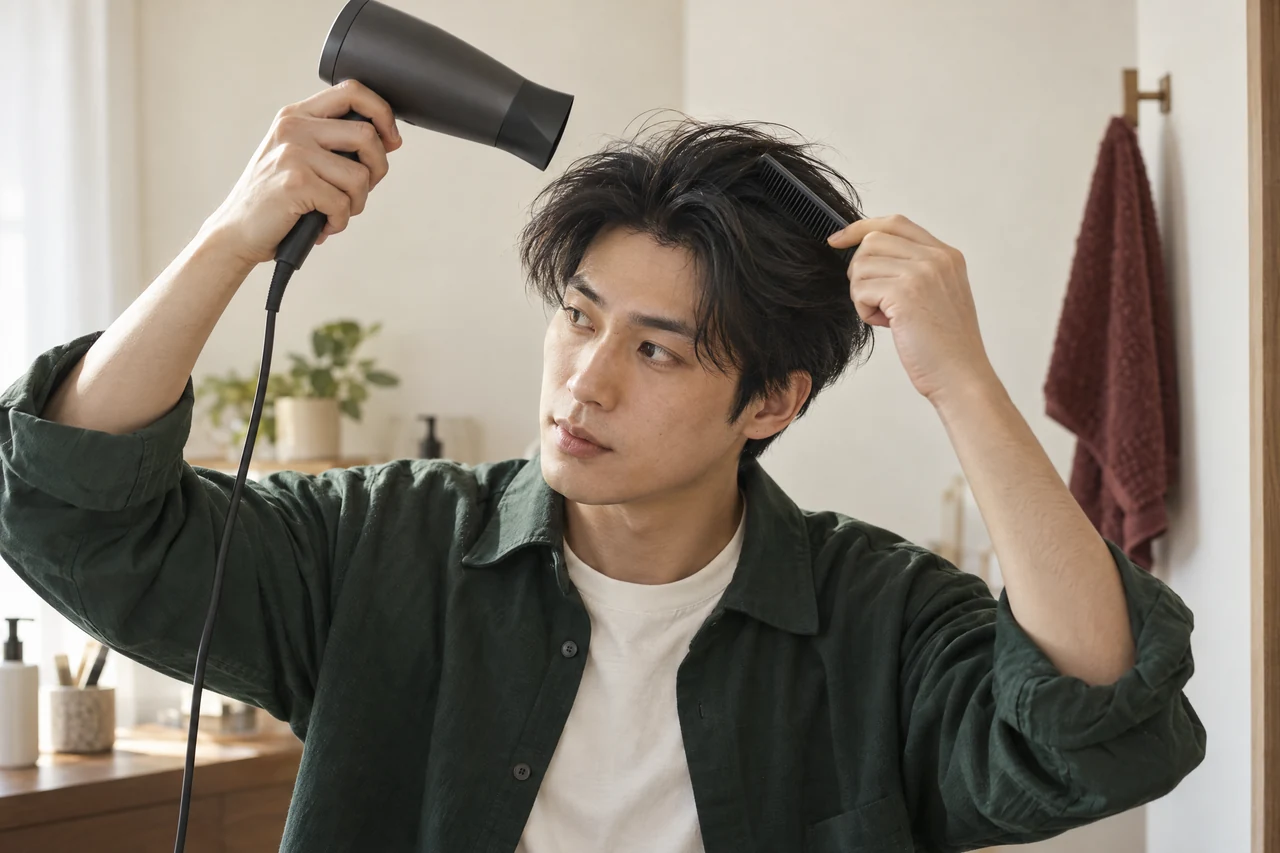
Ask for a drying demonstration focused on the front roots and the route towards the crown. For a close sweep, the aim is backward direction rather than repeatedly lifting the front into a tall roll. For a looser finish, a little space at the roots may be intentional. Watch how the hand or comb guides the hair and where the airflow points, then try the movement yourself before relying on it at home.
The American Academy of Dermatology's styling guidance advises allowing hair to partially air-dry before styling or combing and reducing blow-drying frequency to help limit damage. It also warns that combing through hair after applying long-lasting-hold products can cause breakage. For a slick back, avoid repeatedly dragging a comb through a hardened finish to correct a loose front piece; ask about a gentler reset suited to the product used.
Match the tool to the finish you want
A comb can define a tidier surface, while fingers can leave broader separation in the sweep. Neither should be used to pull through resistance. If the front keeps returning forwards, distinguish a drying-direction issue from insufficient retained length before changing products. Tightly curled or textured hair needs its own handling approach; do not force it into the same combing routine as a smooth, straight-haired reference.
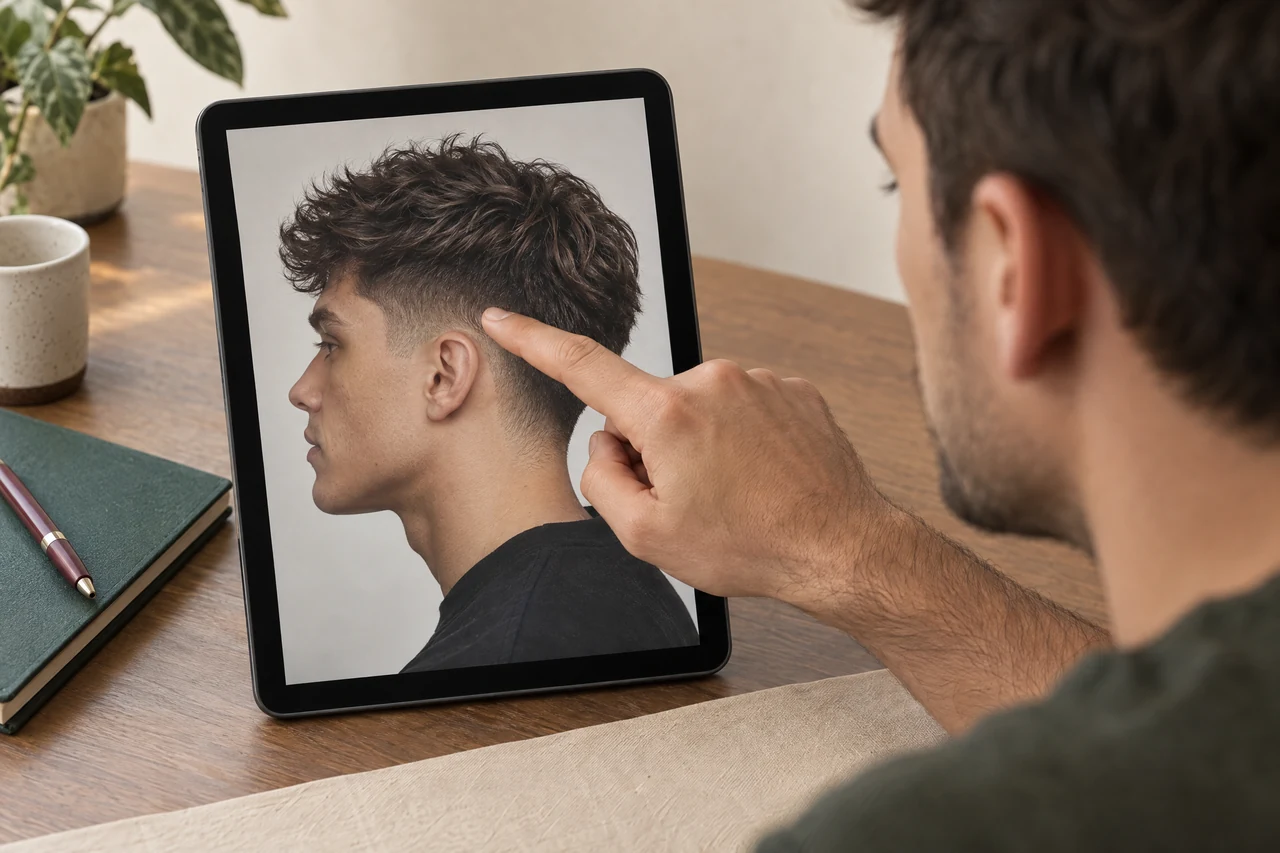
Turn the reference into a clear haircut enquiry
Use haircut reference photos to explain the parts of the image you want to keep. Identify the backward top separately from the side length, height and shine. You might like the top direction but not the exposed temples, or the relaxed surface but not the long back. Saying so gives the consultation a more useful starting point than asking to copy the whole photograph.
Men's wash, cut and blow dry is listed at HK$380. That gives you a confirmed service price to discuss, not an assumption that extra chemical work or a particular styling product is included. For a slick back enquiry, share your current front length, your preferred side connection and whether you already use a dryer. Confirm the proposed work and availability before making plans around the visit.
Review men's haircut to check its service scope and the details to share before arranging the related work.
Agree on what should remain after the cut
Before cutting begins, confirm which front pieces need to stay long, where the short side area should stop and how the crown should connect. Ask what change would make the sweep easier to manage and what change is mainly decorative. At the next visit, describe the actual difficulty: front pieces falling, side width increasing or the back becoming heavy. Those observations support a more precise adjustment than repeating the haircut name alone.
Compare the backward sweep and its side outline as separate choices
| Design direction | What to look for | Daily trade-off |
|---|---|---|
| Close, smooth sweep | Front turns back near the hairline with a controlled surface | More attention to an even finish; exposed front growth is easy to notice |
| Loose backward sweep | Hair bundles move back with visible space and modest lift | Accept some movement instead of expecting every piece to remain tightly aligned |
| Backward top with connected sides | Upper side hair joins the top without an obvious separation | Retained side coverage needs its own weight and ear-edge plan |
| Backward top with undercut contrast | Longer top is clearly separated from closely cut sides | The dividing boundary remains visible when the top falls naturally |
Your preparation checklist
- Choose a reference that shows the front-to-crown path, not only a flattering front view.
- Bring an unstyled photo showing your natural front growth and crown pattern.
- Mark the side coverage you want to retain and whether the top should remain connected.
- Decide between a close surface and a loose sweep, including how much shine you prefer.
- Explain your dryer use, headwear and preferred fallback shape before agreeing on length.
- Ask for a repeatable drying demonstration and confirm the service scope before the appointment.
Frequently asked questions
Does slick back mean the top must be very flat?
No. It describes the backward direction; smoothness and height can vary. Compare the exact finish in your reference and your preferred daily routine.
Can I keep fuller sides?
That is a valid design direction to discuss. The backward top does not automatically require close sides, an undercut or a skin-level finish.
Will the hair stay back after cutting?
Not necessarily without styling. Natural front growth, retained length and your drying routine influence the result; ask about the likely day-to-day finish.
Plan a backward sweep that fits your daily routine
Enquire with Vit So in Sheung Wan about the front length, side contrast and finish you want to keep. Share your current hair and a useful reference so the proposed haircut can be discussed clearly. An enquiry is not a confirmed booking; the service details and appointment availability need confirmation.
Start your WhatsApp enquirySources & further reading
- Hair styling without damage
Partial air-drying, limiting blow-drying frequency and avoiding combing through long-lasting-hold products as practical hair-care considerations.
- 40 Best Slick Back Hairstyles for Men
Visual distinctions between tapered and undercut side outlines and a glossy wet-look backward finish; no product performance promise adopted.



