






Men's Puffy Sides After a Perm: Record the Dry Outline
Photograph the front and each side with a consistent parting and normal drying method. A side may look broader because of new bends, retained length or the way it was dried. Similar viewing conditions help make the concern understandable without declaring from a photograph alone that the original service failed.
Start with the outline you actually wear, not a wet photograph taken straight after washing. Keep your head upright and the camera at a similar height for each view. Include the whole hairstyle so the relationship between crown height and side width remains visible. A close-up can then show the specific tuft above an ear or the fuller band beneath the top. Avoid smoothing the area with your hand while taking the main photographs.
Describe where the width starts. Does hair lift away near the roots, form a broad curve through the middle, or turn out only at the ends? Is the fullness above the ear, behind it or where the longer top rests over the sides? These observations give the stylist something concrete to inspect. They do not establish whether the issue comes from growth direction, cutting weight, curl placement or a combination.
Comparing Men's Puffy Sides After a Perm Under Similar Conditions
Keep a brief note with each photograph: whether the hair was air-dried or blow-dried, which product you used and whether you had just removed headwear. If it looks narrow at home but broader after the commute, show both states and explain the difference. Do not compare a carefully styled salon finish with an unstyled morning photograph as though only the perm has changed. The everyday view is still important; it simply needs its routine attached.
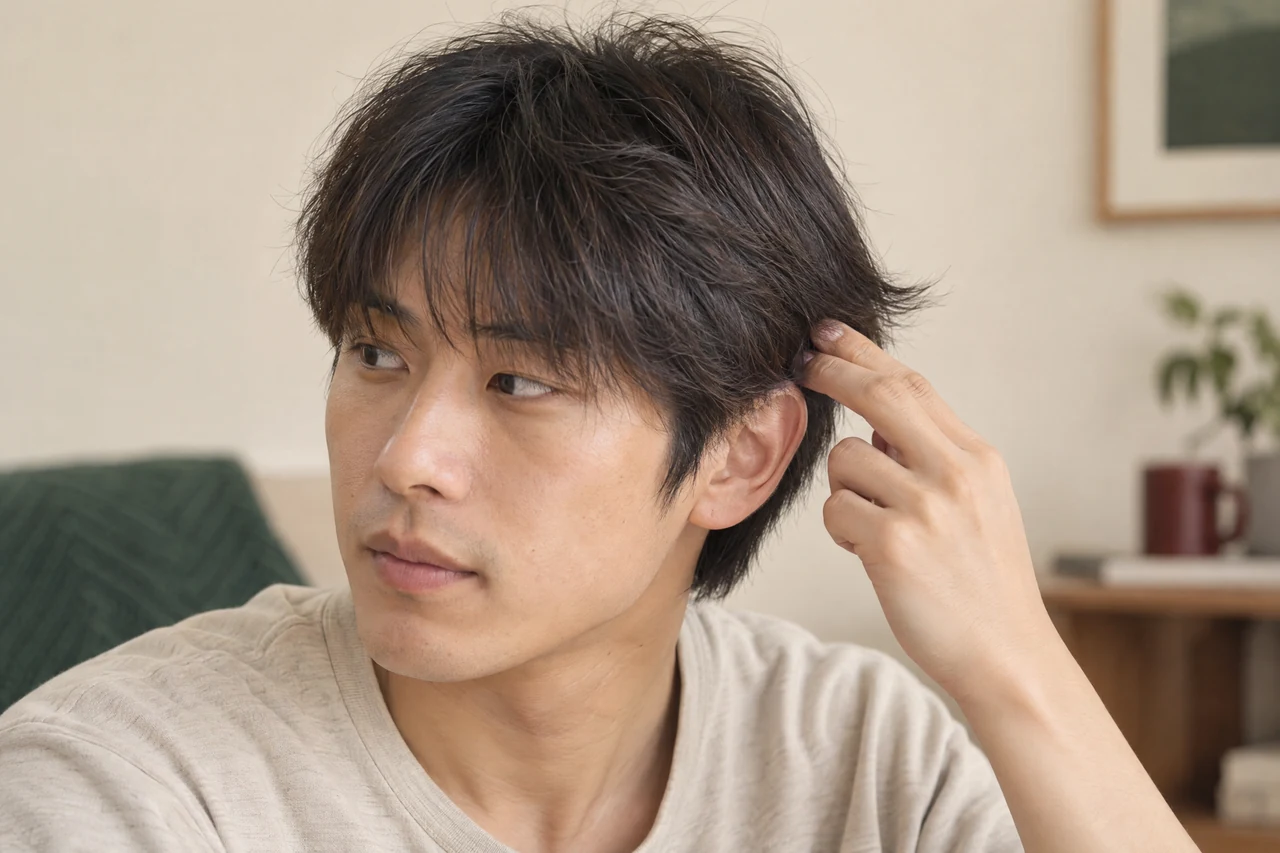
Mark the Top Movement You Want to Keep
Show which fringe and crown strands you like and where the outline becomes too wide. Keeping those areas helps frame a local discussion rather than asking for a completely different hairstyle. Explain whether the concern relates to the original agreed shape or a new preference; the next assessment should not assume that both requests are equivalent.
Make your preservation request more specific than 'leave the top alone'. You might want to keep the fringe's forward curve, the opening of the parting or the crown's relaxed height. Also point out longer strands that travel from the top towards the side. Those strands may help connect the shape you like, even if they sit within the area that appears broad. A narrow-looking outline is not worth achieving by accidentally removing your favourite movement.
Choose a realistic reference for the side change. A photograph with similar top length can be more useful than an extremely short style with an unrelated fringe. Explain whether you want less width while keeping ear coverage, a cleaner ear line or a visibly shorter side. These are different outcomes. Ask the stylist to identify which parts of your existing cut contribute to each option before agreeing to remove them.
Separate a Local Concern from a New Style Request
A local concern can be described as 'I still like the top, but this band above the ear feels wider than the shape we discussed'. A new preference could be wanting exposed skin at the sides after previously agreeing to fuller coverage. Neither wording requires you to judge the cause yourself. Bring the original reference or consultation notes if available, and explain what changed in your preference. That allows the discussion about design and any charge to start from the same information.
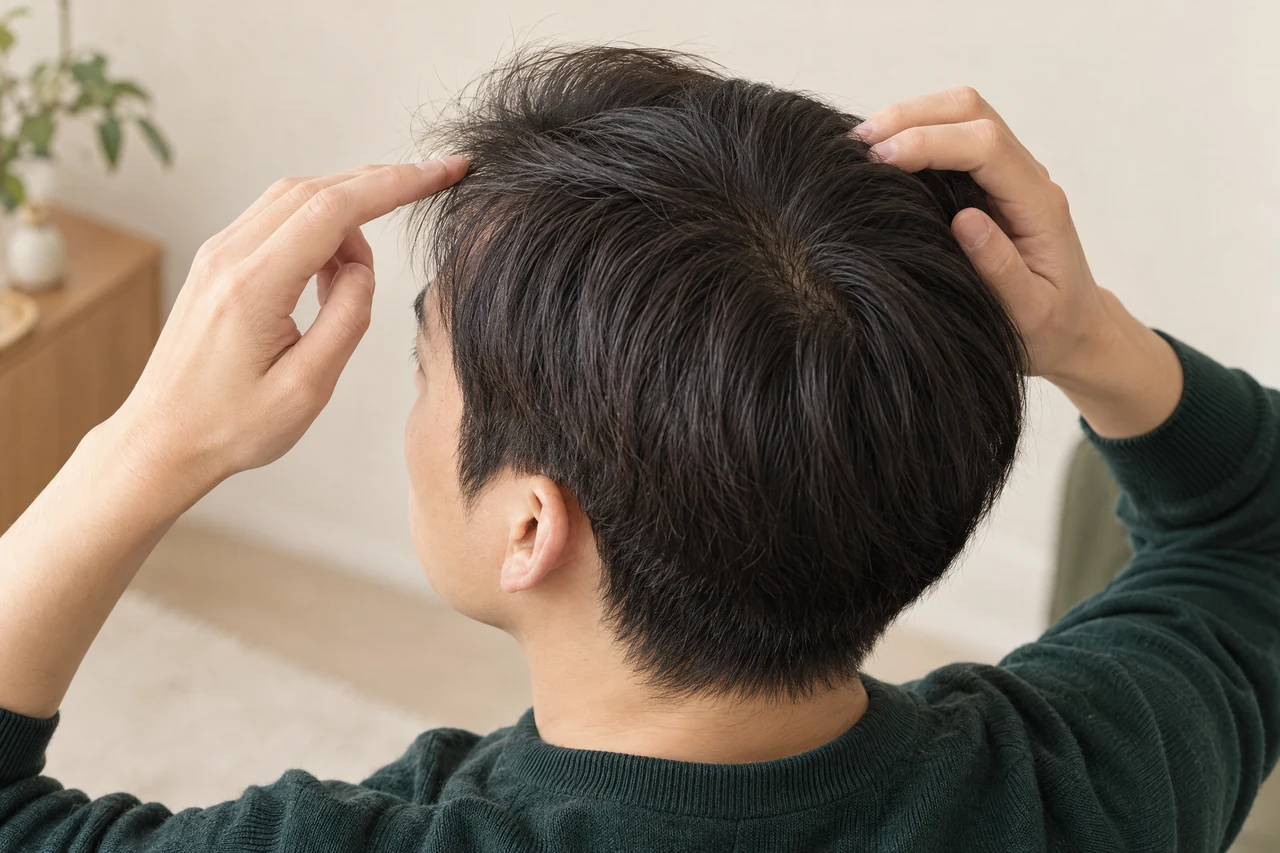
Cutting Weight or Adjusting Drying
A local cut or a different drying direction may be discussed before further chemical work. Removing hair can also remove bends or expose a transition, so ask what movement would be lost. A temporary styling adjustment is not a guarantee, but it may clarify whether the concern is mainly the routine or the retained outline.
Ask for a demonstration of how to guide the sides separately from the top. Lifting every section upwards may not suit a goal of keeping side width restrained. The stylist can show a direction that works with your actual cut without pulling the fringe straight. Use the demonstration to assess the effort involved: a finish that needs constant manipulation may be less useful than a modest outline change you can maintain on an ordinary workday.
For gentle handling, the American Academy of Dermatology's hair-damage guidance recommends the lowest heat setting, air-drying when possible and avoiding pulling or tugging while styling. It also recommends conditioner after shampooing. These are care principles, not a promise that low heat will flatten your sides. Do not repeatedly apply hotter air or tight brushing simply because the outline has not become narrow enough.
Review men's haircut to check its service scope and the details to share before arranging the related work.
If you are deciding whether to keep side coverage or remove more length, down perm vs fade helps frame that choice; it does not establish that fresh permed hair is ready for flattening.
Consider Non-Chemical Changes First
Before a local cut, ask whether the plan changes the end line, internal weight or the join beneath the top. Shortening a strand removes some of its existing bend; reducing weight does not necessarily redirect an outward-growing root. A larger reduction can also reveal a stronger top-to-side contrast. Ask to review the dry outline as the change progresses rather than treating maximum thinning as the default answer to fullness.

Why Side Flattening Is Not an Automatic Follow-Up
A Down Perm should not be added automatically to hair that has just been permed. The earlier treatment areas, condition and desired change need reassessment first. Avoid trying side-control chemicals at home. A follow-up discussion may result in styling advice, a haircut, postponement or another assessed option rather than an immediate repeat process.
Report the treatment date and whether the sides themselves were processed, not just the name of the hairstyle. Include earlier bleaching, colour, straightening or other chemical work that may remain in the current lengths. If you do not know the product or treated boundary, say so rather than guessing. A visible separation between the short sides and longer top is not proof that no chemical product reached the area now under discussion.
The AAD guidance recommends adding time between chemical touch-ups and limiting combined chemical services. That supports a cautious assessment of already treated lengths, but it does not supply a universal safe interval for adding a Down Perm after a men's perm. The right next step depends on the actual hair, prior process and proposed product. A calendar date alone cannot answer whether local chemical work is appropriate.
Review down perm to check its service scope and the details to share before arranging the related work.
Previously Treated Hair Needs Reassessment
Keep a shape concern separate from a possible reaction. If the scalp is painful, raw or developing scabs, or you notice unusual breakage or hair loss, report that before discussing a cosmetic change. The FDA's hair dye and relaxer safety guidance says to stop using a product and contact a healthcare provider after a bad reaction to those products. Its advice is not a test of your hairstyle or a classification of every Down Perm formula; do not try another chemical product to resolve such symptoms.
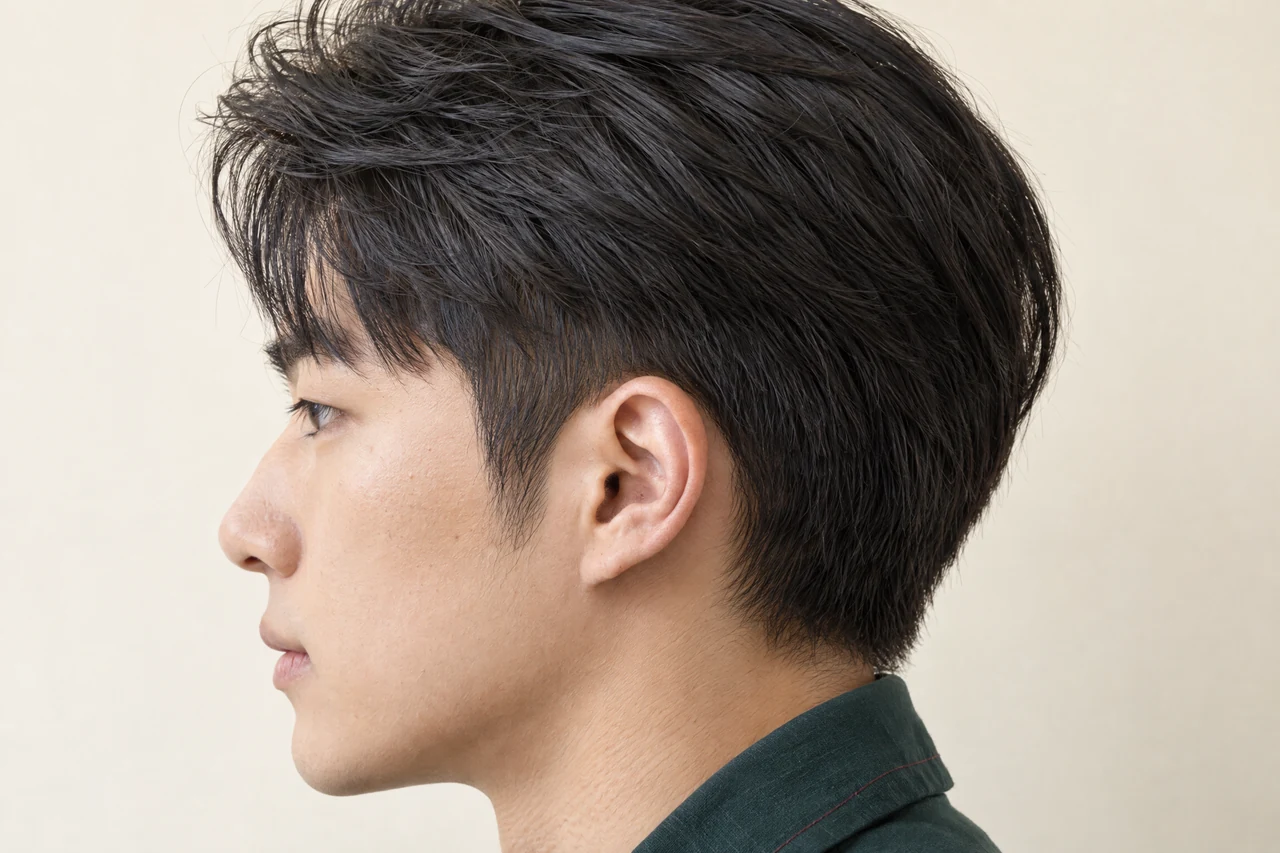
Bring the Routine That Produces the Wider Shape
Your follow-up is more useful when the stylist can understand how the hair behaves outside a styled photograph. Explain whether you wash before work or at night, how you dry the sides and when you apply styling product. Bring the product name or a photograph of its label. A heavily fixed finish can hide the movement that needs assessment, so ask whether to arrive with your usual styling or a simpler finish.
Mention glasses or headwear if they contact the affected area. Show whether the outline changes above the frame arms or after a helmet comes off, without adjusting safety equipment to protect a hairstyle. If the top drops while the sides stay full, describe that too. The apparent width may need to be considered alongside the top's everyday position, rather than judged as an isolated side section.
Continue with perm aftercare for that specific comparison and the preparation questions it raises.
Test a Manageable Adjustment, Not a New Routine Every Morning
Follow the original service's aftercare instructions and ask about anything unclear before experimenting. If the stylist proposes a gentle drying adjustment, keep the other parts of your routine familiar so you can explain what it changed. Note whether the narrower finish lasts through normal movement and whether the fringe still falls as you like. If the method is too complicated for your daily schedule, say so; that matters when choosing between a styling solution and a cut.

Agree the Local Scope Before Any Work Starts
End the assessment with a clear description of what is being proposed. Confirm the areas to preserve, the side boundary to change and whether the appointment involves advice, cutting or further treatment. Ask what the hair is expected to look like with your normal routine, not only after a polished finish. If postponement is recommended, ask what to observe and how to follow up rather than assuming a later chemical service is already agreed.
The listed men's wash, cut and blow dry price is HK$380. This is a standard service price, not a quoted fee for your particular follow-up or a promise of a free correction. Clarify whether the concern is being reviewed against the original agreed design or whether you are requesting additional work. Confirm any charge and included service before proceeding.
When you are ready to book a hair appointment, share the existing treatment date, your dry photographs and the top sections you want to retain, so the enquiry can be considered before a visit is confirmed.
Leave with a Preservation Plan You Can Explain
A useful agreement should be simple enough to repeat: keep this fringe movement and crown length, reassess this side band, and review the dry transition before doing more. Request clarification if the suggested change would affect a strand you marked for preservation. The aim is a considered next step that respects the top you already enjoy, rather than replacing the entire design in pursuit of the narrowest possible sides.

Ways to discuss wider sides while protecting a permed top
| Possible next step | What it helps assess | Trade-off to discuss |
|---|---|---|
| Drying-direction demonstration | Whether your routine emphasises side lift | Temporary styling may require effort and will not change the cut |
| Measured local cut | Whether retained side length or weight contributes to width | Removing length can remove bends or expose the join beneath the top |
| Postpone chemical work | Whether more information or condition reassessment is needed | You may need an interim outline or styling plan |
| Assessed side treatment | Whether the proposed change suits the treatment history | Suitability and boundaries must be confirmed; it is not an automatic add-on |
Your preparation checklist
- Record the original treatment date, treated areas and any older chemical work remaining in the hair.
- Photograph the dry front and both sides, with the routine and any headwear noted.
- Mark the fringe, crown movement and connecting strands you want to preserve.
- Describe the exact side area that feels broad and whether you want to retain ear coverage.
- Ask what a proposed cut or drying change would remove or require at home.
- Confirm the agreed scope, any charge and appointment status before work begins.
Frequently asked questions
Should I book side flattening immediately?
Start with an assessment of the existing treatment and the shape you want to retain. Do not assume that a second chemical process is suitable simply because the sides look wide.
Is changing to another style automatically a free correction?
Do not assume so. Clarify the original agreed design, the local concern and any new request. The scope and any charge need confirmation rather than being inferred from a follow-up enquiry.
What information helps with a follow-up?
Provide the treatment date, the areas treated, current dry photographs and the routine used at home. Mark the top sections you want to preserve and describe the side width that concerns you.
Keep the Top You Like and Clarify the Side Change
Send Vit So your current dry photographs and treatment history for an enquiry about the wider sides. Identify the movement you want to preserve before discussing a local adjustment in Sheung Wan. The appropriate service, scope, any charge and availability need confirmation; an enquiry is not a confirmed booking.
Start your WhatsApp enquirySources & further reading
- How to stop damaging your hair
Gentle styling, lowest-heat drying, conditioner use and reducing avoidable stress from chemical touch-ups; not a measure of hairstyle width.
- Hair Dye and Hair Relaxers
Product-use safety and seeking healthcare advice after a bad reaction to dyes or relaxers; not a universal protocol for Down Perm products.



