







Brand relationship: OWNSTRAND and Vit So have the same owner. This guide provides selection guidance, not an independent review or product test. Confirm styles, supply, item-specific purchase terms and visit arrangements with OWNSTRAND.
Resolve online wig size uncertainty before paying
Start by asking about the particular style, colour option and cap size, rather than whether a shop generally accepts returns. OWNSTRAND, Vit So's same-owner sister brand, uses its buy wigs online Hong Kong page for browsing and style-specific enquiries. Send the listing name with your measurements and request the purchase terms that apply to that item. The page's invitation to ask about availability does not establish a size-exchange entitlement or confirm that the displayed option is in stock.
Establish the total commitment before agreeing to payment. The wig prices in Hong Kong page separates OWNSTRAND's named handmade custom options from quotations for manufacturer catalogue styles. Use it to identify which route your quote concerns, then ask whether fitting, adjustment, delivery or any exchange-related charges apply. Request the deposit and balance arrangements too. A general price reference cannot tell you how much would remain payable if you changed your mind or needed a different size.
Then distinguish a produced style from a measured commission. OWNSTRAND's custom vs ready-made wigs guide describes sample viewing, measurements and a return fitting within its custom human-hair route. That later fitting is not the same as returning goods for a refund. Ask whether custom work or an individually sourced catalogue order has different cancellation or exchange conditions. Neither the word custom nor an adjustable cap establishes unlimited changes, guaranteed fit or permission to exchange.
Make measurements useful at a size boundary
First confirm that you are comparing the right coverage type. The guide to full head wigs helps distinguish an enclosing cap from a partial piece; their fitting questions are not interchangeable. Obtain the selected manufacturer's measurement instructions and size chart. Use a flexible tape along the instructed route, with help if needed, and record the unit. Do not substitute an attractive listing's hair lengths for cap dimensions, or transfer a remembered size from a different maker without checking.
Repeat the measurement after resetting the tape and keeping your hair preparation consistent. If the readings differ, report both rather than selecting the one that falls inside your preferred size. Explain how you intend to arrange your own hair and whether you expect to use a liner. Ask the fitter which preparation matches that product's measurement method. When a chart puts you on a boundary, request a recommendation for that exact cap and an explanation of what can actually be adjusted.
Changing hair underneath can also change the fitting situation. In its treatment-related hair-loss guidance, Cancer Research UK explains that a wig tried over remaining hair might need a smaller or adjustable size after hair loss, and recommends asking a fitter for advice.[2] This does not predict your future size or establish a universal adjustment range. If treatment affects your wearing needs, speak to your care team as well as the fitter instead of treating a current tape reading as permanent.
Ask what adjustable means for this cap
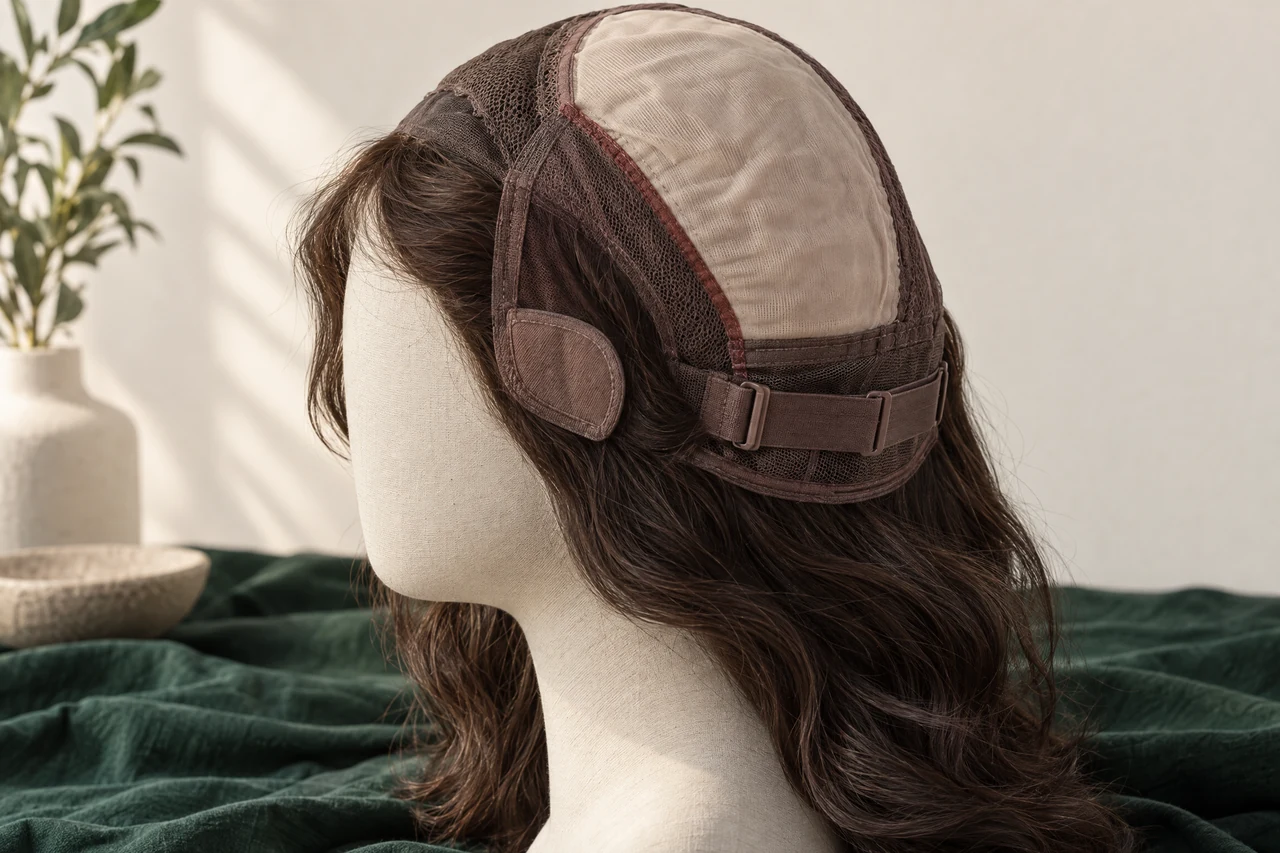
A strap may change how closely part of a cap sits, but ask which area it adjusts and the manufacturer's stated limits. Do not invent a centimetre allowance or assume it changes the cap's depth and ear-tab position. A useful reply connects your measurements to the chosen style. If the explanation is only that one size fits everyone, the original uncertainty remains unresolved.
Put wig size exchange policy questions in writing
Ask directly whether an item that matches its description but feels too tight, loose or uncomfortable can be exchanged. That is different from reporting the wrong item or a defect. Hong Kong's Consumer Council advises checking return policies in advance because some platforms accept returns only for damage or inconsistencies with descriptions, and shipping costs may fall to the buyer.[1] These are general shopping cautions, not OWNSTRAND's confirmed rules. Request the selected item's terms rather than assuming a change-of-mind route exists.
Separate the possible remedies. Does an approved fit mismatch lead to another size, a different style, an adjustment appointment, store credit or a refund? Ask what happens if the replacement size cannot be supplied and whether a price difference would be payable. Clarify who authorises the request and how to contact them. A promise to help with fit is useful only when you understand the action being offered; it does not automatically mean that the purchase can be reversed.
Keep the answer alongside the listing screenshot and dated quote. The Consumer Council recommends retaining transaction records and asking about unclear return procedures.[1] If a reply conflicts with published terms, ask the seller to reconcile the difference before committing. The OWNSTRAND pages read for this guide do not settle the item-specific exchange procedure, permitted hygienic try-on or custom exclusions. That gap means further confirmation is needed, not that an exchange has been approved or that every request will be refused.
Which event starts and satisfies the deadline?
Ask whether any deadline begins with payment, dispatch, delivery or collection. Then ask what must happen before it expires: notifying the seller, receiving approval, posting the item or having it arrive back. Do not borrow a return window from another retailer. Also clarify what to do if you are waiting for a reply, because an unanswered enquiry should not be assumed to pause a deadline.

Clarify hygienic try-on before opening or altering
An exchange route may be of little practical help if you cannot assess fit without breaching its conditions. Before delivery, ask which packaging can be opened, whether a protective cap is required and whether a brief indoor try-on is allowed. Clarify the treatment of tags, seals, lace, fragrance and styling products. These are questions to put to the seller, not universal wig rules. If the answer permits inspection but not wearing, decide whether that gives you enough information for this purchase.
During an authorised assessment, follow the supplied instructions and keep the item in the required condition. Cancer Research UK advises following the supplier's wearing and care guidance.[2] Our wig care guide provides routine-care context, but care advice does not establish return eligibility. Do not wash, cut lace, trim hair, heat-style or add adhesive to try to solve a size problem before the seller has clarified how those actions affect the specific item's remedy options.
On receipt, check the supplied style and size against the confirmed order before attempting an approved try-on. Keep packaging and document any visible discrepancy promptly. If the cap feels wrong, note the location and stop rather than repeatedly tightening it or attempting alterations. Report what you observed through the agreed channel and ask for the next step. Keeping a record helps explain the issue, but it cannot create an exchange right that was never offered for a simple fit mismatch.
Choose a fitting when circumference is not the whole problem
A plausible circumference reading does not answer where the edge will sit near your ears or how the nape feels when you turn. If you wear glasses, the guide to can you wear glasses with a wig helps frame the ear-area discussion. Bring your usual frames to a confirmed fitting and describe any everyday mask use. Ask to assess those contact points within the permitted trial, rather than judging fit from a front-facing hairstyle photograph alone.
When a try-on is permitted, note the hairline position, ear contact and nape behaviour during gentle everyday movements. Report pressure, slipping or a need for repeated repositioning in plain language. Do not take discomfort as proof that you simply need a tighter strap, and do not add attachment methods without checking suitability and terms. Persistent scalp symptoms belong with an appropriate care professional. A fitting can help identify a product-selection issue; it is not a medical assessment or a promise of symptom relief.
Ask what will actually be available at the appointment. Viewing a custom sample is not necessarily trying the precise catalogue style you shortlisted, so establish what each sample can tell you about size. OWNSTRAND has one Kwun Tong store, separate from Vit So's Sheung Wan location. Confirm its selected-item availability and fitting arrangements before travelling. The custom route's measurement and return-fitting discussion may be helpful, but a catalogue label does not establish that every style is held there for immediate try-on.
Use four checks to decide whether to continue online
Use four checks: measurements, permitted try-on, written remedies and total commitment. This is an original decision aid, not a tested scoring system. For measurements, can the seller connect your readings to the selected cap? For try-on, can you assess the contact points without breaching the terms? For remedies, do you know what happens after an unsuitable fit? For commitment, can you accept the fees and restrictions? Mark unanswered points as unknown, rather than counting a friendly reply as confirmation.
Continue with an online shortlist when the fit recommendation is understandable and you can accept the confirmed outcome if the item proves unsuitable. Online selection can still be reasonable where exchanges are unavailable, provided you knowingly accept that commitment. Seek a fitting when borderline measurements, ear-area concerns or a restrictive trial leave too much unresolved. If you cannot afford an unusable purchase and no acceptable assessment or remedy is offered, pause rather than choosing a size just to complete the order.
Send a concise final enquiry: identify the style and proposed size, attach your readings, describe your hair preparation and ask for the unresolved terms in one reply. Include any wearing date that matters, but do not equate production time with delivery or assume a replacement could arrive by that date. Once the answers are clear, compare the online and fitting routes using the same needs. The better next step is the one whose limitations you understand, not automatically the cheapest or most customised option.
Match each unresolved fit question to the next useful action
| What remains uncertain | Clarify online | Consider a fitting when |
|---|---|---|
| Measurements sit on a size boundary | Request the exact chart and item-specific adjustment guidance | The seller cannot explain which cap matches your readings |
| Ear or nape contact | Ask about cap depth and permitted movement checks | Your everyday frames or movements cannot be assessed remotely |
| Hygienic trial conditions | Obtain permitted opening and try-on steps | An acceptable assessment is unavailable before commitment |
| Custom or sourced-order restrictions | Confirm cancellation stages, remedies and all fees | You need measurement discussion before accepting those restrictions |
Your preparation checklist
- Save the exact style, selected size, colour option and dated quote together.
- Record repeat measurements and the hair preparation used; request the relevant chart.
- Confirm whether fit mismatch is eligible, separately from defects or a wrong item.
- Obtain permitted opening and hygienic try-on instructions before touching seals or tags.
- Clarify the deadline trigger, required action, return approval, costs and refund or credit route.
- Check custom-order or sourcing restrictions, availability and any appointment arrangements before committing.
Frequently asked questions
My readings fall between sizes. Should I choose the larger one?
Not automatically. Send repeat readings and your hair preparation to the seller, then ask for the selected manufacturer's recommendation and adjustment limits. A larger circumference may not resolve cap depth or ear position. If the reply cannot connect your information to that style, consider a fitting rather than applying a universal size-up rule. The exchange conditions matter whichever size is suggested.
Does an exchange policy mean I can briefly try the wig on?
Only if the applicable conditions permit it. Ask about protective caps, opening seals, retaining tags and the allowed extent of an indoor trial. An exchange statement and a hygienic try-on procedure are separate pieces of information. If they conflict or remain unclear, obtain a written explanation before payment. Do not assume that keeping packaging alone preserves eligibility after wearing or altering the item.
Are all custom wigs excluded from exchanges?
This guide has not established a universal exclusion or OWNSTRAND's selected-order terms. Ask whether agreed custom work, alterations or individual sourcing changes cancellation and remedy options, and at what stage. Also ask what adjustment is included if the completed fit is unsuitable. A return fitting describes an appointment after making; it does not, by itself, establish a refund or goods-return policy.
Can I go to the store and try the exact online style?
Confirm first. A catalogue reference is not proof of local stock, and a custom sample may differ from the shortlisted cap. Ask OWNSTRAND which styles or samples can be assessed at its one Kwun Tong store and whether an appointment is required. Keep a proposed visit separate from the purchase commitment until you understand what the fitting can establish and any costs involved.
Choose your next step with the fit questions answered
Bring your preferred silhouette and blending concerns to Vit So for a styling discussion. For product sizing, purchase terms or a proposed visit, use the OWNSTRAND guides already linked above and obtain confirmation for the exact option. Keep the fitting and exchange decision with the seller responsible for that purchase.
Start your WhatsApp enquirySources & further reading
- Hong Kong Consumer Council — Beware of Traps – Shop Smartly on the Web
General online-shopping guidance on checking return reasons, costs and procedures before purchase and retaining transaction records; not an OWNSTRAND policy statement.
- Cancer Research UK — Wigs, hats and scarves
Specific treatment-related guidance on fit changes when hair is lost and asking a fitter about adjustable sizing; following supplier wearing and care instructions. No UK entitlement or medical product claim is transferred to Hong Kong.



