







Perm for short hair: assess the shortest sections
The longest section does not tell the full story of a short haircut. Look at the fringe, nape and shortest layers as well as the sides. Hair needs enough workable length for the intended movement, but the requirement depends on the proposed technique and shape. A single minimum measurement cannot determine suitability for every head of hair.
Before a consultation, look at your hair dry with your usual parting. An ear-length side, a short crown layer and a longer front section have different jobs in the outline. Point out any section you need to tuck behind the ear or keep clear of your glasses. If that section becomes more curved, its resting position may no longer meet the same practical need.
Share your colour, bleach, straightening and previous perm history, including treatments that remain only at the ends. Short hair is not automatically untreated hair. The American Academy of Dermatology's colouring and perming guidance warns that these treatments can leave hair dry and brittle and recommends caution with perming. If excessive stinging or burning occurs during treatment, alert the stylist immediately; the AAD advises washing off the solution immediately and consulting a dermatologist.
Review women's haircut to check its service scope and the details to share before arranging the related work.
Why a perm for short hair has no universal minimum length
Ask which specific sections can support the proposed bend after any planned trimming. The useful answer is a shape assessment, not a measurement taken from the longest front piece. Keeping a little more length, changing the intended movement or leaving a very short section outside the proposed treatment may be discussion options. None should be assumed suitable before the hair and method are assessed.
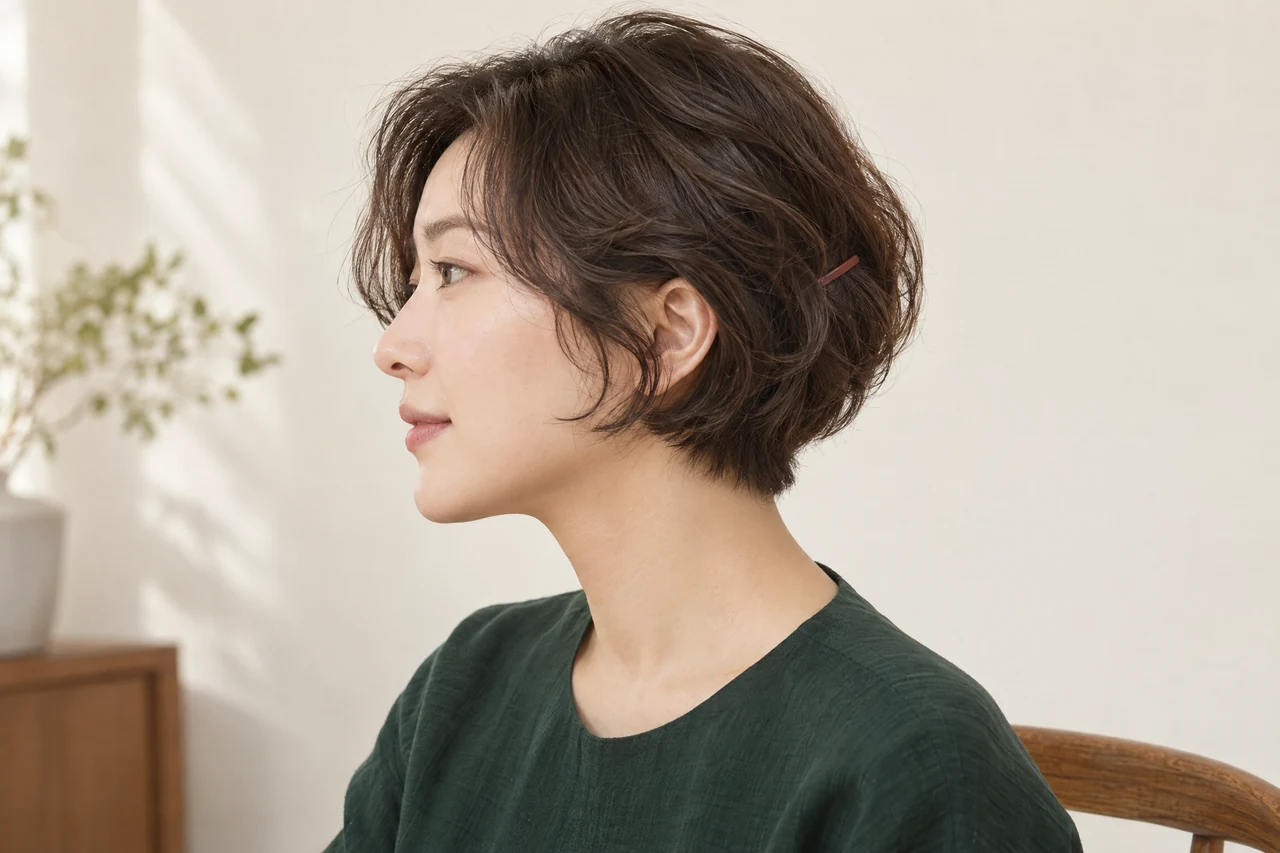
A bob perm changes width as well as length
A bob perm may bring the ends closer to the chin and add width around the cheeks. Compare the dry outline you want with the length you have now. Softer movement and defined strands distribute volume differently, so discuss the front and side views rather than deciding only from the curl visible at the back.
Separate the volume you welcome from the volume you would rather avoid. You might want a fuller back of the head but close-fitting sides, or an airy fringe without a wider cheek-level outline. Saying 'more volume' does not identify those differences. Use the mirror to indicate the desired widest point and show where you want the hair to turn back towards the neck.
Try viewing the reference with the hair both loose and tucked behind an ear. If you regularly wear glasses, bring them rather than judging the sides without the frames. Discuss whether you like the lower edge sitting above, beside or below the chin. There is no requirement to follow a face-shape rule: the important preference is the outline you want to see and live with.
If the length decision is still open, the bob haircut guide can help you describe the base cut before adding movement. A longer bob reference should not silently become approval for a shorter dry finish.
Choose a bob perm outline around the chin
Set a length boundary in plain language, such as wanting the front to remain below the chin when dry. Then discuss the bend separately. A softly inward end and a defined curl can frame the same face differently even when the starting haircut is similar. Ask how the proposed cut and styling approach will work towards your boundary, rather than asking for a guaranteed amount of shortening.

Loose movement versus a curved end
A loose perm for short hair needs enough length to show the intended wave rather than only a lifted end. Broad body-wave movement may look different on a chin-length cut than on a longer reference style. An inward C-shaped end is another visual direction, but its feasibility and method still need individual confirmation.
Read the reference from roots to ends. Does the hair stay fairly straight until the lower edge turns inward, or does a wave change direction through the middle? Those are different requests. For a body wave perm for short hair, identify where the broad movement is meant to be visible. If the reference relies on a long stretch of hair, discuss an adapted short outline rather than expecting the same wave sequence.
An outward end can also be an intentional choice, particularly when you like a more open neckline. At lengths approaching the shoulder, note whether the ends touch your collar or shoulder when you turn your head. Describe both the relaxed position and the position after movement. A tidy photograph alone may hide the contact you encounter during a normal working day.
Continue with body wave perm vs spiral perm for that specific comparison and the preparation questions it raises.
Short hair needs space for the intended bend
For a c curl perm for a bob, indicate whether the inward direction should apply to the entire lower edge or just the front. If you prefer separated, visible curls, show the strand definition as well as the silhouette. These descriptions help keep a modest end bend, loose waves and a more textured bob from being treated as interchangeable goals.

Keep the reference style separate from the method
If you like Korean-inspired short curls, identify the rounded silhouette, fringe direction or separation between strands. That description is more useful than assuming a single named procedure. Also explain how you manage the nape and sides after sleeping or wearing a hat, because those practical habits affect which short shape feels workable.
A search for korean perm for short hair may show a swept fringe, a smooth crown and softly separated ends in the same photograph. Decide which of those features matters most. Ask whether the pictured finish includes brush styling or other finishing work, and which parts of a comparable look would need attention at home. A style label does not establish a particular technique or a service that is available to book.
Review hair perm to check its service scope and the details to share before arranging the related work.
Compare Korean-inspired shape with everyday styling
Show your usual parting as well as the one in the reference. If you prefer to sweep the fringe away for work but wear it down at weekends, say so. Likewise, mention hats and frequent ear-tucking. The aim is to choose an outline that remains appealing in your ordinary arrangements, not only when every strand has been positioned for a photograph.
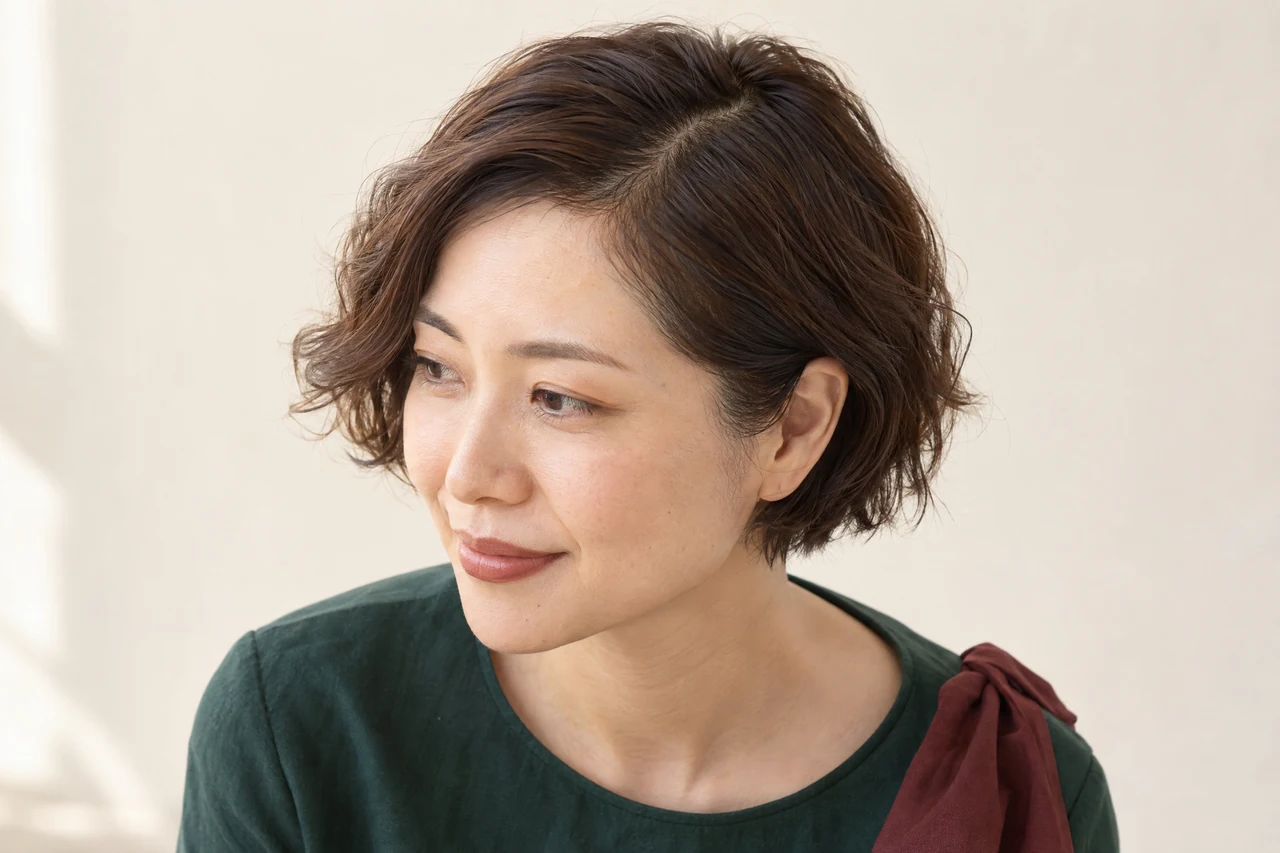
Agree on the cut and nape before choosing the service scope
With a short hair perm for women, the haircut remains part of the design. Look at the connection between the crown, ear area and nape. Decide whether you like a clearly exposed neck or a softer lower edge. If the existing back already feels bulky, explain that before requesting more movement throughout; additional texture is not the same request as a narrower silhouette.
Discuss the sequence of cutting and perming rather than arranging a major cut independently and assuming the new shortest layers will still support the idea. Ask what length needs to be retained for the planned shape, and how any later trim would affect the curved ends. This is especially useful if you want to grow the front longer while keeping the back compact.
The listed full-head perm is HK$1,600. The confirmed women's wash, cut and blow-dry plus full-head perm and pre-care hair protection package is HK$1,880. These are different listed scopes, not prices for named bob styles. Confirm which service applies, what is included and the actual charge before agreeing to treatment. A short starting length does not by itself establish that a partial service is appropriate.
Keep the neckline and front length in the same conversation
Bring a back-view photograph if you cannot easily explain the nape in the mirror. Identify whether your concern is the lower edge, the fullness above it or a section that grows outward. Keeping those concerns separate helps the stylist discuss cut structure and movement without removing front length you intended to preserve.
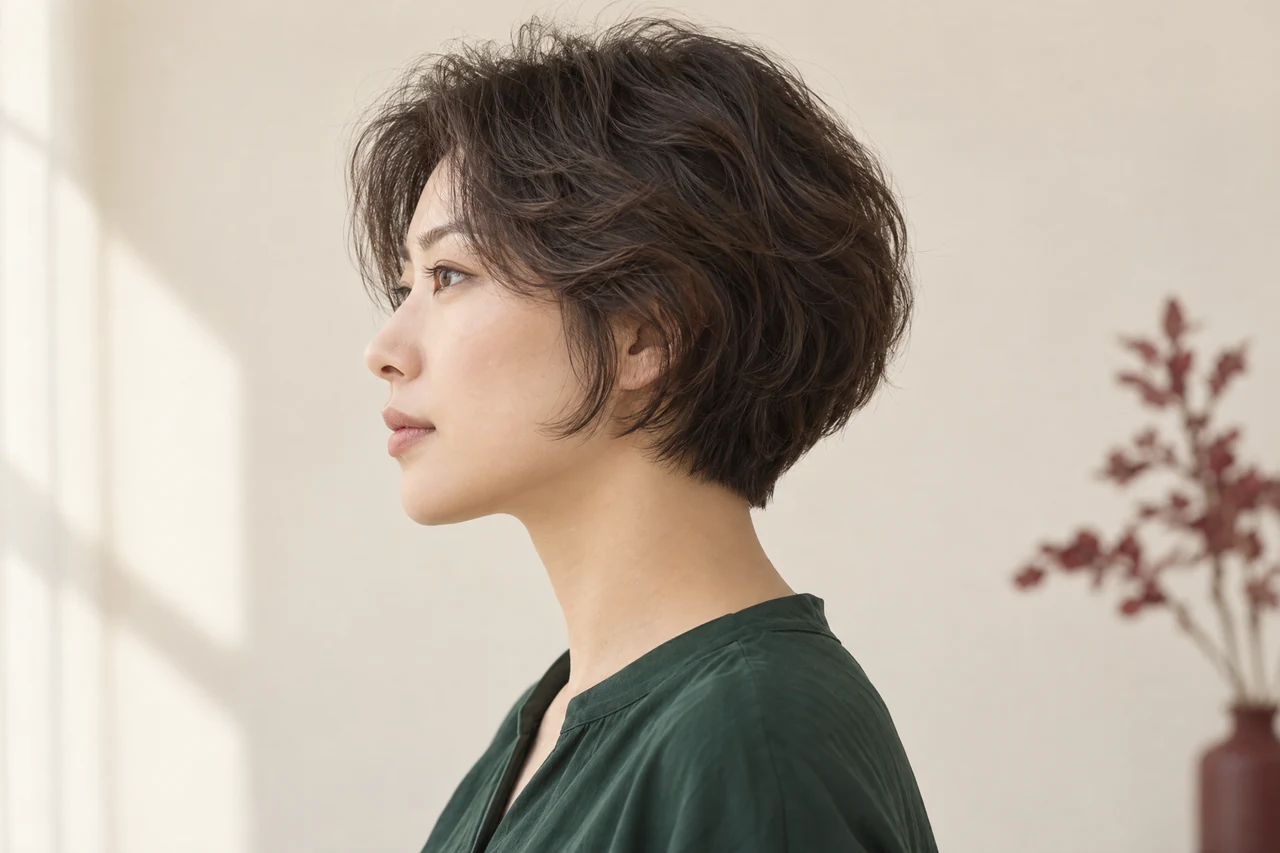
Plan the first home styling routine for a short shape
Before leaving, ask for a demonstration of the drying routine appropriate to the agreed finish. Watch how the fringe is placed, how the ear area is handled and whether the ends are encouraged inward or left more separated. Explain if you do not own the tools being used. A routine built around a brush or attachment you will not use is not a useful everyday plan.
For gentle handling, the American Academy of Dermatology's hair-care advice recommends conditioner after every shampoo, absorbing water with a towel instead of rubbing, avoiding tugging and using the lowest heat setting when heat styling. These are care principles, not instructions for producing a particular bob shape. Ask separately how much product and which drying direction suit your chosen finish.
Use the perm aftercare guide to prepare questions about the first wash and ongoing care. Follow instructions for the actual treatment rather than borrowing a universal waiting period from another person's routine. During your first home styling session, note whether the issue is a flattened fringe, excess side width or an end pointing away from the intended direction. A dry photograph and a description of your steps make follow-up questions more specific.
Observe the shape before adding more styling
Judge the result once the hair is dry and arranged as you normally wear it. If it looks different after sleeping, record which section changed instead of repeatedly using hotter tools across the whole head. Ask whether a local styling adjustment is appropriate. Avoid treating a disappointing morning outline as an automatic reason for another chemical service.
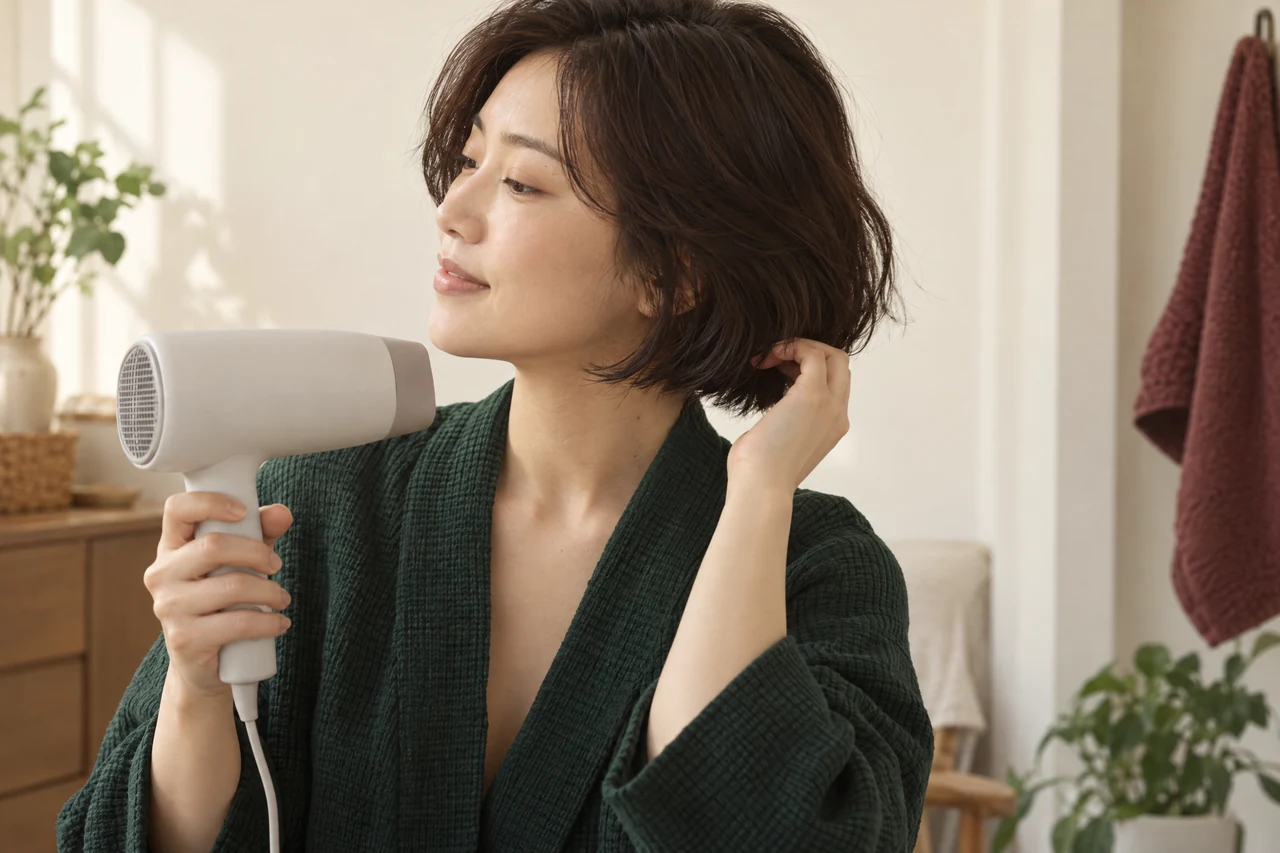
Short-hair shape goals to compare during a bob perm consultation
| Shape goal | What to show in the reference | Practical trade-off to discuss |
|---|---|---|
| Inward-curving lower edge | Ends turning towards the jaw with relatively smooth mid-lengths | Whether the front remains at your preferred dry chin position |
| Loose wave movement | A visible change of direction through the strand, not just at the tip | Whether the shortest layers have room to show that movement |
| Defined, separated curls | Individual curved strands and their spacing around the sides | How much cheek-level width and home styling you welcome |
| Outward-facing ends | An open lower edge from the side and back | How the ends sit near the shoulder, collar and nape |
| Rounded top with compact sides | Crown fullness shown alongside an ear-area view | How the cut, parting and daily drying support the balance |
Your preparation checklist
- Photograph your current dry hair from the front, side and back with your usual parting, showing the shortest layers and nape.
- Mark the front length you want to retain when dry and whether ear-tucking must remain possible.
- Choose references that distinguish inward ends, loose waves or defined curls, and identify where you do not want extra width.
- Prepare your bleach, colour, straightening and perm history, including the positions of older treated sections.
- Explain your ordinary drying tools, glasses, headwear and morning habits so the proposed finish fits your routine.
- Confirm the haircut plan, appropriate service scope, included work, price and treatment-specific home-care instructions before proceeding.
Frequently asked questions
How short can hair be for a perm?
There is no universal cutoff. The shortest sections, intended bend, hair condition and proposed method need to be assessed together; a photograph alone cannot confirm enough working length.
Is a short hair perm for women always a curly bob?
No. The goal may be soft movement, a rounded outline or a more defined curl. The existing haircut and the dry finish you want determine which options are worth discussing.
Can I request a C curl perm for a bob?
You can describe an inward-curving end as a goal. Confirm whether the desired direction is feasible and whether an appropriate method is available; the name itself does not establish a bookable treatment.
Discuss a short shape that keeps your preferred length
Send Vit So your current dry-hair photographs, a reference outline and your treatment history for an enquiry about a short-hair perm in Sheung Wan. Mention the chin position, side width and daily styling you want to preserve. Suitability, service scope, price and appointment availability need confirmation; sending an enquiry does not confirm a booking.
Start your WhatsApp enquirySources & further reading
- Coloring and perming tips for healthier-looking hair
Caution with perming, the risk of dry and brittle hair after appearance-enhancing treatments, and action when excessive stinging or burning occurs.
- 10 hair care habits that can damage your hair
Conditioner after shampoo, towel absorption rather than rubbing, gentle handling and the lowest heat setting when heat styling.



