







Curtains haircut length at the front
Front hair needs enough length to fall towards each side rather than springing back across the centre. The useful length varies with curl, growth direction and where you want the ends to land. Show the desired dry position rather than relying on one measurement or a photograph of someone with different texture.
Start with a landing point you can identify in the mirror: near the outer eyebrow, beside the eye, or farther down towards the cheekbone. These are discussion points rather than standard cutting lengths. A shorter front can give a compact outline but may need more encouragement to stay open. A longer front offers more room for a sweeping shape, yet can move into your eyes when the root lift drops. Decide which inconvenience matters more to you.
If you are unsure whether to keep an open front or more forehead coverage, compare a men's fringe haircut before committing to shorter central pieces.
Curtains haircut length must work when the hair is dry
Bring a photograph taken after your normal wash and dry, without pulling the fringe straight. For waves or curls, show where the ends rest in their usual pattern. Wet or stretched hair can look substantially longer than the position you actually wear. Explain whether the goal is to keep the eyes clear or leave a longer face-framing edge. The stylist can then discuss the dry target and what is achievable now, rather than treating a ruler measurement as the finished result.

A central division is not always perfectly symmetrical
A centre part can reveal unequal growth direction on either side. A slightly shifted division may feel more manageable while keeping an open-front look. Explain whether symmetry or easy daily styling is more important, and assess the parting with your hair resting naturally rather than forcing it into the reference position.
Notice where the hair separates after washing and whether one side lifts while the other lies flatter. The line on the scalp and the visible opening over the forehead are related, but they are not identical: the pieces can curve differently even with a central line. A very tidy division may emphasise that difference. A looser opening can accommodate it without making the haircut look unfinished.
The front-and-top length and central or slightly off-centre division are also described in Daimon Barber's curtains haircut guide. Its styling examples are useful for recognising the shape, but your own resting direction remains the better starting point for deciding how much daily effort to accept.
Continue with middle part vs comma hair for that specific comparison and the preparation questions it raises.
Follow natural growth where a rigid centre resists
If a front cowlick pushes across the proposed division, ask to compare a slightly shifted opening before cutting. Do not assume that a sharp comb line will keep the hair separated once it dries. You can still aim for curtains with unequal amounts of hair on each side. Describe the priority as an open forehead with falling side pieces, rather than identical halves. A staged length plan is useful when the resisting section is currently too short to reach the intended side.

Connect the front to the side coverage
The same open front can sit above fuller sides or a shorter two-block base. Consider the length near the temples and how the pieces tuck or fall around the ears. Choose that coverage with the front shape rather than assuming curtains describes the whole side and back haircut.
Wear your usual glasses when discussing temple coverage. Front pieces may sit neatly without the frames, then catch on the arms or change direction when tucked. If you often tuck the sides away for work, test that movement before choosing a shorter connecting section. Also describe the back separately: a soft nape and a closely trimmed neckline can both accompany curtains, but they create different outlines when viewed from behind.
Continue with two block haircut for that specific comparison and the preparation questions it raises.
Longer front pieces need a balanced frame
Ask where weight should remain near the temples before requesting less bulk everywhere. Removing too much hair can leave long curtain pieces looking isolated over a very light side. Retaining all the weight can create more width than you want. Point to the area that feels bulky and compare its connection with the front. The useful question is whether the frame should be continuous or deliberately contrasting, not simply whether the sides should be shorter.

Drying creates a finish that cutting alone may not
A rounded curtain shape may reflect drying direction, natural movement or a separate texture treatment. Tell the stylist what you normally do after washing and whether you want to avoid extra styling. Keeping enough length helps the discussion, but does not guarantee that the same bend will appear without effort.
For a simple starting routine, absorb excess water gently, find a comfortable parting and use your fingers to guide the front towards each side. If you use a dryer, ask for a demonstration of the root direction and the bend through the ends. Copy the movement rather than adding stronger heat when the shape resists. For naturally curly hair, the demonstration should respect your curl pattern instead of repeatedly brushing it into a straight curtain.
The American Academy of Dermatology's advice on preventing hair damage recommends air drying when possible and using the lowest heat setting when using heated styling tools. That care advice does not determine the most flattering parting, but it is relevant when choosing a routine you will repeat. For more everyday handling guidance, read how to protect hair from heat styling.
Compare a natural fall with a styled bend
Before judging the finished length, look at the hair with minimal styling as well as the more shaped version. Note what changes: the height at the parting, the width of the opening, or the direction of the tips. If you will not use a brush and dryer at home, make the simpler version your everyday target. A polished finish can remain an occasional option without becoming a promise that the haircut will produce the same curve after every wash.

Grow towards curtains without losing the front again
If your current fringe falls straight across the forehead, first check whether it can reach towards either side without being held there. When it cannot, a transitional shape may be more practical than an immediate central split. Keep the length needed for the eventual sweep while tidying areas that are not part of that goal. Explain that you want to grow into curtains, so a routine trim does not automatically reset the front.
Separate what needs tidying from what needs retaining
Show the fringe, temple connection and ear area as separate zones. A neckline tidy may improve the outline without shortening the front, while a side adjustment can change how the longer top sits. Ask the stylist to identify the sections that should remain untouched for the next stage. This makes a maintenance visit more useful than the vague instruction to take a little off everywhere.
Make the consultation about your daily curtain shape
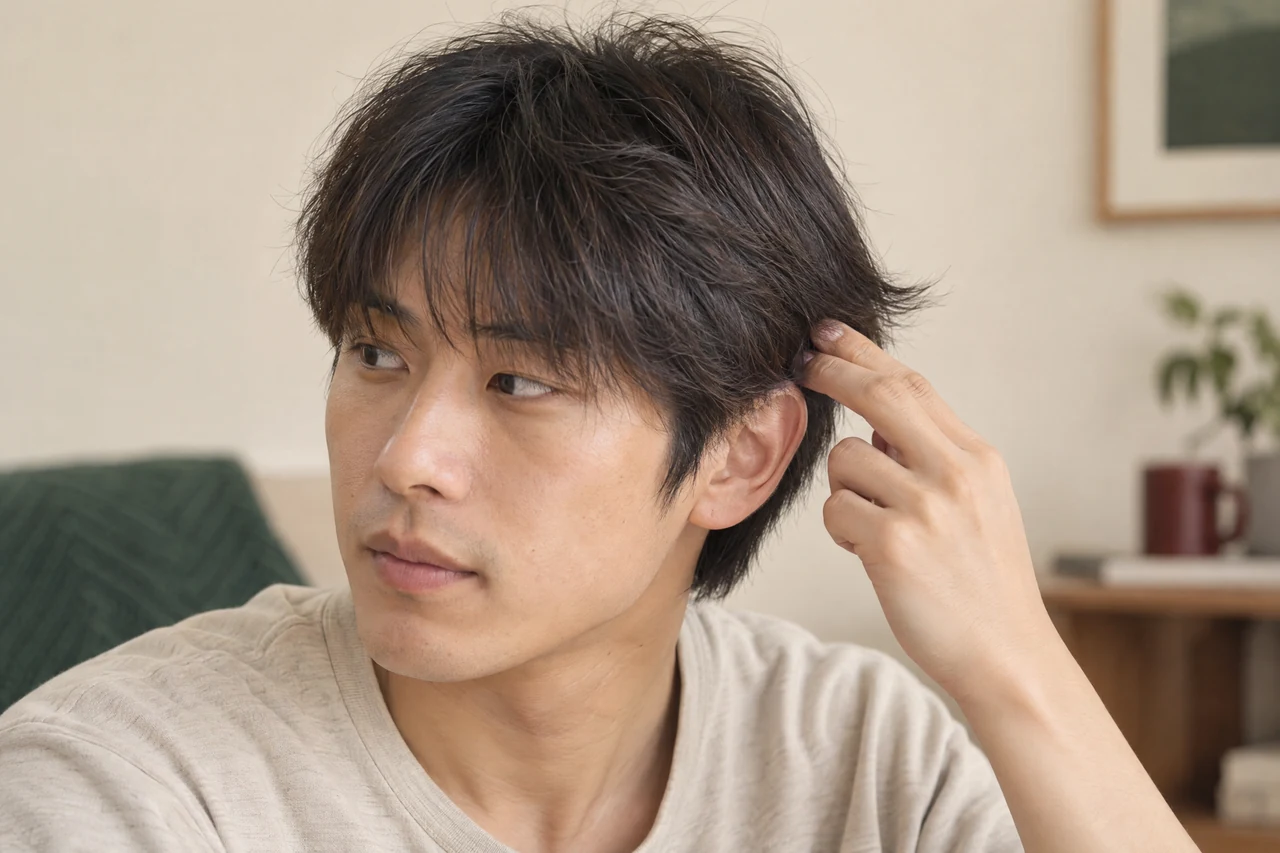
Bring a front reference and a side reference that show compatible versions of the style. Say what you like in each: a narrow forehead opening, ends beside the eyes, fuller temple coverage, or a cleaner ear area. Pair these with an unstyled photograph of your own hair. For a Sheung Wan appointment before or after work, also explain whether you need the fringe clear of your eyes and whether you can realistically dry it into shape each morning.
Vit So's men's wash, cut and blow dry is listed at HK$380. Confirm the requested work before arranging the visit, especially if you are also considering a texture treatment. The central division is a design choice, not an automatic addition of a perm to a cutting service.
Review men's haircut to check its service scope and the details to share before arranging the related work.
Judge maintenance by the parts that stop working
Plan a tidy when the fringe blocks your view, the temple connection becomes awkward, or the side outline no longer suits you. A short base may need attention while the front still has a useful length. Say which part has changed instead of asking to repeat every length from the previous cut. That helps preserve the curtain shape while adjusting the area that actually needs work.

Curtain-shape decisions to compare before shortening the front
| Choice | What you are choosing | Trade-off to discuss |
|---|---|---|
| Compact front | Ends near the outer eyebrow with a smaller frame | Less hanging length, but the split may need more styling support |
| Longer falling front | Pieces beside the eyes or towards the cheekbone | More sweeping length, but more movement towards the eyes |
| Central division | A more evenly placed opening over the forehead | Natural growth may make the sides behave differently |
| Slightly shifted division | An open front with unequal amounts on either side | Less visual symmetry in exchange for following a more comfortable direction |
| Fuller side coverage | A softer connection around the temples and ears | More coverage to manage with glasses or tucking |
| Shorter side base | Stronger contrast beneath the longer top | The side outline may need tidying before the curtain pieces need shortening |
Your preparation checklist
- Photograph your dry, unstyled front so the natural separation and any resisting section are visible.
- Choose the desired landing point beside the eyebrow, eye or cheekbone without stretching the hair to measure it.
- Identify how much forehead you want exposed and whether a slightly shifted opening is acceptable.
- Bring a side view and wear your usual glasses to discuss temple coverage and ear tucking.
- Explain your actual drying and product routine, including any tools you would prefer not to use.
- Agree which front and connecting sections must be retained, and confirm the service scope before arranging the appointment.
Frequently asked questions
How long does hair need to be for a middle part?
Long enough for the dry front to fall towards the desired sides. Growth direction, texture and the intended landing point matter; one length measurement cannot answer for everyone.
Is a curtain hairstyle for men the same as a middle part?
The terms often overlap. Curtains emphasises the falling front pieces; a central part alone does not specify their length, curve or the side coverage.
What if my front hair naturally moves to one side?
Show that natural direction. A shifted part or a gradual length plan may be more manageable than forcing a rigid centre immediately.
Do I need a perm for curtains?
Not automatically. Start with your existing movement and compare a simple dry finish with the bend you want. A perm is a separate option to discuss if changing the texture is part of the goal; it does not replace agreeing on front length and daily styling.
Are centre part and center part different haircuts?
No. Centre and center are spelling variants, not different cutting instructions. For either term, describe where the front pieces should land, how wide the forehead opening should be, and what you want around the sides.
Agree on the front length you want to keep
Send Vit So your current dry-hair photograph, a curtain-shape reference and a short description of your morning routine. Enquire about a Sheung Wan consultation to discuss the parting, temple connection and suitable service scope. An enquiry is not a confirmed booking; agree on availability and the requested work before visiting.
Start your WhatsApp enquirySources & further reading
- How to stop damaging your hair
AAD guidance on air drying when possible, using the lowest heat setting and gentle handling supports the daily drying discussion.
- Curtains Haircut: The Complete Guide to Men's Curtain Hair
The curtains definition and central or slightly shifted parting support identifying the shape; the article also describes longer or shorter side options.



