






A background in precision haircutting
Vit So entered the hair industry in 1996 and travelled to Tokyo in 2000 to study Japanese precision haircutting. His documented background includes commercial hair design. These career details describe professional experience; they are not a promise that one cutting method or reference style will suit every client.
The published Canvas Blend profile of Vit So also describes collaboration with Hair Corner to establish Lobby Hair Dressing, work at HH Hair·Nail within IL COLPO GROUP, and work at Leighton Aveda. These are parts of his professional history, rather than additional locations for an appointment through this website. Together with his further study, they give a more specific account of his background than a general description such as experienced stylist.
For a prospective client, the useful question is how to turn that background into a conversation about your own hair. Describe the outline you would like to see: a closer nape, a fuller end line, more visible ears or a softer front. A named style can open the discussion, but visible details help distinguish the part you like from features you would rather keep unchanged. You do not need to know the cutting terminology to express those preferences.
Tokyo study and commercial design
Tokyo study is a documented part of Vit So’s training, not a requirement that clients choose a Japanese-inspired look. You might want a restrained office shape, a stronger short outline or a small adjustment to long hair. Start with the intended change rather than a national style label. If you like the roundness of a short cut but need the sides to cover your ears, say both. That gives the design discussion a useful boundary without assuming that the whole reference image must be reproduced.

Hair education and professional work
Vit So founded Canvas Hair and Beauty Academy in 2017. His background also includes professional hair-design and education work. The guides on this website are prepared on his commission; the presence of his name does not mean that he personally wrote or reviewed every individual article.
The Canvas Academy instructor profile records the founding year and identifies Japanese precision haircutting and commercial hair design among his professional areas. It places hair education alongside his salon background. Readers can use this information to understand the scope of his professional work while keeping a salon service enquiry separate from questions about courses or teaching arrangements.
The practical role of the guides here is to help you arrive with clearer questions. A guide about layers can help you separate shorter internal lengths from the longest ends. A colour guide can help you distinguish a change of shade from a change in placement. Neither replaces looking at the hair you have now. Use a guide to identify the decision that matters to you, then explain which part remains uncertain.
Canvas Hair and Beauty Academy
An education background is relevant when learning about a stylist, but a client does not need to approach the appointment like a technical examination. Plain descriptions are useful: you want the ends to look fuller, the front to stay out of your eyes, or the side shape to feel less wide. Ask for an explanation of any unfamiliar term before agreeing to a change. If a proposed shape sounds appealing, also ask what drying or styling it may involve at home. Understanding the choice matters more than memorising its name.

A useful starting point for design
Explain what you want to change, what you need to keep and how you normally dry and style your hair. Current photographs and relevant colour or perm history can support that conversation. They help describe the request, but they do not establish an identical result, a final quotation or chemical-treatment suitability.
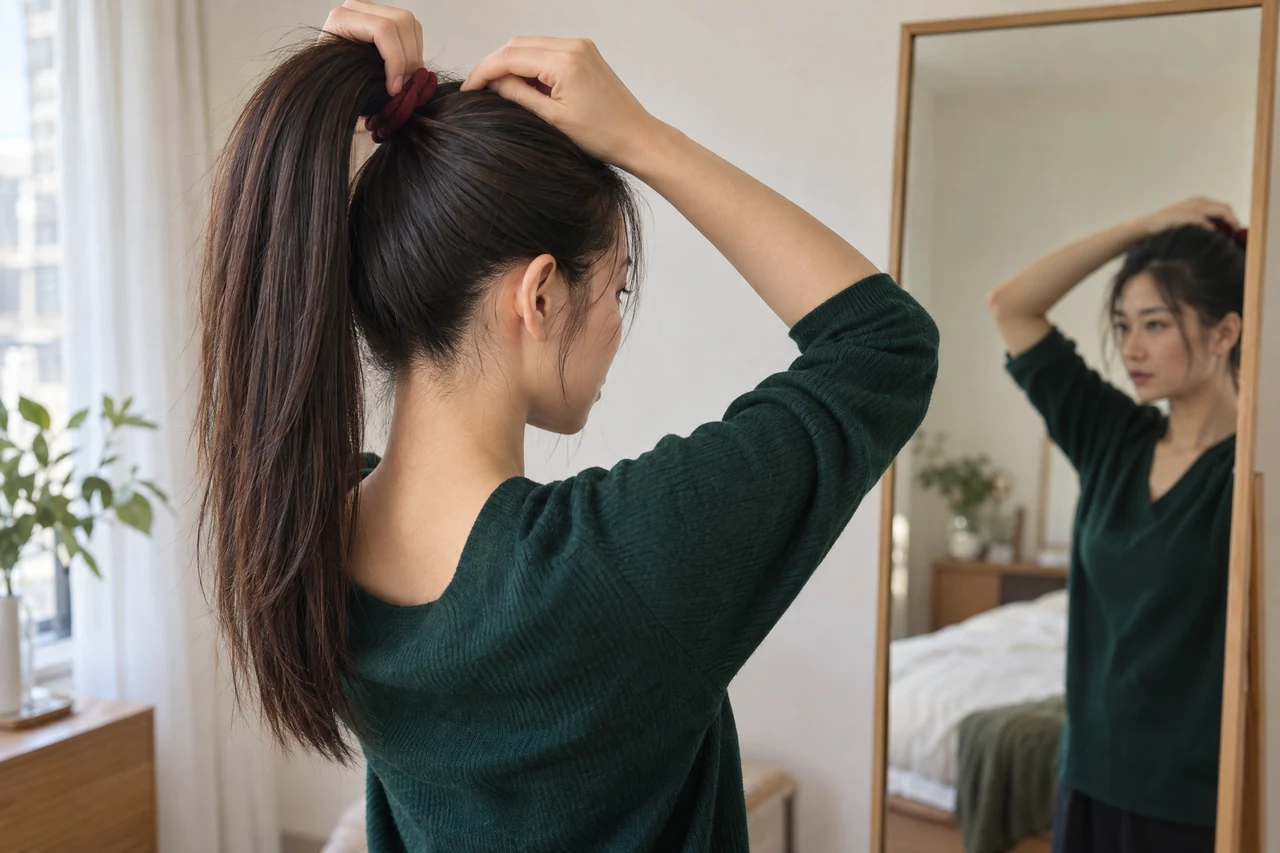
Put the main difficulty into an ordinary daily situation. Perhaps the fringe touches your glasses, the sides are awkward after wearing headwear, or your hair no longer gathers comfortably into your usual ponytail. These details explain what a change needs to achieve. Saying that you want less hair is less specific than pointing to a thick area behind the ears while asking to keep the front long enough to tuck back.
Retained length deserves its own explanation. If you are growing your hair, distinguish the longest ends from the shorter pieces around the face. If you need to tie it up for work or exercise, show your usual tie position and say whether loose front strands are acceptable. Keeping overall length and changing the front are different decisions; neither should be left hidden inside a request for a general tidy-up.
Describe your routine honestly, including whether you air-dry, use a dryer with your fingers or shape sections with a brush. A photograph of your normal finish can be more useful than one taken after unusually elaborate styling. Include previous colouring, bleaching, perming or straightening even if only part of the remaining length was treated.
Share your normal hair and retained length
A useful starting set shows your current front, side and back in clear light, with hair arranged as you usually wear it. Include a tied-up view when that matters. You can then add a reference and identify the particular feature you like, such as the fringe opening or the end line. Our guide to haircut reference photos helps you explain those features without treating a reference as a promise of the same result.
One Sheung Wan appointment location
The appointment location is 252 Hollywood Road, Sheung Wan, Hong Kong. Contact +85253057561 to enquire about the intended service and possible dates. Check the spoken consultation language and any practical requirements before arranging travel; English website text alone does not establish spoken English reception or an available appointment.
Keep your enquiry focused enough to answer. State whether you are asking about a haircut, a styling finish or a possible combination with colour or a perm. Include your current length and any fixed departure time. When the reply arrives, check that it addresses the work you intended rather than only a possible date. This is particularly useful if you are fitting the visit between work and an evening plan.
Use book a hair appointment to send the intended work and possible dates; wait for confirmation before travelling.
Confirm the service and visit directly
Before setting off, keep the confirmed date, time, address and service scope together. Raise access needs or other practical requirements in advance rather than assuming what the venue provides. If your plans change, contact the appointment location to discuss the arrangement. A clear exchange about the visit leaves more space for the hair discussion itself, especially when your request includes retained length or more than one possible service.

Read design images as details to discuss
The images on this page are concept illustrations, not photographs of Vit So’s clients or records of his teaching. They show details that can help you express a preference: the curve at the back of a short cut, the meeting point between a fringe and glasses, or the relationship between face-framing strands and longer ends. They are not evidence of a completed appointment.
When considering a design image, look beyond the overall impression. Is the hair tucked behind an ear? Are the ends curved with styling? Is part of the back hidden by the angle? Note what you can see and ask about what you cannot. The guide to how to compare hair stylist portfolios offers another way to organise those questions when you look at actual professional work.
Separate the desired shape from the photographed finish
A side view may reveal a nape you like while telling you little about the front. A tied-up view may show useful retained length but conceal the loose outline. Combine the relevant views instead of asking one image to describe everything. If you like a full end line and shorter face-framing strands, name both features. You can also identify a feature you do not want, such as an exposed ear or a fringe that requires daily reshaping.

Choose the next enquiry by the work you need
Vit So’s background provides context for the person behind the website. The next step is to identify the service question that applies to you. If the main concern is length or outline, begin there. If it is a colour change or an unwanted curl pattern, explain that separately. This keeps an interest in a new look from becoming an unclear request for every kind of change at once.
Explore hair salon services to compare the wider scope before choosing a service enquiry.
Check the hair salon price list for published entries, then confirm the amount for your agreed scope.
Use a clear priority when several ideas appeal
Decide which part of the change matters most if your preferred ideas compete. Keeping ponytail length may matter more than adding short layers; a familiar front may matter more than a dramatic short outline. Set that priority before discussing optional work. Ask about the included service and the likely home routine together, so you can judge the design as something to live with rather than only a finish to admire on the day.

What Vit So’s background tells you, and what to discuss for your own appointment
| Starting point | What it helps you understand | Your next useful question |
|---|---|---|
| Tokyo precision-haircutting study | A documented training direction | Which outline and retained lengths fit my request? |
| Commercial hair-design background | Professional experience beyond a single style label | Which feature of my reference is the actual priority? |
| Canvas Academy education work | Hair education forms part of the career background | Can you explain the proposed change in plain language? |
| Current-hair photographs | The shape you have before discussing a change | Have I shown the front, sides and back as I normally wear them? |
| A confirmed Sheung Wan visit | The practical arrangement for the intended service | Are the time, service scope and consultation arrangements clear? |
Your preparation checklist
- Name the main change you want, then identify the length or feature you need to keep.
- Prepare clear photographs of your current front, sides and back; add your usual tied-up view if relevant.
- Select a reference for specific visible details, and note any feature you would not want copied.
- Describe your normal drying tools and styling steps, including the steps you are not willing to add.
- Share relevant colour, bleach, perm and straightening history for the hair that remains.
- Confirm the intended service, amount, spoken consultation arrangements and appointment details before travelling.
Frequently asked questions
Does English website text confirm spoken English reception?
No. Ask about spoken consultation arrangements before confirming the visit.
Does a service or guide link reserve an appointment?
No. A message or page link is not a reservation. Confirm the service scope and appointment details directly.
Is there a salon branch in Central or Sai Ying Pun?
No additional branch is established here. The appointment location is 252 Hollywood Road, Sheung Wan, Hong Kong.
Do I need to choose a Japanese-inspired haircut?
No. The Tokyo study describes Vit So’s training background, not a required look for clients. Explain your preferred length, outline and everyday needs so the discussion starts with your own priorities.
Are these images examples of completed client appointments?
No. They are concept illustrations selected to explain design details. Use them to identify a feature for discussion, not as proof of a client result or a record of Vit So’s work.
Begin with the change you want and the hair you need to keep
Send your current hair photographs, main design priority and possible dates to start an enquiry for the Sheung Wan appointment location. Include any consultation-language or practical requirements. Confirm the service scope and visit details directly; sending an enquiry does not reserve an appointment.
Start your WhatsApp enquirySources & further reading
- Canvas Academy 專業導師團隊
Vit So’s entry into the industry in 1996, Tokyo study in 2000, precision haircutting and commercial design background, and founding of Canvas Hair and Beauty Academy in 2017.
- Vit So
The published career history describes Lobby Hair Dressing with Hair Corner, HH Hair·Nail within IL COLPO GROUP and Leighton Aveda.



