







Brand relationship disclosure: OWNSTRAND and Vit So share the same owner. This article provides selection guidance, not an independent review or product test. Confirm designs, availability and visit arrangements directly with OWNSTRAND.
Clip topper choice with bleached hair starts at the attachment zone
The area you want covered is not necessarily the area that would carry the clips. A parting may need visible coverage while a topper's fastenings sit elsewhere around its base. Mark the desired coverage on a simple sketch, then leave the clip positions blank until a particular design is identified. Choosing a size from the visible gap alone skips the support question: which of your own hairs would actually be held when that piece is fitted?
Next record where lightening was applied, whether sections were treated repeatedly, and where untreated growth meets previously processed lengths. Include highlights around the face or crown even if most hair looks darker now. The American Academy of Dermatology explains that appearance-enhancing treatments can make hair dry and brittle, and substantial lightening can cause more damage.[1] That general advice supports discussing treatment history; it does not mean every bleached strand is equally fragile or that darker hair is automatically stronger.
Describe what you notice without turning it into a home strength test. Tell the fitter about recurring snapping during ordinary handling, tangling in a particular section, or hair that seems different from its neighbours. Do not tug strands, repeatedly close a clip on them, or stretch wet hair to prove it can hold a piece. A photograph can help locate a concern, but neither its colour nor its apparent density certifies that the proposed attachment is suitable.
Draw two separate maps
Use one outline for the coverage you want and another for treatment history. On the second, distinguish unbleached growth from previously lightened sections and note uncertain areas. Later, ask the fitter to place the actual clip layout against both outlines. These maps organise a conversation, not a diagnosis. Their useful result may be that the desired coverage is straightforward while the intended attachment zones are still unresolved; that is a reason to ask another question before ordering.
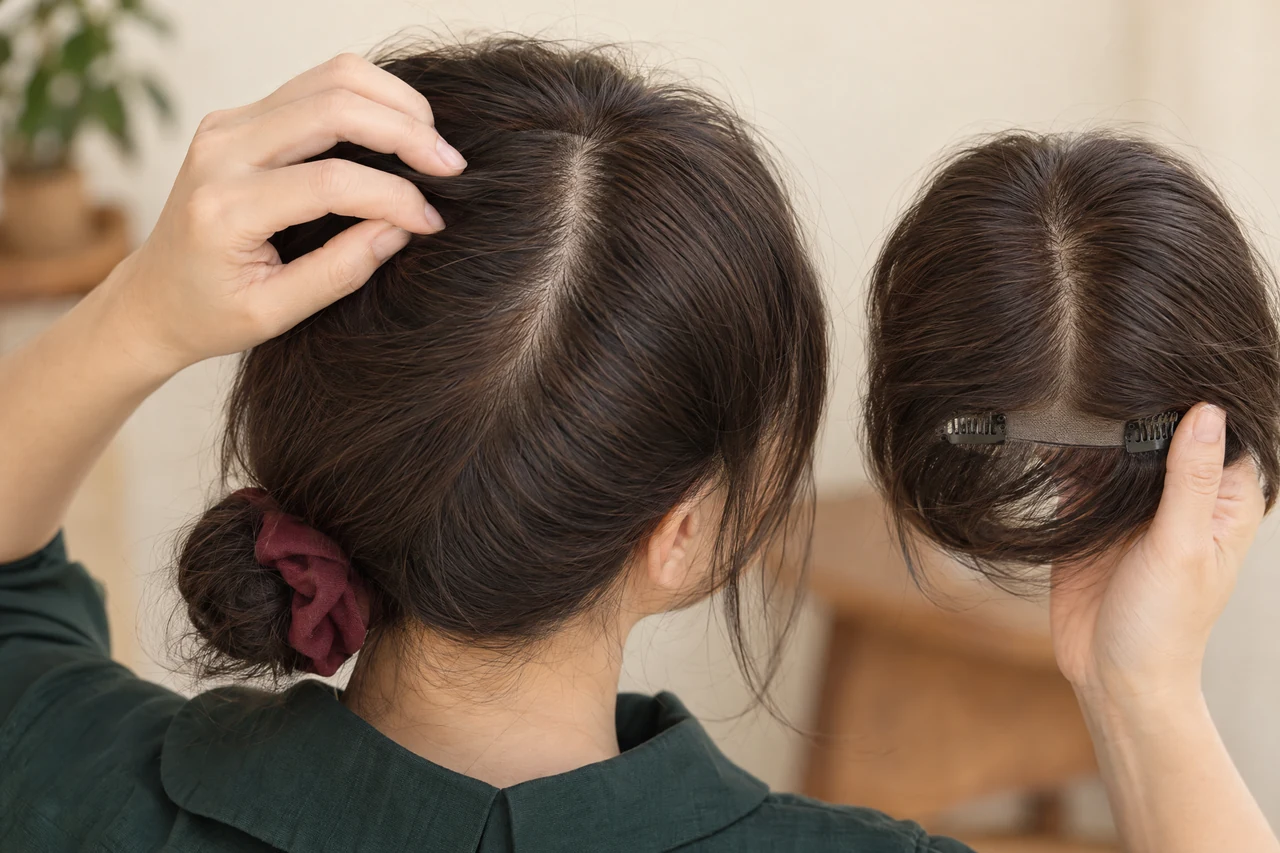
Ask about bleached attachment hair and topper weight together
For a clip-in hair topper, ask OWNSTRAND for the particular piece's complete weight, base dimensions, underside layout and instructions before discussing placement on processed hair. Its guide says clip number, design and position are product-specific; the category name cannot supply those details. OWNSTRAND is a same-owner sister brand of Vit So, not an independently reviewed recommendation here. The page explains attachment questions but does not establish that your hair can support a proposed model.
Keep bleached attachment hair and topper weight in the same discussion without reducing them to one formula. Record the stated weight and its unit alongside the model and configuration it describes. Ask whether the figure includes the base and fastenings and whether the sample you see represents the intended piece. A word such as 'lightweight' is not a substitute for a specification, yet a low figure alone is not proof of suitable fastening either.
Do not divide a piece's weight by its clip count and treat the result as a safe load per clip. The number does not describe how the fitted base sits or which hair each fastening would engage. Likewise, extra clips do not automatically resolve one unsuitable attachment zone. In a hairpiece fitting discussion, ask to identify the intended holding hair separately from hair that merely blends over the edge, and request the specific opening and removal instructions.
A different footprint must be verified, not assumed safer
If a proposed clip would meet a fragile treated section, the custom hair topper Hong Kong page provides a route to ask whether another base footprint is possible. OWNSTRAND describes sample viewing and measurement at its Kwun Tong shop, followed by bespoke production and a return fitting. Those are service details, not proof of attachment safety. Ask which design changes can actually be arranged and whether the revised clip locations could use suitable surrounding hair without losing the coverage you need.
A wider base might place an edge elsewhere, but wider does not necessarily mean stronger support or less pulling. A smaller base might reduce coverage or move fastenings into the very zone you wanted to avoid. Compare the complete proposed layout rather than a size label. Keep the original and revised outlines side by side so the enquiry answers a concrete question: what changes about coverage, clip contact and the hair left visible around this particular piece?
Consider a hypothetical case where lightened face-framing sections lie near the front fastening while hair farther back has a different treatment history. The next step is not to slide the whole topper backwards at home. Ask whether a verified construction can preserve the intended front coverage with an appropriate attachment layout. If moving it exposes the target area, disrupts the parting, or still depends on the same doubtful hair, the proposal has not solved the original problem.

Care can help handling; it cannot approve a clip placement
A softer feel after conditioning can make everyday handling more pleasant, but it does not establish how the hair will behave under a particular attachment. The guide to conditioning bleached hair before wearing clip in extensions is useful preparation for discussing care before temporary pieces. Keep that question separate from topper selection: knowing which care routine to follow does not confirm a clip position, an acceptable piece weight, or an appropriate wearing schedule for you.
Tell the fitter about your usual washing, detangling and styling routine, including products used near the intended clips. Ask how the actual model should be placed and removed without catching hair. Do not add aggressive backcombing, repeated clip repositioning or a tighter fastening as an improvised answer to slipping. If correct use cannot be shown without depending on a doubtful section, return to the design discussion or pause. Manageability is part of the decision, not something to discover after purchase.
Repeated pulling can lead to traction alopecia, and the AAD identifies pain, scalp stinging and crusts as signs to change a pulling style.[2] Remove an uncomfortable piece carefully rather than enduring it or tightening it. The discussion of do hair extensions damage natural hair gives related context, but it cannot diagnose your situation. New or persistent hair loss, scalp symptoms or ongoing breakage warrant appropriate professional assessment; medical treatment-related wearing needs should be discussed with the care team.
Comfort is not a strength certificate
A brief comfortable fitting does not establish that previously processed hair can tolerate repeated attachment over time. Conversely, pain is not a normal adjustment period to push through. Ask what follow-up and removal guidance applies to the exact piece, but do not adopt a universal daily wearing limit from a general article. If discomfort arises, stop adding tension. Persistent symptoms need a health professional's assessment, not a shop's assurance that the colour or coverage looks right.
Compare verified non-clip full coverage if support remains doubtful
When a topper would still rely on unsuitable attachment hair, use the hair topper vs wig guide to consider a different coverage approach. OWNSTRAND describes toppers as local pieces blended with surrounding hair, whereas full wigs cover the head. Ask specifically about a full-coverage design whose verified fastening does not require clips on the doubtful sections. 'Full wig' alone does not mean clip-free, and this guide does not confirm a particular non-clip model or its availability.
The alternative also needs its own fit check. Ask how the cap is secured, where it contacts the head, and how your existing hair would sit beneath it without being pulled tightly. AAD guidance notes that hair coverings can cause rubbing-related traction, especially when hair is tightly pulled back underneath.[2] Removing one clip-related concern therefore does not make another design risk-free. Compare pressure, handling and comfort on their own terms instead of assuming broader coverage is automatically safer.
Changing the coverage approach may also change your appearance priorities. A topper preserves visible natural lengths around its edges; a full wig creates a more complete silhouette and may require less colour blending with exposed hair. If keeping your own lightened ends is important, say so before choosing an alternative. You may decide that neither a workable topper layout nor a comfortable full-coverage arrangement has been established yet. Postponing the purchase is a valid outcome, not a failed consultation.
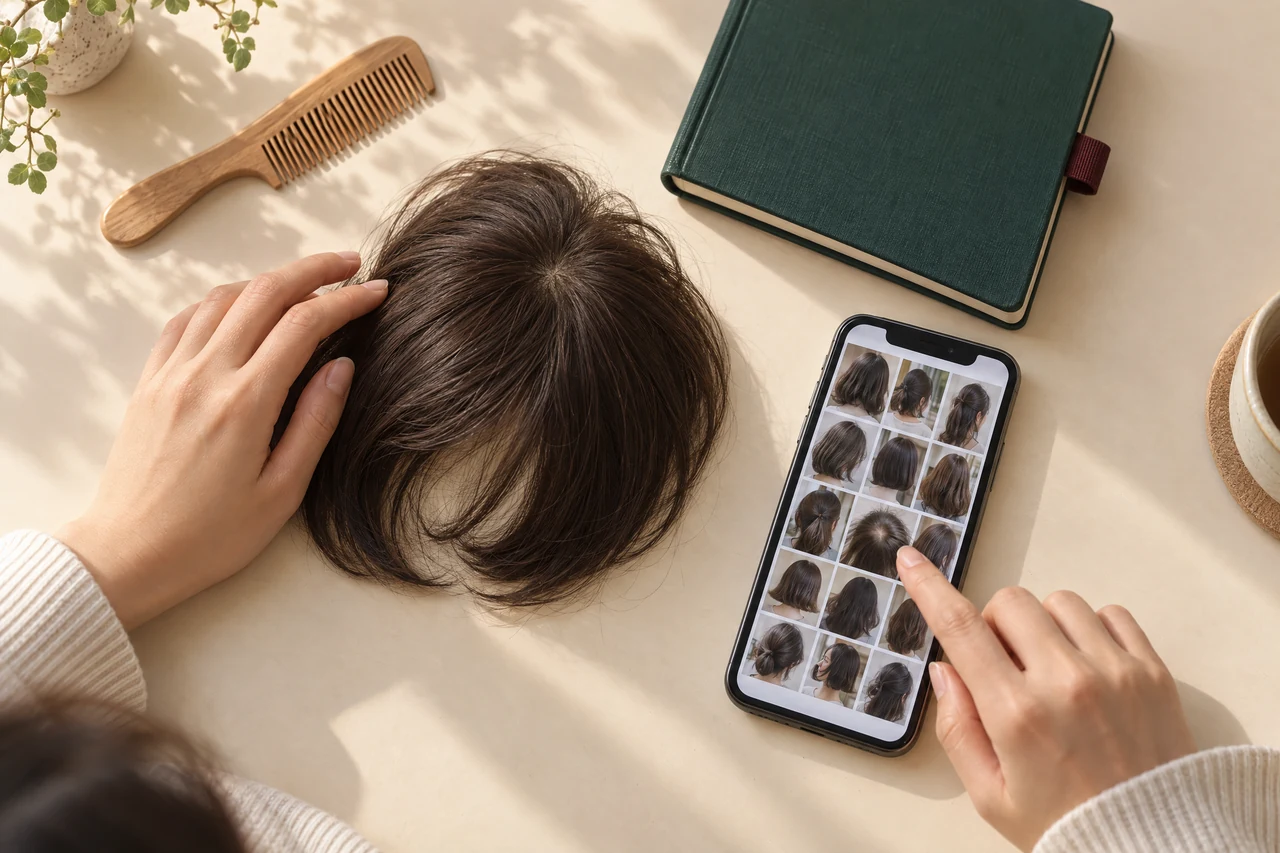
Use four enquiry steps before choosing, changing direction or pausing
Use four steps to make the decision traceable: map treatment and coverage separately; obtain the actual piece's specifications; compare its attachment footprint with the hair available; then choose whether to continue, explore another design or pause. This is an original enquiry framework, not a validated scoring system. Do not award points for having enough hair or a convincing photograph. An unanswered fastening question remains unanswered even when the proposed shade, cut and price are appealing.
For the enquiry, bring ordinary-light photographs of your current parting, sides and back, plus your lightening history and normal hairstyle. Name the exact model or proposed custom design. Ask the fitter to explain any placement changes against your maps, including which hair would be caught and which would remain for blending. Keep the response with the product details so a later change of base, length or fastening prompts another check instead of inheriting the first proposal's assumptions.
Before committing, confirm the quoted design, care instructions, availability and applicable consultation or fitting arrangements directly with OWNSTRAND. Its single store is in Kwun Tong; it is not Vit So's Sheung Wan salon. An enquiry is not an order or confirmation of stock. Proceed with further selection only when the actual proposal addresses the attachment questions and you understand its limitations. If symptoms need assessment or the supporting hair remains uncertain, defer the purchase rather than forcing a cosmetic deadline.
Four enquiry steps: what each can establish and what it cannot
| Step | Useful information | Do not infer |
|---|---|---|
| 1. Map the zones | Treatment history and desired coverage, shown separately. | Colour or density proves attachment strength. |
| 2. Identify the piece | Complete weight, base dimensions, clip layout and instructions. | A lightweight label or extra clips makes it suitable. |
| 3. Compare the footprint | Whether a verified layout could use suitable surrounding hair. | A bigger or custom base automatically solves fragility. |
| 4. Choose the next step | Continue enquiries, compare verified alternatives, or pause. | A comfortable moment guarantees repeated-wear suitability. |
Your preparation checklist
- Record lightened sections, repeated treatment and untreated growth without pulling strands to test them.
- Keep desired coverage separate from the proposed clip attachment zones.
- Request the specific piece's complete weight, clip layout, base dimensions and removal instructions.
- Ask what a revised footprint changes; do not assume custom construction approves the supporting hair.
- If comparing full coverage, confirm whether the actual fastening avoids the doubtful hair.
- Pause for unresolved attachment questions; seek appropriate assessment for discomfort or hair-loss symptoms.
Frequently asked questions
If I have dark unbleached roots, can the clips avoid my bleached hair?
Possibly, but visible growth does not establish what hair a particular clip would engage. Ask to compare the actual fastening instructions and positions with your treatment map. Do not attach experimentally or assume a dark root area is sufficient; suitability remains specific to the proposed piece and hair.
Is there a safe topper weight for bleached hair?
The sources used here do not provide a universal safe weight or weight-per-clip threshold. Request the complete piece weight as a comparison detail, not a pass mark. Clip placement and the supporting hair still need consideration, and a lighter option cannot automatically resolve a doubtful attachment zone.
Will conditioning or a bond-care product make a topper suitable?
A care product is not evidence that your hair can support the proposed clips. Discuss care for your processed hair separately from the item's fastening, placement and removal. If hair is breaking during ordinary handling, raise that concern before considering attachment rather than treating improved softness as approval.
Can I buy a custom topper now and sort out the clips at collection?
Clarify the intended footprint and attachment approach before confirming an order. A return fitting can check the completed proposal, but it should not replace the earlier discussion of whether the design would rely on doubtful hair. Confirm available changes, quotation and arrangements for the specific request; do not presume every alteration is possible.
Bring a support question, not just a colour reference
Invite Vit So to discuss how your current haircut, parting and visible lengths could blend with a proposed piece. For product specifications, a custom design or visit arrangements, use the OWNSTRAND guides already linked above and ask about the exact request. Keep attachment suitability unresolved until the relevant details are established; pause for appropriate assessment when symptoms or treatment-related needs require it.
Start your WhatsApp enquirySources & further reading
- American Academy of Dermatology — Coloring and perming tips for healthier-looking hair
Treatments can leave hair dry and brittle; substantial lightening increases damage. This is general guidance, not a clip-topper strength or load test.
- American Academy of Dermatology — Hairstyles that pull can lead to hair loss
Repeated pulling and rubbing can contribute to traction alopecia; pain, stinging and crusts are warning signs. Hair-loss causes need professional assessment.



