







Brand relationship: OWNSTRAND and Vit So share the same owner. This is a commissioned selection guide, not an independent review or product test. Confirm styles, supply and visiting arrangements with OWNSTRAND.
Short wig choice with hearing aids starts with the device
First identify the space your existing hearing aids occupy, without moving them to accommodate a wig. NIDCD explains that behind-the-ear designs have a case behind the ear, while in-the-ear and canal designs sit within the outer ear or canal. It also notes that small canal aids can be difficult to adjust and remove.[1] That makes your familiar hand movement relevant even when little of the device is visible. Smaller does not automatically mean easier access beneath hair.
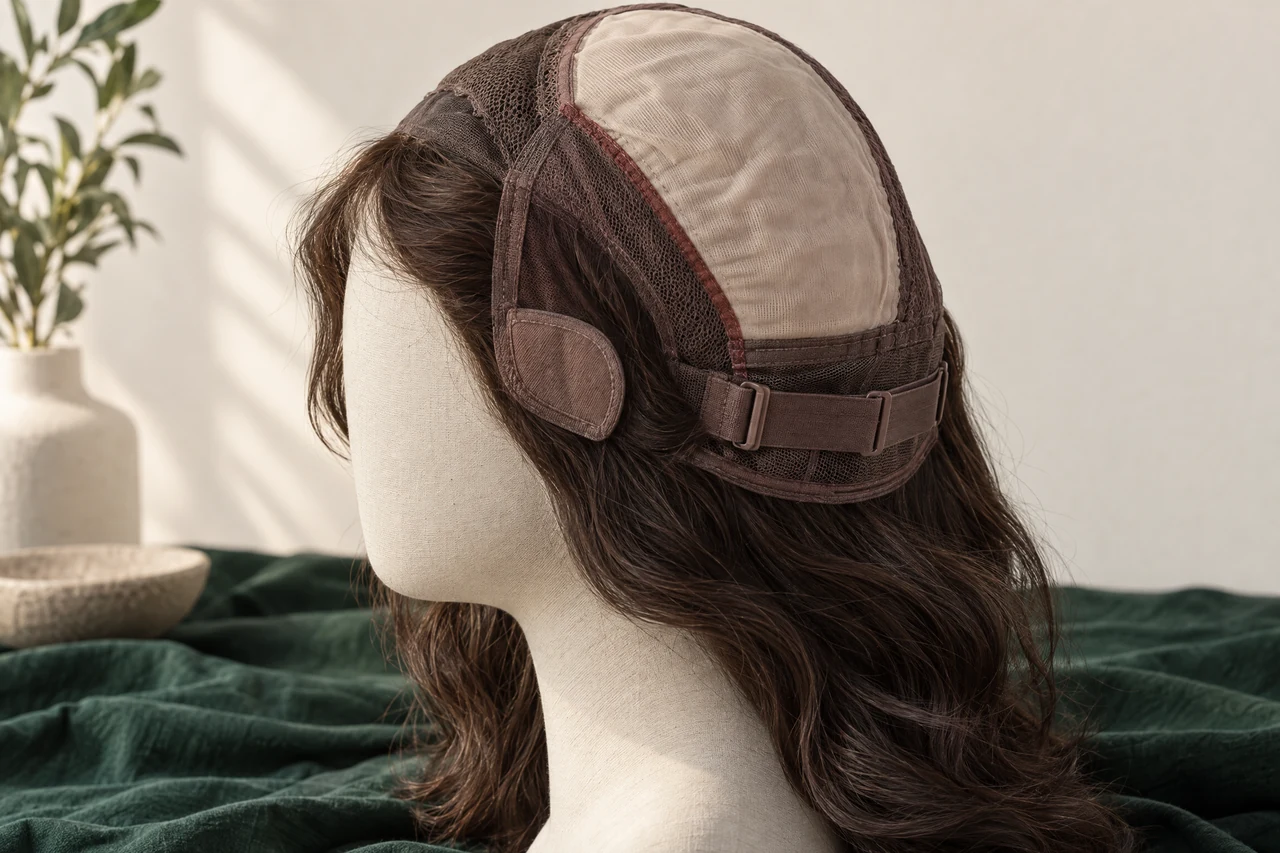
Use four dimensions to compare candidates: how much ear coverage you want, how easily you can reach the device, where the wig meets your temple, and where its ear tabs sit. Ear tabs are the shaped side parts of a wig cap near the ears; their position is separate from the hair falling over them. This is an original selection checklist, not a clinical score. A pleasing outline cannot cancel out an awkward contact point underneath it.
Describe both ears separately if your aids or daily movements differ. You might reach one side frequently but rarely touch the other, or need glasses throughout the day. State your preference plainly: 'I want an exposed ear and an uninterrupted removal movement,' or 'I want side coverage that I can lift aside.' There is no requirement to conceal a hearing aid. Start with the access and appearance you personally want rather than someone else's idea of discreet styling.

An exposed-ear pixie offers a clearer starting point for access
An exposed-ear outline is worth comparing when you want less hair to move before reaching a control or removing an aid. OWNSTRAND's pixie wigs guide recommends checking whether the sides actually cover the ears, alongside fringe, crown and nape proportions. That is the useful distinction here: some pixie shapes have longer side pieces. Ask for both profile views and cap information instead of assuming the word 'pixie' means an open ear or device clearance.
A cropped silhouette can also leave the cap edge easier to notice. Consider whether you like the appearance of the sideburn area and how much temple coverage you want, while keeping the hearing aid in its usual position. Vit So's pixie cut comparison helps describe a cropped versus longer short outline. It concerns hairstyle proportions, not proof that a manufactured wig will share those proportions or fit around your particular device.
During an agreed fitting, look at the hair resting naturally rather than holding it out of the way for the whole comparison. If a long side piece repeatedly falls into your reach, ask whether another manufactured shape would be more suitable. Do not assume trimming is permitted or reversible. A shorter outline is a sensible candidate when it gives you the look you want with fewer hair-moving actions, but it still needs a separate cap-contact check.
Exposed ears do not prove an open cap area
Separate what the mirror shows from what you feel underneath. An ear may be visible while a cap seam or tab still occupies space close to a behind-the-ear case. Ask the fitter to explain the relevant cap area on that exact wig. If you feel pressure, stop comparing its appearance and report the contact point. Do not squeeze the aid beneath the cap or tighten the wig to make the outline look smoother.
Bob coverage should move aside without moving the hearing aid
A bob is a reasonable candidate when you prefer hair around the ears and jaw but still want straightforward access. OWNSTRAND's bob wigs page treats a bob as a shape rather than a fixed length, and distinguishes the visible outline from each item's material and construction. Compare how the side hair falls over your ear at rest. A bob label alone does not tell you whether that hair can be lifted aside comfortably.
Use your ordinary reach, following the handling instructions you already have, to see whether the side section stays clear long enough for the task. The question is not whether you can expose the device once for a photograph. It is whether the same movement feels manageable in everyday use without catching hair or pulling the cap. If you need someone else to hold the entire side panel away, decide whether that assistance matches your actual routine.
Avoid equating coverage with compression. A softly falling side panel may give the visual coverage you want, whereas a tucked-back section may collect hair in space already occupied by an aid or glasses. Those are observations to make with your own combination, not universal rules about bobs. Compare the hair both loose and in any permitted arrangement you intend to use. Keep the preferred outline only if its normal resting position leaves your familiar access manageable.
Hearing aid access in wig styles is a movement question
For hearing aid access in wig styles, name the exact task that matters: reaching a button, removing the aid for charging, or taking off glasses without a snag. These tasks may need different amounts of room. You do not have to perform unfamiliar device operations during a wig appointment. Demonstrate only the handling you already know, or explain it to the fitter. If that handling is difficult without a wig, ask your audiologist for guidance before treating haircut length as the solution.[1]

Check temple contact and ear tabs beneath either outline
Ask to see the relevant side of the cap before comparing colour or fringe. Find out where its edge, seams and ear tabs would sit, and whether the manufacturer's permitted adjustment range suits you. Fibre softness does not describe the whole construction, and a front-hairline feature says little about room near an ear. Neither human hair nor synthetic fibre automatically establishes hearing-aid compatibility. Keep missing cap information on your enquiry list instead of filling the gap from a product image.
If you wear glasses, include the pair you use most rather than a lighter substitute chosen for the appointment. The question behind can you wear glasses with a wig is especially relevant where a glasses arm, cap edge and hearing aid occupy neighbouring space. Look for an ordinary resting position, then notice whether taking the glasses off catches the hair or changes the cap's position. Do not rearrange the hearing aid to make the glasses comparison easier.
Check the combination while sitting and during gentle everyday movements, such as turning your head or looking down. You are observing whether the wig shifts, pulls or creates contact that was absent at rest; you are not conducting a medical-device test. Stop if discomfort appears. NIDCD directs hearing-aid users with discomfort or feedback to their audiologist.[1] A wig fitter can discuss cap fit, but should not be asked to reshape a tube, change programming or diagnose an ear problem.
Arrange a comparison with your usual hearing aids
Before travelling, ask OWNSTRAND's wig shop Kwun Tong enquiry route whether you can discuss an exposed-ear pixie and a bob while wearing your usual aids. Its only salon is Unit 2103, 50 Hoi Yuen Road, Kwun Tong, Hong Kong. The page describes sample viewing and custom human-hair measurements with a later fitting; that does not establish that a specific catalogue wig is available to try. Confirm the exact option and appointment arrangements first.
Bring your normal glasses and, if relevant, the mask you commonly wear, so the conversation reflects the items sharing the ear area. Explain any access requirement before a stylist concentrates on the finished outline. Ask which cap adjustments or hair changes are permitted for the chosen product and whether they affect ordering or return terms. A custom human-hair service and a manufactured ready-style enquiry are different routes; establish which one you are discussing before agreeing to alterations.
If whistling starts during a comparison, pause and describe what happened rather than declaring the bob too long or the pixie incompatible. Kent Community Health NHS Foundation Trust explains that feedback occurs when sound from the hearing aid is picked up and amplified by its microphone; poor earmould fit and other causes can contribute.[2] That mechanism does not identify the cause in your case. Persistent or unfamiliar sound changes belong with your hearing-care professional, not a tighter wig adjustment.
Choose from your notes, then confirm the exact product
Write a short observation for each of the four dimensions rather than giving either style an overall comfort score. For example: 'ears visible; familiar removal unobstructed; temple pressure noticed; tab position needs checking.' A pixie with unresolved pressure is not preferable just because access looked easy. A bob that requires constant hair handling may not suit your routine despite its attractive coverage. If neither candidate works, pause the selection and ask about another cap or outline instead of forcing a winner.
Keep accessory styling as a separate decision after basic access is workable. Vit So's event hairstyle with hearing aids and statement earrings guide is useful for describing an occasion-specific arrangement, but it does not establish a wig's construction or justify moving the hearing aid. For daily care, NIDCD advises keeping aids away from heat and moisture and avoiding hairspray or other hair-care products while wearing them.[1] Follow the device instructions and the chosen wig's separate care directions.
Before deciding, confirm the named style, cap size, fibre, colour, permitted maintenance and any fitting service for that item. Ask for the quotation, current supply and relevant alteration or return terms without assuming a catalogue display is stock. If scalp or ear symptoms, skin sensitivity or treatment-related wearing needs affect your choice, consult an appropriate care professional first. The aim is an informed cosmetic enquiry: an outline you want, access you can manage and unresolved contact issues clearly identified.
Compare four dimensions on actual candidates; neither style name confirms fit
| Dimension | Exposed-ear pixie candidate | Bob-coverage candidate |
|---|---|---|
| Visible coverage | Check whether the sides genuinely leave the ears exposed; longer side pieces may remain. | Check how much ear and jaw coverage the side panel gives when resting naturally. |
| Everyday access | Observe your familiar reach without assuming short hair removes every obstruction. | Check whether you can move the side hair aside without catching it or moving the aid. |
| Temple contact | Inspect the cap edge even if the ear looks open; include your usual glasses. | Separate contact from cap construction from contact caused by hair tucked behind the ear. |
| Ear-tab position | Ask where the actual tab sits relative to your ear and device; do not force clearance. | Inspect beneath the coverage instead of judging comfort only from the visible silhouette. |
Your preparation checklist
- State whether exposed ears or side coverage is your appearance priority.
- Describe your familiar device-removal and control-access movements, checking both sides.
- Include your usual glasses and notice temple contact without repositioning the aid.
- Ask to inspect ear tabs and permitted cap adjustments on the exact candidate.
- Confirm sample access, appointment arrangements and product-specific supply before travelling.
- Pause for pressure or unfamiliar sound changes; refer device concerns to your hearing-care professional.
Frequently asked questions
Does a pixie automatically fit better with behind-the-ear hearing aids?
No. Exposed ears can make a pixie a useful access candidate, but the cap edge and ear tabs still need checking. Some pixies retain long side pieces. Compare the actual wig with your usual device and glasses; do not treat a short outline as evidence of clearance or hearing-aid performance.
Can I keep bob coverage without always tucking the hair behind my ear?
Possibly, if its natural side panel gives the coverage you want and can be moved aside for your familiar handling. Tucking is not a required solution and may put more hair into the ear area. Ask about the specific wig's permitted styling, and choose another outline if everyday access remains awkward.
Should the fitter shorten a hearing-aid tube or move the device for the wig?
No. This selection compares cosmetic outlines around the device as you normally wear it. Changes to the aid, its tubing, programming or prescribed fit belong with your hearing-care professional. If a wig requires those changes to look acceptable, set that candidate aside while you seek appropriate guidance.
Can I choose from photographs if I cannot attend a fitting?
Photos can help shortlist coverage and length, but cannot establish cap contact or your removal movement. Request both side views, exact cap and size information, and ordering or return terms. If fit remains uncertain, keep the choice provisional rather than assuming either a pixie or bob will work.
Bring a clear outline and access brief to the conversation
Ask Vit So to discuss the shape and style blending you prefer. For OWNSTRAND product details or a possible visit, use the already-linked guides to enquire about the exact wig and arrangements. Keep medical-device questions with your hearing-care professional, and confirm cap details and supply before deciding.
Start your WhatsApp enquirySources & further reading
- Hearing Aids — National Institute on Deafness and Other Communication Disorders
Device placement, handling small canal aids, audiologist support for discomfort or feedback, and precautions involving heat, moisture and hair-care products. General guidance, not a wig-compatibility study.
- Hearing aid feedback — Kent Community Health NHS Foundation Trust
General feedback mechanism and the existence of multiple possible causes. Published by a children's hearing service; no child-specific recommendations or device-repair instructions are applied here.



