







Men's hair colour starts with the haircut
A longer top and closely cut sides may show colour differently because the amount of visible hair is different. Share whether you are keeping the current cut or changing its shape. Discuss which areas should look connected and whether the intended result is an overall tint rather than separate highlighted strands.
Look at your haircut from the side, not just straight ahead. A swept top may overlap the side when relaxed, then reveal a stronger boundary when lifted with styling product. A cropped fringe exposes a different area from a longer side part. Tell the stylist whether you normally wear the top forward, parted or pushed back, so the colour discussion follows your everyday shape.
Review men's haircut to check its service scope and the details to share before arranging the related work.
Review grey coverage to check its service scope and the details to share before arranging the related work.
Men's hair colour across the top and sides
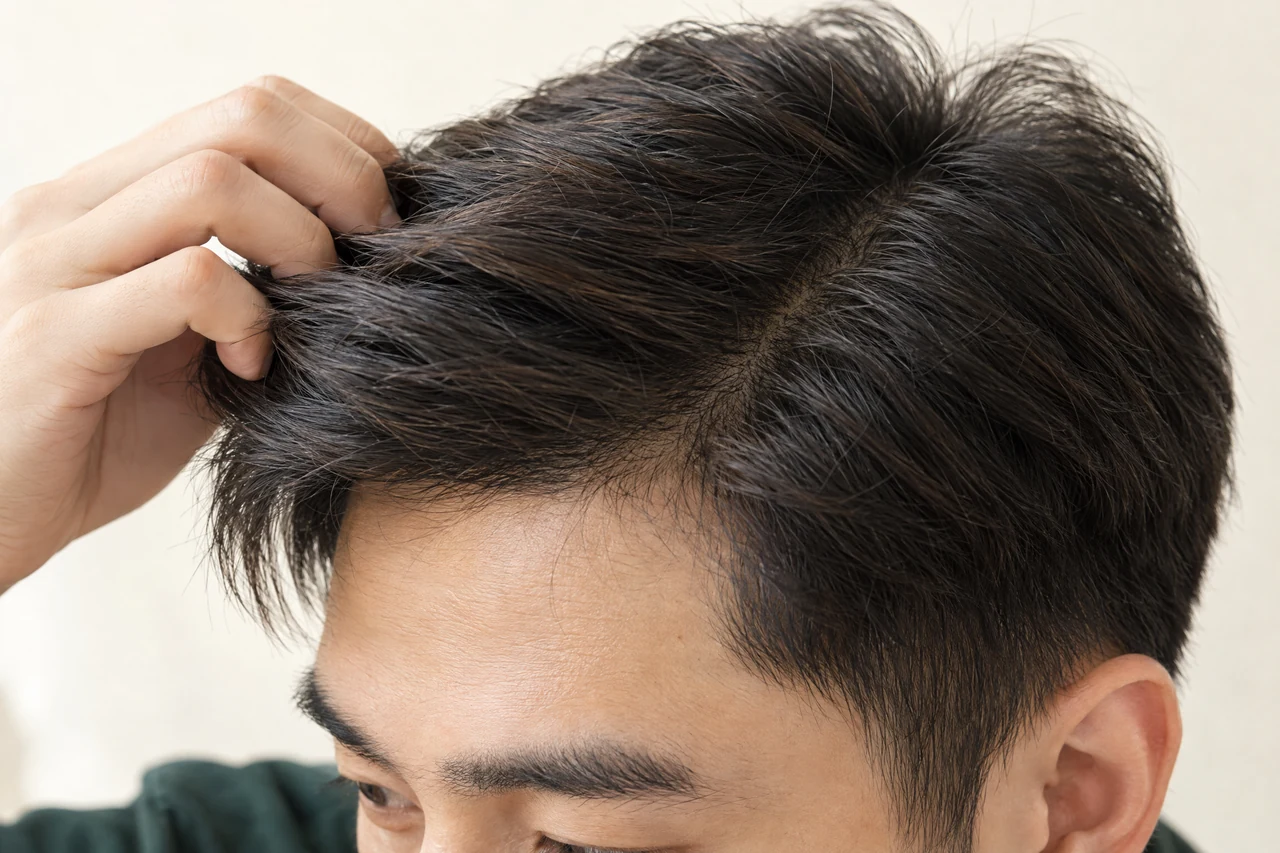
Short sides show a mixture of hair and visible skin, whereas a longer top presents more overlapping strands. Even a connected colour direction can therefore look less uniform across the head than it does on a loose colour swatch. Point out whether you like that contrast or want it visually softened. Include the crown and back in your photographs: a colour choice that works at the fringe still needs to fit the rest of the cut.
White strands, contrast and the usual cut shape
Men's grey hair coverage and men's grey blending are different appearance goals: a more consistent colour or some visible white strands. Show the hairline, temples and the length you usually keep after a haircut. Short sides can change how much white is visible, so discuss the colour with the normal cut shape rather than a shade name alone.

Decide how visible the change should be
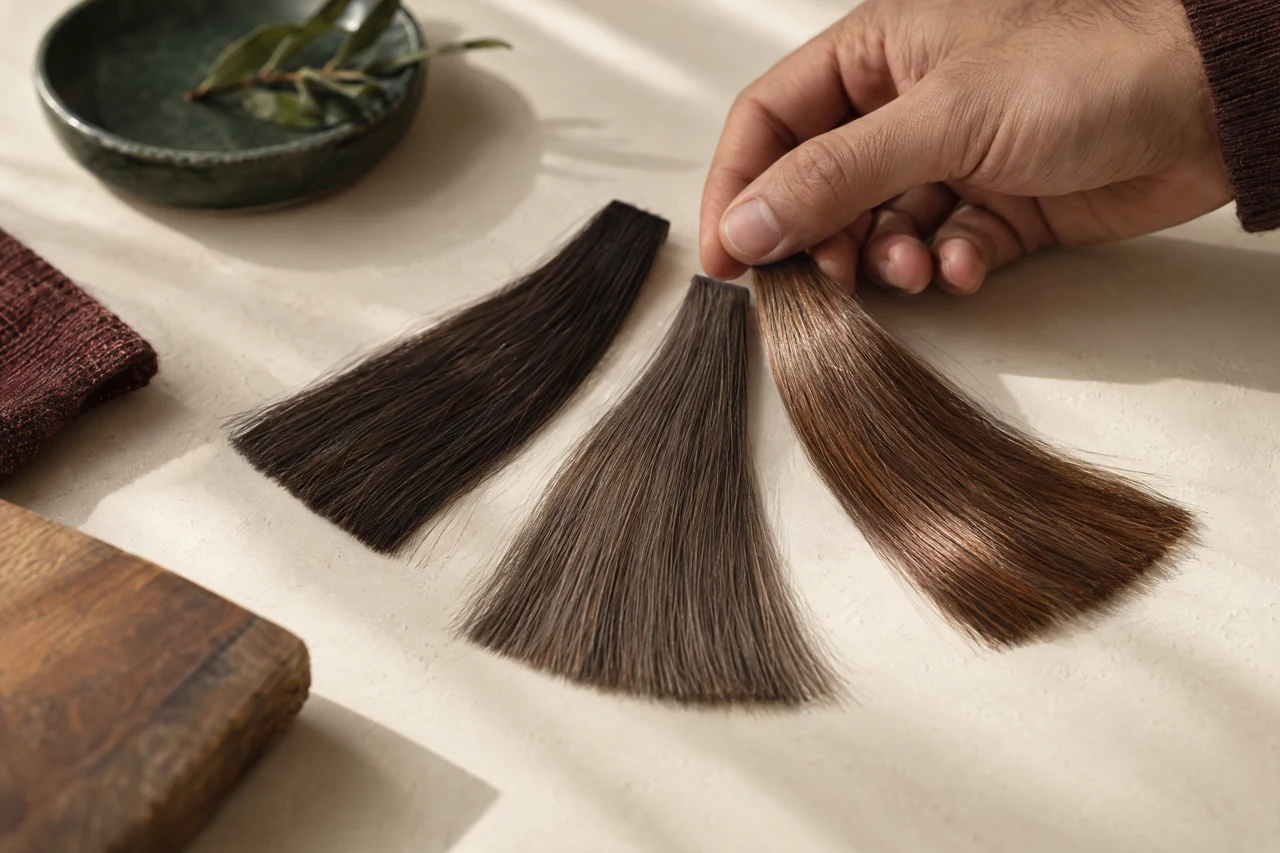
A brown close to your natural depth can be a different visual choice from a brighter warm or cool shade. Describe the change you want at work, in daylight and when styling the top. There is no fixed male colour chart that decides suitability; starting shade and personal preference are more useful than a label.
Separate depth from reflection when choosing a reference. Depth describes how light or dark the hair looks overall; reflection describes the warmth or coolness you notice as light catches it. You might want to keep a dark outline while introducing a warmer brown on the visible top. Alternatively, you may prefer a distinctly lighter appearance. These are different requests even if both photographs are described as brown.
Continue with hair colour ideas for men for that specific comparison and the preparation questions it raises.
If avoiding bleaching matters more to you than reaching a particular photograph, use no bleach hair colour to prepare a discussion based on your existing hair rather than a promised shade.
Subtle brown or a stronger reflection
Choose references with a similar haircut length and show what you like about each one. A deep brown with a quiet warm reflection can be easier to relate to a dark natural base than a pale cool-grey reference. Tell the stylist if obvious red, orange or golden reflections are something you dislike. Compare the goal in soft daylight and ordinary indoor light, and avoid relying solely on a heavily edited image. A colour name helps start the conversation, but the acceptable degree of change is the more useful decision.
Growth and trimming affect the visible colour
Shorter haircuts remove coloured lengths as the hair grows. The contrast between new roots and the remaining colour also depends on the target depth. Discuss your normal haircut pattern when planning colour, but do not assume a fixed maintenance interval. If new roots or grey coverage are the main concern, use the more specific service enquiry.
Think about what happens between haircuts. If you clip the sides closely but retain the top, the sides can return towards their natural appearance while coloured hair remains above them. If you shorten the top substantially, more of the colour is removed too. Neither pattern automatically means the colour has faded; trimming and new growth can change the visible balance without the remaining strands changing shade.
For an existing colour you already like, a root touch up enquiry helps distinguish new growth from lengths that may not need the same work. Include a close photograph of the boundary as well as a full view of your cut.
Colour placement after regular haircuts
Describe your normal haircut pattern in practical terms: whether you refresh the sides separately, trim the fringe or shorten everything together. Also say if you are growing out the top. Retained length changes which areas stay coloured longest, so the plan should match that intention. Decide what would prompt a follow-up for you: a visible root line, a warmer reflection, lost colour at the sides or a change in the haircut outline. These observations are more useful than expecting everyone with short hair to follow the same calendar.
Confirm colour scope alongside any cut
Share photographs of your current top, sides and back with any colour history. Ask whether the colour and haircut should be planned together and confirm their quoted scope. The public tinting range is not a dedicated men's package; any combined arrangement and the work needed for your particular target must be confirmed before booking.
The public tinting range is HK$800–HK$1,000. This is the general tinting listing, not a promise that every men's colour request falls within it. A target involving lightening or a different treatment needs its own scope confirmation. Short hair alone does not establish which process is required. Explain your budget alongside the colour goal so the discussion can focus on an appropriate, clearly quoted option.
The hair salon price list helps you distinguish listed services from the proposed work for your own appointment. Ask what the quote includes rather than assuming that a haircut, lightening or additional colour work is bundled into the tinting figure.
Do not assume a cut-and-colour package
If both services matter, ask whether they can be arranged together and how the sequence will be planned. Cutting away substantial length changes the areas left to colour; a small tidy-up may be a different arrangement. Give your preferred date and any later commitment, but obtain the proposed appointment duration before making tight plans. You can also identify a fallback goal, such as keeping the depth closer to your natural hair, if the original reference needs more work than your budget or schedule allows.

Bring hair history and scalp information to the enquiry
Short hair can still contain previous dye, bleach or perm treatment, particularly on a longer top. Record what was used, roughly when it was applied and which areas were treated. Include home colour and colour-depositing products rather than assuming only salon services count. If you do not know the product, a photograph of its packaging or a previous service record is more helpful than guessing.
The FDA's hair-dye safety guidance explains that a reaction can occur despite previous uneventful colouring. It recommends following product instructions and skin testing before every use, while noting that a negative test cannot rule out a later reaction. Share previous symptoms and known ingredient allergies before arranging colour, and ask what preparation the proposed product requires.
Separate the colour reference from the safety details
Keep your preferred appearance and any past reaction information as separate parts of the enquiry, so neither is overlooked. Mention scalp irritation, sunburn or broken skin before the visit; the FDA advises against dyeing when the scalp is irritated, sunburned or damaged. Previous swelling, a rash or burning should not be treated as an ordinary colour preference. Seek medical advice about reactions rather than trying another shade as a workaround. This preparation is relevant even when you only want a discreet dark tint.

Plan for the way you wear coloured short hair
Bring a photograph of your usual dry hairstyle as well as the reference. A matte, forward-styled crop and a swept, glossy top show reflections differently. Colour will not replace the length or styling needed to reproduce a reference haircut. Ask how to assess the shade with your normal finish, and whether the proposed care routine fits the way you wash and style your hair.
The American Academy of Dermatology's colouring and perming advice recommends protecting treated hair from sunlight because it can become dry, rough and faded. Consider that advice alongside your outdoor routine in Hong Kong. For cleansing and styling after the service, follow the instructions given for the actual treatment rather than adopting a universal wash-delay rule from an unrelated colour reference.
Keep a useful record for your next haircut
Take a clear photograph after colouring and compare later photographs in similar light, with similar styling. Notice the top, temples and sides separately. If the shade seems different, explain whether you see a new root boundary, warmer lengths or less coloured hair after trimming. Bring those observations to the next enquiry. They help distinguish an upkeep question from a new colour goal and keep your next haircut aligned with the appearance you want to retain.

Compare men's colour goals with the short-hair outline you plan to keep
| Main goal | What to compare | What to discuss before arranging work |
|---|---|---|
| Discreet overall tint | A depth close to the natural base with a chosen reflection | How the longer top and close sides should relate in everyday light |
| More noticeable colour change | A brighter top or stronger warm or cool appearance | Starting colour, previous treatment and whether additional processing is needed |
| More consistent grey coverage | White strands at the temples, hairline and crown | The amount of grey and the contrast you want after the usual haircut |
| Keep some visible grey | The mix of dark and white strands rather than complete concealment | Which areas should retain white strands and the desired overall depth |
| Refresh existing colour | New roots versus retained coloured lengths | Whether the concern is growth, a tone change or colour removed by trimming |
Your preparation checklist
- Photograph the dry top, both sides and back in clear light; include the hairline if white strands matter.
- Describe the haircut you will keep, including any planned change to the top, fringe or side length.
- Choose a reference and explain the depth, reflection and degree of contrast you like or dislike.
- List previous colour, bleach, perm and home-product use, including the areas treated and approximate timing.
- Share past reactions or current scalp irritation, and ask about the proposed product's preparation instructions.
- Confirm the colour scope, any haircut arrangement, the quote and expected duration before committing to a visit.
Frequently asked questions
Can I discuss brown without a dramatic change?
Yes. Explain the depth you want to keep and whether a warm or cool reflection appeals to you. A discreet reference helps describe the goal but does not guarantee an identical result.
Is grey coverage the same enquiry?
Grey coverage depends on the amount and location of grey and the contrast you want to retain. Use the grey-hair colour page to prepare that discussion rather than assuming it is the same as a fashion-colour change.
Should I cut before choosing colour?
Discuss the planned cut and colour together first. The final length affects how much coloured hair remains visible; the order of the proposed steps needs confirmation for your appointment.
Discuss colour that fits your next haircut
Send Vit So your current top, side and back photographs, your preferred colour reference and any previous treatment details. Mention the cut you want to keep and your budget for a men's hair colour enquiry in Sheung Wan. The proposed work, price and availability need confirmation; sending an enquiry does not confirm a booking.
Start your WhatsApp enquirySources & further reading
- Coloring and perming tips for healthier-looking hair
General advice on protecting dyed, bleached or permed hair from sunlight and recognising treatment-related damage.
- Hair Dyes
Product instructions, reactions despite previous uneventful use, the limits of skin testing and avoiding dye on irritated or damaged scalp.



