







Do highlights need bleach for the contrast you want?
A larger difference between the base and the target generally asks more of the lightening process. That does not let a photograph establish the exact method or number of sessions. Point out the lightness and warmth you would accept, and explain whether avoiding bleaching is a firm boundary or a preference to discuss.
Separate the amount of hair you want coloured from how light each selected strand should become. A small face-framing section can still require considerable lightening if its target is pale blonde. Conversely, a more widely distributed pattern may look restrained when the strands stay close to the base. Saying that you want only a little colour is therefore not enough to decide whether bleach is involved.
Bleach is not the only professional way to lighten natural pigment. Wella's guide to high lift blonde colour describes high lift colour as permanent colour that lifts and tones natural hair. It recommends this approach for suitable uncoloured hair or natural roots, while distinguishing very dark or previously coloured hair that may need pre-lightening. This explains a possible alternative, not a promise that every brunette reference can be recreated without bleach.
Review hair highlights to check its service scope and the details to share before arranging the related work.
Do highlights need bleach when the target is much lighter?
Bleach becomes more likely when selected strands need to move far beyond their starting depth, particularly towards a pale result. Ask whether your preferred look depends on that brightness or whether a deeper, warmer version would still appeal. A beige reference may attract you because of its softness rather than its actual lightness. Identifying that preference gives the consultation a useful alternative if the original target is unsuitable.
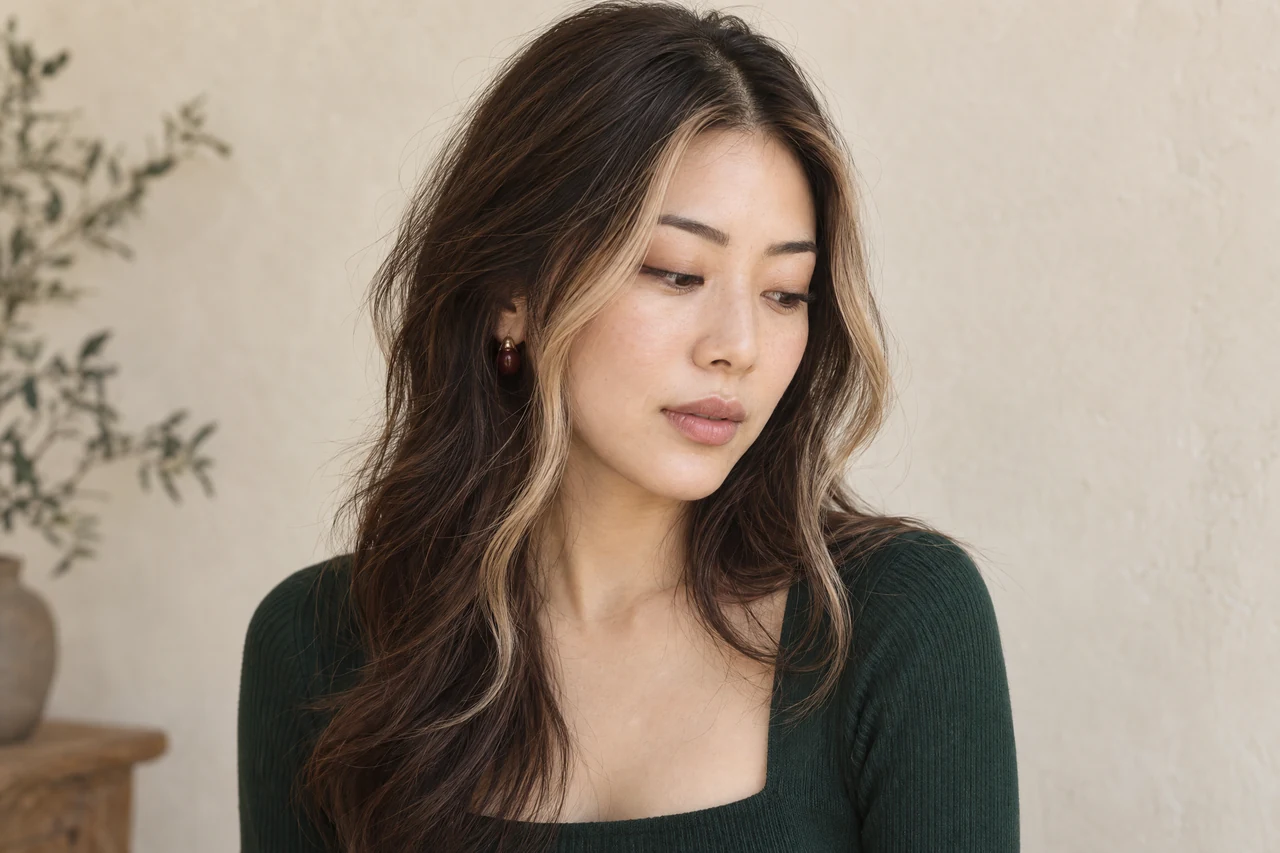
Existing dye and uneven chemical history
Tell the stylist about dark dye, home colour, previous bleaching, perms or straightening, including which areas were treated. The roots and lengths may start from different conditions. Do not assume a lighter colour applied over older dark dye will reproduce a pale reference; assessing the existing pigment and condition is part of deciding what is feasible.
Hair that looks naturally dark may still contain artificial pigment. A previous brown tint, an at-home black colour or a dark shade used to cover old highlights all matter. Include colour that has visibly faded: fading does not establish that the lengths are now equivalent to untouched hair. Where possible, bring product names or packaging photographs and explain whether the colour was repeatedly applied through the ends or mainly used at the roots.
Also identify the old lightened areas beneath any darker overlay. Those lengths have a different history from new growth, even if the surface shade now looks similar. The aim is to avoid treating the whole head as a uniform starting point. Your recollection need not be perfect; an honest description of what you remember is more useful than assuming everything has grown out.
If the main obstacle is accumulated dark colour rather than the highlight pattern, the guide to hair colour correction helps you prepare the history and describe the change you want before discussing further processing.
New growth and previously coloured lengths need separate attention
Ask the stylist to explain which areas are being assessed separately and whether a strand test is appropriate. A strand test concerns how a selected sample responds; it is not the same as a skin allergy test and cannot guarantee identical behaviour everywhere. The roots might support one approach while older lengths require a different plan, a deeper target or no further lightening. This distinction is especially important when the reference shows continuous pale strands from near the scalp to the ends.

A no-bleach balayage request
Can I get balayage without bleach? A painted placement pattern does not itself decide the chemistry. Feasibility depends on your base, earlier colour and required brightness. If avoiding bleach is essential, explain that limit and accept that the target contrast may need reconsideration. The published Balayage/Ombré item includes one bleaching session, not a confirmed no-bleach variant.
Wella's high lift guide discusses using suitable permanent colour with highlights or balayage techniques. That supports the distinction between placement and product choice. It does not establish that a particular no-bleach variation is available to book here. When enquiring, describe the soft transition you like and your process boundary separately, so the response can address both rather than simply accepting the word balayage.
The listed Balayage/Ombré item is HK$2,500 and includes one bleaching session. Treat that as the stated item scope, not a calculation for an unlisted bleach-free option. Ask what the proposed quotation covers for your hair, including any separate toning or additional work. Do not assume that removing a process creates a corresponding discount or that an included session guarantees the final shade.
Review balayage hair colour to check its service scope and the details to share before arranging the related work.
Placement language cannot guarantee a bleach-free result
A useful request is: I like the softly blended placement, but I do not want bleaching; what depth could be realistic on my current hair? That leaves room to discuss the design without implying that the pale ends in a reference are achievable. If the brightest areas are essential to you, say so too. The answer may be to change the process, change the target or defer the work rather than rename the same result.
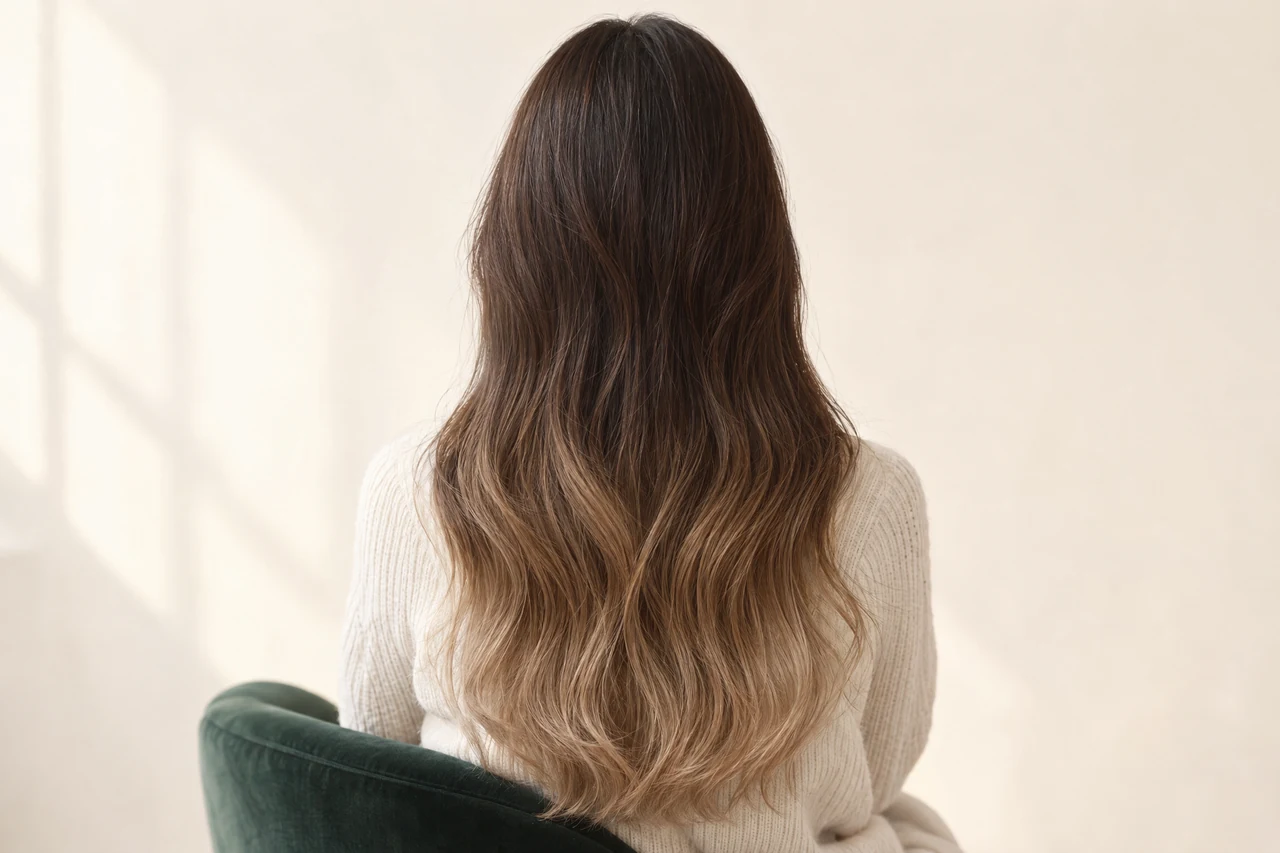
When a different goal or a pause makes sense
A consultation may lead to retaining more depth, choosing a smaller visual change or postponing chemical work on fragile areas. Those are decisions about the actual hair, not failures to match a name. Confirm the feasible target, proposed scope and quotation before processing; no colour label promises one-session lightness or damage-free results.
Avoiding bleach does not mean avoiding all chemical change. High lift colour is still permanent colour, and the American Academy of Dermatology's colouring and perming advice notes that appearance-enhancing treatments can leave hair dry and brittle. Choose a process by suitability and the change it needs to make, not by treating a no-bleach label as a guarantee of undamaged hair.
If your ends are breaking, tangling unusually or feeling different since earlier processing, describe that before focusing on the target shade. A glossy reference or a smooth blow-dry cannot settle the condition question. Preserving length may matter more than creating pale ends now. Agreeing to retain depth can be a positive design choice, provided you understand what the revised colour will and will not show.
If lightening is part of the agreed plan, consider hair care after bleaching when deciding whether the ongoing handling and care fit your routine.
Keep the hair assessment ahead of the reference shade
Discuss priorities in plain terms: keeping long ends, avoiding further processing on old highlights, or accepting more warmth instead of chasing pale cool strands. Ask what would cause the work to be adjusted or stopped. A pause should not come with an invented universal waiting period or a promise that a mask will make any target possible later. Future colour still needs an assessment of the hair that is present at that time.

Judge the achievable version in everyday light
A no-bleach boundary may mean accepting a quieter difference that is easier to notice outdoors than at your desk. Compare your references with the settings where you actually want the colour to show. A bright window portrait, warm restaurant lighting and a photograph of styled waves do not communicate brightness in the same way. Bring an unfiltered picture of your current hair and explain what you like in the reference without relying on its shade name.
For daily life in Hong Kong, include how you usually wear your hair and whether your workplace expects a restrained colour. If the proposed deeper result would only satisfy you in strong light, clarify that before agreeing. More selected strands will not necessarily compensate for a target that is too close to your base.
Discuss care before committing to more brightness
Tell the stylist about frequent heat styling and outdoor time when discussing upkeep. The AAD advises protecting dyed, bleached or permed hair from the sun because exposure can make it weak, dry, rough, faded and brittle. Sun protection is care guidance, not a way to guarantee a particular highlight tone. Ask for instructions appropriate to the agreed process rather than copying the routine attached to an unrelated photograph.

Turn the bleach decision into a clear enquiry
Your enquiry can begin with your current colour, the last known chemical services and whether avoiding bleach is essential. Then describe the lightest acceptable result and any warmth you would dislike. This is more actionable than asking for natural highlights while sending a pale blonde reference. Include your hair length and the parts you want to keep untouched so the scope can be discussed accurately.
Review no bleach hair colour to check its service scope and the details to share before arranging the related work.
Before proceeding, repeat back the proposed result in your own words. Confirm whether selected strands will be lightened, which old lengths will be included and whether the agreed target is a deeper alternative to your reference. If further work is suggested later, request a separate explanation rather than assuming every stage is already covered.
Agree on the outcome as well as the process
A useful agreement covers both what will be done and what you should expect to see. Confirm the quotation, inclusions and any changes that need fresh approval. If the no-bleach boundary remains firm, make sure it is understood before processing starts. An enquiry about feasibility is not a confirmed booking or acceptance of a particular chemical plan.

How the starting point changes the highlights-and-bleach discussion
| Starting point and goal | What needs assessment | Useful decision |
|---|---|---|
| Uncoloured hair; restrained lighter strands | Whether suitable permanent colour can create the accepted contrast | Keep the target flexible; do not assume subtle means bleach-free |
| Very dark base; pale blonde highlights | The gap between the base and target, plus strand condition | Discuss pre-lightening or a substantially deeper alternative |
| Old dark dye through the lengths | Artificial pigment and different root-to-end histories | Do not expect lighter tint alone to reproduce a pale reference |
| Old bleached ends beneath darker colour | Previously lightened areas and whether further processing is appropriate | Prioritise those lengths rather than treating them like new growth |
| Soft balayage placement; firm no-bleach boundary | Achievable brightness without changing the agreed process limit | Accept a revised target or pause if the reference depends on more lift |
Your preparation checklist
- Prepare a colour history, including home dye, darker overlays and any previous bleaching, perms or straightening.
- Identify which services affected the roots, middle lengths or ends; bring product information where available.
- Mark the lightest strands you like in the reference and explain whether warmth or depth can change.
- State clearly whether avoiding bleach is essential or a preference you are willing to discuss.
- Describe breakage, unusual tangling and your normal heat styling so condition and upkeep are considered.
- Confirm the feasible target, proposed process and quotation before agreeing to the work; ask what changes need further approval.
Frequently asked questions
Does a subtle highlight always avoid bleach?
No. Subtle describes the visible contrast, not the required chemistry. Existing dye and the starting depth can still affect how that result would be approached.
Can a photo show whether my hair is strong enough?
It can help explain colour and placement, but cannot fully assess strand condition. Share the chemical history and expect the feasible plan to need further assessment.
Should I try to remove old dark dye myself first?
Do not treat an online colour plan as a home chemical recipe. Share the existing colour history and ask for an assessment before adding another process.
Is high lift colour the same as bleach?
No. Wella describes high lift as permanent colour that lightens and tones natural hair, rather than a separate lightener-and-toner approach. It is still a chemical process with suitability limits, especially where previous colour is present. This distinction does not confirm a specific product or service for your hair.
Can I keep my dark roots and still need bleach?
Yes. Leaving the roots dark concerns the chosen area. Selected lengths can still require pre-lightening to reach the agreed brightness. Tell the stylist both where you want colour to begin and how light those strands should look.
Find a highlight target that respects your process boundary
Enquire with Vit So in Sheung Wan using your current hair photographs, chemical history and preferred reference. Explain whether avoiding bleach is essential, and ask about a feasible target and quotation before arranging the related work. Your enquiry starts the discussion; it does not confirm a booking or a no-bleach balayage service.
Start your WhatsApp enquirySources & further reading
- High Lift Blonde Hair Colour: Everything You Need to Know
Professional product guidance explaining high lift permanent colour, natural-pigment suitability and the distinction between application technique and lightening chemistry.
- Coloring and perming tips for healthier-looking hair
General advice about dryness and brittleness associated with chemical treatments and sun protection for dyed, bleached or permed hair.



