







Crew cut vs buzz cut: top length and shape
A crew cut retains more length on top than at the sides; a buzz cut is typically more uniformly short. The crew cut vs buzz cut choice affects how much shape you can create at the front. A buzz cut fade adds a side transition, so it is not simply the same uniform length everywhere.
Start by deciding whether you want any movable hair at the front. With a very short buzz, there may be little length to sweep across the forehead or lift with your fingers. More of the head outline and hairline remains visible. If you like the simplicity but feel unsure about that exposure, discuss a less close version before removing all the length you currently use for coverage.
A crew cut gives you a middle ground when you want a compact outline but still enjoy a small lift at the front. Ask how the front connects to the crown rather than requesting extra length everywhere. A noticeably longer front can create shape without making the whole top equally tall. Whether it stands naturally or needs direction depends on your hair, not merely the name of the cut.
Treat the sides as a separate choice. You can prefer a short top without wanting exposed skin around the ears. If the side transition is the part you like in a reference, identify that detail before agreeing on the top.
Continue with fade haircut for that specific comparison and the preparation questions it raises.
Uniform shortness or a little extra height
Look at both the front and side views. A dark, even-looking buzz in a photograph can look different on hair with another density or colour. For a crew cut, point out the front height you like and where you want that height to reduce towards the back. These visible features communicate more than an isolated clipper number.
A short cut that still supports a side part
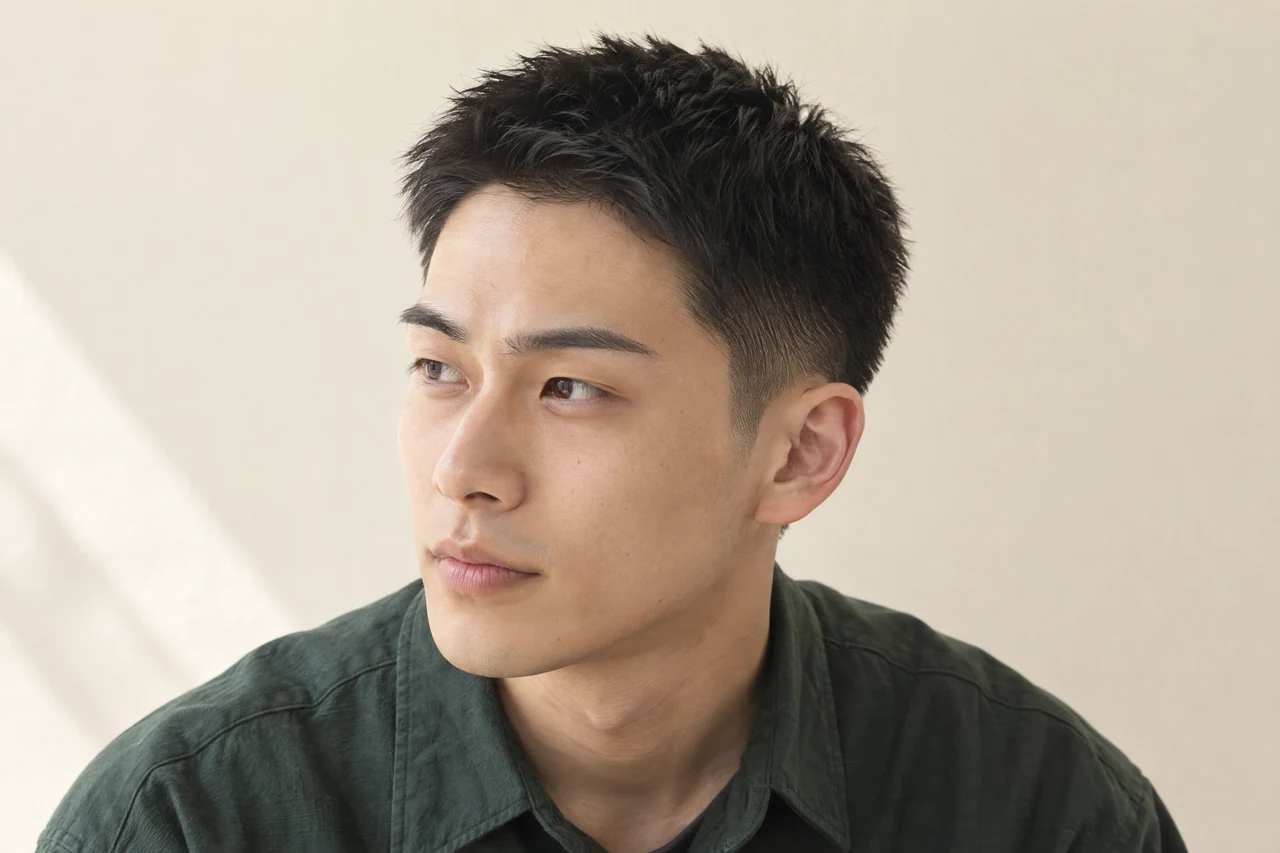
An ivy league haircut keeps enough top length for a neat side part while retaining a short overall outline. Check your natural parting and front growth direction before choosing it. The longer top may need more drying than a uniform short cut, even though both sit within a short-hair category.
The useful distinction is retained styling room. Woodward Barbers' Ivy League guide describes it as a crew-cut variation with a slightly longer top that allows a side part. Use that definition to narrow your references, rather than treating every pictured version as a fixed length prescription. Some examples have a restrained side sweep; others retain a much fuller front.
For an office-friendly direction, decide whether you want a comb-defined finish or a softer part made with your fingers. A natural part does not require a shaved line. Explain whether the forehead should stay open and whether the front should sweep sideways or slightly back. Cutting that front too short can remove the very movement that attracted you to the reference.
If you want to switch the part from one side to the other, say so before the top is cut. A photo with a strong part shows a finished arrangement, not proof that the same cut will fall equally easily in both directions. Show where your own hair separates after washing, especially if a front tuft repeatedly springs back.
The Ivy League option
This is worth considering when you want short sides but dislike having only one way to wear the top. Ask to see the front swept neatly and then relaxed. If the relaxed version is also acceptable to you, the retained length serves everyday use rather than only the styled appointment photograph.
Short hairstyles for men with upward movement
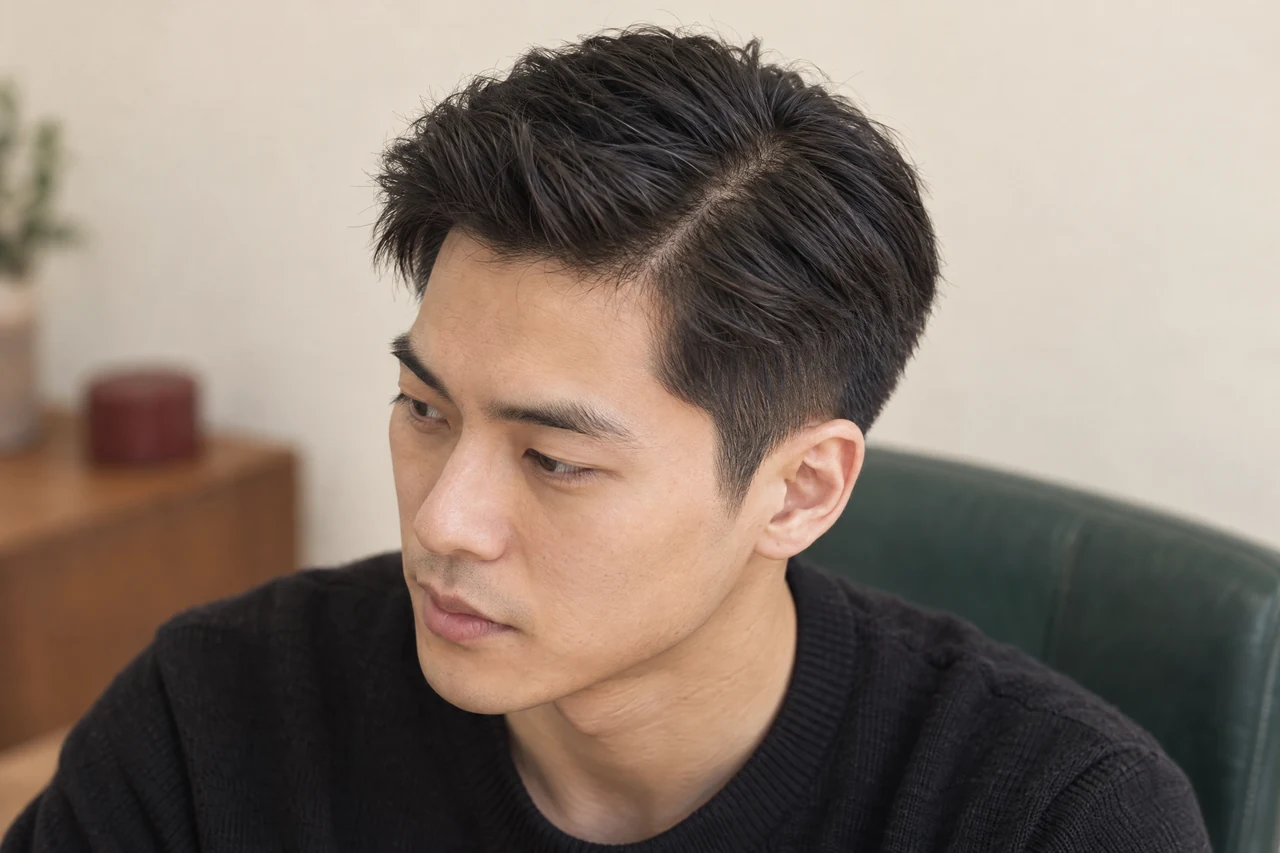
A faux hawk haircut uses a top styled upwards towards the centre rather than requiring a fully shaved strip at the sides. Discuss the height you want and whether the same cut should also lie flatter. The lifted finish depends on retained length and styling; the haircut alone does not guarantee constant height.
Choose how pronounced you want the central shape to be. A low, loose ridge can read as textured short hair, while a narrow, firmly styled ridge becomes the main feature. The relevant question is not simply whether you like height. It is whether you are willing to direct the hair towards the middle whenever you want that particular finish.
Ask what happens when the styling product is washed out. The top may fall forward, separate to one side or spread more broadly. If you need a quieter look at work, agree on a flatter option before cutting. Do not rely on a strong-hold product to make an unsuitable everyday outline comfortable.
If you prefer hair travelling forward rather than upwards, a short fringe may be a more useful direction. That is a different top-length decision, not just a faux hawk styled without effort.
Continue with textured crop haircut for that specific comparison and the preparation questions it raises.
Short hairstyles for men that keep a central ridge
When showing a reference, identify the ridge height and how far it continues towards the crown. Ask whether you can recreate it with your fingers or whether the finish needs drying and more precise shaping. Keep the side outline in the discussion: an extreme side contrast is optional, not the defining requirement of upward central movement.

Less morning styling is not the same as no upkeep
When comparing low maintenance short haircuts for men, separate morning effort from trim frequency. Very short hair may dry easily but show changes at the edges quickly. A slightly longer, softer outline may grow out more gently, yet need direction when drying. Choose the trade-off that matches your actual routine.
Decide what normally makes you feel ready for a trim. It might be the front losing its shape, hair touching the ears or the side contrast becoming less distinct. These are different maintenance priorities. If you travel often or cannot return conveniently, explain which changes you can accept rather than asking for a permanently fresh outline.
Short hair still needs care suited to the scalp and hair type. The American Academy of Dermatology's healthy hair tips recommend washing according to how dirty or oily the hair becomes and applying shampoo to the scalp. They also advise gently absorbing moisture rather than roughly rubbing the hair. Shortness alone is not a reason to adopt a rigid washing schedule.
When choosing a haircut for a busy lifestyle, include what happens after exercise or headwear, not only your first departure from home. A finish that you can reset with your usual tools may be more practical than an impressive shape you cannot restore during the day.
Compare drying effort with repeat visits
Describe your least elaborate morning, not your ideal one. If you normally leave after towel-drying, say that. If you enjoy a deliberate side part, allow for directing it as it dries. Also explain whether you value crisp edges enough to arrange repeat visits; a quick morning routine and infrequent appointments are separate goals.
Choose references that match your natural top
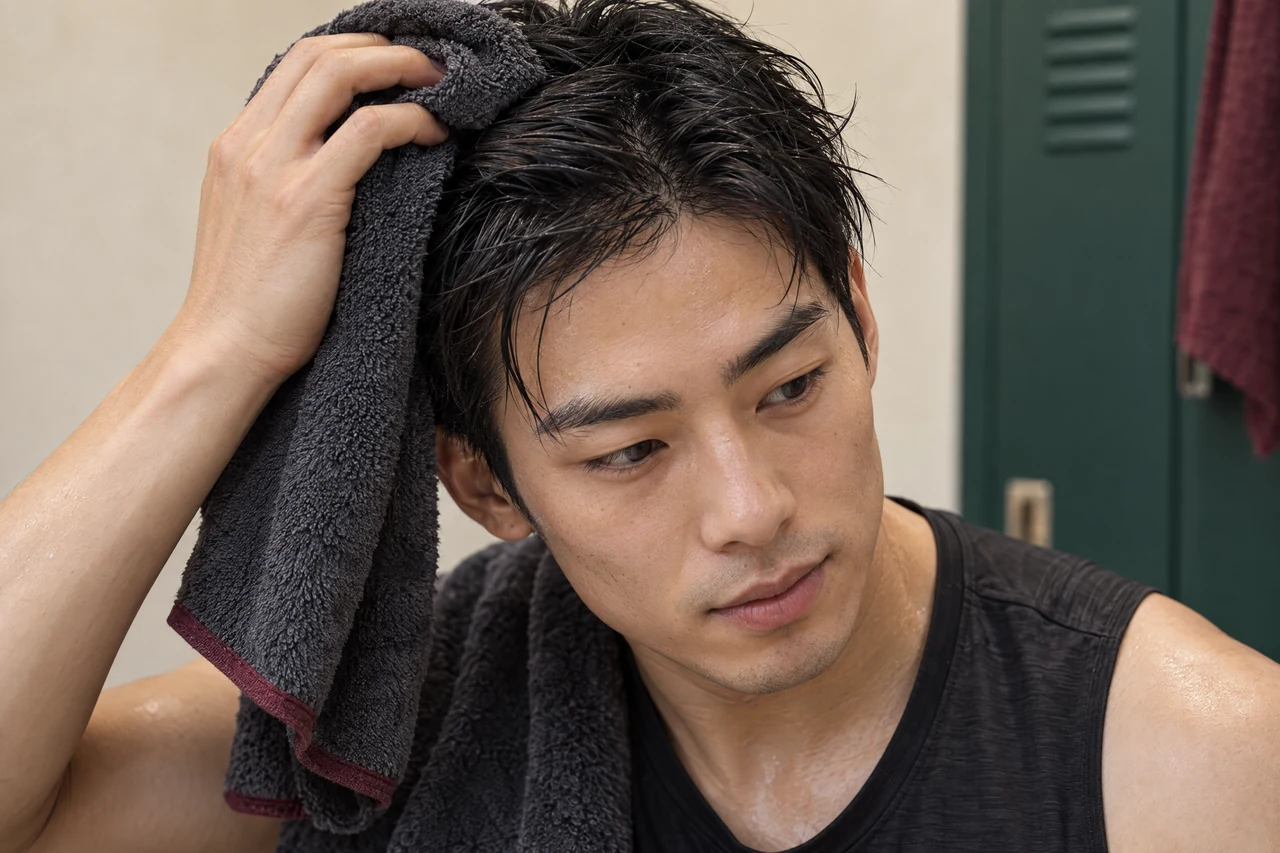
Straight, coarse hair can look different at the same visible length from fine hair or hair with a bend. Hair that sticks out at the crown may become more noticeable when shortened. Do not assume that cutting every troublesome area closer will make it lie down. Show the problem in its dry, unstyled state and ask which lengths should be retained or reduced.
With waves or curls, judge the dry shape instead of copying the stretched appearance of damp hair. With fine hair, notice whether the reference relies on separated strands or a dense, solid-looking top. The aim is to adapt the feature you like, not promise another person's density or exact outline.
Useful haircut reference photos show the top from the front and the relationship between the crown and sides. Explain which feature you want from each image. A photo of your previous cut can also help you show what felt too exposed, too bulky or difficult to part.
Separate length from the photographed finish
Ask what you are seeing: the remaining length, the direction created by drying or the hold from a styling product. If the image only shows a front view, avoid guessing the back. Bring a reference for the missing angle or describe whether you want the crown close, softly rounded or visibly textured.

Agree on a short cut you can repeat at home
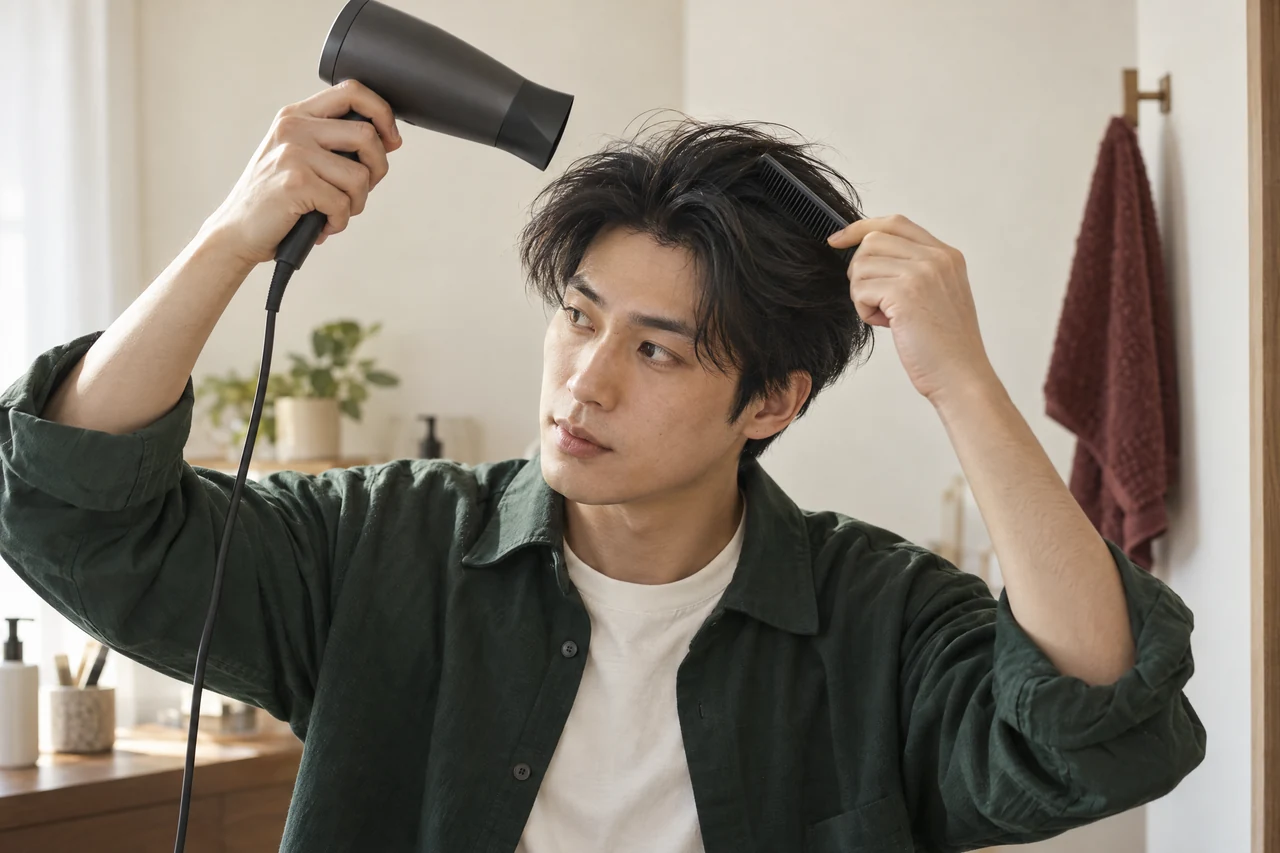
Before the appointment finishes, ask for the simplest routine that still produces the feature you chose. For a side part, watch how the direction is established. For a lifted front, ask where to concentrate the shaping rather than adding product across the whole head. Mention the comb, dryer and products you actually have at home.
If drying is part of that routine, the American Academy of Dermatology recommends limiting heat styling, using low or medium heat settings and a heat-protection product. The point is gentle handling, not a medical judgement on which short style looks best. Choose a finish that does not require repeatedly reheating the same area to correct it.
The listed men's wash, cut and blow dry price is HK$380. When enquiring, describe the cut and any additional work you want so the scope is clear. A style name alone does not establish extra services or the time available.
Review men's haircut to check its service scope and the details to share before arranging the related work.
Keep a record of the useful details
After the cut, save clear photos of the front, sides and back. Note whether you liked the natural fall as much as the styled result. At your next visit, explain what changed first. That gives the next length decision a practical starting point without reducing the entire haircut to a guard number.
Compare short cuts by the movement you want to keep on top, not by a fixed clipper number.
| Cut direction | What remains on top | Morning choice | Upkeep trade-off |
|---|---|---|---|
| Buzz cut | Nearly uniform shortness with little movable front length | Often little shaping to do | A close outline exposes the head shape; edge changes may matter quickly |
| Crew cut | A short top with more shape than the sides, often retaining front lift | Leave natural or direct the front | Front height and crown behaviour still need attention |
| Ivy League | Enough length to create a side part or soft sweep | Establish the part and direct the front | More styling flexibility, but more drying direction than a very close buzz |
| Faux hawk | Length that can be directed upwards towards the centre | Shape a ridge when you want the lifted finish | Choose an acceptable flatter version for days without that styling |
Your preparation checklist
- Choose the top's main job: nearly uniform shortness, a small front lift, a side part or a central ridge.
- Show your hair dry and without heavy styling so the natural part, crown and outward-growing areas are visible.
- Bring front and side references, and identify the features you like rather than relying on the haircut name.
- State how much forehead and ear exposure feels comfortable, including whether you want visible skin at the sides.
- Explain your real morning tools and whether you need to reset the shape after exercise or wearing headwear.
- Agree on the change that should prompt your next trim and ask to see a simple home styling routine.
Frequently asked questions
Is the shortest cut always easiest to maintain?
Not in every sense. It can reduce morning styling while requiring regular attention if you want a sharp outline. Consider both routines.
Can I keep enough length to change the parting?
Possibly, depending on current length and growth direction. Explain which parts you want to try before deciding how short to cut the top.
Should I bring a clipper number?
You can mention it, but show the desired remaining length and outline too. Equipment and numbering do not communicate the whole cut or guarantee identical results.
Does a short haircut have to include a skin fade?
No. A short top and exposed skin at the sides are separate choices. Describe the coverage you want around the ears and how much contrast you like between the sides and top.
What if I like a faux hawk but rarely use styling product?
Ask to discuss its relaxed shape first. If you only like the deliberately lifted ridge, that finish may not match your usual routine. A modest front lift or another short top direction may be more useful.
Keep the top length that fits your routine
Enquire with Vit So in Sheung Wan about a short cut that suits your natural growth direction and daily effort. Share current photos, your preferred reference and whether you want a part, lift or nearly uniform finish. Confirm the service scope and available appointment before visiting; an enquiry is not a confirmed booking.
Start your WhatsApp enquirySources & further reading
- Tips for healthy hair
Washing according to oiliness or dirt, shampooing the scalp, gently absorbing moisture and limiting heat styling with low or medium heat and heat protection.
- Ivy League Haircut: A Classic Style That Never Goes Out of Fashion
The Ivy League retains more top length than a classic crew cut, supporting a side part and other styling directions.



