







How often should I trim my fringe when keeping the shape?
Watch for the front reaching your eyes, losing the outline you enjoy or requiring more adjustment during the day. These changes are more useful than a fixed trim interval. Compare the fringe after your usual drying routine and decide whether you want to restore the current shape or accept a slightly longer version before arranging a visit.
Choose a practical reference point: how the fringe looked when you liked wearing it at home, not only immediately after a polished salon finish. Notice where the shortest centre pieces stopped, how much eyebrow was visible and whether the corners fell forward or opened to the sides. A defined horizontal edge gives you a different maintenance target from a soft, parted outline. A longer fringe is not automatically overdue if that extra length still suits your intended look.
Check it in ordinary use. Look straight ahead without raising your eyebrows, then look down as you would when reading your phone or working at a desk. If you wear glasses, put on your usual pair and notice whether the ends sit comfortably above the frame, rest on it or become caught when you remove it. Report the actual inconvenience rather than asking for an arbitrary gap. The desired clearance depends on the shape you want to keep and how you wear the hair.
A useful reason to enquire is a repeated change, such as the same central pieces needing to be moved out of your eyes after every normal drying session. A single awkward morning after sleeping on the fringe is less informative. If it has simply become a softer version of the shape you enjoy, you can choose to keep that length. Maintenance means restoring an agreed outline, not necessarily returning to the shortest fringe you have ever had.
Continue with fringe cut for that specific comparison and the preparation questions it raises.
How often should I trim my fringe as it reaches my eyes?
Treat eye clearance as a prompt to decide, not an instruction to shorten every front piece. If you want to keep forehead coverage, ask which part is causing the obstruction and where it should finish when dry. If you want to open the front instead, first test whether a comfortable sideward arrangement clears your view without cutting. Avoid choosing a shorter length while holding the hair taut or pulling a curl straight: that is not the position in which you will wear it.


Mark the parts you want to grow
When planning how to grow out bangs, separate the pieces you want to retain from the small area you might continue maintaining. Repeatedly shortening the outer pieces can restart the transition toward longer sides. Explain whether your eventual aim is to tuck behind the ears, join face layers or remove forehead coverage altogether.
Start with the destination in everyday terms. Being able to tuck the front behind your ears is different from keeping loose cheek-level pieces beside a ponytail. Removing forehead coverage altogether is different again. Show the stylist the movement you want to achieve, including where the current hair slips free. This makes it easier to decide whether the next visit should preserve all the front length or maintain only a clearly identified central area.
Do not let the word tidy obscure the boundary. You might welcome a small centre adjustment but want the longer corners left untouched. Alternatively, you may want the whole fringe to gain length and accept some temporary unevenness. Ask the stylist to point out the proposed cutting area before work begins. If connecting the fringe to face layers would require shortening pieces you are trying to keep, discuss whether that connection can wait until the fringe has more length.
Bring a current photo with your usual parting and a reference showing the eventual front shape. Mark which feature matters: exposed forehead, sides reaching the cheek or enough length to tuck away. The guide to haircut reference photos can help you explain those details without expecting every feature of a reference image to transfer to your hair.
Continue with layered haircut for that specific comparison and the preparation questions it raises.
The centre and sides can have different goals
A smaller maintained centre with growing sides may suit someone who still enjoys a little forehead coverage. It is not the right compromise if your priority is to grow every front piece long enough to sweep back. Say which goal comes first. Also clarify whether the long pieces beside the fringe are part of its existing outline or separate face-framing hair. Adding those pieces into a fresh, wider fringe would change the plan rather than simply maintain it.

Choose a comfortable interim arrangement
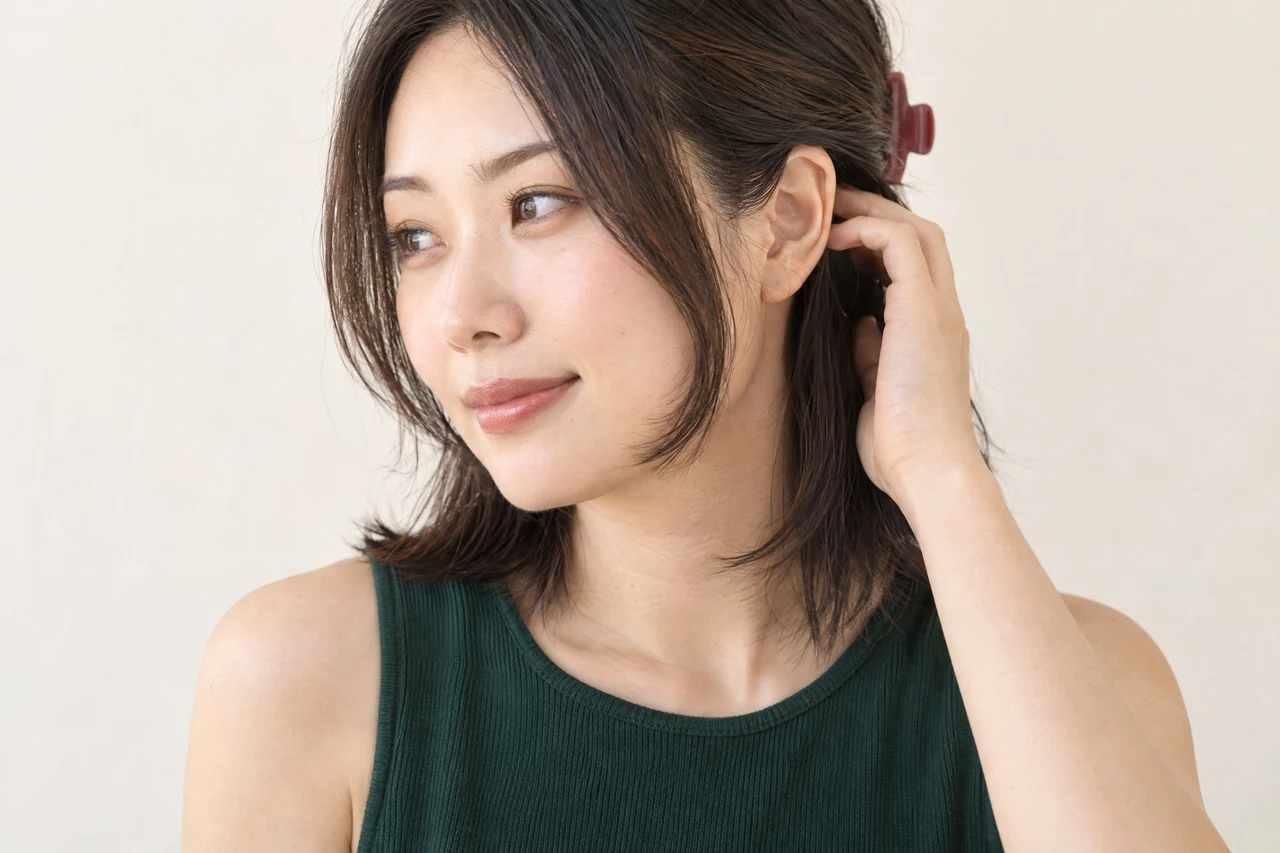
During the transition, try the parting and simple clips you already find comfortable, without assuming the hair will immediately hold a new direction. Discuss whether the corner lengths can connect to the sides or should remain untouched. The purpose is a wearable intermediate stage, not a promise that one trim can turn a short fringe into long layers.
Try a modest change in parting before deciding that extra length must come off. Notice whether the hair naturally separates near the centre or settles more comfortably toward one side. Then test that arrangement during your normal day, including walking outdoors and sitting at your desk. If the centre repeatedly falls forward, a familiar clip or comfortable headband may be more practical than forcing it back with increasingly strong styling products.
Southern Living's guide to growing out bangs describes headbands, pins and barrettes as transition options, alongside side-swept arrangements. These are possibilities to try, not requirements to adopt a new haircut. Choose support that holds the actual short pieces comfortably. If the rest of your hair goes into a ponytail but the fringe does not reach it yet, secure the front separately instead of pulling harder on the whole style.
Keep the transition gentle. The American Academy of Dermatology's hair-care advice recommends the lowest heat setting, air drying when possible and avoiding tight pulling or tugging. Applied to a growing fringe, that means favouring comfortable support over tension and avoiding repeated hot-tool passes just to make the ends behave. This guidance concerns hair handling; it does not determine the aesthetic shape or how often your fringe needs cutting.
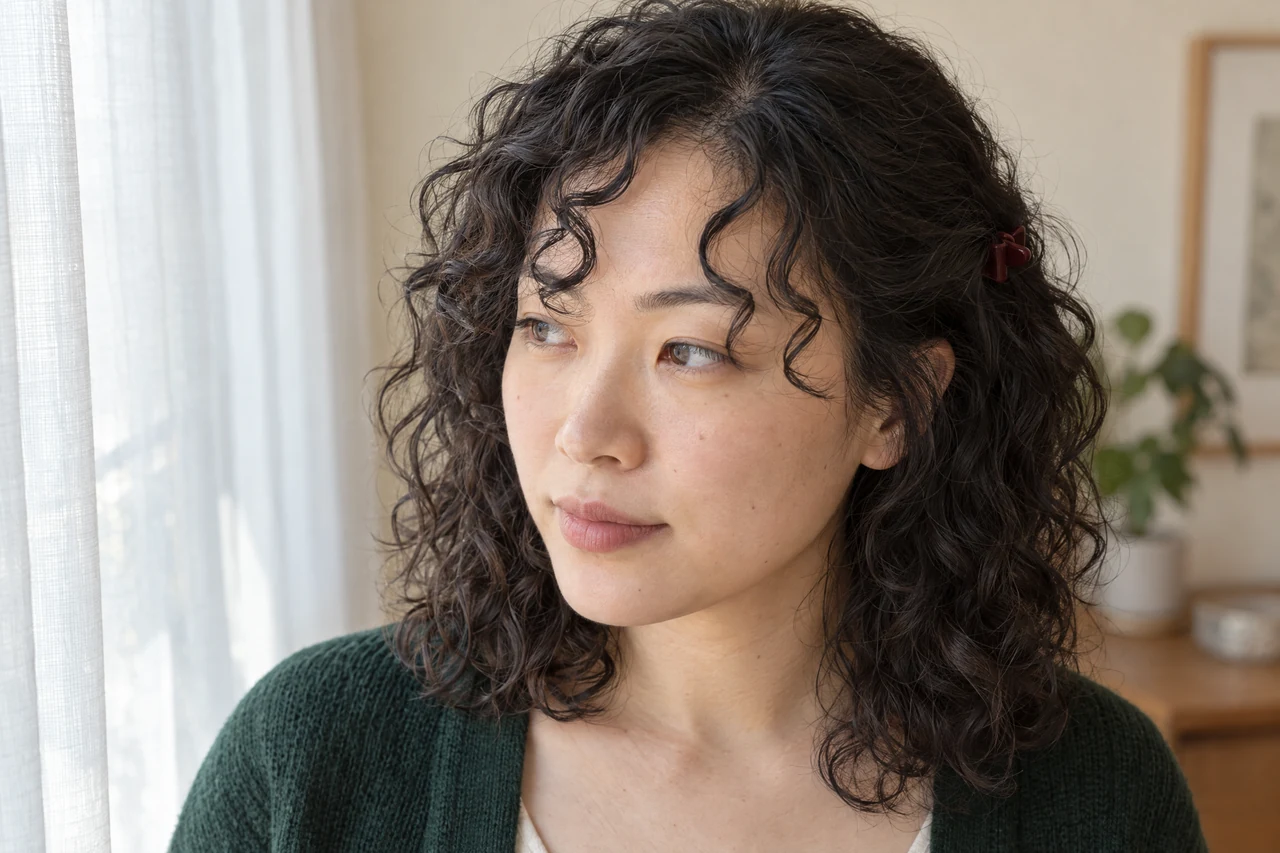
With waves or curls, compare the front after your normal drying method rather than judging only its wet length. A stretched strand and a settled curl can suggest different cutting targets. For a closer look at dry-length decisions, read bangs for curly hair before requesting a shorter outline.
Sideward fall and temporary support
An interim arrangement succeeds if you can repeat it without constant correction. A sideward fringe may still need a clip for exercise or a windy journey, and longer corners may frame the face without yet tucking behind the ears. Keep whichever option makes the current stage comfortable. If you cannot tolerate the centre near your eyes and do not want accessories, say so: maintaining that area may matter more to you than the fastest uninterrupted grow-out.
Confirm a visit without guessing its price
A small adjustment across the front is still an appointment with a scope to agree. Ask whether a standalone visit is available, which items are included and what charge applies. Do not assume a complimentary trim, a walk-in arrangement or a separate reduced rate simply because little length would be removed.
Make the enquiry specific enough to distinguish maintenance from redesign. Describe whether you want to restore the present eye clearance, change the parting or grow the sides toward your face layers. Attach a current front photo and mention whether your fringe is normally air dried, blow dried or worn curly. If you want no cutting outside the centre, state that directly rather than relying on the phrase fringe trim to communicate the boundary.
Ask whether the suggested scope includes washing, drying or adjustments beyond the fringe. If the discussion expands to the surrounding haircut, confirm the revised work and charge before agreeing. Little length removed does not by itself establish how the service is booked or priced. For a visit to Sheung Wan around work or other plans, allow for the appointment arrangement actually confirmed rather than assuming a brief walk-in stop will be possible.
Use book a hair appointment to send the intended work and possible dates; wait for confirmation before travelling.
Use this 6-point fringe decision checklist before enquiring. It brings together the outline you want, the pieces you need to preserve and the practical conditions for a visit. You do not need a perfect hairstyle photograph or a technical cutting term; a clear description of what bothers you and what must stay long is a useful starting point.
Scope and service items before booking
A useful request might say: I want the centre clear of my eyes, but I am growing the outer pieces toward an ear tuck. Please advise whether a standalone adjustment is available and confirm its inclusions and charge. Change those details to match your own goal. Once the scope is agreed, confirm the date and time as well. An enquiry starts the conversation; it is not itself a reserved appointment.

Choose the next step by fringe behaviour and the length you want to protect
| What you notice | If keeping the fringe | If growing it out |
|---|---|---|
| Centre reaches the eyes after normal drying | Discuss restoring the agreed dry clearance | Try comfortable sideward support; decide whether the centre must also gain length |
| Corners no longer follow the outline you liked | Ask whether the corners need a shape adjustment | Protect them if they are needed for an ear tuck or longer face framing |
| Longer fringe still sits comfortably | Keep the softer version if you enjoy it | Continue preserving length without cutting merely because time has passed |
| New parting needs constant correction | Review whether the original fall suits you better | Try a familiar clip or headband before sacrificing growing length |
| Fringe and surrounding layers look disconnected | Clarify whether you want a wider haircut change | Ask whether blending now would remove length needed for the final goal |
Your preparation checklist
- Check the fringe after your usual drying routine, with the parting you actually wear.
- Note where it reaches your eyes or glasses and which pieces need repeated adjustment.
- Choose whether to maintain forehead coverage, grow the sides or grow the entire fringe.
- Identify the pieces that must remain untouched and show the intended tuck or face-framing length.
- Try a comfortable interim parting or accessory and record whether it works during your normal day.
- Send your current photo and intended scope; confirm standalone availability, inclusions, charge and appointment details.
Frequently asked questions
Is there one correct number of weeks between fringe trims?
No. The chosen shape, growth and your tolerance for changing length differ. Check eye clearance and daily arranging effort against the shape you want to maintain.
Should every part be trimmed while growing the fringe out?
Not automatically. Identify the sides and other pieces that need to gain length, then discuss whether only a smaller maintenance area should be adjusted.
Are short fringe touch-ups free?
A complimentary touch-up is not confirmed. Ask about the available scope, charge and appointment arrangements before making plans.
Does an awkward morning mean my fringe needs a trim?
Not necessarily. Return to your usual parting and drying routine, then check whether the problem repeats. A temporary change after sleep is different from the same pieces consistently reaching your eyes or losing the outline you want to maintain.
Can I grow the sides while keeping a little fringe at the centre?
You can discuss that as an intermediate goal. Identify the centre you want maintained and the corners you want left long. If your eventual aim is to sweep every front piece back, repeated centre trims will keep that area shorter, so decide whether present comfort or uninterrupted length gain matters more.
Keep the fringe comfortable without losing your grow-out plan
Tell Vit So how your fringe falls now and whether you want to maintain it or grow it out. Send a current photo, identify the pieces you want preserved and ask about a suitable appointment scope in Sheung Wan. Standalone availability, service inclusions and charges need confirmation; your enquiry is not a confirmed booking.
Start your WhatsApp enquirySources & further reading
- 10 hair care habits that can damage your hair
Lowest heat settings, air drying where possible and loose, gentle styling support care during fringe grow-out; this is not a fringe-trim timetable.
- How To Grow Out Bangs With Style And Grace
Headbands, pins, barrettes and side-swept arrangements are possible ways to manage bangs while retaining growing length.



