






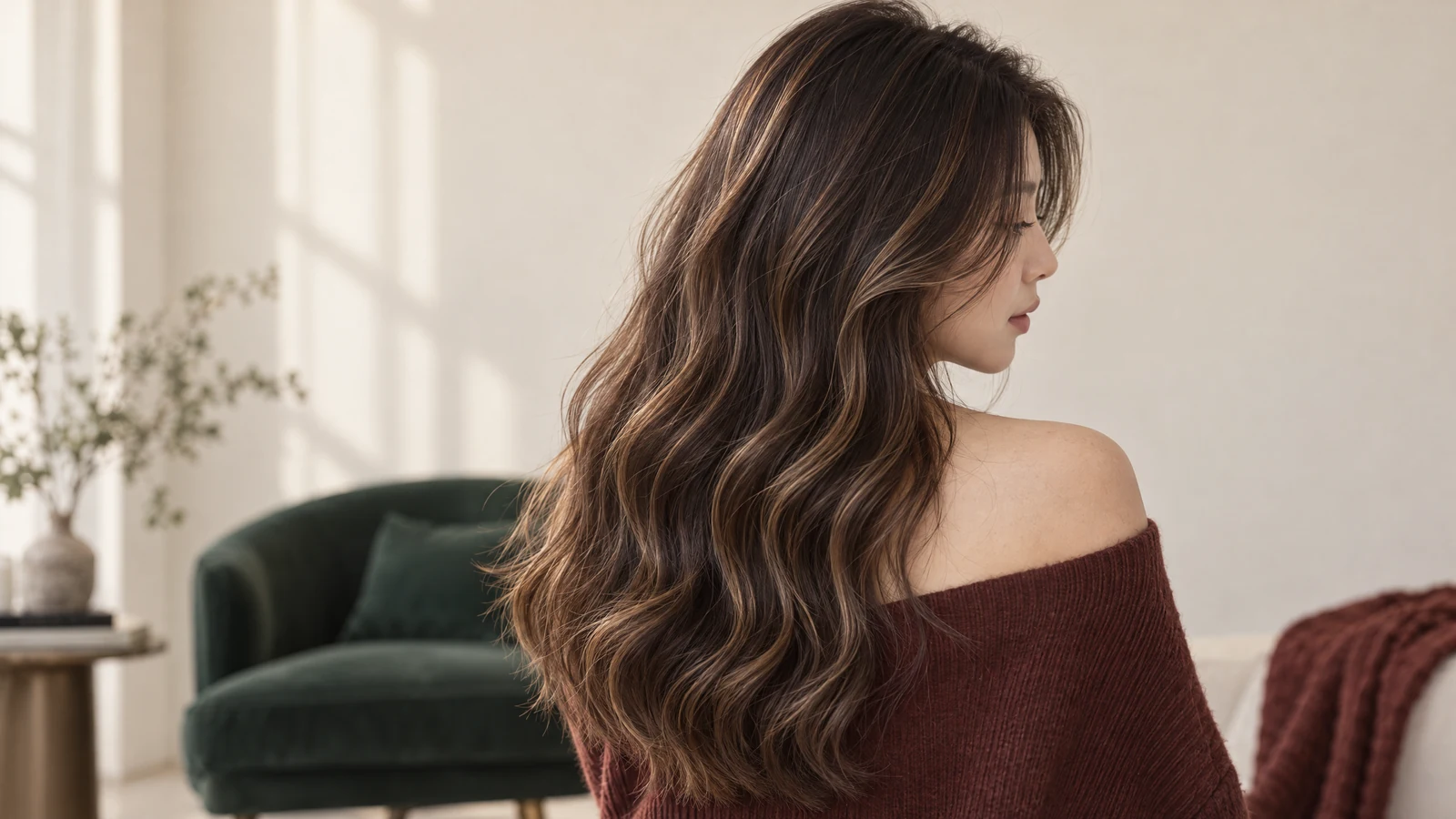
Highlights on dark hair: width and spacing
Subtle highlights for dark hair can mean fine strands, wider spaces between light areas or a shade closer to the base. Low contrast highlights are not necessarily bleach-free. Keep the discussion specific: identify how much of the dark background you want to retain and which areas should catch the light without dominating the whole design.
Separate the brightness of each strand from the amount of hair that looks lighter overall. A small number of pale strands can create strong individual lines against a nearly black background. More closely spaced brown strands may look less stripy but make the whole hairstyle appear lighter. If keeping your dark identity matters, ask to retain visible depth between the light areas rather than simply requesting the finest possible highlights.
Placement changes what you notice in the mirror. Brightness close to the face may feel more prominent than similar lightness at the back. A dark surface with lighter hair underneath can look restrained when worn down, yet reveal contrast when tucked behind the ears. Explain whether you want the change to register during an office conversation, only when the hair moves, or clearly from across a room.
Review hair highlights to check its service scope and the details to share before arranging the related work.
Highlights on dark hair with retained deep areas
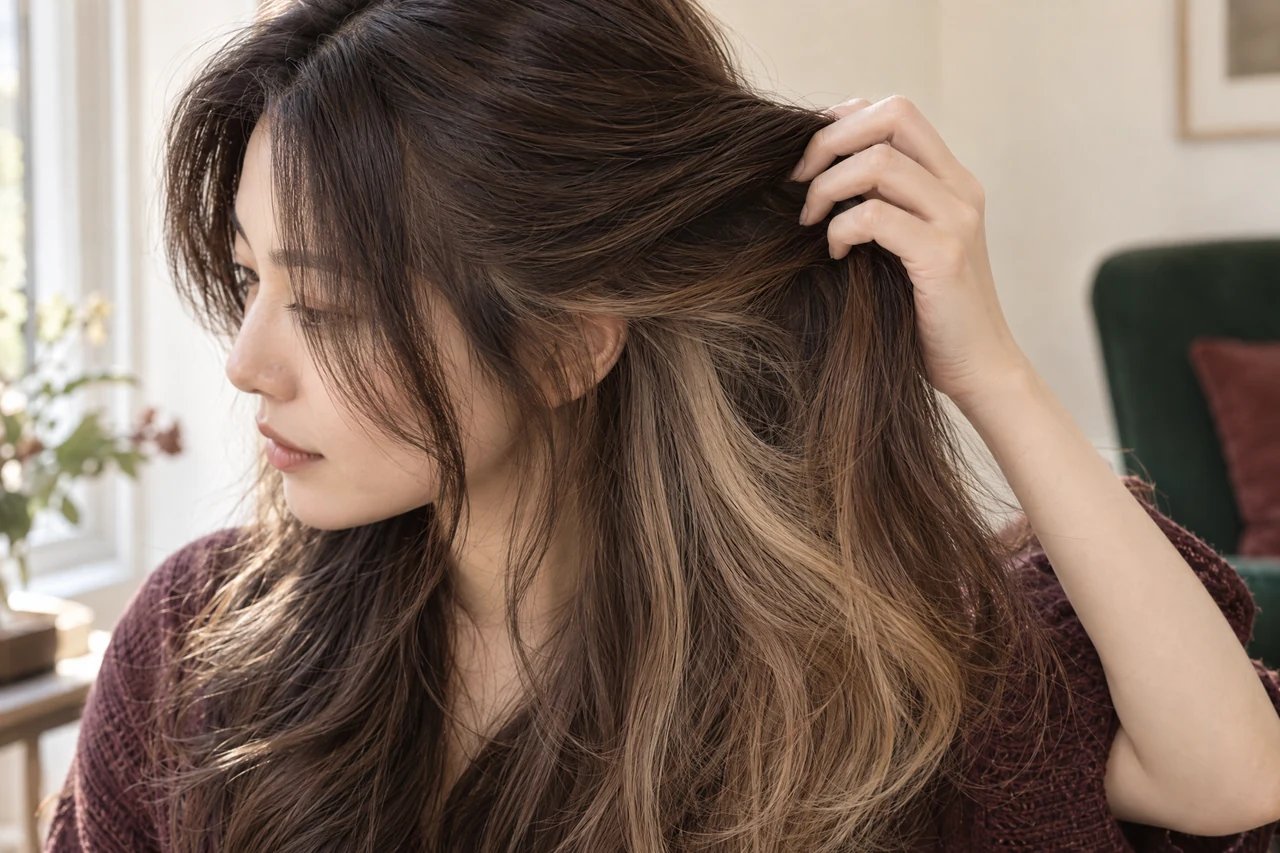
Use a reference to identify the dark spaces you like as well as the bright strands. Point out whether you want depth around the parting, through the lower layers or at the ends. On straight hair, separate lines may remain easy to follow; bends and waves can show different surfaces as they turn. Bring a photograph of your usual finish so the proposed spacing is discussed in the hairstyle you actually wear.

Balayage on dark hair: where brightness begins
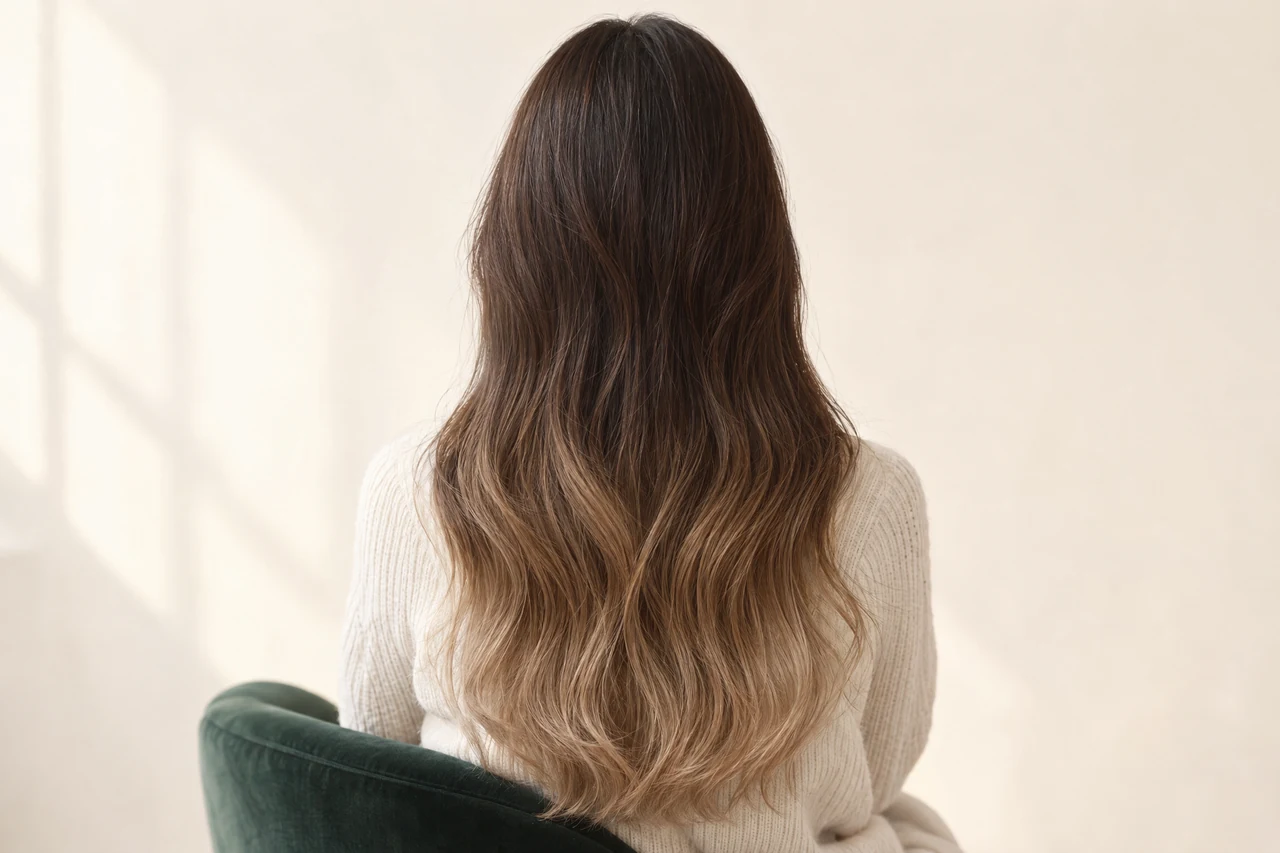
Brunette balayage can retain brown depth near the roots and introduce lightness lower down. The point at which brightness begins affects how strong the transition appears. Compare photographs with similar starting depth, and distinguish a darker-root design from one that changes most of the lengths; the technique name alone cannot make that choice.
Read the outline from roots to ends. A long dark upper area followed by concentrated brightness at the tips produces a different balance from lighter ribbons beginning around the face and continuing through the lengths. Neither arrangement is automatically softer. Very pale ends can look dramatic beneath dark roots, even when the transition between them is gradual. Decide whether the overall impression should remain brunette or move towards a noticeably lighter lower half.
Hair length limits the space available for a transition. On shorter hair, a bright area may occupy much of the visible shape even if it begins away from the scalp. On longer hair, you may prefer a larger dark area above the lightness. Discuss planned trimming before agreeing the placement; removing the lightest ends later can change the balance you originally chose.
Review balayage hair colour to check its service scope and the details to share before arranging the related work.
Balayage on dark hair with a gradual transition
Ask to compare the beginning of the light areas, their brightest point and the dark hair left alongside them. A gradual transition describes the distribution of colour, not a promise of gentle processing. Balayage on black hair can still involve a substantial lightening distance. First agree the dark-to-light arrangement; the stylist can then assess which process, if any, suits the actual hair.
Black bases and old artificial colour
Highlights on black hair and balayage on black hair require a close look at both natural depth and existing artificial colour. Previously dyed lengths may respond differently from new growth. A pale reference is not evidence that the same lift is suitable in one visit. Assessment may lead to a more restrained target or a staged plan.
A dark appearance does not reveal everything underneath. Hair that was lightened and then covered with black dye has a different history from never-coloured black hair. Repeated dark applications may also have covered different areas. Tell the stylist where colour was applied, whether the ends were previously lighter and whether any sections have been chemically straightened or permed. Product names or photographs of packaging can be useful when available.
In its guide to lightening hair without bleach, Wella distinguishes techniques intended for virgin hair from lifting previously coloured hair, explaining that tint alone is not sufficient for reducing existing oxidative colour depth. That distinction is useful when a reference is labelled bleach-free: the label does not establish suitability for old dyed-black lengths.
If the priority is removing or working around old dark colour, prepare for a colour correction discussion rather than treating the request as placement alone. Ask whether a strand assessment is appropriate and what it can establish about the proposed lightness and condition. Also agree an acceptable alternative if the palest reference is not suitable.
Natural black hair and dyed-black lengths are different starting points
The distance to the target matters even when the starting colour is natural. The American Academy of Dermatology's colouring and perming guidance explains that greater lightening can cause more damage. Use this as a reason to discuss the demands of a very pale target, not as a rule predicting an individual salon result. A lower-contrast design may reduce the desired change, but condition and previous processing still need consideration.
Check photographs under ordinary light
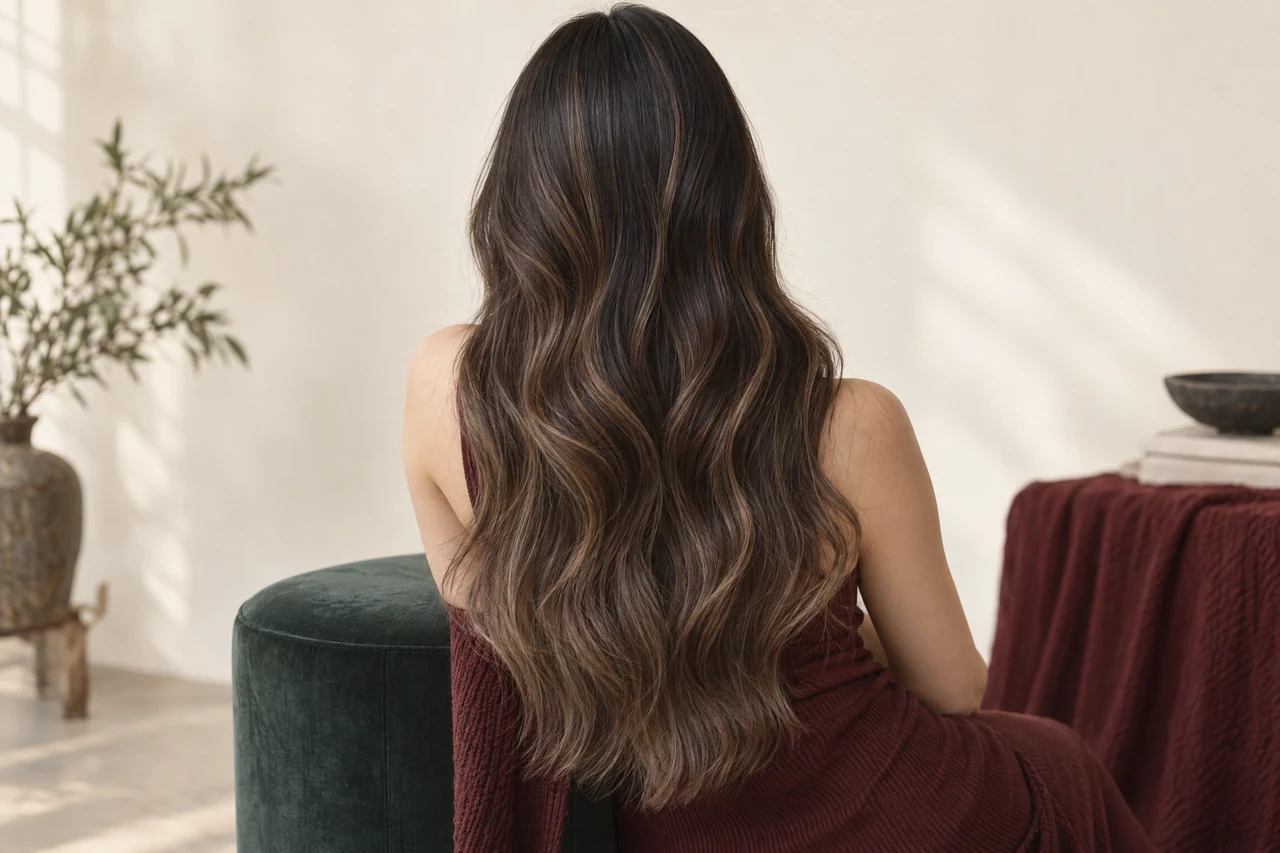
A bright outdoor photograph can make light strands look more prominent than they do inside. Ask whether the appeal comes from strand contrast, warm reflection or lighter ends. Use unfiltered current photos where possible, but recognise that images cannot fully show hair condition. Bring your colour history as well as your preferred examples.
Compare photographs that show the entire head as well as close views. A close-up of selected bright strands can hide how much dark hair remains elsewhere. A curled finish may display alternating surfaces that are less obvious when the same hair hangs straight. Look for a front view, the back and the parting before deciding that a reference is understated enough for your everyday routine.
For a Sheung Wan consultation, useful current photographs include your hair near a window and under the indoor lighting you normally encounter. Keep the angle and hairstyle similar so you are not comparing completely different views. Screens and camera settings can still change the appearance, so describe your preference in words too: mostly dark indoors, visible brown ribbons in daylight, or distinct light ends in either setting.
Continue with do highlights need bleach for that specific comparison and the preparation questions it raises.
Read tone and contrast without assuming a filter-free result
A brown strand with a warm reflection is not necessarily as light as a beige strand in another picture. Keep the shade discussion separate from the arrangement: you might like the spacing in one photograph but prefer less brightness. Mark the part of each reference you want to borrow and the part you do not. This makes the consultation more useful than asking for an exact copy of a photograph with unknown lighting and colour history.
Plan for changing contrast after the appointment
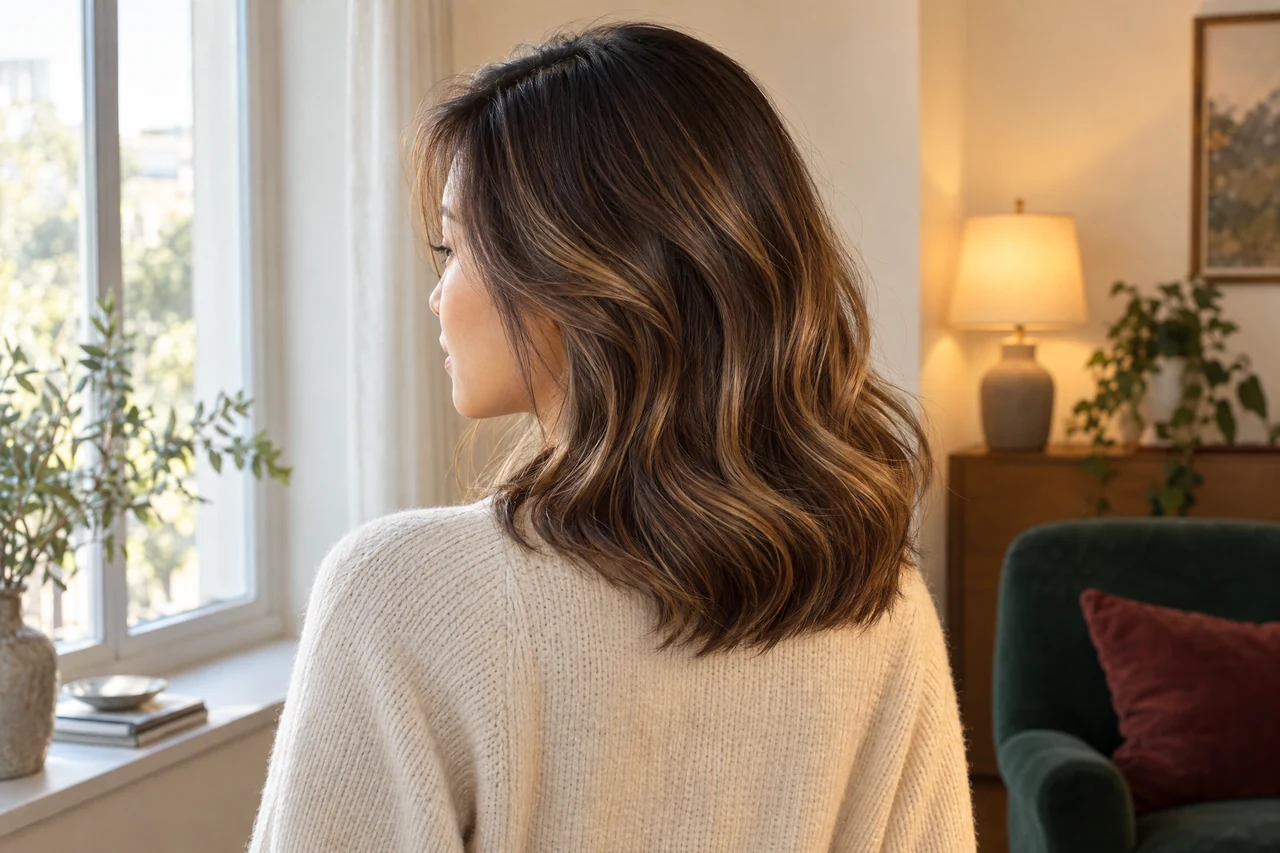
A dark-root design and a low-contrast design solve different concerns. Leaving the root area dark may make new growth less central to the look, while strong pale ends still need care and attention to their changing tone. Fine highlights nearer the parting may preserve a dark overall appearance, but their starting position can become more noticeable as hair grows. Decide which change you would find more bothersome before choosing the arrangement.
Read about growing out highlights if you want to keep the dark base without continually adding more lightness. Ask what a future visit would be intended to do: refresh tone, review the root transition or change the placement. Those are different tasks, and a refresh should not automatically mean lightening every previously treated length again.
Keep care realistic for the lightened areas
Explain how you wash, detangle and style your hair, including regular heat styling or swimming. The American Academy of Dermatology also advises sun protection for dyed or bleached hair because sunlight can contribute to dryness and fading. Ask for care instructions suited to the actual process and agree which changes should prompt a follow-up. Soft-looking colour is a visual description; it does not mean the treated lengths need no care.
Prepare a clear dark-hair colour enquiry
Use the 6-point checklist below to prepare a dark-hair colour enquiry. The aim is to establish a usable design brief, not to choose a chemical formula yourself. State your main priority first: keeping most of the base dark, making the face area brighter or introducing a gradual change through the ends. Then explain your limits on visible contrast and ongoing appointments.
Ask for the proposed scope and quotation after sharing your history. A technique name alone does not tell you whether old colour needs separate work, whether a toner is included or how the plan would change if further lightening is unsuitable. If you have an event or travel deadline, mention it early and ask what can reasonably be considered within that schedule rather than assuming the full reference can be achieved immediately.
Agree a fallback that still serves your goal
Choose what you would keep if the desired pale shade is not feasible: the same spacing with darker bright areas, less overall lightness or a later reassessment. A restrained first design can still show a deliberate contrast against dark hair. It should be an option you genuinely like, not an unwanted compromise accepted after the work has started.
Compare dark-base designs by visible contrast, not by the technique label alone
| Design direction | What stays dark or becomes visible | Question to settle first |
|---|---|---|
| Fine, spaced highlights | Dark areas remain between individual light strands | Should the lines show indoors or mainly in movement? |
| More closely spaced highlights | More of the visible surface can appear lighter | Do you want distinct ribbons or an overall brighter impression? |
| Lower-starting balayage | A larger dark upper area sits above lighter lengths | Where should the brightness begin in your current cut? |
| Strongly contrasting light ends | Dark roots remain but the lower outline looks noticeably light | Is pale-end contrast more important than retaining a brunette impression? |
| Previously dyed-black lengths | Artificial colour and earlier processing affect the starting point | Does the old colour need assessment before placement is planned? |
Your preparation checklist
- Photograph your current roots, mid-lengths and ends in ordinary light, including the way you usually wear your hair.
- Write down previous black or dark dyes, earlier lightening and chemical texture services; identify which lengths were treated.
- Choose references with a similar dark base and mark the spacing or transition you like, not only the shade name.
- Describe how much brightness you want near the face, at the parting and through the ends, including your usual tied-back style.
- Share your care routine, preferred return-visit commitment and any event deadline; agree a fallback lightness you would accept.
- Confirm assessment requirements, proposed work and quotation before proceeding, including any separate correction or tone-refresh work.
Frequently asked questions
Can a dark base still look understated?
Yes as a design goal: retaining depth and limiting contrast can keep brightness restrained. The achievable shade and necessary process still depend on the hair assessment.
Is previously dyed black hair the same as natural black hair?
No. Artificial pigment and earlier chemical treatment change the starting conditions. Tell the stylist which areas have been dyed, lightened or straightened.
Do I need to copy the exact shade in a photo?
No. You can use it to show the placement and strength of contrast you prefer, then agree a feasible shade for your own base.
Turn a dark-hair reference into a clear contrast plan
Send Vit So your current hair photographs, colour history and preferred references for an enquiry in Sheung Wan. Explain which areas should stay dark and where you want brightness to show. The next step is to confirm assessment needs, possible scope and the quotation; an enquiry is not a confirmed booking.
Start your WhatsApp enquirySources & further reading
- Coloring and perming tips for healthier-looking hair
General guidance on damage associated with greater lightening and sun protection for dyed or bleached hair.
- How to Lighten Hair Without Bleach
Distinguishes bleach-free techniques for virgin hair from lifting existing oxidative colour in previously coloured hair.



