






Hairdresser vs Hair Stylist in Everyday Use
Hairdressers and hair stylists can both work on cutting and shaping hair. Usage varies between businesses, so the words alone do not draw a dependable boundary between a simple cut and design-led work. Read what is offered and discuss the change you need instead of interpreting the title as a complete service description.
The Cambridge Dictionary definition of hairdresser includes both cutting hair and putting it into a style. It also lists hairstylist as a synonym. That is useful evidence against the claim that a hairdresser only cuts while a hair stylist only finishes. Ordinary English allows both activities within the same role; a particular salon may organise them differently.
A cut can be a design decision even when the requested change looks modest. Preserving a substantial end line while adjusting the hair around the face involves choices about shape and length. Equally, a dramatic-looking finish may use the existing cut without changing it. The visible impact of the result does not tell you which job title the professional should have.
Hairdresser vs Hair Stylist: Start with the Actual Work
Separate the action from the label. Do you need shorter ends, a different outline or hair arranged for an occasion? If you want both a cut and a polished finish, name both. Saying that you want to keep enough length for a ponytail but soften the front gives either a hairdresser or a hair stylist a concrete brief. Asking for the more creative title does not.

Does the Spelling Change the Role?
The joined spelling hairstylist does not create a separate kind of appointment. It points to the same broad styling role as the two-word form. If you encounter different titles on salon pages, compare the actual cutting, finishing and other listed services rather than booking a different service simply because the spelling changes.
The Cambridge Dictionary entry for hairstylist describes cutting and arranging hair, with hairdresser given as a synonym. Reading hair stylist as someone who cannot cut would therefore be an unsafe assumption. In a booking message, the service name and your explanation of the work are more informative than whether the role appears as one word or two.
Stylist on its own needs context. On a hair salon page, look for the associated services and examples of hair work rather than treating the shortened label as an extra qualification. A staff profile, a menu category and a service description provide different kinds of information. The profile names the person; the menu helps identify what to request.
Read Hairstylist as a Role, Not a Different Appointment
For an appointment before dinner, you might want your existing hair washed and shaped without losing length. For an everyday redesign, you may need cutting as well. Neither request becomes clearer if you switch from hairstylist to hairdresser. Explain whether scissors should be part of the visit and what finish you want to leave with.

A Job Title Does Not Confirm Every Technique
Neither title establishes that every colour method, perm process, wig service or hairpiece fitting is available. It also does not confirm beard shaving or medical hair treatment. If your request goes beyond a haircut or finish, use the relevant service information and ask about the specific work before deciding that the role name covers it.
The U.S. Bureau of Labor Statistics occupational overview describes haircutting and hairstyling together within this broad area of personal-appearance work. That supports considering more than cutting alone, but it is a U.S. occupational reference, not a statement about Hong Kong qualifications or any individual salon's menu. A broad role description cannot replace confirmation of a particular technique.
For colour, explain whether the aim is a darker overall shade, visible light sections or a change to existing uneven colour. For texture, say whether you want curls arranged temporarily or a chemical change. These are different requests even if they appear under the same professional's profile. Where previous bleaching, colouring or straightening may affect the proposed work, share that history before asking for a plan.
Explore hair salon services to compare the wider scope before choosing a service enquiry.
Check Colour, Texture and Other Service Scope
Match the evidence to the request. A portfolio full of long, waved finishes does not by itself show experience with the short outline you want. A colour photograph does not confirm wig fitting. Ask whether the specific work is offered, who would perform it and what assessment is needed first. Keep an enquiry about scalp symptoms separate from a request for an aesthetic haircut.
Choose on Evidence rather than the Label
Look for examples with a starting point close to your own hair and ask what part of the design is relevant to you. Confirm the scope, fee and communication arrangements for the visit. A clear answer to your actual question is more useful than inferring a qualification, seniority level or guaranteed outcome from a role label.
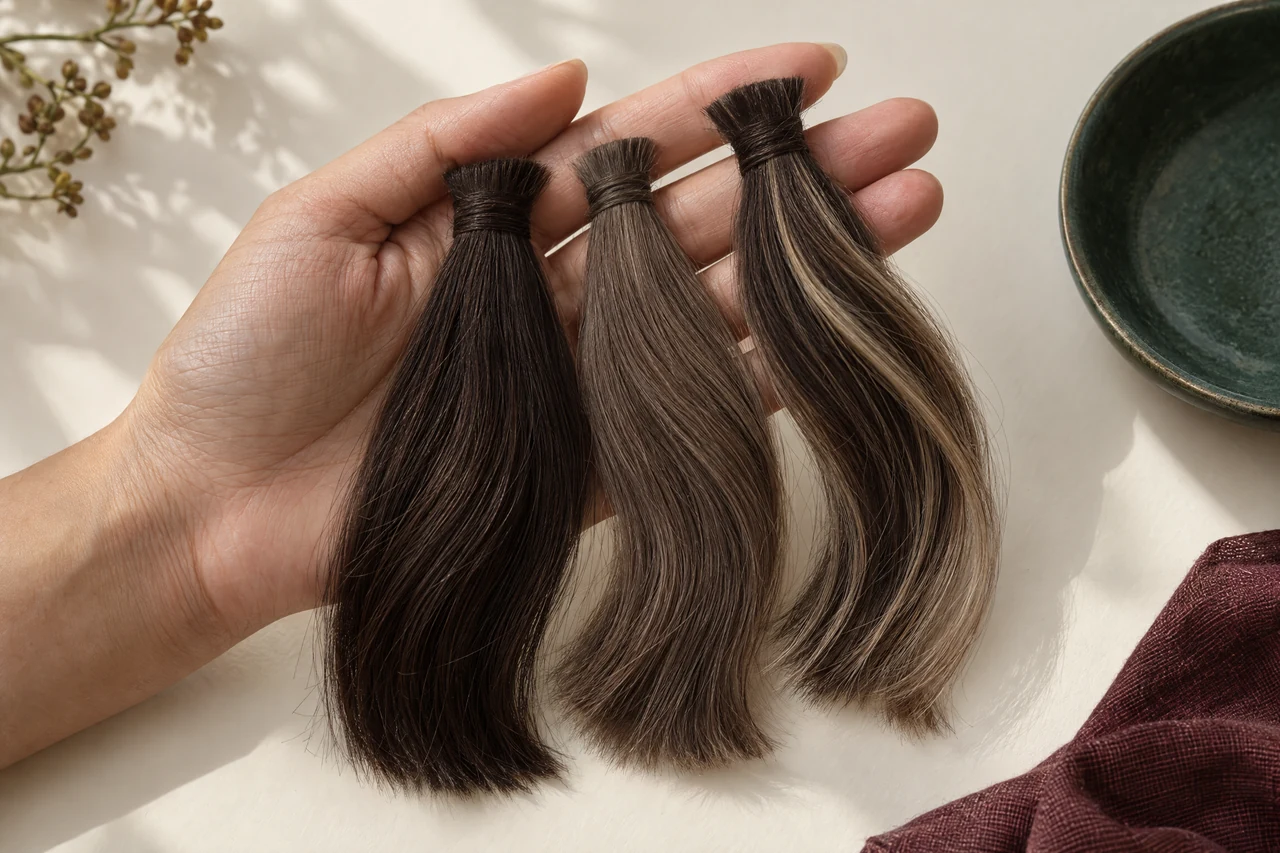
Read a photograph for the feature you actually need. On short hair, that might be the connection from the sides to the top or the shape at the nape. On longer hair, it may be the end line and the shortest pieces around the face. Ask whether the photographed movement comes from the cut, the finish or both. A styled image can be a useful reference without being a promise of how your hair will fall after washing.
Our guide to how to compare hair stylist portfolios helps you distinguish the visible finish from evidence relevant to your own starting point.
Continue with how to choose a hairdresser for that specific comparison and the preparation questions it raises.
Compare Relevant Work and Ask Clear Questions
If a business uses senior, director or another internal title, ask what that means there and whether it changes the fee or who carries out the work. Do not assume those labels form a universal ladder. Relevant training and documented experience can inform your choice, but they should be connected to the service you need rather than inferred from the word stylist.

A Service Name Is More Useful for Comparing Fees
Distinguish the price of the work from the title of the person. Wash and blow dry, wash with a cut and blow dry, and a more involved styling request are not interchangeable just because all involve arranging hair. Ask what is included before comparing quotations. An apparently lower fee is not a like-for-like comparison if it excludes cutting or the finish you have in mind.
Vit So's listed men's wash, cut and blow dry is HK$380. The listed women's wash, cut and blow dry is HK$480, while wash and blow dry is HK$240. These are named services, not a surcharge for choosing the word hairstylist over hairdresser. Confirm which service fits your request and whether a listed length supplement applies before arranging the visit.
Use the hair salon price list to check the named service rather than assigning a price level to a job title.
Review blow dry to check its service scope and the details to share before arranging the related work.
Confirm Cutting and Finishing Separately
Ask whether the finish is simply drying or shaping towards your chosen look. If you need an occasion style, explain the arrangement rather than assuming every blow dry covers it. When requesting cutting and styling together, confirm the time and fee for the whole request. The overlap between role names does not establish what a particular appointment includes.

Turn the Title Question into a Clear Hair Brief
You do not need to decide which professional label sounds better before describing your hair. Start with what you want to keep, then identify the change. For a Sheung Wan visit after work, explain whether you need a presentable finish that evening or a cut intended for your usual morning routine. Those priorities may lead to different proposals, even with the same person.
Use everyday landmarks when possible: hair that still tucks behind the ears, ends that remain below the shoulders, or a fringe that stays clear of your glasses. Explain how you normally dry your hair and whether you use brushes or heated tools. This gives practical meaning to style rather than leaving it as a word attached to someone's job title.
Agree on the Work before Agreeing on the Visit
Before proceeding, ask the provider to describe the proposed service back to you. Clarify any difference between your target picture and the suggested cut or finish. If the recommendation involves an additional process, ask why it is relevant and what it costs. A shared description of the work is a firmer basis for an appointment than agreement about whether someone is called a hairdresser or a hair stylist.

What a hair role label tells you, and what still needs confirmation
| Name or description | What you can take from it | What to check for your visit |
|---|---|---|
| Hairdresser | An everyday role that can include cutting and styling | The exact cut, finish and other services offered |
| Hair stylist or hairstylist | Overlapping styling-role wording, not a separate appointment created by spelling | Whether cutting is included in your requested service |
| Stylist on a salon profile | A role label that needs the surrounding hair-service context | Relevant work and the named service on the menu |
| Senior or director | A title used within that business | Its meaning there, who performs the work and any fee difference |
| Wash and blow dry | A more specific service description than a job title | Your desired finish and whether you also need a cut |
Your preparation checklist
- State whether you want cutting, a temporary finish or additional colour or texture work; do not leave the request at 'styling'.
- Identify the length or feature you must keep, such as a tuckable front section or enough hair to tie back.
- Bring a current hair photograph and a reference that illustrates the particular shape or finish you mean.
- Ask which relevant work shows the proposed approach, and how much the photographed finish depends on styling.
- Confirm who will perform the requested work, its inclusions, the fee and any applicable supplement before arranging the visit.
Frequently asked questions
Does hairdresser vs hairstylist mean different skill levels?
Not by itself. These overlapping terms do not establish a qualification or seniority level. Look at relevant work, the documented background and the service being proposed.
Can a hairdresser help with style as well as a cut?
The term can include cutting and styling, but the exact offering depends on the provider. Explain the finish you want and confirm how it fits the appointment.
Should I book two appointments for cutting and styling?
Not because of the role names alone. State both needs and confirm whether the requested work can be arranged together, along with the time and fee.
Find the service that matches your hair goal
Tell Vit So what you want to change and what you need to keep for your visit in Sheung Wan. Include your current length and whether you need a cut, a finish or other work. Enquire to clarify the proposed scope, fee and available arrangements; sending an enquiry is not a confirmed booking.
Start your WhatsApp enquirySources & further reading
- Meaning of hairdresser in English — Cambridge Dictionary
The everyday definition covers cutting and styling and identifies hairstylist as a synonym.
- Meaning of hairstylist in English — Cambridge Dictionary
The joined role name describes cutting and arranging hair and identifies hairdresser as a synonym.
- Barbers, Hairstylists, and Cosmetologists — U.S. Bureau of Labor Statistics
A U.S. occupational overview includes haircutting and hairstyling; it is not used to infer Hong Kong qualifications or an individual provider's menu.



