







Map a curly men's haircut while a down perm grows out
Begin by identifying where the previous side treatment was applied. Was it limited to the ear area and sideburns, or did it extend into the upper sides and back? Give the approximate treatment date and explain any haircuts since then. A side that now looks wider may contain untreated growth near the scalp, flatter lengths further out and weight left by the haircut. Those are different things to discuss, even when they occupy the same small area.
Look at each side after washing and drying normally, without holding it down for the photograph. Compare the temple, the area above the ear and the back corner separately. Notice whether the hair bends near its base, lies straighter at its ends or simply looks too short to show a clear curl. Appearance alone cannot establish the exact treatment boundary. The history helps the hairdresser decide what a proposed trim would actually remove and what would remain.
The first decision in a curly men's haircut while a down perm grows out
Decide whether your priority is a closer side outline today or natural curl continuity later. These aims can lead to different cuts. If you are unsure which lengths still belong to the previous treatment, the guide to how long does a down perm last explains why regrowth and later cutting matter more than an assumed expiry date. Do not use a calendar alone to decide that every remaining strand has returned to its original behaviour.
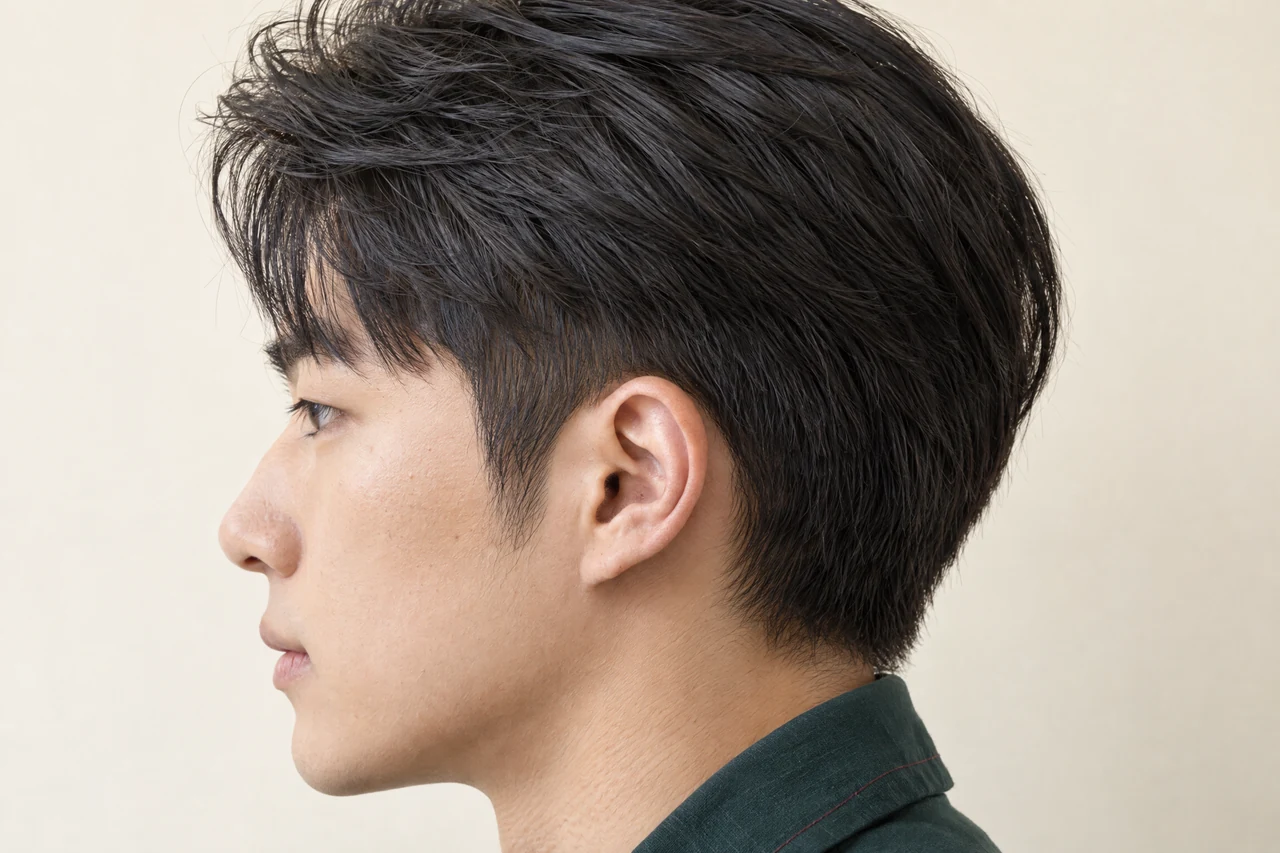
Retain flatter side lengths when coverage matters most
Keeping some treated side length can be a sensible temporary choice if you dislike exposed ears or a strong contrast beneath the curls. The hairdresser can discuss tidying the perimeter and adjusting excess weight without removing every flatter end. The compromise is that the sides may still look less curly than the top. A useful transition cut does not have to make those textures identical; it needs a shape you can wear without constantly pressing or stretching the hair into place.
Consider where the retained hair lands rather than asking to keep all the length everywhere. A strand that rests neatly above the ear may be worth retaining, while a narrow tail that catches behind the ear may need attention. Similarly, preserving upper-side coverage does not require leaving an untidy neckline. Ask which areas can be cleaned up independently. That keeps a small outline problem from becoming an unnecessary reduction of the entire side section, especially when eventual curl connection is the goal.
Keep coverage, but accept the temporary texture contrast
In a hypothetical case, someone likes a soft curly fringe but wants the ears partly covered for work. Retaining flatter upper-side lengths could preserve that familiar outline while the roots develop more visible movement. The important question is whether those lengths still sit comfortably after ordinary drying. If they form an obvious shelf or require repeated forceful brushing, retaining them unchanged may no longer serve the goal. Review the particular area rather than declaring all treated length useful or useless.
Shorten the sides without cutting away the top you like
A shorter side cut removes more of whatever treated length lies beyond the cutting point. It cannot remove treatment that remains within the length you keep, so ask what the proposed cut leaves behind. Shortening also changes the visible relationship with the top. You may gain a cleaner ear outline while seeing more scalp or more outward movement from short new growth. Choose that contrast deliberately, rather than expecting a shorter side to behave like a longer, naturally falling curl.
The upper-side join deserves as much attention as the ear edge. Taking the side very close while leaving a heavy curly top can produce a clearly separated shape, which may be welcome or may feel abrupt. A softer graduation can retain more visible thickness, but it also retains more length. Show where you want the transition to begin and whether a noticeable separation is acceptable. Neither a fade nor an all-over crop is automatically required to stop repeating chemical side control.
Protect the dry outline of the untreated top
Use the discussion of curly haircuts for men to establish the fringe landing point and top volume you want to preserve. Then assess the sides against that agreed shape. There is no need to shorten the top merely to make it resemble the flatter side ends. However, a small adjustment to overhanging top weight may improve the connection. Confirm that distinction before cutting: refining the outline is different from abandoning the natural curls you came to keep.

Let the natural side pattern develop before judging the connection
If the long-term aim is curls continuing from the top into the sides, repeatedly cutting the sides close may keep you from seeing how their pattern develops at a longer length. Waiting does not mean ignoring the haircut. You can discuss limited ear and neckline maintenance while protecting the upper-side length needed for the next assessment. The test is whether the emerging movement can contribute to the planned outline, not whether every new strand already matches the top exactly.
Natural top curls do not prove that the sides will form identical curls. Their direction, available length and visible movement may differ. The eventual connection may be a soft change in texture rather than a continuous row of matching ringlets. Choose references for the amount of side coverage and the top-to-side proportion, then explain how your own sides differ. A photograph taken before the down perm, if available, is more informative about your previous side pattern than an unrelated model's haircut.
Balancing natural top curls with treated side lengths in stages
Agree what will trigger the next adjustment. It might be a flatter end creating a visible ledge, the ear perimeter becoming uncomfortable, or enough new movement appearing to reassess the upper-side join. These are observable reasons for another cut, not promises about a fixed number of weeks. Ask what can be retained at that visit and what would have to be removed. This makes the transition manageable without treating every change in side width as a reason to restart flattening.
Use gentle care rather than trying to force a texture match
Do not make brushing the sides flat the test of whether the cut works. The American Academy of Dermatology's curly-hair care advice recommends conditioning and detangling wet hair with suitable tools, such as fingers or a wide-toothed comb, rather than brushing curls dry. Handle any tangles gently and assess the result after your usual routine. A small styling adjustment may make the mixed textures easier to wear, but it is not evidence that the treatment history has disappeared.
Avoid responding to uneven texture by repeatedly applying heat or arranging another chemical process without a condition assessment. DermNet's guidance on hair shaft defects identifies perming lotions and straighteners as possible sources of chemical injury, and excessive grooming and dryer heat as possible sources of physical injury. This does not mean every down perm damages hair. It does mean that fragile lengths deserve caution, especially when the proposed solution involves processing an area that has already been treated.
When to pause the haircut-and-treatment discussion
Tell the hairdresser about unusual snapping, persistent scalp discomfort, redness or sores before arranging further work. Defer chemical services while those concerns are unresolved, and seek advice from a healthcare professional for ongoing scalp symptoms or unexplained hair loss. A haircut can alter the outline, but it cannot diagnose or treat a scalp problem. Likewise, do not attempt a home chemical reversal to make the sides resemble the top; the previous process and the current condition need to be understood first.
Prepare a haircut-led enquiry with clear length boundaries
When enquiring about a men's haircut, say that the top is naturally curly and you want to stop repeating side flattening. Describe the current side lengths and the coverage you want to retain. That is more useful than requesting a generic tidy-up, which could mean removing the very upper-side length needed for your longer-term goal. Explain your usual styling routine too, including whether you normally air-dry or use a dryer, so the discussion concerns an achievable everyday shape.
The confirmed price for men's wash, cut & blow-dry is HK$380. That is the listed cutting service, not a promise that any additional chemical work is included or appropriate. Ask the enquiry team to confirm the proposed scope and appointment availability before making arrangements. If you need a consultation in a particular language, confirm that as well. An English-language website does not by itself establish the language available for your visit, and a WhatsApp message is an enquiry rather than an instant booking.
Agree what may be cut and what must stay
Use the preparation checklist to set a practical boundary: for example, keeping the dry fringe above a chosen point while allowing more treated side ends to be removed. Ask the hairdresser to explain the trade-off before committing to a noticeably shorter side. Finish with a simple home-care plan and a reason to review the shape again. The aim is not a flawless texture match at every stage, but a wearable outline that moves towards your preferred natural side shape without an automatic repeat treatment.

Compare the transition by the length you retain and the shape you are willing to wear.
| Option | What it preserves or changes | Main compromise |
|---|---|---|
| Retain flatter side lengths | Keeps ear coverage and a familiar perimeter | Top and sides may continue to show different textures |
| Shorten more treated ends | Removes more old length and clears the ear outline | Short new growth may project; the top can look more separate |
| Grow upper sides with limited edge tidying | Allows more side length for assessing natural movement | A fuller or less even outline may need to be tolerated |
| Remove treated ends gradually | Spreads length changes across later haircut decisions | Mixed lengths remain until the retained treated portions are cut away |
Your preparation checklist
- Bring dry front, side and back photographs without pressing the sides flat.
- Give the previous down-perm date and describe the areas treated, if known.
- Mention subsequent haircuts, colour, bleaching and any other chemical services.
- Show an older untreated-hair photograph if it reveals your previous side movement.
- Identify the ear coverage and dry top length you do not want to lose.
- Explain your normal styling routine, scalp concerns and acceptable shorter-side contrast.
Frequently asked questions
Will a haircut immediately make the treated sides curly again?
A haircut removes length; it does not guarantee a change in the behaviour of the treated length left behind. Ask how much of the old side section the proposed cut would remove. Even after removing those ends, short untreated side growth may need more length before its natural movement is easy to judge.
Should I repeat a down perm just once to make growing out easier?
Not automatically. Repeating it may conflict with your stated aim of allowing the natural side texture to develop. Discuss retaining coverage, changing the cut or tolerating a fuller outline first. If chemical work is still being considered, disclose the earlier treatment and have the current condition assessed before agreeing to it.
How long will it take for the sides to connect with my curly top?
There is no reliable personal timetable from a description alone. The treated length still present, your target side length and the movement of the emerging hair all matter. Plan reviews around visible changes and comfort, rather than a promised completion date. A connected final outline may still contain a natural difference between top and side curls.
Enquire about keeping your curls through the side transition
Send Vit So a WhatsApp enquiry on +85253057561 with your dry-hair photographs, down-perm history and preferred side coverage. Explain that you want a haircut-led return towards natural side texture. The address is 252 Hollywood Road, Sheung Wan, Hong Kong. Confirm suitability, service scope, consultation language if needed and appointment availability before visiting; an enquiry does not confirm a booking.
Start your WhatsApp enquirySources & further reading
- 6 curly hair care tips from dermatologists — American Academy of Dermatology
Practical guidance on conditioning and gentle wet detangling of curly hair. Useful for handling curls during a mixed-texture stage; it does not give a down-perm grow-out timetable.
- Defects of the hair shaft — DermNet
Explains potential physical and chemical causes of hair-shaft injury and the role of gentle care. Relevant to caution about further processing fragile lengths, not a diagnosis of an individual reader.



