







Straightening regrowth beside an old bleached face frame starts with a map
A face frame is the lighter hair arranged around the face, but its processing boundary may not follow a neat line across the head. One front strand may have lightening higher up than the strand behind it. The opposite side may have been refreshed differently. For this enquiry, distinguish the natural growth you dislike from every adjoining lightened segment you want retained. Looking only at the crown can miss the front area that matters most to your decision.
Describe the concern in everyday terms before naming a procedure. Is the front root lifting away from the face, forming a wave above straighter lengths, or simply looking fuller than the rest? Show the hair with your usual parting and with the front moved back. A photograph can explain the shape, but visible darkness does not prove that a segment has never been processed. The map needs your history as well as the present colour contrast.
What must stay unchanged when straightening regrowth beside an old bleached face frame?
Name your non-negotiables: retaining the pale front pieces, avoiding further chemical processing on their lengths, keeping enough hair to tuck behind the ears, or preserving a soft bend. These preferences may limit how uniform the final outline can be. Saying you would rather keep a visible transition than sacrifice the face frame gives the discussion a clear stopping point. It is more useful than asking for perfectly straight roots with no other change.

Root-only describes an intention, not a safety guarantee
A proposed application area and a safe, workable procedure are different questions. Ask what would be applied, which strands would be involved, what heat or other steps would follow, and whether the highlighted front can genuinely remain outside that work. Do not treat a verbal promise to avoid the blonde hair as enough information. If the boundary cannot be assessed clearly, the appropriate response may be not to proceed, rather than to expand the service into the lengths.
The Canadian Dermatology Association's hair-care guidance advises against applying colouring, perming or relaxing chemicals to already damaged hair. Its virgin-hair application advice concerns chemical relaxers specifically; it is not approval for every service called straightening. This matters when lightened front strands sit beside the intended regrowth area. Neither the service name nor a neat-looking colour boundary establishes that those strands are suitable for another process.
Old bleach is still part of the front lengths' history
The date of the last lightening appointment is useful, but it is not a clearance date. Record later toner, permanent colour, previous straightening and any repeat lightening on the same pieces. The guide to can bleached hair be straightened explains the broader compatibility question. Here the narrower decision is whether the front lengths can remain an assessed exclusion while the neighbouring regrowth goal is considered at all. Gloss alone cannot answer it.
Prepare a front-specific history, not just a whole-head timeline
Bring clear photographs of both front sides, the parting and the back, preferably showing the usual texture rather than only a freshly ironed finish. Include an older photograph if it helps locate where the original face frame began. Explain whether the pieces were lifted once or repeatedly, and whether a later appointment touched only the roots or also the existing blonde. If you do not know the product or dates, say so rather than filling the gaps with guesses.
The preparation checklist below separates history from preferences, so the hairdresser can understand both. Mention strands that keep snapping during normal handling, tangles that have become harder to release, or a front section that feels markedly different from the rest. Do not repeatedly stretch or pull a strand to test it yourself. Ask whether a strand assessment is appropriate and available, what area it would represent, and how its findings would affect the proposed plan.
Keeping highlighted front lengths outside a straightening enquiry: wording that helps
Try a clear request: 'I want to discuss the natural regrowth, but I want the previously lightened front lengths excluded from further chemical straightening. If that is not suitable or practical, please show me a cut or styling alternative.' This states an intention without prescribing technique. It also leaves room to decline chemical work. An assessment of one small strand should not be described as a guarantee for every neighbouring section or the entire head.
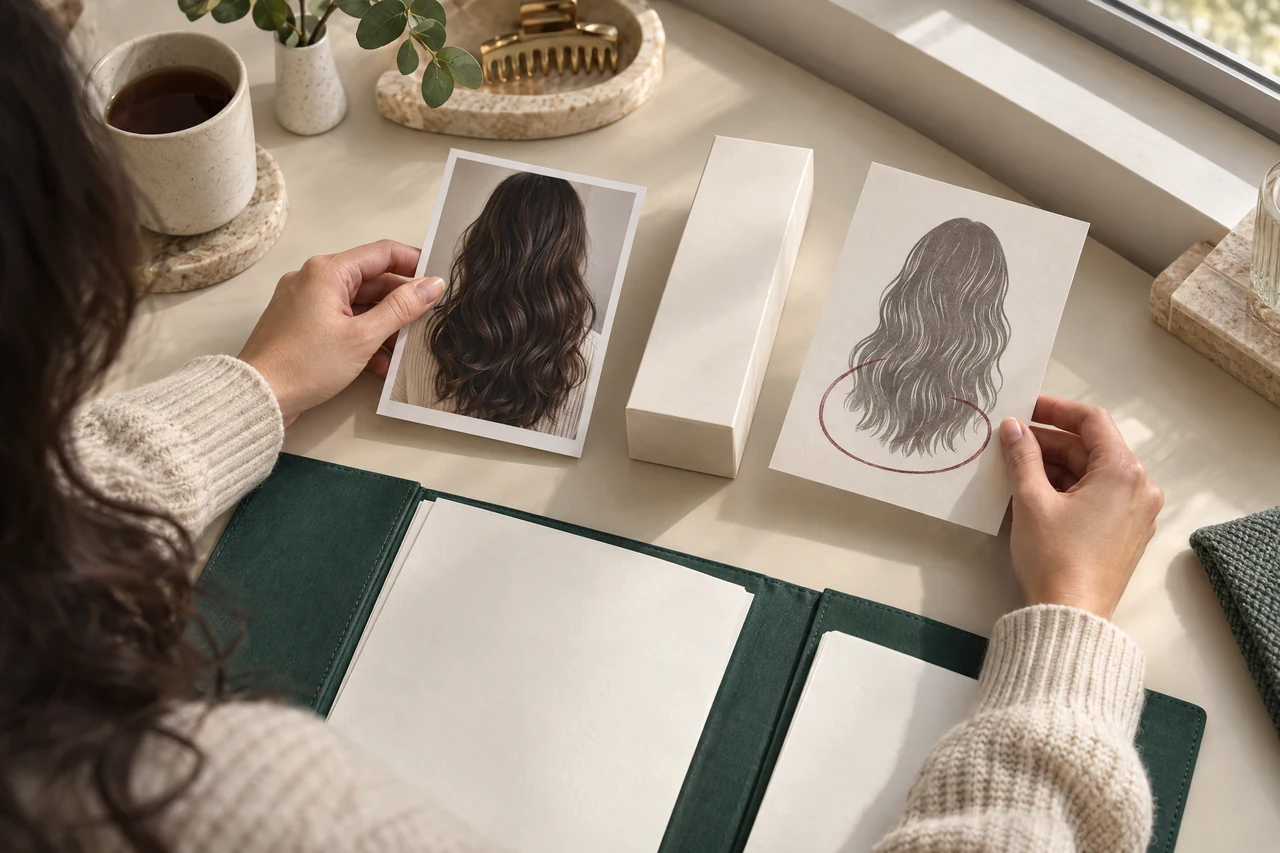
Compare four ways to live with the front transition
Keeping the transition is a real option, especially if the main issue is how the front falls rather than a need for an entirely straight outline. A different parting, a softer shape or a loose tuck may make the contrast acceptable without further processing. The trade-off is that natural root movement remains visible. A cut can change where the face frame sits and remove some unwanted length, but it cannot turn the remaining regrowth into permanently straight hair.
Temporary styling offers flexibility for particular days, with the limitation that the shape needs to be recreated and heat is not harmless. An individually assessed local chemical procedure is a separate possibility to discuss, not a default fourth step after the other options. Its availability, appropriate area and limitations must be confirmed. When reading about how long does hair straightening last, distinguish the behaviour of previously treated lengths from the texture of new growth before assuming a whole-head repeat is needed.
A hypothetical choice when the blonde pieces matter most
Suppose someone likes the lighter pieces around the cheeks but dislikes the wave immediately above them. If retaining those pieces is the priority, they may prefer a small shape adjustment and some remaining root movement over an uncertain chemical boundary. Someone willing to shorten the front may make a different choice. Neither preference proves suitability. The useful comparison is what each option asks you to give up, not which one sounds most permanent.
Keep temporary styling from becoming repeated front-section heat
If you postpone chemical work, avoid compensating by repeatedly clamping the same highlighted pieces until the root and length look identical. Ask for a manageable styling approach that tolerates some movement and fits your normal routine. The American Academy of Dermatology's damage-prevention advice recommends reducing heat-tool use, using the lowest heat setting and avoiding pulling or tugging. This is a reason to choose a less demanding finish, not a promise that temporary styling cannot cause damage.
Use conditioner after shampoo and handle tangles gently instead of rubbing the front lengths vigorously with a towel. If an iron is being considered, the hair should be dry; the Canadian Dermatology Association advises against straighteners on wet hair. A product marketed for protection does not make repeated passes unlimited. If the front only looks acceptable after more heat than you want to use, revisit the cut or accept a softer outline rather than escalating the daily routine.
When the enquiry should pause
Tell the hairdresser about noticeable breakage or current scalp irritation before any chemical appointment. Do not frame an uncomfortable scalp as something to work around for the sake of the front shape. Seek advice from a qualified healthcare professional for persistent irritation, unexplained thinning or hair loss. The AAD particularly recommends dermatological advice when hair-care changes do not help or thinning is a concern. A salon shape assessment cannot diagnose the cause.
Confirm the scope, charge and acceptable fallback before proceeding
Use the hair straightening service information to begin a discussion about the actual procedure, not to infer an unlisted root-only option. Confirm whether any localised work is offered for your situation, which areas it would involve and whether the bleached front can remain excluded. Ask what would happen if the assessment does not support your preferred scope. Agreeing to an enquiry should not be taken as agreement to process all the lengths.
The confirmed listed price for Ionic Straightening is HK$1,600. That is a listed service price, not a standalone regrowth-only quotation or evidence that a front exclusion is suitable. Do not calculate a smaller charge from the proportion of hair you want treated. If a different or unlisted scope is proposed, request a confirmed quotation before agreeing. Also clarify whether a cut or styling appointment is being arranged instead, so the decision and the charge refer to the same work.
If chemical work is deferred, leave with a usable next step: what shape could be adjusted now, how the front can be handled gently, and what information is missing from the history. If a procedure is considered suitable, ask for instructions specific to it, including washing, tools and how the excluded front lengths should be managed. Future lightening or a face-frame refresh deserves its own assessment rather than an assumption that the previous boundary will still apply.
Choose a stopping point you are comfortable keeping
Before proceeding, be clear about whether you accept different textures near the face, less straightness in a difficult area, or postponement of the chemical goal altogether. The strongest plan is one you can live with without chasing an identical finish on every strand. If the only acceptable outcome requires the protected front lengths to receive work you wanted excluded, reconsider the appointment rather than quietly changing that priority.
Options to discuss when preserving the bleached face frame is the priority
| Option | What it can address | Trade-off to accept |
|---|---|---|
| Leave the transition | Keep the front pieces and natural regrowth without another chemical shape change. | The difference in movement remains; the parting or everyday shape may need adjusting. |
| Adjust the cut | Change how the front falls or remove some unwanted processed length. | Some length or placement changes; remaining regrowth keeps its natural texture. |
| Use temporary styling | Choose a smoother outline on selected days without committing to chemical straightening. | The finish needs recreating; minimise heat and avoid repeatedly targeting the pale front. |
| Discuss an individually assessed local procedure | Consider whether a limited regrowth goal is suitable and available for this particular hair history. | Exclusion, technique, finish and quotation need confirmation; assessment may lead to declining chemical work. |
Your preparation checklist
- Photograph both front sides and the usual parting with the natural texture visible.
- List lightening appointments and identify which front strands were refreshed more than once.
- Record toner, permanent colour, straightening or perming on those same lengths, including uncertainties.
- Describe breakage, difficult tangles or scalp discomfort without doing repeated home stress tests.
- State which lighter lengths, bends and front-section length you want to retain.
- Decide whether you would accept a visible transition, a cut or postponement instead of chemical work.
Frequently asked questions
Can the blonde front be clipped away so the regrowth is automatically safe to straighten?
No. Clipping hair away describes separation, not proof that the proposed procedure is suitable. The location of previously processed strands, the intended application and any heat or other steps still need assessment. If the front cannot remain an acceptable exclusion, choosing a non-chemical alternative may be the appropriate outcome.
Does a darker toner over an old face frame mean those lengths are no longer bleached?
No. A darker appearance does not remove the earlier lightening from the history you should disclose. Tell the hairdresser where the face frame was lifted and what colour was added afterwards. If the boundary is hard to see now, older photographs and treatment records may help explain it, but do not replace assessment.
Will leaving out the highlighted front make a regrowth enquiry cheaper than the listed straightening service?
Do not assume so. A smaller requested area is not a confirmed service category or quotation. Suitability and availability come first, followed by an agreed scope and actual charge. Ask for confirmation rather than dividing a listed price by the area of hair you want treated, and keep a cut or styling alternative open.
Enquire with your front lengths and priorities clearly identified
Send Vit So a WhatsApp enquiry at +85253057561 with clear front-view photographs, your lightening history and the lengths you want excluded. Ask whether an assessment or a cut-and-styling discussion is the appropriate starting point at 252 Hollywood Road, Sheung Wan, Hong Kong. Confirm availability, scope and any quotation before arranging the appointment; an enquiry does not confirm suitability or a booking. If consultation language matters to you, ask about it in advance.
Start your WhatsApp enquirySources & further reading
- Hair Care — Canadian Dermatology Association
General guidance on chemical-processing damage, relaxer-specific precautions, gentle handling and limiting heat. It does not establish whether a particular straightening procedure can exclude your bleached front lengths.
- 10 hair care habits that can damage your hair — American Academy of Dermatology
Practical advice on reducing heat and mechanical damage, conditioning and when to seek dermatological help for continuing problems, thinning or hair loss.



