







Men's sideburn trim length near the ears
Show the sideburn ending point in relation to your ear and explain whether the edge should stay substantial or become softer. Glasses and your usual side coverage can affect what you notice. Discuss the hair-cutting area separately from any beard request; a sideburn preference does not establish a beard service.
Start with the lowest point you want to keep, not simply the instruction 'shorter'. An ending near the upper ear leaves more cheek exposed; one nearer the middle or lower ear retains a longer vertical detail. These are reference points rather than rules for a particular face shape. Point to the position on your own face and say whether you want a definite bottom edge or individual hairs tapering towards it.
Length does not describe everything. A sideburn can end at the same ear level but look lighter after reducing its density, or narrower after changing its front boundary. If you like the current width, say so before asking for less bulk. Avoid using a reference with very sparse sideburn growth as a promise of how dense hair will look at the same length.
Wear your everyday frames when discussing the ear area. For a closer look at where the frame arms sit beside the hair, a haircut consultation with glasses can help you prepare the details to show. Removing the frames for cutting should not mean judging the final outline only without them.
Men's sideburn trim: choose the point you want to keep
A useful request is: 'Keep the bottom around the middle of my ear, retain this width, and soften the tips rather than making a solid block.' In its sideburn touch-up guide, Wahl advises combing the hair in its growth direction before trimming. For your consultation, let the hair sit normally so its ending point is visible, then compare both sides without pulling the hair taut.

A tapered neckline softens the lower edge
For a tapered neckline, discuss a gradual reduction towards the bottom rather than a hard new line high above the natural edge. The amount of remaining coverage depends on the nape growth and the outline you want. Show where you do not want the boundary raised during tidying.
Think of the taper as a change in remaining length, not an instruction to expose the entire neck. You may want the lowest hairs shortened while keeping a visible covering above them. Someone else may prefer a much lighter lower edge. Ask to see the intended transition area on your own nape before deciding how much contrast you want between hair and skin.
A small nape taper also differs from taking a fade higher around the whole head. Keeping the change low can preserve the weight at the back of the haircut. If you like a fuller side outline, show that in the reference rather than presenting only an extreme close-up of a shaved neck. The transition should connect with the back, not become an isolated pale patch.
Continue with fade haircut for that specific comparison and the preparation questions it raises.
Gradual shortening at the nape
Separate the highest point of the blend from the lowest point of the outline. Ask where longer hair will start transitioning and which existing hairs at the bottom will remain. When the nape has an upward-growing patch, discuss whether retaining some length produces a less exposed result than cutting everything extremely short. A taper can soften the appearance of the edge without making the underlying growth pattern uniform.
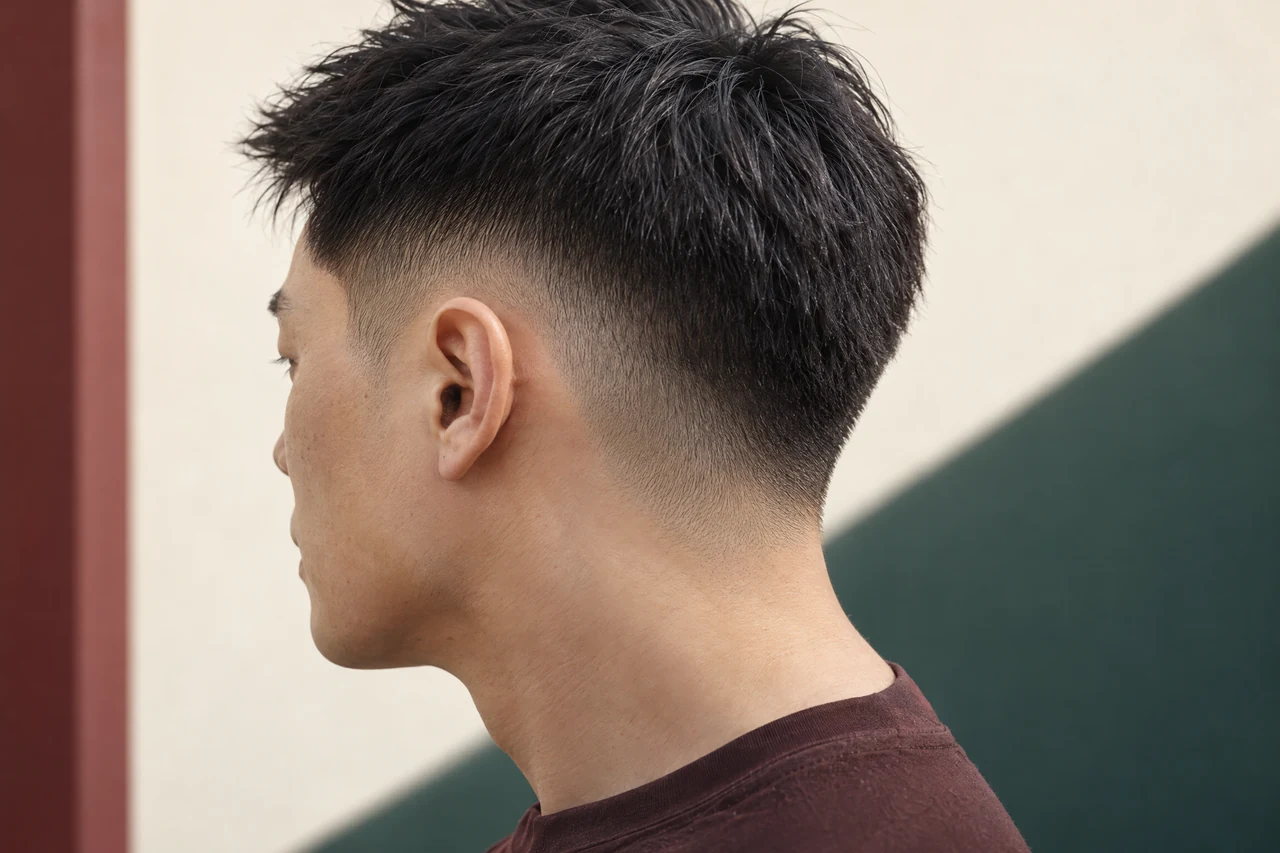
A natural neckline follows the existing growth boundary
A natural neckline keeps the existing growth boundary central to the haircut discussion. Upward or diagonal hairs may mean a perfectly straight edge is not the most realistic choice. Compare leaving a soft border with tidying the surrounding outline, without assuming neck shaving or a separate edge-cleaning package is available.
Natural does not have to mean untouched. The discussion can concern stray hairs around an otherwise retained boundary, the length of the lower fringe, or how softly it meets the skin. It should begin with what is already there. If the boundary rises on one side or forms a point in the centre, decide whether you are comfortable seeing that feature rather than automatically replacing it with a horizontal line.
Distinguish hair that grows outside the main outline from hair that belongs to the shape you want to retain. Asking to remove every visible irregularity can gradually move the edge upwards. If this has happened before, bring a back photograph from before the repeated tidies and show the lowest coverage you would like to recover. Existing short areas may need to grow before that outline is possible.
Accept a softer edge instead of forcing a straight line
Keep your head comfortably upright when checking the back. Wahl's neckline guide specifically advises keeping the head straight to judge an even line. Tilting forward can make it harder to compare the resting outline with a reference. Ask to see the rear view as well as the side view; a border that looks neat from one angle may reveal a raised corner from another.

Decide on detail as part of the whole haircut
Check the sideburns and nape with the full side and back shape, not only close-up photographs. A sharp detail can look out of place beside a soft overall outline. Ask what scope is appropriate for your needs and confirm any arrangement before assuming these areas can be booked independently.
With longer sides, the sideburn may sit partly beneath hair swept behind the ear. A narrow, sharply cut strip can become more noticeable when that hair moves. With shorter sides, the same strip may be the strongest remaining vertical feature. Check the haircut in the way you normally wear it, including hair tucked back, rather than judging the detail only after a different salon finish.
The confirmed men's wash, cut and blow dry price is HK$380. This is the listed haircut service, not an advertised price for sideburn-only trimming or a neckline-only appointment. Explain whether you want a complete haircut with edge preferences or are asking about a smaller amount of work, so the appropriate scope and charge can be confirmed.
Review men's haircut to check its service scope and the details to share before arranging the related work.
Small edges should agree with the sides and back
Check the sideburn with the hair above it, then check the nape with the weight at the back of the head. A useful order is to agree on the overall coverage first and refine the ends afterwards. If the haircut includes a deliberately longer back, make clear that 'tidy the neckline' does not mean removing that length to create a conventional short edge.

Check the outline in everyday conditions
Notice which change actually prompts you to want a tidy. It might be hairs catching on the arms of your glasses, a sideburn spreading towards the cheek, or the lower nape becoming visible above a shirt collar. Those are different concerns. Describing the location and behaviour is more useful than requesting the shortest possible edge as a solution to all of them.
After washing at home, let the hair settle into your normal direction before comparing it with the finished haircut. Hair pressed flat while damp can look different once dry, and a sideburn tip may turn outwards without the whole side needing to be shorter. Record the outline before adding styling product if that is the condition you want the cut to work in.
A neat edge does not have to be shaved smooth
If you personally shave near the sideburns or on the neck, distinguish that skin-close routine from trimming hair length. The American Academy of Dermatology's razor bump advice recommends shaving in the direction of growth to reduce irritation. Tell the stylist if close hair removal has previously left the area sore or bumpy; do not assume a sharper-looking boundary requires it. Persistent razor bumps deserve advice from a dermatologist rather than repeated attempts to cut closer.
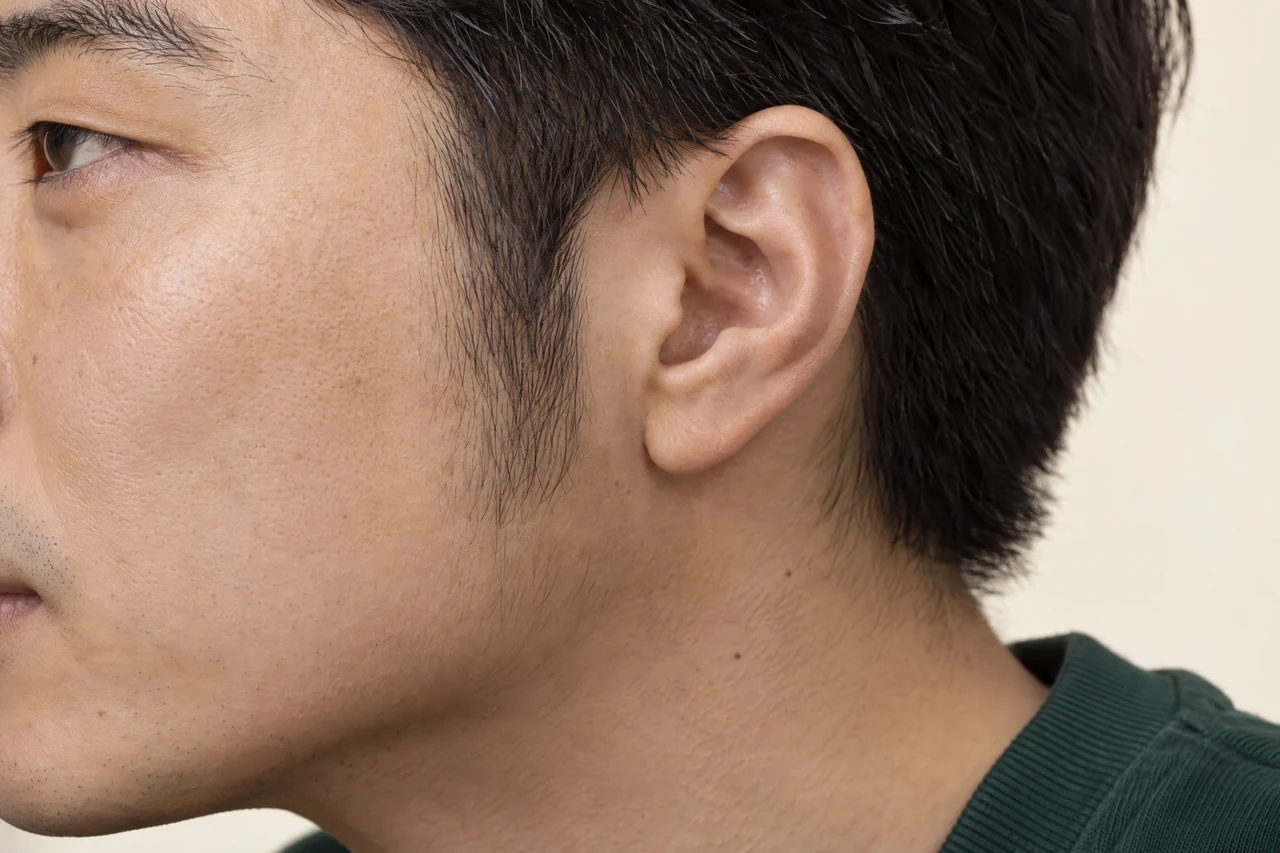
Prepare clear side and back views for your enquiry
Show each side in similar light with the ear visible, plus a rear view of the resting nape. Include a wider view that shows the hair above the edge. Avoid relying on a tightly cropped photograph that hides how a fade connects to the top, or an image where a high collar covers the very boundary you want to discuss.
Use haircut reference photos to prepare an example of the retained length and another showing an edge you do not want. Say which feature matters: the ear-level ending, the width of the sideburn, a low transition at the nape, or the natural lower boundary. You do not need to like every part of a reference haircut for one detail to be useful.
Use book a hair appointment to send the intended work and possible dates; wait for confirmation before travelling.
Describe the limit as clearly as the desired change
For a visit in Sheung Wan, a concise enquiry can state that you want to keep the current top and side coverage, retain sideburns at a shown ear level, and discuss a softer nape without raising the boundary. If you are unsure between tapering and leaving a natural edge, send your own back view and ask about the trade-off. That gives the consultation a concrete starting point without committing you to an unconfirmed technique.
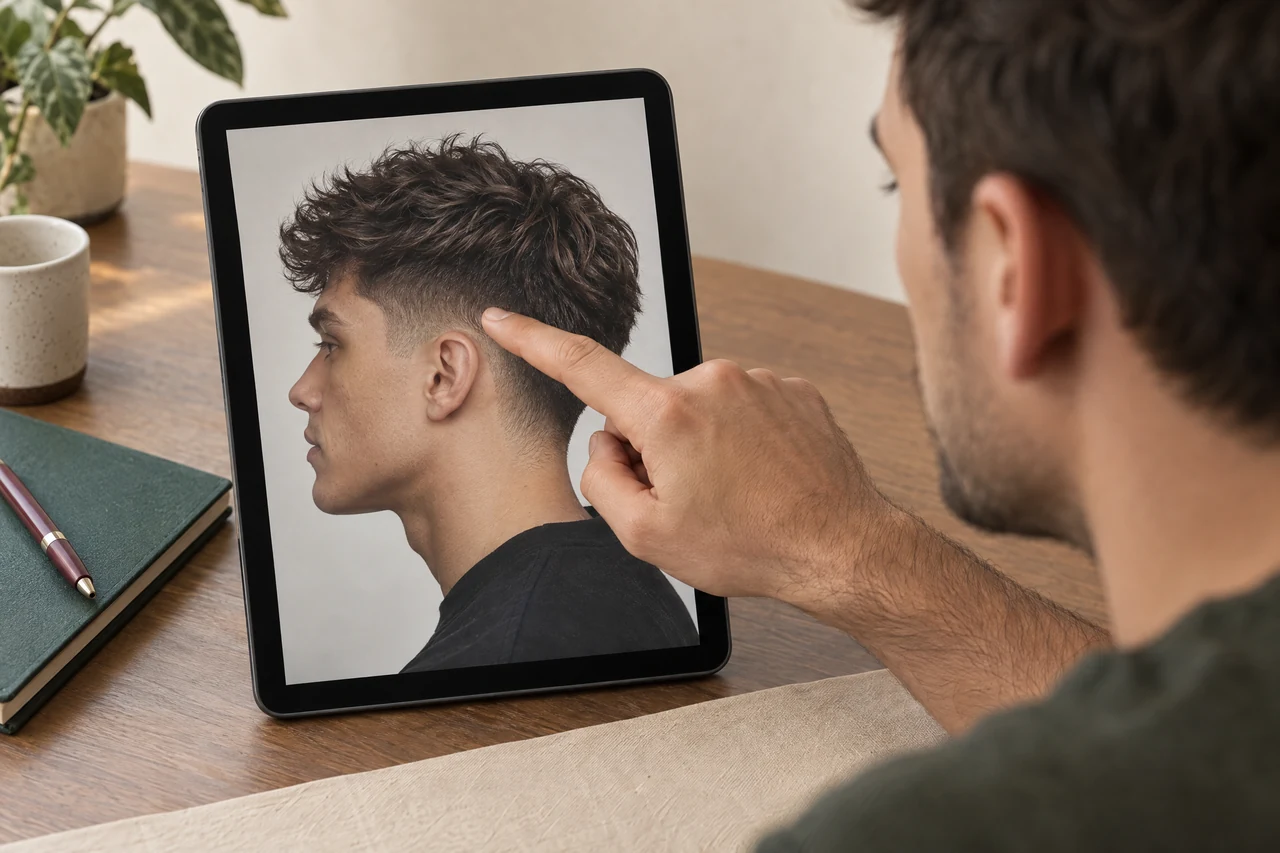
Compare the ending point, coverage and boundary before choosing an edge finish.
| Detail choice | What you are choosing | Trade-off to discuss |
|---|---|---|
| Retained sideburn | A visible ending at an agreed ear level with some density | Keeps a distinct vertical detail; width and tip shape still need agreement. |
| Softened sideburn | Less density towards the bottom rather than simply a higher ending | A lighter edge may be less defined; protect the length if you still want it visible. |
| Tapered neckline | Gradual shortening towards the lower nape | Softens the transition; confirm how much coverage remains and how high the blend extends. |
| Natural neckline | An outline centred on the existing growth boundary | Retains natural points or asymmetry; agree which surrounding hairs can be tidied. |
| Defined lower line | A more deliberate geometric boundary | Can contrast with natural regrowth; do not keep raising the edge to chase every irregular hair. |
Your preparation checklist
- Photograph both sideburns with your head upright and the ear visible; show your everyday glasses if you wear them.
- Point out the lowest sideburn ending you want to retain, then describe width and density separately.
- Provide a rear view of the natural nape and identify any upward or diagonal growth you want considered.
- Mark the highest acceptable lower boundary in your reference and explain whether you prefer a gradual taper or a softer natural border.
- Show the full side and back shape, especially if you are keeping longer hair around the ears or nape.
- Mention previous soreness from close hair removal, and confirm the intended haircut scope and price before arranging a visit.
Frequently asked questions
Does a sideburn trim include beard shaping?
Not automatically. Sideburns are part of the hair outline near the ears. Beard shaping needs separate confirmation and is not listed as a confirmed Vit So service.
Can an upward-growing nape be made permanently straight?
Cutting does not change its growth direction. Discuss a softer boundary and the highest acceptable edge rather than expecting a permanent straight line.
Can I book only a neckline tidy?
Ask about the appropriate service scope and price first. A separate neckline appointment, shaving method or standalone charge is not assumed from the haircut listing.
Do my sideburns need to end at exactly the same part of each ear?
Use the ears as reference points, but compare the overall appearance with your head level. Different growth density or ear positions may affect what looks balanced. Ask for a visual check of both sides rather than repeatedly shortening one side to copy the other.
Should I shorten my sideburns if they turn outwards?
First show how they sit when dry and normally combed. The issue may concern tip direction or density rather than the ending point. Explain whether you want to retain the length so that making them shorter is not treated as the only possible approach.
Keep the edge you like and clarify what needs changing
Send Vit So your side and back views, the sideburn ending you want to retain, and your preference for a tapered or natural nape. Share possible dates for Sheung Wan and ask which haircut scope suits the request. Your enquiry starts the discussion; the appointment and any special arrangement still need confirmation.
Start your WhatsApp enquirySources & further reading
- 6 razor bump prevention tips from dermatologists
Shaving with hair growth to reduce irritation, and seeking dermatologist advice for persistent razor bumps.
- How to Touch Up Your Sideburns
Combing sideburns in their growth direction before trimming and comparing both sides.
- How to Trim the Back of Your Neck
Keeping the head straight to assess an even neckline and identifying the natural side boundary.



