






Perm for long hair: choose the start of the movement
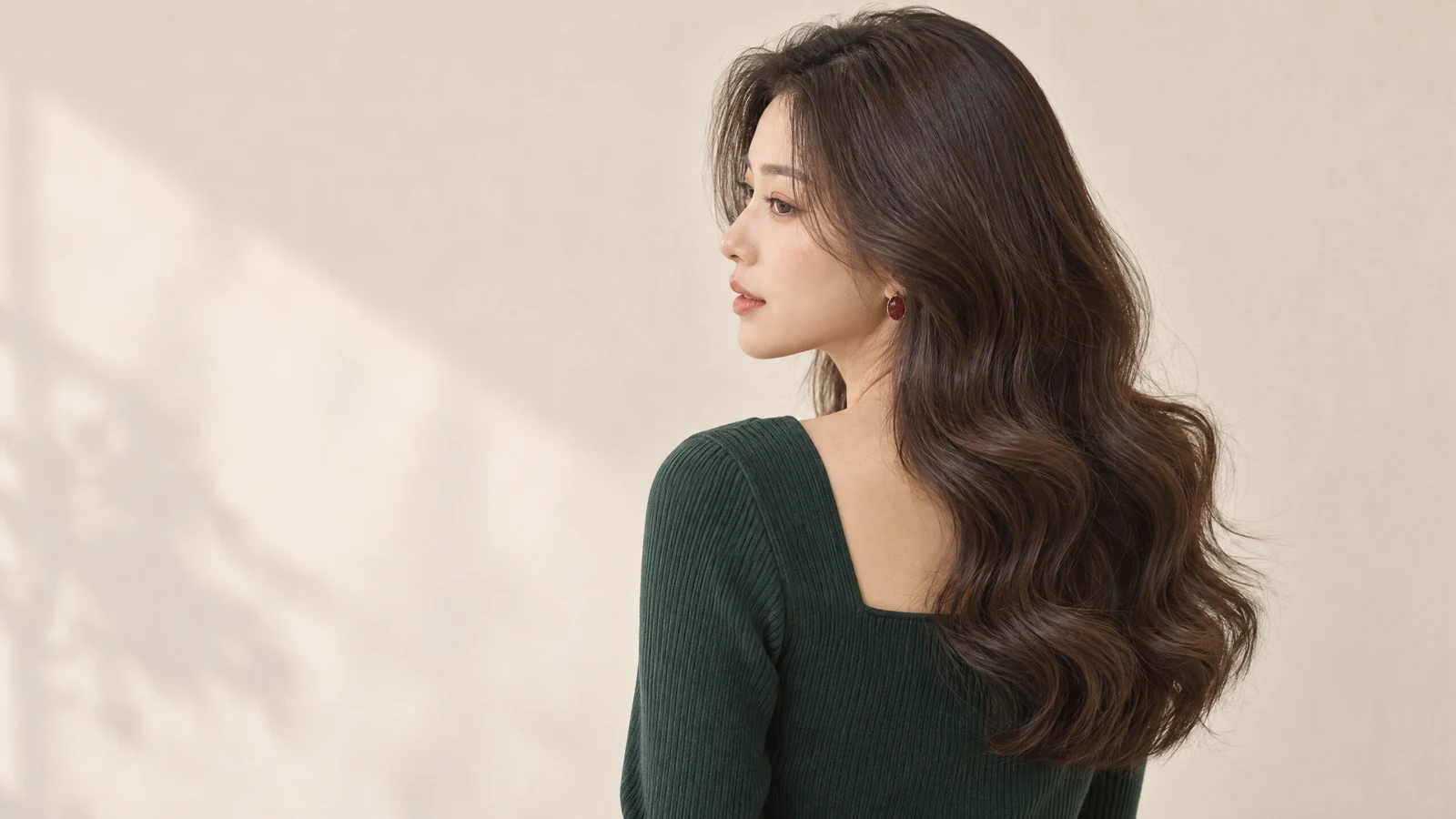
A long wavy perm can begin higher through the lengths or concentrate lower down, giving a different outline even with similar wave spacing. Identify whether you want movement around the face, through the mid-lengths or mainly below the shoulders. The start point should be discussed alongside hair condition and the sections that already contain chemical treatment.
Use a visible landmark to describe placement: below the cheekbones, around the shoulders or through the lower back lengths. Then separate the front from the back. You may want a gentle curve beside the face while keeping the upper back smooth. Saying only 'big waves' leaves these choices unresolved, because a broad wave starting high creates a different impression from the same broad movement starting low.
A reference photograph is most useful when you identify what you like and what you would change. Point out the first bend rather than only the curled ends. Also notice whether the hair is brought forward over the shoulders or left behind the body; moving it changes where the waves appear to begin. Bring an image showing the back as well as a flattering front view.
Continue with perm just the ends of hair for that specific comparison and the preparation questions it raises.
Discuss a perm for long hair from roots to ends
Describe the upper area you want to leave quieter, the section where the first bend should become visible and how much definition you want at the ends. These are visual goals, not instructions for applying chemicals. Ask the stylist to explain how the proposed placement would connect through your existing cut. A smooth-looking crown in a photograph does not by itself reveal the processing method or the treated area.
Shoulder and medium lengths need a separate dry-length check
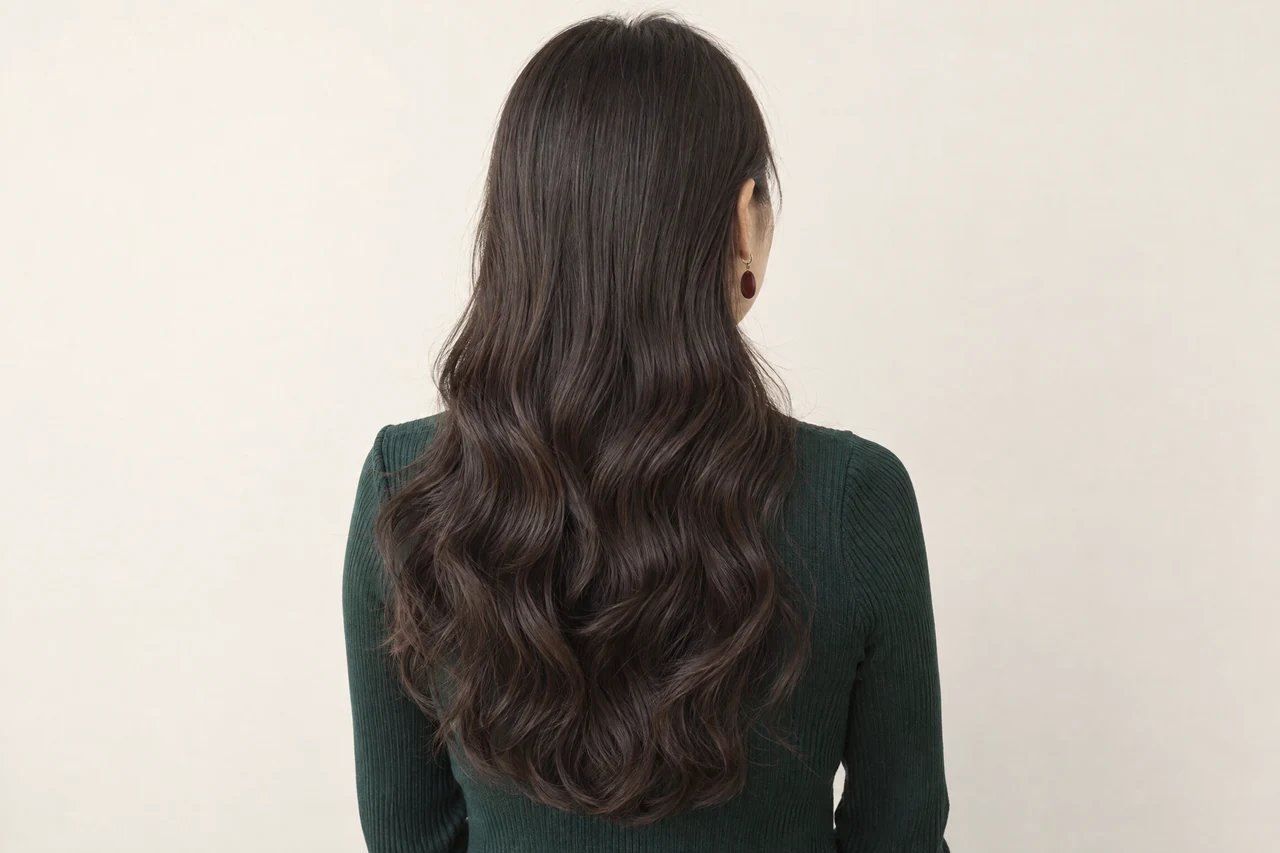
A perm for medium length hair may shift the ends from below the shoulders to a more compact outline. A shoulder length perm also needs a check of where the ends sit against collars and how you tie the hair back. Describe the dry length you would be comfortable with rather than assuming wet length will stay visually unchanged.
Decide whether your priority is hair that still falls below the collarbone, ends that clear a jacket collar or enough length for a comfortable low ponytail. These goals are more informative than 'please do not cut much'. Curves can make an unchanged strand look shorter, while a trim changes its actual length. Discuss both changes before agreeing to the overall shape.
Check the front and back separately. Hair brought over the shoulders may look shorter than hair hanging freely down the back. At medium lengths, an outward-facing end can also sit differently when it touches clothing. Wear or photograph a collar similar to the one you use most often, especially if you want the finished ends to fall beyond it rather than rest on it.
Review women's haircut to check its service scope and the details to share before arranging the related work.
Watch where the ends meet clothing
Before the appointment, photograph dry hair without pulling it straight, with your head upright and shoulders relaxed. Show how you normally tie it back and identify any front pieces that already escape the tie. Holding a section in a curve can help communicate your acceptable outline, but it is not a prediction of how that section will respond to a perm. Agree on the shortest acceptable visible finish before planning a trim.
Loose waves need to be considered with hair weight
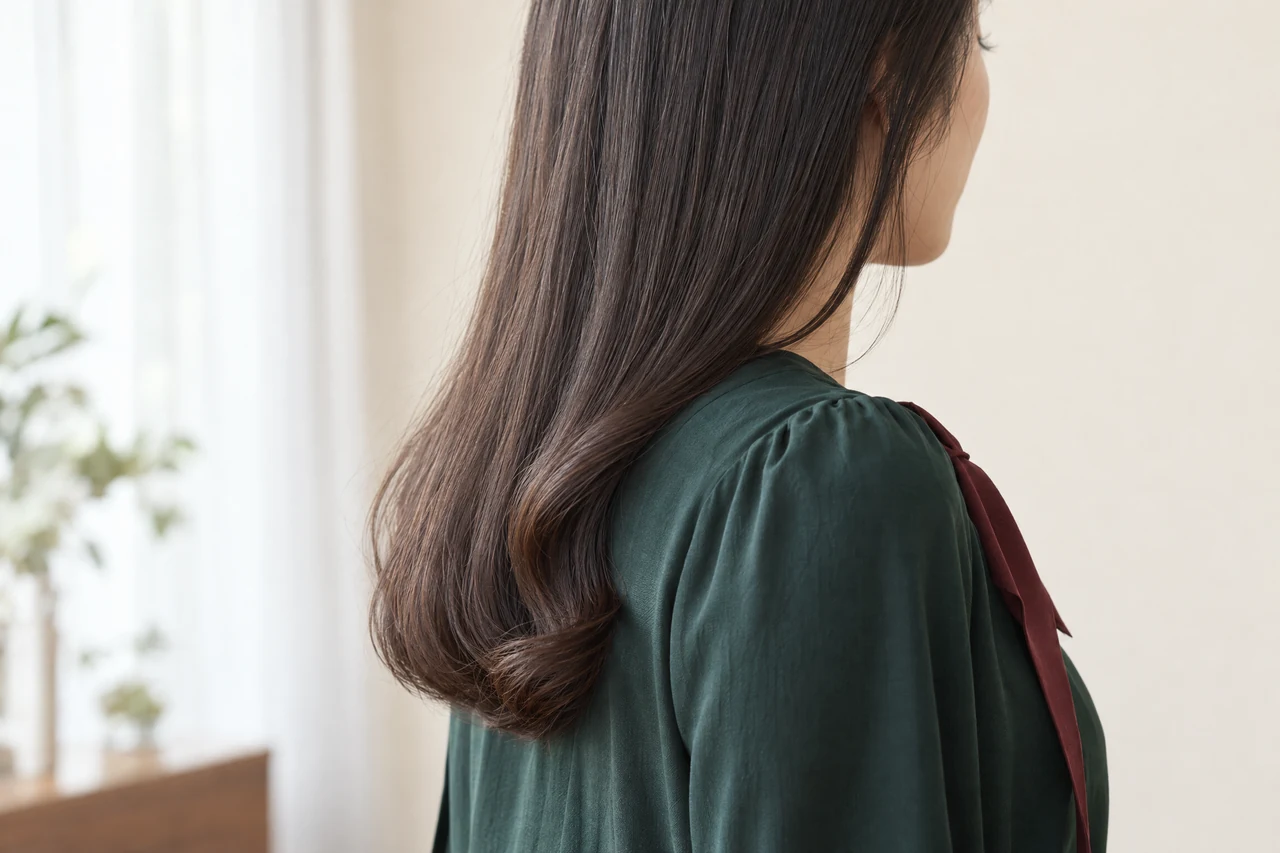
For loose curls through long hair, compare the wave in a reference image with your density and existing layers. A body wave perm for long hair is a broad-movement goal, not a promise of the same volume on every head. Heavy lengths and shorter sections may present movement differently, so the haircut belongs in the discussion.
Look beyond the size of each bend. Compare how much hair sits around the shoulders, how full the bottom edge appears and whether separate shorter pieces create movement above that edge. A dense, mostly one-length cut may keep a substantial lower outline. Introducing layers changes where some ends finish, so it can alter the shape even if the longest hair remains untouched.
More layers are not automatically better. If the ends are already sparse, preserving a fuller perimeter may matter more than adding shorter pieces. If the sides feel bulky, ask which part of the outline needs adjustment rather than requesting thinning everywhere. Describe whether you prefer a continuous sweep of hair or visibly separated waves; these are different finishing priorities.
If keeping the longest edge is your priority, use the layered haircut guide to prepare questions about which shorter sections would change and which length would stay.
Match broad movement to the haircut
Compare a reference with your own hair worn in the same direction and with a similar parting. Ask whether its fullness comes mainly from the cut, the wave pattern or the styling. Broad waves do not necessarily mean a fuller crown. If you want both a quieter upper outline and visible lower movement, make that combination explicit rather than expecting a loose-wave label to communicate it.

Layers and processing method are different decisions
A perm with layers needs a plan for the shortest pieces as well as the longest ends. Ask how their movement would connect and which sections should remain less curled. If you are considering a digital perm for long hair, confirm method availability and suitability separately; length alone does not establish that a heat-assisted procedure is appropriate.
Bring the history of the lengths, not just the date of your latest appointment. Tell the stylist where you have had highlights, bleach, colour, straightening or an earlier perm, including treatments later covered with a darker shade. Identify whether those areas remain in the hair you want to keep. The goal is to assess the proposed work against the actual strands, rather than assuming the whole head has the same background.
The American Academy of Dermatology's colouring and perming guidance notes that appearance-enhancing treatments can leave hair dry and brittle. It also advises immediate rinsing and dermatologist advice for excessive stinging or burning during perm processing. Tell the stylist promptly about discomfort; it is not something to endure for a stronger wave.
Continue with digital perm vs cold perm for that specific comparison and the preparation questions it raises.
Ask how shorter sections join the longer outline
Pay particular attention to short face-framing pieces and layers above the shoulders. Ask where their ends would sit after styling and whether they would still tuck behind the ears or reach your usual hair tie. If a haircut change is proposed, clarify how it supports the chosen wave placement. Decide the cut and curl plan together rather than cutting new layers first and trying to fit a perm around them later.

Choose a dry finish you can repeat at home
Explain your usual routine honestly: whether you air-dry, use a dryer, brush the lengths smooth or tie them back soon after washing. A photograph of polished, separated waves may include styling that you do not want to repeat. Ask to see how the proposed movement should be dried and arranged with the tools you actually have, including how to handle the longer back sections.
Gentle handling matters when preserving long ends. In its advice on how to stop damaging your hair, the American Academy of Dermatology recommends conditioner after each shampoo, absorbing water without towel-rubbing and using the lowest heat setting when blow-drying. It also recommends gentle wide-tooth combing rather than tugging. Ask the stylist how to apply these habits to your particular wave pattern and processing instructions.
Plan your perm aftercare routine before choosing a finish that would need more drying or arranging than you want to do.
Include ponytails and your everyday parting
Show the parting you actually wear and explain how often your hair is tied up for commuting, exercise or work. The AAD recommends loosely pulled-back hair instead of tight styles. For your design discussion, identify which front pieces you want to remain easy to secure and which you enjoy wearing loose. Ask for treatment-specific washing and tying instructions rather than assuming every perm has the same rules.
Make the long-hair enquiry specific enough for a useful quote
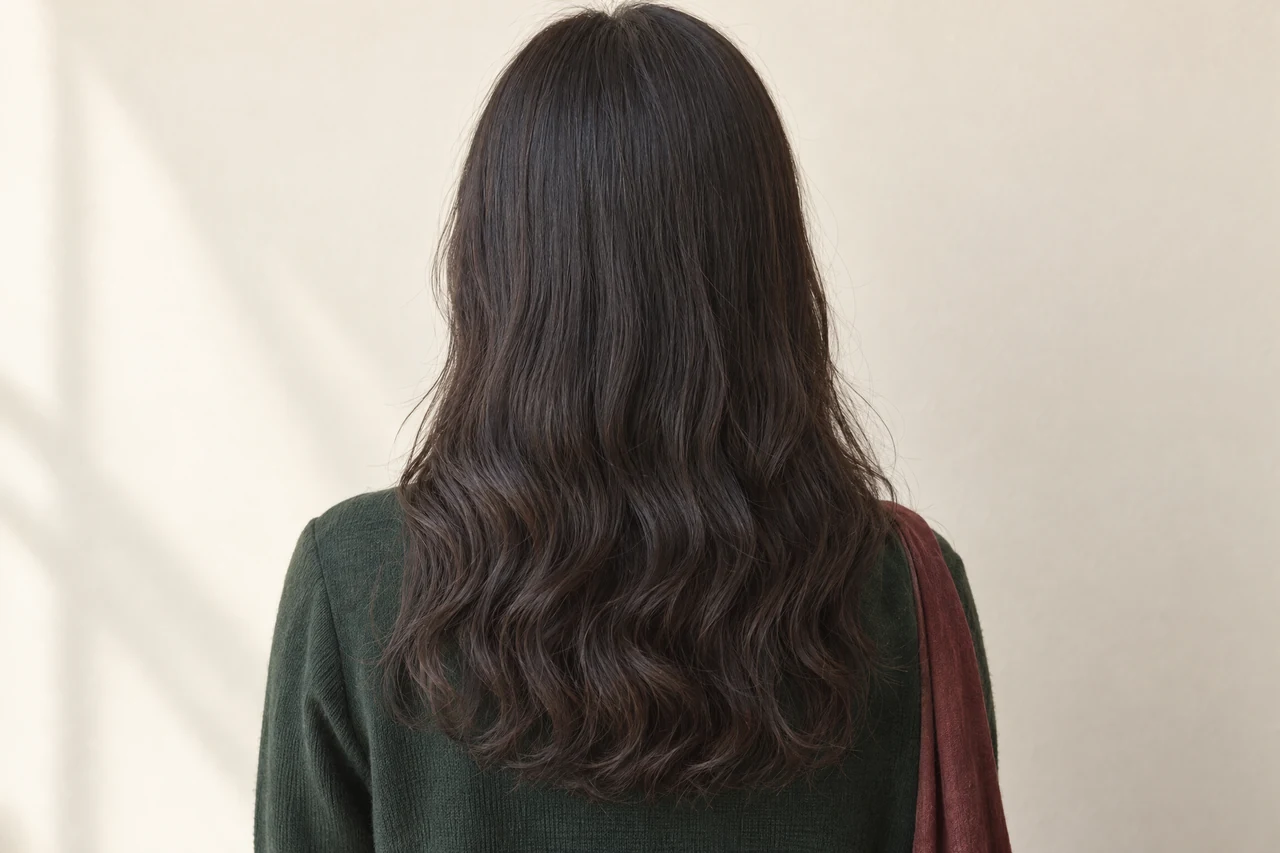
Send current dry-hair photographs showing the front, side and back, together with your preferred first-bend position and minimum acceptable finished length. Mention any proposed layer change and your treatment history. This helps frame the consultation around the hair you will keep rather than a style name alone. Ask about method suitability, the intended cut and the time to allow before arranging the visit.
The listed full-head perm price is HK$1,600. The women's wash, cut and blow-dry package with a full-head perm and pre-service hair protection is listed at HK$1,880. These describe different included work, so confirm which applies to your plan. For single services, the pricing note lists an additional HK$200 for hair extending below the chest; confirm the applicable services when enquiring. Package contents and the actual charge also need confirmation.
Agree on priorities before the work begins
If keeping visible length conflicts with the requested outline, say which matters more. You might prefer a quieter wave with a fuller end line, or accept a layer change for more movement around the shoulders. Ask what alternative is available if the desired placement is unsuitable for the existing hair. An enquiry starts this discussion; it does not confirm a booking, processing method or result.

Compare long-hair wave placement by the outline you want to wear
| Visual goal | What to compare | Trade-off to discuss |
|---|---|---|
| Movement beside the face | First bend in front versus first bend at the back | Shorter face-framing pieces may sit higher once curved |
| Broad waves around the shoulders | Side width, lower fullness and existing layers | More movement may change the outline against clothing |
| Low-starting waves with a smooth upper area | Length remaining below the proposed start point | A low start does not by itself create crown lift |
| Medium-length waves that still tie back | Dry end position and shortest sections reaching the tie | Curl shape and a trim can both affect usable length |
| Long waves with a substantial bottom edge | Perimeter fullness versus shorter-layer movement | Adding layers changes some ends even if the longest length stays |
Your preparation checklist
- Photograph current dry hair from the front, side and back without stretching the lengths straight.
- Mark the preferred first-bend position and identify upper areas you want to keep visually quieter.
- Describe the shortest acceptable dry finish using the collarbone, clothing or your usual ponytail as a reference.
- List previous chemical services and show which treated sections remain in the lengths.
- Compare the shortest existing layers with the longer edge before agreeing to further cutting.
- Explain your drying, parting and tying routine, then confirm the method, included work and applicable long-hair charge.
Frequently asked questions
Will I keep exactly the same visible length?
Not necessarily. Curl direction and definition can change apparent length. Discuss the dry finish and any planned cut before treating wet length as a reliable preview.
Do long waves have to begin near the roots?
No single start point suits everyone. Explain the areas where you want movement and those you want to keep straighter, then ask what placement is feasible.
Should I cut layers before deciding on a perm?
Discuss the cut and curl plan together. Existing short layers may move differently from longer sections, and a new haircut can change the outline you are trying to achieve.
Is a loose curls perm for long hair the same as an ends-only curl?
Not necessarily. Loose describes the intended movement, while ends-only describes its limited position. For this long-hair discussion, show how far through the lengths you want the waves to extend. If you only want an end bend and a predominantly straight outline, make that narrower goal clear.
Plan long waves around the length you want to keep
Enquire with Vit So in Sheung Wan about your current length, preferred wave start and everyday styling. Share dry-hair photographs and your treatment history so the discussion can cover layers, suitability and the relevant quote. Confirm availability and appointment details before visiting; an enquiry is not a confirmed booking.
Start your WhatsApp enquirySources & further reading
- Coloring and perming tips for healthier-looking hair
Potential dryness and brittleness from appearance-enhancing treatments, and the need to respond promptly to excessive scalp stinging or burning during perm processing.
- How to stop damaging your hair
Conditioning, gentle towel use and combing, low-heat drying and loosely pulled-back hairstyles when caring for long lengths.



