






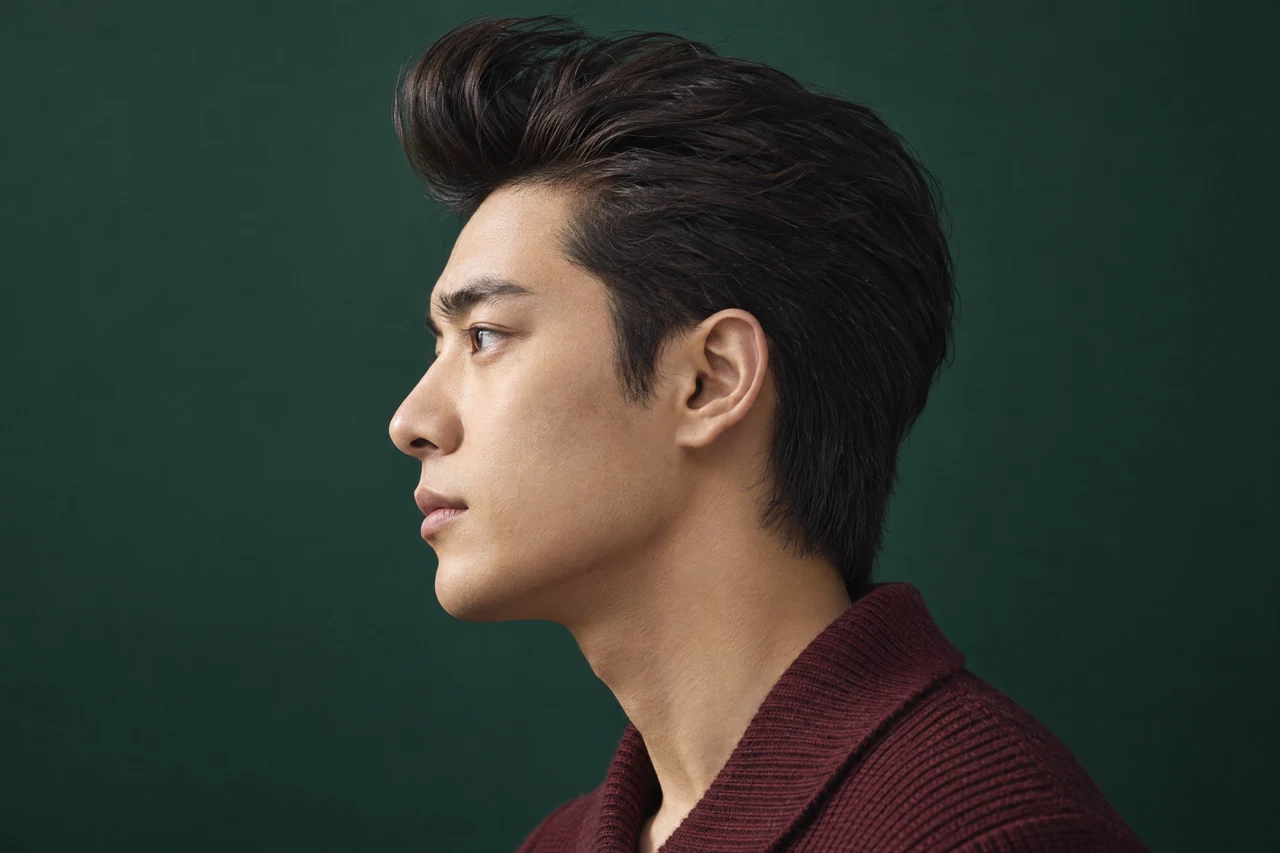
Pompadour vs quiff at the raised front
A rounded, controlled front presents differently from a looser lift with separated pieces. Compare the front and side views to see whether height comes mainly from the fringe or continues across the top. Choose the amount of structure you like instead of asking for the tallest version of either name.
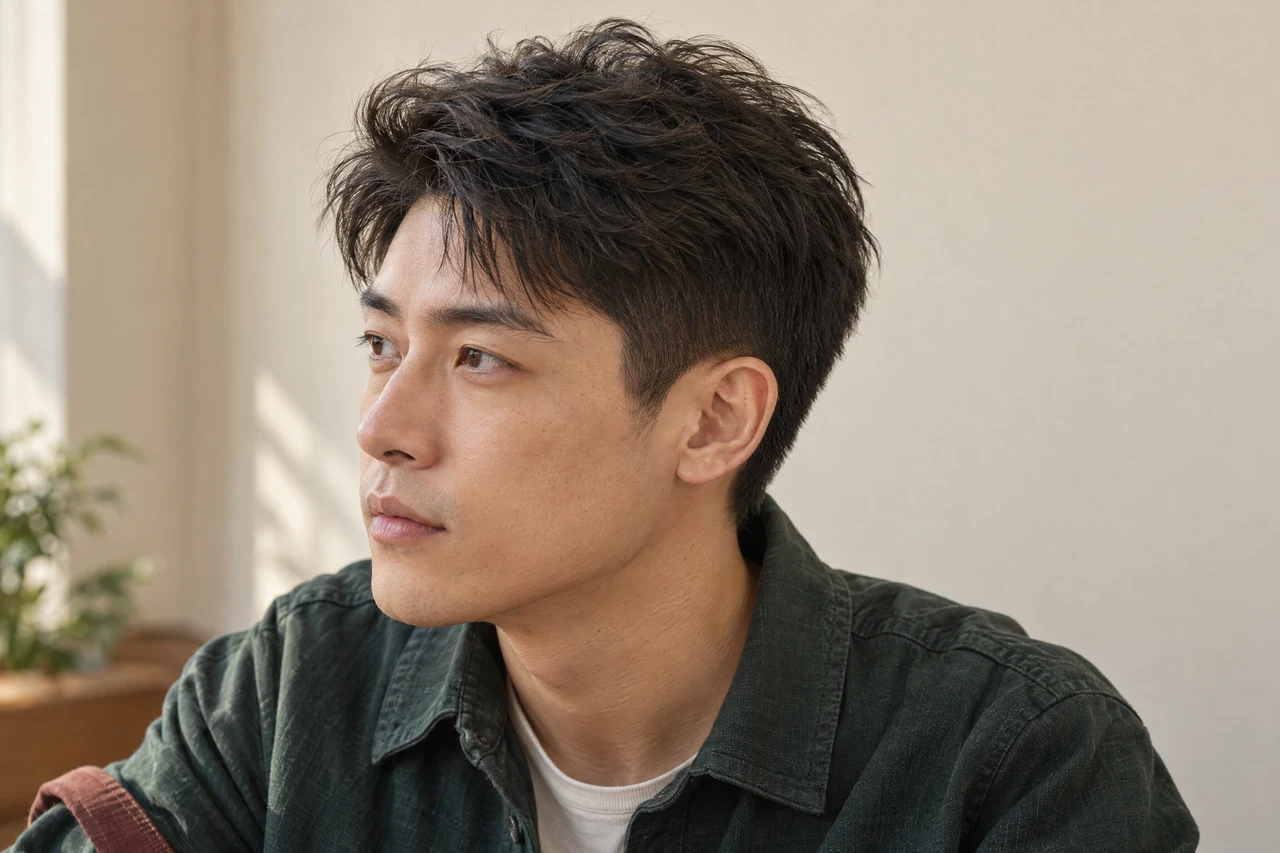
Look at where the silhouette peaks and how it travels backwards. A sculpted pompadour usually reads as a substantial front arc connected to the rest of the top. A textured quiff may concentrate attention on the forelock, with less uniform direction behind it. These are useful visual distinctions, not rigid rules: a relaxed pompadour can show separation, and a carefully combed quiff can look controlled.
The GATSBY pompadour guide describes both styles as lifting the front, distinguishing airy quiff volume from a denser, backwards-directed pompadour. Its textured pompadour variations also show why gloss and smoothness should not be treated as compulsory. When comparing photographs, identify the direction and continuity you like rather than assigning every image to a strict category.
If your favourite reference has very little raised volume and mostly follows the head backwards, a flatter swept-back brief may be closer to your goal. That changes the consultation: you would prioritise direction and surface control over a front crest.
Continue with slick back haircut for that specific comparison and the preparation questions it raises.
Pompadour vs quiff: read the shape rather than the label
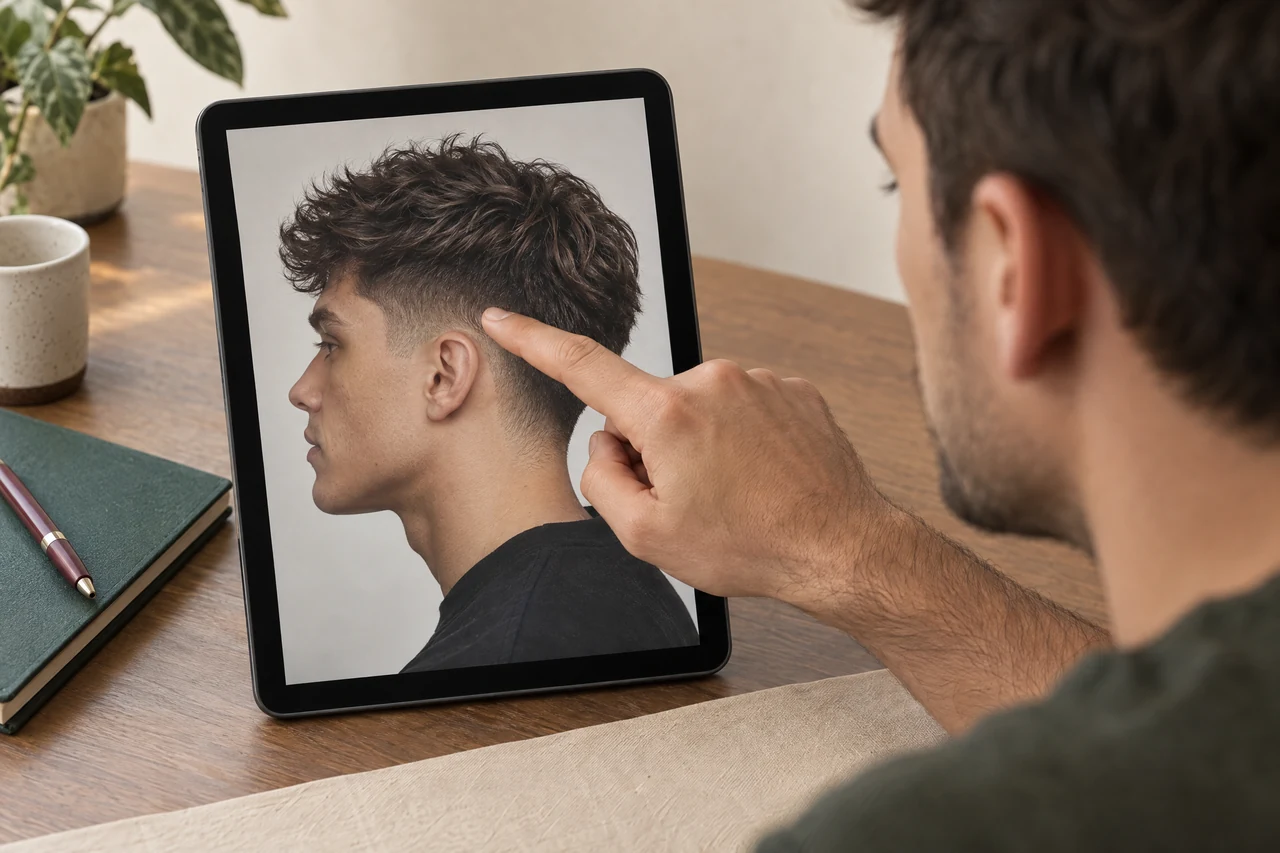
Check the forehead opening as well as the peak. Do you want the entire hairline visible, or would you prefer a loose piece near an outer corner? A side view reveals the curve, while a front view shows its width and symmetry. Save references that answer both questions. A photograph with dramatic lighting may highlight individual strands without clearly showing the overall height, so pair it with a more straightforward angle.
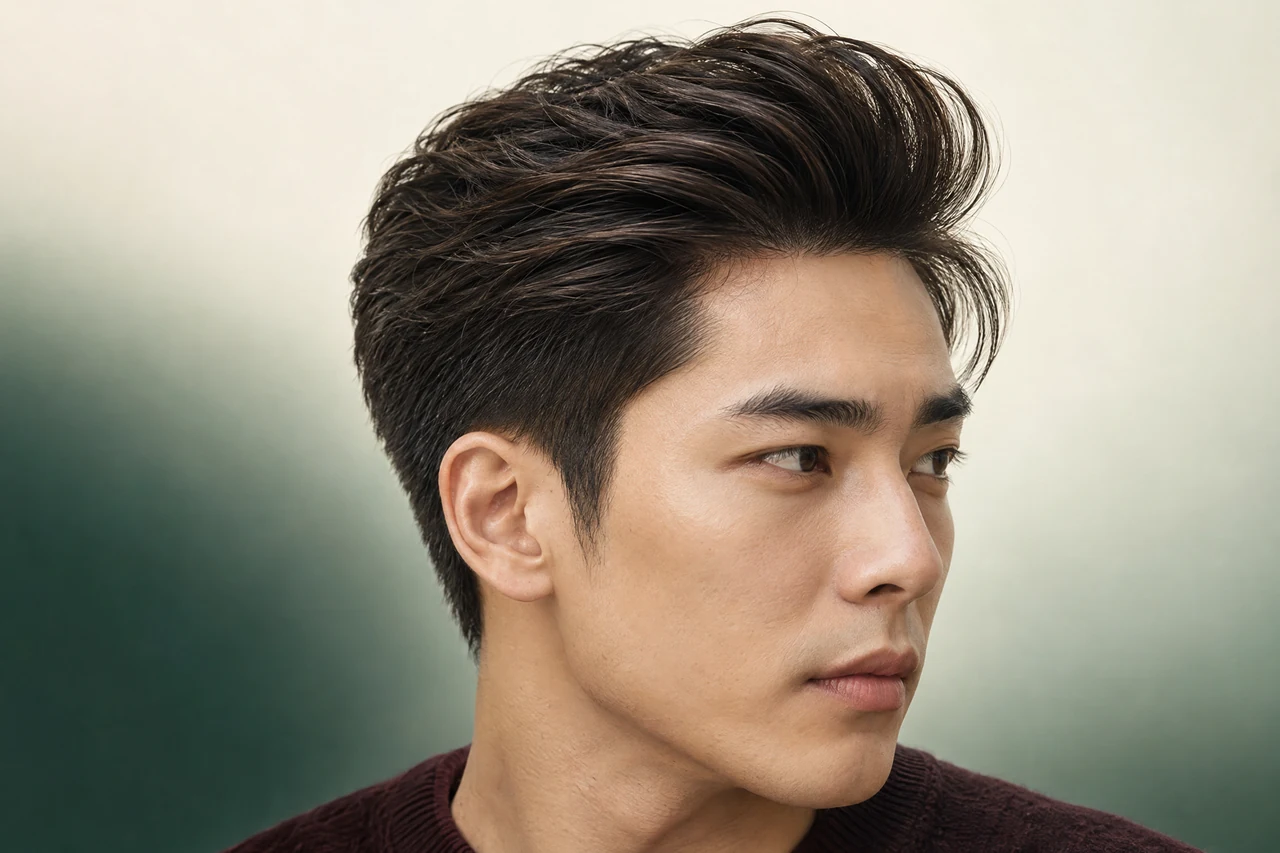
Retain enough length without leaving unwanted weight
More top length can help create height, but excessive weight may make the shape harder to lift. Explain where your hair collapses or feels dense and which areas should stay substantial. Discuss selective weight changes rather than assuming that maximum thinning or maximum length will produce the reference.
There is no useful universal top length for every version. The front needs enough reach to form the requested bend, but the required reach changes with your hair's natural pattern and the depth of the sweep. A broad front arc and a compact, broken lift ask different things of the cut. Ask which part needs to grow and which part can be reshaped now, instead of postponing the entire haircut until every area is longer.
Describe the behaviour you notice after washing. Fine strands may lose their lift once a heavy finishing product is added. Dense hair may form a solid block at the front or push out where the top meets the sides. Naturally wavy hair may supply movement that suits a looser quiff, yet need different handling for a smooth arc. These observations help the stylist assess support without assuming that texture alone decides the style.
If retaining a raised front is less important than having a compact top that settles easily, compare a shorter direction before committing to grow-out. This is particularly useful when your current fringe cannot yet form the sweep you want.
Continue with short hairstyles for men for that specific comparison and the preparation questions it raises.
Support and movement need a balanced top
Ask where weight should remain so the lifted section does not look isolated. Removing bulk indiscriminately can conflict with a brief for a substantial, connected front. Equally, leaving everything dense may make separation harder to see. Agree on the silhouette before discussing cutting techniques. The practical question is whether the retained top can form the preferred shape and still look intentional when worn lower.
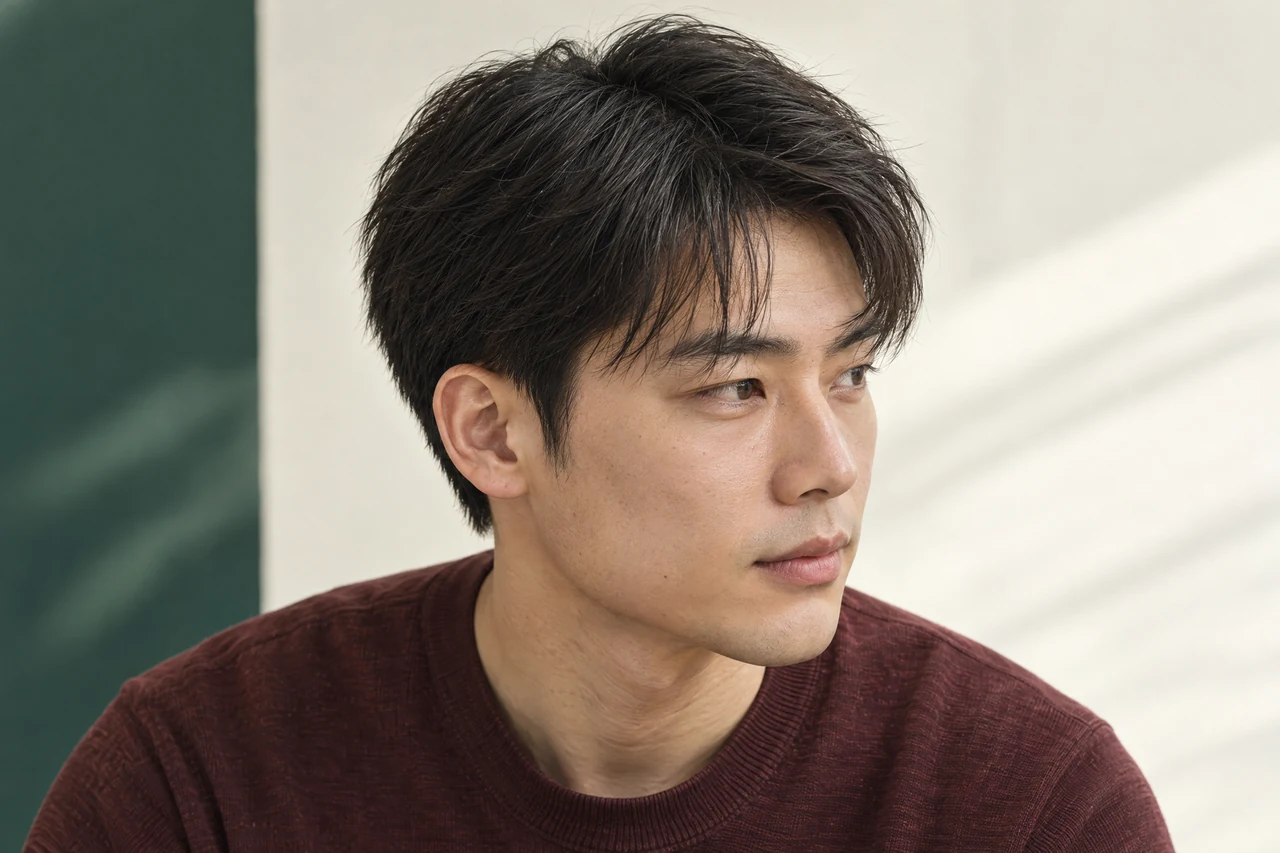
Sides change the apparent height
Shorter sides can make the front look taller by contrast, while fuller sides give a softer outline. Compare that balance with your everyday clothes and preferred profile. A high front does not automatically require a high fade; choose the side coverage separately and ask about a suitable connection.
A close side outline exposes more of the head shape and makes the top-to-side boundary easier to see. Fuller framing can make a similar front look less dramatic. Decide whether you want a gradual connection or a visible break beneath the longer top. A disconnected outline may suit the contrast in your reference, but it is not an automatic feature of either a quiff or a pompadour.
When a reference includes very short sides, separate what you like about the front from what you like about the fade. The fade haircut guide helps you discuss the starting height and retained coverage without making the lifted top dictate everything else. Wear your usual glasses when assessing the profile, because the frame arms and sideburn area share the same visible space.
Close contrast or fuller framing
Turn your head rather than judging only the mirror's front view. Look at the temple width, the area above the ear and the transition towards the crown. A front that looks balanced head-on can appear disconnected from a bulky back in profile. Ask how the sides will look as they grow, especially if crisp contrast matters to you. Choose your upkeep around the outline you want to preserve, not a fixed calendar attached to the style name.
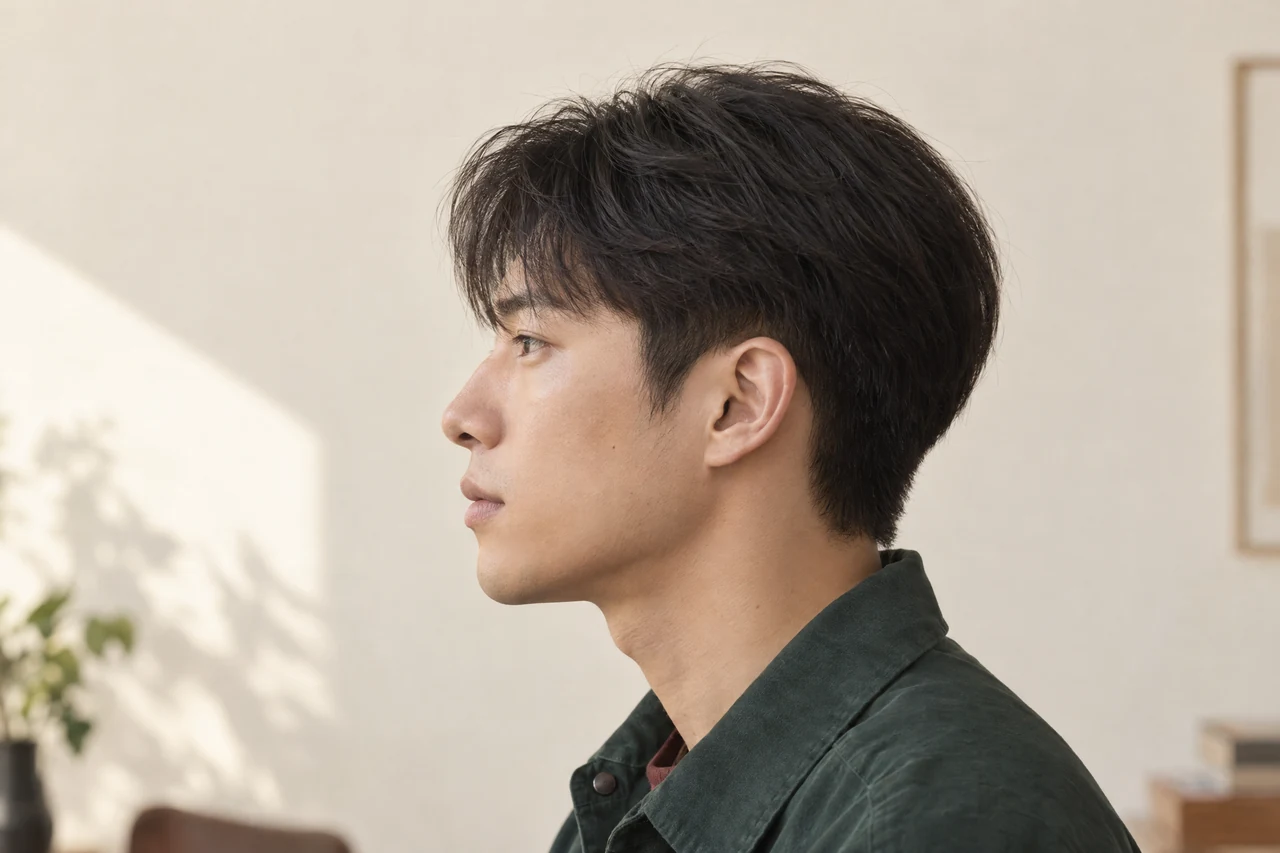
Consider the time behind the lifted finish
A controlled lift may involve more directional drying than a loose textured finish, but your hair determines the actual effort. Ask what the proposed shape would need after washing and whether a lower version is more practical. Neither name guarantees lasting height, a fixed product routine or no maintenance.
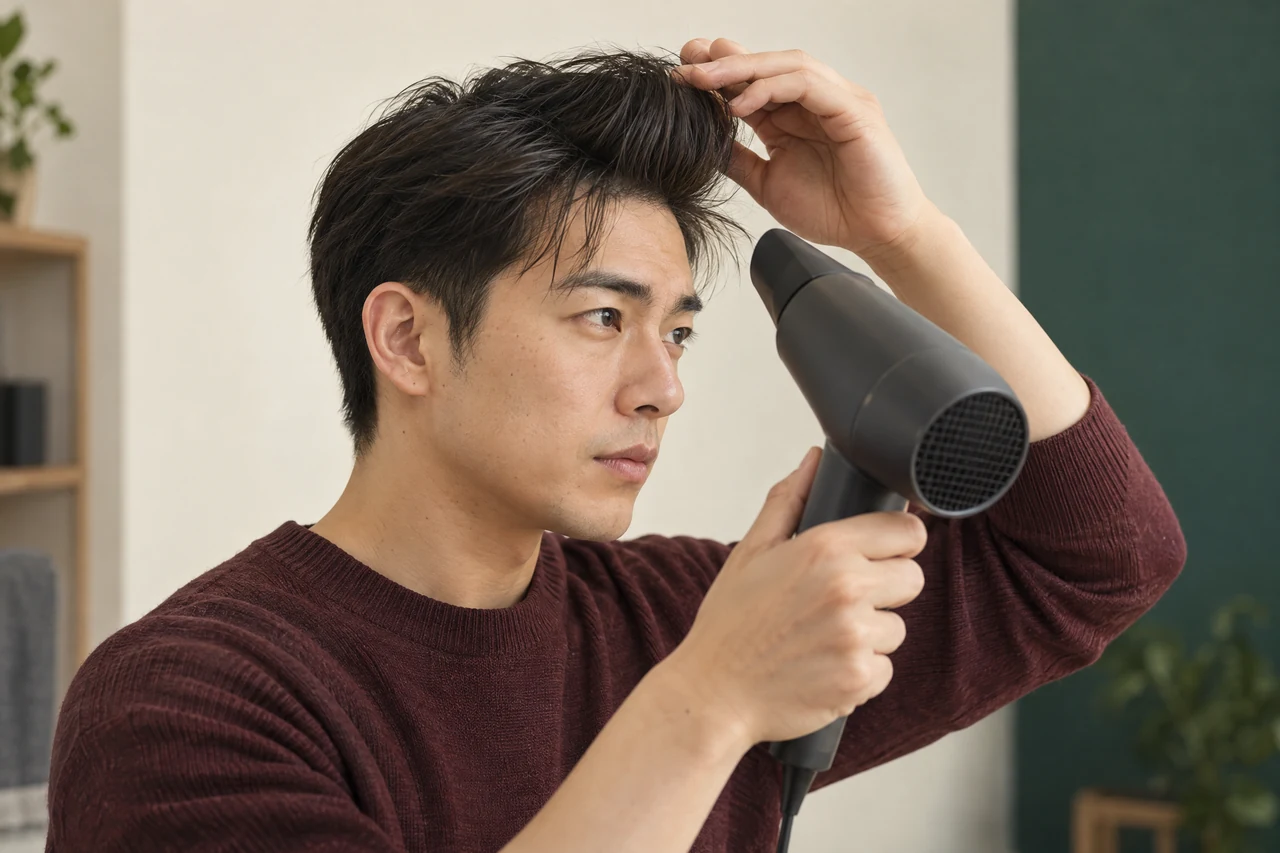
The important distinction is forming the base versus refining the surface. A stylist may first establish an up-and-back direction at the roots, then use a brush or fingers to shape the front. The GATSBY guide similarly recommends blow-drying a base before finishing. If the root direction remains forward, adding more product to the ends may not resolve the shape you are trying to build. Ask for a demonstration of the relevant movement rather than a list of products to buy.
Keep heat exposure part of the decision. The American Academy of Dermatology's hair-care guidance recommends air-drying where possible, the lowest heat setting and less frequent heat-tool use. It also advises gentle handling rather than tugging. These are hair-care considerations, not a ranking of hairstyle attractiveness. If your ideal front requires repeated hot restyling, discuss a less demanding version and review how to protect hair from heat styling before making it your daily routine.
Drying and styling are part of the choice
Explain when you normally wash your hair and whether you have access to a dryer afterwards. Someone who showers at the gym and leaves with damp hair needs a different everyday plan from someone happy to dry and shape the front at home. Ask what happens if you skip the lifting step: can the cut fall into a softer direction, or does the retained front become awkward? That answer makes the styling commitment much easier to judge.
Choose a finish you can wear beyond the mirror
Set height and surface finish separately. You might prefer a rounded pompadour with understated sheen, or a textured quiff with tidier edges. State whether you want visible separation, a combed surface or a softer touchable appearance. Product category alone cannot establish these choices: different formulas vary, and the amount used matters. Ask what finishing step is serving the shape instead of assuming a pompadour must be glossy or a quiff must be matte.
Think about a normal Hong Kong day, including walking outdoors, travelling to work and exercising. If you frequently touch the front or wear headwear, tell the stylist that its appearance after disruption matters. Choose a lower fallback shape you would still enjoy. This does not mean abandoning a statement finish; it means reserving the most deliberate version for occasions when you want to spend time creating it.
Keep an everyday version alongside the statement shape
Ask to see the front with less lift before the final finish is completed. Look for an intentional outline rather than expecting every strand to stay frozen. Notice whether you prefer the front slightly off-centre and whether the crown needs smoothing to connect with it. A workable lower version gives you a specific alternative on rushed mornings, not just an instruction to use less product.
Bring a clear raised-front brief to the consultation
Describe your priority in plain language: a rounded connected sweep, or a lighter front with separated pieces. Show the maximum height you would be comfortable wearing, then point out the side coverage you want to retain. Include a photograph of your own unstyled hair so natural growth is part of the conversation. Also say what you dislike in the reference, such as exposed temples, a hard boundary or excessive shine.
Vit So's listed men's wash, cut and blow dry is HK$380. Use that as the confirmed price for the named service, not as a quote for additional treatments or separate styling work. Share your current top length and desired finish when enquiring so the appropriate scope can be discussed before the visit.
Review men's haircut to check its service scope and the details to share before arranging the related work.
Agree on what to retain and what to demonstrate
Before cutting starts, confirm which front length needs protecting and how the top should connect to the sides. Ask to observe the drying direction and finishing gestures you will need at home. If you are unsure between the styles, begin with the amount of structure you prefer rather than forcing a label. The most useful outcome is a cut and styling plan that match your chosen silhouette and your actual routine.
Compare the requested finish, not a fixed height or compulsory product routine.
| Decision | More sculpted pompadour brief | More textured quiff brief |
|---|---|---|
| Front silhouette | Rounded up-and-back arc with connected volume | Lifted forelock with more visible separation |
| Surface direction | More uniform sweep across the top | More variation between individual pieces |
| Top planning | Retain enough reach and substance for the connected arc | Retain enough reach to lift while allowing movement |
| Side outline | Fuller framing or close contrast, agreed separately | Fuller framing or close contrast, agreed separately |
| Drying effort | May require more precise directional shaping | May permit looser shaping, but natural growth still matters |
| Everyday alternative | Lower rounded sweep | Softer, less elevated textured front |
Your preparation checklist
- Save front and side references that clearly show the width, peak and backwards curve you prefer.
- Photograph your hair without styling and note where the front falls, splits or loses lift.
- Identify the front length to protect and the areas that feel too heavy or too exposed.
- Choose side coverage separately from top height; bring your usual glasses if you wear them.
- Explain your washing routine, dryer access and willingness to shape the front before leaving home.
- Ask to see a lower everyday version and confirm the service scope before agreeing to additional work.
Frequently asked questions
Is a quiff always easier than a pompadour?
Not for everyone. Compare the degree of control and height you want with your natural growth, density and willingness to dry and style the front.
Can I choose a modest amount of lift?
Yes as a design brief. Show the height you actually want rather than assuming either style must be dramatic or tightly sculpted.
Should the sides be faded?
That is a separate outline choice. Discuss side coverage and its connection with the top; a lifted front does not require one particular fade.
Can a pompadour have a textured finish?
Yes. A rounded, backwards-connected silhouette can still have visible strand separation. Show both the overall arc and the surface texture you like so the brief does not default to a smooth, glossy finish.
Should I grow all of my hair before requesting either style?
Not necessarily. Ask which part of the front needs more reach and whether the sides or back can be reshaped meanwhile. The length needed depends on the requested bend and your natural hair behaviour, rather than a universal measurement.
Find a raised-front shape that fits your mornings
Enquire with Vit So in Sheung Wan about a sculpted sweep or a looser textured lift. Share your current hair, preferred front and side views, and the drying routine you can realistically manage. The enquiry can clarify the proposed service and availability; it is not a confirmed booking.
Start your WhatsApp enquirySources & further reading
- 19 Pompadour Hairstyles For Men To Up Their Game | GATSBY
The shared lifted front, differences in direction and volume, textured pompadour variations and blow-drying a base shape before finishing.
- 10 hair care habits that can damage your hair
American Academy of Dermatology advice on reducing heat exposure and avoiding pulling or tugging during styling.



