






Can you perm bleached hair? Start with the treatment map
Record which areas were bleached, how often they were lightened and whether later colour or straightening covered the same sections. Darker colour applied afterwards does not erase the earlier processing history. Include older ends as well as recent highlights, so the discussion reflects the hair that would actually receive the proposed chemical treatment.
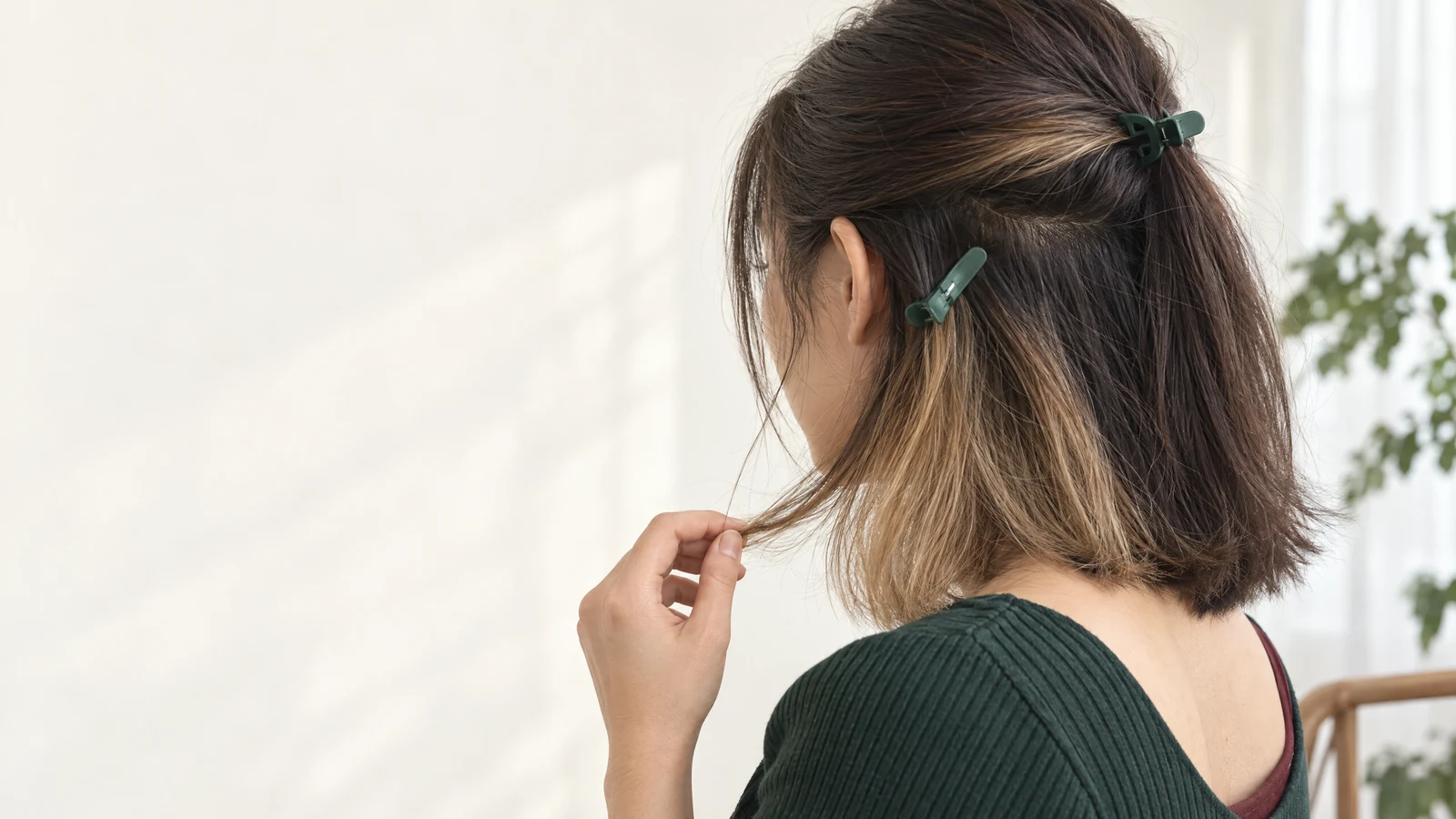
Start with the hair you will keep after any proposed cut. Separate the roots from the middle lengths and ends, then identify highlighted pieces, a lightened fringe or a brighter face frame. An all-over brown finish can conceal different histories underneath. Describe where each service was applied rather than summarising everything as 'dyed hair'. If bleach was applied again to already lightened lengths, make that overlap clear.
A perm changes more than the surface appearance. A review of hair dyeing and perming mechanisms explains that permanent waving involves breaking and restructuring disulfide bonds within the hair. These are chemical links in hair proteins that help determine shape. The review also describes damage to the cuticle and cortex from chemical treatments. This explains why a smooth finish alone cannot establish whether another reshaping process is appropriate.
When asking can you perm bleached hair, include old lightened lengths
New growth does not cancel the history of the ends attached to it. Even if you stopped bleaching long ago, disclose the earlier lightening while those lengths remain. A partial curl goal also needs careful mapping: asking for movement only at the ends may target the oldest processed area, not avoid it. Bring older photographs if they help identify where the bleach used to be.
Coloured hair needs more detail than its present shade
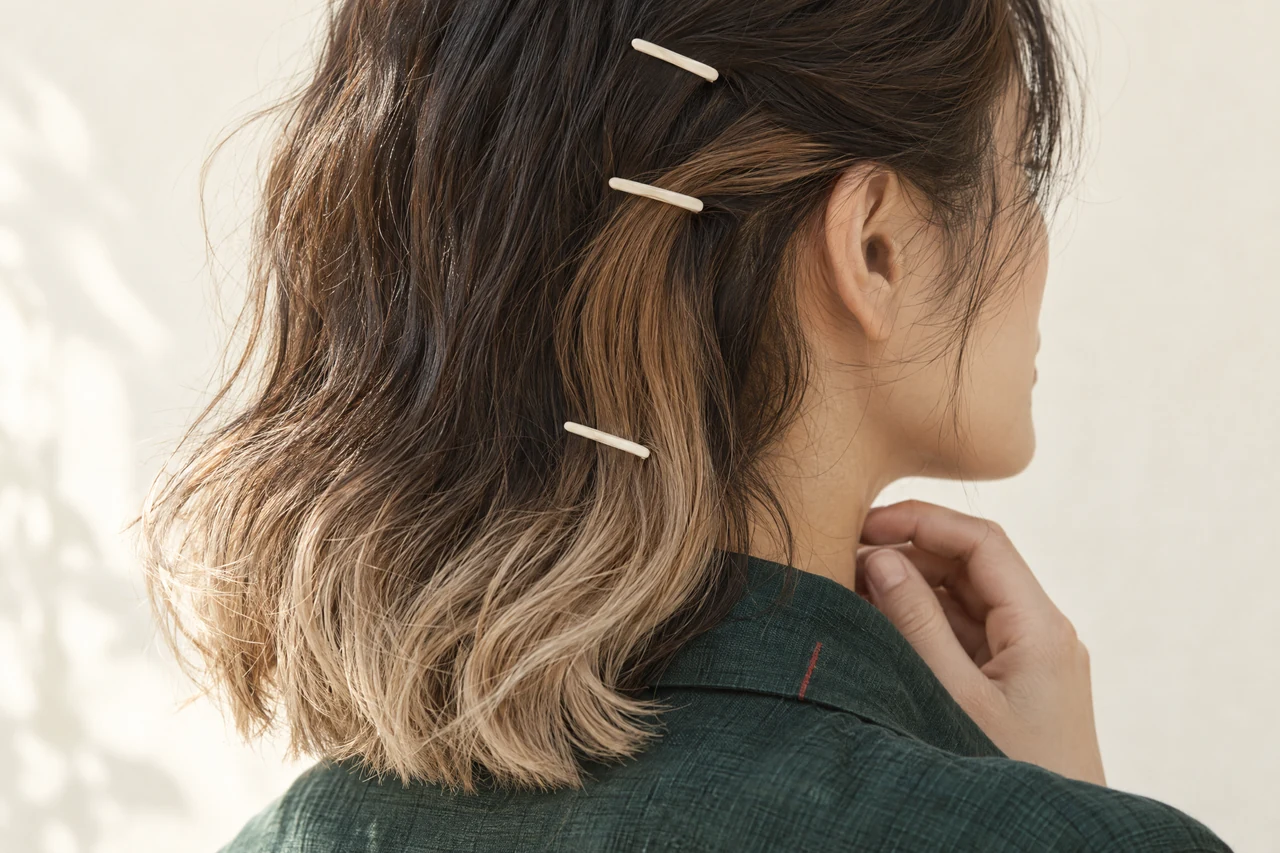
For previously coloured hair, describe whether the colour involved lightening and which areas were repeatedly processed. Share dates and product details where you know them, without treating a missing date as proof of safety. There is no universal waiting period that establishes whether adding a perm is appropriate, and same-day colour and perming should not be assumed.
Tell the stylist whether the result came from salon colour, a home kit, toner over bleach or a colour-removal service. Share packaging or a product photograph when available. 'No bleach' is useful information, but it does not describe every ingredient or previous service. Include chemical straightening and smoothing, even if the original purpose was simply to reduce frizz. Avoid guessing a product name to fill a gap; saying that you do not know is more useful.
For your proposed hair perm, ask which retained sections would need assessment and whether the curl goal is realistic for their history. Choosing a named technique should follow that discussion, not substitute for it. A mild-sounding service label cannot tell you whether your highlighted pieces can tolerate the work.
Explain products, sequence and overlap where known
Write the sequence in plain language: lightening first, colour afterwards, then any straightening or previous perm. Approximate dates are helpful when exact ones are unavailable. Also mention future colour plans. Wanting fresh highlights and new curls for the same occasion requires a discussion of priorities and service compatibility rather than assuming everything belongs in a single visit.

Fragile or damaged sections can change the plan
If the hair is breaking, unusually fragile or difficult to detangle, disclose that before discussing more chemical work. A conditioning treatment does not automatically make damaged sections suitable for perming. The safer discussion may involve a cut, temporary styling or postponing the change, rather than finding a named method that supposedly removes the risk.
Describe changes you notice during ordinary washing and styling. Useful details include ends that catch on the comb, short snapped pieces, rough lengths or a section that feels unusually soft and stretchy when wet. These observations are reasons to seek assessment, not a home diagnosis. Do not repeatedly pull wet hair to see how far it stretches or try perm solution on a hidden section yourself.
The American Academy of Dermatology's colouring and perming advice notes that cosmetic treatments can leave hair dry and brittle and urges caution with perming to prevent long-lasting damage. Its guidance supports taking fragile hair seriously; it does not approve an individual salon procedure. Separate scalp symptoms from hair-shaft concerns and disclose both before treatment.
Review hair treatment to check its service scope and the details to share before arranging the related work.
If you are postponing curls, use hair care after bleaching to focus your routine on the lightened lengths you want to retain, rather than adding products solely to obtain permission for a perm.
Be willing to postpone additional processing
Ask what postponement is intended to achieve: reducing further stress, removing compromised ends or allowing more unprocessed growth. Waiting is a planning choice, not proof that the same old hair has become suitable. If the answer remains no after reassessment, you can still agree on a useful haircut or styling direction.

A curl goal can have non-chemical alternatives
If additional chemical work is not appropriate, the preference for movement can still guide haircut and styling choices. Explain which part of the reference look matters most, such as curved ends or softness around the face. Temporary styling is not the same as a lasting perm, but it may help explore a direction without assuming more processing is suitable.
Show the stylist where movement should begin and how much width you like around the cheeks or shoulders. A rounded end line, a changed parting or styling that follows an existing bend may address part of the goal. Removing fragile ends has a different trade-off: it changes retained length and may remove some colour placement. Agree on the shortest acceptable length before considering that option.
Review hair styling to check its service scope and the details to share before arranging the related work.
Temporary styling still deserves care. Heat and brush tension are not automatically harmless alternatives for weakened lengths. Ask for an approach suited to the current condition, and explain whether the look is for one evening or for everyday use. A finish that needs constant hot-tool touch-ups may not be a practical compromise for already fragile hair.
Separate wanting movement from needing a perm now
Think about your normal morning, not only the reference photograph. If you usually wash and leave home without shaping the ends, a temporary finish will involve a different routine. If the goal is an upcoming dinner or photograph, lasting chemical change may be unnecessary. In Hong Kong's humid weather, discuss how you will manage the chosen finish without repeatedly forcing the hair back into shape.

Prepare a consultation that goes beyond a reference photo
Use the 6 preparation steps below to organise your enquiry. They bring together treatment history, current condition and the shape you want, so the discussion can move beyond a yes-or-no question. Natural-light photographs from the back and sides can help show length and placement. Include the ends and inner sections where possible; a polished selfie may hide the areas that matter most.
Explain your hair's ordinary state after washing, including whether it tangles before styling products are applied. Mention regular hot-tool use and what you can realistically change. You do not need a technical assessment before making contact. Your role is to provide an honest record and clear preferences; suitability requires more than interpreting a photograph.
Continue with can i get a perm again on permed hair for that specific comparison and the preparation questions it raises.
Include older perms and the length you intend to keep
If curls from an earlier perm remain underneath the colour, identify them in the same treatment map. Old chemical reshaping adds another part of the history, even when its curl has relaxed. Make clear whether you want to preserve that movement or replace it, and where you are willing to cut.

Agree on priorities before deciding what to book
Rank the things you most want to keep: length, lightness, a particular curl shape or a simpler routine. Keeping heavily lightened ends and obtaining a new lasting curl may not both be feasible. The comparison below helps frame the conversation, but the options are not automatic approvals. A revised goal should be something you genuinely want, not a service selected simply because the original request was declined.
If chemical work is considered, ask what assessment is needed, what limitations remain and how future colour would be planned. Confirm the service scope and quote only after the proposed work is clear. If the plan is a cut or temporary styling instead, confirm that change before the visit rather than assuming the original perm enquiry has become a different booking.
Ask what would change the recommendation
Find out whether a later discussion would require a cut, more information about an unknown product or an in-person review of the retained hair. A vague instruction to return after some time is less useful than understanding the reason for reassessment. Accept that additional information may confirm a limit rather than remove it.

Ways to approach a curl goal when bleach or colour history affects the decision
| Possible direction | What it can address | Trade-off to discuss |
|---|---|---|
| Assess a proposed perm | Whether lasting reshaping is appropriate for the retained sections | Further chemical stress and uncertain suitability; a method name is not approval |
| Revise the haircut | End shape, weight and removal of compromised lengths | Less retained length and possible changes to highlighted placement |
| Choose temporary styling | Explore a curved end line or movement for an occasion | Not lasting; heat and tension still need to suit the hair |
| Postpone processing | Avoid adding chemical work while planning the next step | No immediate lasting curls; waiting alone does not establish safety |
Your preparation checklist
- Map the roots, middle lengths and ends, including lightened pieces now covered by darker colour.
- List the sequence of bleach, colour, straightening and previous perms; mark dates or products you do not know.
- Describe breakage, tangling and changes during ordinary washing without performing a pulling test at home.
- Prepare natural-light hair photographs and a reference showing where you want the curve to begin.
- State the length and colour placement you want to keep, plus whether a cut or temporary styling is acceptable.
- Confirm what assessment, service scope and quote are needed before treating your enquiry as a booking.
Frequently asked questions
Can you perm coloured hair?
It depends on the current condition and the full treatment history, including any lightening underneath the colour. A colour label alone cannot establish suitability for another chemical process.
Can you perm damaged hair?
Existing damage can make further chemical work unsuitable. Describe breakage and fragile sections, and be prepared to postpone treatment or discuss cutting and styling alternatives instead.
Will a perm damage my hair?
Chemical reshaping can add stress and damage. Individual assessment helps inform the decision, but neither a named method nor a protective treatment can promise a damage-free outcome.
Can men perm bleached hair?
The same history-led assessment applies to men. Short sides do not establish the suitability of a longer bleached top or fringe. Explain the treatment history of the areas that would receive the perm and how much length you intend to keep. Gender does not remove the risks of overlapping chemical work.
Can you perm colored hair if you do not know the product used?
Share whatever information you have and say clearly what is missing. Packaging, past salon records or photographs may help clarify the history. Do not treat an unknown product as harmless, and expect that uncertainty may change or postpone the proposed service.
What if my scalp stings during a perm?
Tell the stylist immediately rather than treating discomfort as proof the product is working. The AAD's colouring and perming guidance advises immediate rinsing and consulting a dermatologist if excessive stinging or burning occurs while perm solution is on the scalp. Existing irritation should also be disclosed before chemical work.
Discuss curls with your bleach and colour history in view
Enquire with Vit So in Sheung Wan using current hair photographs, the treatment details you know and the length you want to keep. Explain whether your priority is lasting curls or temporary movement, and whether a cut or postponement is acceptable. The next step is to discuss assessment and an appropriate plan; an enquiry is not a confirmed booking or a promise that bleached hair can be permed.
Start your WhatsApp enquirySources & further reading
- Coloring and perming tips for healthier-looking hair
Hair treatments can cause dryness and brittleness; caution with perming and response to excessive scalp stinging or burning.
- Mechanisms of impairment in hair and scalp induced by hair dyeing and perming and potential interventions
Permanent waving changes disulfide bonds, while dyeing and perming can impair hair-shaft structures and physical properties.



