






Day to night event hairstyles start with a workable base
List the outfits and occasions in order, then identify the detail that needs to work throughout: a clear face, an open neckline or visible loose length. A base outline with fewer changes may be more practical than several unrelated looks. Discuss what can remain in place and what you could reasonably adjust yourself.
Begin with the hardest requirement rather than the most glamorous reference photograph. A graduation cap needs room to sit; a high collar needs clearance behind the neck; a reception with dancing may make loose front pieces inconvenient. If the morning requirement conflicts with the evening picture, decide which matters more. Taking off an ornament can change the mood, but it cannot restore crown volume flattened by headwear or recreate curls hidden inside a pinned bun.
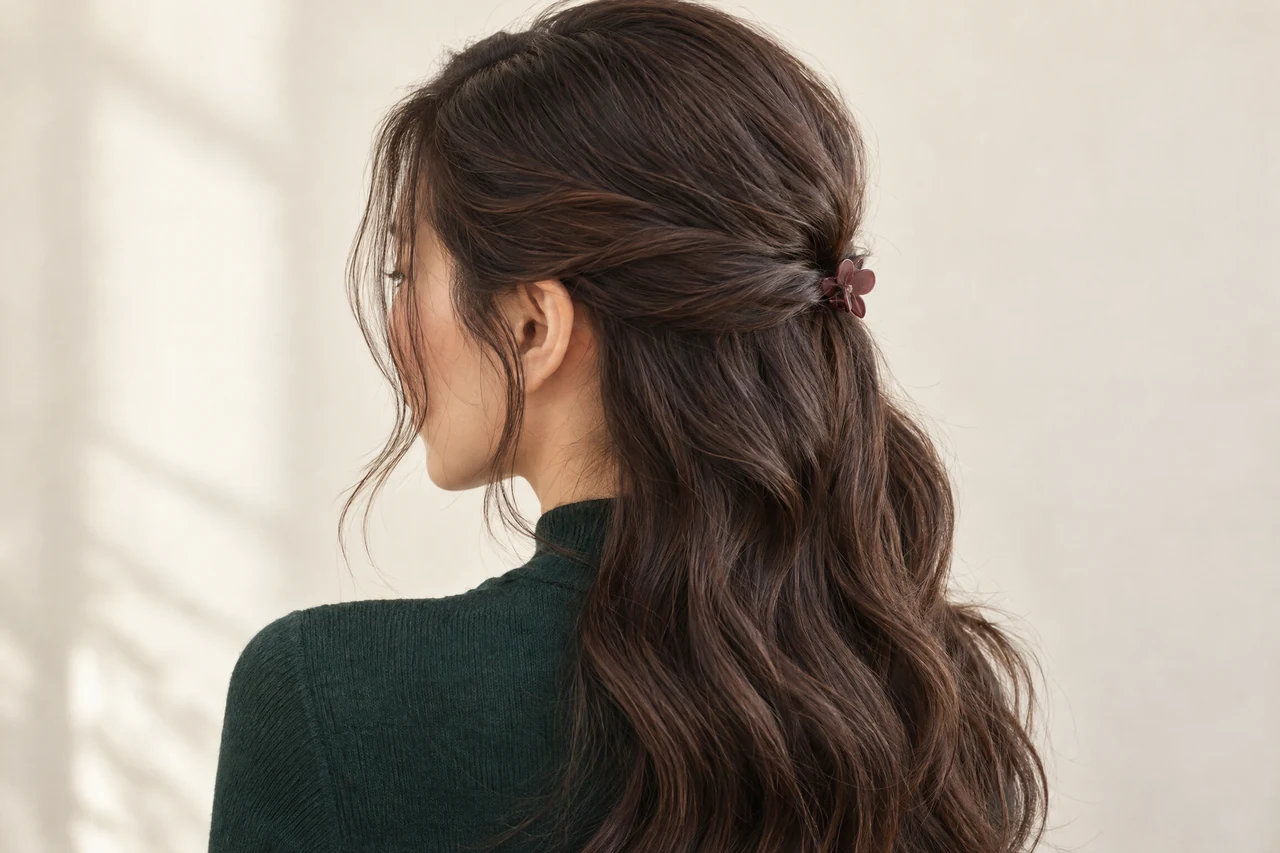
Separate the hairstyle's support from its decoration. A half-up shape may keep the front clear while retaining visible length, whereas a low updo can expose the neckline throughout. Neither is automatically convertible into the other. Ask which pins hold the shape and whether a decorative clip is genuinely removable without releasing them. For shorter hair, an unchanged parting with a small accessory swap may be more realistic than an evening gathering.
Set priorities for day to night event hairstyles
Choose a feature to protect and a feature you are willing to let change. You might keep the ears visible while accepting softer ends by dinner, or preserve a low gathered shape while removing a daytime ornament. Describe that tolerance explicitly. A reference showing a tight bun in the morning and loose, polished waves at night is a request for two different structures, not a simple accessory change. Bring both images, but ask which outcome is feasible without later professional help.
Allow time for travel, dressing and photographs
Separate the hair appointment from the journey, changing clothes and any photography before the event. Share the time you need to leave the salon so the requested work can be assessed. Multiple people, different looks and preparation steps can change the required arrangement; a generic duration from another service is not a reliable booking rule.
Your event start time is not your salon departure time. For a Sheung Wan appointment followed by a venue elsewhere in Hong Kong, work back through the journey, arrival arrangements, dressing and portraits. Include collecting bags or meeting family if those tasks happen before departure. Check the actual route and transport options rather than assuming the journey will match an ordinary commute. Keep a buffer for delays without presenting it as styling time.
Check how each outfit goes on and comes off. A narrow opening pulled over the head may brush the finished hair; a front-opening preparation top avoids that particular manoeuvre. A changing room also needs somewhere to put removed accessories. If dressing requires another person's help, confirm that they will be there before scheduling a hair adjustment in the same gap.
Review event hair styling to check its service scope and the details to share before arranging the related work.
When you are ready to book a hair appointment, send the departure deadline as well as the event time so the enquiry reflects the whole journey.
Work backwards from each departure deadline
Put the day into a simple sequence: leave the salon, travel, dress, take photographs, attend the first occasion, then move to the next. Mark where a mirror and a reliable helper are actually available. A gap spent in a car is not a usable styling appointment. If the requested work cannot fit before departure, simplify the finish or discuss a different arrangement before confirming; do not rely on recovering lost time during the outfit change.
A tea ceremony adds clothing and movement considerations
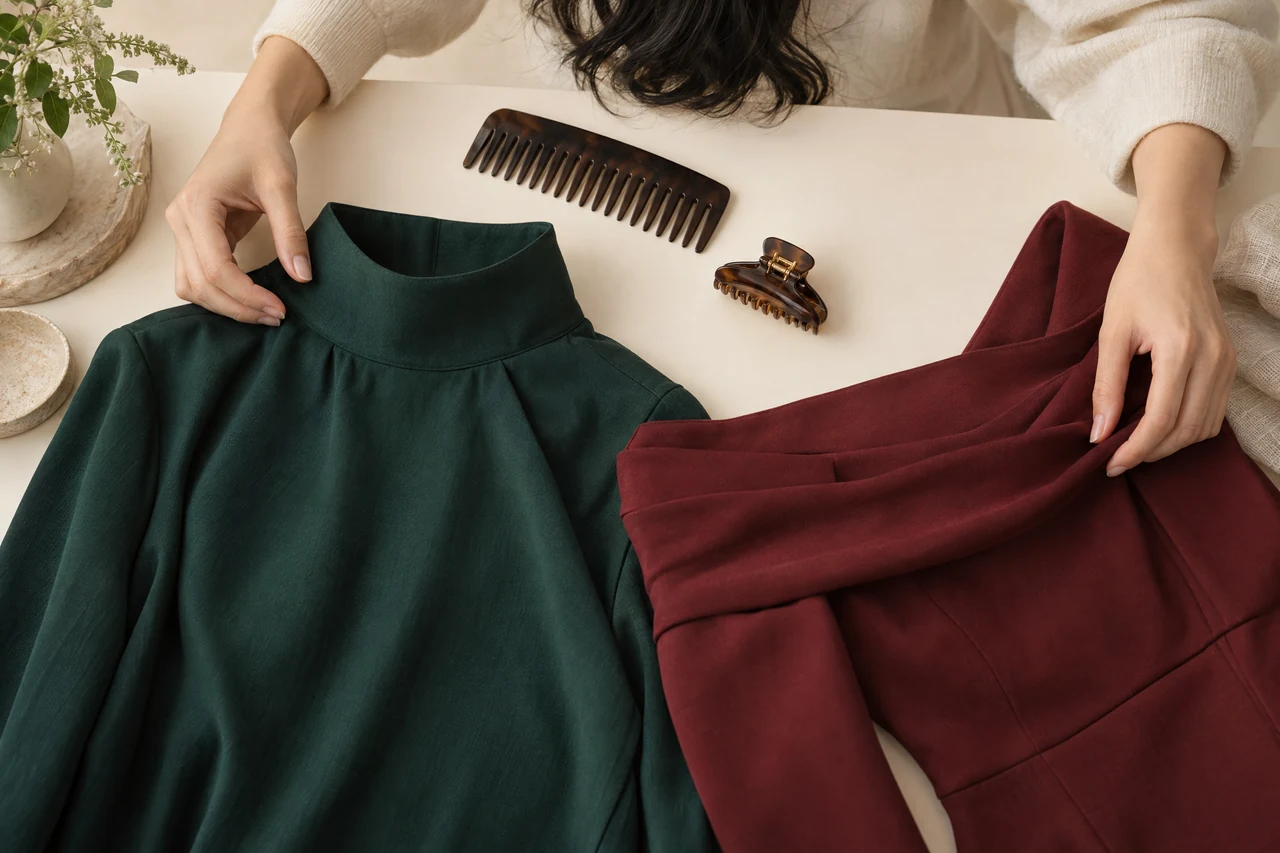
When choosing wedding hairstyles for tea ceremony photographs, allow for looking down, family interactions and the neckline of the clothing you will wear. Compare that outline with the later ceremony or banquet outfit. Changing a veil or ornament may be simpler than requesting a complete new style, but any fitting or restyling arrangement still needs individual confirmation.
If you will wear a high-collared traditional outfit, show its front and back alongside the later dress. Check whether the gathered hair touches the collar when you look down or turn towards a relative. Include earrings and any required ornament in that comparison. A comfortable neutral position is only part of the decision: the outline should also be considered during the movements expected at your ceremony.
Treat veil fitting and removal as separate steps in the outfit sequence. Identify who will remove it and how they will recognise its fastening without disturbing the hairstyle. If the evening look needs the back of the hair visible, consider what remains after removal rather than judging only the veiled photograph. Do not ask an unprepared helper to search through hidden pins while relatives are waiting for the next picture.
Continue with wedding hair with veil for that specific comparison and the preparation questions it raises.
Review bridal hair to check its service scope and the details to share before arranging the related work.
Check the earlier ceremony and later banquet together
Create a short outfit note with the ceremony clothing first and the banquet clothing second. Beside each, record what must be visible in photographs and which accessory will be worn. Where family traditions require a particular ornament, mention it before choosing the base. If both outfits work with an exposed neck and clear face, keeping the same structure may be sensible. If their requirements conflict, choose the priority or enquire about a separately arranged restyle.
Separate small checks from professional restyling
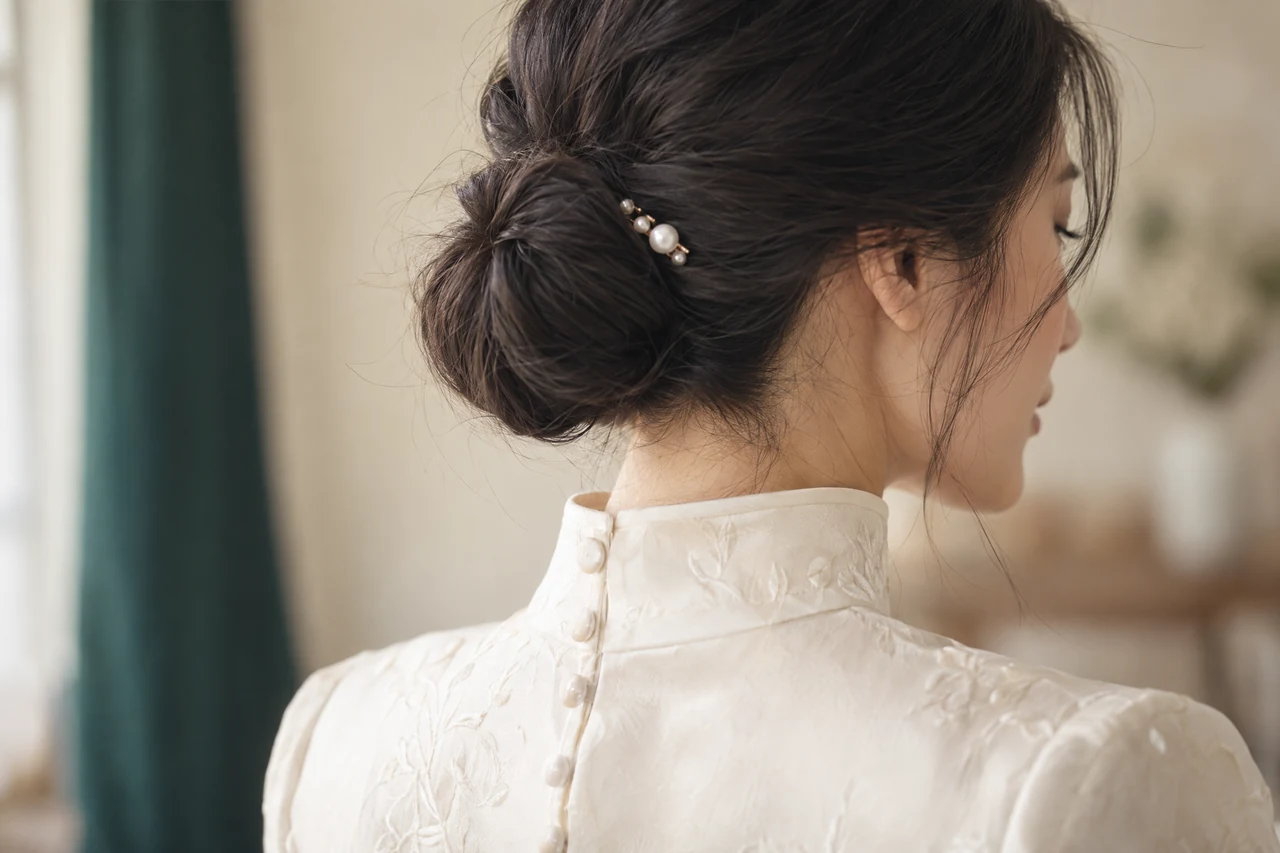
Wedding hair touch up planning should distinguish ordinary mirror checks from work that needs a stylist. Ask what care is suitable for the agreed finish and decide who can assist with an accessory change. Later appointments, venue attendance and professional touch-ups are not automatic parts of a salon visit; confirm any such arrangements explicitly.
A small check might mean noticing a face-framing piece in the wrong place or confirming that a removable clip is closed. Rebuilding the pinned base, repositioning a heavy ornament or recreating a curl pattern is different work. Ask for a demonstration of the agreed adjustment, and have the intended helper watch if possible. Let them practise only the step they are expected to perform, not dismantle the hairstyle to understand it.
Avoid using a comb to force a sprayed section back into shape. The American Academy of Dermatology's hair styling guidance warns that combing after applying long-lasting hold products can cause breakage. Ask how to handle the actual finish instead of assuming that extra brushing or another layer of product is suitable.
Confirm who can help at each transition
Assign a named helper rather than writing 'someone will fix it'. Check whether that person can reach the fastening and will still be present after the earlier event. Your kit should contain only items relevant to the agreed care: a mirror, the removable accessory and any specifically advised tools or product. Keep structural pins alone unless shown otherwise. Before leaving, take an agreed rear-view photograph so you can compare the shape later without guessing.
Choose a transition that does not depend on rebuilding
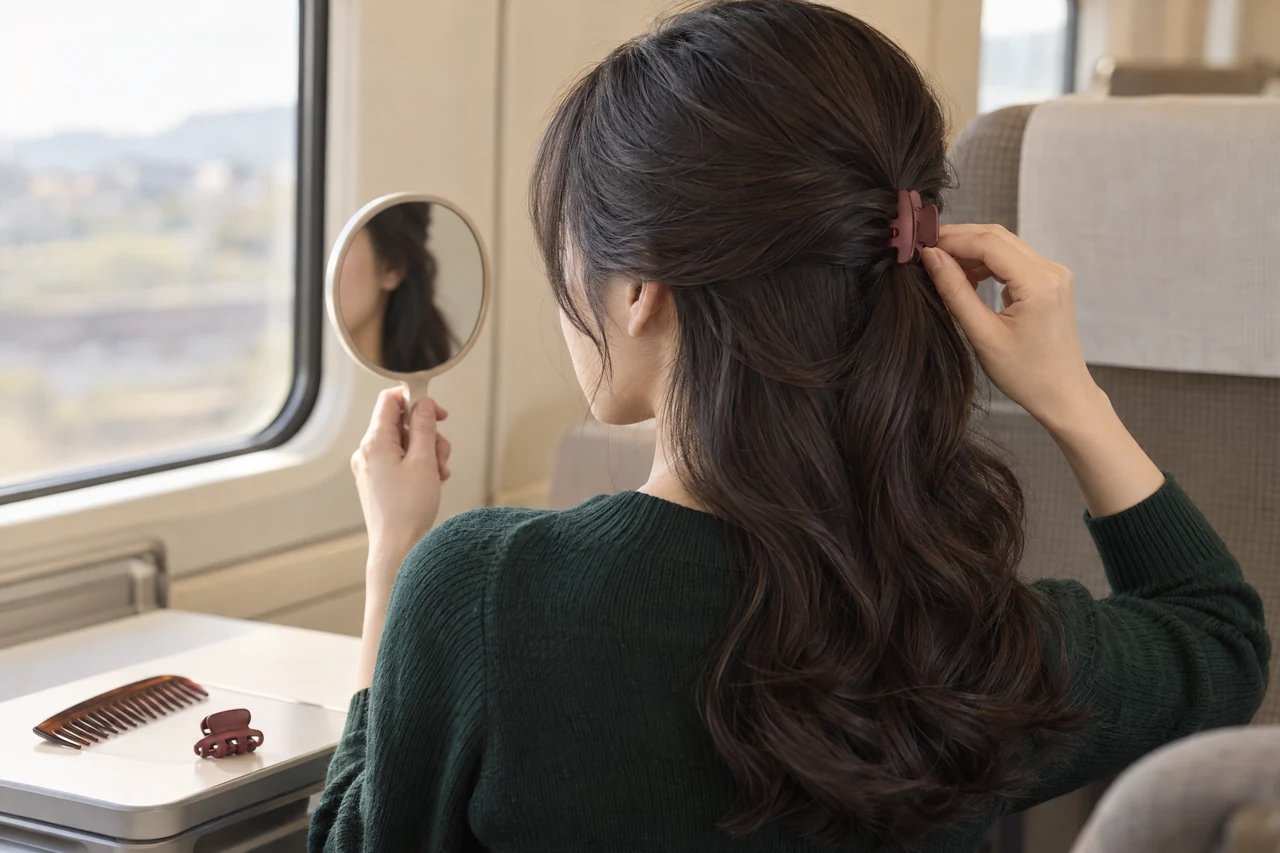
An accessory change is useful only when it is independent of the support underneath. A small barrette may add an evening focal point to the same half-up shape, but a clip that also holds the gathered section is not merely decorative. Ask which category your accessory belongs to. Judge the hairstyle without the ornament as well as with it; the undecorated version should be a finish you are happy to wear.
Gathering loose length for dinner can look simple in a concept image, yet your own layers, existing pins and reach determine whether it is practical. If it requires finding hidden support or retwisting the back by touch, keep the original shape instead. When comparing options at a wedding hair trial, discuss the proposed transition and whether it can be demonstrated within the agreed trial scope.
Keep the evening difference modest when help is limited
The evening outfit and earrings can provide the change while the hair stays recognisable. This is particularly useful when photographs run late or the changing space is shared. A modest, rehearsed adjustment is easier to abandon without spoiling the base than a plan that starts by taking everything down. Decide in advance that keeping the original hairstyle is acceptable if the transition window disappears.
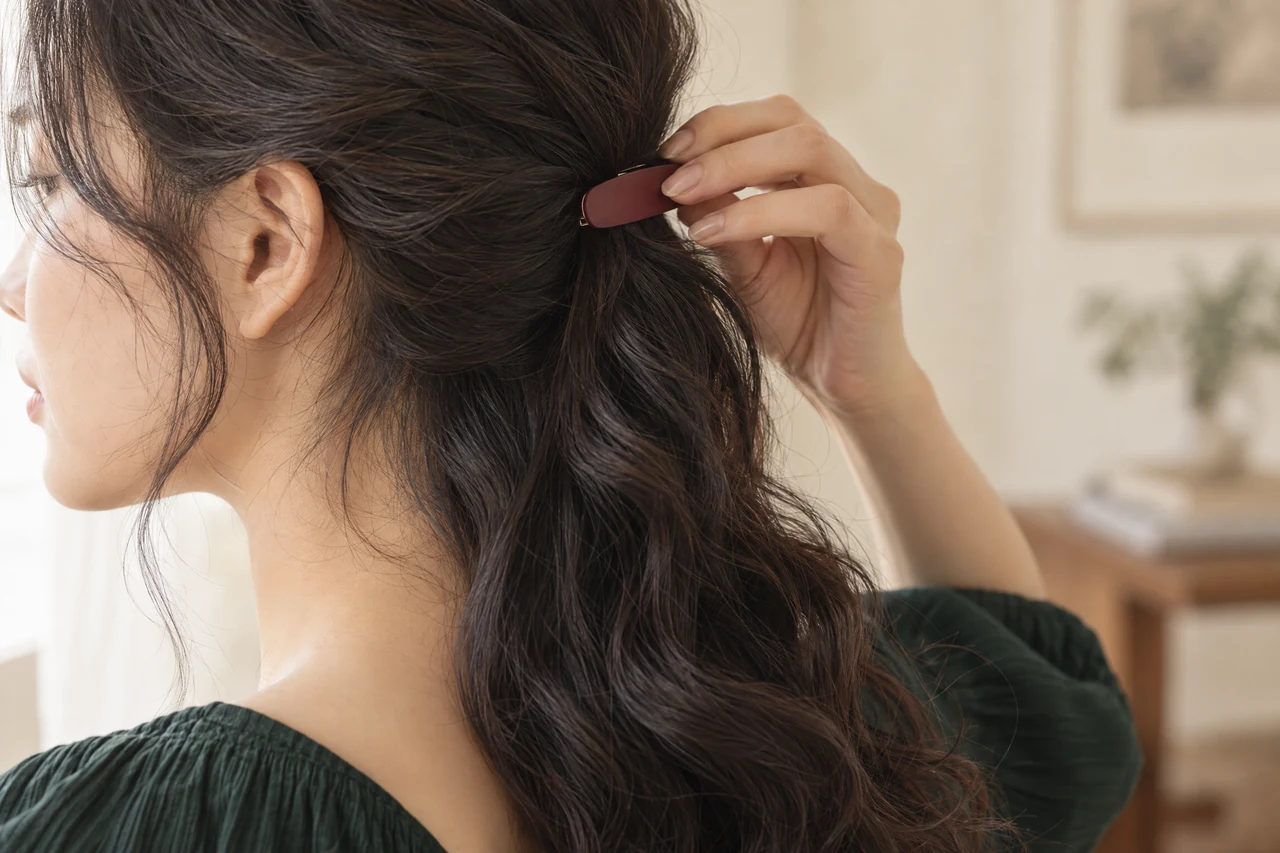
Build a fallback around comfort and the remaining schedule
If travel takes longer than expected, dress first and inspect the hair afterwards rather than making changes during the journey. Compare the front and back with the departure photograph. Deal with a clearly understood removable accessory, but leave uncertain structural work alone. The fallback should still suit the evening outfit: the unchanged base, perhaps without its daytime decoration, is often a more workable choice than a rushed new shape.
Comfort is not something to postpone until the last photograph. The American Academy of Dermatology's guidance on hairstyles that pull says a painful hairstyle is too tight and advises changing styles that cause pain from pulling or scalp stinging. If that happens, prioritise relieving the pull rather than adding tighter pins to maintain the picture. Seek appropriate help if you cannot safely release the fastening.
Use the preparation checklist before deciding on extra changes
The checklist below contains 6 planning steps; it is an editorial planning aid, not a styling-time estimate. Use it to identify missing information before adding another look. If the helper, changing space or removal method remains uncertain, choose a transition that does not depend on that missing detail. Share your resulting plan with the salon so the requested base, departure deadline and any separate service can be discussed together.
Compare day-to-night transitions by what changes and what help they need
| Transition | What stays in place | Practical trade-off |
|---|---|---|
| Keep the same style | The agreed base and accessories | Least handling; both outfits need to suit the same outline. |
| Remove or swap a decorative clip | The support beneath it | A different focal point; confirm the clip is not structural. |
| Remove a veil | The base and its own fastening | Reveals the back; a helper needs the demonstrated removal method. |
| Gather previously loose length | Only what the agreed method preserves | Requires suitable length and a rehearsed adjustment; not automatically a self-service option. |
| Change an updo into polished loose waves | Little of the original structure | Plan as a professional restyle, not an ordinary mirror check. |
Your preparation checklist
- List outfits in wearing order, including how each neckline passes over or around the finished hair.
- Record salon departure, journeys, dressing and photograph times as separate parts of the day.
- Choose the visible feature that must remain and the detail you are willing to let soften or change.
- Identify a named helper and a usable mirror location for every planned accessory adjustment.
- Confirm which fastenings are decorative, which are structural and how the agreed removal is performed.
- Agree on the unchanged fallback and enquire separately about any professional restyle, availability and charge.
Frequently asked questions
How long does wedding hair styling take?
Timing depends on the chosen structure, hair preparation, accessories and the number of people or looks. Share your departure deadline and ask for an estimate for the agreed scope; no fixed duration is published here.
Can one hairstyle cover a tea ceremony and evening banquet?
Compare both outfits and the planned movement. A base shape may work, but accessory changes and any later professional adjustment should be planned and confirmed separately.
Does the appointment include all-day touch-ups?
No such arrangement should be assumed. Confirm the salon visit first and ask separately about any later service, its availability and charge.
Plan a base that fits your whole event day
Send Vit So your outfit sequence, hair reference photographs and required Sheung Wan departure time. Explain whether a helper will be available later and which accessory changes you have in mind. An enquiry helps clarify the suitable scope and availability; it is not a confirmed booking or an all-day support arrangement.
Start your WhatsApp enquirySources & further reading
- Hairstyles that pull can lead to hair loss
Recognising pain and scalp stinging from tight styling and prioritising relief from pulling.
- Hair styling without damage
Avoiding forceful combing through hair treated with long-lasting hold products during a transition.



