






Auburn vs copper hair colour starts with the brown base
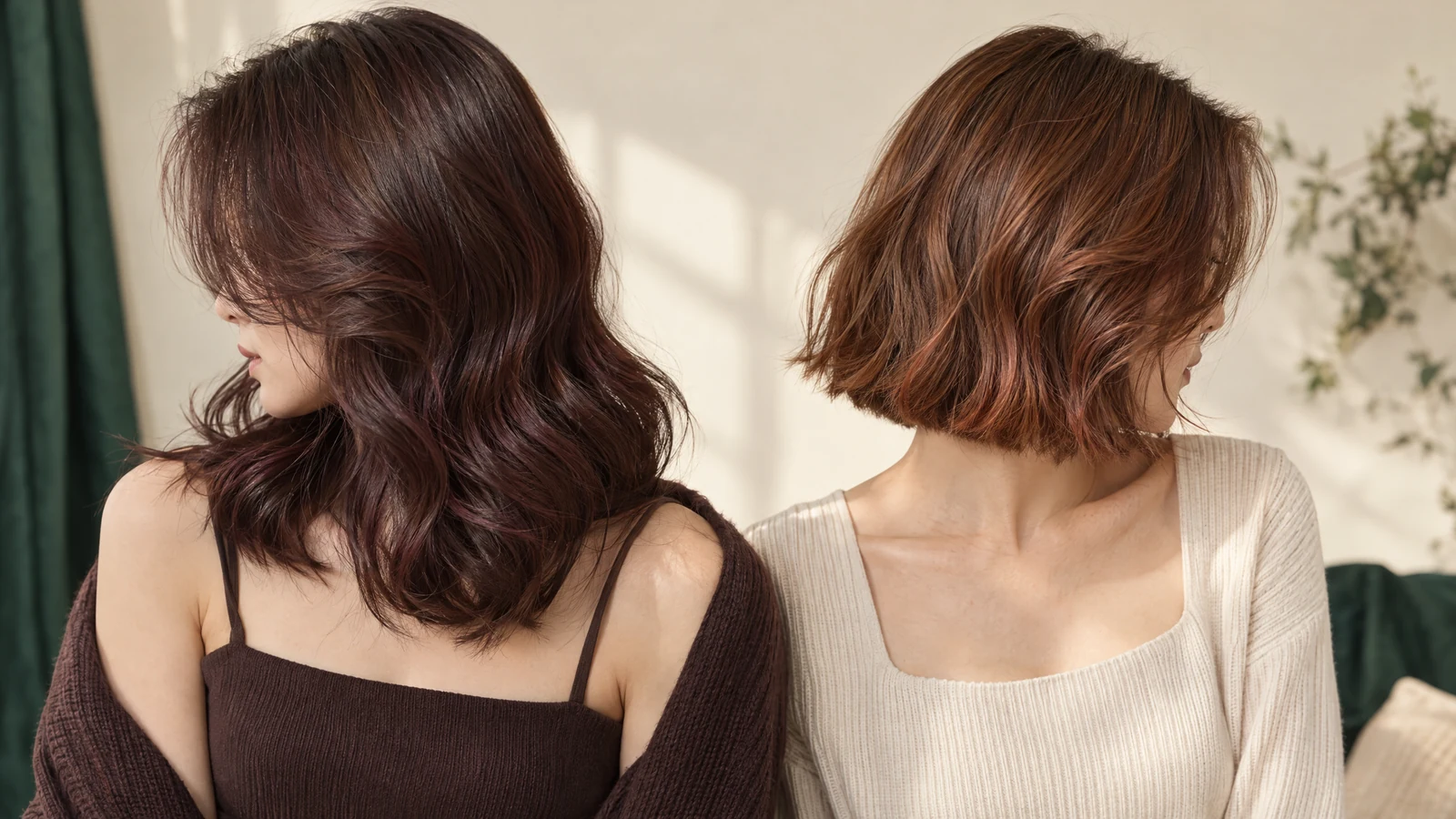
Red brown hair colour can range from a discreet warm brunette to a more noticeable red finish. Dark auburn hair keeps a deeper impression, while copper brown hair colour suggests a more copper-warm reflection. Compare photographs at similar brightness before deciding which is redder or warmer. A darker reference and a brightly lit copper picture do not make a fair comparison.
The quickest distinction is what remains when you look away from the brightest strands. Does the hair still read mainly as brunette, or does an orange-red impression dominate the whole shape? Auburn often answers the first question; a stronger copper reference often answers the second. Copper brown sits between them, keeping enough brown to soften the orange warmth rather than looking like a vivid all-over copper.
Wella's auburn colour guide describes auburn as a brown-and-red blend and contrasts its deeper, more muted impression with copper's brighter orange-gold richness. This is a useful vocabulary distinction, not a universal chart. An image labelled auburn hair color may still contain copper accents, and another labelled red brown hair color may look much deeper.
If preserving a brunette impression matters more than making a red statement, compare brunette hair colour ideas before deciding how much brown should remain. That depth decision helps prevent choosing a brighter reference just because its shine is appealing.
Auburn vs copper hair colour at similar depth
Put the references side by side and examine the shadowed hair first, then the illuminated lengths. At comparable depth, auburn tends to show a red-brown balance, while copper brown has a more orange-warm reflection. If both images seem equally brown in shadow, the preference may be about reflection rather than overall lightness. Say whether you want that warmth across the whole head or only where movement exposes selected strands.
Compare wine-red and violet-red impressions
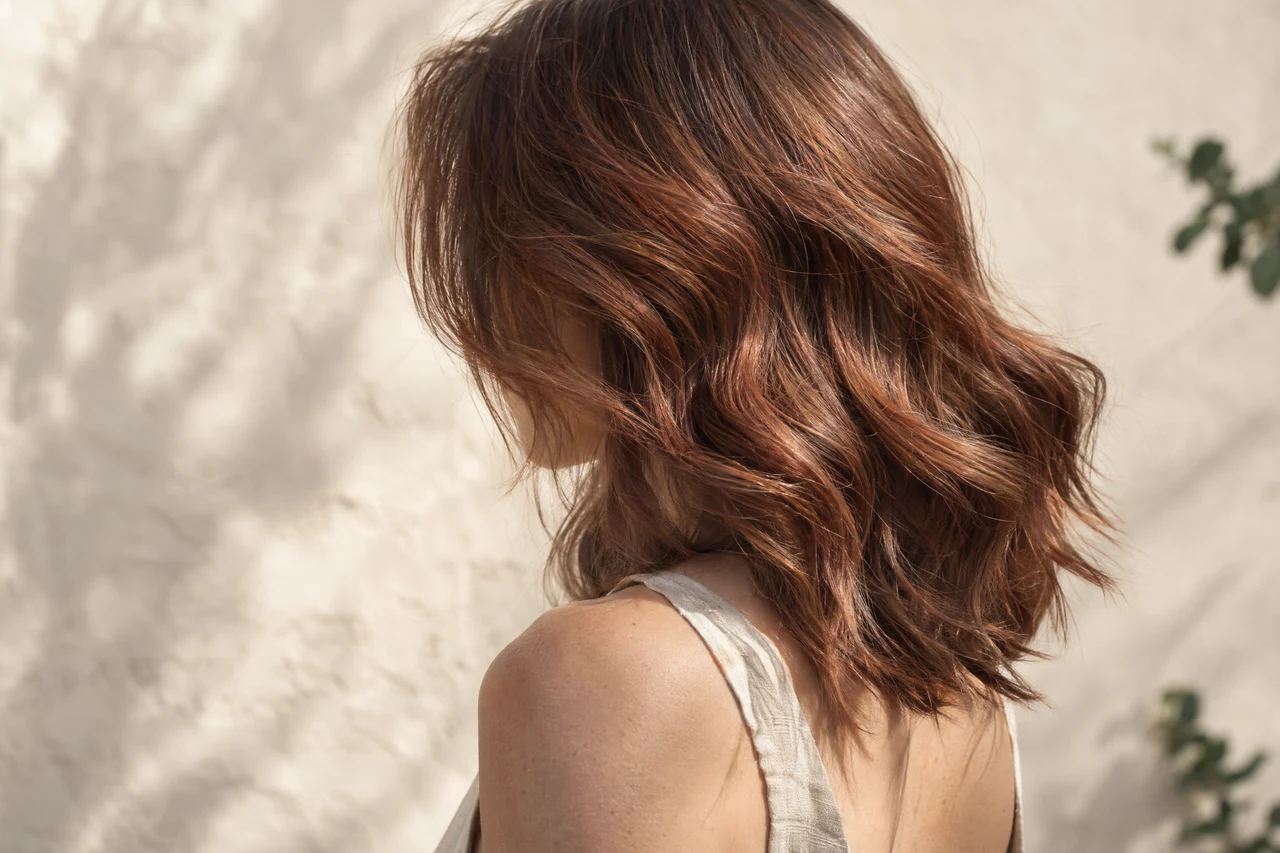
Burgundy hair colour often suggests a wine-red direction, while mahogany hair colour can suggest a brown base with a violet-red hint. These labels vary between references rather than defining exact formulas. Compare whether you want more brown visible in shadow or a stronger red-purple impression, then share the photographs that best illustrate the difference.
A useful way to separate these from copper is to ask which reflection you do not want. If orange warmth is the part you dislike, a wine-red or brown-violet reference may communicate your preference better. If purple is the unwanted element, a copper-warm brown may be closer. Neither choice automatically means the hair must be light or intensely saturated.
For auburn vs burgundy hair, keep the brown proportion in view. A deep burgundy photograph can look almost brunette until a red-purple highlight catches the light. A brighter auburn picture can appear more obviously red despite its warmer direction. Do not compare the names as if burgundy always means more visible colour in every setting.
Burgundy and mahogany are useful reference labels
Describe mahogany hair colour with a sentence such as, 'I want the brown to stay dominant, with a little violet-red rather than orange.' For burgundy, you might prefer a stronger wine-red impression through the lengths. Bring an unwanted reference as well as a favourite: showing a purple finish you dislike can make the boundary clearer than simply asking for a cooler red.
Rose and cherry references need a brightness check
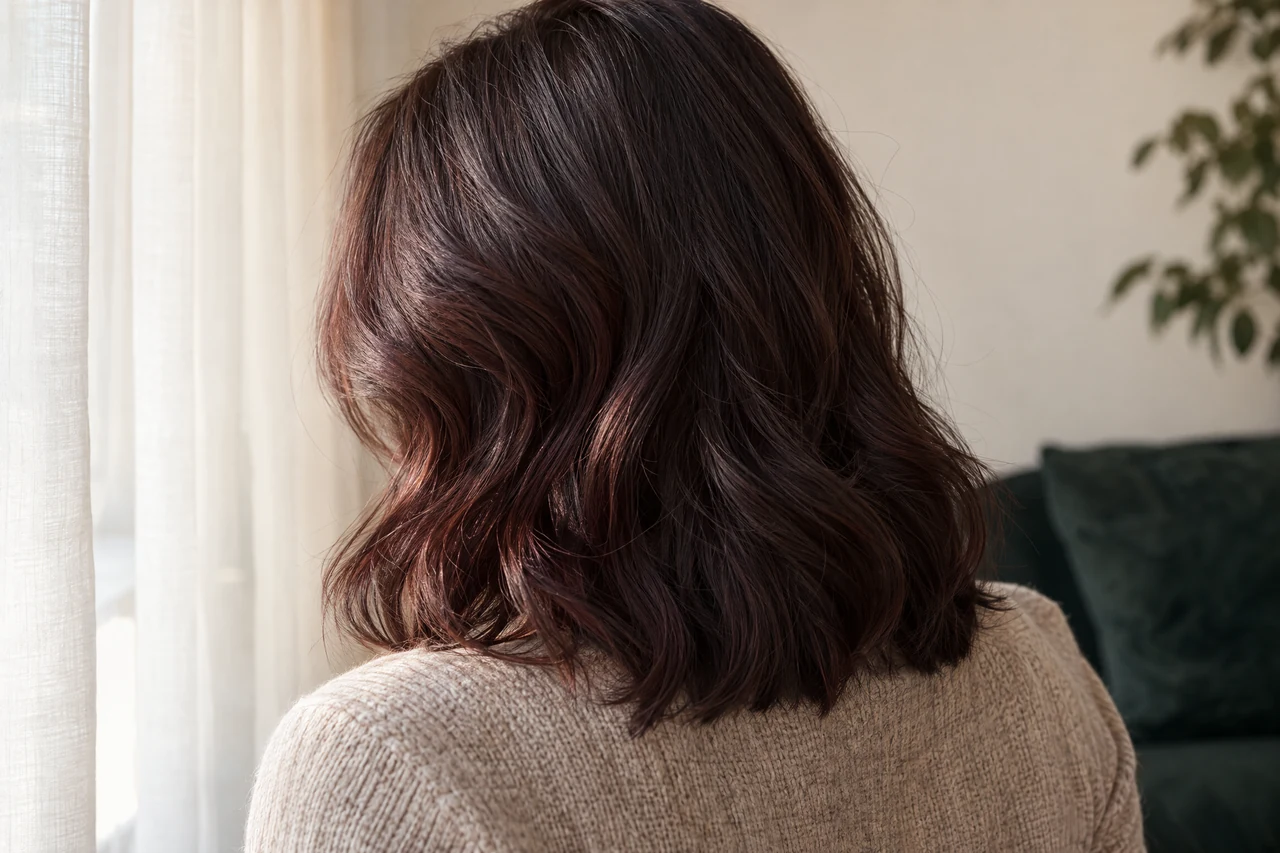
Rose brown hair colour can describe a brown base with a softer pink reflection; cherry red hair colour suggests a more noticeable red direction. Red hair colour ideas are only useful when the starting base and intended brightness are part of the conversation. A pale rose image and a deeper cherry example may involve very different colour assessments.
Separate softness from paleness. A muted rose reflection over brown is not the same request as a pastel pink finish with very little brown visible. Likewise, cherry can describe red reflecting through a deep base or a much more conspicuous overall red. Identify the background colour under the reflection, not just the pink or red strand closest to the camera.
Compare the colour near the face with your ordinary clothes and usual make-up, rather than only with the styling in the inspiration image. Copper warmth, wine red and rosy brown can create different contrasts, but there is no need to treat a skin-tone category as a rule that excludes the shade you like.
Continue with how to choose hair colour for my skin tone for that specific comparison and the preparation questions it raises.
A pink reflection is not the same as a vivid red
Ask yourself whether you like the rosy colour itself or the gentle contrast of the whole photograph. If the appeal is softness, keeping more brown may be important. If the appeal is a distinct cherry-red outline against dark clothing, a barely visible pink reflection may feel insufficient. Explain the setting in which you want the colour noticed, so the consultation addresses visibility as well as the shade family.

Think about visibility on a dark base
Brown hair with red undertones may show more warmth when daylight catches the lengths than it does indoors. The amount visible depends on base depth, existing dye and the brightness of the proposed change. A reference can communicate the reflection you like, but it cannot establish that the same redness will appear on every dark starting shade.
For a Hong Kong workday, decide whether a discreet indoor brunette with daylight warmth would satisfy you. If you want copper to be recognisable in office lighting, say so. That is a different target from wanting a red reflection outdoors while keeping a dark outline indoors. Your preferred everyday visibility is more useful than requesting the brightest version of a colour name.
Share separate photographs of your roots, middle lengths and ends. Include any previous dark dye, lightened areas or colour-depositing products in the history. Wella's guide notes that bleach-free auburn depends on the darkness of the base and desired brightness; a lighter auburn target may need lightening. Old colour and uneven starting areas make an individual assessment especially important.
Review no bleach hair colour to check its service scope and the details to share before arranging the related work.
Brown hair with red undertones may look discreet indoors
Check references in a softly lit room and near a window rather than relying on direct sunlight alone. Notice the overall shape, not just the glossy wave bends. Those bends can show concentrated reflection while flatter sections remain dark. If you normally wear your hair straight or tied back, explain that too: the visible colour distribution in a waved inspiration photograph may not represent your usual presentation.
Choose the red family with upkeep in mind
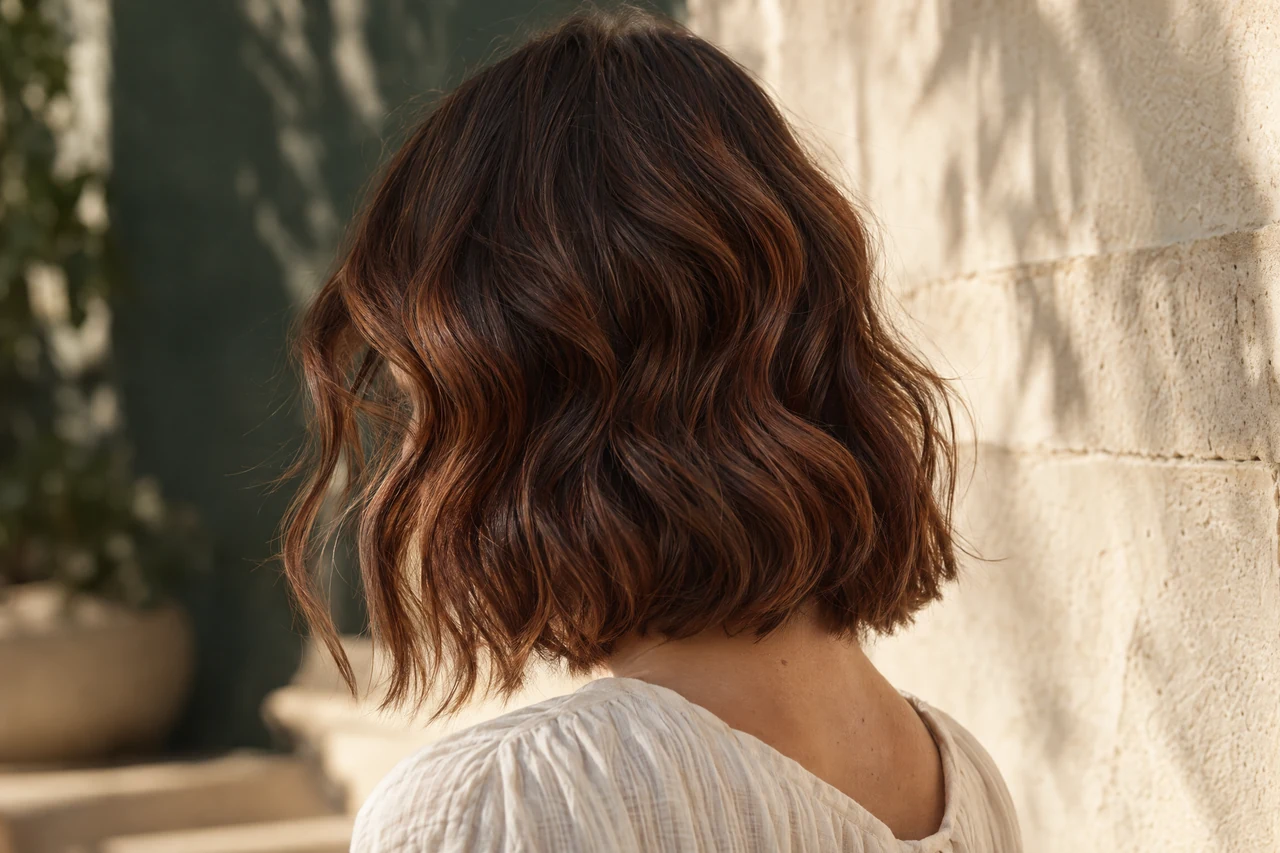
Before choosing a strong red reflection, consider whether you would also like a softer version as the colour changes. Red-toned colour can be prone to fading, but there is no fixed lifespan for every auburn or burgundy finish. Discuss care and future review for the proposed process, especially if a very specific red balance matters to you.
For this choice, upkeep is partly about tolerance. Would a more brown-dominant auburn still feel attractive once the red looks less distinct? Would a softer copper still suit your wardrobe? If the exact pink or wine-red reflection is the main attraction, ask what reviewing that balance would involve before committing. The least troublesome shade is not necessarily the darkest one; it is a direction whose changing appearance you can accept.
The American Academy of Dermatology's colouring and perming advice explains that sunlight can leave coloured hair faded, dry and brittle, and recommends a wide-brimmed hat outdoors. This is relevant to protecting your chosen finish, not a measure of which red looks best. For washing and products, follow the instructions for the actual process rather than borrowing a routine from an unrelated bright-red reference.
Continue with how long does auburn hair colour last for that specific comparison and the preparation questions it raises.
Decide how much change you would accept as colour fades
Name the change you would find disappointing: less red, more visible warmth, loss of a rosy reflection or a stronger root contrast. These are different concerns and may call for different follow-up conversations. Avoid choosing a depositing mask solely because its label says red; ask whether its tone supports the auburn, copper or wine-red balance you actually want.

Turn your red-tone preference into a clear consultation request
Use the 6-point checklist below to prepare your red-tone comparison. Bring a preferred reference and one that goes too far, then describe the difference in ordinary words. For example, 'I like the brown depth here, but this other picture has too much orange,' explains a preference without asking the stylist to reproduce a photograph exactly.
Keep the order simple: establish the indoor depth, choose the reflection family and discuss how widely the colour should show. Only then compare the proposed work with your starting hair and future care. The hair colour service guide helps you connect those preferences with the scope to discuss before arranging an appointment.
Before the process is agreed, share previous reactions to dye or current scalp irritation separately from the colour references. The AAD advises following manufacturer instructions when testing store-bought colour and seeking dermatological advice if a reaction develops. An inspiration photograph cannot answer a safety question, so ask for the instructions relevant to the products being considered.
Decide which compromise matters least
If a bright copper reference conflicts with your wish to avoid lightening, decide whether you would rather retain depth or reconsider the brightness goal. If a wine-red reflection feels too purple, look for a more brown-dominant reference rather than abandoning all red tones. A useful consultation leaves you with an agreed direction and trade-off, not merely a shade name.
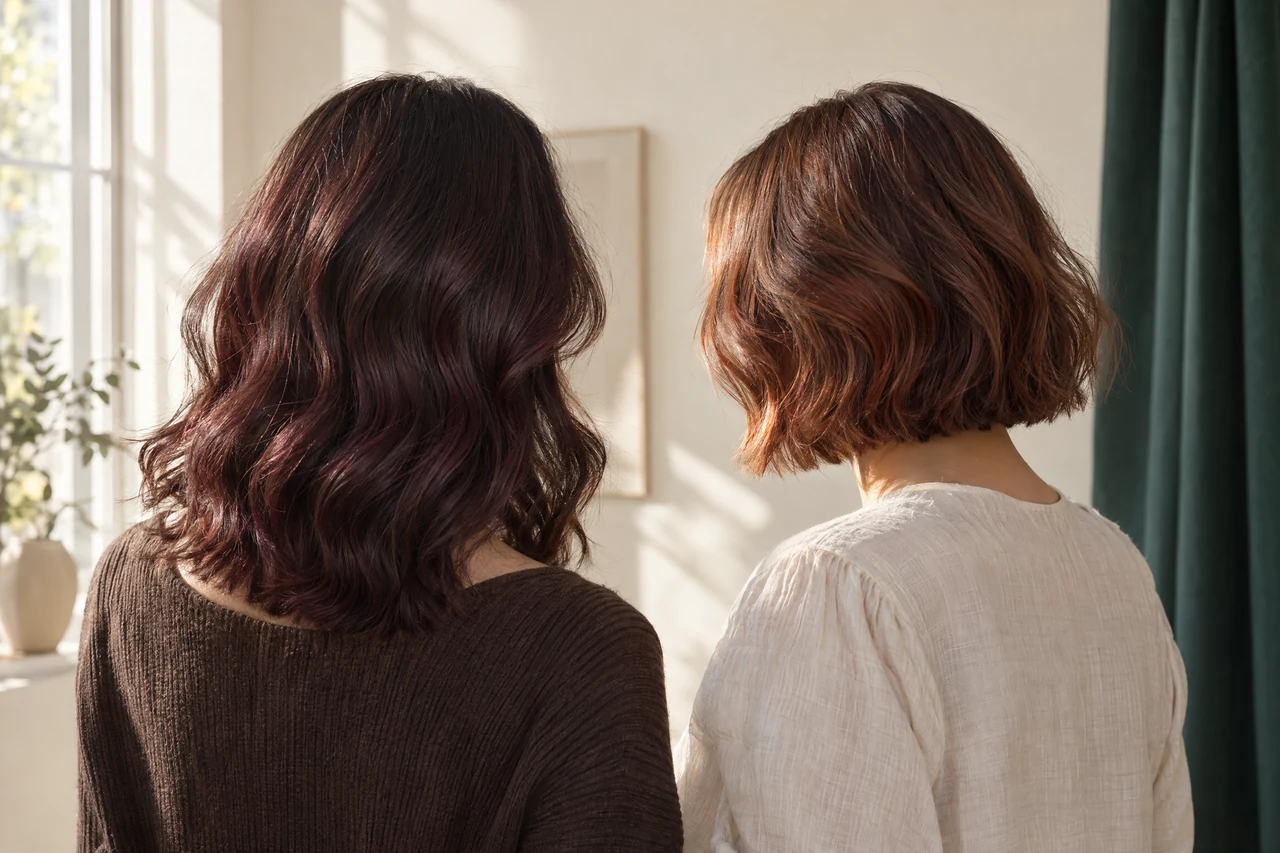
Red-tone reference map: compare similar lighting and depth before using these labels
| Reference family | Brown and reflection balance | Decision to explain |
|---|---|---|
| Auburn | Brown remains noticeable with red warmth | How much brunette depth should remain indoors? |
| Copper brown | Brown with a more orange-gold reflection | Do you want gentle copper warmth or an obvious copper impression? |
| Burgundy | Wine-red direction, sometimes with considerable depth | Should the red-purple show discreetly or dominate the lengths? |
| Mahogany | Brown-led reference with a violet-red hint | How much purple reflection would be too much? |
| Rose brown | Brown with a softer pink reflection | Is the target muted brown-pink or a much paler rose? |
| Cherry red | More noticeable red direction at variable depth | Do you prefer deep reflective red or a visibly brighter finish? |
Your preparation checklist
- Choose comparable reference photographs; include shadowed hair as well as the brightest strands.
- State the indoor depth you want to retain and where you want red noticed in daylight.
- Identify your preferred reflection: red-brown, orange-warm, wine-red or softer pink-brown.
- Share root, length and end photographs with your previous dye and lightening history.
- Name the fading change you would accept and the reflection you would not want to develop.
- Confirm the proposed process, product instructions and service scope before agreeing to the work.
Frequently asked questions
How should I compare auburn vs burgundy hair?
Look at the balance between brown and red in auburn and the wine-red impression in the burgundy reference. Compare similar lighting and depth; the names alone are not exact formulas.
Will red brown hair show on dark hair?
It may read as a reflection rather than a bright overall red, depending on natural depth, old dye and the proposed target. A photograph cannot guarantee visibility on your particular base.
Are warm reds automatically achievable without bleach?
No. A subtle red-brown reflection and a bright copper or pale rose target are different changes. Discuss the specific depth and brightness rather than assuming all warm shades avoid lightening.
Find the red-brown balance you would enjoy every day
Share your current hair photographs and preferred auburn, copper or wine-red references with Vit So for a Sheung Wan consultation enquiry. Explain the indoor depth and daylight reflection you want, along with your colour history. Suitability, scope and availability need confirmation; an enquiry is not a confirmed booking.
Start your WhatsApp enquirySources & further reading
- 10 Auburn Hair Color Ideas to Try Right Now
Auburn's brown-red balance, copper's orange-gold richness, dark-base reflections and the dependence of bleach-free feasibility on starting depth and target brightness.
- Coloring and perming tips for healthier-looking hair
Sun exposure and fading or dryness in coloured hair, outdoor hat protection and manufacturer instructions when testing store-bought colour.



