






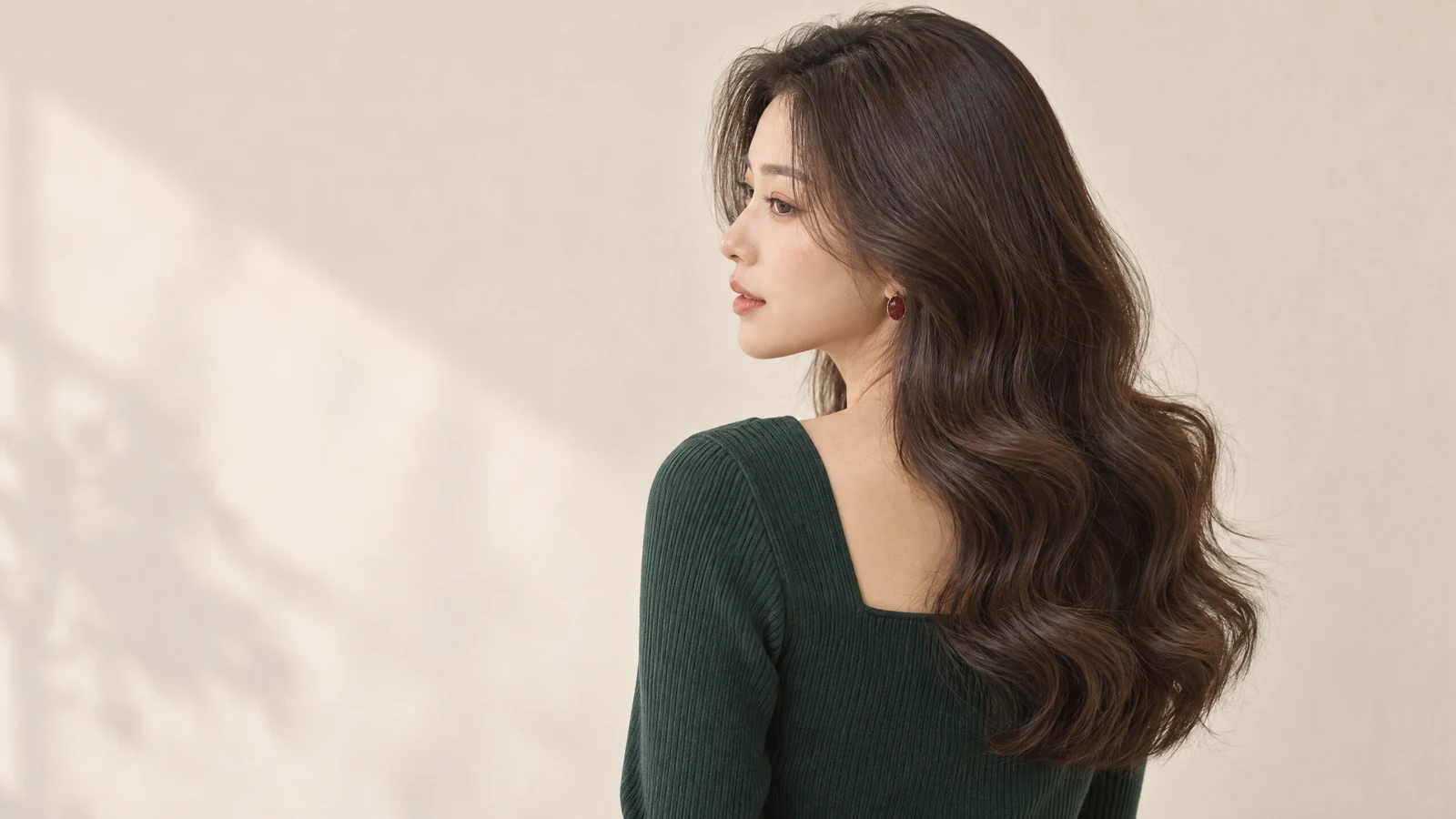
Perm just the ends of hair: define the preserved area
Show the point below which you would like movement and the mid-length area you prefer to keep straighter. Include your shortest layers, since their ends may sit much higher than the longest section. The boundary is a consultation starting point, not proof that a sharp line between straight and curled hair will be feasible.
Start with your hair dry and resting in its usual parting. Point to the section you like as it is: perhaps the smooth line beside your cheeks or the straight length over your shoulders. Then indicate where you would welcome a change. Saying that the upper length should remain visually quiet is more helpful than asking for a natural perm, which could also mean waves throughout the haircut.
Distinguish leaving a section untreated from making it straighter. If your mid-lengths already have natural waves, an ends-only treatment would not itself straighten that preserved area. Tell the stylist whether you like its present texture or want a different upper outline; these are separate requests with different implications for the scope.
Use haircut reference photos to show both the line you want to preserve and the curve you want to add, rather than presenting a finished photograph as an instruction to copy every detail. Include a back view of your own hair so the hidden layers are not missed.
Before you perm just the ends of hair, mark the boundary
Describe the proposed boundary relative to a visible feature, such as the collarbone, and also point to it on the actual hair. A body landmark helps explain the finished outline, but a layered haircut has ends at different heights. Ask whether shorter face-framing pieces would stay unchanged, receive their own bend or need a cut adjustment to connect with the longer perimeter.

A transition can look different from a single curved end
A small curved tip and a wave extending through several centimetres create different outlines. Explain whether you want only the ends to turn inward or a softer transition into movement. Compare both front and side views after drying, and ask how the proposed placement would connect with the cut rather than relying on a menu name.
An inward end follows the lower outline towards the body; an outward flick opens it away. A longer wave introduces movement before the final tip. These are useful visual descriptions, not promises of which technique will work. If keeping the middle straight matters most, state that priority before discussing how much wave could be added.
For shoulder-length hair, show where the ends rest against your clothing. For longer hair, explain whether you normally bring the lengths forward or leave them behind your shoulders. The preferred direction needs to make sense in those positions. A reference with all the hair arranged over one shoulder may not answer how you want the back to look.
Continue with perm for long hair for that specific comparison and the preparation questions it raises.
Compare a short bend with a longer wave zone
Choose a preferred version and a version that would feel too curly. Explain what separates them: the first visible bend, the width at the sides or the amount of movement near the face. Ask the stylist to discuss the proposed dry transition, not simply the point where a section would be wrapped. The visible curve and the treatment placement should be considered together.
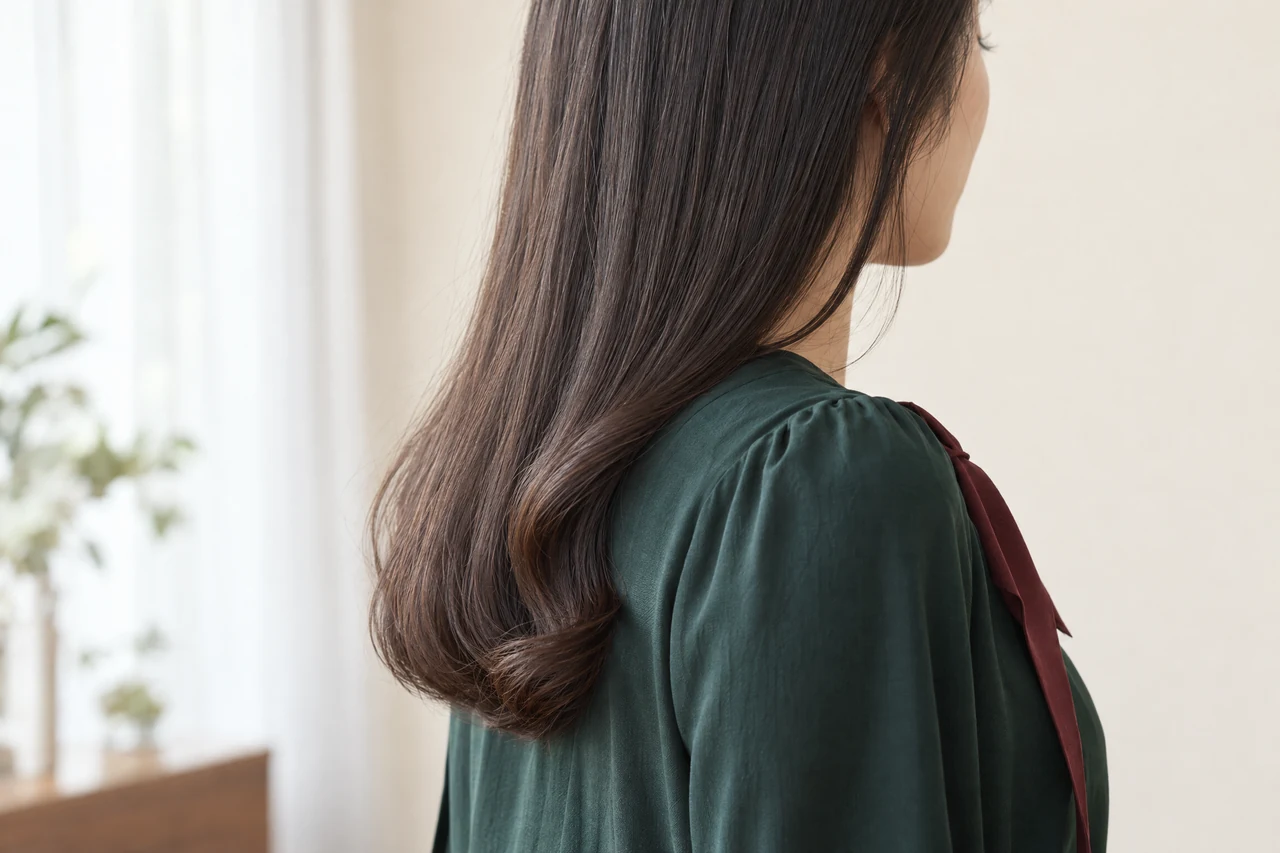
Include the fringe in the placement discussion
A perm with a fringe needs a separate decision about the direction and amount of movement near the face. The fringe may be shorter, behave differently and need a different styling routine from the ends. Explain whether you want it left unchanged or included in the discussion, rather than assuming that the whole haircut receives one treatment.
For a perm with bangs, explain whether the front should fall down, sweep sideways or open around a central parting. Bring your glasses if you wear them daily and show where the hair sits against the frames. Keeping the forehead visible and creating a stronger bend are not interchangeable goals; the preferred dry fall should guide the conversation.
Leaving the fringe untreated can be a deliberate choice even when the longer ends are included. It may preserve a front section you already find easy to manage. Conversely, wanting movement in the fringe does not mean every short piece beside the ears should be treated. Identify those connecting pieces rather than grouping all face-framing hair under one label.
Keep the forehead area separate from longer sections
Show the shortest dry length you would be comfortable with, particularly when the front curves away from its current position. Explain whether you use a brush, a roller or only your fingers each morning. Ask what styling would be needed for the proposed fringe direction and whether that fits your routine before adding it to an ends-only request.

Confirm partial-treatment scope before comparing prices
Partial treatment describes a limited scope, but it does not establish that any chosen fringe or ends-only pattern can be offered. Confirm which sections would be treated, which remain untouched and what styling or cutting is included. The published partial perm price should be read with the agreed scope, not used to predict suitability from a photograph.
The published partial perm price is HK$900. Treat this as the listed service entry, not an automatic quote for your chosen ends-only pattern. Ask whether the requested lower sections and any fringe work fit that category. Confirm any additional cutting or care separately, especially if the length or layers need adjusting before the planned transition can make sense.
Review hair perm to check its service scope and the details to share before arranging the related work.
Check the hair salon price list for published entries, then confirm the amount for your agreed scope.
The listed category does not define every eligible area
Ask for the agreed scope in plain language: which lower sections are included, whether the fringe is excluded, what finish is planned and what the total covers. A photograph can begin that discussion but does not confirm eligibility or appointment time. If assessment changes the proposal, compare the revised outline and cost before deciding whether to proceed.
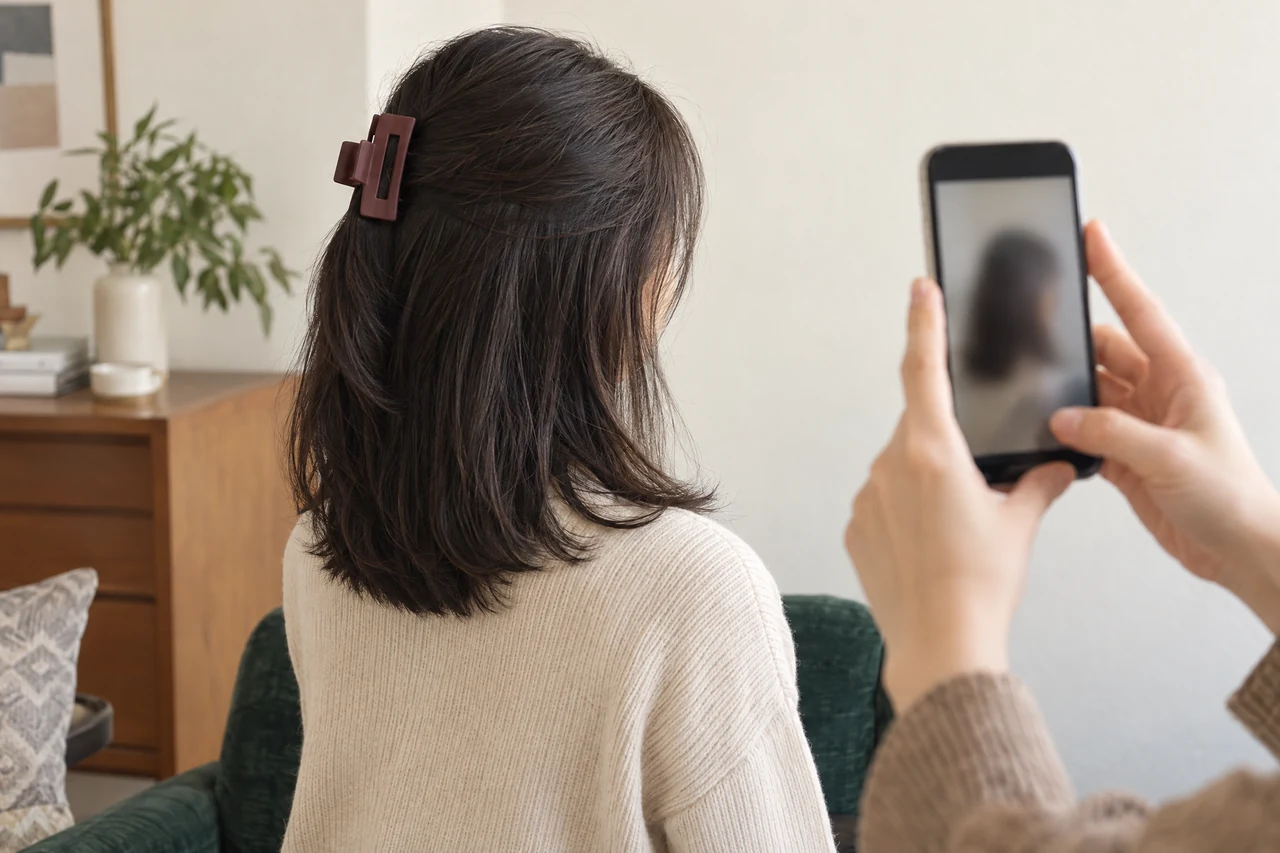
Check the history of the ends you want to reshape
Prepare a treatment history by location, not just by your most recent appointment. The ends you now want to curl may include old lightened sections, previous straightening or an earlier perm. Explain where each treatment reached and whether those lengths remain. Include regular hot-tool use and mention areas that snap, tangle unusually or feel noticeably different from the upper hair.
The American Academy of Dermatology's colouring and perming advice notes that appearance-enhancing treatments can leave hair dry and brittle. A small treatment area should therefore not be taken as proof that the selected ends are suitable. Their present condition and processing history still matter, even when you do not want the mid-lengths altered.
If the ends need trimming, discuss the cut before settling the intended curl position. Removing length can change where the finished curve would sit. If retaining every bit of length is your priority, say so; the useful outcome may be a different placement, a temporary styling option or postponing chemical work rather than forcing the original reference.
Bring information that helps assess the selected sections
Bring dates where available, product names for home treatments and photographs showing earlier lengths. Tell the stylist about scalp irritation before treatment starts. The AAD advises immediate removal of perm solution and dermatological advice for excessive scalp stinging or burning; report such symptoms straight away rather than waiting for the intended processing time to finish.

Plan a home routine for straight lengths and curved ends
Ask for a styling demonstration that respects both parts of the design. The upper lengths and the curved ends may need different handling, so ask where to stop brushing or stretching a section and how to encourage the intended end direction. Describe an ordinary work morning, including whether you wash before leaving home and how often you wear the hair tied back.
The American Academy of Dermatology's damage-prevention guidance recommends conditioner after each shampoo, absorbing water with a towel rather than rubbing, gentle combing and the lowest heat setting when using heated tools. These habits support careful handling; they do not establish which end curve will appear or how long it will last. Follow the instructions for the actual treatment and ask when to wash first.
Make perm aftercare part of the placement decision: a finish that needs daily brush work may not suit someone hoping to use only their hands. Ask which products and drying steps are necessary, and which are optional for a more polished finish. Be clear about whether you want a wearable everyday bend or a styled photograph-ready outline.
Review the transition as the cut changes
Notice where movement begins when your hair is dry and in its usual parting. Future trims can remove part of the curved section, so explain your longer-term length goal when arranging maintenance. If the ends become difficult to manage, record front, side and back views before seeking advice. Do not assume another chemical treatment is the first answer to a change in shape.

Compare the placement request before choosing a treatment scope
| Requested outline | What to preserve | What to clarify |
|---|---|---|
| Small inward bend at the tips | The present straight mid-length line | Where the bend should sit dry and whether the cut supports that direction |
| Outward-facing end flick | A quiet upper outline | How the ends should look at the shoulders and when brought forward |
| Longer low wave zone | The upper length above the first visible movement | How much transition is acceptable before the final curve |
| Curved ends with an unchanged fringe | The current forehead coverage and front styling | Which shorter face-framing pieces remain outside the scope |
| Curved ends with a separately discussed fringe | Any front sections you do not want altered | The fringe's dry direction, minimum comfortable length and separate styling needs |
Your preparation checklist
- Photograph your dry hair in its usual parting from the front, side and back, including the shortest layers.
- Mark the area you want preserved and explain whether it should stay as it is or become straighter.
- Choose a preferred end direction and a reference showing more curl than you would want.
- Decide whether the fringe is excluded or needs a separate placement discussion, and bring your everyday glasses.
- List previous colour, bleach, straightening and perm work by the sections that still remain.
- Confirm the eligible treatment area, cutting or care inclusions, total quote and home styling before agreeing to an appointment.
Frequently asked questions
Is a perm with bangs different from a perm with a fringe?
Bangs and fringe refer to the same area in different English usage. What matters is the intended direction, length and whether that area is included in the treatment plan.
Can I guarantee that the mid-lengths stay exactly straight?
No exact result can be established from a name or reference image. Show the area you want preserved and discuss what boundary and transition are realistic.
Does partial treatment automatically mean an ends-only price?
No. Confirm whether the proposed ends-only scope fits the listed service, along with any cutting, styling or other items, before agreeing on the booking.
Should I show my hair tied up as well as loose?
Yes, if tying it back is part of your normal routine. Show which ends remain visible and whether you leave short front sections out. This helps explain your everyday priorities alongside the loose outline; it is not a guarantee that the curve will look identical in every position.
Discuss the straight area you want to keep
Send Vit So current dry-hair photographs, your preferred end direction and the treatment history of those lengths. For a consultation in Sheung Wan, explain whether the fringe should remain unchanged and what daily styling you can manage. Enquire about the proposed scope and quote before choosing a visit; an enquiry is not a confirmed booking.
Start your WhatsApp enquirySources & further reading
- Coloring and perming tips for healthier-looking hair
Potential dryness and brittleness from appearance-enhancing hair treatments, and the need to act immediately on excessive scalp stinging or burning during a perm.
- How to stop damaging your hair
Conditioner after shampoo, avoiding towel rubbing, gentle combing and reducing heat exposure during routine handling.



