







Temporary wedding extensions without thinning a blunt bob: set the cutting boundary
The feature you enjoy on an ordinary morning may be the very feature that complicates a long wedding style. A blunt bob has a defined lower outline rather than ends that gradually disappear into longer lengths. If added hair falls beneath that outline, the natural edge can still be noticeable. Preserving it is a valid design priority, not a failure to commit to the bridal look. The assessment should work within that priority rather than quietly replace it.
Here, thinning means deliberately removing some natural-hair bulk to soften the cut's outline; it is not the same as medically diagnosed hair thinning. Taking out that bulk may change how the bob sits after the added hair is removed. It cannot be reversed simply by unclipping the wedding hair. If you do not want this change, say so before any shaping begins, and make clear that the restriction includes hidden underneath sections as well as the visible ends.
What does temporary wedding extensions without thinning a blunt bob actually allow?
It allows a discussion of styling and assessed removable hair, not automatic permission to reshape the natural cut. Specify whether you also wish to avoid shortening, new layers or thinning around the ears. Cutting added hair is a separate question and should be identified clearly. A useful written boundary is: preserve the existing natural perimeter and internal thickness; stop and ask before any proposed natural-hair cutting. Agree this before concentrating on the desired final length.

Build a complete wedding look using the bob first
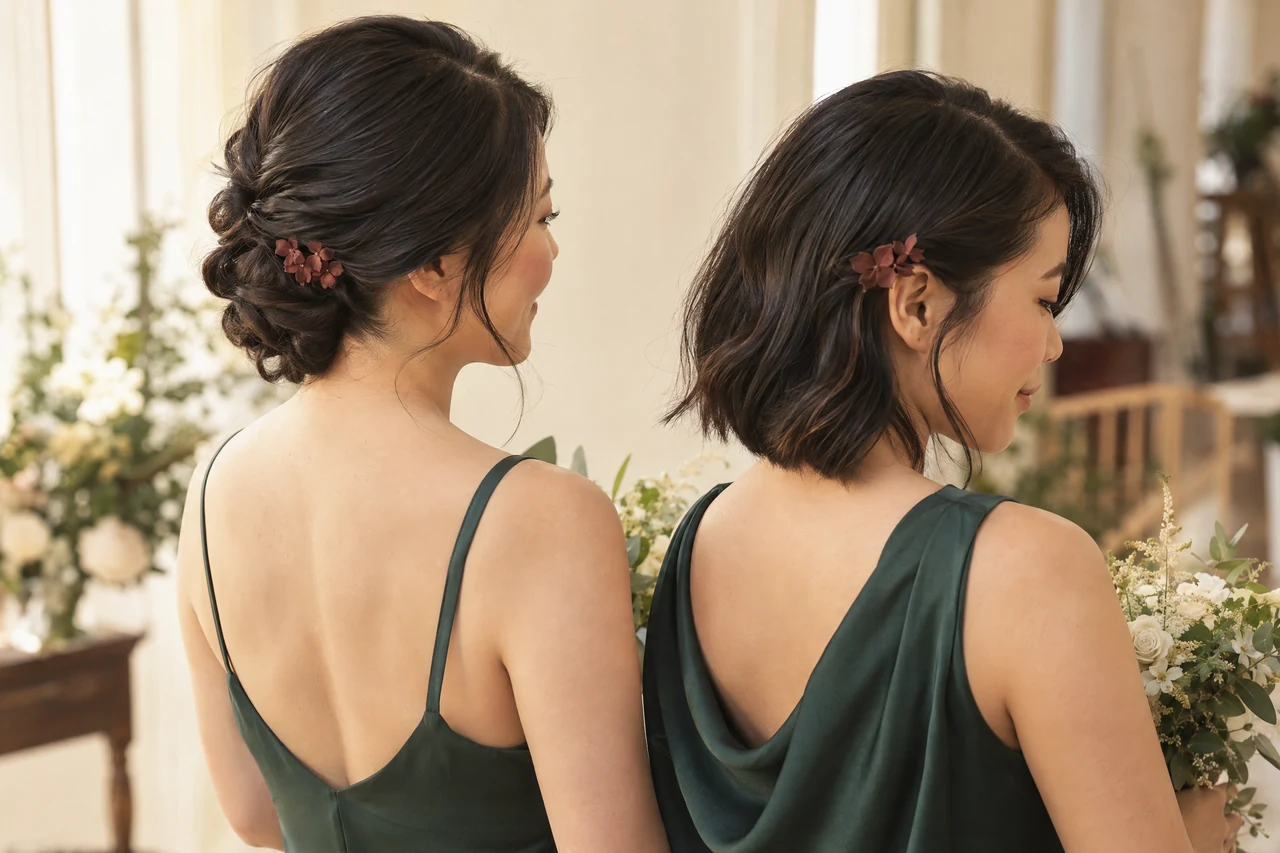
An existing-length option should be a complete design, not merely the bob left untouched while a long style receives all the attention. Consider a deliberate side part, polished inward movement, soft waves or an ear tuck with a suitable ornament. Bring the neckline and earrings into the discussion. Decide what the front, sides and back should look like together. A short finish can frame your face and leave the neckline clear without pretending to be a long-hair updo.
Use the guide to wedding hairstyles for short hair to compare parting, texture and accessory placement before deciding that additional length is necessary. Choose references close to your actual bob as well as the longer image you admire. Ask what you like in that longer reference: perhaps it is the soft face-framing movement or an ornament behind the ear rather than the length itself. That detail might be achievable without an addition.
Compare alternatives against the same requirement
The comparison below starts from keeping the natural cut intact. None of the added-hair options is a promised service or a universal recommendation. A loose long style, a partly gathered design and a separate hairpiece present different coverage questions. Ask whether the necessary fitting and styling can actually be arranged, then judge them against the finished bob option. Do not compare an unstyled short cut with a carefully posed long reference and assume the latter is the only wedding-worthy choice.
Check the visible join before choosing the final length
There are two different things to inspect: the place where added hair is secured, and the visual change from the natural bob ends to the longer silhouette. Covering the first does not necessarily solve the second. A bob edge might form a horizontal step over longer strands even when no fastening is visible. Look at the sides and nape as well as the front. Ask to see the transition in the proposed style rather than judging loose lengths held against your head.
The discussion of hair extensions for short hair explains why short layers, parting and attachment coverage deserve assessment together. For this particular request, add a stricter condition: the natural ends must stay. A style that relies on softening those ends through cutting does not meet your brief, however attractive its photograph. If a reference requires that change, compare a smaller length increase or a different outline instead of accepting thinning as an unspoken finishing step.
Style the transition, but do not promise it disappears
Waves or a partly gathered shape may change how the short ends are seen, but they are possibilities to test, not guarantees of concealment. Matching colour alone is insufficient if the texture, shine or lower outline still looks disconnected. Turn your head, change the parting only as planned, and allow the hair to settle again. If the join becomes distracting whenever the pose changes, decide whether that dependence on arrangement suits your actual wedding rather than a still photograph.
Treat comfortable weight and removal as part of the design
Adding more hair to make the lower lengths look fuller is not automatically a solution to a blunt transition. The supporting natural hair and the proposed attachment still need assessment. Tell the stylist about fragile areas, earlier extensions and recent colour or chemical work. Ask where the addition would sit and how it would interact with your veil or ornament. Do not stack accessories over the same area simply because each item looks light when considered separately.
The American Academy of Dermatology's extension-care guidance says pain or a headache means the hairstyle is too tight and advises asking the stylist to loosen the affected area. Do not interpret discomfort as a necessary part of a secure bridal style. Stop the fitting and have it assessed rather than waiting for the ceremony. Short wear does not establish that a particular attachment or amount of hair is appropriate for you.
Know the removal route before the event
Confirm exactly what removable means for the proposed method: who removes it, what is released first, and whether professional removal is needed. Request instructions for that actual fitting rather than treating every addition like a clip-in. If clip-ins are selected, the AAD advises removing them before washing your natural hair. Do not pull a tangled piece free or improvise removal of an unfamiliar fastening. Make the after-event plan practical for your travel and the person who will help.
When to pause instead of adding strain
Redness, itching or areas of broken or missing hair warrant attention rather than concealment. Alopecia UK's traction alopecia information lists these signs and identifies extensions, especially alongside chemical treatments, among risk factors for repeated strain. If these concerns are present, defer additional tension and chemical work while seeking healthcare advice. A styling consultation can consider appearance, but it cannot diagnose hair loss. Preserving the cut's thickness is not a guarantee against hair or scalp problems.
Trial adding occasion length while protecting the natural bob edge
Bring your own everyday bob into the comparison, not just an idealised reference. Take clear photographs with your usual parting and the hair sitting naturally. Note any areas you normally tuck behind your ears, since that movement can change coverage. These 6 preparation items keep the consultation focused on preserving the bob as well as creating the event look. They are an editorial checklist, not a measure of how likely extensions are to suit you.
If a trial can be arranged, request the same no-thinning boundary for it as for the wedding. Test the intended veil or ornament and rehearse any planned change between ceremony and reception. Sit, turn, look down and allow someone to view the back at normal distance. Record what feels uncomfortable or looks disconnected. Ask which adjustments involve only added hair and styling, and which would alter the natural cut. The latter need a fresh decision, not silent agreement.
Translate the reference into negotiable details
For a hypothetical bride who wants a chest-length wave but must keep a dense chin-length bob, the honest trial question is whether that particular contrast can look acceptable without natural-hair thinning. If not, identify the reference detail worth retaining, such as a wave around the face. A shorter occasion outline or a finished wavy bob may honour that detail more convincingly. Do not assume a longer target deserves priority simply because it was the first image saved.

Confirm a reversible plan, or choose the finished bob
Send an enquiry about hair extensions with the wedding date, current bob photographs and your no-thinning requirement, and ask whether a suitable temporary method and fitting scope can be arranged. The service link does not confirm that every removable option is offered or available for your date. Establish who would supply and match any added hair, what a trial includes, and how removal would be handled. Request the actual quotation rather than assuming an ordinary styling charge covers the addition.
Before proceeding, summarise the agreed outline, natural-hair cutting restrictions, fitting method and removal arrangements. If the proposed style needs irreversible thinning to look convincing, it falls outside your original brief. You can decline that change without abandoning a considered wedding hairstyle. Choosing the polished bob is a complete decision; choosing assessed added length is another. What matters is that the event design and the everyday cut are both considered before scissors or attachments are introduced.
Keep the next-morning bob in the decision
Visualise the hair after the veil, ornament and addition have gone. Does the plan leave the natural outline you wanted to preserve, with no agreed cutting change hidden inside the styling brief? An assessment cannot promise zero damage or an invisible join, but it can clarify what is proposed and what you refuse. If the long look only works by giving up the bob's defining edge, revise the wedding reference instead of treating that trade-off as unavoidable.
Compare each occasion direction with the same condition: no thinning of the natural bob.
| Direction | What to assess | Effect on the everyday cut |
|---|---|---|
| Finished existing-length bob | Parting, movement, neckline and accessory placement | No addition or natural-hair thinning required for this option |
| Modest removable length increase, if suitable | Natural end line, matching texture and attachment coverage | Preservation is possible only if fitting needs no natural-hair cutting |
| Partly gathered style with assessed added hair | Coverage when gathering, nape visibility and combined accessory weight | A gathered finish does not automatically justify thinning underneath |
| Dramatic loose length from a dense short bob | Strong short-to-long step and reliance on arranged styling | Revise the reference if convincing blending depends on thinning the bob |
Your preparation checklist
- Bring current front, side and back photographs with your everyday parting.
- Write down the natural ends and internal thickness that must remain untouched.
- Choose an existing-length wedding reference as well as the desired longer look.
- Share hair-processing history, fragile areas and any previous attachment discomfort.
- Bring veil and accessory details, neckline photographs and planned style changes.
- Ask about method availability, trial scope, confirmed quotation and removal responsibility.
Frequently asked questions
Can a stylist trim only the extensions and leave my bob alone?
That is a boundary you can request, but it does not prove the finished transition will suit your bob. Ask the stylist to distinguish shaping the added hair from cutting natural sections, and require permission before any natural-hair change. If trimming the addition alone cannot produce an acceptable outline, compare a revised length or an existing-hair finish rather than allowing your no-thinning condition to disappear.
Does temporary mean the long look is harmless and easy to remove myself?
No. Temporary describes intended wear, not guaranteed comfort or safety. The actual fastening, amount of added hair and condition of the supporting hair still matter. Confirm removal instructions for the selected method and whether professional help is required. Report pain or tightness during fitting. If you have unexplained hair loss or scalp symptoms, seek healthcare assessment rather than relying on the addition being worn for only one occasion.
What if the long wedding reference cannot work without thinning the bob?
Keeping the everyday cut means the reference may need to change. Identify its most important detail, then compare that detail in a shorter or existing-length style. You might retain face-framing movement or an accessory position without reproducing every long strand. If preserving the natural perimeter is non-negotiable, do not approve thinning solely to rescue a temporary look; choose the assessed alternative you can accept from several angles.
Enquire with your bob-preservation brief
WhatsApp +85253057561 with your wedding date, clear current-hair photographs and the longer reference you like. State that the natural bob must not be thinned, and ask to compare an existing-length finish with any suitable temporary option. Vit So is at 252 Hollywood Road, Sheung Wan, Hong Kong. Method availability, trial arrangements, pricing and appointments require confirmation; confirm your preferred consultation language too.
Start your WhatsApp enquirySources & further reading
- How to prevent hair damage from a weave or extensions — American Academy of Dermatology
Professional dermatology guidance on extension-related precautions, responding to painful tightness, clip-in removal before washing and seeking advice about hair loss. It does not guarantee suitability for a wedding fitting.
- Traction Alopecia — Alopecia UK
Patient information about repeated tension, signs that deserve attention and risk factors including extensions combined with chemical treatments. Relevant to deciding when to pause additional strain, not to diagnosing readers.



