







Brand relationship disclosure: OWNSTRAND and Vit So are brands under the same owner. This commissioned guide offers cosmetic selection guidance, not an independent review or product test. Confirm styles, supply and visit arrangements directly with OWNSTRAND.
Men's hair system with uneven grey zones: check feasibility first
Start your custom men's hair system enquiry with a layout, not merely a hairstyle photograph. Say whether the piece should cover both the front and crown, or only one of them, while leaving your sides visible. OWNSTRAND's guide confirms that bespoke options require individual discussion; it does not establish that every system design or base can be made. Ask whether your proposed coverage and uneven colour arrangement can be considered together.
Next, use the custom wig with a percentage of grey hair guide to ask a narrower question: can the front and crown have different blends within the same piece? The page discusses grey prominence and where the effect matters, but does not promise separately controlled zones. Explain that an evenly distributed mix would change your appearance. Request a clear distinction between a preference the shop can discuss and a detail the maker can specify.
OWNSTRAND's custom human hair wig Hong Kong overview describes sample viewing, measurement and a return fit with washing, cutting and blow-drying for its custom-wig process. Request a documented design and individual quotation if your layout is feasible. Confirm which steps apply to the proposed men's piece rather than assuming the full process or an attachment service is included. OWNSTRAND and Vit So share the same owner; these links describe a sister brand's enquiry routes, not an independent recommendation or product test.

Build a four-zone reference from the hair you want to keep
Use four viewing zones for this brief: front, crown, left side and right side. This is a practical communication method, not a manufacturing standard. Add a rear view if the system would meet retained hair at the back. On a simple sketch, mark the proposed coverage outline separately from the colour observations. A mostly grey side outside that outline is a blending reference; it is not automatically a request for more grey throughout the replacement hair.
Take current photographs with your usual parting and dry, normally arranged hair. Keep the lighting similar between views and avoid filters. The American Cancer Society recommends photographs of the existing style and natural-light comparison with hair references or wig swatches.[2] Here, apply that advice to each visible zone rather than relying on one flattering portrait. Include both a close view of the mix and a wider view showing how it reads beside your face.
Record what you see before deciding what to change. For example, write 'front mostly dark; crown visibly greyer; left side finer mixed strands; right temple has a stronger pale cluster'. These are illustrative descriptions, not observations about a particular client. Natural hair turns grey or white when follicles stop creating melanin, according to the American Academy of Dermatology.[1] That biological explanation does not provide a system-colour formula or establish that a supplier can reproduce the pattern.
Keep observation separate from preference
Label each note as either current appearance or desired appearance. You might like your dark front but prefer a softer transition into the crown. Keeping those statements separate prevents a reference photograph from being mistaken for an exact-copy instruction. When two pictures disagree, explain which shows the colour you want and which only shows the cut or coverage.
Describe regional grey percentage in a hair system without false precision
A regional grey percentage in a hair system should identify the area it describes. 'A little grey at the front, clearly more at the crown' carries a different instruction from 'a little grey overall'. Ask what any proposed number means: is it a nominal hair mix within a marked area, an overall blend label, or a visual estimate? Do not count pale pixels in a phone photograph and treat the result as a measured percentage of strands.
Position matters even when the amount sounds similar. Scattered pale strands can create a different impression from one concentrated cluster beside a parting. The phrase salt and pepper hair colour can help describe the mixed appearance, but it does not specify where the mix sits. Add plain language about placement: fine dispersion, a stronger crown concentration, or a temple reference that should remain outside the system. Ask whether those distinctions can be documented.
If numbers are useful during consultation, tie them to agreed samples or the maker's own definitions. A dark-front reference and a greyer-crown reference may communicate more than unsupported percentages. Ask whether the transition would be gradual or visibly divided, and how the chosen parting affects it. Treat sample selection as evidence of the colour direction being discussed, not proof of an exact final match or confirmation that this regional arrangement is currently available.

Specify the meeting line with retained mixed sides
The edge beside your retained hair deserves its own note. Identify where the replacement lengths would overlap the side hair and where a visible meeting line could appear in your usual style. Compare the dark base colour as well as the grey prominence. A similar amount of grey cannot by itself resolve a difference in the darker shade, length or hair direction. Ask to discuss these together without treating colour selection as a substitute for fit.
For hairpiece fitting, bring photographs showing both side profiles and the crown-to-back relationship. Explain how short you normally keep the sides and whether you expose them by brushing the top back. A longer overlap may look different from a closely cropped junction, so the desired cut belongs in the brief. Confirm the proposed piece's dimensions and wearing position before deciding where its colour zones should end; no fitting or installation arrangement is implied here.
Do not automatically mirror the left and right sides. If one temple is visibly paler, note that difference and ask whether the proposed layout can accommodate it. Also state what you will keep unchanged, such as your natural temple cluster or regular side length. When regional control is unavailable, ask which compromise matters most: retaining the darker front, making the crown greyer, or easing the side junction. A clear priority is more useful than accepting an unexplained average.
Judge the transition, not just the swatch
A swatch helps with colour, but cannot demonstrate the whole relationship between top coverage and retained sides. Ask what can be reviewed before commitment and at a later fit check. Compare the agreed style from normal viewing distance as well as close up. A precise-looking colour code does not remove the need to discuss an acceptable difference at the boundary.
Check how styling and fibre choices affect the layout
Give the maker your usual parting and the alternative you actually use. Hair originating in one region can lie across another when brushed, so a colour map should describe both placement and the finished appearance you want. Say whether the crown must look greyer with the hair resting naturally or only in a particular styled view. Ask which parting or direction can be supported by the proposed construction; do not assume that every base allows the same styling freedom.
Confirm what the dark and pale strands are made from for this particular request. A human-hair service description does not answer every question about a proposed grey blend, and grey-looking fibres are not automatically heat friendly. The American Cancer Society advises against colour rinses on synthetic wigs and against dryers or curling irons unless the wig is heat resistant.[2] Do not plan to correct an unsuitable zone layout with home colouring or heat before checking the piece's own instructions.
Discuss density and length alongside the mix, since the amount and arrangement of visible hair affect how you judge the finished colour. Ask for care instructions and what future adjustment is realistic. Trimming may change the outline, but it should not be presented as a guaranteed way to relocate grey strands. Your retained hair will also change between haircuts; choose a review point that fits your normal routine rather than expecting one colour decision to stay identical indefinitely.
Turn the zone map into a proceed, simplify or pause decision
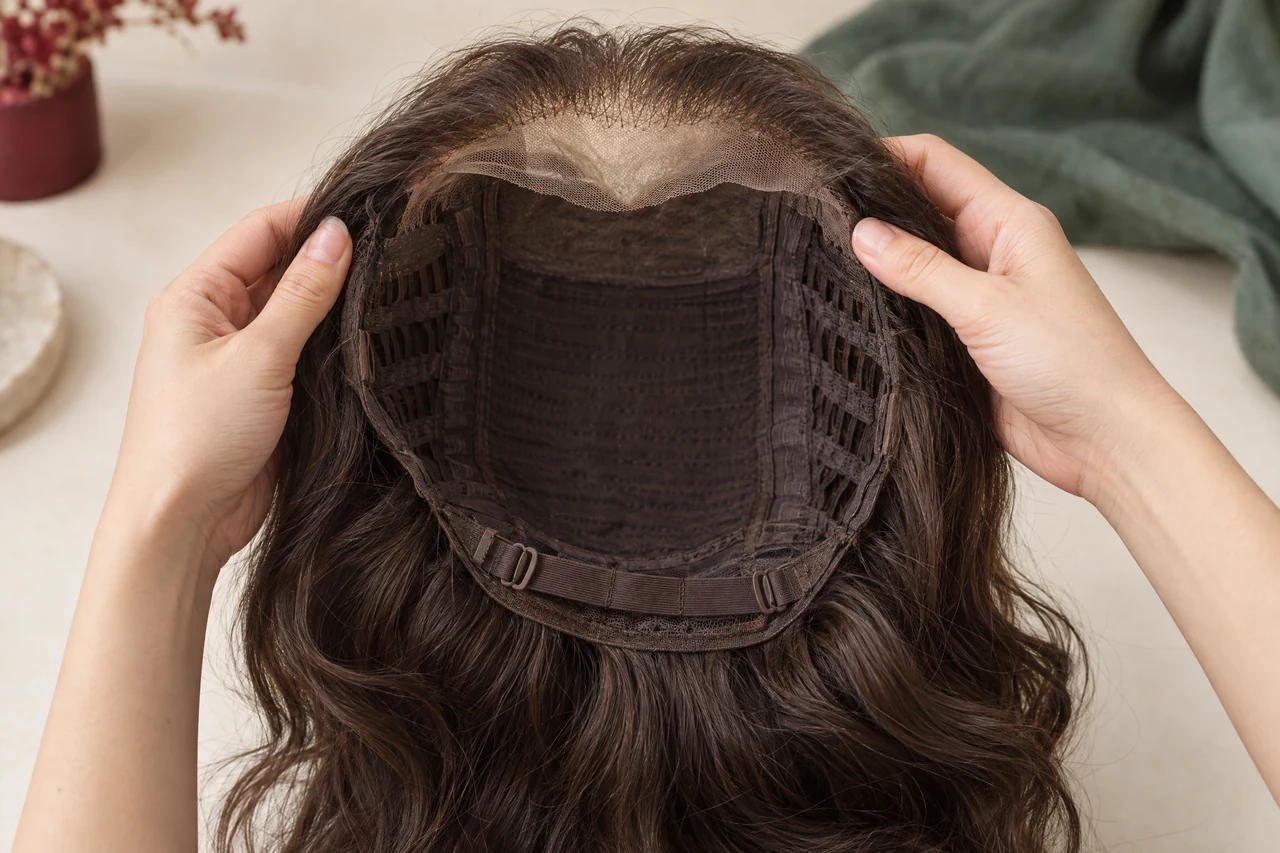
Before committing, collect the confirmed coverage, colour references and achievable zone arrangement into one written brief. The custom made wigs discussion can help organise design priorities, while OWNSTRAND must confirm its own product and visit arrangements. Its single store is in Kwun Tong, separate from Vit So's Sheung Wan location. Ask for the individual quotation, timing, fitting scope and wearing method; a published example or enquiry does not reserve a piece or place an order.
An example brief could read: 'Keep the front predominantly dark, make the crown visibly greyer, and use both retained sides as boundary references. I prefer a gradual transition, not a pale band. My left temple is lighter than the right. Please confirm whether those regions can be specified independently and how the finished colour can be reviewed.' This is a request template, not a specification OWNSTRAND has accepted or a claim that the layout can be supplied.
Proceed when the proposed design addresses your essential zones and you understand its limitations. Simplify when a less detailed blend still preserves the feature you care about most. Pause when the response only offers an overall percentage, leaves construction unclear or cannot explain the intended transition. If scalp symptoms or treatment-related wearing needs affect your choice, seek advice from a care professional before proceeding. A cosmetic colour discussion cannot establish medical suitability or promise hair regrowth.
A four-zone enquiry map: illustrative preferences, not offered specifications
| Zone | Describe the desired appearance | Ask what can be confirmed |
|---|---|---|
| Front | Predominantly dark, with grey as a minor detail | Can this stay distinct from the crown blend? |
| Crown | Visibly greyer, with darker strands remaining | Can placement follow the agreed coverage and hair direction? |
| Left side boundary | Relate to the retained lighter temple cluster | Is this outside the piece, and how would the junction read? |
| Right side boundary | Relate to the retained darker mixed side | Can the two sides be discussed separately rather than mirrored? |
Your preparation checklist
- Mark the proposed coverage separately from the four viewing zones.
- Provide current, unfiltered natural-light views with your usual parting.
- Record the darker base shade, grey prominence and any concentrated cluster.
- Identify retained hair and note left-right differences at the meeting line.
- Ask whether regional placement is specifiable and how a percentage is defined.
- Confirm fibres, construction, care, quotation, timing and review arrangements.
Frequently asked questions
Can I order a dark front and a greyer crown as separate zones?
You can request them, but first ask whether the maker can specify those regions within the proposed piece. OWNSTRAND's public pages allow a grey-blend discussion case by case; they do not confirm independent regional control. Ask for the feasible arrangement before treating your drawing as an accepted order.
Should my mixed sides be included in the overall grey percentage?
Not without explaining what the percentage covers. If the sides remain your own hair, use them as boundary references rather than averaging them into the replacement top. Label the system outline and retained areas so a greyer temple does not inadvertently become an instruction for the whole piece.
What if only a uniform grey mix is available?
Compare that compromise against your main priority. It may be acceptable if the overall impression matters more than the crown pattern. If keeping the front dark is essential, ask about another feasible design or pause. Do not assume a haircut or later dyeing can reliably recreate missing regional placement.
Does a custom-wig fitting mean a bonded system installation is included?
No. A return custom-wig fitting and a hair-system attachment service are different arrangements. Confirm the intended wearing method and whether any installation, attachment materials or follow-up care are offered for your exact request. Neither the category name nor the colour discussion establishes that service.
Bring a layout, not just an average
Invite Vit So to discuss the styling direction and the visual relationship with retained hair. For an OWNSTRAND product or Kwun Tong visit enquiry, use the already linked guides and request confirmation of the proposed zones, construction and individual quotation. Keep both brands' service arrangements separate.
Start your WhatsApp enquirySources & further reading
- American Academy of Dermatology — What causes gray hair, and can I stop it?
Natural grey or white hair results when follicles stop creating melanin; this does not define a hair-system recipe.
- American Cancer Society — Wigs for Hair Loss
Current-style photographs, natural-light colour comparisons and precautions about synthetic colour rinses and heat resistance. Used for selection and care principles only, not medical suitability or brand endorsement.



