







Growing out a perm while keeping wavy ends starts with a boundary
Say clearly that you do not want another perm at this stage. That keeps the discussion focused on using the texture already present rather than recreating the original result. Enjoying your curled ends does not mean you must keep the same amount of curl everywhere. You might prefer a smoother crown with movement below the jaw, or a quiet shoulder-level bend instead of the fuller wave you originally chose. Describe the finish you want today, without treating the straight roots as a problem that must be chemically corrected.
As the straighter area becomes longer, the remaining waves can look concentrated lower down. This changes the balance of the haircut even when you still like the ends themselves. A flatter upper section and a wider lower section may feel comfortable from the front but bulky over a collar. Before changing anything, distinguish an unwanted outline from a wish to have more curl. They lead to different decisions: adjusting a shape need not mean adding another chemical service.
Growing out a perm while keeping wavy ends is not a repeat-perm plan
If you are comparing the alternatives, the discussion of can i get a perm again on permed hair explains why previously processed lengths need their own assessment. Here, however, the starting decision is to stop repeat perming. Use that boundary when choosing a cut or temporary finish, and do not let a photograph of fuller curls quietly change the brief. You can keep some old movement without asking to renew it.
Locate the waves in your everyday dry outline
Look at your hair with its usual parting after your ordinary wash and drying routine. Find where a recognisable bend begins at the front, sides and back; these points need not line up. Notice which ends form useful curves and which look thin, tangled or disconnected from the rest. A photograph taken after a polished blow-dry can show a finish you enjoy, but it does not show what your retained waves do by themselves. Bring both views if you use both routines.
For shoulder-level hair, check the outline while standing normally and wearing a familiar top. Ends resting against the shoulder or collar can turn in a different direction from sections hanging clear of clothing. Also check behind the ears and in your usual ponytail. A cut that looks neat loose may remove the curved section you like in the ponytail, or leave shorter pieces outside the tie. These practical checks make the transition easier to describe than simply asking to blend the textures.
Separate the wave boundary from the intended cutting line
The place where straight-looking hair meets a wave is not automatically the place to cut. Cutting above it might remove the movement you wanted to keep; cutting far below it might preserve an outline you no longer enjoy. Ask to identify the useful wave area before agreeing on the amount to remove. Photographs help communicate that area, but an in-person assessment is needed to judge condition and how a proposed shape may sit.
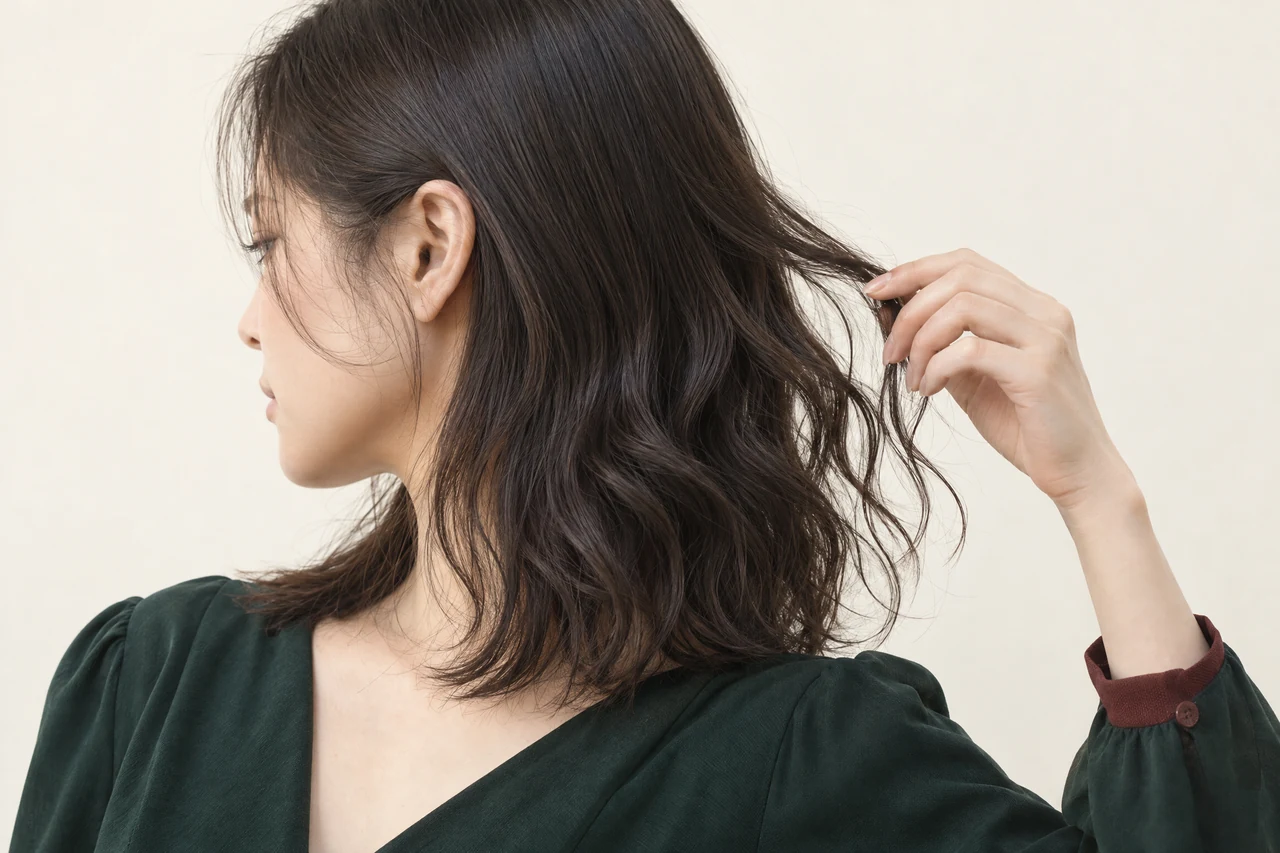
Compare retaining length with changing the shoulder-level shape
Keeping the length with a restrained trim leaves more of the old wave available. That suits someone who values curled ends and can tolerate an increasingly smooth upper section. The limitation is that the bottom may keep looking fuller than the top. A shorter overall outline reduces the amount of old wave as well as the length, so it is not a neutral tidy-up. If only a small curved section remains, even a modest change may remove much of the movement you hoped to preserve.
Layers offer a separate choice from overall length. They can alter where the outline feels full, but they also remove hair from individual sections and may shorten some pieces beyond their remaining wave. More layering is therefore not an automatic way to hide straight roots. Ask how the shorter pieces would sit when dry, whether the ends would still look substantial, and what would happen in a ponytail. The longer layered concept image is a shape comparison, not a promise for shoulder-length hair.
Choose the priority before choosing the cut
Discuss a women's haircut as a transition service rather than assuming a perm package is needed. Women's wash, cut & blow-dry is listed at HK$480. Confirm the proposed service and actual charge when arranging the appointment, particularly if anything additional is suggested. More importantly, agree whether preserving the curved ends, maintaining tie-back length or reducing lower fullness comes first. That order helps make the cutting decision specific instead of relying on an undefined request for softer layers.
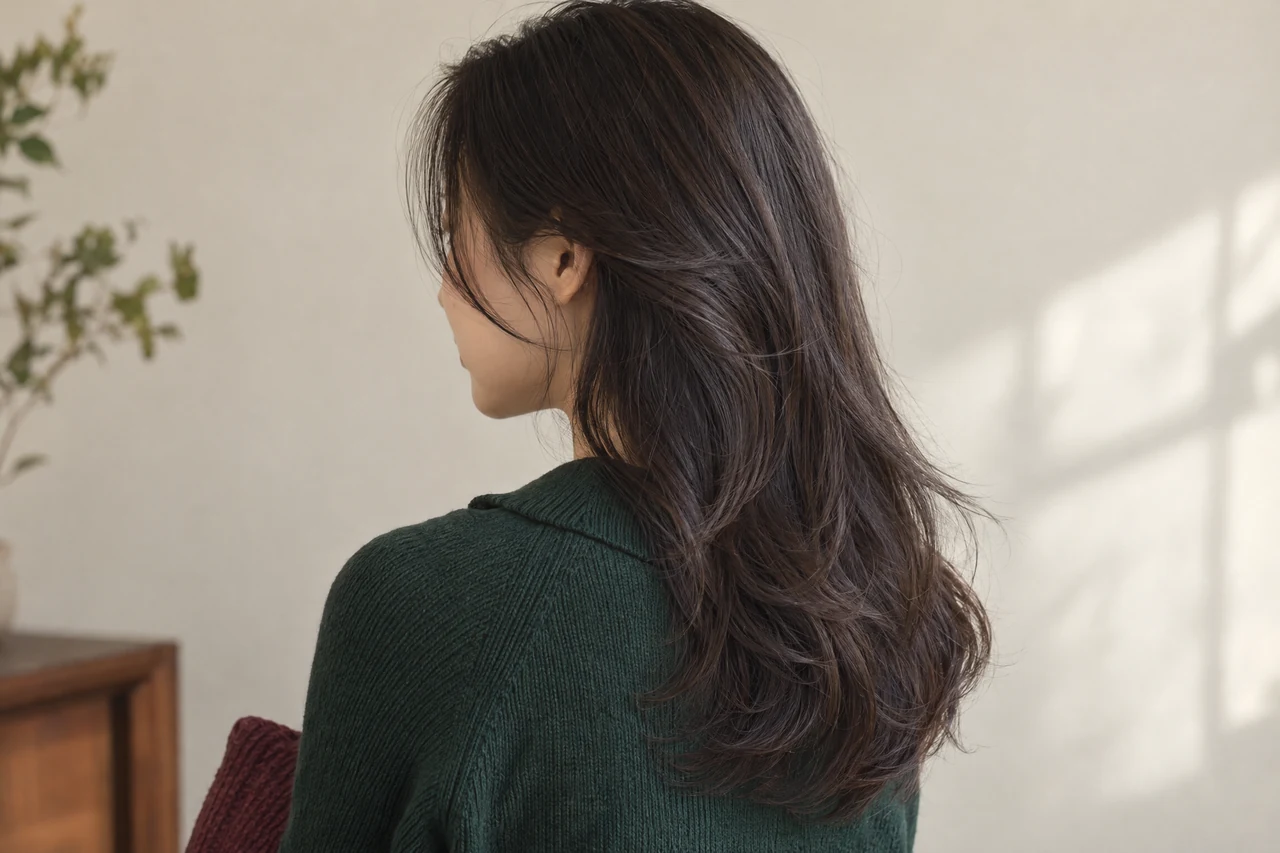
Use a temporary finish without making both textures identical
A mixed-texture finish can look deliberate when the upper hair stays relatively smooth and the ends retain a loose bend. Begin with your ordinary parting and avoid pulling every lower section straight as you dry. You can gently arrange the existing end movement, then see whether the resulting outline is comfortable enough for everyday wear. This approach will not create a lasting wave in straight new growth. Its purpose is to make the current haircut usable without another chemical process.
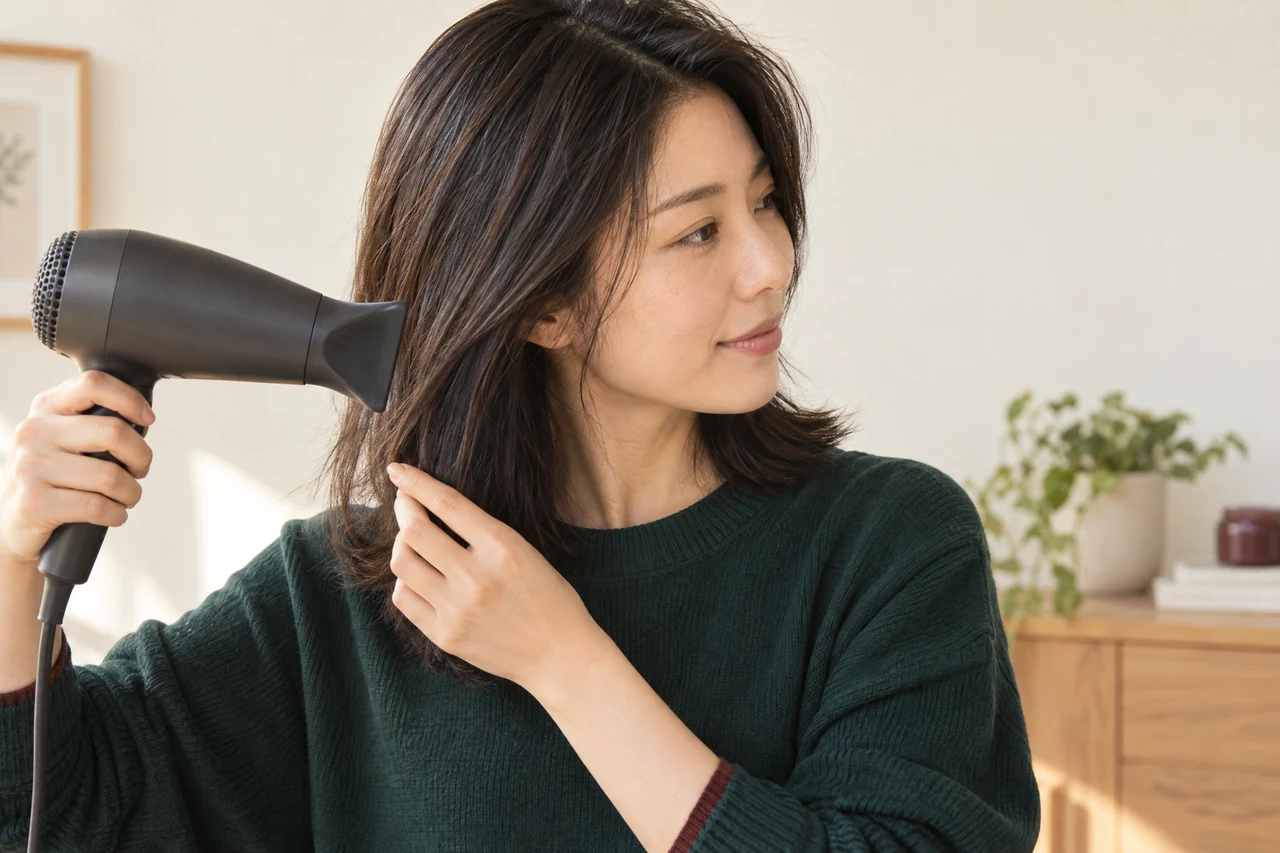
If you use a dryer, ask for a manageable method rather than a finish that depends on repeated high-heat passes. The American Academy of Dermatology's guidance on preventing hair damage recommends air-drying where possible, using the lowest heat setting and reducing heated-tool use. A temporary finish is not risk-free simply because it is non-chemical. Compare the appearance with the time and heat it requires, and accept some texture difference rather than repeatedly forcing older ends into shape.
Keep an everyday version and an occasional version
For a hypothetical person who likes waves for evenings but usually ties their hair back for work, the daily target might be a loose ponytail with curved ends. An occasional shaped finish can remain a separate choice. Do not use the evening photograph as the only standard for the haircut if you will not repeat its styling routine. Ask to see a simple dry outline too, so the transition does not depend on looking freshly styled every day.
Care for the retained ends without weighing down the roots
Straight new growth and older waved lengths do not necessarily need identical amounts of styling product. A rich curl routine across the whole head may leave the upper area looking flatter without improving the outline below. Start with care suited to your scalp and the condition of the ends, and follow product directions. For the remaining processed area, use the perm aftercare guide to frame questions about washing and drying, while making clear that you are no longer trying to maintain a freshly permed shape from root to tip.
Detangling deserves attention where the two textures meet. The AAD's curly-hair care advice recommends working in sections with wet, conditioned hair and fingers or a suitable wide-toothed comb, rather than dry-brushing curls. That guidance is written for naturally curly or coily hair, so its washing schedule and product quantities should not be copied wholesale for straighter roots and permed ends. Apply the gentle-handling principle cautiously and ask for a routine suited to your particular mix of textures.
A pleasing curve does not override a condition concern
If the ends repeatedly snag or appear to break during ordinary handling, describe that separately from their wave shape. Do not add a home perm or chemical straightener to make the two areas match while seeking advice. A haircut assessment may change how much old movement is sensible to retain. If improved care does not help, or you are concerned about thinning or hair loss, seek a dermatologist's advice, as the AAD recommends; a styling consultation cannot diagnose the cause.
Plan the next manageable shape, not a universal straight-hair date
There is no useful single date to promise for this transition. The amount of old wave you keep, the length you maintain and how the ends look after routine styling all affect the appearance along the way. If you keep trimming to a shoulder-level outline, you progressively remove some of the old length. If you let the overall length increase, you may keep the wave area for longer. Neither route requires every part of the haircut to look straight at the same moment.
Use the preparation checklist to make the next appointment focused. Include your chemical history even though you are asking to stop perming, because the retained lengths still have that background. Then agree what would trigger a review: ends becoming difficult to manage, an outline that no longer works with clothing, or a change in your wish to keep the waves. A review is a chance to reassess the cut, not a commitment to resume processing or a promise that every remaining curl can be preserved.
Make the enquiry clear about what you are not requesting
A useful message is: 'I want to stop perming, but keep some of the wavy ends while the straighter roots grow longer. I would like to discuss the cut and a simple daily finish.' Add your current dry-hair photographs and minimum acceptable length. Ask which service is appropriate and whether a closer assessment is needed before deciding. If consultation language matters to you, confirm it when enquiring; an English-language website alone does not guarantee an English-speaking appointment.
Compare these interim choices against the movement you want to keep; none promises identical texture from roots to ends.
| Interim choice | What it preserves or changes | Main compromise |
|---|---|---|
| Retain length with a restrained trim | Keeps more of the existing lower wave area | The smoother top and fuller bottom may stay visibly different |
| Revise the overall shoulder-level length | Changes where the ends rest and removes some old wave | The cut may sacrifice the curved section you most enjoy |
| Adjust selected layers | Changes fullness and the length of individual pieces | Some shorter pieces may lose their remaining wave or escape a ponytail |
| Use a temporary mixed-texture finish | Arranges the current texture without another perm | Needs repeat styling and does not permanently wave new growth |
Your preparation checklist
- State that you want to stop repeat perming, while retaining some existing end movement.
- Bring front, side and back photographs after your usual wash and drying routine.
- Record the last perm and any colour, bleach or straightening on the retained lengths.
- Show where you like the waves and which areas feel too full or disconnected.
- Confirm your minimum dry length and demonstrate your usual tie-back position.
- Explain your available styling time, tools and any recurring tangling or breakage concerns.
Frequently asked questions
Does blending straight new growth with shoulder length perm waves require another perm?
No. If your decision is to stop perming, the enquiry can focus on the haircut, how much of the wave area to retain and a temporary finish. Blending does not have to mean matching both textures exactly. Straighter upper hair and curved ends may be an acceptable interim look if the outline suits your daily routine.
Will adding layers keep the curls while making the top fuller?
Not automatically. Layers change the lengths of selected sections, which can remove part or all of their remaining wave. They can also affect end thickness and tie-back convenience. Ask which pieces would become shorter and how they might look dry before choosing layers as the solution to a flatter upper area.
Can I know when every last permed end will be gone?
Not from a general timetable or a photograph alone. Keeping more old length and removing it through successive cuts lead to different transitions. Discuss how much movement remains and what you want to retain at each review. A changing curl appearance is not a reliable calendar for when every treated length has been removed.
Ask about a haircut-led perm grow-out plan
Send Vit So a WhatsApp enquiry on +85253057561 with current dry-hair photographs, your treatment history and the words 'no repeat perm'. Explain which wavy ends and tie-back length you want to keep. Ask about a suitable cut, manageable styling and the confirmed charge at 252 Hollywood Road, Sheung Wan, Hong Kong. Availability, consultation arrangements and any appointment require confirmation; an enquiry is not an instant booking.
Start your WhatsApp enquirySources & further reading
- How to stop damaging your hair — American Academy of Dermatology
Practical guidance on conditioner, gentle handling, reducing heat exposure and seeking dermatology advice for unresolved concerns, especially thinning or hair loss. It does not provide a perm grow-out deadline.
- 6 curly hair care tips from dermatologists — American Academy of Dermatology
Advice for naturally curly or coily hair, including sectional detangling with conditioned wet hair. The gentle-handling advice is relevant here, but the full routine is not automatically suitable for straight roots and permed ends.



