







How to reduce bulk in men's thick hair by identifying the area
Point out whether the weight sits at the front, crown or side join. Explain the movement or separation you want and the areas that should remain substantial. Selective adjustments can be discussed without assuming that all-over thinning is suitable or that one particular cutting tool must be used.
Start with dry hair in its usual parting. Look straight ahead, then turn to each side. A fringe that falls as a solid curtain calls for a different conversation from a wide ridge where the top meets the sides. If the back looks rounded but the front already separates easily, say so. The useful request is to reduce a particular area while preserving another, rather than simply to make the hair lighter.
The word thick can mean that individual strands feel coarse, that many hairs occupy the same area, or that the haircut looks full. Those observations can overlap, but they do not tell the stylist where to remove weight. Describe what you notice when you run your fingers through the hair and what you dislike in the mirror. Also mention whether the width is present immediately after washing or mainly after applying product.
Review men's haircut to check its service scope and the details to share before arranging the related work.
How to reduce bulk in men's thick hair while keeping the outline
An outline is the visible boundary of the haircut; internal weight is the substance beneath it. You may like the length around your ears yet want less fullness underneath. Alternatively, you may want a narrower outline without losing the top's coverage. Our guide to layering vs thinning out hair helps explain these different requests. Scissor Tech's weight-removal guide describes several approaches and warns that excessive removal can leave hair looking thin and stringy. Agree on the result first, rather than requesting a tool by name.

Short side hairs can stand out rather than lie down
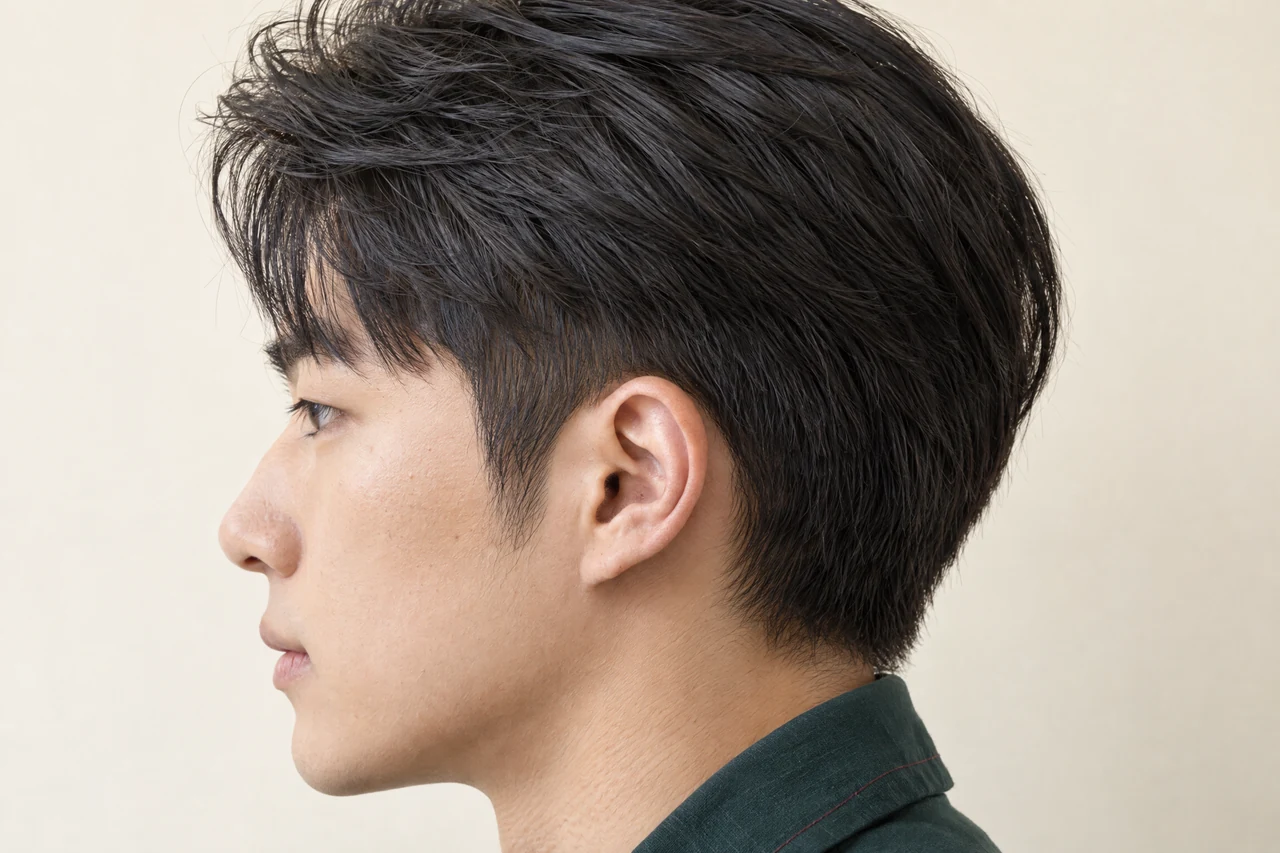
Shortening coarse or outward-growing side hair can remove the length that helped it settle. If the sides still stand out after a cut, show them dry without forcing them flat. Compare retaining more useful length with changing the connecting weight; cutting still shorter is not a universal fix for the direction of growth.
Check whether the problem begins right above the ear or higher at the join with the top. When short hairs project away from the head, removing additional weight from the longer section above may not change their direction. When a dense overhanging section creates the width, that connecting section deserves attention. Ask the stylist to show which area is responsible before agreeing to more shortening.
Retaining side length means accepting some visible hair around the ear while assessing whether it can settle more comfortably. A closer cut offers a different appearance: less side coverage and more contrast with the top. Neither choice is automatically better. If you prefer exposed ears, compare a taper haircut by its retained coverage and transition, not just by how short the lowest section looks.
Continue with two block haircut for that specific comparison and the preparation questions it raises.
Length and growth direction matter as much as thickness
Show what happens when you stop pressing the sides down. Tell the stylist if they flare after sleeping, after wearing a cap or only when you blow-dry upwards. These details help separate the natural dry outline from a temporary styling effect. A photograph of the side you dislike is more informative than a request to take another amount off everywhere. If you are growing a very short side section, ask which parts can be tidied without restarting that length goal.
Preserve the top support you still want
Tell the stylist whether the top should still lift, part or cover a shorter side section. Removing too much internal weight can change that support and make the front look sparse or disconnected. Discuss the silhouette you want before choosing how much weight to remove from each area.
Separate a dislike of width from a dislike of height. A lifted front with narrower sides may be exactly what you want, even if the top still feels substantial. A fringe worn down needs enough hair to form the coverage you prefer. A top swept across a short side needs enough length and substance to make that connection look intentional. Show these preferences before describing the amount to remove.
Use your normal styling movement during the consultation. If you lift the front with your fingers, demonstrate that; if you comb the hair back, explain whether you want a smooth finish or visible separation. Ask to see the shape after drying, before a strong finishing product disguises how the hair naturally falls. You can then discuss whether the heavy area remains without confusing product hold with haircut support.
Less weight is not the same as less height
A lighter feel and a lower silhouette are different goals. Removing weight may allow some sections to move more freely rather than making them lie flatter. For that reason, set a boundary around the front and crown you want to keep. A practical phrase is: 'I want less fullness at the side join, but I still want the front to lift and the fringe to look substantial.' That gives the stylist a visible priority instead of an instruction to thin every section equally.

Consider a separate flattening service only when relevant
A down perm is a separate service to discuss when side direction is the main concern, not an automatic addition for thick hair. Start with retained length and the haircut shape, then ask about suitability if you are considering chemical treatment. Share previous chemical history and do not expect every outward-growing area to respond identically.
The decision becomes more specific when you can point to a side section that keeps projecting out despite a workable cut and a manageable styling routine. Explain whether you want to retain that section's coverage or are comfortable with a closer outline. Ask what area would be treated, what the intended change is and how you would care for it afterwards. Do not treat a reference image of smooth sides as proof that chemical work is required.
Review down perm to check its service scope and the details to share before arranging the related work.
The American Academy of Dermatology's advice on preventing hair damage identifies colouring, perming and relaxing as potential sources of damage and advises limiting overlapping chemical services. Tell the stylist about bleach, colour, previous perms and any areas that break easily. This care guidance supports reviewing hair history; it does not determine whether a particular side outline will suit you.
Cutting and chemical direction changes have different roles
A haircut changes length and the distribution of weight. A chemical flattening discussion concerns the direction of a selected section. Keep those aims separate in the enquiry, including the service scope and quote. You may decide that adjusting the cut is enough, that keeping more side length is preferable, or that a separate suitability assessment is worthwhile. The choice should follow the problem you can actually identify.

Test the shape with a realistic home routine
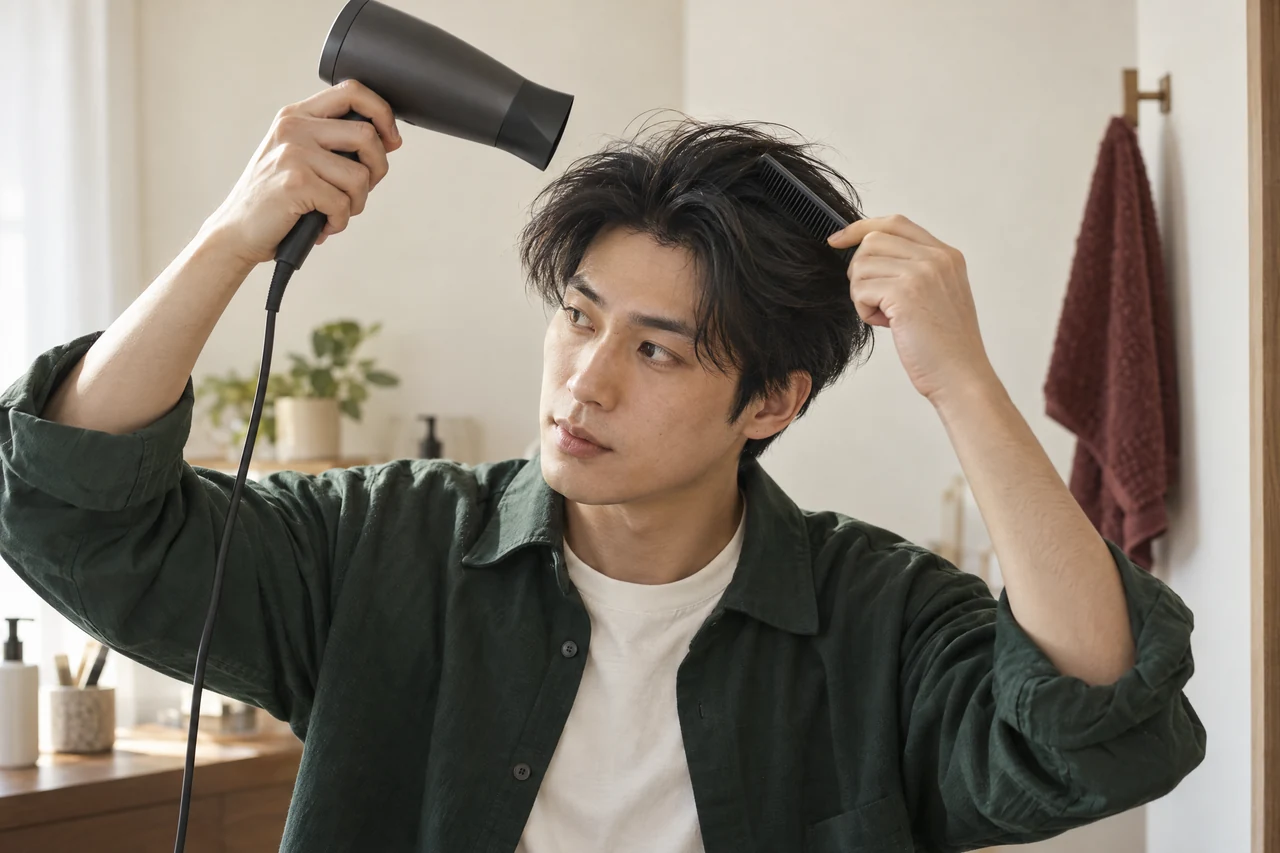
Before asking for another round of weight removal, notice how you create the morning shape. Drying the whole head upwards can produce width in the sides as well as lift on top. Ask for a demonstration that directs the sides towards your preferred outline while treating the front separately. Explain if you normally air-dry, because a cut judged only after an elaborate blow-dry may not reflect how you will wear it.
Keep the handling gentle. The American Academy of Dermatology's healthy-hair tips recommend conditioner after washing, absorbing moisture without rough towel rubbing, and low or medium heat with a heat-protective product. These are ways to reduce avoidable damage, not a promise that coarse side hair will become flat. Follow the directions of the product you use and avoid pulling hard on the hair to force a narrower shape.
Choose product for the finish, not as a substitute for the cut
Explain whether you dislike greasy shine, stiffness or the need to reshape your hair at lunchtime. Start with the amount recommended for your product and assess the outline before adding more. If extra product flattens the top while the sides still project, describe that trade-off at your next consultation. For a Hong Kong commute followed by an office day, a routine you can repeat comfortably is more useful than a finish that depends on continually pressing the sides down.
Review the grow-out before making the next cut shorter
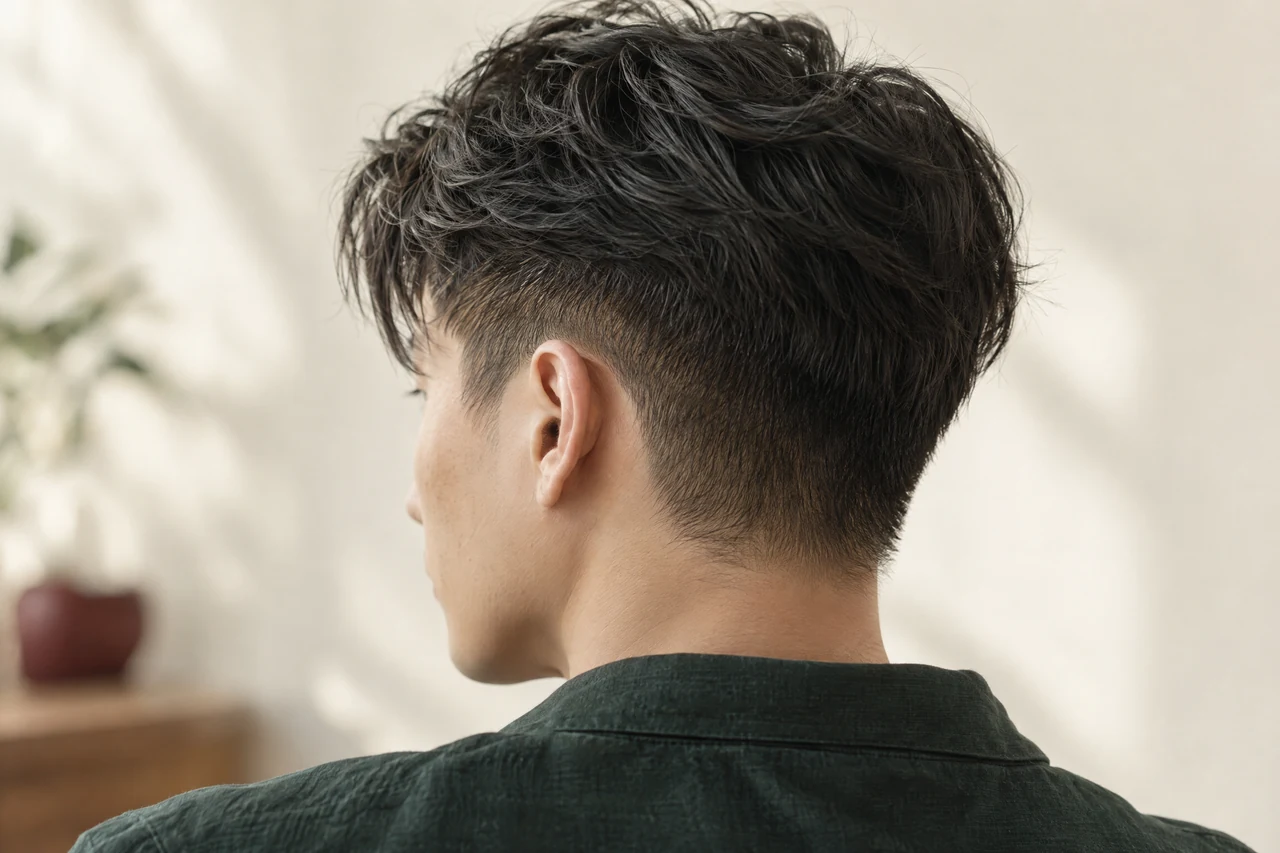
Record where fullness returns as the haircut grows. Is the fringe becoming a solid band again, is the side join widening, or are the short hairs around the ears changing direction? Use similar lighting and the same parting for your photographs. Comparing those specific areas helps you ask for a targeted adjustment rather than removing all the length you have regained.
The listed men's wash, cut and blow dry price is HK$380. If you are enquiring about selective weight removal, explain the shape you want within that haircut discussion. Any separate chemical service needs its own suitability and scope confirmation; do not assume that it is part of a haircut simply because the sides are thick.
Bring a clear boundary for what should stay
Use the preparation checklist below to identify the heavy area and the length or coverage you value. Mention if the previous haircut felt airy initially but left the fringe too sparse, or if very short sides became harder to settle. That information gives the next consultation a useful starting point. The aim is a repeatable balance of narrower areas and retained support, not the maximum possible amount of hair removed.
Compare the source of unwanted fullness before choosing how to change thick hair.
| What you notice | What to discuss | What to preserve or check |
|---|---|---|
| A solid, heavy fringe | Selective separation or a change in fringe shape | Enough coverage at the front and the preferred brow-level outline |
| Width where the top meets the sides | The connecting weight and the transition between lengths | Top support and whether the join should look blended or deliberately separate |
| Short hairs projecting above the ears | Retained side length versus a closer outline | Dry growth direction; more shortening may not make the hairs settle |
| A full top that no longer lifts easily | Where weight can change without losing the intended shape | Front lift, parting and crown coverage |
| Persistent side direction with coverage you want to keep | A separate flattening-service suitability discussion | Chemical history, hair condition, aftercare and agreed scope |
| Width mainly after home styling | Drying direction and the effect of your usual product | A routine you can repeat without excessive heat or force |
Your preparation checklist
- Bring dry, unstyled front and side photographs with your usual parting visible, including the area that feels too wide.
- Point to the unwanted weight at the fringe, crown, above the ear or top-to-side join rather than requesting all-over thinning.
- Name what must stay: front lift, fringe coverage, useful side length or a substantial connection between top and sides.
- Describe your normal drying and product routine, including what happens after commuting, sleeping or wearing headwear.
- Share previous chemical treatments and fragile areas before discussing any separate flattening service.
- Confirm the haircut scope and ask to see the dry shape with a home-manageable finish before deciding on further changes.
Frequently asked questions
Why does my hair stick out on the sides after a haircut?
Growth direction and very short length can make side hairs stand outward. Compare the dry shape and retained length before assuming more shortening or thinning will solve it.
Should thick hair be thinned everywhere?
Not automatically. Locate the heavy areas and identify the support you want to keep. The outline and intended styling should guide selective changes.
Does every thick-haired man need a down perm?
No. It is a separate suitability question, particularly when side direction is the issue. Thick hair alone does not establish that chemical flattening is necessary.
Discuss a lighter shape with the support you want to keep
Enquire with Vit So in Sheung Wan and share current front and side photographs. Explain where your hair feels bulky and which lengths should remain. Ask about the haircut approach and any separate service only if relevant. An enquiry is not a confirmed booking; confirm the appointment details before visiting.
Start your WhatsApp enquirySources & further reading
- Different Ways To Remove Weight From A Haircut
Different approaches to distributing haircut weight and the risk of a thin, stringy appearance after excessive removal.
- Tips for healthy hair
Conditioning, gentle towel handling and lower-heat styling to reduce avoidable hair damage.
- How to stop damaging your hair
Chemical-treatment damage and reasons to review overlapping colour, perm and relaxing history before further treatment.



