







Layering vs thinning out hair starts with the goal
Choose whether the main concern is a static shape, weight inside the cut or a dense-looking edge. These observations lead to different conversations. Removing hair throughout the outline can reduce weight but also make the ends feel less substantial. Describe what bothers you and what should stay before asking for layers or thinning as a predetermined solution.
A request for lighter hair can mean several different things. You might want the sides to move instead of hanging in a solid sheet, less hair gathered behind the ears, or a softer-looking bottom edge. Only the last goal necessarily asks for a less solid perimeter. Point to the area while your hair is down, then show it in the position where the heaviness bothers you most.
Layers and weight removal are not mutually exclusive. The professional education guide from MHDPro on long layered haircuts describes layering as removing weight from internal lengths. The useful distinction for a client is therefore not which label wins, but whether the proposed change alters visible length relationships, reduces selected bulk, or does both. A technique name alone does not explain how much hair will remain at the edge.
Layering vs thinning out hair in a haircut discussion
Try saying: 'The area behind my ears feels crowded, but I like the solid ends and do not want obvious short pieces on top.' This identifies a concern and a boundary without prescribing the cutting method. If movement is your priority instead, say whether you want it around the face or through the back. Ask the stylist to show which zones would change before cutting begins.

Protect the outline when comparing layers
One length haircut vs layers compares a relatively continuous edge with shorter pieces that change movement and weight distribution. A one length haircut does not make every strand fall identically in every position. Discuss the visible perimeter, the shortest surface pieces and how the hair sits when moved forward before choosing how much layering belongs inside the outline.
The perimeter is the outer boundary you see when the hair falls naturally. It might be straight across, softly rounded or longer towards the centre back. Keeping its longest point is not the same as keeping its fullness: the longest strands can remain while fewer surrounding strands reach that line. Explain both requirements if you want the ends to look substantial as well as stay long.
A one length haircut can be a useful reference for an uninterrupted edge, but it is not automatically the best answer to every bulky shape. Equally, layers do not have to mean a visibly broken outline. MHDPro's guide discusses maintaining a strong outline to support softer internal layers on straight hair. Treat that as a design possibility to assess, rather than a promise for every existing cut.
Continue with layered haircut for that specific comparison and the preparation questions it raises.
An even perimeter and shorter pieces inside
Look at the ends from the back and with the hair brought over each shoulder. An edge you like from behind may appear much softer at the front. Show the shortest pieces already present, especially around the face, so that a new layer is not discussed as though all the hair still reaches the perimeter. Decide whether those pieces should be maintained or allowed to grow.

Separate inner bulk from the visible surface
Internal layers for thick hair may be discussed when the inside feels bulky but the surface and bottom edge should remain substantial. Identify whether the concern sits behind the ears, at the back or near the ends. This is an assessment of shape and weight, not a guarantee that every thick head of hair needs the same reduction.
Think of the surface as the hair most visible over the crown and down the outside of the shape. Interior hair sits underneath, although it becomes visible when you part, tuck or tie the hair differently. A smooth outer appearance and a lighter interior can be compatible goals, but keeping the surface intact does not make every internal change invisible in every hairstyle.
Ask where any proposed weight removal would start and where it would stop. A crowded middle section and already sparse ends call for a different discussion from dense ends with comfortable space above them. Avoid treating the whole head as uniformly thick. Hair around the front corners may need more retention than the back, even when the overall amount feels generous.
Continue with haircuts for fine hair volume for that specific comparison and the preparation questions it raises.
Weight at the back, sides and ends
Show the difference between hair that presses together behind an ear and hair that spreads at the bottom. If you tuck the sides back for work, demonstrate that movement. If the main concern is a thick ponytail, show the gathered hair too. These observations help establish whether the desired change is local comfort, a narrower outline or a lighter edge, rather than a general instruction to remove more everywhere.

Distinguish thickness from texture or dryness
Haircuts for thick hair should consider strand size, density and natural direction separately. If the problem is a rough or tangled feel rather than the outline itself, removing weight may not address it. Explain how the hair behaves after washing and ordinary drying; care needs and cutting goals can be related without being the same problem.
Strand size describes an individual hair; density describes how much hair occupies an area. Fine strands can occur in a dense head of hair, while coarser strands do not necessarily create a full bottom line. Also distinguish a wide dry silhouette from a large amount of hair. Natural bends, the way the hair falls and existing shorter pieces can all influence what looks bulky.
The American Academy of Dermatology's advice on damaging hair-care habits explains that fragile, damaged hair can break and look frizzy. It recommends conditioner after shampooing and gentle detangling. That supports separating a care problem from a cutting-weight problem; it does not establish which hairstyle you should choose or mean that every frizzy surface is damaged.
Review hair treatment to check its service scope and the details to share before arranging the related work.
A heavy feel is not always excess cutting weight
Describe whether the difficulty is resistance when detangling, a rough feel at the ends or a shape that stays too wide even after your usual care. Bring details of recent colouring, lightening, straightening or perming when relevant. Do not assume that cutting away more interior hair will resolve a surface concern, especially if the edge already looks less full than you want.
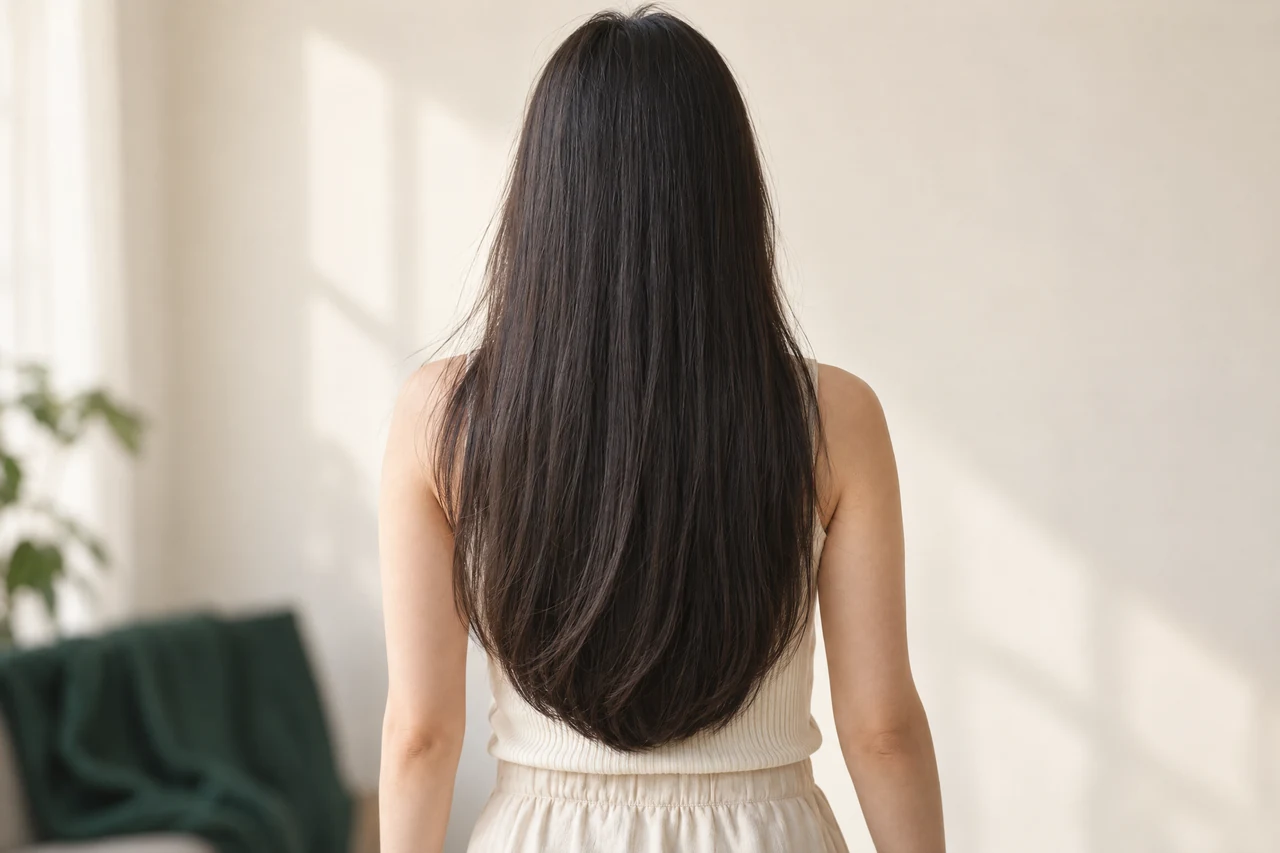
Compare the dry shape with your everyday routine
Judge the goal against the way you actually wear your hair. A layered finish shaped with a brush can show movement that you do not recreate when you simply dry with your fingers. If you normally air-dry, show the resulting outline rather than bringing only a polished reference. You are choosing a cut for ordinary mornings, not just the appointment finish.
For naturally wavy hair, compare where the bends gather and how the ends sit once dry. Removing weight should not be described as a guaranteed route to flatter hair: the dry shape needs its own assessment. Our guide to a haircut for naturally wavy hair focuses on that pattern, helping you keep the texture discussion separate from a request for less bulk.
Consider the commute, office and exercise routine you expect the cut to handle. Shorter pieces that move attractively when worn down may need clips when tied back. A thinner edge may feel different in your usual hair tie. Demonstrate these habits before approving the change rather than discovering the trade-off afterwards.
A simple drying routine is a design condition
Tell the stylist whether you use a brush, a diffuser or just your hands, and whether you regularly smooth the surface with heat. Ask what steps the proposed shape would need at home. The AAD recommends the lowest heat setting for heat tools; adding repeated high-heat styling to compensate for an unsuitable everyday shape is not a useful definition of easier hair.
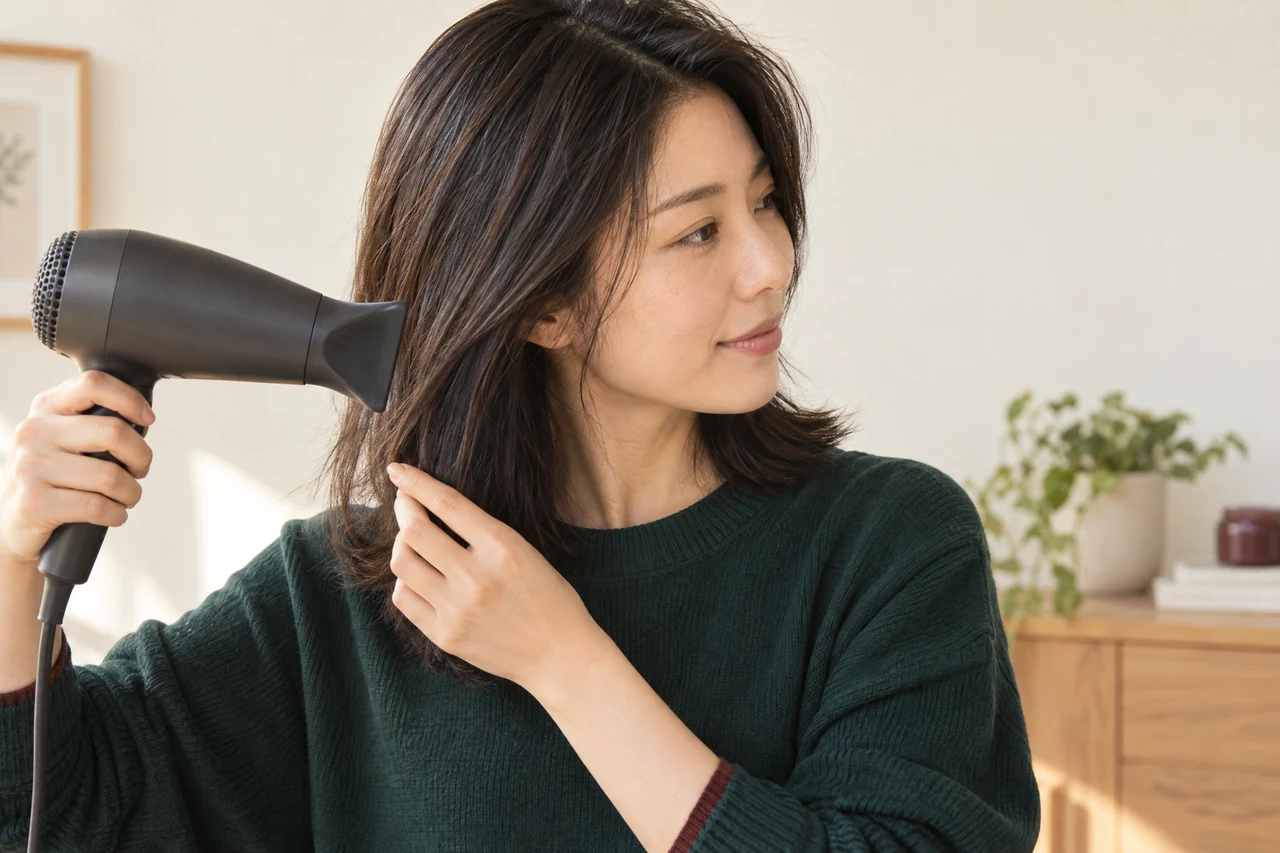
Agree on a weight map before the haircut
Make the decision in terms of zones: where you want change, where you want fullness retained and where you are unsure. Use the 6-point preparation checklist below to organise those priorities. You do not need to name a tool or specify a technique. A clear explanation of the desired result leaves room for the stylist to assess the current lengths and natural fall.
Bring current front, side and back photos in consistent light, with the hair in its usual parting. Pair a reference you like with a note about the specific feature: a continuous bottom edge, softer side movement or a smooth surface. A photo alone cannot show how much interior hair was removed, so avoid assuming that its hidden cutting structure is obvious.
For a women's haircut, turn the comparison into an agreed brief: retain the bottom-line fullness, assess the bulky zones and confirm which shorter pieces are acceptable. If the ends are already too light, ask whether retaining weight now is more useful than further reduction.
Check movement as well as the still outline
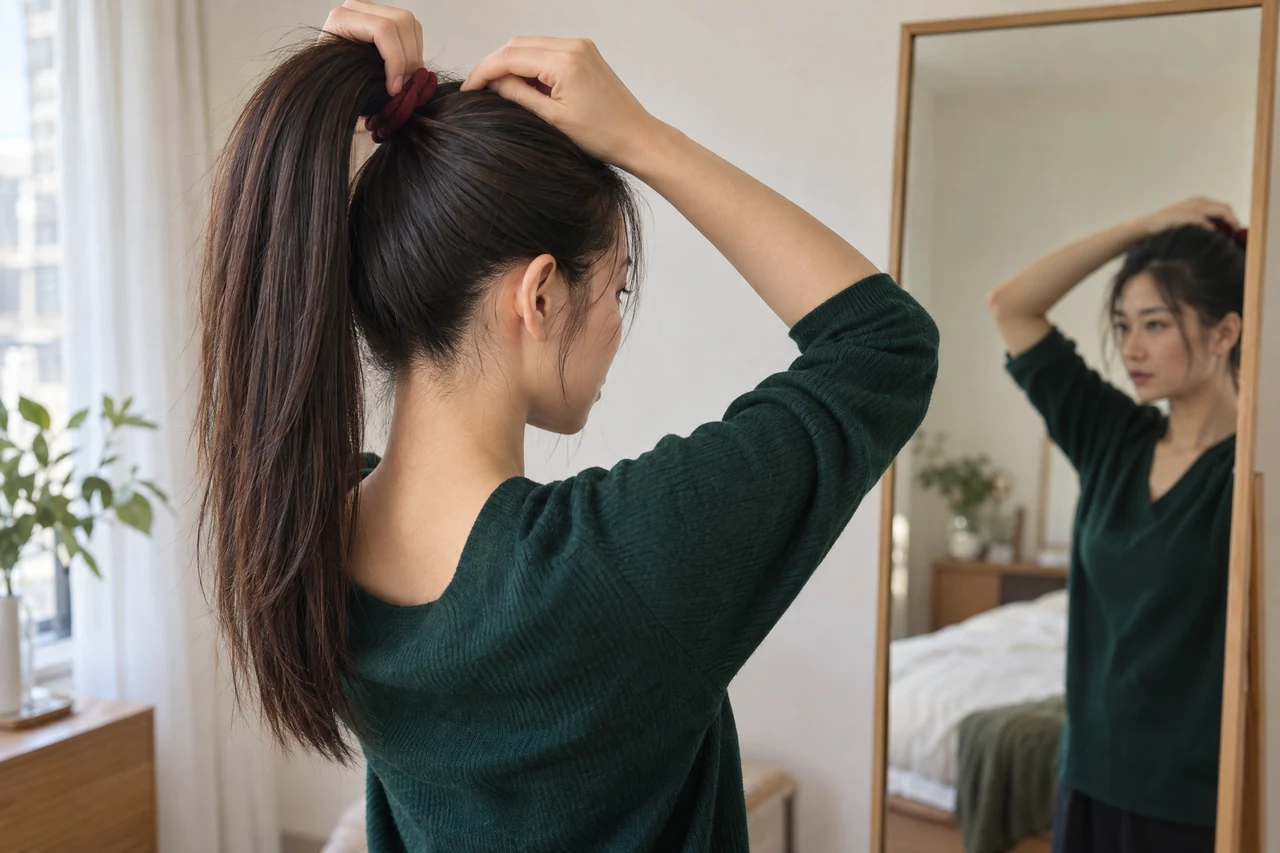
Before leaving, look at the dry hair from more than the front. Bring it forward, tuck it as usual and gather it at your normal ponytail height without pulling tightly. Confirm how to style the changed area. After washing at home, note any specific difficulty and share photos in the same positions; 'the right side spreads behind my ear' is more useful feedback than 'it still feels thick'.
Compare the intended change, not just the haircut label
| Discussion focus | What may change | What to confirm first |
|---|---|---|
| A relatively continuous perimeter | A substantial visible edge with fewer obvious length changes | Whether the sides and back still feel too solid when dry |
| Visible layering | The relationship between shorter pieces and the longest edge | The shortest acceptable pieces and how they behave when tied |
| Selected internal weight removal | Bulk underneath the surface or within a crowded zone | Which areas remain untouched and how movement reveals the interior |
| A deliberately softer end line | A less dense-looking perimeter | Whether you are willing to lose some edge fullness |
| Care and handling review | The approach to roughness, tangles or fragile lengths | Whether the concern is feel rather than excess cutting weight |
Your preparation checklist
- Locate the troublesome zone with the hair dry: behind the ears, through the back, at the sides or along the ends.
- Show the edge fullness you want to keep, not only the longest point you want retained.
- Identify existing shorter surface and face-framing pieces, then say whether they should stay or grow.
- Demonstrate your normal parting, ear tuck and ponytail height without pulling tightly.
- Explain your actual drying routine and relevant chemical-service history; separate roughness from a shape concern.
- Confirm the proposed change by area, including what stays intact and what styling it will need at home.
Frequently asked questions
Do layers always make thick hair lighter?
Not in the same way for every head of hair. The placement and retained weight matter; discuss the bulky area and the edge you want to keep.
Can I ask for less inner weight but an intact surface?
Yes, describe that as a priority. Whether and how it can be approached depends on the existing cut, density and natural fall, not only a technique label.
Does thinning out hair mean treatment for hair loss?
No. Here it means cutting-related weight removal. This guide does not diagnose hair loss or offer medical treatment or regrowth.
Discuss lighter movement without losing the edge you like
Send Vit So your current length, photos of the bulky area and the surface or end line you want to retain. For a consultation in Sheung Wan, include your normal drying and tying habits so that the haircut discussion starts with your priorities. An enquiry is not a confirmed booking; the service scope and appointment details need to be agreed.
Start your WhatsApp enquirySources & further reading
- Long Layers – The Ultimate Guide to Long Layered Haircuts
Professional hairdressing education on internal weight removal through layering, support from a retained outline and the risks of over-layering fine hair.
- 10 hair care habits that can damage your hair
Care guidance on fragile hair, breakage-related frizz, conditioning, gentle detangling and lower heat use; separate from an aesthetic haircut assessment.



