







Red brown to cool brown hair: decide what depth should remain
State whether you like the current darkness and only want less red, or whether you also want the hair lighter or darker. A cool-brown reference may have a different depth from your own hair. Compare the two features separately so the enquiry does not treat every cooler finish as the same colour change.
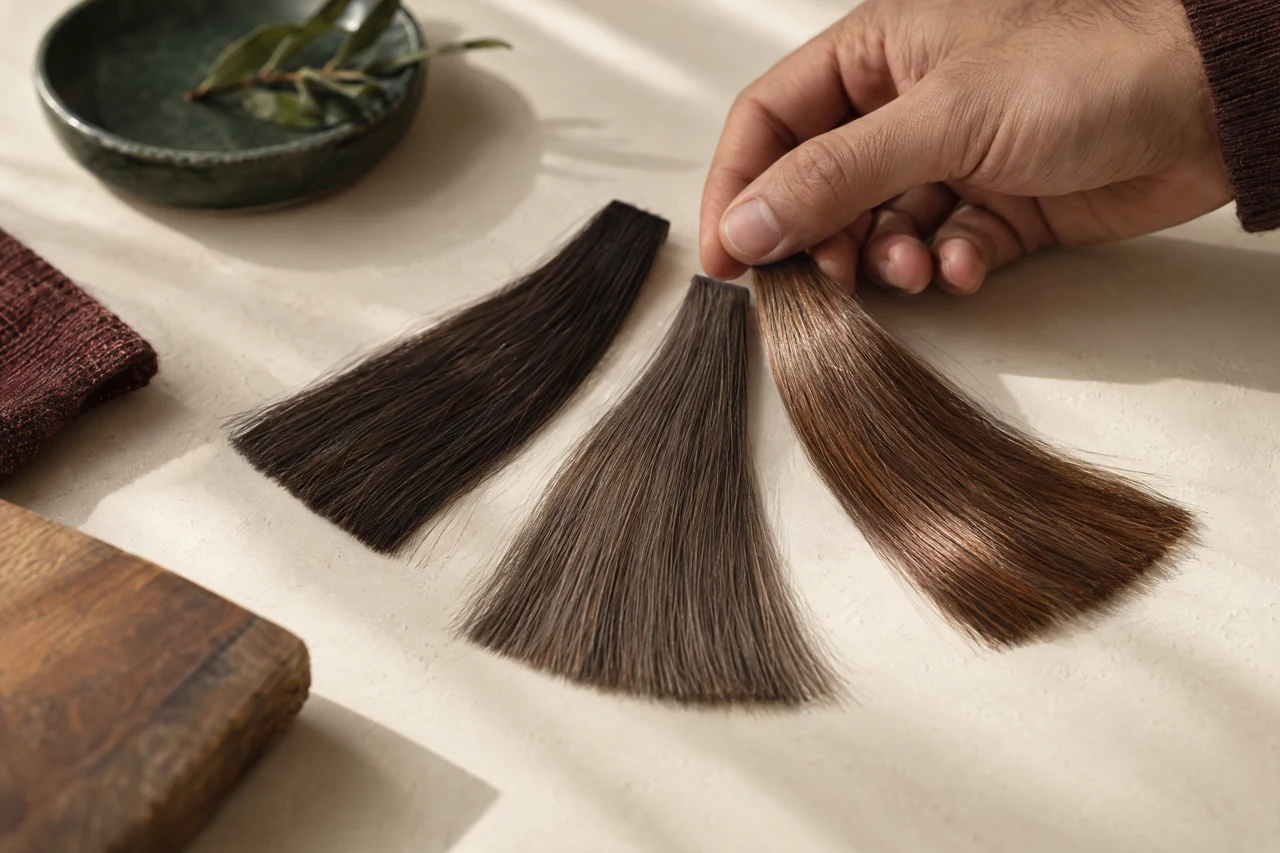
Depth means how light or dark the overall brown appears; tone describes the warm or cool impression within it. A nearly black brown and a lighter smoky brown can both look cool, yet they create different contrasts around your face. Identify the part of your current colour that works: perhaps the darker crown, the softness of the ends or the way it looks with your usual office clothes. These are details worth retaining, not obstacles to a new shade.
In its guide to starting hair colour and tone, Wella explains that previously coloured hair should be assessed from its current colour rather than its original natural shade. Bring a recent photograph alongside your reference so the discussion starts from the red brown actually present in the lengths.
When choosing a reference, the guide to ash brown hair colour can help you separate a smoky reflection from the lighter depth that sometimes accompanies it. Mark which feature you like instead of requesting everything in the photograph.
Continue with toner or colour correction for brassy hair for that specific comparison and the preparation questions it raises.
A red brown to cool brown hair brief needs a depth preference
Use a direct brief such as, 'Keep the darker brown overall, but make the red reflection less obvious.' If you would accept going darker, say how dark is too dark. If you want a lighter brown as well, make that a separate request. This prevents a reduction in visible warmth being mistaken for permission to change the whole depth.

Record old red colour through the lengths
List the dates and areas of previous red-brown colouring, including home dye and toner. Describe whether the roots, mid-lengths and ends have the same appearance. The red visible now is only part of the starting point; a history of applications helps explain why different lengths may need different assessment.
Start with the most recent application, then work backwards through earlier changes that may still be present in the hair. Include a brown shade applied over an older red, not just products sold with 'red' in the name. Mention colour-depositing masks, tinted conditioners and any henna or plant-labelled product. If the formula is unknown, bring a packaging photograph or the product name rather than guessing what it contained.
Separate what you know from what you observe. 'The last application covered all the lengths' is a treatment detail. 'The ends look darker than the middle' is an observation. Both are useful, but neither proves how the hair will respond to another service. Also mention previous lightening, straightening or perming, even when those processes happened before the current red brown.
Continue with colour correction for that specific comparison and the preparation questions it raises.
New growth and repeatedly coloured ends can differ
Photograph the parting, the side lengths and the ends with the hair dry. Show any band where a root application met older colour. Note if the ends feel rougher, tangle more readily or contain short broken pieces. A dark-looking end is not automatically an untreated end; its history may be quite different from the new growth. Keeping these areas distinct makes the consultation more informative.

Agree how much transitional warmth is acceptable
Explain whether a small reduction in red would feel sufficient or whether you dislike any warm reflection. A highly cool reference is not a promise of a one-step result. Discuss acceptable intermediate tones and any condition-related limits before agreeing work, rather than expecting all old warmth to disappear at once.
A useful distinction is between an obvious red cast across the whole hairstyle and a warm reflection visible only when the hair turns towards a window. You might accept the latter while prioritising a brown appearance indoors. Alternatively, any copper-looking end may bother you even if the overall colour is darker. Point to the unwanted area and explain where you normally notice it, rather than relying only on 'make it ash'.
Set a stopping point as well as a target. If retaining length and manageable ends matters more than the strongest cool effect, make that priority explicit. The American Academy of Dermatology's colouring guidance notes that appearance-changing treatments can leave hair dry and brittle. That is a reason to consider the condition cost of further work, not a judgement about which brown looks best.
Review no bleach hair colour to check its service scope and the details to share before arranging the related work.
A cooler goal need not mean an instant ash-grey result
If avoiding bleach is important, describe it as a boundary alongside the desired depth and warmth reduction. Ask which cooler-brown directions may be feasible within that boundary. Do not treat a shade name as evidence that a particular method will work. A neutral-looking brown with some residual warmth may suit your priorities better than pursuing a much lighter, heavily smoky reference.

Observe later colour changes before repeating the process
If the colour appears warmer later, compare photographs taken in similar light and record the timing and products used. Separate a change in tone from a change in overall darkness. Ask about reassessment instead of automatically repeating colour across all lengths; the current condition and history still need to guide the next decision.
Keep a clear photograph of the dry colour after the service, then use the same window position and a similar background for later comparisons. Turn off filters and avoid comparing a warm evening photograph with a bright daylight photograph. Include a full view as well as the area that concerns you; a close-up alone can exaggerate how dominant the warm reflection looks in the whole hairstyle.
Describe whether the change is all over, at the ends or confined to an older band. Record your usual wash routine, any tinted products introduced and whether you have been swimming or spending time outdoors. These observations help frame a follow-up question without claiming that one habit caused the change. Do not keep adding corrective products while waiting for advice, as that makes the current colour harder to describe.
Use similar lighting to describe warmth returning
Use words that identify a change: 'The ends now show more copper beside the window, but the crown still looks dark brown.' That gives more information than 'the colour is wrong again'. If the hair also feels more fragile or difficult to detangle, mention this separately. A tone concern and a condition concern may require different next steps rather than the same repeat application.

Turn the cooler-brown goal into an agreed scope of work
Before agreeing a colour service, ask what the proposed work is intended to change in each area. Will the assessment focus on reducing red through the lengths, keeping the roots close to their current depth or addressing an uneven end? These are questions about the result and scope, not requests for a formula. Ask whether a strand assessment is appropriate and what it could help establish for your particular history.
Clarify what the quote includes and what would need separate approval if the assessment changes the plan. Do not assume a standard tinting or toner price represents a complete red-brown correction. Time should also follow the agreed work rather than the shade name. If you have a work meeting, trip or event coming up, explain the deadline and ask whether the proposed transition fits it before committing.
The preparation checklist below has 6 steps. Use it to send a concise enquiry with your photographs, then keep the same priorities available during the consultation. A reference, a hair history and a clear warmth tolerance are more useful together than a large collection of unrelated cool-brown pictures.
Make the intermediate finish part of the decision
Ask what an acceptable outcome would look like if the strongest cool target is not suitable at this assessment. You may prefer a quieter brown now, a revised reference or no further colouring until the condition has been reviewed. Agree this before work begins so there is a shared understanding of what matters most, rather than deciding only when you see the final mirror view.
Care for the existing lengths during the transition
Keep home care straightforward while the colour is being monitored. The American Academy of Dermatology's hair-damage advice recommends gently washing the scalp rather than rubbing shampoo into the lengths, using conditioner after shampoo and reducing heat exposure. These habits address avoidable stress on the hair; they do not guarantee that every warm reflection will remain hidden.
Ask for guidance on the first wash and whether your existing shampoo, conditioner and styling products suit the work actually performed. Review hair care for colour-treated hair when planning a manageable routine for the lengths you want to keep. Do not buy a strongly tinted product solely because another brunette used it; the visible warmth and colouring history may differ.
For outdoor days, the AAD colouring guidance also recommends a wide-brimmed hat to protect treated hair from the sun. If you use hot tools for workday styling, choose a lower heat setting and reduce unnecessary passes. Care and colour assessment work alongside each other: softer-feeling ends still need their history considered before another chemical change.
Keep care questions separate from colour correction
Tell the stylist whether you want help with roughness, visible red or both. Conditioner is not a substitute for an assessed colour plan, and another colour application is not automatically the answer to dry ends. If a product causes irritation, stop using it and seek appropriate advice rather than treating the reaction as part of achieving a cooler brown.

Different goals when an existing red brown feels too warm
| Priority | How to describe the desired change | Trade-off to discuss |
|---|---|---|
| Keep the current depth | Less visible red while retaining the familiar dark-brown outline | How much warmth may remain without making the colour darker |
| Accept a deeper brown | A darker, quieter finish, but not an almost-black result | Whether the proposed depth is genuinely welcome, not merely a way to hide red |
| Want a lighter cool brown | Both a depth change and a cooler reflection | Existing dye, condition and whether an intermediate warmer brown is acceptable |
| Prioritise length and condition | Reduce red only within an agreed condition boundary | Whether a modest change, revised target or pause better protects the retained ends |
Your preparation checklist
- State whether the current depth should stay, become darker or become lighter; identify any area you want preserved.
- Select a cool-brown reference and mark the reflection you like separately from its darkness and styling.
- List old red, brown and tinted-product applications, plus any lightening, henna, straightening or perming still present in the lengths.
- Photograph dry roots, mid-lengths and ends in similar neutral light, including any darker band or particularly warm area.
- Describe the warmth you could accept during a transition, your no-bleach preference if relevant and your condition or length priorities.
- Confirm the proposed scope, quote, timing and follow-up observations before agreeing work; ask which care instructions apply to that plan.
Frequently asked questions
Can I keep the same depth while reducing red?
That is a useful goal to describe, but the feasible approach depends on the starting hair and old colour. Point out which darker areas you want retained.
Does cool brown always require bleach?
No method can be inferred from the shade name alone. Existing dye, the target depth and condition need assessment before discussing what work, if any, is appropriate.
Can all red warmth be removed in one visit?
No single-visit or completely cold result is promised. Explain your tolerance for transitional warmth and ask about realistic limits and reassessment.
Should I choose a much darker brown just to hide the red?
Only if that darker appearance is also something you want. Show a depth that would feel too dark as well as your preferred reference. Discuss the warmth and depth separately so a deeper finish is an informed choice rather than an unwanted compromise.
Can I use a tinted shampoo to make my red brown cooler?
Ask about suitability before adding it, especially if roots and ends differ or the colour has been repeatedly applied. Share the exact product and the warmth you see. A product label alone cannot establish whether it will suit the current hair or the planned service.
Bring a clear depth and warmth goal to your colour enquiry
Enquire with Vit So in Sheung Wan using recent dry-hair photographs, your red-colour history and the coolest intermediate brown you would comfortably accept. Mention any no-bleach preference, condition concerns and upcoming deadline. This helps establish the assessment and proposed scope; an enquiry is not a confirmed appointment or a promise of a particular result.
Start your WhatsApp enquirySources & further reading
- For better color results, it's good to know your starting hair color & tone
Using the current dyed colour as the starting point and distinguishing overall colour depth from warm or cool tone.
- Coloring and perming tips for healthier-looking hair
Dryness and brittleness associated with appearance-changing hair treatments, and sun protection for treated hair.
- How to stop damaging your hair
Gentle scalp cleansing, conditioner after shampoo and limiting heat exposure while caring for existing lengths.



