







Brand relationship disclosure: OWNSTRAND and Vit So are brands under the same owner. This article offers selection guidance, not an independent review or product test. Confirm styles, supply and visit arrangements directly with OWNSTRAND.
What custom wig fit at the nape needs to settle
Before committing, ask how the completed piece will be compared with your recorded nape requirements. OWNSTRAND, Vit So's sister brand under the same owner, describes a return visit to assess a completed custom item in its custom wig fitting Hong Kong guide. This is a later completion stage, not proof that any nape concern can be corrected after manufacture. Ask what must be agreed now and what can realistically be assessed or refined at collection.
Treat measurements as part of the specification, not the whole answer. The American Cancer Society notes that wig sizing can vary between brands and advises checking the relevant brand's sizing guidance.[1] For a custom enquiry, bring a previous size if useful, but let the fitter explain which measurements and landmarks apply to the proposed cap. Saying that your last wig was average-sized does not establish where this new rear edge should sit or how it will feel against your neck.
Use four dimensions to organise the conversation: seated baseline, ordinary head tilt, cap-edge contact and coverage, and hair underneath. This is an editorial discussion method, not a clinical test or a numerical comfort score. Write a short observation for each dimension and identify the one you cannot compromise on. The broader custom made wigs guide helps frame design priorities; here, keep the decision focused on the lower rear edge before size is approved.
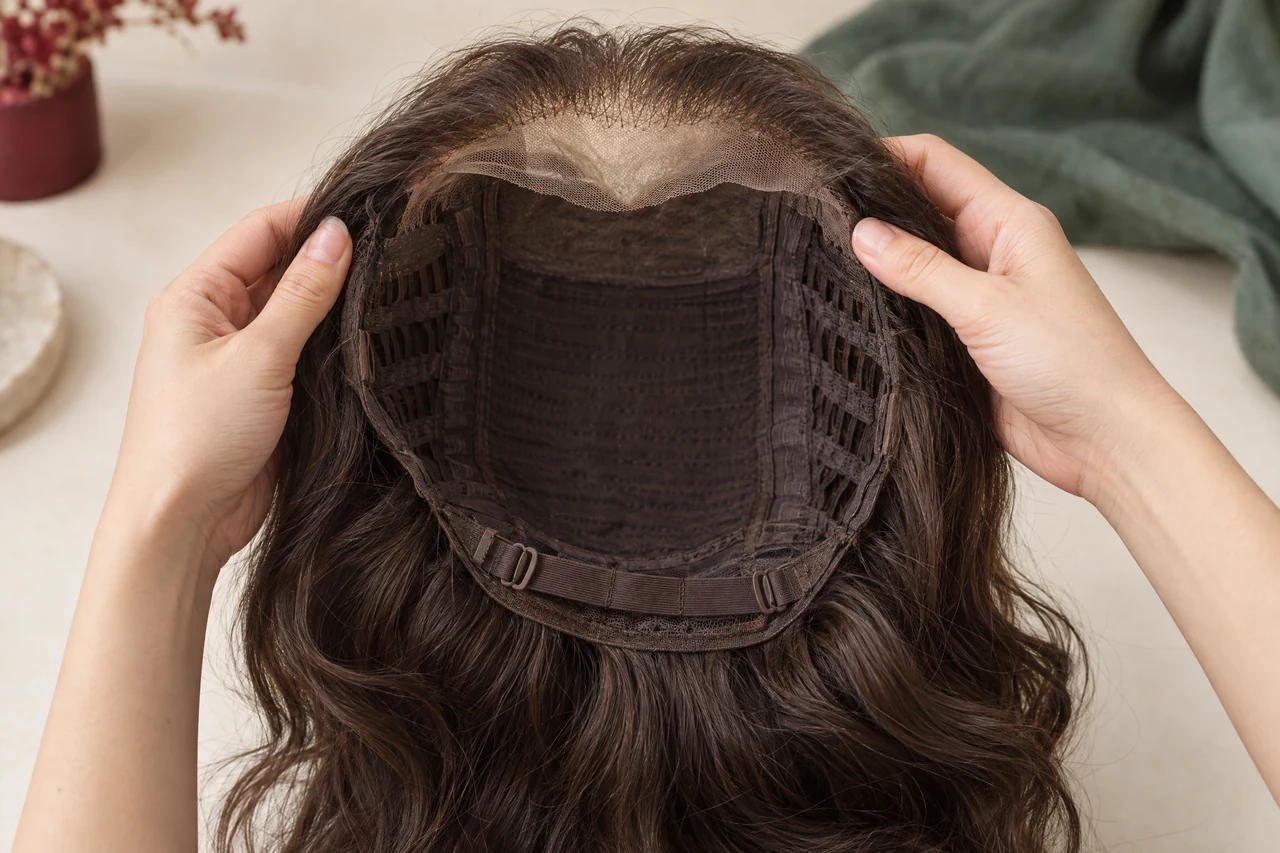
Locate the cap edge separately from the visible hair ends
Put the nape requirement into the brief before production rather than relying on a final haircut to solve it. OWNSTRAND's custom human hair wig Hong Kong page describes sample viewing, head measurement and a return fitting. Use that sequence to ask where your preferred rear boundary will be recorded. The page does not establish one universal nape construction, so ask about the actual proposed base, edge material and adjustment mechanism instead of inferring them from a hairstyle photograph.
The visible ends of a bob or cropped style can extend below the cap boundary. Conversely, moving those ends aside may reveal an edge that the finished haircut normally conceals. Ask the fitter to identify both positions without pulling or stretching the piece. Record whether you want to cover short natural hairs, leave some neck visible, or avoid contact with a particular collar. These are separate requirements; a lower-looking haircut does not necessarily mean the cap itself needs to extend farther down.
If an edge feels intrusive, describe whether the sensation is broad pressure, one concentrated spot, or hair brushing the skin. Ask which part is making contact and whether its position can be changed within the selected design. Do not assume that adjusting circumference will change every aspect of the rear shape. Nor should a named mesh, scalp-effect or hand-tied option be treated as a promise of a specific nape finish. Request an explanation tied to the sample or specification being discussed.
A useful boundary description
Replace 'make it snug at the back' with an observation such as: 'With my usual hair preparation, I want this area covered, but I notice contact here when seated.' Ask the fitter to confirm which point you mean on your head. A sketch or agreed photograph can support the conversation, but neither supplies measurements nor proves what the finished edge will do.
Compare sitting upright with a gentle everyday head tilt
Confirm whether a visit can include a relevant sample and a seated nape discussion before travelling. OWNSTRAND's wig shop Hong Kong page identifies its single Kwun Tong shop at Unit 2103, 50 Hoi Yuen Road and asks visitors to confirm arrangements. Ask which sample can be viewed and what it can demonstrate about the proposed edge. A catalogue picture does not establish sample availability, and a shop address does not promise a walk-in or free try-on.
Start sitting as you normally would at a desk, with shoulders relaxed and eyes forward. Wear a familiar collar if it is relevant, while telling the fitter that you brought it for comparison. Notice whether the concern appears before any tilt or only when you look slightly down, as if reading. Return to the starting position and describe what changed. Keep the motion comfortable and ordinary; exaggerated bending is not necessary to communicate a problem at the lower rear edge.
Compare like with like. If the sample is repositioned, the straps altered or your hair rearranged, note that change before repeating the same posture. Otherwise, you may attribute an improvement to size when several conditions changed together. A useful note might say, 'Contact is noticeable only when looking down in this collar, with the sample in this position.' It does not prove the cause, but gives the fitter a more specific question than 'the back feels wrong'.

Keep the hair underneath consistent with the intended routine
Discuss how much natural hair will sit beneath the finished cap and how you normally arrange it. Cancer Research UK explains that someone trying wigs while still having hair may need a smaller size after hair loss, or can discuss an adjustable wig with the fitter.[2] That advice comes from a treatment-related context; it is not a prediction about your hair. Its relevance here is simple: record the intended hair condition rather than treating today's fitting conditions as permanent.
For someone keeping their natural hair, note whether it will be flattened, distributed around the head, or gathered in a particular place using the supplier's recommended method. Ask whether that preparation is appropriate for the selected cap. A concentration of hair near the nape is a condition to show the fitter, not a reason to approve more space without assessment. If you cannot recreate the preparation yourself, ask for another manageable arrangement before making it part of the size brief.
Mention any intended liner or grip and ask whether it is compatible with the piece. Do not add several accessories during comparison and assume each will improve fit. Record the agreed setup so it can be repeated at the completion visit, and ask what adjustment options remain if the underlying hair changes. If treatment-related wearing needs, scalp soreness or persistent symptoms affect your decision, seek advice from your healthcare professional rather than asking the shop to establish medical suitability.
Discuss nape contact in custom wig fittings without trading away coverage
Contact and coverage should each have an explicit requirement. You might want natural hairs concealed at the lower rear while also finding a particular edge position uncomfortable when seated. Ask the fitter whether the proposed construction can address both, and what compromise would be involved if it cannot. Do not respond automatically by choosing the loosest or tightest setting. The decision is whether the actual design can meet your priorities under the agreed conditions, not whether one adjustment feels better in isolation.
Use a side-rear mirror view to compare the intended hair outline with the area you want covered. Explain whether your normal routine involves wearing the hair down, moving it aside or using a neckline that exposes the rear. Ask which of those looks the proposed style can support; do not assume every custom piece can be worn with the hair lifted. A photograph can document an agreed appearance, but it cannot establish pressure, sustained comfort or the construction hidden beneath the hair.
Keep ear-area concerns separate even when they are noticed at the same appointment. Glasses arms or mask loops may need their own assessment, and moving the whole piece to accommodate them can change the rear position. The guide to can you wear glasses with a wig addresses that distinct contact area. Bring your usual glasses if relevant, but ask the fitter to check both locations rather than declaring the nape resolved because the ears now feel comfortable.
When to pause instead of tightening
If a proposed setup causes pain, pulling or persistent irritation, stop the comparison and raise the concern. Ask whether the fit, preparation or design needs reassessment rather than repeatedly increasing tension. Describe the symptom without trying to diagnose it. A supplier can discuss construction and fitting; a healthcare professional should advise on ongoing symptoms or treatment-related skin concerns.

Approve a written requirement, not an unresolved assumption
Before approving manufacture, ask the fitter to repeat back the rear-edge requirement, intended hair preparation and the posture that made contact noticeable. Distinguish what has been agreed from what remains uncertain. For example, a note can record the desired coverage while stating that a particular edge option still needs confirmation. If that option determines whether you will proceed, resolve it first. A vague assurance that the finished wig will be adjusted is not equivalent to confirming the requested construction is possible.
Ask what happens if the finished piece does not meet the recorded requirement, including which alterations can be assessed, any charges and the relevant cancellation or return terms. Do not assume that a custom size can be remade or returned without conditions. Confirm the quotation and timing for your specification separately from the nape discussion. At collection, compare the completed item with the original setup and notes; a sample establishes a discussion point, not an exact forecast of the finished piece.
Request instructions for putting on, removing and handling this particular cap without distorting its rear edge. The wig care guide provides broader cap-handling context, but the supplier's item-specific instructions should direct your routine. Keep the agreed preparation and care notes together so a later concern can be described accurately. Finalising size is appropriate when you understand the specification and accept its limitations; unresolved discomfort or an essential unanswered coverage question is a reason to pause.
Four dimensions to record before approving the nape specification
| Dimension | Record | Question before approval |
|---|---|---|
| Seated baseline | Usual posture, collar and location of contact | Where should this cap edge rest when I sit normally? |
| Ordinary head tilt | What changes when gently looking down | Can this contact be assessed without changing several conditions at once? |
| Edge and coverage | Cap boundary versus visible hair ends | Can the proposed design cover this area without the contact I want to avoid? |
| Hair underneath | Hair arrangement and any agreed liner | Which setup informs the size, and what if it changes later? |
Your preparation checklist
- Ask the fitter to identify the actual cap edge separately from the haircut's visible ends.
- Record your seated baseline and the specific ordinary tilt that changes contact.
- Confirm a natural-hair preparation you can repeat and any compatible liner.
- State which rear area must be covered and which contact you want to avoid.
- Resolve essential construction questions and confirm the applicable quote and alteration terms.
- Agree how the completed item will be compared with the notes before collection.
Frequently asked questions
Does a matching circumference guarantee a comfortable nape?
No. Circumference does not describe the rear-edge shape, underlying hair arrangement or your response to contact when sitting. Ask the fitter how the relevant measurements relate to the selected construction. A matching number is useful information, but it does not replace checking the proposed boundary or assessing the actual completed piece.
Should I ask for a longer nape edge to hide short natural hairs?
Explain the coverage goal first. Ask whether the hair outline, cap boundary or preparation needs consideration and which options the proposed piece allows. Extending a boundary is not automatically possible or comfortable. Approve the specification only after understanding how the requested concealment relates to contact during your ordinary seated posture.
Can I approve size from a photograph of the back?
A photograph can clarify the silhouette and area you want covered, but it cannot convey contact or establish the hidden cap dimensions. Ask what measurement and fitting process the supplier requires. If an in-person assessment is not possible, clarify the limitations and applicable terms rather than treating a picture as proof of fit.
What if the sample feels fine but the finished wig feels different?
Return to your recorded hair preparation, collar and posture, then describe the precise difference at the completion visit. Ask whether an adjustment can be assessed within the finished construction. A sample and a brief try-on cannot guarantee identical or sustained comfort, so clarify the supplier's alteration process before committing to manufacture.
Bring a clear nape brief to the next discussion
Invite Vit So to discuss how the rear hair outline fits your wider hairstyle and blending goals. Use the OWNSTRAND guides already linked above for product, sample and fitting enquiries. Take your contact and coverage notes with you, and confirm the item-specific construction and visit arrangements before deciding.
Start your WhatsApp enquirySources & further reading
- Wigs for Hair Loss — American Cancer Society
Wig sizing can vary by brand; check the relevant sizing guidance rather than relying on a previous label.
- Wigs, hats and scarves — Cancer Research UK
Hair underneath can change fitting assumptions; treatment-related guidance discusses potentially needing a smaller size after hair loss or considering an adjustable wig.



