






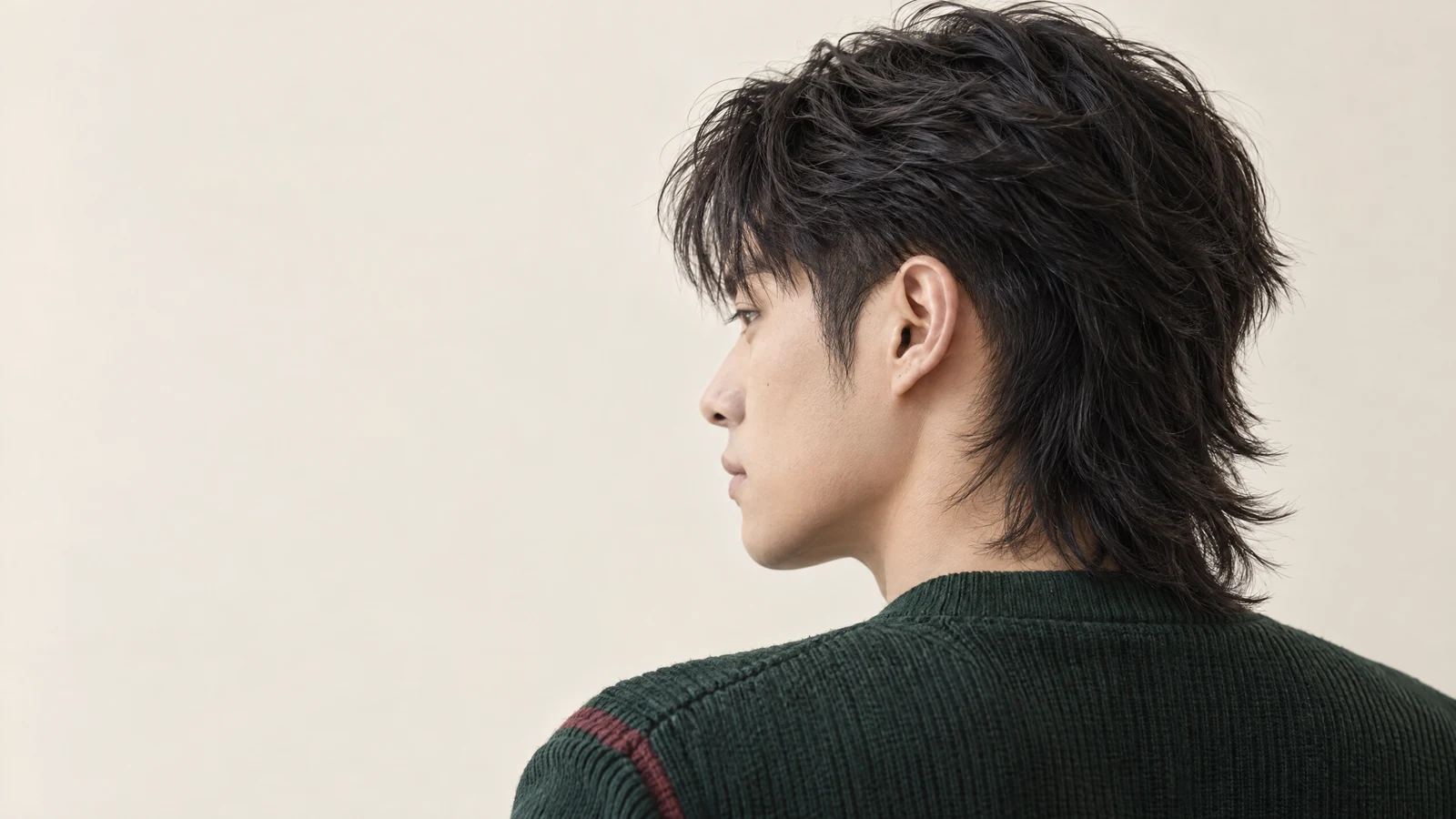
Modern mullet haircut contrast from the side
A front photograph can hide how much length remains at the back. Compare a clear profile and rear view, noting where the shorter side meets the longer nape. Decide whether that difference should look sharp or more connected before choosing the degree of side shortening.
The defining feature is a change in length around the head, rather than a particular curl pattern. John Frieda's Guide to Modern Mullets describes shorter hair at the front and sides with longer lengths behind, and recommends explaining whether you prefer soft layering or a more graphic shape. Use that distinction to identify what attracts you to a reference: the exposed ear, the full crown or the longer outline against the neck.
For a quieter contrast, retain some hair above and behind the ear while keeping the nape visibly longer. For a bolder outline, shorten the side more decisively. Neither choice dictates how short the fringe must be. A forward fringe can stay substantial even when the ear area is close-cut, provided the front-to-side connection is discussed.
If a reference includes a fade haircut, specify where the fade should stop rather than requesting the same shortening around the whole head. Taking that short area through the lower back could remove the nape that makes your preferred outline a mullet.
Modern mullet haircut proportions should be checked in profile
Look at your reference with the head upright. A downward tilt, raised collar or hand lifting the crown can change the apparent length difference. Ask to compare your natural side profile with the photograph, then point to the boundary behind the ear. Showing an unwanted version can clarify how much disconnection you do not want.
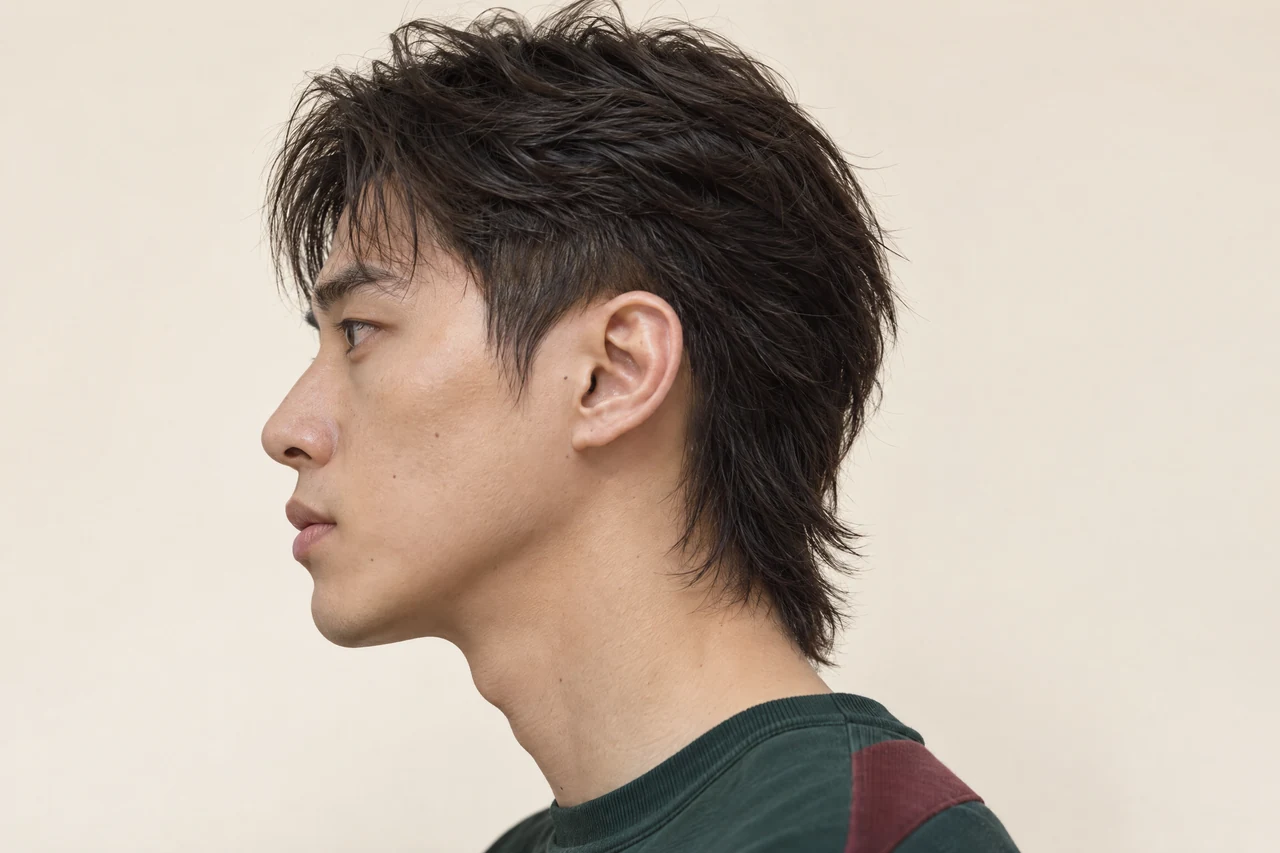
Set a clear nape length to preserve
Show where you want the back to land when dry and resting naturally. Neck growth direction and curl can affect that position, so a stretched length alone is not enough. If the nape is still being grown, distinguish it from edges you are comfortable tidying during the transition.
A landing point is easier to understand than a request to leave the back long. Indicate whether you want the ends above your usual shirt collar, touching it or extending below it. Wear or bring the sort of collar you use regularly. Hair that looks free against a T-shirt may sit differently against a raised work collar, especially when the ends already turn out.
Also decide on the width of the retained back. A broad, full outline and a narrower central tail can finish at a similar length yet look quite different from behind. Identify whether the hair directly behind the ears belongs to the longer section. This helps avoid preserving the centre while accidentally removing the side edges you wanted to keep.
Continue with long haircuts for men for that specific comparison and the preparation questions it raises.
Choose the dry landing point at the back
If your nape is too short for the reference, make the first cut a transition rather than forcing the finished silhouette. Separate the areas that can be shaped now from the length that needs to grow. Agree on any permitted tidying of the longest ends before cutting begins; do not leave the meaning of a small trim to assumption.
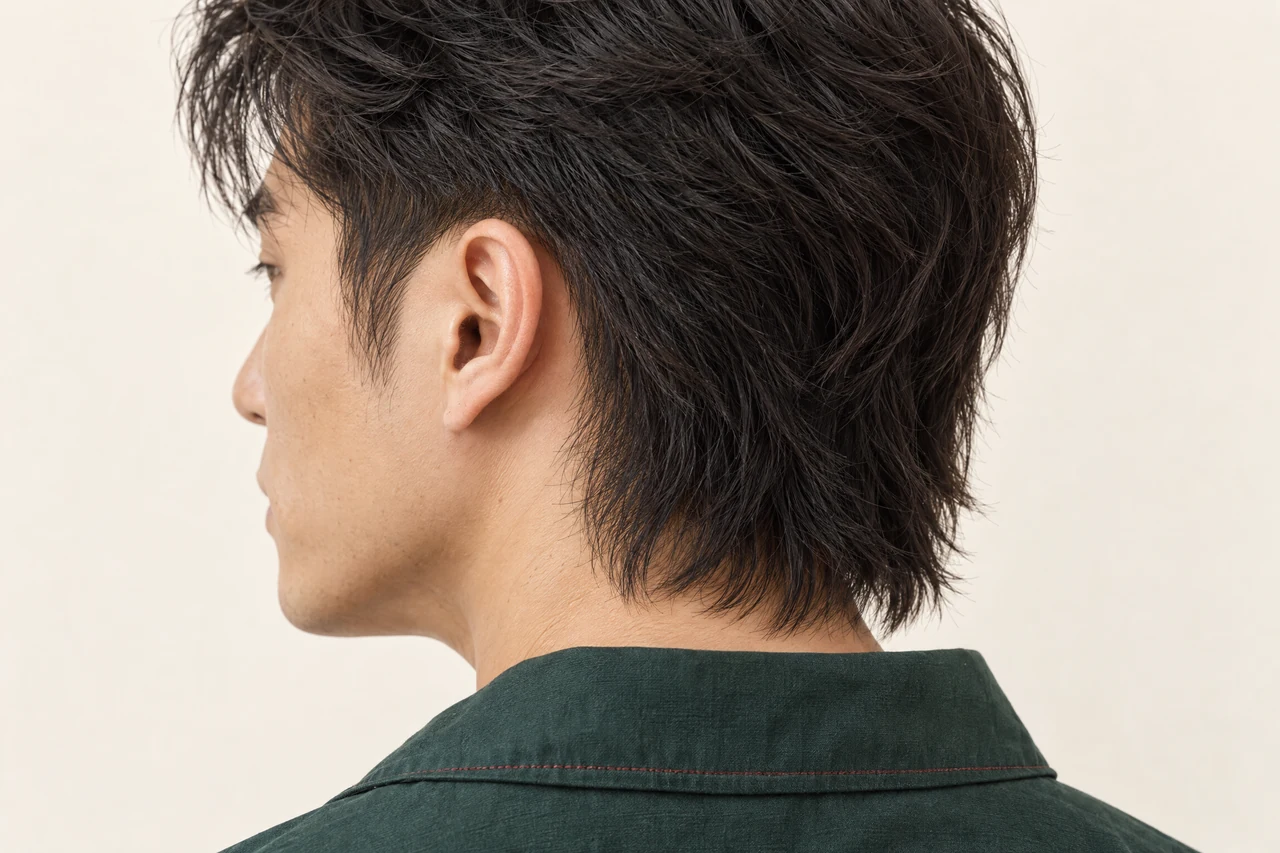
Layers change the flow from top to back
Discuss whether you want a fuller back or a more separated layered finish. Removing weight can change both movement and the visible thickness of the nape. Point out where you want lightness and where you need the longer outline to stay substantial, instead of requesting an all-over thin finish.
The crown is the area near the upper back of the head. Its shape matters because the eye follows it down towards the longer nape. Shorter crown layers can make the outline more stepped and separated, while retaining more length there can create a fuller connection. Ask whether the back should read as a continuous shape or as distinct pieces when resting naturally.
If the hair is dense, show where it feels wide: above the ear, behind it or through the lower back. Removing weight only at that location is a different decision from reducing the whole tail. With finer hair, a highly separated reference may leave more visible gaps than you want. State whether seeing the neck through the ends is acceptable.
Understanding layering vs thinning out hair helps you distinguish a change in the shape of the cut from a request to remove bulk. For a mullet, both decisions need to respect the longer outer line rather than treating lightness as the goal everywhere.
Lightness without losing the longer outline
Describe a priority if your references conflict. You might prefer visible movement at the crown but a substantial lower edge, or a narrow, piecey nape with a fuller top. Those are useful choices. Asking for maximum volume, maximum thinning and a thick tail all at once leaves the weight distribution unclear.

Texture in a reference is not proof of a treatment
A wavy or separated reference may show natural texture, directional drying or a treatment. Start by explaining the cut proportions and your current movement. If you want a texture change, discuss it as a separate suitability question; the word mullet does not establish that a perm is necessary or included.
Straight hair can still show the short-side, long-back structure. The question is whether you like the way those lines appear without adding waves. Before choosing a heavily tousled reference, consider how you wear your hair after an ordinary wash. A shape you enjoy in that state is a more useful starting point than a photograph whose styling routine you would not repeat.
Bring a photograph of your own hair without deliberate curling or straightening. Explain which areas already bend, spring up or lie flat. If you want extra movement only through the nape, say so; that request should not become an assumed change to the fringe and crown as well. Share previous colouring, bleaching, perming or straightening if a chemical change is being considered.
Review men's perm to check its service scope and the details to share before arranging the related work.
Separate natural movement, styling and chemical changes
Try describing the same reference without the word texture: where the hair bends, which direction the fringe falls and whether the nape separates into visible pieces. Those observations let the consultation focus on a specific result. A wave shown in a concept image illustrates an appearance, not evidence of how it was created or what your hair will do.
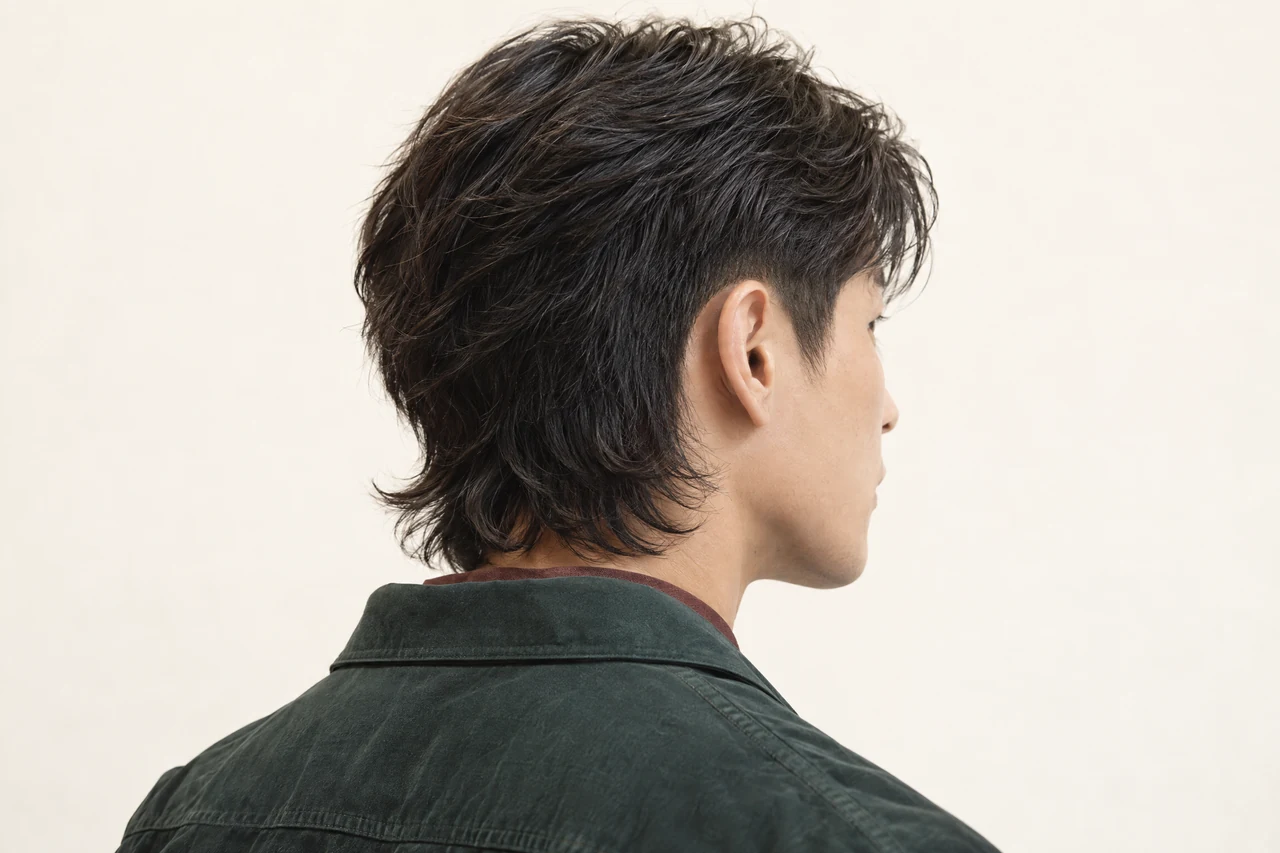
Keep the longer back manageable in daily life
A mullet has different handling needs at the short sides and longer back. After washing, avoid judging the nape while it is still pressed against a towel or collar. Let the ends settle, then check how the fringe and crown fall in relation to them. Use your fingers to establish the direction you actually want rather than repeatedly pushing the whole cut backwards.
For general care, the American Academy of Dermatology's healthy-hair tips recommend conditioner after washing, gentle moisture absorption instead of rough towel rubbing, and limiting heat styling. If you use a dryer, its advice is to choose low or medium heat and use heat protection. These are hair-care recommendations, not a promise that the mullet will keep its shape without styling.
Ask for a routine you will actually repeat
Explain whether your mornings involve air drying, a quick dryer session or deliberate styling. Ask how to arrange the crown and nape separately with that routine. If you wear glasses or headwear, show the contact points around the ear. The finished side outline should be considered with those everyday items, not only with the hair arranged for a photograph.

Maintain the contrast without restarting the back length
Watch which part of the silhouette changes first. The fringe may interfere with your eyes while the back still feels right, or side growth may cover the ear and reduce the contrast. A maintenance request should identify that change instead of automatically shortening every area. If you are still growing the nape, repeat its protected landing point at each visit.
Vit So's listed men's wash, cut and blow dry price is HK$380. That is the haircut service price, not a mullet-and-perm package. Explain the cut you want and confirm any additional work before arranging the visit. If a future texture service interests you, keep that decision separate from the immediate length and layer plan.
Review men's haircut to check its service scope and the details to share before arranging the related work.
Use the changing outline to plan your next trim
Keep a clear side and rear photograph when the cut sits the way you like. Compare later photographs taken with the head in a similar position. That gives you a practical way to explain whether the crown has become too full, the ear too covered or the back too long, without assuming a universal maintenance interval.

Modern mullet choices: what to specify before the cut
| Decision | Softer or fuller direction | Sharper or more separated direction |
|---|---|---|
| Side exposure | Retain some coverage above and behind the ear | Expose more of the ear; define where shortening stops |
| Crown-to-back connection | Keep a fuller transition towards the nape | Show more distinct layers while protecting the long ends |
| Nape width | Preserve a broader back outline | Choose a narrower tail deliberately, not by accident |
| Lower edge | Keep enough weight for a substantial outline | Allow visible gaps and separated pieces if preferred |
| Fringe | Retain comfortable coverage and a soft connection | Choose a more defined front edge separately from the sides |
| Texture | Work with your existing straight, wavy or curly pattern | Discuss added movement separately from the cut structure |
Your preparation checklist
- Choose clear side and rear references, and identify the feature you want from each rather than asking for every detail to be combined.
- Mark the nape's desired dry landing point and say whether the ends may be trimmed while you are growing them.
- Specify ear exposure, the width of the retained back and where the shorter side should meet it.
- Decide where you want movement and where the outline must stay full; include the crown as well as the lowest ends.
- Show your usual collar, glasses or headwear if these change how the sides or back sit during the day.
- Explain your normal drying routine, share relevant chemical history and confirm the requested service scope before arranging the visit.
Frequently asked questions
Does a modern mullet have to be very dramatic?
No. Side exposure and the front-to-back length difference can be softer. Show the degree of contrast you want rather than relying on the name.
Can I keep the back while tidying the front?
Describe the protected nape length and the areas you are happy to adjust. The balance should be assessed rather than assuming every part must be shortened.
Is a perm part of this haircut?
No treatment is implied by the style name. Discuss cut structure first and any desired texture service separately, including your chemical history.
What if I want to stop wearing a mullet later?
Decide whether you want to retain the back or shorten it towards the sides. Keeping the back means allowing the shorter front and sides to catch up while adjusting the connection. Shortening the tail can reduce the contrast sooner, but gives up length you may have spent time growing. Bring a reference for the next shape, not just a request to remove the mullet.
Plan a mullet with a clear nape-length boundary
Enquire with Vit So in Sheung Wan about your preferred side exposure, crown layers and protected back length. Share side and rear references alongside your usual styling routine so the discussion starts with the shape you want to wear. An enquiry is not a confirmed booking; confirm the appointment and service details before visiting.
Start your WhatsApp enquirySources & further reading
- Guide to Modern Mullets
Defines the shorter-front-and-sides, longer-back structure and recommends reference photos that distinguish soft layering from a graphic shape.
- Tips for healthy hair
Supports conditioner use, gentle moisture absorption and limiting heat styling with low or medium heat and heat protection.



