







Textured crop haircut and French crop terminology
A french crop haircut is often discussed alongside a textured crop, but photographs can range from a strong short fringe line to a broken, softer edge. Use the name as a starting point, then describe the exact front length and amount of separation you like. Terminology alone does not settle those details.
The useful shared idea is a compact haircut with the top directed towards the front. In its crop haircut guide, Barber Industries describes either a blunt or choppy fringe and tapered or faded sides. That range matters: a textured top does not automatically require an irregular front edge. You can prefer visible movement behind the fringe while keeping its boundary relatively solid.
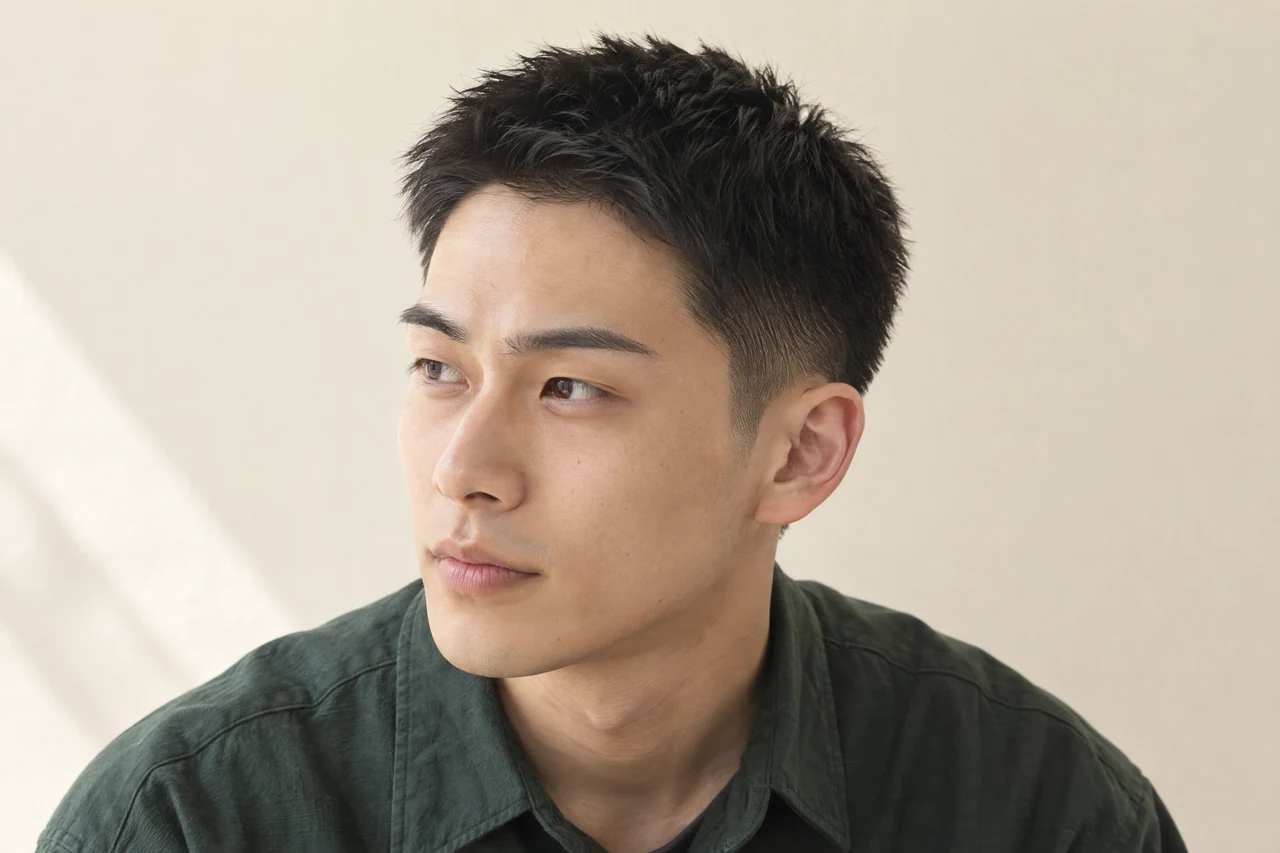
Start by looking at the face straight on. Does the front sit close to the hairline, cover part of the forehead, or approach the brows? Then look from the side to see whether the top lies forward or rises noticeably. A photo with a lifted front may attract you because of its height rather than its crop shape. Identify that difference before committing to a much shorter fringe.
Continue with short hairstyles for men for that specific comparison and the preparation questions it raises.
Textured crop haircut references can show different edges
Choose a reference for the feature you actually want. A close front view is useful for the fringe boundary, while a side view explains the temple transition. If the images show different people, say which detail belongs to which photograph rather than expecting every feature to combine unchanged. Dark hair against a light forehead can make small gaps appear prominent; judge the spacing itself, not only the dramatic lighting or the model's face.
Choose the fringe line before reducing thickness
Look at how much forehead is visible and whether the fringe forms a continuous line. Removing too much weight can change a solid edge into scattered pieces. Explain the thickness you want to retain and any areas that naturally separate, rather than asking for maximum texture without discussing the front outline.
Use a visible facial landmark to explain the dry length. Saying that you want a clear space above the eyebrows is more helpful than saying only that the fringe should be short. Also explain whether the corners should remain covered. A straight central edge with lighter corners has a different appearance from an equally dense line across the whole forehead. Neither option is inherently better; they place the emphasis differently.
Notice whether the front separates in the same place after washing. If it does, show that area before styling hides it. For fine-looking ends, retaining a fuller boundary may matter more than adding further gaps. For a dense front, movement can be discussed behind the edge rather than treating the entire fringe as one area to thin. Our guide to how to reduce bulk in men's thick hair explores this question of removing weight without losing the support you still want.
Continue with men's fringe haircut for that specific comparison and the preparation questions it raises.
A blunt edge and a softer edge behave differently
A firmer edge reads as a more continuous boundary, so its position on the forehead becomes a noticeable feature. A softer edge breaks that boundary into strands and spaces. With natural waves, check where those strands settle when dry rather than judging only the wet length. If you are unsure about forehead exposure, discuss keeping a little more front length initially and assessing the dry fall before further shortening. Texture is a design choice, not an instruction to remove as much hair as possible.

Match the sides to the forward top
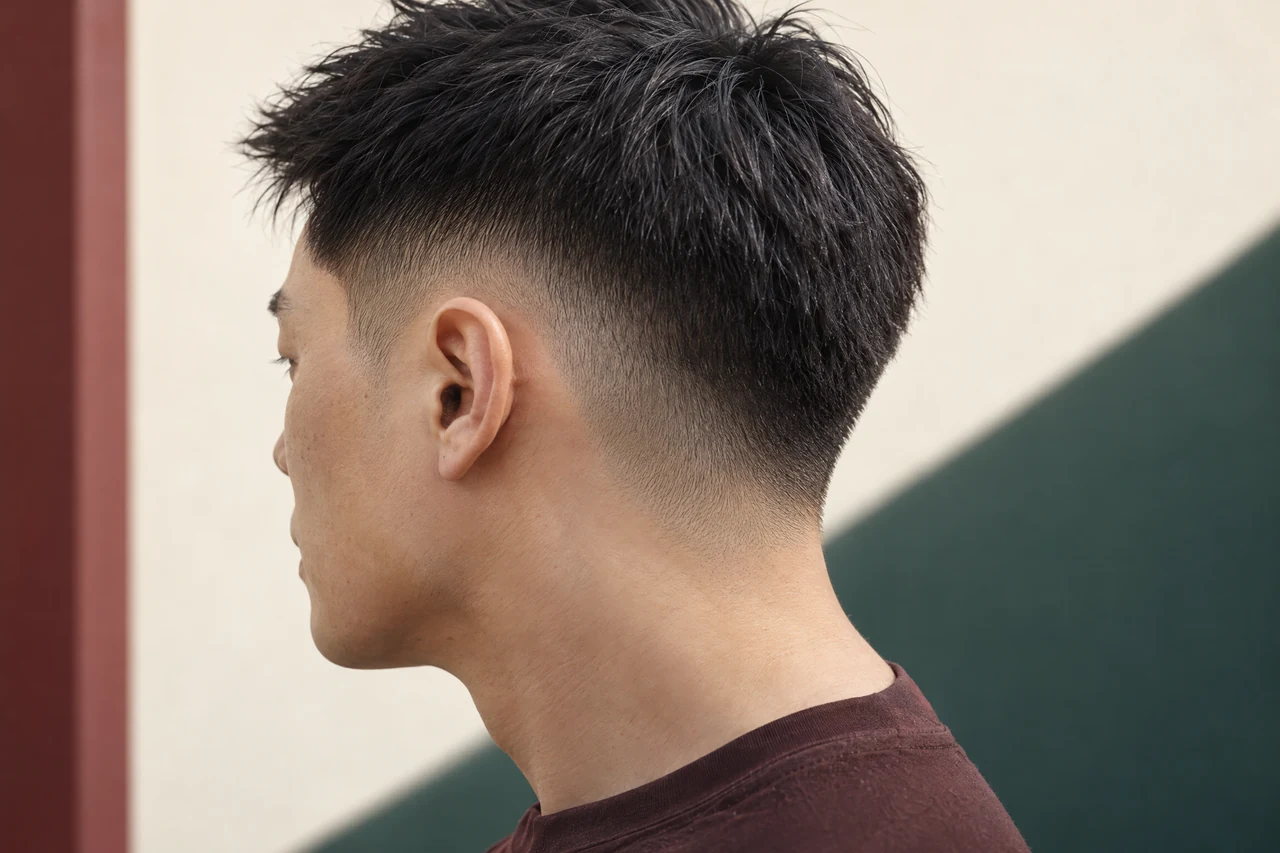
A soft side transition and a high, close transition give the same forward fringe a different balance. Check how much weight sits above the temples and around the crown. The top should be considered with the sides, not selected from one photograph while the side outline comes from an incompatible example.
Decide whether you want hair coverage around the ears or a stronger contrast between the short sides and the top. Retaining some side coverage can support a softer overall outline. A closer transition makes the top's shape more prominent, including any weight that projects above the temples. Look at the haircut head-on as well as in profile; the side view alone can conceal width at the upper sides.
When your reference concentrates on the fringe, make the side request separately and clearly. The fade haircut guide helps you compare transition height and coverage before choosing the sides for your crop. Describe the darkest area you want to retain and how much ear you want exposed, rather than relying on a fade label to communicate every detail.
Keep the connection above the temples intentional
Ask to view the join between the forward top and the sides without lifting the hair away with your hand. A heavy ledge above a very short side may be an intentional contrast, but it should not be a surprise. Around the crown, show any area that stands up in your normal routine. The aim is to agree on the outline it can realistically form, not to insist that every part of the head points forwards in exactly the same way.
Test the finish against your normal routine
Visible texture can be emphasised by drying direction and product, not just the cut. Ask what the front is likely to do after your usual wash and drying routine. If you do not want to style it every morning, discuss a softer reference and your natural growth direction before choosing the edge.
Ask for a demonstration that begins with the forward direction rather than immediately adding dramatic height. Once the shape is dry, a small amount of a suitable styling product can help define selected strands. Ask which product amount and application order were used. Adding more hold is not always the answer when the fringe looks clumped: first compare how it sits before product with how it sits afterwards.
For everyday care, the American Academy of Dermatology's healthy hair tips recommend gently absorbing moisture rather than roughly rubbing hair dry. They also advise limiting blow drying and heated tools, using low or medium heat and a heat-protection product. These are care recommendations, not a test of whether a particular crop will suit you. Avoid making repeated high-heat passes just to recreate every strand in a reference photo.
Separation in a photograph may come from styling
For a Hong Kong workday, think about the finish you can restore after travelling, wearing headwear or exercising. A firmly arranged row of pieces may require more attention than a softly forward front. If you normally air-dry, say so before choosing the cut, and ask how much of the reference depends on blow drying. For wavy hair, assess the relaxed dry pattern too; combing it flat for the consultation may hide the movement you live with at home.

Maintain the front edge without automatically shortening everything
A crop can lose its intended balance in different places. The fringe may begin covering more forehead, the sides may become wider, or the top may stop separating the way you prefer. Before your next visit, identify which change bothers you first. A request to make the whole haircut shorter may remove top length that still works while leaving the real issue poorly explained.
Check the fringe in its normal dry position before deciding on maintenance. If the length is still comfortable but the line looks heavy, discuss the weight distribution. If it catches on your eyebrows or no longer leaves the forehead space you chose, the front length deserves attention. Avoid adopting a universal trimming interval from a photograph; your tolerance for a softer edge and growing sides is part of the maintenance decision.
Decide whether you are maintaining a crop or moving towards a longer fringe
If you want the front to grow towards the brows, tell the stylist that before a routine tidy-up. Keep the intended front length separate from the ear and neckline request. A longer fringe reference can help explain the direction, but it is not evidence that your crop will grow into precisely that style. Record what you like about the current cut while it is still fresh, then note what becomes less convenient as it grows. That gives your next discussion a practical starting point.

Bring a crop brief that separates length, weight and finish
For a consultation at Vit So in Sheung Wan, bring a clear front reference and a side view if available. Explain what you want to retain as well as what you want to remove. A useful request might be a forward top, a fuller short edge with slight separation, and sides that remain visibly covered above the ears. This is a starting brief for assessment, not a demand for a particular cutting tool.
Men's wash, cut and blow dry is listed at HK$380. Discuss the desired crop as part of your haircut enquiry and confirm the service scope before arranging the visit. If you are also considering a chemical texture change, raise that separately rather than assuming it is included because the haircut is called textured. Bring your usual styling product details if you want advice on repeating the finish.
Review men's haircut to check its service scope and the details to share before arranging the related work.
Agree on the dry front before the final refinement
Use the mirror to check forehead exposure with your head in its normal position, not only tilted down towards the fringe. Look at the centre and both corners, then check the side connection. Ask which part of the finished separation comes from the cut and which comes from styling. Leave with a clear drying direction and a realistic product approach, so the consultation has translated a photo into choices you understand rather than merely a hairstyle name.

Crop choices to compare before deciding on the front edge
| Design direction | What to notice | Trade-off to discuss |
|---|---|---|
| Firmer short fringe | A more continuous line across the forehead | Its exact dry position is prominent; retain enough weight for the boundary. |
| Softer, broken fringe | Forehead visible between separated strands | More gaps may mean less continuous coverage, especially at naturally separating areas. |
| Forward crop with covered sides | Some visible hair around the upper ear and temples | A softer contrast needs the upper sides considered with the top's weight. |
| Forward crop with closer sides | Stronger contrast below the top | Check whether retained temple weight creates a ledge you actually want. |
| Longer fringe instead of a short crop | Front strands approaching the eyebrows | Keep the length goal explicit; a routine crop tidy-up could remove it. |
Your preparation checklist
- Identify the dry fringe landmark you want: near the hairline, partway down the forehead, or closer to the brows.
- Choose whether the front should read as a continuous edge or separated pieces, including at the corners.
- Bring front and side references and label the feature you like in each rather than combining them silently.
- Show any natural front separation or crown lift, ideally with a photograph of your ordinary unstyled hair.
- Explain whether you air-dry, blow-dry, use product or need to reset the front after headwear or exercise.
- Confirm side coverage, service scope and the maintenance goal before agreeing to the final outline.
Frequently asked questions
Are French crop and textured crop always different cuts?
The labels overlap. Compare the actual fringe edge, retained thickness and side transition instead of assuming the names specify two fixed services.
Will texture stay visible without product?
That depends on your hair and drying routine. A styled photograph cannot prove how much separation the cut will show without styling.
Can a crop have softer sides rather than a close fade?
Yes as a design direction. Describe the coverage you want and discuss the balance with the fringe rather than assuming every crop needs close sides.
Plan a short fringe you can understand and maintain
Send Vit So your crop reference and a description of your everyday hair routine to discuss a visit at 252 Hollywood Road, Sheung Wan. Mention your preferred forehead exposure and side coverage so the enquiry begins with the right details. Availability and service scope need confirmation; sending an enquiry does not confirm a booking.
Start your WhatsApp enquirySources & further reading
- TEXTURED CROP VS FRENCH CROP: WHAT TO ASK YOUR BARBER — Barber Industries
A forward-styled crop can have a blunt or choppy fringe and tapered or faded sides; consultation should cover length, thickness and everyday styling.
- Tips for healthy hair — American Academy of Dermatology
Gentle moisture absorption, limiting heated styling and using low or medium heat with heat protection.



