






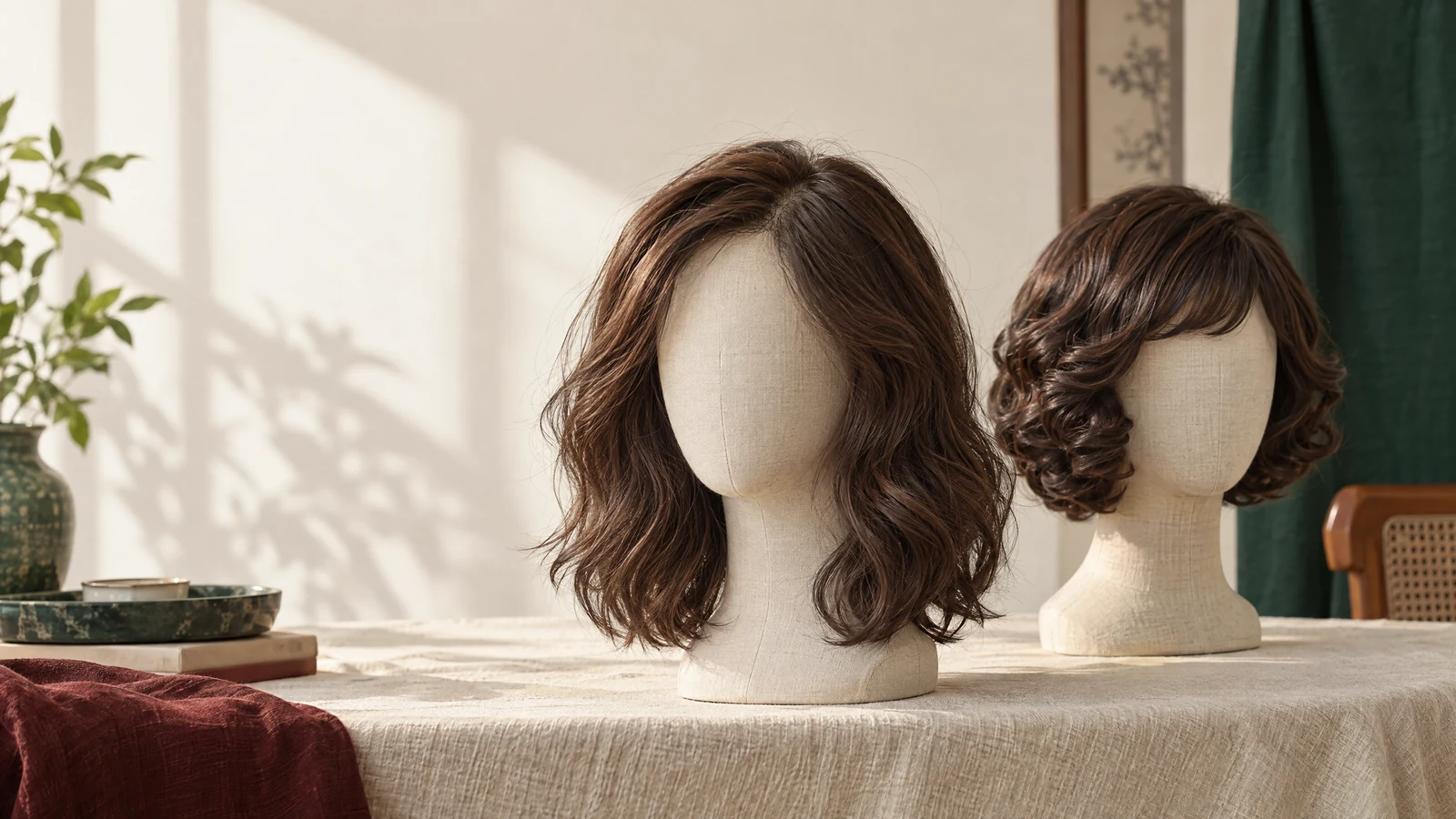
Human Hair vs Synthetic Wigs: Start with the Actual Fibre
Human hair wigs use human hair, but the label alone does not tell you its previous processing or how it will respond to styling. Synthetic wigs use manufactured fibres and may come with a defined style. Ask for the item details and care label rather than assuming that all products within one material category behave alike.
Start with a specification you can keep: the fibre composition, product name, supplied texture and care instructions. If a piece contains a blend, ask about the whole mixture rather than following guidance for its human-hair portion alone. In its wig information, Macmillan Cancer Support explains that human hair wigs can combine different hair types, often bleached and then dyed. That history matters when you want to change the shade or maintain smooth ends.
Compare samples of a similar length and density where available. A long wave and a short crop are not a fair test of how much work the material creates. Look at strand movement, the feel of the ends and how readily the piece settles into its supplied outline. Ask what happens after washing: will the displayed finish return through air drying, or does it depend on styling?
Review full head wigs to check its service scope and the details to share before arranging the related work.
Human Hair vs Synthetic Wigs Is Not a Quality Guarantee
Human hair wigs are not automatically more convincing, and synthetic wigs are not automatically less attractive. Colour variation, density, the cut and the hairline can change the overall impression. Separate what you see from what you are buying: a soft-looking display piece still needs a documented care routine. Also distinguish fibre from cap construction. The material describes the strands, while the base helps determine fit and where hair can be parted.
Compare the Style You Want to Maintain
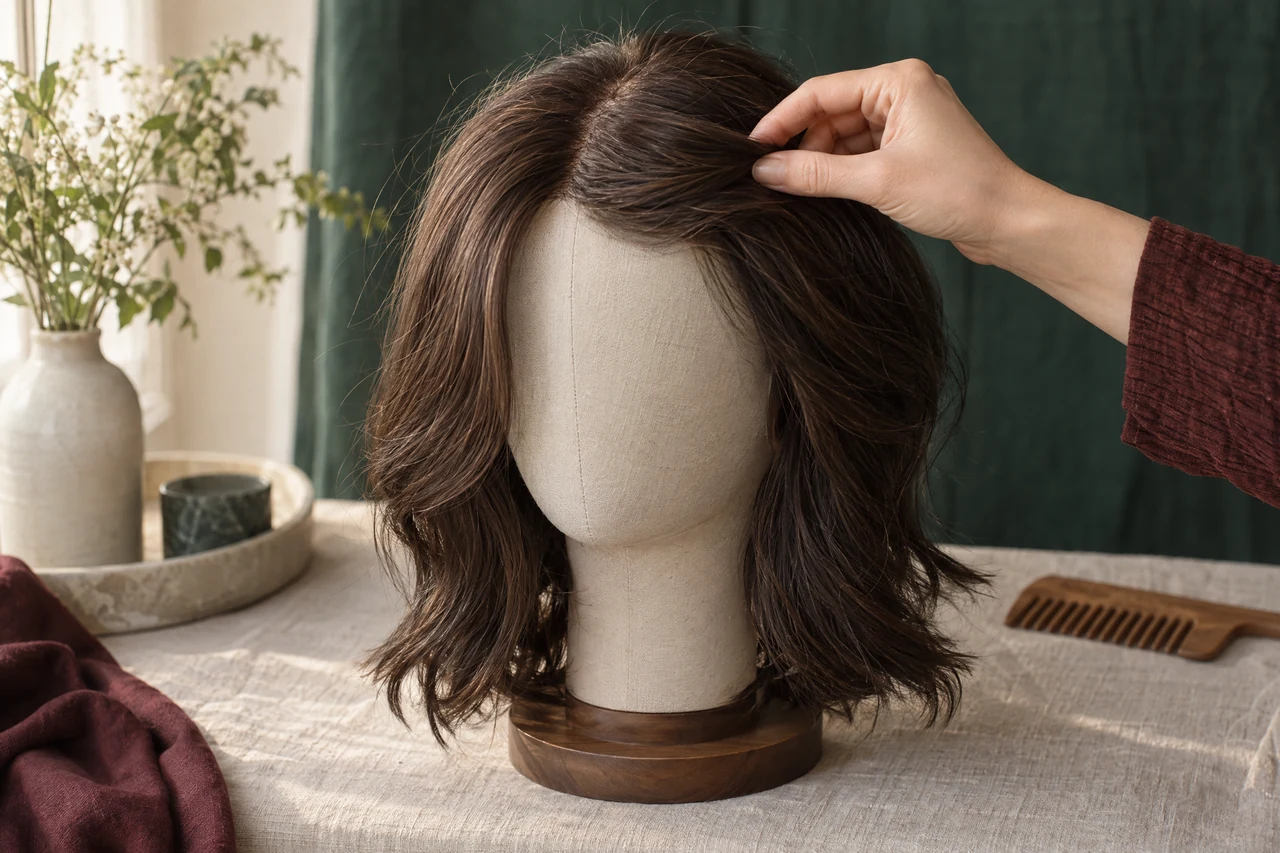
Consider whether you want a consistent ready-shaped look or expect to change the outline frequently. Then compare the work needed to maintain the actual piece. A pre-styled synthetic design may appeal to someone who prefers a stable look, while any human-hair option still needs its own care plan. Neither material means a permanently effortless style.
A stable everyday outline can be a useful advantage. Cancer Research UK's guide to wigs notes that most synthetic wigs come ready to wear. If you like the supplied fringe and curl pattern, preserving that shape may suit you better than creating a different finish every morning. Choose a shape you would actually wear to work, not just one that looks appealing on a stand.
Human hair may offer scope for styling changes, but flexibility also means work. Ask how the actual piece dries without styling and how much effort the shown finish requires. If you prefer alternating smooth ends with waves, confirm those changes are possible and learn the maintenance steps. A display finish is not evidence that the same result will appear immediately after every wash.
For your Hong Kong routine, consider collars, scarves and time spent outside. Long hair can repeatedly contact clothing at the nape, so ask how to deal with tangles without pulling the base. A shorter supplied style may reduce the area you need to organise, but it does not remove cleaning or fitting needs. Your willingness to maintain the chosen length matters alongside fibre type.
A Supplied Shape May Suit a Consistent Routine
Style memory means a fibre can retain a set shape; it does not mean every synthetic piece behaves identically. Some heat-friendly fibres can keep a newly created texture after washing. If you change the curls, you may need another approved styling process to restore them. Ask which shape belongs to the supplied item and which was created for display, especially if your goal is a consistent wash-and-dry routine.
Check Heat and Colour Limits Before Buying
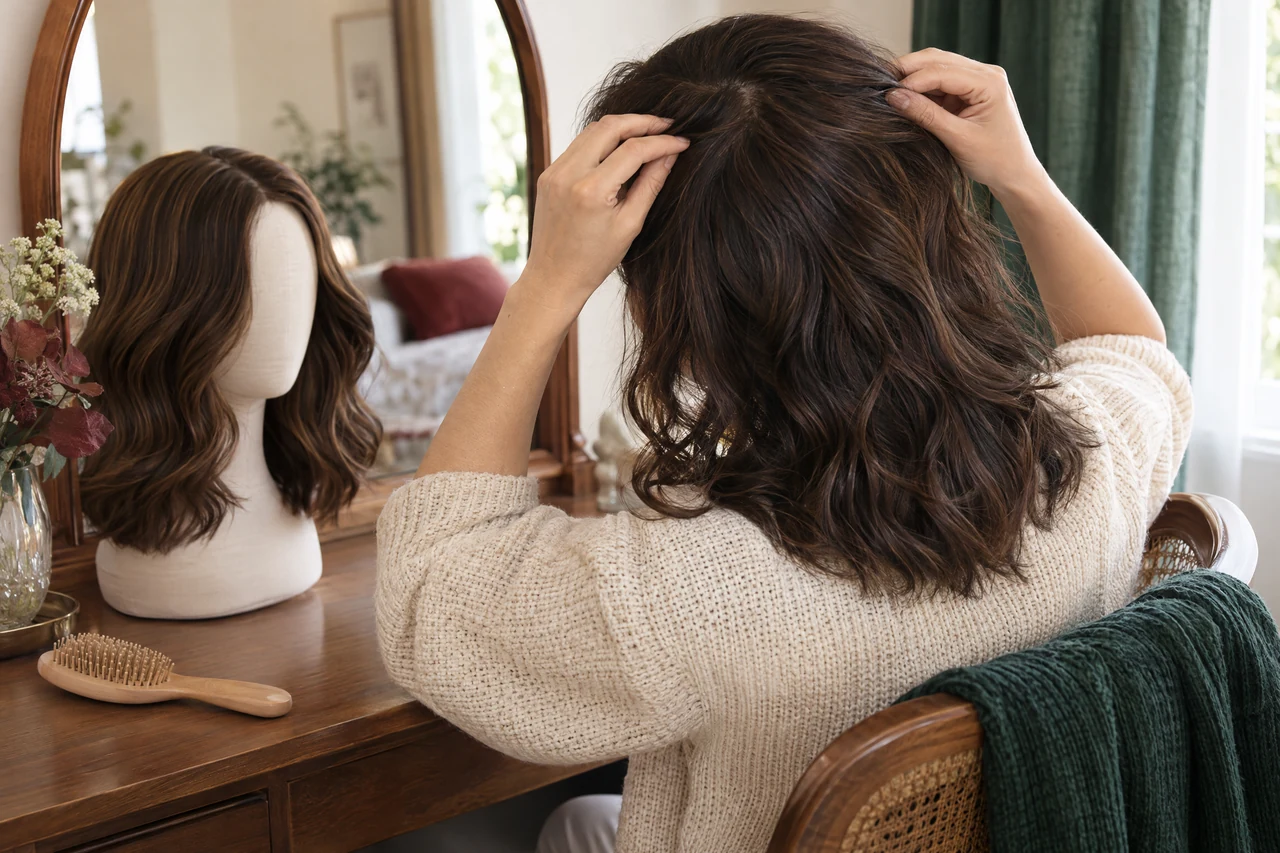
Heat tolerance and colour compatibility must come from the actual item's instructions and assessment. Do not assume a synthetic piece accepts heat because another one does, or that processed human hair can be coloured without limits. The cap and base also need consideration. A planned styling change should be discussed before purchase rather than treated as guaranteed afterwards.
Treat heat-friendly as a product-specific instruction, not permission to use any setting on any tool. HairUWear's fibre care guidance distinguishes its synthetic fibres and warns that sudden oven heat can damage even heat-friendly fibre. Its Tru2Life instructions also explain that a heat-styled texture can remain after washing. These are examples of why the written directions for your own piece must guide the styling plan.
Colour is a separate question. The same manufacturer states that hair colour cannot be used on its synthetic fibre. Do not transfer the dyeing method for natural hair to a manufactured strand, or assume heat compatibility means dye compatibility. For human hair, disclose any known processing and ask whether the proposed change is appropriate. A finished brown shade does not reveal how much lightening happened previously.
Choose the intended shade before committing if colour change is essential to you. Request confirmation of what work can be done, who will do it and any effect on the product's care requirements or warranty. Heat protection cannot make an incompatible fibre safe, and a tool's lowest setting is not proof of compatibility. When instructions are missing, leave heat and chemical changes out of the plan.
Do Not Transfer Ordinary Hair Advice to Every Wig
Your usual blow-drying, curling or colouring habits are a starting point for discussion, not a ready-made wig routine. Ask how close tools may come to the base, whether the piece should be removed for styling and which products are suitable. Fibre condition is only part of the assessment: delicate lace, attachment areas and the cap also need protection. Bring the product instructions if you already own the wig.
Compare the Full Care Commitment
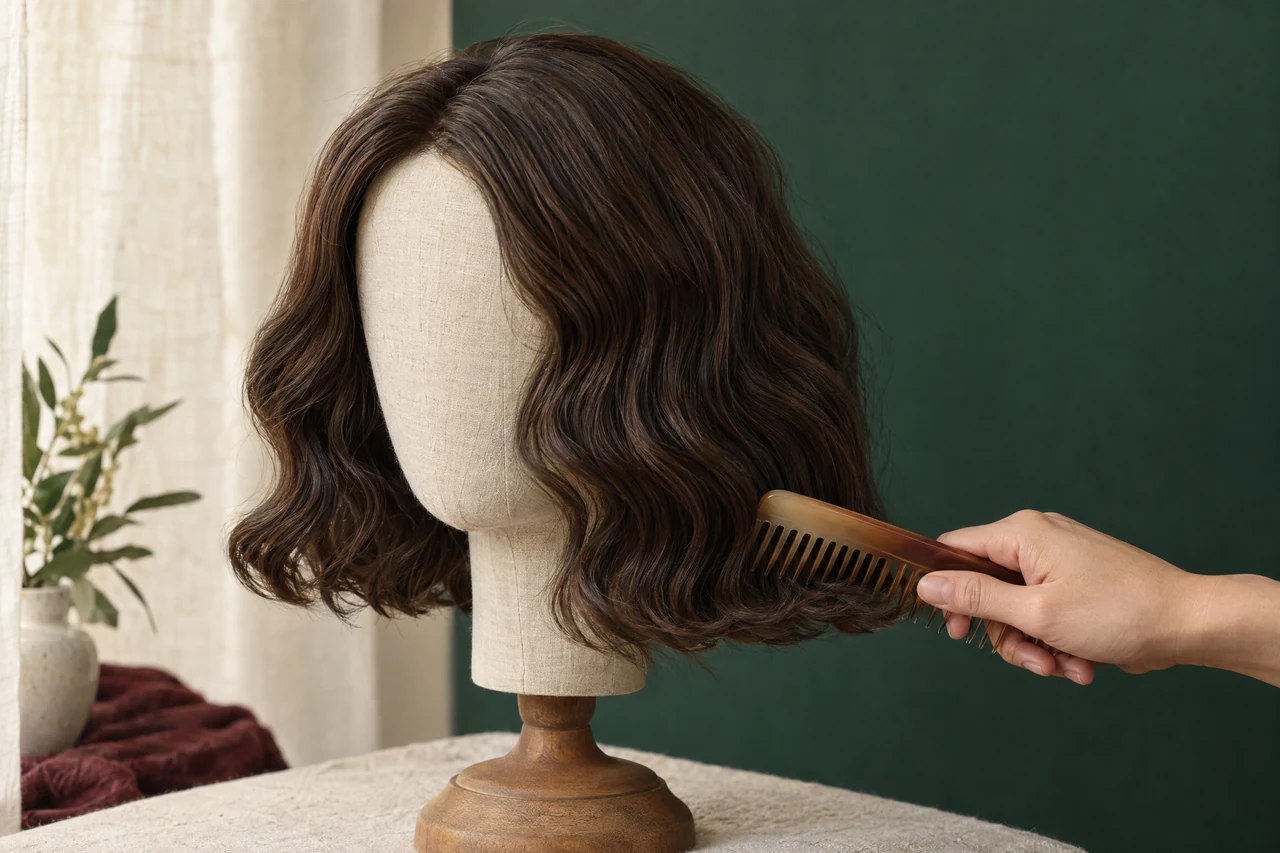
When choosing a wig, include the time and supplies needed for cleaning, drying and storage alongside the initial quote. Ask which steps can be done at home and which problems require assessment. No lifespan or replacement interval is universal. Confirm the available product and any separate care service before assuming that either is included in an enquiry.
Work backwards from when you need the piece ready to wear. Cleaning includes gentle detangling, the instructed washing method, drying and any styling afterwards. Macmillan advises careful washing of both materials with slightly warm or cold water, with advice from the wig provider. Do not adopt a fixed wash interval from someone else's routine; wearing frequency, perspiration and the actual instructions should inform yours.
Drying support deserves its own question. HairUWear's guidance uses different drying arrangements for different constructions and cautions against overstretching the cap. A solid display head is therefore not automatically the correct support for a wet wig. Confirm the suitable stand or surface, and give the piece the drying time its instructions require before storage. Avoid packing it while still damp just to clear the bathroom.
Ask for a quote that separates the piece, any agreed fitting or cutting, care supplies and optional future work. Human hair may involve professional cleaning or styling; ready-shaped synthetic hair still needs maintenance. If you wear a wig daily, consider what you will wear while it is being cleaned. Compare a realistic routine and budget rather than assuming a higher purchase price pays for every later service.
Continue with wig care for that specific comparison and the preparation questions it raises.
Cleaning, Drying and Storage Affect the Decision
Notice changes in handling, not just age. Increasing tangles at the nape, rough ends or a distorted cap are reasons to seek advice before adding heat or stronger products. Store the dry piece according to its directions, away from avoidable heat and compression. Keep its care information with your supplies so another person helping with cleaning does not mistake the material or use your ordinary hair products.
Judge the Finished Look Separately from the Material
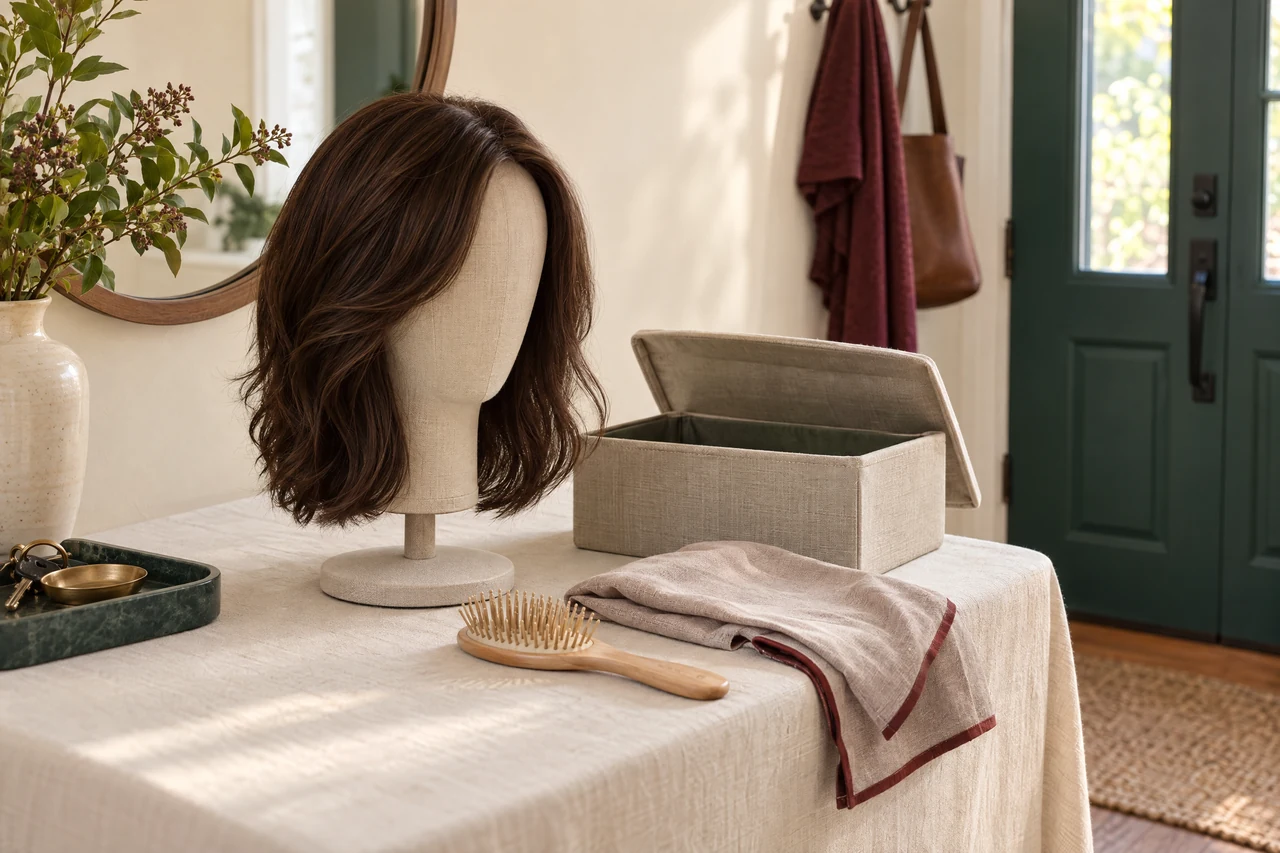
If your priority is how to make a wig look natural, compare the whole outline before deciding that one fibre is the answer. Cancer Research UK notes that buying a more expensive wig does not guarantee a more realistic look. Check how the colour sits beside your face and whether the density suits the silhouette you want.
Where a suitable sample can be tried, view the sides and back as well as the front. A neat fringe can distract from excess width near the ears or an end line you dislike. Compare like-for-like styles before attributing those differences to material. Record which details you want to keep so a later discussion about fibre does not lose the shape goal.
Continue with lace front wig vs full lace wig for that specific comparison and the preparation questions it raises.
Keep the Cap Question Separate
A human-hair label does not establish an unrestricted parting, and a synthetic label does not specify a particular hairline construction. If you want to tuck hair behind your ears or change the part, ask whether the base supports that movement. Decide the desired appearance first, then check the combination of fibre, cut and construction that could support it.

Prepare a Material-specific Enquiry
Use these 6 checks before choosing a wig material. Bring your desired outline, daily styling habits and any product details you already have. If you are asking how to choose a wig, the most useful starting question is what you want to preserve after an ordinary day of wear, rather than which category sounds more premium.
Include accessories in the discussion. The guide to can you wear glasses with a wig addresses the ear-area checks that a fibre comparison cannot settle. Where a fitting is available, wear your usual frames and notice whether adjusting them disturbs the piece. Comfort and a manageable shape can matter more to daily use than the material you originally preferred.
Ask for Details You Can Use at Home
Request the actual fibre instructions before deciding on heat styling, cleaning supplies or a storage support. Confirm whether the enquiry concerns a new piece or work on one you own, and share its label if available. This makes it easier to clarify suitability and price without assuming a particular product, sample or styling service is available.

Compare the same desired length and outline, then ask what the actual material requires.
| Decision point | Human hair | Synthetic fibre |
|---|---|---|
| Supplied finish | Ask which styling steps produce the displayed finish after washing. | A ready-shaped design may retain its outline; confirm how this specific fibre dries. |
| Changing the shape | Potential flexibility depends on processing, condition and instructions. | Conventional and heat-friendly fibres differ; confirm whether a changed shape remains after washing. |
| Heat tools | Check the permitted method and protect the base as well as the hair. | Use only with confirmed compatibility; heat-friendly does not mean unrestricted heat. |
| Changing colour | Request assessment of the previous processing and intended shade. | Do not assume ordinary hair colour works on manufactured fibre. |
| Care commitment | Allow for cleaning, drying and any required restyling or professional work. | Allow for gentle cleaning, the correct drying support and preserving the approved shape. |
| Budget comparison | Request a full quote rather than assuming maintenance is included. | A lower initial cost does not remove the need for supplies and care. |
Your preparation checklist
- Define the everyday length, fringe and texture you want to keep, with clear reference images.
- Confirm the exact fibre composition, including any blend, and keep the written care instructions.
- Explain your normal use of heated tools and any intended colour change before purchase.
- Ask how the piece looks after washing and which steps are needed to restore its displayed finish.
- Check the drying support and storage space you can use, plus what you will wear during cleaning.
- Request the item and care quote separately, and confirm available samples, fitting scope and arrangements before visiting.
Frequently asked questions
Is human hair always easier to style?
Not automatically. Previous processing, the shape you want and the item's instructions matter. A material label does not guarantee compatibility with your usual styling routine.
Are all synthetic wigs heat-resistant?
No heat tolerance is assumed here. Check the actual fibre's care label and do not use heated tools without confirmed compatibility.
Does this comparison confirm either material is in stock?
No. It explains decision questions. Confirm available items, samples and any separate fitting or styling work before planning a purchase or visit.
Match a Wig Material to Your Everyday Routine
Send Vit So your preferred length and texture, how often you plan to wear the piece and any existing product label. For a Sheung Wan visit, first confirm available items or samples, whether fitting or styling work is offered, and the relevant quote. An enquiry helps clarify the options; it is not a confirmed booking.
Start your WhatsApp enquirySources & further reading
- Wigs, hats and scarves
Ready-to-wear synthetic styles, manufacturer-specific heat advice and the limits of using price to judge appearance.
- Wigs for cancer treatment
Processing history of human hair wigs, potential professional care needs and careful washing of both materials.
- Hair Care & Styling
Examples of heat-friendly synthetic style retention, colour restrictions, oven heat risk and construction-specific drying instructions.
Use your schedule to test a material choice
Brand relationship: OWNSTRAND and Vit So have the same owner. These selection resources are not an independent review; confirm styles, availability and visits with OWNSTRAND.
Material names become more useful when tested against your actual routine. For human hair wigs, ask about the exact item’s permitted cleaning, drying and restyling methods, then check whether you have enough time and space between wears. A preset synthetic outline may suit limited styling time, while a documented heat-friendly version still has manufacturer-specific limits. Compare the shape you want with the work you are willing to do, rather than assuming a higher-priced fibre is automatically easier or better.



