






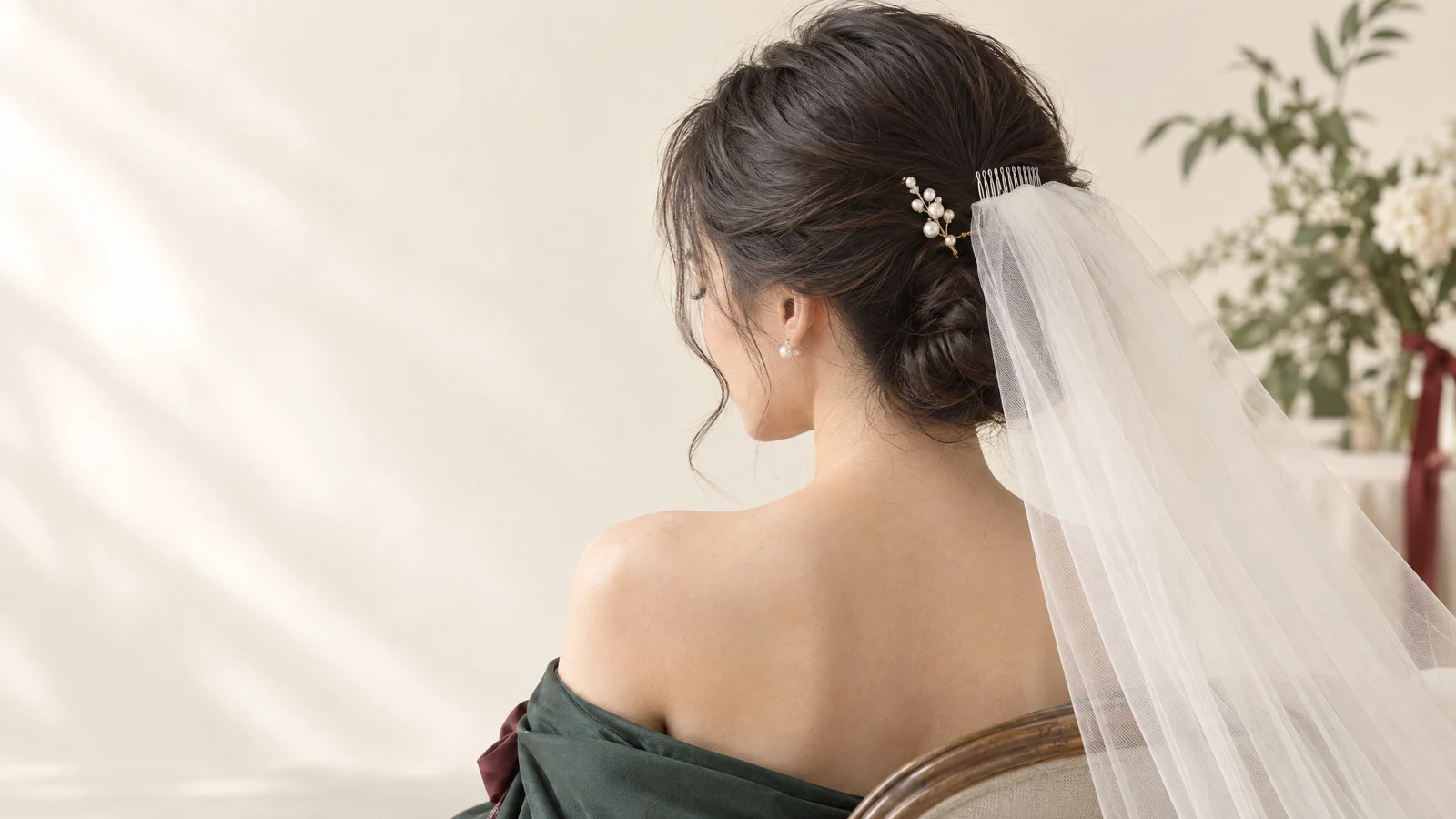
Wedding hair with veil depends on the whole accessory set
Bridal hair accessory placement should be considered with the veil, earrings and neckline together. Show the actual fastenings and weights so the stylist can assess how the pieces might sit without crowding one point. Compare the side and back outline as well as the front photograph, and ask about alternatives if the combination is uncomfortable.
Start by describing what you want people to see. Perhaps the priority is the curve of a low bun, an open dress back or a pearl ornament near one ear. The veil can frame that detail or cover it, depending on where the fabric begins and how broadly it spreads. A position above the bun and a position below it are useful visual comparisons, not interchangeable fastening instructions. Ask the stylist which is practical with your current hair and the actual comb before deciding from a reference photograph.
A decorative comb attached to the veil will leave with it. A separate ornament might remain, but its support still needs assessment. If a keepsake piece is essential, show its underside as well as its decorative face. Explain whether its position can change. This helps the stylist judge the complete combination instead of treating the ornament as a finishing detail after the hairstyle has already been built.
Continue with updo or hair down for wedding for that specific comparison and the preparation questions it raises.
Check wedding hair with veil from the side and back
Use a mirror or ask for photographs at ordinary head height. From the side, look at the relationship between the comb, the bun and the neckline. From behind, check how much hair detail the fabric hides and whether the ornament remains visible. Keep the same posture for each comparison so an attractive camera angle does not decide the fitting for you. If you plan to wear a face-covering layer during the ceremony, include its intended position in the assessment too.
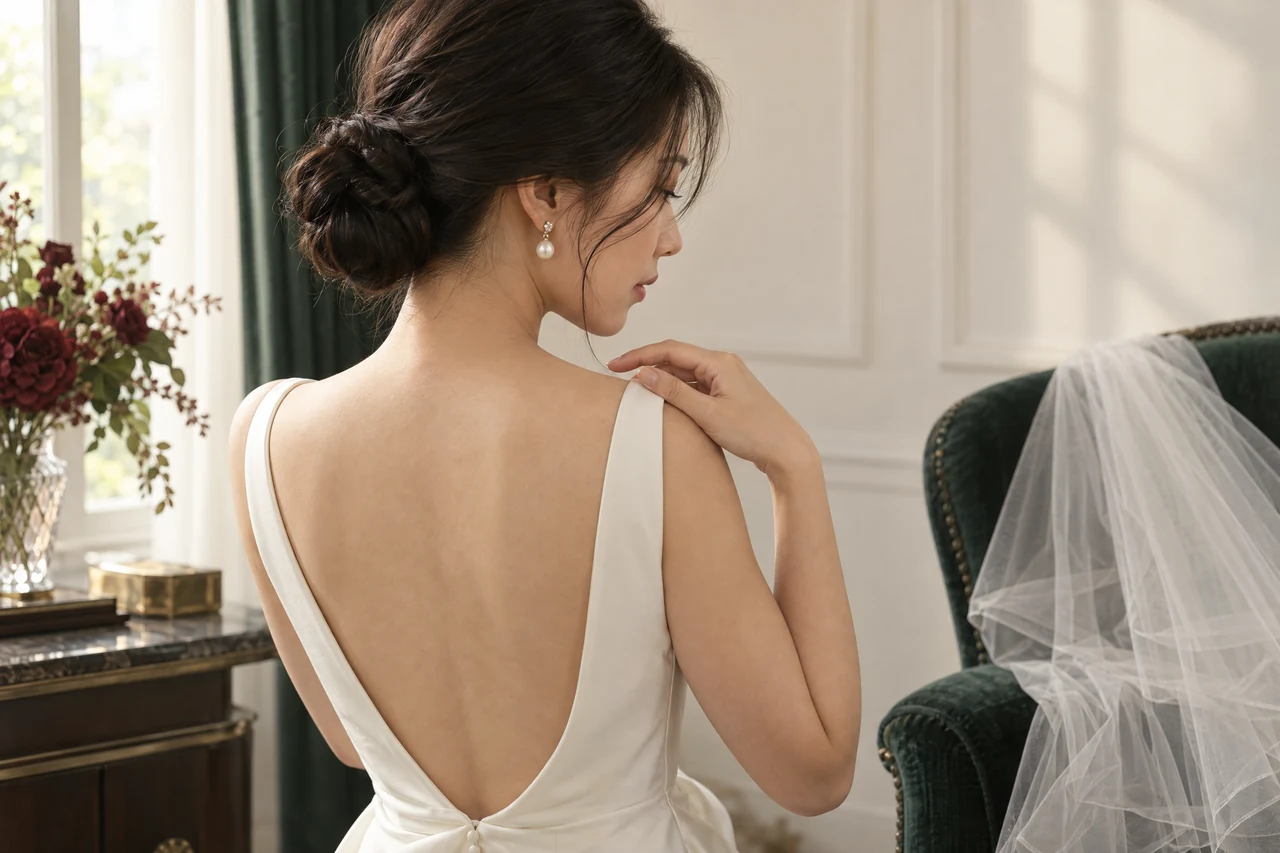
Test ordinary movement and wearing comfort
During an agreed fitting, check how the accessory feels when you turn your head, sit and look down. Describe pulling or an unstable feeling promptly rather than accepting it as necessary for hold. The actual structure and materials require individual assessment; this guide does not specify a universal fastening technique or promise uninterrupted comfort all day.
Distinguish between fabric touching your shoulders and tension at the attachment. Tell the stylist where you feel the problem and which movement brings it on. A long veil caught beneath your body when you sit can tug even if the comb felt comfortable while standing. Arrange the fabric clear of the seat before sitting, and check whether it catches against earrings or textured dress details during a gentle turn. Do not test security by deliberately pulling the veil or shaking your head forcefully.
The American Academy of Dermatology advises changing a hairstyle immediately if tightly pulled hair causes pain or the scalp stings. Its guidance concerns hair and scalp health, not the appearance of a bridal style. For a fitting, the practical takeaway is to speak up about pain rather than asking for tighter fastening. Persistent scalp symptoms deserve medical advice rather than simply another styling product.
If your ceremony or portraits involve exposed locations, planning outdoor wedding hairstyles also means considering how the veil will be handled between sheltered and windy areas.
Turning, sitting and looking down reveal useful details
Rehearse the movements that genuinely belong in your schedule: looking down during a reading, turning towards your partner and sitting for a meal. Mention travel with a headrest or a close-fitting collar if either could press against the gathered hair. An appointment cannot reproduce every venue condition, but it can reveal obvious interference. Record what was adjusted and repeat the same gentle movement afterwards, so you know whether the change addressed the problem.
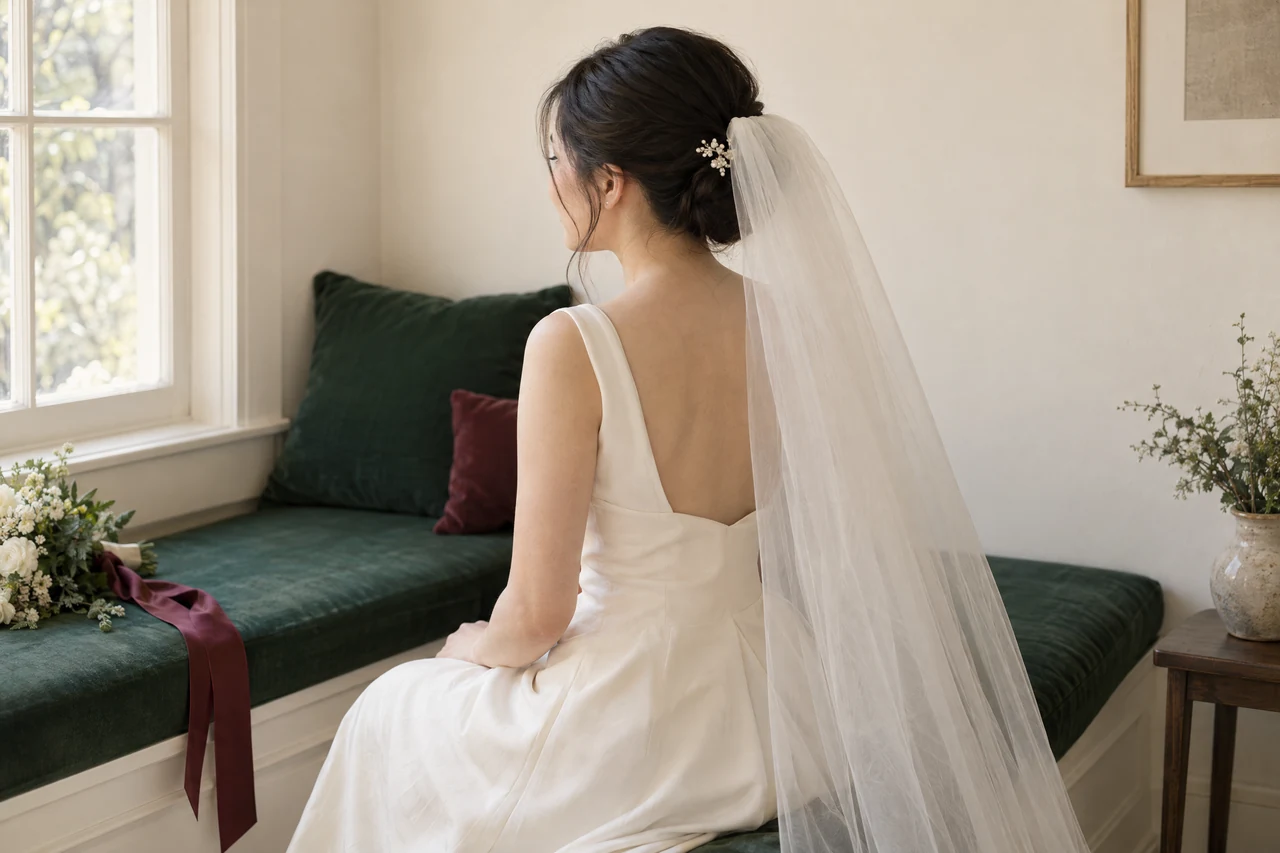
Plan the outline that remains after removal
Explain whether you want to keep another ornament in place after the veil comes off. Ask which parts are decorative and which support the hairstyle, and request a suitable demonstration if removal is planned. A helper should understand that sequence before the day; pulling a comb or removing unfamiliar pins can disturb the remaining structure.
Treat the veil-free hairstyle as part of the original design. Ask to see the back without the veil during the agreed fitting, rather than assuming the fabric conceals nothing important. Check the area where the comb sat, the shape of the gathered hair and the position of any remaining ornament. If a modest surface adjustment is expected, ask exactly what your helper can safely do. Removing the veil is a different task from releasing a bun into waves or changing the parting.
The Vows & Veils bridal veil guide recommends bringing the actual veil to the trial and having the hairstylist demonstrate removal to the designated helper. That preparation is more useful than memorising a generic direction for pulling out a comb. The release sequence should match your attachment and the way it has been incorporated into your hairstyle.
Continue with wedding hair trial for that specific comparison and the preparation questions it raises.
Keep decorative pieces and support points distinct
Ask the stylist to identify the veil fastening separately from the pins or ties holding the hair together. With permission, your helper can make a simple note or record the demonstration for private reference. They should know what remains untouched, where they can hold the attachment and when to stop. If resistance occurs on the day, pause and seek informed help; it is not a signal to tug harder or start removing nearby pins at random.
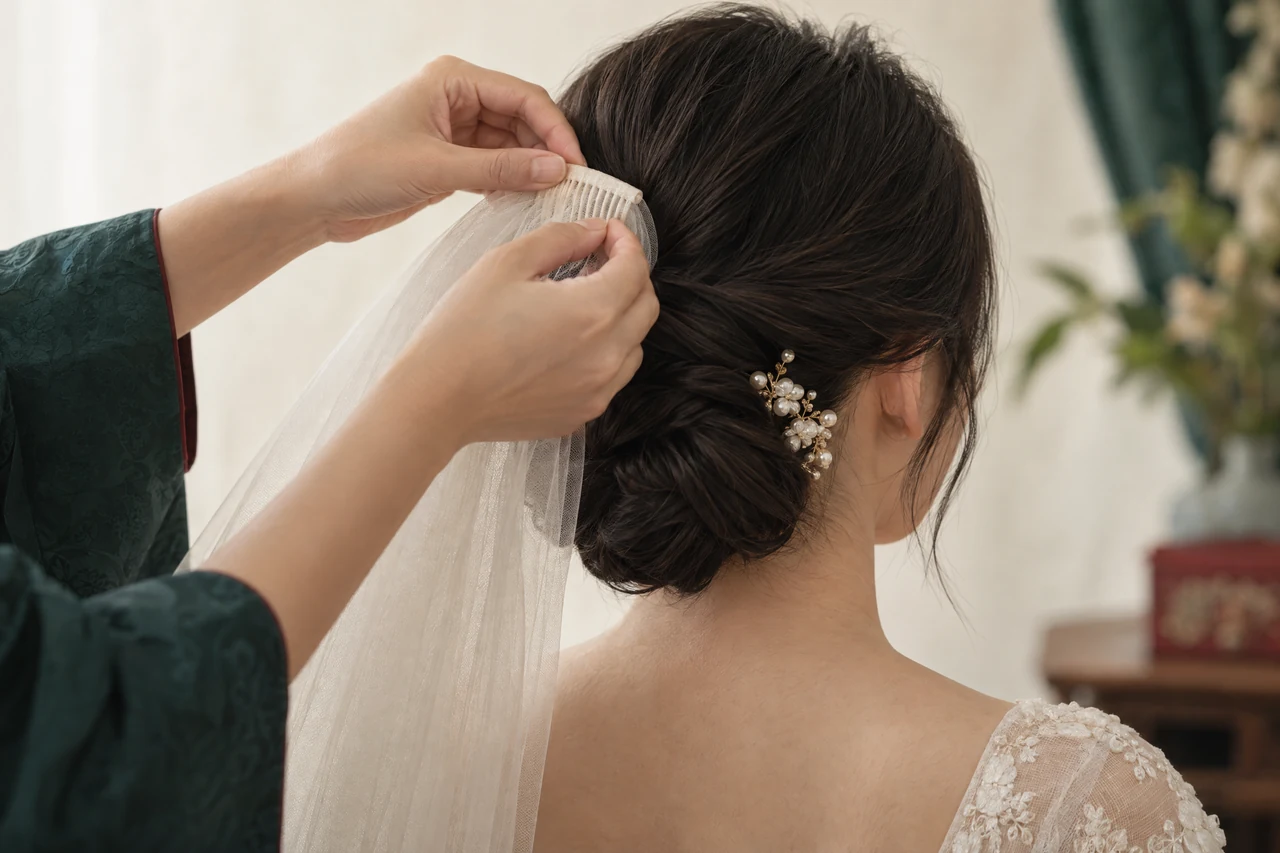
Prepare for the transition without assuming a touch-up service
Choose a calm point in the schedule for removing the veil, with a mirror and enough time to check the result. Confirm who will assist and what guidance they need. A salon appointment does not imply a stylist will attend the venue or restore the hair later, so plan those responsibilities separately.
Decide whether you want veiled portraits before removal, and tell the people coordinating the photographs. The best transition point is the one that fits your priorities and leaves room to work calmly. A pause before changing clothes may be practical, provided the helper and mirror are available then. Avoid relying on a brief gap while everyone is moving between locations. Once removed, the veil needs a clean place to rest so its comb does not catch the fabric or get lost among other accessories.
For a salon enquiry in Sheung Wan, use the bridal hair service information to frame questions about the appointment you need. Confirm whether fitting, a trial, accessories or any later work can be included and how the work will be quoted. Do not treat a general styling price as an inclusive wedding package. If venue assistance is important, establish whether it is available before building it into the day's plan.
Continue with day to night event hairstyles for that specific comparison and the preparation questions it raises.
Agree who can help and when there is time
Choose a helper who is comfortable following the demonstrated sequence, not simply whoever happens to be nearest. Share the agreed timing and arrange access to the private fitting notes. Keep the removal tools recommended for your fastening together, without assuming scissors or extra pins will be needed. A small clean pouch can hold removed pieces. If you change into an outfit that must pass over your head, discuss that movement separately because it can disturb hair even after the veil has gone.
Inspect the actual veil before settling the hairstyle
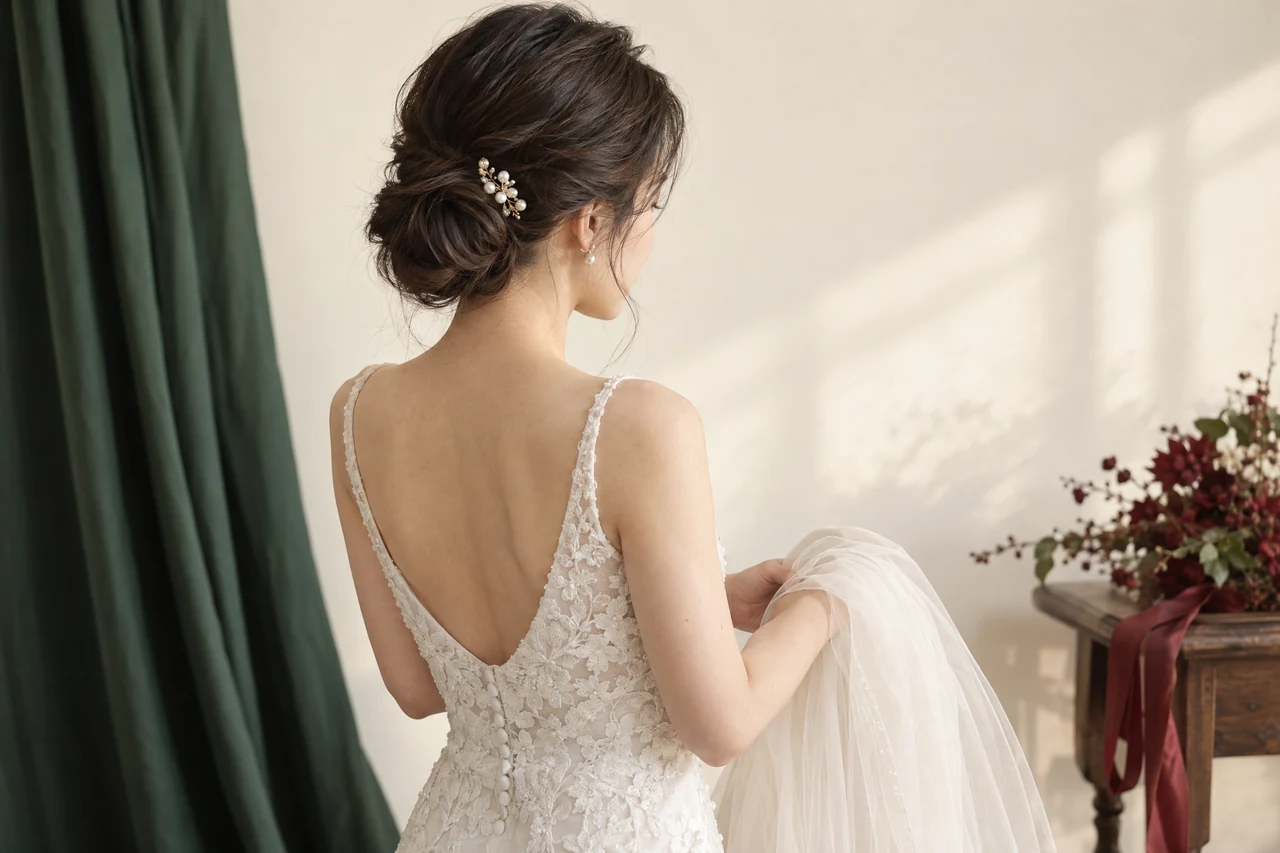
Lay the veil out carefully before the appointment and check how the fabric joins its fastening. Note whether the comb is plain or decorative, whether it is rigid or flexible, and whether the piece has been altered since you bought it. A photograph of the veil in its packaging will not show how the fabric hangs when released. If the attachment is loose, damaged or unfamiliar, ask the supplier for guidance rather than trying to repair or bend it immediately before the fitting.
Length alone does not describe the whole fitting problem. Fabric fullness, layered construction and embellishment can change how the veil feels and where it sits. Let the stylist handle the real piece during an agreed assessment rather than estimating its suitability from the name of a veil length. If you are still choosing between veils, explain what can change and what is already fixed. Use the 6-point checklist below to keep the fitting and removal decisions together.
Bring information that photographs cannot supply
Include the underside of each accessory in your preparation photographs and bring any supplier instructions. Mention existing extensions or a hairpiece because their attachments may affect where a veil can sit. Show your current hair rather than only the desired finished shape. The purpose is to assess compatibility with what you will actually wear, not to prescribe the same hidden support for every bride.
Choose a focal point when accessories compete
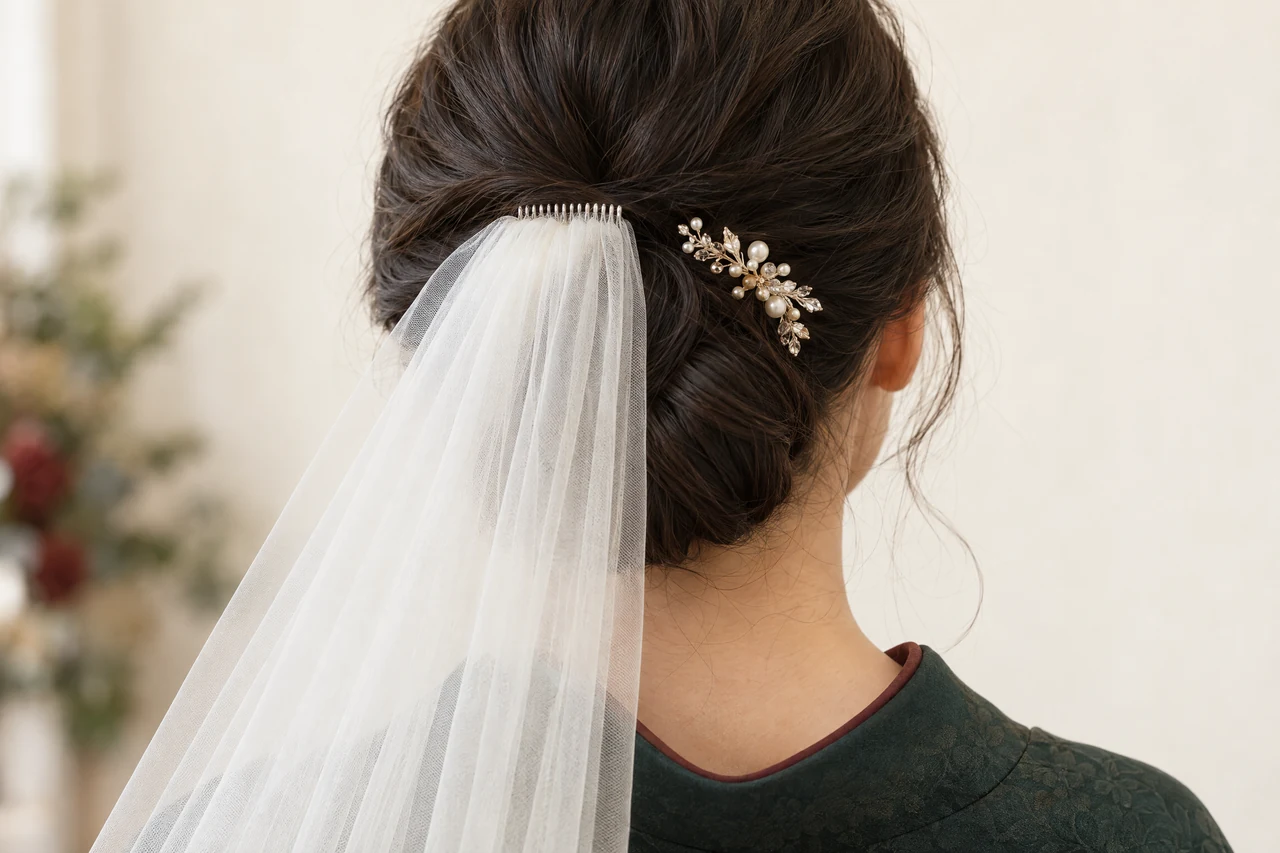
When a veil and ornament both need the same area, decide which position matters more. A side ornament may be movable while the veil attachment has fewer suitable options. Alternatively, the heirloom ornament may be non-negotiable, making a different veil or hairstyle worth considering. Visual separation alone does not prove that the pieces are independently supported; ask about the structure as well as the appearance.
Compare a simpler combination before adding more support
Try viewing the hairstyle with the veil alone, then with the ornament added. Ask whether the second piece improves the intended focal point or merely adds crowding. If the combination feels cumbersome, reducing decoration or choosing another fastening can be a better discussion than adding pins indefinitely. Keep photographs of the agreed veiled and unveiled versions together so the ceremony and reception look remain parts of one coherent decision.
Veil fitting choices to compare with your stylist, not universal placement rules
| Choice | Visual trade-off | Question for the fitting |
|---|---|---|
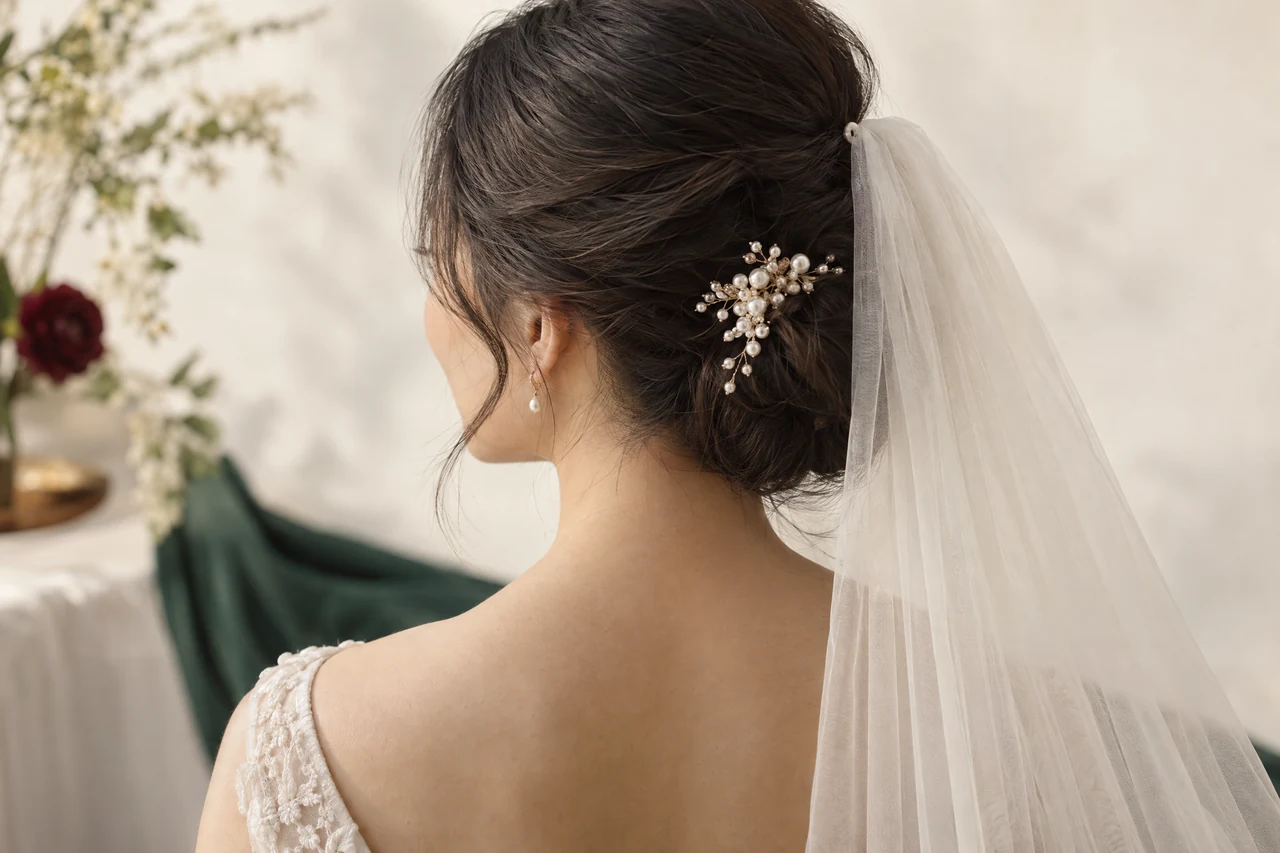
| Veil beginning above the bun | Fabric may cover more of the gathered detail | Can the attachment sit here comfortably without crowding the ornament? |
| Veil beginning below the bun | More of the bun may remain visible above the fabric | Is there suitable support and clearance from the collar? |
| Veil with a separate side ornament | Creates distinct visual points | Can the ornament stay without disturbing the veil's release? |
| Veil with its own decorative comb | The decoration leaves with the veil | Does the unveiled hairstyle look complete without that decoration? |
| Veil over a half-up or loose style | Retains visible length and moving hair | Where can this specific fastening be supported, and what remains after removal? |
Your preparation checklist
- Confirm the fitting scope and bring the actual veil, complete fastenings and intended hair ornaments.
- Show front and back dress photographs and identify the detail you want the veil to frame rather than conceal.
- Compare side and rear views, then describe any pulling during gentle turning, sitting or looking down.
- Ask which fastenings belong to the veil and which must remain to support the hairstyle or ornament.
- Arrange a removal explanation for your designated helper and check the veil-free outline during the agreed fitting.
- Choose a calm transition point with a mirror, safe accessory storage and separately confirmed assistance if needed.
Frequently asked questions
How to remove a veil without ruining hair?
Ask the stylist to explain the sequence for your actual fastening. Identify which supports must stay, use an informed helper and stop if there is resistance; no universal damage-free removal is guaranteed.
Should I bring my actual veil instead of a photograph?
Ask what the appointment allows you to bring. The real fastening and weight provide information a photograph cannot, particularly when another accessory shares the same area.
Can I assume the stylist provides hair ornaments?
No. Confirm any materials or accessories separately. Show what you already own and ask whether it is suitable for the intended hairstyle.
Plan a veil fitting around the hairstyle you want to keep
Enquire with Vit So in Sheung Wan with your current hair photographs, the actual veil details and your intended removal time. Ask what assessment can be arranged and which accessories to bring. Confirm the appointment scope, availability and quote before finalising your wedding schedule; an enquiry is not a confirmed booking.
Start your WhatsApp enquirySources & further reading
- Hairstyles that pull can lead to hair loss
Responding promptly to pain or stinging from tightly pulled hair; the guidance addresses hair and scalp health, not veil aesthetics.
- Wedding Hairstyle with Veil: The Ultimate Guide to Choosing the Right Veil
Assessing the actual veil with the hairstyle at a trial and arranging a removal demonstration for the designated helper.



