






Men's perm with grey side colouring planned separately: map both areas
Begin with your hair as it looks when dry and worn normally. Point out the fringe, front top and crown that you want to move, rather than asking for curls everywhere. Then identify the temples, hair above the ears or sideburns where grey is most noticeable. These descriptions need not become technical section lines at home. Their purpose is to show that movement and colour are different requests, with a possible meeting point that needs professional attention.
The men's perm enquiry is the place to explain the top movement you want without automatically including the grey side hair. A reference image can help distinguish a loose bend from more visible curls, but it cannot confirm how your own hair will respond. Mention the top length you want to keep and whether a smaller curl area would satisfy you. This leaves room to adjust the scope instead of treating the photograph as a full-head instruction.
A men's perm with grey side colouring planned separately starts with priorities
Choose which change matters most if the full request cannot proceed as imagined. You might prioritise preserving existing top curls, reducing side-grey contrast or keeping a familiar short outline. Those preferences can lead to different appointments. For example, retaining a curled top does not necessarily mean repeating its perm when the sides need colour. Say explicitly if you would rather keep some visible grey than alter the top, or accept temporary styling while a new texture goal is assessed.
Define the grey side hair you will actually retain
Colour scope should relate to the sides after the intended haircut, not simply to every grey strand visible today. If you usually have a close outline, explain whether you want to keep that routine or retain more length beside the ears. Ask how the planned trim changes the area worth discussing for colour. A photograph of grown-out sides may show your concern clearly, but it should not silently become the length plan for the finished haircut.
Use the men's hair colour enquiry to describe both the grey area and the contrast you would like to soften. Less noticeable grey could mean discussing blending rather than requesting an entirely uniform dark finish; whether that is achievable needs confirmation. Explain how much visible grey you would accept at the temples and sideburns. Also mention whether the top should remain its current shade, since matching everything to one dark reference could expand the colour request beyond your intention.
Describe depth and reflection, not just a shade name
A dark-hair photograph is useful for discussing how deep or reflective you want the finish to look, but it does not demonstrate grey coverage on your hair. Separate what you like about the colour from what you like about the cut. You may want a discreet side tone while keeping the top's existing variation. Ask what contrast might remain between those areas and how it could look in ordinary daylight. Avoid promising yourself an invisible boundary from a single polished image.
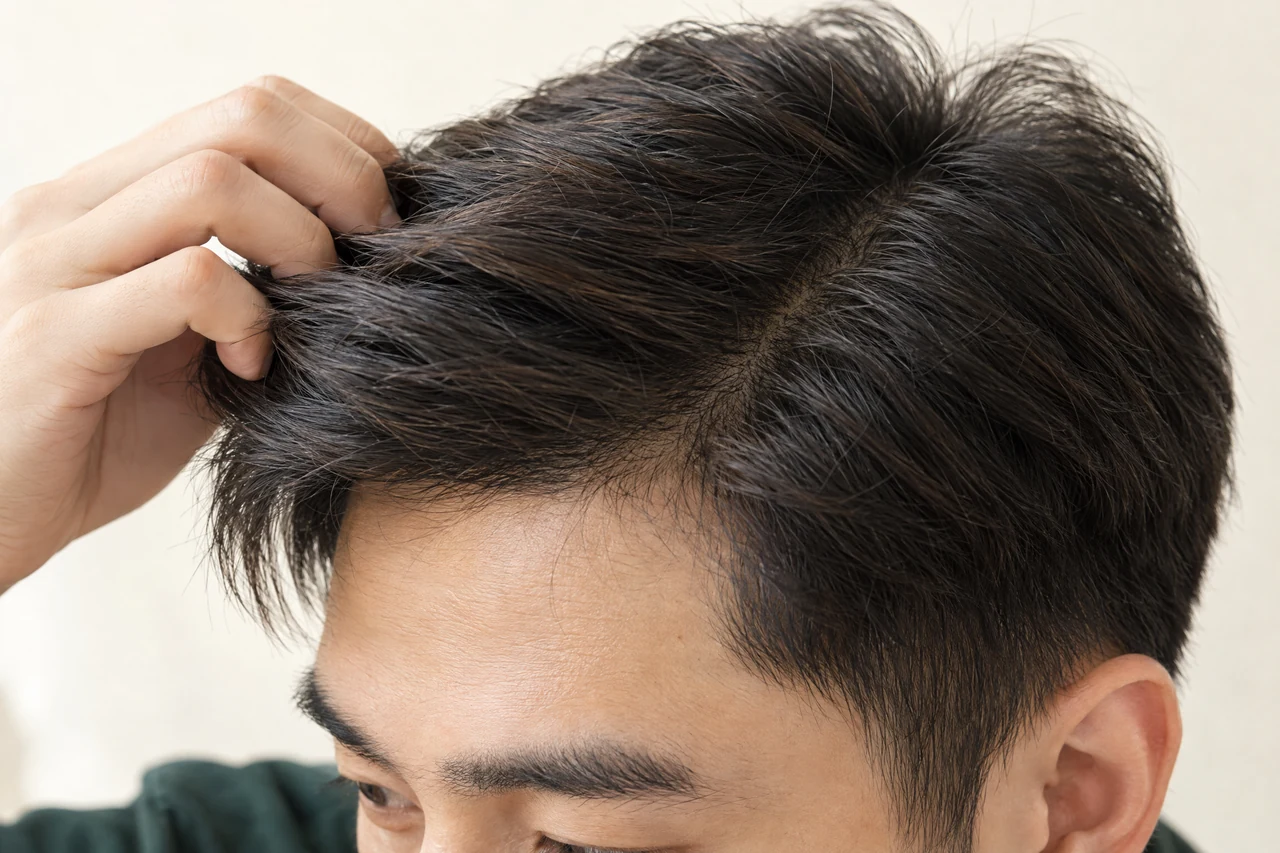
Check where the curl and colour areas meet
The visible top-to-side transition is not necessarily a gap between two sets of hair. Longer top strands can lie over shorter side strands, especially near the temples and above the ears. Grey may also extend into the longer hair at that junction. Show this edge with the top worn down and gently moved aside. Ask which strands belong to the proposed curl area, which would receive colour and whether any would be involved in both requests.
This boundary also needs a history, not only a shape. Record where previous dye, bleach, straightening or perming was applied, even if the present colour looks natural. If you used a home product on the temples and brushed it further upwards, say so. Mark uncertain areas as uncertain instead of describing the top as untouched. A simple front, side and crown photo set can support the discussion, but it cannot establish the condition or suitability of each strand.
Separate areas do not establish compatibility
Treat the area map as a question for assessment, not proof that chemical work is suitable. Ask how the practitioner would define the boundary and account for any overlap. Do not add a side-flattening treatment merely because a reference has neat sides: cutting, colour and changing side texture are distinct decisions. If the assessment cannot support the intended scope, useful alternatives include leaving the boundary uncoloured, retaining visible grey or postponing the new curl request rather than widening treatment to make the plan simpler.

Compare a familiar cut-and-colour step with a staged texture plan
If your top already has curls you want to keep, start by saying that maintenance is the goal. A haircut and a separately assessed side-colour request may be enough to discuss without adding another perm. If the top is currently straight, the enquiry includes a new texture goal and more decisions about retained length, history and condition. The comparison below is not a booking menu. It helps you distinguish an existing shape you want to preserve from a chemical change you are asking to explore.
The American Academy of Dermatology's colouring and perming guidance explains that appearance-enhancing treatments can leave hair dry and brittle and advises caution with perming. That supports taking condition seriously; it does not approve this particular top-and-side combination. If the proposed lengths are fragile, breaking or have an unclear processing history, pause further chemical work for assessment. A glossy photograph or a darker current shade is not a substitute for that assessment, and separating the requests does not remove the need for it.
Ask for the sequence rather than prescribing it
The question can i get a new haircut and colour in one visit is a useful starting point for discussing your priorities, but adding a top-perm goal changes what needs confirmation. Ask whether a familiar cut-and-colour step, a separate texture assessment or a staged plan is appropriate. Do not assume either colour-first or perm-first is universally correct. If staging is advised, ask what will be reassessed before the next step rather than treating a chosen date as automatic permission.
Confirm separate charges and a workable care plan
The confirmed men's wash, cut & blow-dry price is HK$380. That is the listed haircut service, not a quotation for top curls with grey side colouring. Ask which services the assessment actually proposes and what each confirmed charge includes. A description such as side-only colour does not establish a reduced price, and a top-only curl goal does not establish which perm category applies. Obtain the scope and total charge before agreeing, including any additional work that is not already confirmed.
Care should follow the treatments that actually take place, not the combined look you hoped to achieve. Ask for instructions covering washing, drying and products for the top and sides, and have any apparent differences clarified before leaving. If only colour is performed, do not adopt a perm timetable from a reference article. If a texture service happens later, ask for updated instructions. Mention practical limits such as frequent washing, a quick morning routine or little experience arranging curls so the advice can be useful.
Plan the next trim without bundling every repeat service
Ask what the next haircut should preserve on top and how shortening the sides may change the visible colour. A trim, colour refresh and repeat perm are not automatically the same appointment. Keep a record of what was done and where, so a later enquiry can distinguish new growth from previously treated lengths. Before arranging another chemical step, explain whether you are unhappy with the colour contrast, the curl shape or just the grown-out outline. Each concern may call for a different response.

Prepare an enquiry that can lead to a clear decision
The six-item checklist below gives your enquiry a clear starting point. Include ordinary-light photographs, the side length you expect after cutting and a brief history for both areas. A reference can accompany that information, but describe the feature you want rather than asking for the whole image. A useful message might say: 'I want to keep movement on top, discuss the grey at my temples separately and understand whether these requests should be staged.' This is an enquiry, not confirmation that both treatments can proceed.
Disclose previous dye reactions and any black henna tattoo history before agreeing to colour. The NHS guidance on hair dye reactions explains that ingredients in many dyes can irritate skin or cause allergic reactions. Do not continue dye use after a reaction to a patch or strand test, and seek healthcare if symptoms worsen. Sudden mouth or throat swelling or difficulty breathing requires urgent medical help. A smaller colour area should never be treated as a reason to disregard reaction history.
Know when to leave the enquiry open
If your scalp is currently sore or irritated, or you have unresolved symptoms from a previous dye application, defer colour and seek appropriate healthcare advice rather than trying another shade. Product-specific safety instructions also need confirmation before an appointment; do not improvise a home test as approval for the service. For the hairstyle itself, an incomplete history or uncertain boundary may mean more information is needed. Leaving the chemical decision open is more useful than accepting an unsupported promise simply to settle the booking.
Compare the request you are making, not an assumed combined package.
| Possible starting point | What it addresses | What still needs confirmation |
|---|---|---|
| Keep existing top curls; discuss cut and side colour | Preserves the current movement goal while identifying grey side hair | Retained side length, colour scope and whether the existing top is left untreated |
| Familiar haircut and colour step; defer new top texture | Prioritises the outline and grey concern without adding a new perm request now | Colour suitability and what a later texture assessment would require |
| Assess a staged top-texture and side-colour plan | Explores both goals as distinct chemical requests | Boundary overlap, condition, sequence, separate charges and reassessment |
| Cut or temporary styling; retain visible grey | Explores the silhouette without adding chemical work | Whether the appearance is an acceptable interim compromise |
Your preparation checklist
- Send current front, side and crown photographs in ordinary daylight, with your hair worn normally.
- Identify whether the top curls already exist or describe the new movement you want to discuss.
- Show the grey side areas and explain the side length you intend to retain after cutting.
- List previous colour, bleach, straightening and perms by area, noting dates approximately and labelling unknown details.
- Disclose dye reactions, current scalp discomfort and black henna tattoo history before discussing colour suitability.
- State your priority, acceptable compromises and questions about sequence, confirmed charges and treatment-specific care.
Frequently asked questions
What matters when keeping top curls while discussing colour on grey sides?
Say whether you are preserving existing curls or requesting new ones. Identify the grey area after the planned haircut and show where longer top strands meet it. Include processing history for both areas. Keeping the top unchanged should be an explicit preference, not an assumption made from the words side colour.
Can the top perm and grey side colouring happen at the same appointment?
Do not assume that different visible areas make a shared appointment suitable. The boundary, past processing, current condition and proposed products need assessment. Ask for an individually suitable sequence, including whether work should be staged or deferred. This article does not establish a safe interval or approve either order.
Does a small grey side area qualify for a cheaper colour-and-perm package?
A small area is a scope description, not a price category or a confirmed package. Ask which listed services apply and request the actual charge before agreeing. Do not add individual menu figures yourself or assume the haircut price includes colour, perming or extra work at the boundary.
Discuss your top-curl and grey-side priorities with Vit So
Enquire by WhatsApp on +85253057561 with current photographs, your treatment history and the side length you want to keep. Ask which areas can be assessed, whether the requests should be staged and what the confirmed charges would be. Vit So is at 252 Hollywood Road, Sheung Wan, Hong Kong. Appointment arrangements and service suitability require confirmation; confirm your preferred consultation language if needed.
Start your WhatsApp enquirySources & further reading
- Coloring and perming tips for healthier-looking hair — American Academy of Dermatology
General dermatology guidance on dryness, brittleness and caution with colouring and perming; it does not approve an individual combined-service plan.
- Hair dye reactions — NHS
Public-health information on dye reactions, relevant history, following product instructions and symptoms that require medical attention.



