






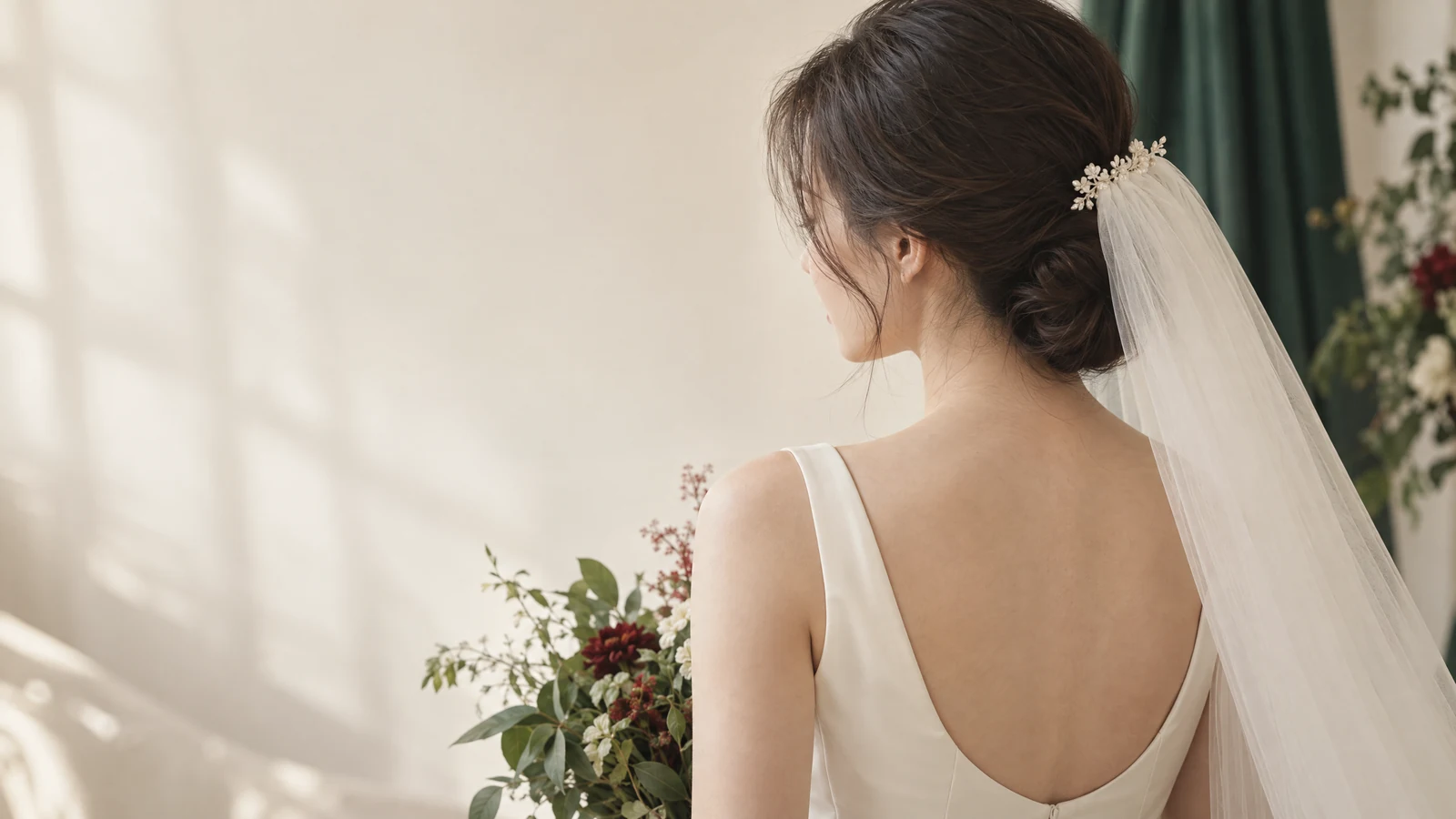
Wedding hairstyles for fine hair need a clear volume brief
Point out whether you want more visible height at the crown, fuller ends or a less narrow gathered shape. These are different design goals, not a change in the number of hairs. Use photographs with similar density and note the lighting, since a bright backlight or a different angle can change how full the outline appears.
Start with the area you notice in your own photographs. A flat crown is a different concern from a narrow ponytail or ends that separate over the shoulders. Asking for volume everywhere can obscure the priority. For a close portrait, a gentle curve behind the crown may matter more than a wide bun. For a back view of an open-back dress, the gathered outline may be the detail you care about most.
Fine describes the individual strand, while density concerns how much hair is present across an area. You may have many fine strands, or fine strands with a less substantial gathered shape. Neither observation alone selects the hairstyle. Show your normal parting and the ends without deliberately fluffing them up, so the conversation starts with the hair available rather than a temporary photograph trick.
Review volumising hair styling to check its service scope and the details to share before arranging the related work.
Define fullness in wedding hairstyles for fine hair
Give your preferred fullness a location and a limit: a rounded crown without a tall top, a low bun wider than the gathered base, or loose ends that look connected rather than spread apart. Also name something you do not want, such as a rigid surface or a large ornament. These descriptions make it easier to compare achievable options without treating maximum size as the only attractive result.
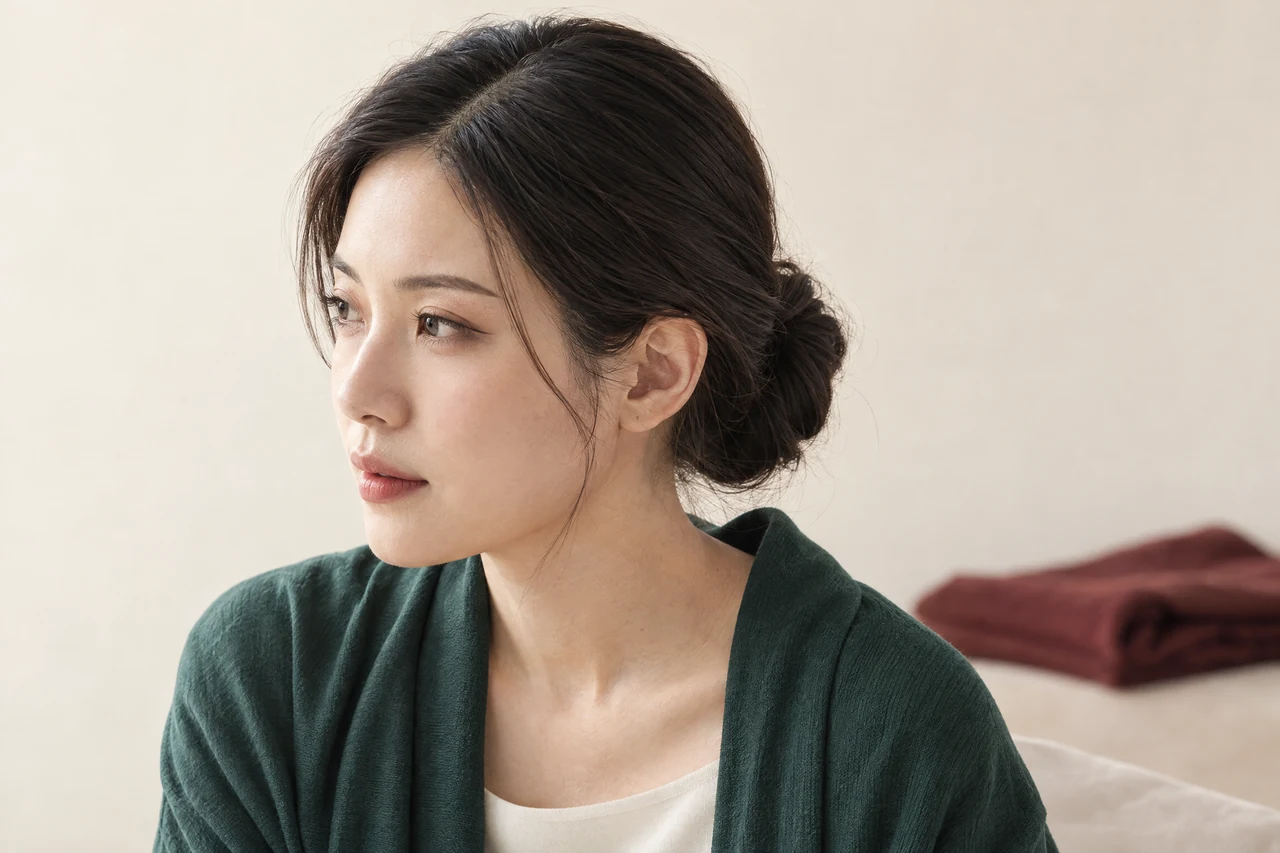
Compare structure with the weight of the finish
A large loose outline may have different support needs from a compact gathered shape. Tell the stylist if your hair quickly looks flat or feels heavy after products. Discuss the balance between lift, touch and structure; a product-heavy finish is not automatically better, and no particular product or technique should be presumed from a reference.
A compact low chignon concentrates the available hair into a defined shape. It can suit a preference for tidy edges without needing to imitate an oversized bun. A half-up style uses some hair for the gathered section, leaving less in the loose lengths. Check whether that trade-off still gives you the end fullness you want. Wearing everything down preserves the loose length, but its outline should be assessed after the initial styling has settled.
The American Academy of Dermatology's leave-in conditioner advice recommends a lighter formulation for fine, straight hair to avoid a limp, greasy appearance, and the smallest amount that does the job. That supports a sensible care discussion, not a rule to skip conditioning. Tell the stylist which products leave your roots flat and which help your ends stay manageable.
Continue with updo or hair down for wedding for that specific comparison and the preparation questions it raises.
Avoid assuming more product means more lift
Ask what the finish is meant to preserve: crown shape, smoothness or separation in the waves. These goals may need different handling. If the hair already feels coated, adding another layer may not address a slipping fastening or an unsuitable shape. Follow the agreed washing and preparation instructions rather than experimenting with a heavy mask, oil or unfamiliar styling mixture immediately before the appointment.
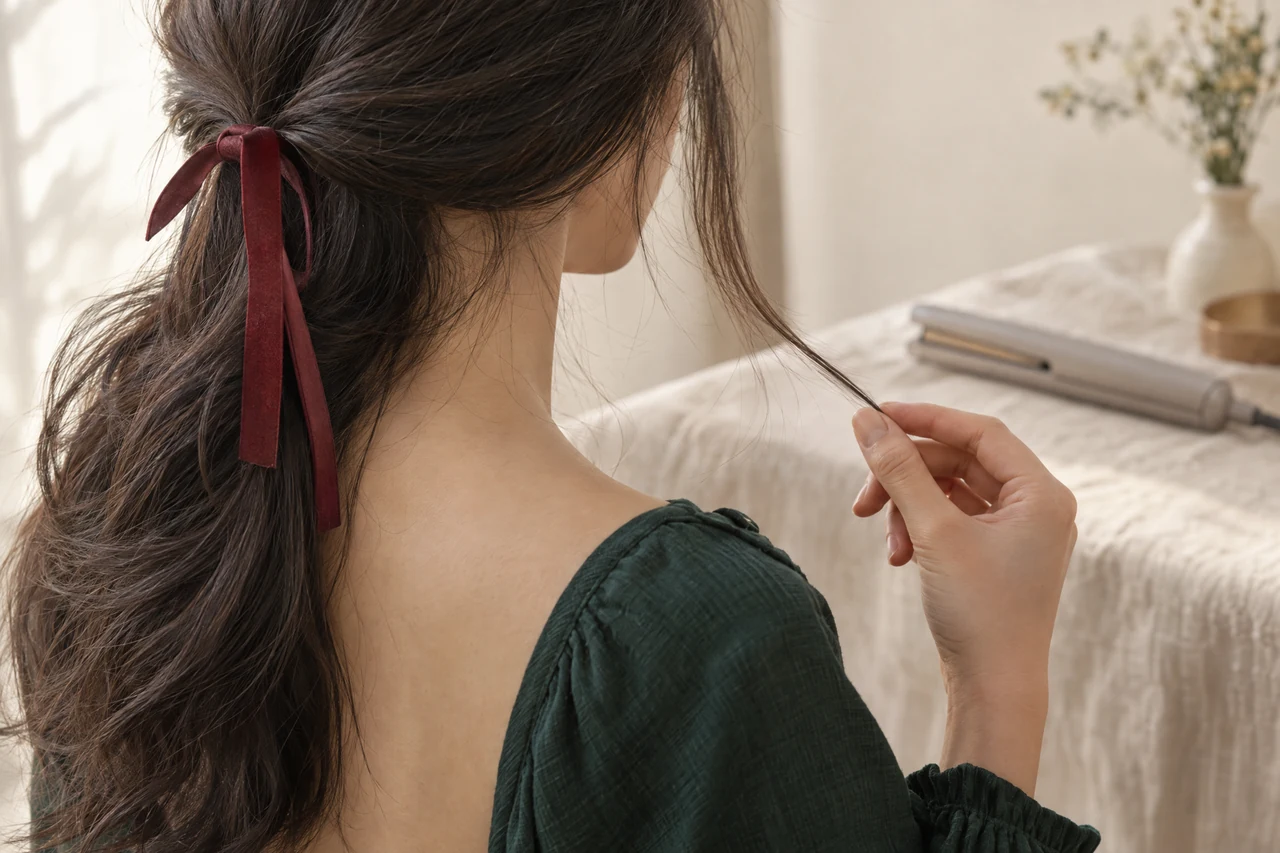
Match the accessory to the visible proportions
A large ornament can dominate a small bun or a fine loose outline. Show the actual accessory and its fastening so its weight and placement can be discussed. Compare a smaller or lighter alternative if it overwhelms the intended shape. Stock, added hair and specialist fixing materials are separate questions, not assumed parts of the appointment.
Judge the decoration against the finished hair, not just against the dress on a hanger. A broad comb across a narrow gathered section can make the ornament the main feature. That may be intentional, but it is different from wanting the bun itself to look fuller. A small pin placed slightly to the side can leave more of the hairstyle visible. Check the front and profile too: a rear accessory may be barely visible in the portrait you value most.
Bring the fastening as well as the decorative piece. A comb, a clip and a flexible decorative strand do not attach in the same way. Explain whether an heirloom must be worn or whether you are open to another accessory. If the original needs an unsuitable amount of tension to stay in place, changing its position or choosing an alternative can be a better decision than forcing a larger hairstyle around it.
Consider weight as well as decoration
Support should feel secure without pulling. The American Academy of Dermatology's guidance on hairstyles that pull explains that repeated tension can damage hair over time and that a painful style is too tight. Report pulling or pain while the accessory is being fitted; do not accept it as proof of good hold. The immediate practical goal is a comfortable fastening, not a medical assessment.
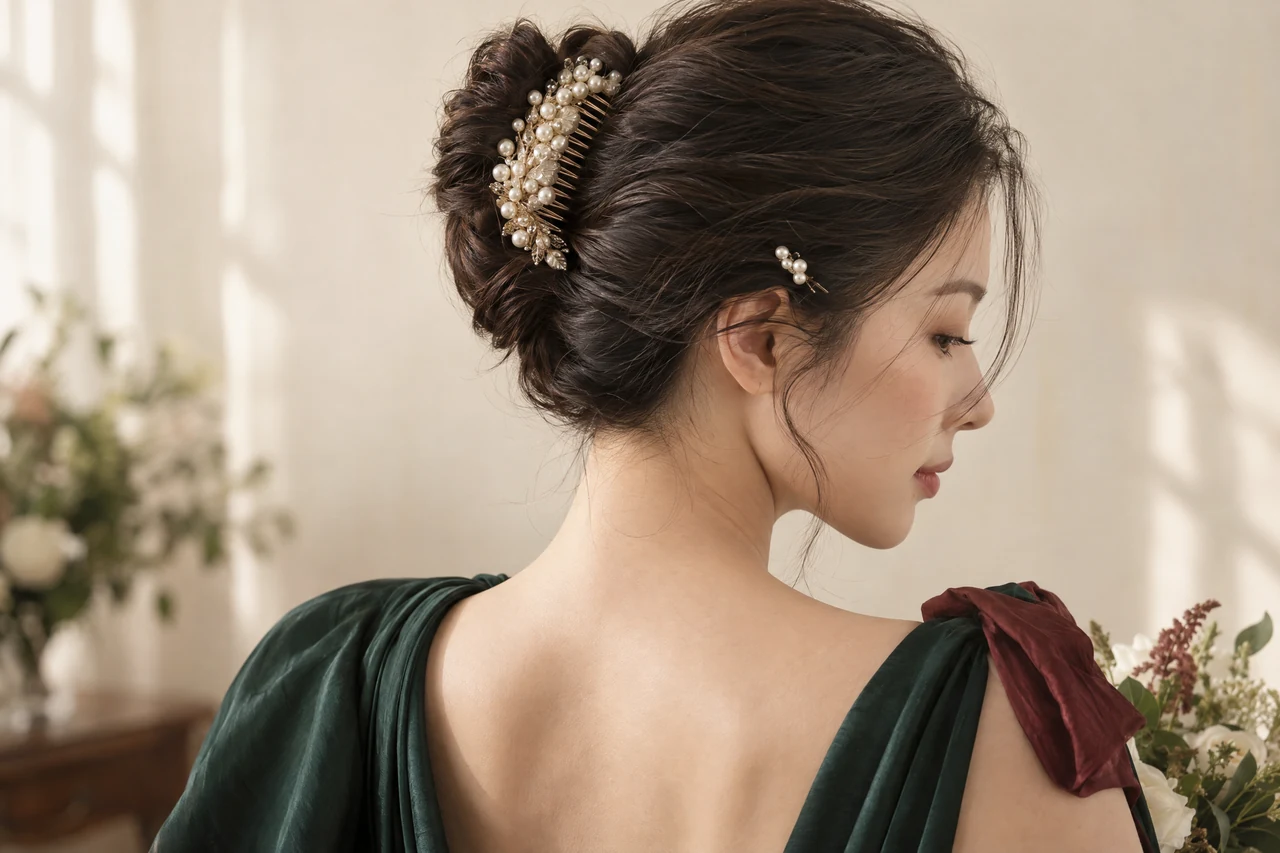
Agree on a realistic reference and backup
Explain how your hair behaves after washing, under a hat and during humid travel. This helps identify the details worth prioritising and a simpler backup outline if the preferred style is unsuitable. The goal is a cosmetic finish that works with your hair, not a promise of new growth, restored density or medical treatment.
Separate the detail you like from the overall size of the reference. You might want its side sweep, its low position or its soft edges without needing its bun width. Ask whether the pictured fullness depends on added hair or concealed support. A photograph cannot confirm either. Any proposed addition needs a separate discussion about suitability, visibility, comfort and cost; it should not appear unexpectedly as the solution to a mismatch.
Choose a backup that preserves your main preference. If you love a clear neckline, a smaller low gathered shape may be more useful than switching to loose hair. If your priority is movement beside the face, a simpler half-up outline may retain that detail. Agree on what would trigger the change, such as a poor accessory fit or loose ends losing the intended shape, rather than leaving the decision until departure.
Review bridal hair to check its service scope and the details to share before arranging the related work.
Use your usual hair behaviour as useful evidence
Describe what changes first during an ordinary day. Your roots may flatten while the ends keep their bend, or the waves may relax while the parting stays tidy. Mention time spent outdoors, travel between venues and any clothing pulled over the head. These observations help set priorities without promising that a salon finish will stay identical through every part of a Hong Kong wedding itinerary.
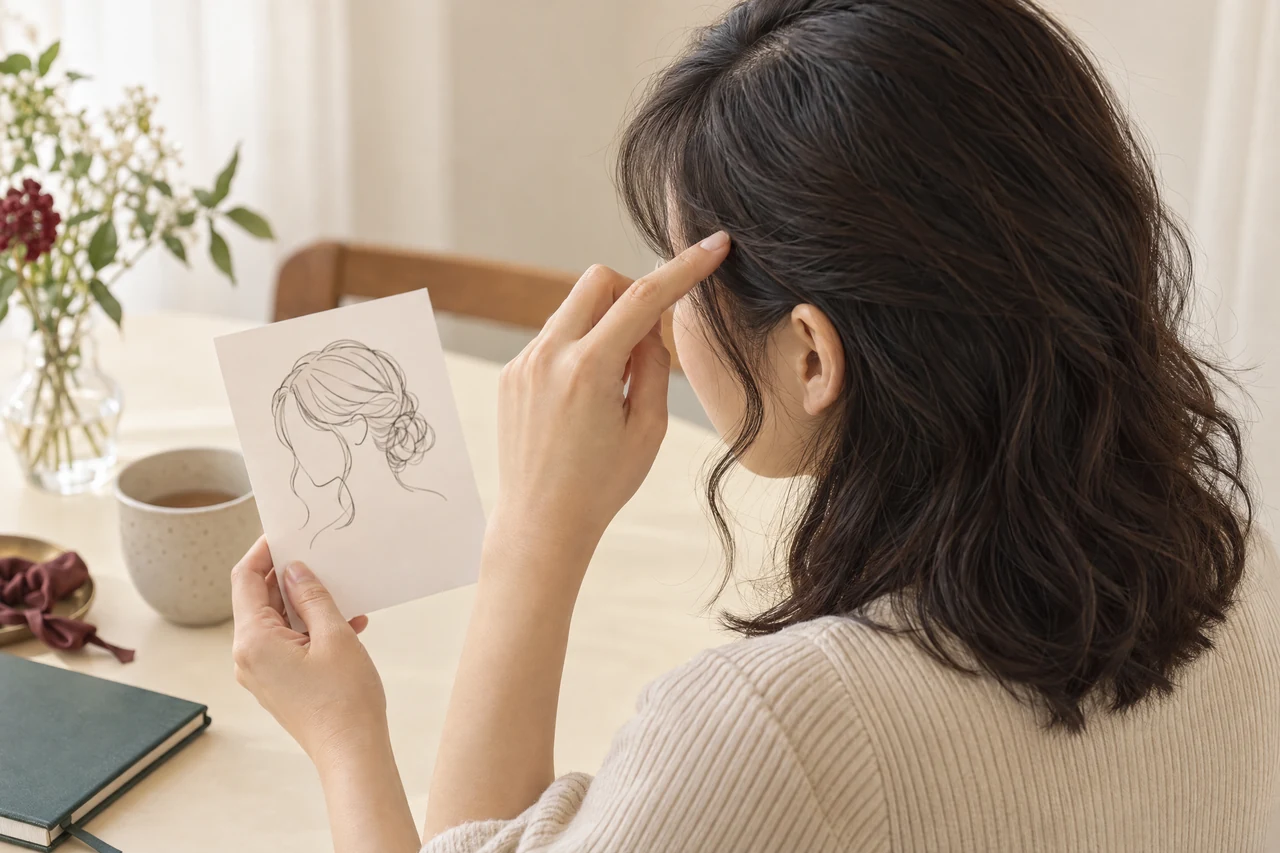
Check the outline beyond the first photograph
At a wedding hair trial, compare the style from the front, side and back before deciding that it needs more size. Use a similar camera distance for each version, and keep the lighting reasonably consistent. Close-up texture can look attractive while the overall shape remains narrow; conversely, a compact bun may balance the shoulders well when viewed in a fuller portrait.
Look again after sitting and turning your head. Check whether the crown still has the curve you wanted and whether a face-framing strand has moved across the eye. For a half-up style, check the loose ends separately from the gathered area. A change in the ends does not necessarily mean the fastening has failed. Tell the stylist which change you notice instead of asking for the entire hairstyle to be made tighter.
Prepare a focused brief rather than a folder of unrelated looks
Use the 6-step preparation checklist below to connect your normal hair behaviour with the wedding outline you want. Send current photographs alongside the references, and identify the detail worth keeping in each reference. Confirm trial availability, appointment timing and preparation directly. A trial is an opportunity to compare and refine; it does not make every image achievable or establish the final wedding arrangements on its own.
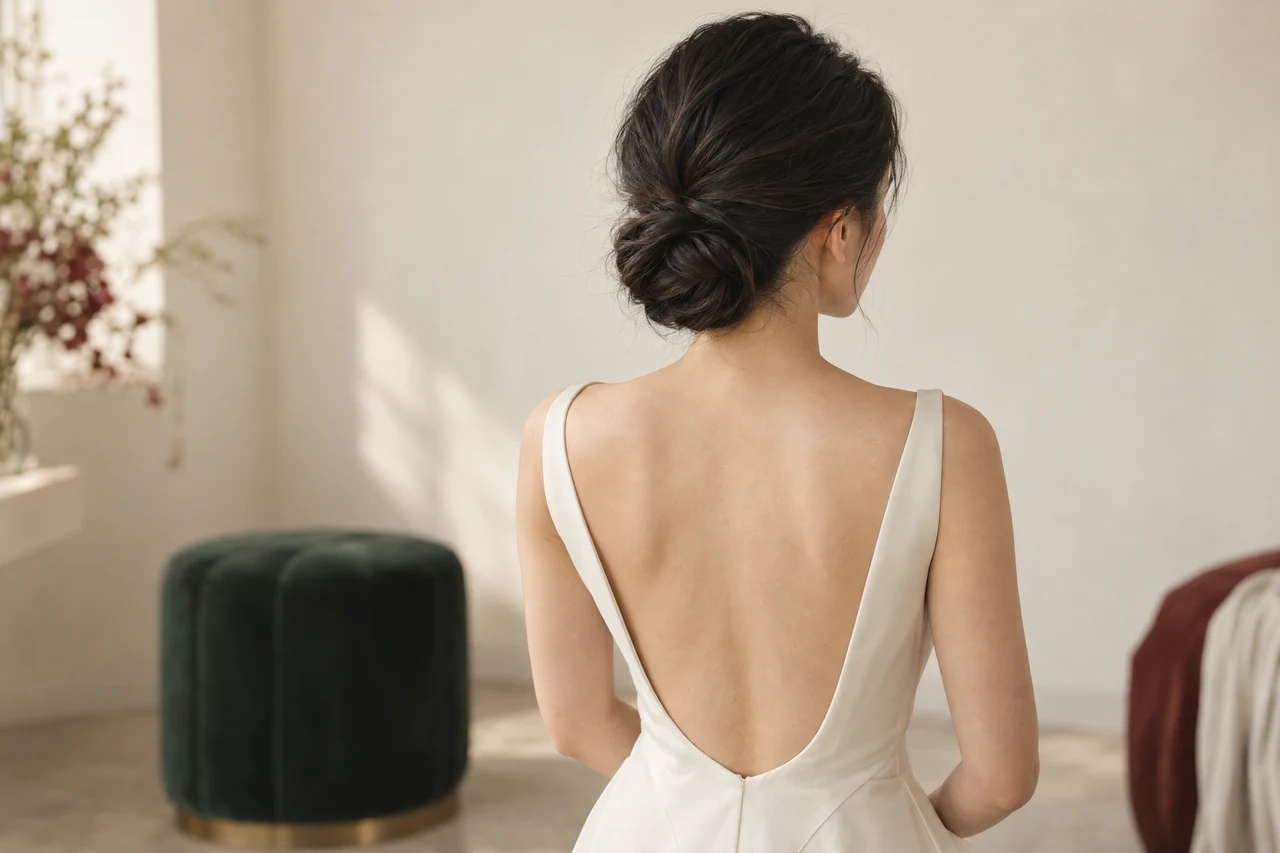
Keep the veil and later changes separate from fullness
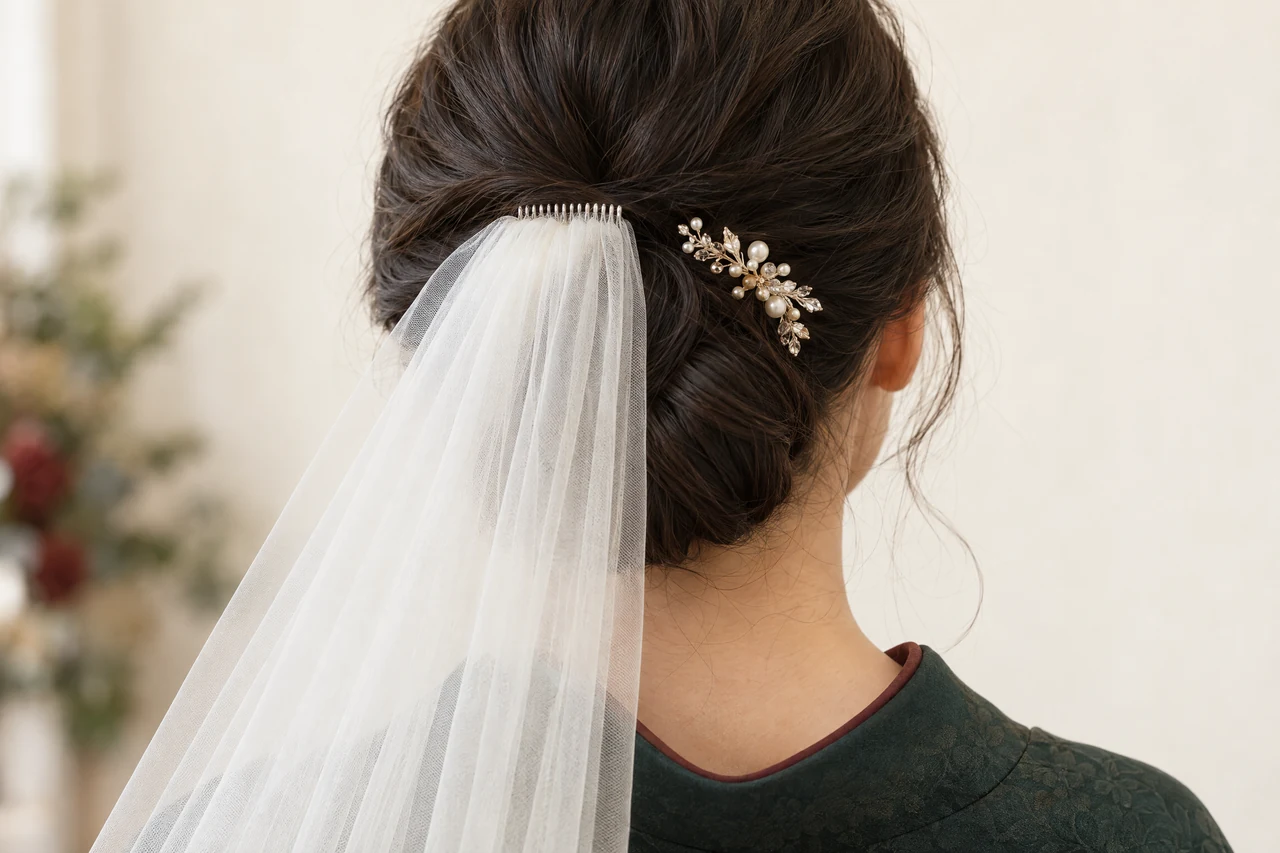
A veil can cover the bun or change the balance of the back view, so evaluate the hair with and without it. When planning wedding hair with veil, discuss its fastening and removal rather than assuming the decorative accessory will carry it. Decide which part of the hair should remain visible after the veil comes off. A comfortable low shape may already provide the outline you need without being enlarged.
For a later outfit, consider a small accessory change before requesting a complete restyle. Removing a veil may reveal enough texture to create a different impression. Confirm who will carry out removal or adjustment, what instructions they need and whether assistance is available. Ask for a quote for the actual work, including any trial or additions, rather than treating a general styling price as a complete bridal package.
Know what can be adjusted without disturbing the base
Ask which visible details are safe to tidy and which fastenings should be left alone. Repeatedly pulling loose sections wider to recreate the first photograph can disturb the shape. Keep the agreed backup simple and compatible with the accessory. The aim is a finish you can wear comfortably through the planned events, with adjustments understood before the day begins.
Compare wedding outlines by where they place the available hair, not by promised density.
| Outline | Where fullness is emphasised | Fine-hair trade-off | Useful check |
|---|---|---|---|
| Compact low chignon | A defined gathered shape near the nape | Bun width depends on the available hair; oversized references may not translate | Check the profile and the accessory against the finished bun |
| Soft half-up style | A lifted gathered area with loose length below | Hair used in the top section is no longer available to fill the loose ends | View the crown and end fullness separately |
| Loose waves | Movement through the lengths and beside the face | The outline may change as waves settle; spreading ends apart can look less substantial | Compare the outline after movement, not only immediately after styling |
| Simple low twist | A restrained shape with clear neck and shoulder lines | Less emphasis on bun size; decoration can easily become the dominant feature | Check whether a smaller accessory better matches the shape |
Your preparation checklist
- Identify the area where you want visible fullness: crown, sides, loose ends or gathered shape. Include a detail you do not want.
- Send current photographs showing your usual parting and ends, alongside references with the preferred detail clearly identified.
- Describe how your hair responds to washing, conditioner and styling products, including what feels heavy or looks flat.
- Bring the actual accessory and veil fastening, and explain whether either item is essential or can be replaced.
- Share the outfit sequence and travel plan, then compare the outline after sitting, turning and removing the veil if applicable.
- Agree on a simpler backup, safe adjustment instructions and a quote for the specific trial, wedding work and any proposed additions.
Frequently asked questions
Does fine hair mean I have low density?
Not always. Strand thickness and the amount of hair are different. Describe both your texture and the areas where you want a fuller visual outline.
Can a style permanently increase my hair volume?
A temporary finish can change the appearance of fullness, not create new hair. Medical concerns about hair loss belong with an appropriate health professional.
Is a large bun realistic for everyone with fine hair?
It depends on available length, density and the proposed structure. Compare a smaller shape first and ask separately about any additions shown in a reference.
Should I avoid a half-up hairstyle if my ends look fine?
Not necessarily. Compare how much hair the gathered section uses and how the remaining ends look together. A smaller top section or a different outline may better balance the fullness you want. Decide from your own hair rather than a style label.
Plan a wedding outline that feels balanced on your hair
Enquire with Vit So in Sheung Wan using current hair photographs, your preferred fullness area and details of the dress, accessory and itinerary. Ask about suitable options, trial arrangements and a quote for the specific work. An enquiry is not a confirmed booking; availability and the appointment details need to be agreed.
Start your WhatsApp enquirySources & further reading
- Dermatologists' top tips for using leave-in conditioner
Lighter leave-in conditioner and a smaller amount for fine hair to avoid a limp, greasy appearance.
- Hairstyles that pull can lead to hair loss
Repeated tension from tight hairstyles can damage hair over time; a painful hairstyle is too tight.



