






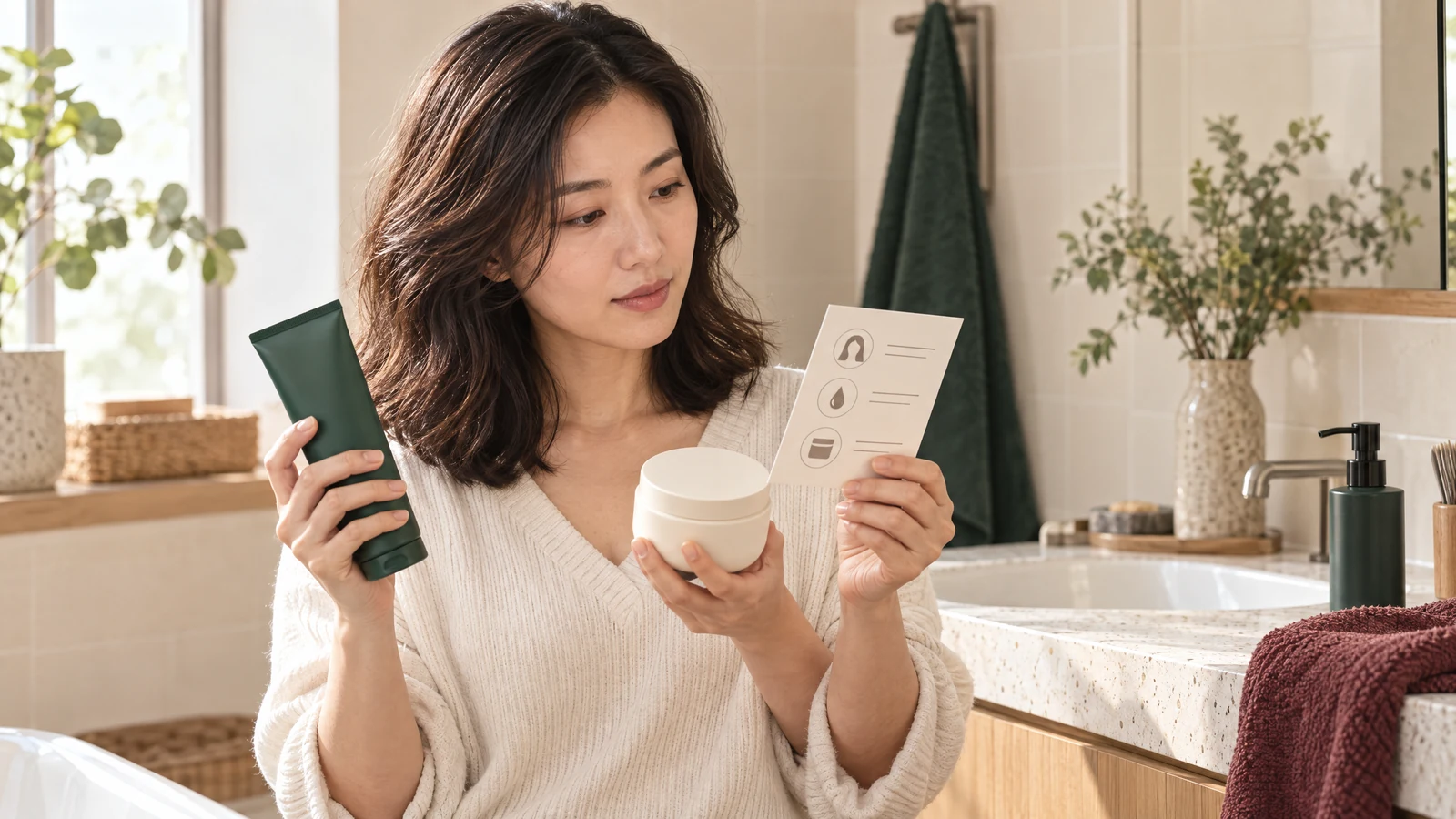
Hair mask vs conditioner: compare the directions
A routine conditioner is commonly used as a rinse-out conditioning step, while a mask may have different directions or a more focused care role. Those labels are not universal definitions. Compare the recommended application area, contact time and rinsing instructions for the actual products instead of assuming that a thicker texture always gives a better result.
Conditioner is a useful starting point when the immediate problem is combing resistance after shampooing. The American Academy of Dermatology's everyday hair-care advice explains that conditioner helps moisturise and detangle hair, making it easier to manage. That describes a practical job, not a promise that every conditioner will feel equally light or suit every length.
A mask is worth considering when you can name what your current conditioning step leaves unresolved. Perhaps the lower lengths still feel rough after drying, or you want a product suited to chemically treated ends. Compare its stated purpose with your existing conditioner before buying another jar. If the directions and intended results largely overlap, replacing a step may be more informative than adding one.
Read hair mask vs conditioner beyond the name
Turn the packaging around and read the use instructions before judging texture. Check whether the product goes on before shampoo, after shampoo or after towel-drying. Then check whether it must be rinsed out. A jar does not prove that a formula needs extended contact, and a pump bottle does not prove that it is lightweight. The meaningful comparison is between the actual products you plan to use.
Check whether a mask replaces a conditioning step
Do I need conditioner after a hair mask? Follow the specific mask's directions and the agreed routine. Some products are intended to replace a rinse-out conditioning step; others may specify a different sequence. Adding another product automatically can make it harder to judge weight or residue, so check the instructions before layering.
As a manufacturer example, Garnier's guide to using a hair mask says a mask can replace regular conditioner and that an additional conditioner is not usually necessary. It also describes exceptions and stresses following the mask's own instructions. This is not a universal sequence for every brand, nor a product recommendation or statement about what Vit So stocks.
If your mask clearly replaces conditioner, use it in that role and assess the result before introducing another rinse-out product. If the label specifies conditioner afterward, follow that sequence. When instructions are missing or unclear, ask the manufacturer or share a photograph of the packaging during your enquiry. Do not try to resolve conflicting directions by applying everything; that leaves you with more variables and no clearer answer.
Follow the product's sequence, not a universal rule
Remember that an after-shampoo mask and a pre-shampoo treatment occupy different places in a routine. A pre-shampoo product does not automatically remove the need for the conditioning step that follows cleansing. Equally, a conditioning mask is not necessarily a preliminary stage before another conditioner. Write down the sequence for your actual products, including the rinse points, rather than borrowing a routine built around someone else's formulas.
Leave-in conditioner vs hair mask
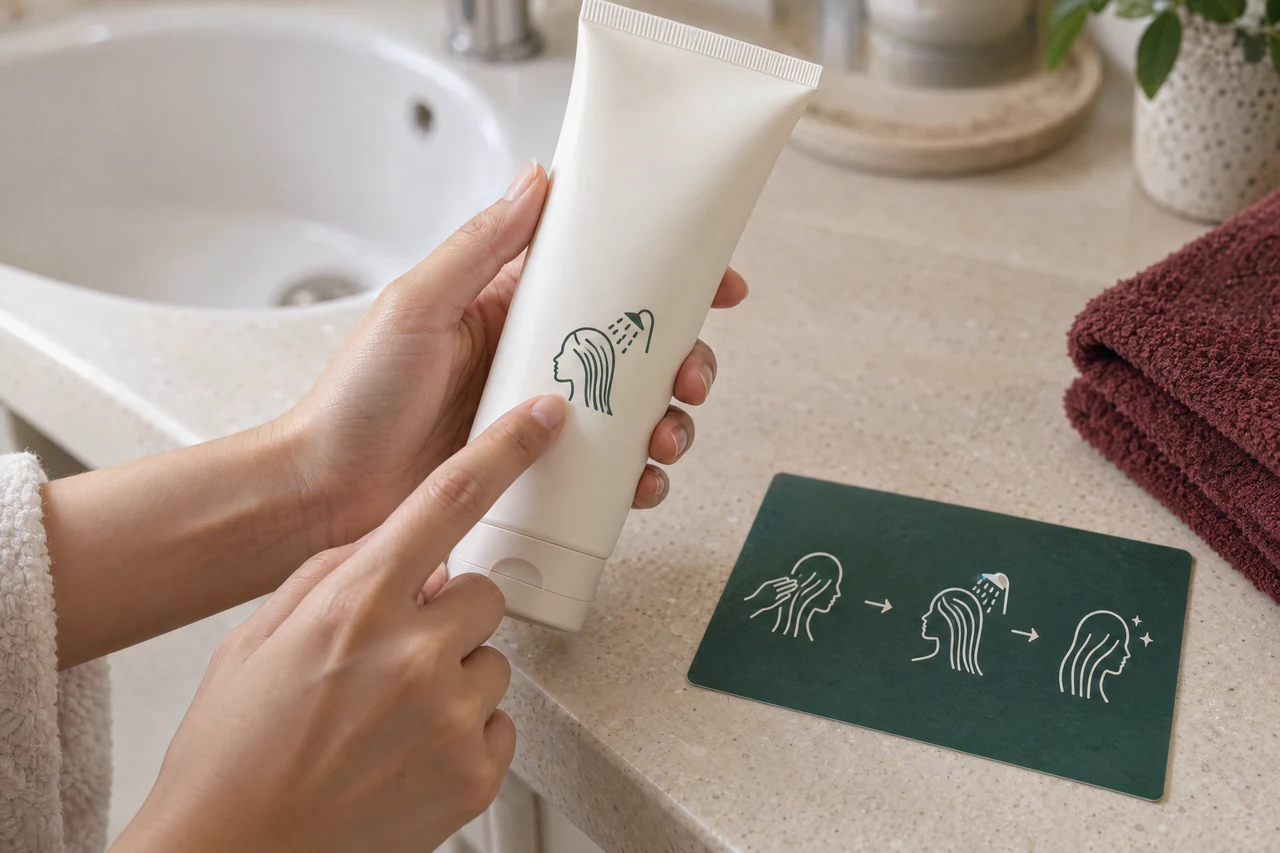
Leave-in conditioner vs hair mask is useful when you compare whether the product stays on or is rinsed out. Leave-in products are formulated and directed for that role; a rinse-out mask should not be left on indefinitely to imitate them. Use the stated amount and application area, and review whether the ends feel manageable without becoming coated.
The American Academy of Dermatology's leave-in conditioner tips distinguish leave-in and rinse-out formulas by their chemistry and intended use. Its advice is to use a small amount of leave-in on damp hair and avoid the scalp. Diluting your ordinary rinse-out conditioner in water does not turn it into a product designed to stay on.
Think of a leave-in as an optional response to a remaining need after washing, rather than an automatic companion to every mask. It may be useful when the lengths need help with detangling or manageability, but a heavy combination can work against the movement you want. Read any heat-protection claim separately: the AAD notes that this benefit should be indicated on the packaging. A conditioning label alone is not evidence of heat protection.
Whether a product stays on is a practical difference
A leave-in spray and a leave-in cream may require different application methods, so follow the amount and hair condition stated on each label. Avoid adding more while hair is wet simply because you cannot yet see the dried finish. If a product expressly offers several uses, choose one stated method and follow it completely. Multi-use directions on one product do not authorise leaving a different rinse-out mask in your hair.
Deep conditioner vs hair mask labels
Deep conditioner vs hair mask is often a comparison of overlapping care labels rather than two fixed procedures. Check what each actual product says it does and how it is used. Do not extend its contact time for a stronger effect or combine several concentrated care products simply because the labels sound different.
Words such as deep, intensive and nourishing can help you recognise a product's intended positioning, but they do not give you a shared scale for comparing every formula. A mask described as moisturising may also include protein ingredients. A deep conditioner may focus on softness rather than changing the hair's shape. Compare the full directions and stated purpose, not just the most prominent word on the front.
If those ingredient labels are driving your choice, the guide to moisture vs protein treatment helps separate care goals without assuming that every rough strand needs the same product. For a salon service, ask what the treatment actually includes rather than treating an at-home jar and an appointment as equivalent.
Continue with deep conditioning treatment for that specific comparison and the preparation questions it raises.
Names can overlap without identical formulas
Keep contact time tied to the instructions, even when the label says intensive. Longer is not automatically better, and neither a heated cap nor overnight wear should be added unless the product allows it. Also check the application area: a conditioning product for lengths and ends is not automatically scalp care. These details often tell you more about how a product fits your routine than the distinction between mask and deep conditioner.
Match placement and amount to the hair that needs care
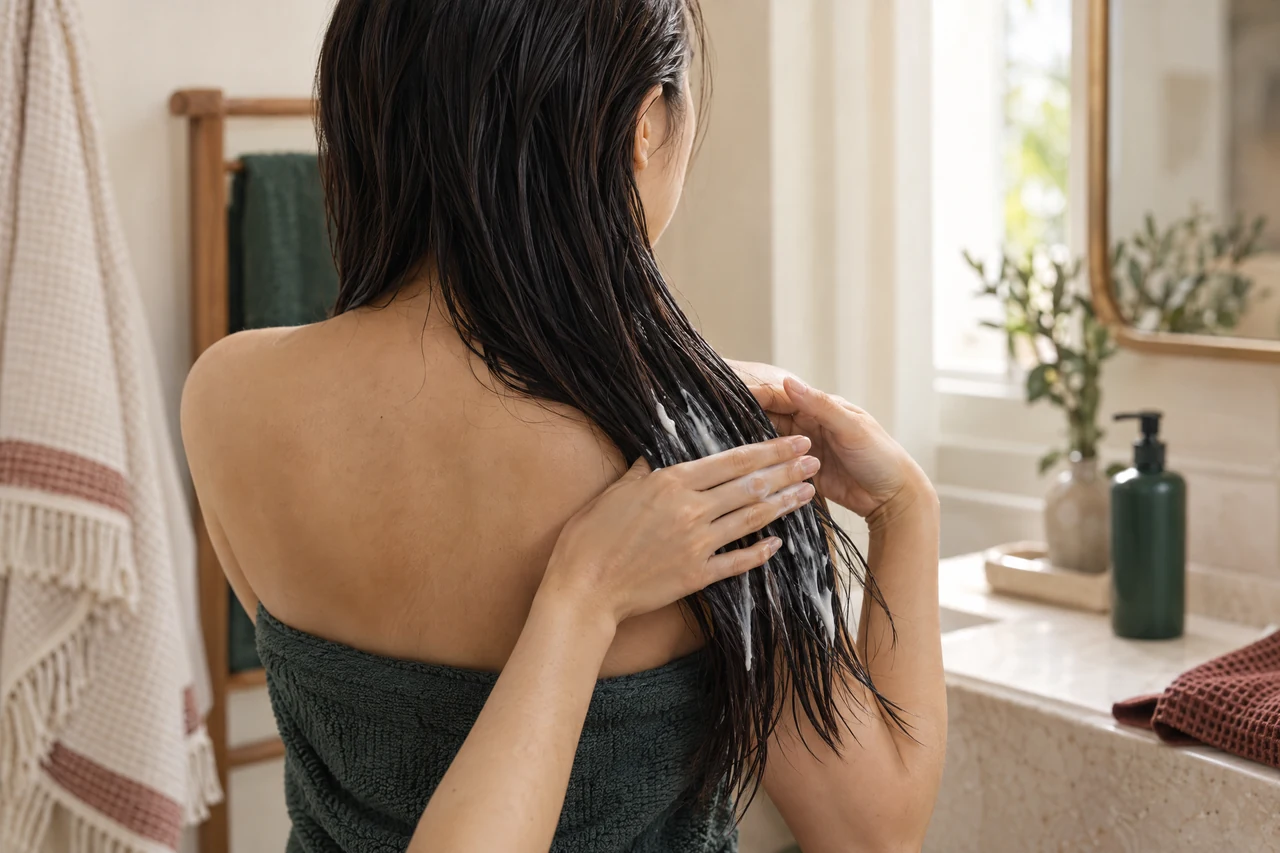
Dry ends and flat roots can exist together. Treating the whole head as equally dry may add weight where you want lift while failing to distribute product evenly through the lower lengths. The AAD's everyday advice recommends concentrating conditioner on the ends for fine or straight hair, and along the length for dry or curly hair. Use that general distinction alongside the directions for your specific formula.
For longer hair, divide the lengths into manageable sections so you can reach the underneath as well as the outer surface. Spread the directed amount rather than depositing most of it on the first area you touch. Handle tangles gently, working from the ends instead of pulling a comb through resistance. More product is not a substitute for careful distribution.
If preserving movement is your main priority, read how to choose a hair treatment for fine hair before choosing a richer conditioning step. During a Sheung Wan consultation, explain whether you dislike heavy roots, limp lengths or a coated feeling at the ends. These are different observations, even if all of them lead you to describe the product as too heavy.
Use a short product-role check before washing
The checklist below contains 6 product-role checks. Use it with the packaging in front of you, not as a reason to build a longer routine. Record the label's contact time rather than substituting a general time found online. For rinse-out products, allow enough time to rinse as directed. If you are in a hurry, a product whose stated method fits the time available is more practical than rushing an unfamiliar mask.
Review the finished feel before adding another product
Assess your routine after the hair has dried as well as while it is wet. Easy combing in the shower is useful, but it does not tell you whether the roots will retain movement or the ends will feel coated later. Note where the problem appears and which product was used there. Keep drying and styling reasonably consistent when comparing changes so a different finish does not obscure the product's role.
Change one conditioning variable at a time. You might compare a mask in place of your conditioner where its directions allow, or review the amount of an existing leave-in. Do not simultaneously replace the shampoo, add a mask and introduce several finishing products. If hair remains difficult to manage despite appropriate use, bring the labels and a description of your routine to a consultation rather than assuming the answer is another intensive product.
Continue with salon hair treatment vs at home for that specific comparison and the preparation questions it raises.
Review hair treatment to check its service scope and the details to share before arranging the related work.
Bring the instructions, not only the product names
A clear photograph of the front and back labels helps establish whether your products replace or complement one another. Share where you apply each one, whether it is rinsed out and what bothers you after drying. Include recent colouring or perming if relevant to the lengths. Persistent breakage or scalp irritation deserves appropriate professional advice; it should not be treated as proof that you need a stronger mask.
Compare the role of each conditioning product before combining steps
| Product label | Likely role to verify | What to check before using it |
|---|---|---|
| Rinse-out conditioner | A conditioning step after cleansing, commonly for softness and easier detangling. | Confirm application area and rinsing directions; do not assume it doubles as a leave-in. |
| Hair mask | A conditioning or focused care product that may replace another step. | Check whether it goes before or after shampoo and whether conditioner afterward is specified. |
| Deep conditioner | An overlapping care label, not a universally separate procedure. | Compare its purpose, contact time and rinse instructions with the mask you already own. |
| Leave-in conditioner | A product directed to remain on the hair after application. | Check amount, damp or dry application and any explicit heat-protection claim. |
| Product with several stated uses | Different permitted methods for that particular formula. | Choose one complete label-approved method; do not transfer its permissions to other products. |
Your preparation checklist
- Identify the main goal: easier detangling, softer ends or less product weight. Choose the unresolved need rather than the most intensive-sounding label.
- Read when the product is applied, including whether it is a pre-shampoo, after-shampoo or leave-in step.
- Confirm whether the mask replaces conditioner or requires a separate conditioning step; seek clarification if the label is unclear.
- Check the directed amount, application area and contact time before starting, especially when roots and ends need different handling.
- Mark which products must be rinsed out and which may remain on; do not convert a rinse-out formula into overnight care.
- Record the dried feel and movement after use, then change only one conditioning variable if the result needs adjustment.
Frequently asked questions
Does a thick mask always suit dry hair?
No. Formula, application and your hair's response matter more than thickness. A product can feel too heavy even when the ends feel dry.
Can I sleep in a rinse-out mask?
Do not turn a rinse-out product into overnight care unless its directions expressly allow that use. Longer contact is not automatically more useful.
Should I change several products together?
Changing one step at a time makes it easier to understand softness, weight and residue. Keep the routine practical and follow the directions for each product.
Make your conditioning routine easier to understand
Unsure whether your mask replaces conditioner or whether a leave-in adds anything useful? Enquire with Vit So in Sheung Wan and share your product labels, recent hair history and the finished feel you want to change. Ask about suitable cosmetic hair-care options and their scope. An enquiry starts the discussion; it is not a confirmed booking.
Start your WhatsApp enquirySources & further reading
- Dermatologists' top tips for using leave-in conditioner
Different intended use of rinse-out and leave-in conditioners; small amounts on damp hair; avoiding the scalp; packaging must indicate heat protection.
- How to Use a Hair Mask: Benefits, Steps, and Tips
Manufacturer guidance that masks may replace conditioner, with exceptions and product-specific instructions; not a universal routine or stock recommendation.
- Tressed to impress: tips for keeping your mane magnificent
Conditioner's role in manageability; placement for fine or straight versus dry or curly hair; gentle detangling from the ends.



