







Root touch up around an existing blonde money piece: identify three areas
The surrounding coloured hair and the blonde front section may look like one hairstyle, but they carry different colour histories. Start by showing the new growth above your ordinary base colour. Then point out the already lightened front lengths. Finally, expose the new growth belonging to those blonde strands. This last area may be naturally dark even though it sits within the money piece. A request to colour the rest of your roots does not explain what should happen there.
If you are unsure how far the accent extends, the guide to what is a money piece can help you describe its width and front placement. For this appointment, however, use your existing hair as the main reference. Lift the front sections gently to show where the blonde continues underneath. A bright ribbon visible from the front may include strands hidden by the top layer, so a single face-on photograph can leave part of the retained area unclear.
Make root touch up around an existing blonde money piece a keep-and-change brief
A useful request is: 'Refresh the ordinary coloured roots, keep these blonde lengths, and discuss their front regrowth before doing anything to it.' This is clearer than 'Do my roots but save the blonde', because saving the blonde does not specify whether its dark upper section should remain untouched. Ask the hairdresser to show you the included and excluded areas in the mirror. The aim is an agreed map of your hair, not a fixed stripe measurement borrowed from someone else's photograph.
Colouring regrowth without covering a bleached face frame: agree the scope
An ordinary tint root service and a bleach retouch answer different requests. The former addresses the chosen base-colour regrowth; the latter concerns lightening new hair above a previously lightened section. Check the listed root touch up service, then describe your existing money piece rather than assuming the name covers every root on your head. Its service listing is a starting point for an enquiry. It does not establish that refreshing a blonde face frame is suitable or included.
Be explicit about whether the whole front section, including its dark regrowth, is excluded from the surrounding tint. Another possibility is to discuss colouring some front new growth towards the base colour while retaining the blonde below it. That would change the appearance of the transition, even if the blonde lengths remain visible. It needs your agreement rather than being treated as an insignificant detail. The front roots should never disappear into the general instruction merely because they are also new growth.
Clarify what unchanged means at the front
Keeping the current money piece can mean leaving its brightness, tone, width and starting point as they are. Those are separate preferences. You might like the pale ends but dislike warmth, or like the contrast but want a softer starting point. Say which feature matters most before a toner or blending step is proposed. If you want no colour applied to the retained section at all, make that your instruction. Do not assume that a finishing colour step will leave it visually identical.
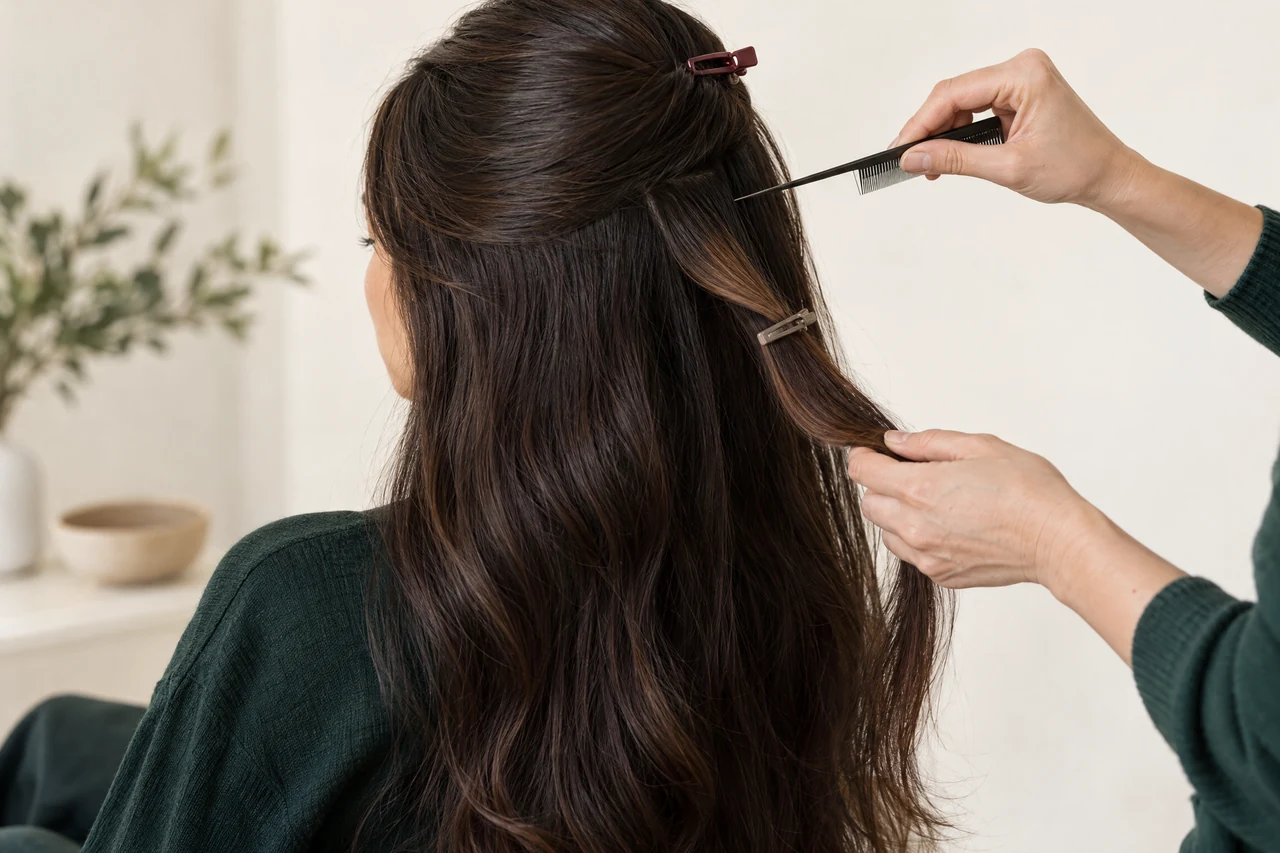
Choose between a visible dark boundary and a separate front refresh
Leaving the front regrowth alone keeps the old blonde lengths without adding a lightening stage to this visit. It also means accepting the dark boundary above them. That boundary may be prominent in a middle parting or when the hair is tucked back, while a side-swept fringe may partly hide it. Neither appearance is automatically wrong. View your hair in the way you usually wear it and decide whether the grown-out front still gives you the brightness you enjoy.
If you want the blonde to begin closer to the scalp again, ask for a separate assessment of the front regrowth and processed lengths. Wella's professional lightening guide includes a recommendation not to overlap its lightener onto previously lightened hair, and identifies hair condition and porosity as factors in development. This supports discussing the old-to-new boundary carefully. It is product-specific guidance, not a promise that any front refresh will be suitable or that Vit So uses that product.
A smaller section still needs its own decision
Consider a hypothetical customer who likes the current pale ribbon but notices dark hair above it. Refreshing surrounding brown roots would address one concern; extending the front blonde upwards would address another. The second request is not made simpler by being narrow. The hairdresser still needs to consider the previous lightening, the current condition and the desired transition. You can agree to surrounding root colour while deferring the front refresh, provided the proposed scope allows that separation and you are happy with the remaining boundary.

Compare the ordinary root charge with any added front work
The confirmed Express root touch-up price is HK$800 for regrowth within 3 inches. This is a listed service price and scope limit, not a quotation for refreshing an existing blonde money piece. Ask whether the proposed surrounding root work fits that service and whether excluding the front affects the arrangement. If front lightening, toning or another adjustment is suggested, request its scope and confirmed charge separately. Do not add menu amounts yourself and present the sum as an agreed appointment price.
The guide to how to compare hair colour quotes is useful when two proposals treat the front differently. A quote that leaves the money piece alone is not directly comparable with one that also refreshes its regrowth and adjusts the blonde tone. Ask each proposal to identify the same areas before comparing the total. Clarify what finishing work is included and which optional stages need approval. A clear quote should tell you what remains unchanged as well as what will be coloured.
Approve a front change before it becomes part of the visit
If the consultation reveals that the front needs a different plan from the photographs, pause and ask for the revised scope. You do not have to agree to a blonde refresh simply because you arrived for root colour. Check the proposed appearance, any further assessment and the charge before consenting to additional work. If you prefer to retain the current front, say so. Ask what the surrounding roots can reasonably look like under that limit rather than accepting an unconfirmed transformation.
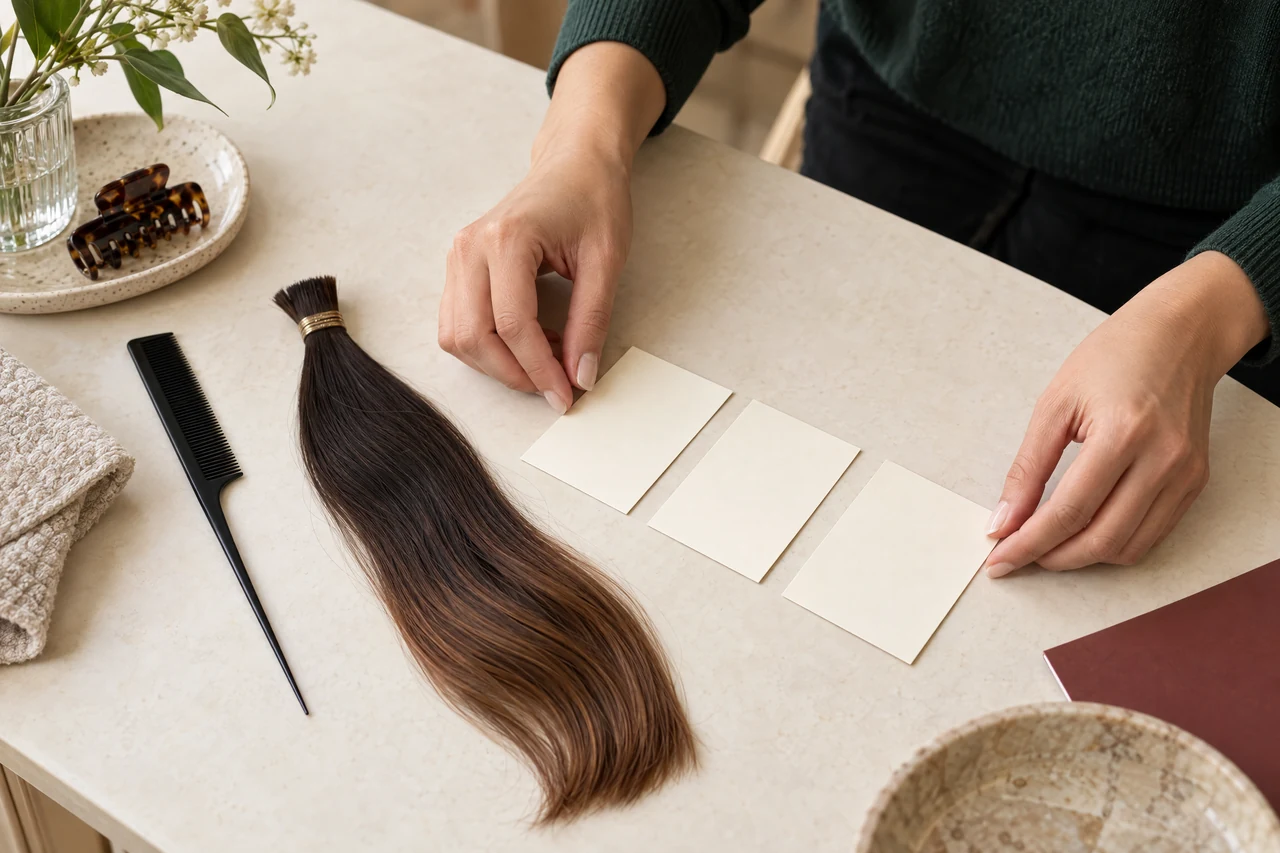
Prepare photographs, colour history and safety information
Send clear photographs showing your usual parting, both front sides and the top of the roots in ordinary daylight. Include one view with the front lifted so its dark-to-blonde boundary is visible. Describe where past bleach, tint or other colour was applied, including any home colour used since the money piece was created. Approximate dates and honest uncertainty are more useful than guessed product details. Photographs can help shape an enquiry, but they cannot fully establish hair condition or whether another lightening stage is appropriate.
Tell the hairdresser about previous dye reactions before discussing colour placement. Follow the relevant product instructions and confirm any required pre-service testing with the salon. The NHS advice on hair dye reactions says not to continue using dye if you feel unwell or react after a patch or strand test. Defer chemical work if the scalp is currently sore or reacting and seek healthcare advice for worsening symptoms. Sudden mouth or throat swelling or difficulty breathing requires emergency medical help, not a colour appointment.
Separate a colour goal from permission to reprocess
A photograph of a fresh blonde face frame shows a desired appearance, not evidence that your current front hair can be treated again. Mention breakage, unusually rough areas or other changes you have noticed, without trying to diagnose them. Ask the hairdresser whether assessment suggests leaving the front alone for now. A plan that preserves the old blonde may still be useful while another colour goal is deferred. The preparation checklist below helps keep exclusions and history visible in the same enquiry.
Keep the front exclusion clear at future root appointments
After the visit, keep a simple record of what was actually done: surrounding root tint only, front left entirely alone, or an agreed additional front stage. Take a photograph in your normal parting once the hair is styled. It can help explain the result you want to retain next time, but should not replace a fresh look at the new growth. As the dark front section becomes longer, revisit whether you still like the blonde's starting point rather than assuming the same brief will always suit you.
Ask for care advice that matches the work performed on each area. Surrounding root colour does not mean the blonde needs the same colour-refresh product. Before using a tinted mask or other colour-depositing product at home, ask whether it could change the retained front tone. Do not attempt to remove unwanted colour or extend the blonde with an improvised bleach step. If the front looks different from the agreed plan, explain which area changed and arrange an assessment rather than layering another treatment onto it.
Judge the preserved feature in your everyday style
The useful comparison is with your own before-visit photographs under similar light and with the same parting. Look at whether the front ribbon remains visible, whether its starting point matches the agreed plan and how it sits against the refreshed surrounding colour. A deeper-looking base can change the perceived contrast without making the blonde itself lighter. Discuss that difference separately from actual colour applied to the front. This helps your next enquiry focus on the feature you want to keep, rather than a vague request for everything to look fresher.
Front-section choices to discuss alongside the surrounding root colour
| Proposed scope | What happens at the front | Trade-off to understand | What to confirm |
|---|---|---|---|
| Surrounding root tint; whole front excluded | Existing blonde and its own regrowth are left alone. | The dark boundary above the blonde remains visible. | Exact excluded strands and applicable root-service scope. |
| Discuss base-colour treatment of front regrowth | Some new growth may be coloured; blonde lengths are retained. | The transition can look different without extending the blonde upwards. | Where tint stops and the intended front appearance. |
| Separate front lightening assessment | A possible refresh of new growth above the old blonde is evaluated. | Suitability depends on current hair and previous processing. | Boundary plan, any tone stage and a separate quotation. |
| Separate tone discussion only | A proposed adjustment concerns the existing blonde's tone. | Changing tone is not the same request as refreshing dark regrowth. | Whether any product enters the retained area and whether you want that change. |
Your preparation checklist
- Photograph both front sections and the top roots in your usual parting and ordinary daylight.
- Show the blonde underneath by lifting the front, so its dark-root boundary is visible.
- State whether the money piece's own regrowth is excluded as well as its blonde lengths.
- Describe previous bleach and colour locations, approximate dates and any uncertain parts of the history.
- Report previous reactions and current scalp or hair concerns before agreeing to chemical work.
- Request confirmation of the surrounding root service, any separate front stages and the actual charge.
Frequently asked questions
Can I have surrounding roots coloured and leave the money piece's dark roots visible?
Yes, leaving the whole front section untouched is a preference you can discuss. It preserves the existing blonde while accepting the dark new growth above it. Show the front strands in your usual parting and ask whether the surrounding root work can be arranged within that exclusion. The consultation still needs to confirm the area and service scope; the preference alone is not a confirmed booking or guaranteed outcome.
Does a root touch-up fee include bleaching the money piece's regrowth?
Do not assume so. Ordinary root tint and front lightening are different proposed stages. The listed Express root touch-up price applies to its stated regrowth scope, not automatically to every process at the front. If you want the blonde brought closer to the scalp, request a separate assessment and confirmed quotation. Clarify any tone adjustment too, rather than treating it as included because the finished style is called a money piece.
Will a toner keep my blonde face frame completely unchanged?
A proposed toner is a colour decision, not a promise of no visible change. Ask what it is intended to alter and which strands it would touch. If your priority is retaining the current blonde tone, say that before a finishing colour stage is agreed. A tone discussion also does not resolve the separate question of dark front regrowth. Keep those requests distinct when you review the plan.
Enquire about root colour while keeping your blonde front section
Send Vit So clear root and front-section photographs via WhatsApp +85253057561. Explain what you want coloured, which blonde strands should stay unchanged and whether their regrowth should be left alone. The location is 252 Hollywood Road, Sheung Wan, Hong Kong. Request confirmation of suitability, service scope, any testing requirements and the quotation before arranging the visit. A WhatsApp enquiry is not a confirmed appointment.
Start your WhatsApp enquirySources & further reading
- Wella Professionals Lightening — professional lightener guide
Further reading on professional lightening guidance, including its recommendation against overlap onto previously lightened hair. Product-specific instructions do not establish the products used or the service plan at Vit So.
- NHS: Hair dye reactions
Public-health information on recognising hair dye reactions, following dye instructions and knowing when symptoms need healthcare or emergency help. It is not a personalised assessment of your suitability for colour.



