







Patchy hair colour correction starts with a visible colour map
Uneven hair colour after dyeing may appear as patches, bands or abrupt lines. Photograph the roots, middle and ends, then indicate whether each area looks lighter, darker or warmer than the surrounding hair. Use comparable light and avoid filters; the aim is to describe the visible pattern without claiming to know why it happened.
Give each area a plain description that somebody else can locate. 'The darker strip starts below my ears' is more useful than 'the brown looks wrong'. Note whether the difference extends across the back, appears on one side or is visible only when you lift the top layer. Separate depth, meaning how light or dark the colour looks, from tone, meaning its warm or cool character. A patch can differ in both, but naming them separately helps avoid asking for a tonal adjustment when your main concern is a stripe of different depth.
Look at the transition as well as the colour inside it. A narrow, sharp boundary across otherwise similar brown lengths may bother you more than a broad, gradual change into lighter ends. Describe whether you want that boundary softened or the surrounding areas brought closer together. You do not need to assign professional colour levels or diagnose your hair before making an enquiry.
Prepare patchy hair colour correction photos by area
Take a full view first, then closer views of the areas you have named. Keep the same window, background and camera settings where possible; avoid direct sun on one side and shadow on the other. Show dry hair in your usual parting before separating sections gently. Keep the original photographs and add location notes in your message rather than relying only on tightly cropped images that lose the position of the patch.

Banding needs a history of repeated colouring
Hair colour banding correction involves assessing the transitions between differently coloured lengths. Dates of root maintenance, full-head dye and bleach can help describe those areas. Record any overlap you know about without guessing. A band of different depth is not automatically the same issue as a warm tone across otherwise even hair.
Build your timeline from the most recent application backwards through the hair you still have. Include salon and home colouring, colour-depositing products, removers and any bleaching you remember. If a product is available, bring its packaging or an ingredient photograph rather than describing every product simply as brown dye. Include previous straightening or perming because the correction discussion needs the processing history, not colour names alone.
Mark uncertain details as uncertain. You might remember that colour was taken through the ends but not whether it was permanent or demi-permanent. That is still useful information. A visible band by itself does not establish who caused it or which application produced it. Keeping the record neutral makes it easier to discuss the current hair without turning the consultation into an unsupported explanation of a previous visit.
Continue with root touch up vs full head colour for that specific comparison and the preparation questions it raises.
Continue with toner or colour correction for brassy hair for that specific comparison and the preparation questions it raises.
Record where each previous application reached
For every remembered application, say whether it covered new growth, a middle section, selected highlights or the whole length. Add an approximate date and any photograph from that time. If the hair has since been cut, mention the length removed. An application history helps identify questions to investigate; it does not mean every section will behave identically or that a formula can be selected from the timeline alone.
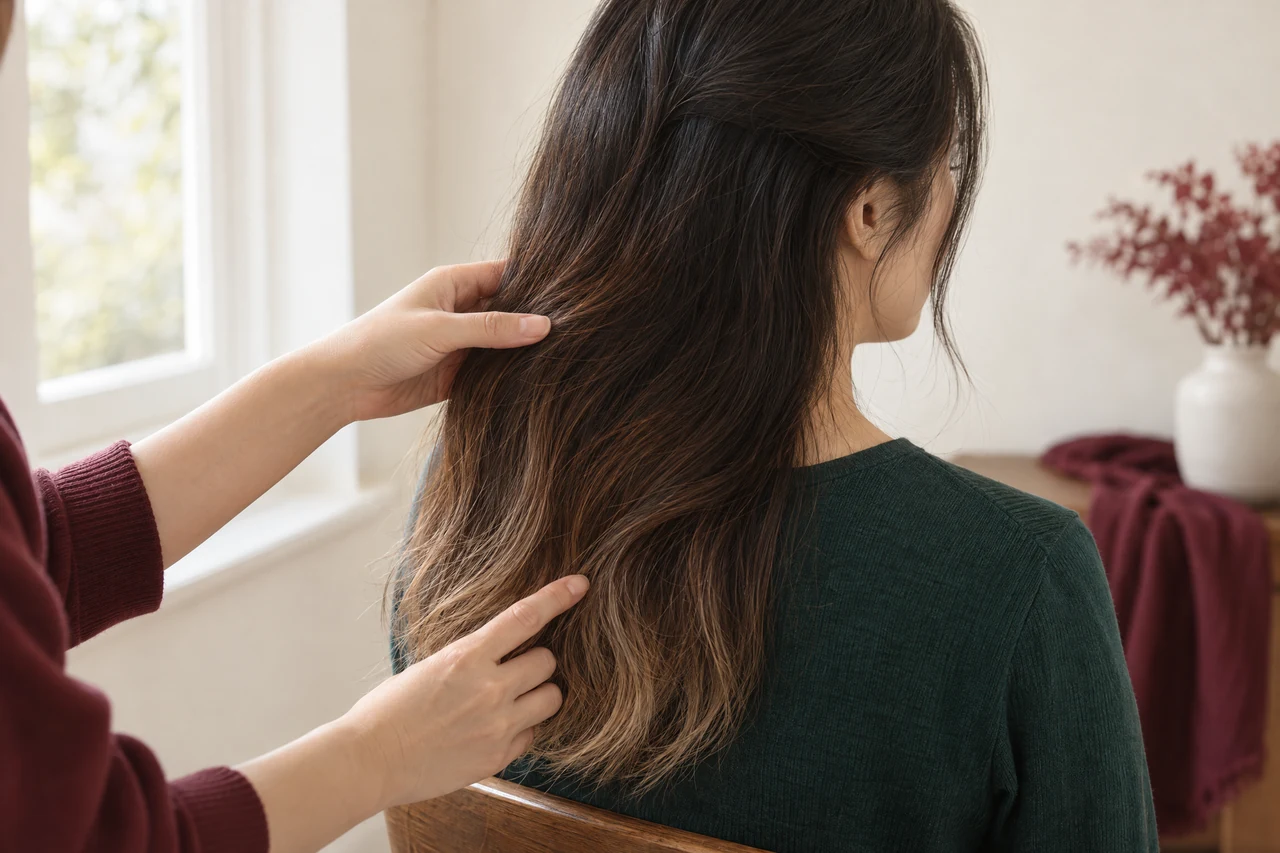
Prioritise the most visible contrast rather than every strand
Show the uneven areas with the parting and shape you normally wear. A visible front section may matter more to you than a less noticeable area underneath. Explain the depth you want to preserve and any length you are willing to trim, so the assessment can consider a realistic improvement rather than a promise of perfect uniformity.
Think about the situations in which the contrast bothers you. Hair worn down for work exposes a different surface from hair tied up for exercise. A centre part may reveal a light patch that disappears with your usual side part. Show both the everyday arrangement and any regular tied-up style, so the priority is based on what you actually see rather than only a carefully styled reference photograph.
Compare possible directions before choosing a shade name. Bringing lighter areas towards a deeper overall look is a different goal from making a dark band as light as the ends. Softening a boundary while keeping some dimension is another option to discuss. Wella's professional guide to fixing banding describes selectively breaking up bands while retaining a darker base. This illustrates why reducing visible contrast need not mean making every strand the same colour; it is not a formula recommendation for your hair.
Define an acceptable improvement in your usual hairstyle
Write down your main priority and a boundary you do not want crossed. You might want a less obvious middle stripe while keeping depth near the face, or a pale section made less distracting without losing length. Then explain what you could accept between visits: some remaining warmth, a deeper overall appearance or a softer rather than invisible transition. These are choices to assess, not outcomes to assume.

Allow a revised goal when condition limits the change
Different hair segments may not be suitable for the same work at the same time. Ask what could be considered now, whether a less dramatic target is preferable and what needs reassessment later. Avoid applying a uniform home formula across all bands while the history and condition of each section remain unclear.
Tell the colourist about sections that catch during detangling, feel unusually rough or have started breaking. Describe what you notice without assigning a home diagnosis. Wella's banding guide includes consultation and a strand test before correction; ask whether testing is appropriate for the areas being considered. A test on a selected section can inform a professional decision, but it does not turn all differently processed lengths into the same starting point.
The American Academy of Dermatology's colouring and perming advice notes that these treatments can leave hair dry and brittle, and that substantial lightening carries greater damage risk. That supports discussing condition before pursuing a lighter target; it does not determine which colour will look best. If previously lightened lengths are part of your map, review hair care after bleaching alongside the colour discussion rather than treating more colour as the answer to every concern.
Ask which areas should be left alone or reviewed later
Ask the colourist to distinguish the proposed correction area from hair that would remain untouched. If the goal changes after assessment, request a description of the revised finish before agreeing to proceed. Leaving a vulnerable section alone, adjusting the target depth or trimming ends may be preferable to insisting on the original reference. Waiting is a planning choice, not a promise that damaged lengths will become suitable for further lightening simply with time.

Compare the correction scope before agreeing to the visit
A request to fix patchy colour is not a complete service specification. Ask which zones the quote covers, whether lightening or colour removal is being considered, and what finishing colour work is included. Confirm any haircut separately. A routine colour price should not be treated as a guaranteed total for an assessment-led correction involving different bands.
When considering options, use how to compare hair colour quotes to focus on included work rather than the lowest headline figure. Ask what happens if testing changes the plan and whether later work would require a new quote. Give your budget boundary before choosing the scope, so an acceptable first stage can be discussed without assuming that the entire transformation is included.
Continue with colour correction for that specific comparison and the preparation questions it raises.
Agree on the first-stage finish and the stopping point
Before proceeding, check that you and the colourist mean the same thing by improvement. Identify the contrast being addressed, what may remain visible and why the work would stop there. Mention travel, a work commitment or an event deadline early, but do not let a deadline substitute for assessment of what the hair can reasonably undergo.
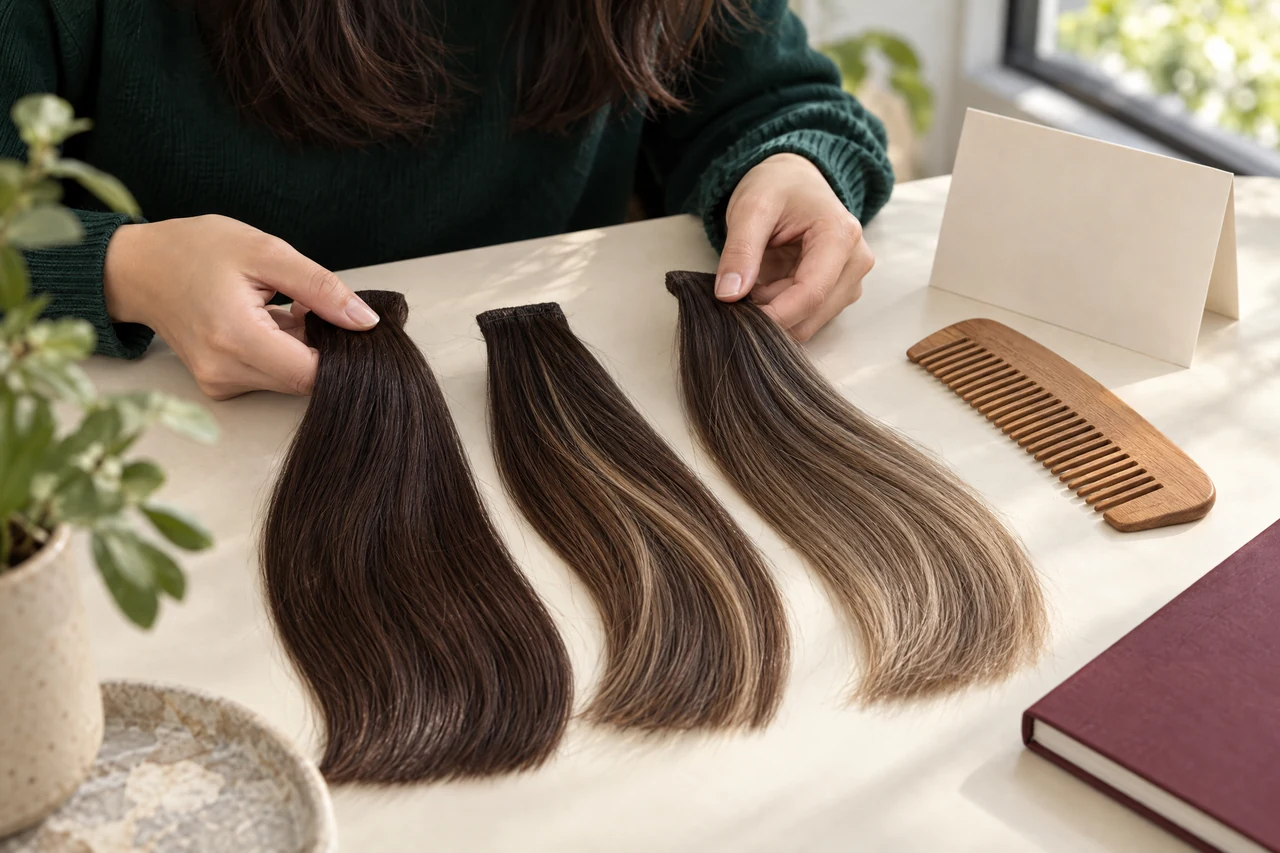
Keep a comparable record between correction stages
After any agreed work, photograph the same zones in the same dry hairstyle and comparable light. Record the date and the products you use afterwards. This gives a more useful basis for follow-up than comparing a freshly waved salon finish with flat hair photographed under a different lamp. Note changes in feel separately from changes in colour so the next discussion can address both.
Follow the advice given for the actual service before adding purple shampoo, tinted masks or another home dye. These products may change the appearance you are trying to document and should be included in your next update. The AAD also advises protecting coloured and bleached hair from sun exposure. Keep everyday care practical while preserving a clear record of the remaining bands.
Bring the same priorities to the reassessment
Use the 6-step preparation checklist below to keep your photos, history and decisions together. At follow-up, explain whether the original priority still matters most or whether the first-stage finish has changed your preference. Further correction should be a fresh decision based on the current hair, not an automatic continuation towards a reference you no longer want.

Visible patterns to record before discussing patchy hair colour correction
| What you can see | What to record | Decision to discuss |
|---|---|---|
| A darker strip across the middle lengths | Its upper and lower boundaries, width and known application history | Whether softening its edge or reducing the depth difference is the priority |
| A pale patch within deeper hair | Its position with hair down and tied up, plus any known lightening | Whether to reduce its prominence while preserving nearby depth |
| Roots, middle and ends of different depths | Separate views of each segment and the transitions between them | Which segments could change and which should remain untouched |
| Warmth across otherwise similar-looking depth | Comparable-light photos showing tone separately from bands | Whether the concern is mainly tonal rather than a depth correction |
| A contrast concentrated in rough or breaking lengths | Where handling feels different and what processing is known | Whether a revised colour target, limited work or trimming is preferable |
Your preparation checklist
- Photograph the whole hairstyle and the named patches in comparable light, without filters.
- Describe each area's position, depth, tone and boundary without guessing its cause.
- Prepare a timeline of colouring and other chemical services through the lengths you still have.
- Choose the contrast that matters most and state the depth and length you want to preserve.
- Discuss section assessment, any suitable testing, untouched areas and an acceptable interim finish.
- Confirm the quoted scope, possible changes after assessment and the follow-up arrangements before proceeding.
Frequently asked questions
Will one toner remove every colour band?
No such result can be assumed. Bands of different depth and an unwanted tone are different concerns. The areas, previous processing and desired change need assessment.
Should I photograph the hair wet or dry?
Show how the unevenness looks in your normal dry hairstyle, in comparable light. Additional views may help the discussion, but photographs do not replace assessment of the hair itself.
Can a patchy finish be corrected in one visit?
That cannot be confirmed in advance. The differences between areas and their processing histories affect the scope. Ask about an acceptable interim result and whether staged work is appropriate.
What if I cannot remember the dye I used?
Say which details are missing and bring any packaging, purchase record or older photograph you can find. An approximate date and application area are still useful. Do not replace an unknown product type with a confident guess; uncertainty belongs in the history so it can be considered during assessment.
Should I cover the patches with a darker home dye before enquiring?
Send your current photos and history first rather than adding another application solely to hide the pattern. Making the hair look darker is not the same as establishing a suitable correction plan. Any new colouring would also need to be included in the processing record.
Make your uneven areas easier to assess
Enquire with Vit So in Sheung Wan using comparable-light photos, your processing timeline and the contrast you most want softened. Include your preferred depth, length boundary and any deadline so the feasible scope can be discussed. An enquiry is not a confirmed booking; the service plan, timing and quote need confirmation before your visit.
Start your WhatsApp enquirySources & further reading
- How To Fix Banding
Professional banding discussion supports consultation, strand testing and selective contrast reduction, with further sessions considered where needed rather than a universal single-visit fix.
- Coloring and perming tips for healthier-looking hair
Supports considering dryness, brittleness and lightening-related damage risk before further chemical work, and protecting coloured or bleached hair from sun exposure.



