






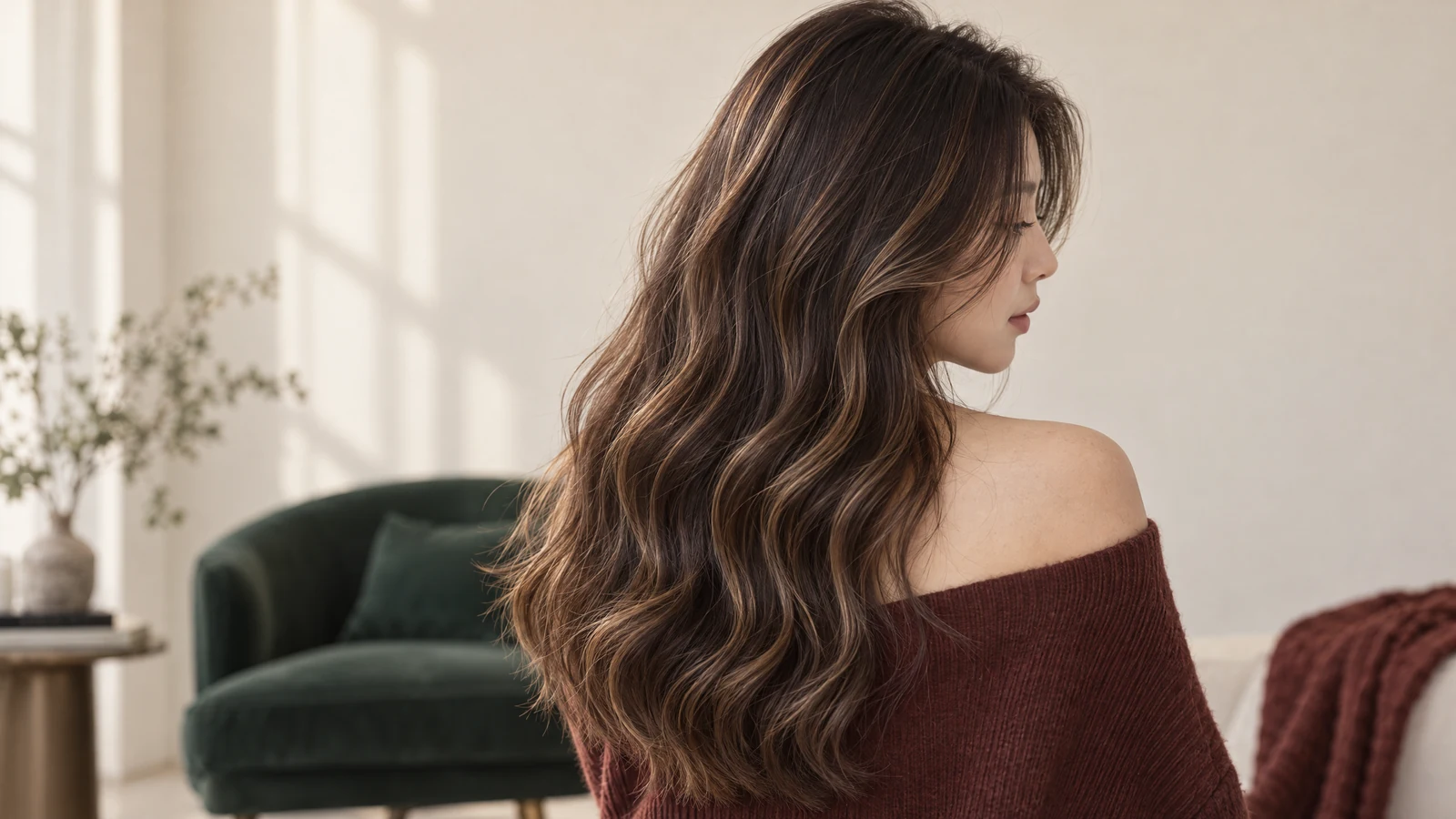
Bronde balayage: balance brown depth and blonde lightness
Dimensional hair colour relies on visible differences in depth rather than one uniform shade. In a brown-and-blonde design, retaining deeper areas can matter as much as adding lightness. Look at the proportion of brown to blonde in a reference and whether the lighter ribbons are concentrated around the face, through the lengths or at the ends.
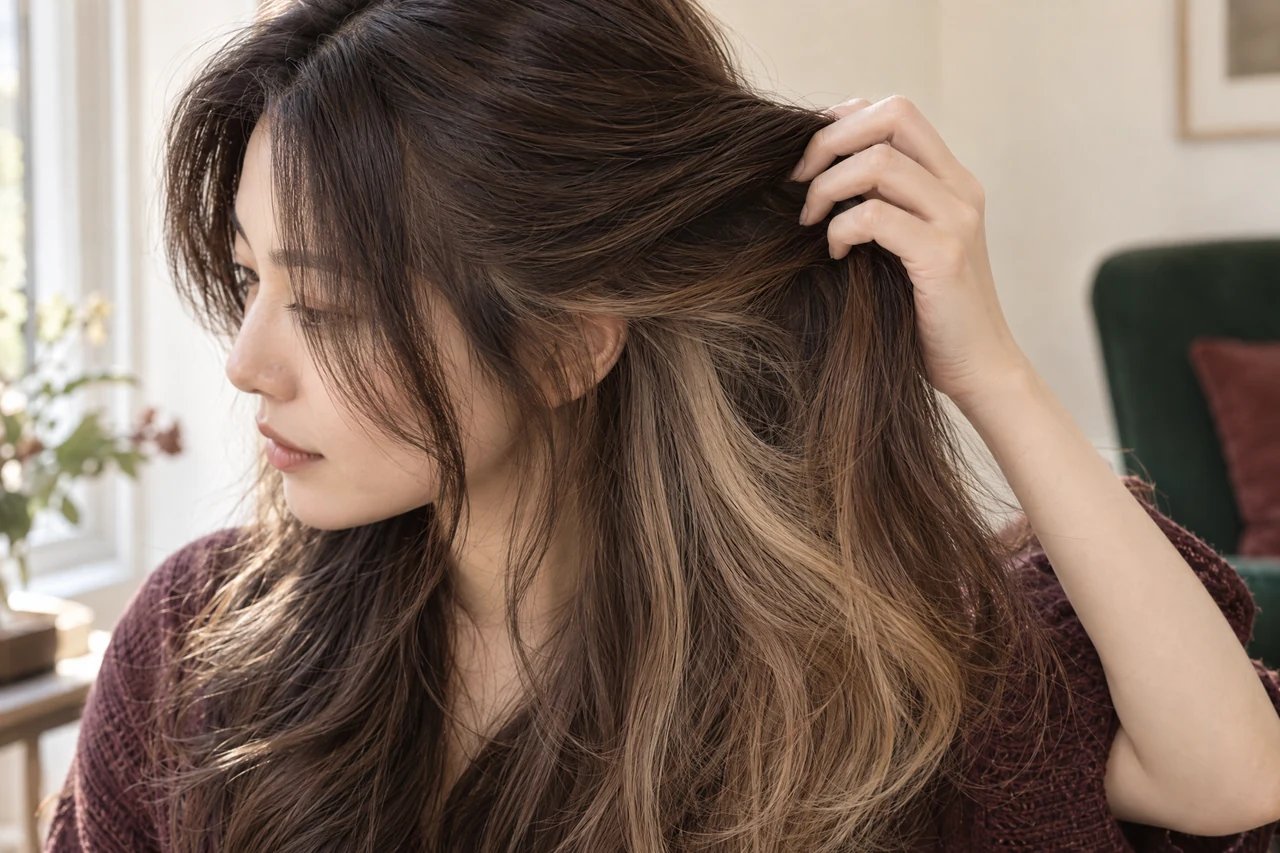
Start by deciding whether you want to read as brunette with light running through it, or blonde with brown still visible between the lighter areas. Both photographs might carry the bronde label, yet they can look very different across a room. If you like your current dark outline, point to the crown and the underneath sections you want to retain, rather than asking only for more blonde. Those darker areas give the bright strands something to contrast against.
Bronde is not automatically caramel. In its ash blonde colour guide, Wella Professionals includes ash bronde as a brown-blonde combination with extra depth. That makes bronde and ash useful descriptions of different parts of a design, rather than mutually exclusive choices. You can prefer a brown-dominant balance while asking for cooler lighter reflections, provided the starting colour and hair condition support that direction.
Review balayage hair colour to check its service scope and the details to share before arranging the related work.
Bronde balayage with enough darker space
Look at the hair in its ordinary position, not only separated into styled waves. Wide bright ribbons can become prominent panels when the hair falls straight; fine ribbons may blend into a softer overall impression. A reference with large dark gaps will not read the same as one packed with light strands, even if the blonde tone is similar. For shoulder-length hair, also inspect the ends: a mostly light lower edge can make the whole cut feel blonder than a dark perimeter with scattered brightness. Describe both the amount of blonde you like and the brown you would miss.

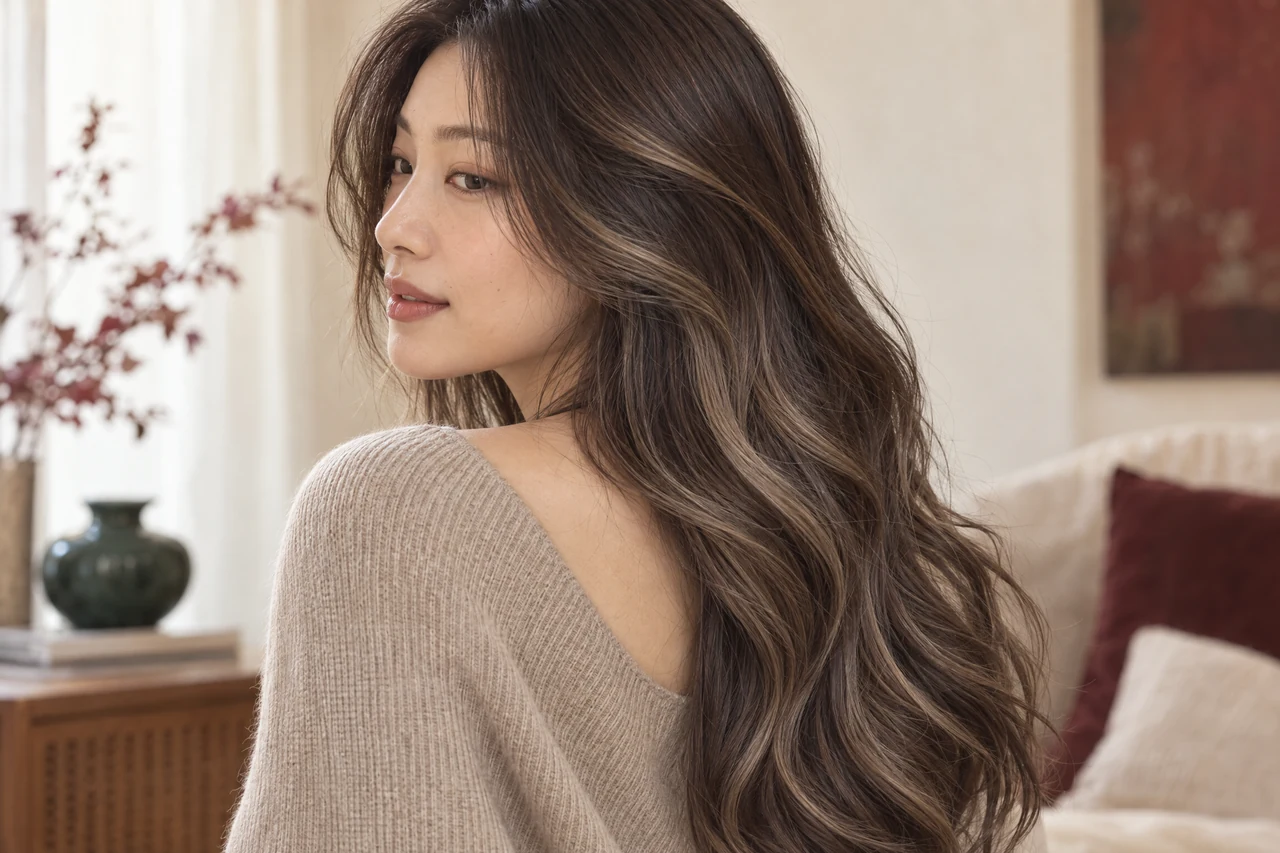
Ash blonde balayage: distinguish cool tone from pale depth
A cool impression is not the same as very pale lightness. Existing warmth, artificial dye and earlier bleaching influence what can be achieved and maintained. Agree which matters more: a cooler reflection or a brighter result. Toner may adjust the visible tone, but it is not a substitute for assessing the required lightening.
An ash reference can be smoky and relatively deep, or visibly pale with silver-looking strands. Before using either as a target, identify whether you are drawn to reduced gold, extra brightness or the contrast with the roots. Wella's dark ash blonde explanation describes a deeper cool direction and separates suitable pre-lightening from subsequent toning. For a client, the practical question is whether the lighter areas need a change in depth, a change in reflection, or both.
If you want a cooler result but do not actually want to look blonde, compare ash brown hair colour before selecting a much lighter photograph. A deeper cool reference may communicate your preference more accurately. Conversely, if brightness matters more than a fully smoky finish, a neutral beige direction may be worth discussing. Avoid choosing the palest photograph simply because its caption says ash.
Continue with highlights on dark hair for that specific comparison and the preparation questions it raises.
Ash blonde balayage depends on the starting colour
Bring the history of the lengths as well as the roots. New natural growth, previously tinted mid-lengths and older bleached ends may have different starting conditions within the same hairstyle. Mention home colour, henna or other colouring products, and any straightening or perming still present in the hair. If you cannot identify a product, bring its packaging or a photograph rather than guessing. Ask which parts of the reference are feasible now and which would require a different approach. That conversation is more useful than requesting a toner by shade name without knowing what it would be applied over.
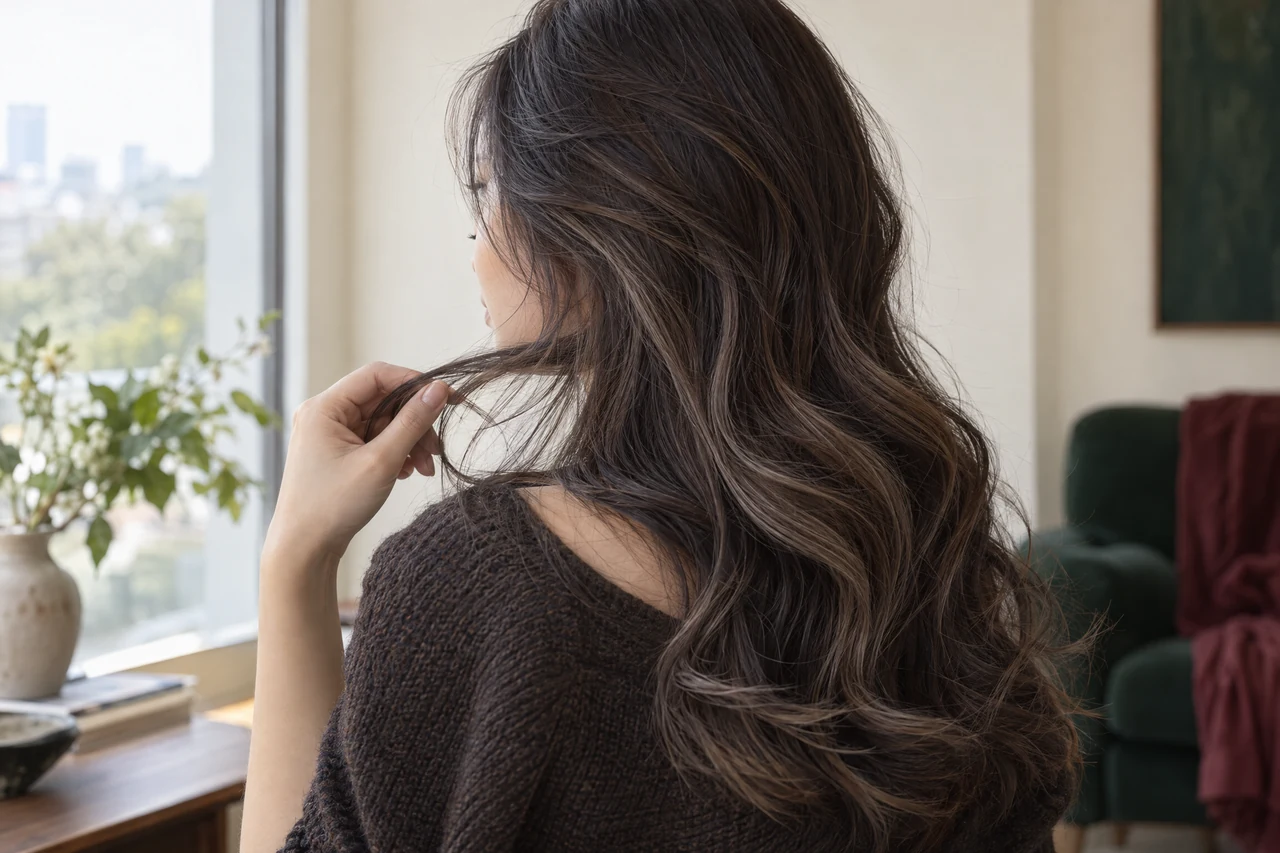
Caramel warmth and sunlight-inspired brightness
Caramel highlights on brown hair suggest a warm brown-to-golden direction, while sun kissed balayage describes brightness placed to resemble a sunlit effect. Neither is one standard shade. Compare the warmth at the roots, lengths and ends in ordinary light, and point out any orange or very yellow impression you would prefer to avoid.
Warmth is a preference to describe, not a defect to remove in every design. You may like a softly golden edge against brown but dislike strongly copper-looking ribbons. You may also like a warm overall impression while wanting the front pieces to look more neutral. Point to those areas separately. Saying that you like the golden reflection but not the orange-looking ends gives a clearer direction than calling the whole photograph too warm.
Sunlit placement and warm tone do not have to travel together. A reference may look sun kissed because the face and ends are brighter while the crown stays deeper, even when those lighter areas are beige rather than strongly golden. For Hong Kong daily life, consider the places where you will usually see the colour: an office mirror, window light at home or an evening restaurant. A tone that appeals under a bright window may feel more golden under a warm lamp; use both views when deciding what you like.
Compare reflections, not just colour names
Keep the lighting comparison fair. A close-up in direct sunshine can make a few strands appear much brighter than a shaded rear view of the same head. Ask for references that show the root area and the full length, and include a view without dramatic styling if you usually wear your hair straight. Wella distinguishes ash from more neutral beige in its colour guide, but a screen label cannot tell you how that finish will appear beside your own base. Treat caramel, beige and ash as starting vocabulary; the visible balance in the photograph should guide the discussion.
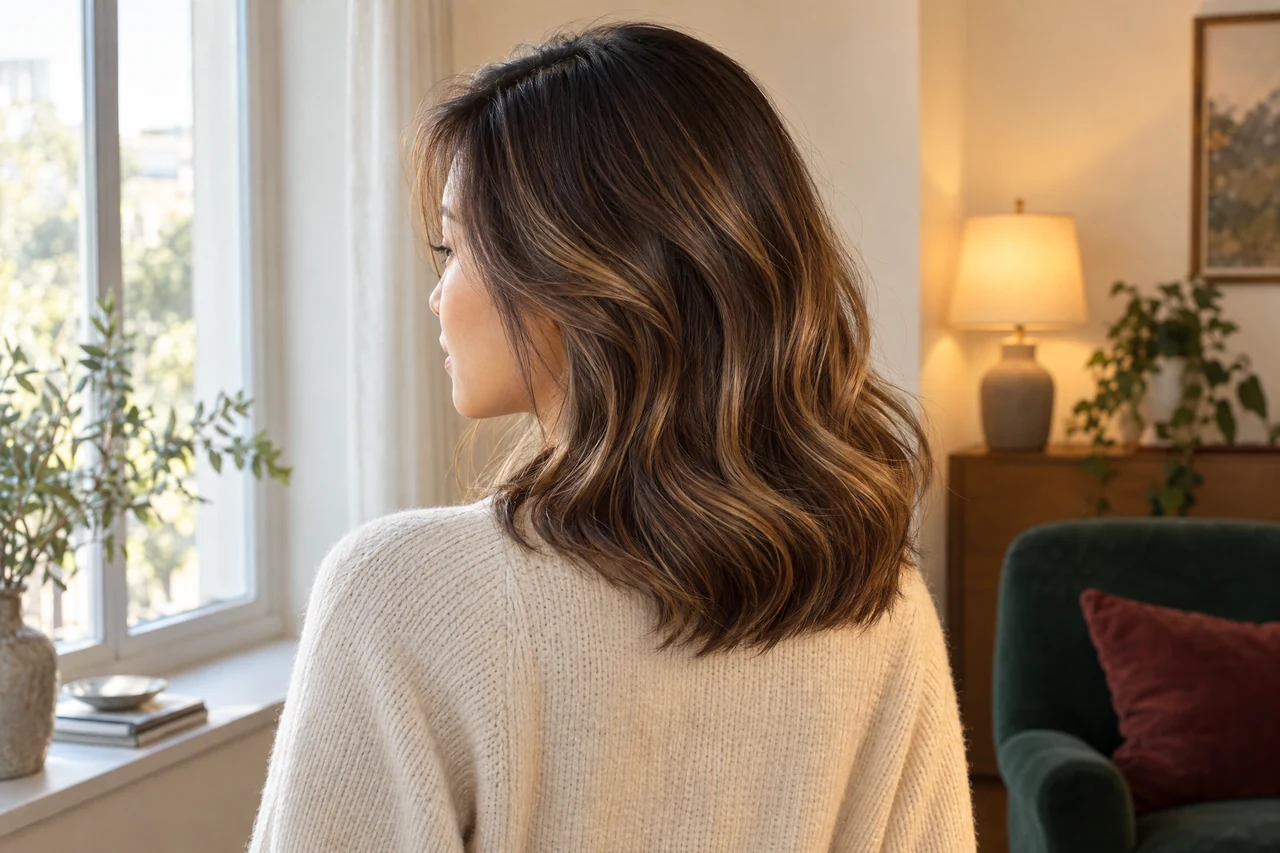
Plan the tone you can maintain
Choose a reference you still like when the finish becomes warmer or less crisp. Cooler tones may need review as they fade, while any lightened area needs suitable care. Ask how tone changes might be managed without repeatedly lightening the same strands; there is no universal refresh interval or permanent shade guarantee.
Separate the maintenance of the colour pattern from maintenance of its reflection. You might still like where the bright ribbons sit after growth appears, yet want their warmer tone adjusted. Alternatively, you may like the colour of the ends but feel that the lightness now starts too far down. Explain which change bothers you before requesting the same service again. Wella's dark ash guidance notes that neutralising warmth requires upkeep, so a cool finish should come with a discussion of how you will recognise a useful review point.
When the lighter areas become warmer, use toner or colour correction for brassy hair to frame the question around the actual problem. A tonal change, uneven depth and an unwanted bright band are not identical concerns. Record a clear photograph in familiar lighting and explain whether the issue is widespread or confined to specific strands. This helps keep the next decision focused on the area that needs attention.
The American Academy of Dermatology's colouring and perming advice explains that sun exposure can leave dyed or bleached hair dry, rough and faded, and recommends a wide-brimmed hat outdoors. If outdoor weekends or a long trip are part of your routine, mention them when choosing the tone. Protection and suitable care support the lengths; they do not turn a cool colour into a permanent finish.
Continue with balayage aftercare for that specific comparison and the preparation questions it raises.
Colour changes as tone fades and the hair grows
Choose your tolerance before choosing your refresh plan. Would a softer beige reflection still feel attractive, or would any return of gold prompt an enquiry? Does dark regrowth fit your preferred brown-blonde balance, or do you want brightness nearer the face? If you travel frequently or prefer fewer salon visits, explain that constraint rather than assuming every balayage will be low maintenance. Ask for care instructions matched to the actual finish, including whether a pigmented product is appropriate. Do not add stronger or more frequent toning products simply because the shade name contains ash.
Turn a colour reference into a clear consultation brief
Use the 6-point checklist below to prepare a bronde or ash blonde colour enquiry. It brings the reference, your starting hair and your maintenance preference into the same conversation. You do not need to arrive with a technical formula. A useful description might be brown still visible through the back, brighter pieces beside the face, and a neutral reflection rather than strong gold. These are design preferences, not a prediction of the finished result.
For an enquiry in Sheung Wan, send current photographs with the hair loose and the root area visible. Pair them with your preferred reference and explain what attracts you to it. A second, less-preferred photograph can clarify a boundary, such as too much blonde at the ends or a cooler finish than you want. Keep that explanation short enough to identify the priority. The discussion can then focus on a suitable direction instead of trying to reproduce every feature of an edited image.
Agree what matters most if the reference needs adapting
Rank the result you most want to keep: a brown-dominant outline, visible blonde brightness or cooler reflections. If your hair history limits the original reference, that priority helps guide an alternative without losing the reason you chose it. Ask what work the proposed plan includes and what follow-up may be needed for the tone. Confirm the quote and appointment arrangements after the assessment; the words bronde and ash blonde alone do not establish the scope of a booking.

Compare the visual priorities behind bronde, ash blonde and warm balayage references, rather than treating the names as fixed formulas.
| Reference direction | What to inspect | Useful consultation question |
|---|---|---|
| Brown-dominant bronde | Brown remains visible at the crown, between ribbons and around the ends. | Which darker areas can stay while the lighter strands become more noticeable? |
| Blonde-dominant bronde | More of the lengths read light, with deeper strands providing contrast. | Do I like the amount of blonde when the hair is loose and uncurled? |
| Ash blonde balayage | Cooler reflections; the lighter strands may be deep or pale. | Is my priority less gold, greater brightness or both? |
| Caramel on brown | Warm brown-to-golden reflections beside the base. | Where do I enjoy warmth, and which orange-looking areas would I avoid? |
| Sunlight-inspired placement | Brightness around selected areas with deeper space retained elsewhere. | Do I like the placement independently of the warm or cool tone? |
Your preparation checklist
- Choose a preferred reference showing the roots and full lengths; identify the brown-to-blonde balance you want to retain.
- Photograph your current hair in ordinary window light, with the crown, mid-lengths and ends visible rather than hidden in a curled finish.
- List previous colour, bleaching and chemical services still present in the lengths, including home products where known.
- Describe your preferred reflections separately from brightness; point out any strong gold, orange or smoky grey you would not enjoy.
- Explain your everyday styling, outdoor plans and tolerance for warmer tone or dark regrowth between reviews.
- Ask which priority is feasible, what the proposed work includes and how the tone might be reviewed before confirming the quote and appointment.
Frequently asked questions
Does bronde always mean a warm finish?
No. It describes the relationship between brown and blonde more than one fixed temperature. Use a photograph to show the warmth or coolness you prefer.
Can toner make any hair ash blonde?
No. The existing depth and pigments limit the result. Tone adjustment and the amount of lightening are separate decisions.
How should I compare two similar photos?
Look at the darker areas, lighter strand width and reflections under similar lighting. Screens and editing can shift colours, so treat the photos as preferences rather than exact targets.
Make your brown-blonde and cool-tone preferences easier to discuss
Share your current hair photographs, colour history and preferred reference with Vit So in Sheung Wan. Explain whether keeping brown depth, adding brightness or reducing warm reflections matters most, so you can discuss a suitable direction and the work involved. An enquiry starts that conversation; it is not a confirmed booking or an exact shade promise.
Start your WhatsApp enquirySources & further reading
- 10 Ash Blonde Hair Ideas for Cooler-Than-Cool Color
Professional colour vocabulary distinguishing cool ash from neutral beige and showing ash bronde with retained brown depth.
- How to Create Dark Ash Blonde Hair
Deeper ash blonde, the distinction between pre-lightening and toning, and upkeep as warmth becomes visible again.
- Coloring and perming tips for healthier-looking hair
Sun exposure and practical outdoor protection for dyed or bleached hair; not an assessment of a hairstyle's appearance.



