







Observe bangs for curly hair when naturally dry
Compare where the front sits when wet with where it lands after ordinary drying. Notice the shortest visible point and whether neighbouring curls form different shapes. Avoid describing the whole front through one stretched measurement; the useful question is which dry length you can comfortably wear while the curls remain in their usual pattern.
Begin with the front as you normally wear it, rather than arranging every curl into a matching row. Let your usual parting settle and keep your head upright. Look at the curl ends against familiar landmarks: the eyebrows, the space above them and the outer corners of the eyes. These are conversation points, not cutting instructions. Describe whether you like the forehead coverage or find yourself moving hair away from your sightline.
A wet photograph and a fully dry photograph are most useful when they show the same parting and a similar angle. If the wet front reaches the eyes but the dry centre sits above the eyebrows, record that difference in plain language. Do not calculate a universal allowance from it. The photograph shows the behaviour of your existing hair on that occasion, not a guaranteed landing point after shortening.
Bangs for curly hair and the shortest dry point
Pay attention to the curl that sits highest, even if most of the fringe hangs lower. Ask yourself whether you would enjoy that amount of exposed forehead across more of the centre. Also distinguish a short-looking curl from a curl temporarily held up by a clip or pushed aside. You can point out the area without stretching it; showing where it naturally rests keeps the discussion connected to the finish you intend to wear.
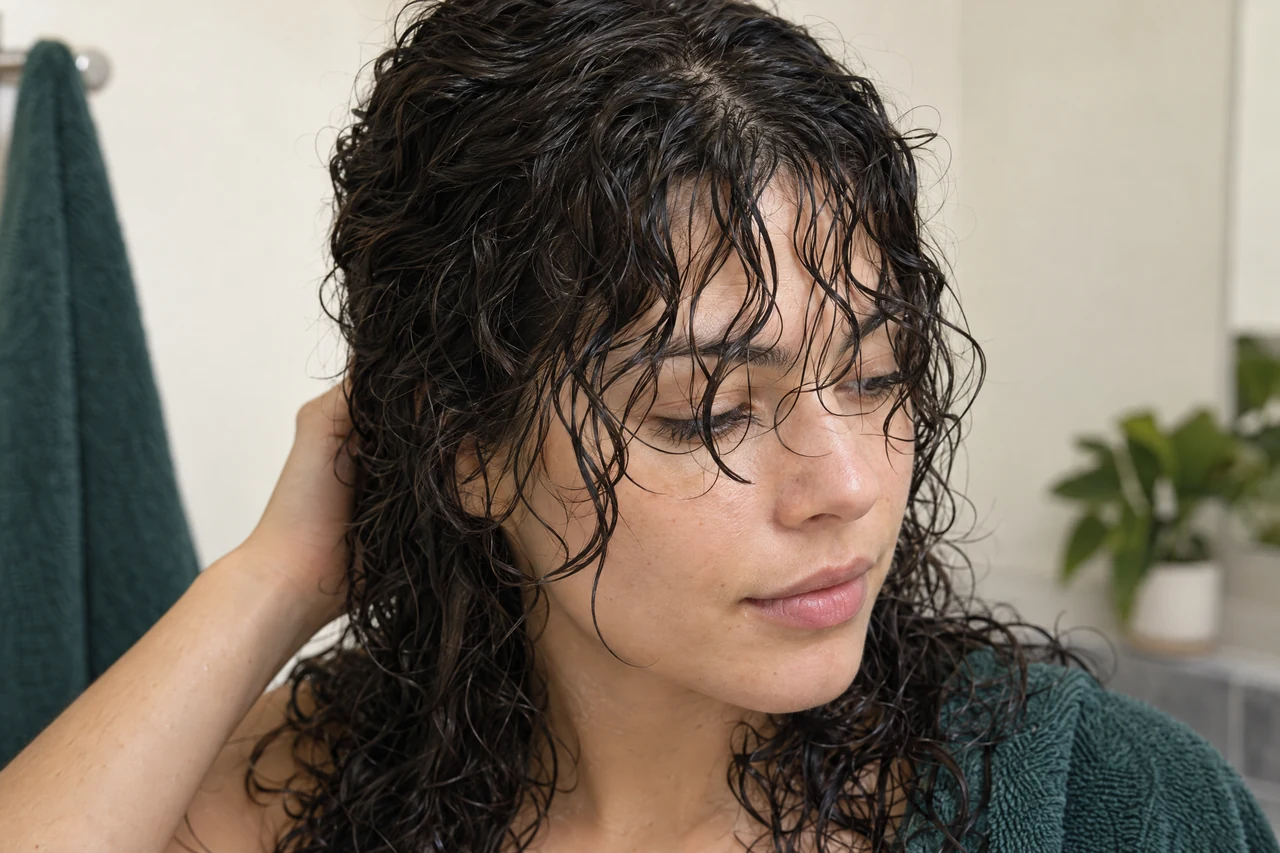
Separate centre curls from the side connection
The centre front and the pieces near the temples may have different curl patterns or growth directions. Identify whether you want forehead coverage, an open centre or longer side pieces. Discuss the connection to the rest of the hair so that the front is considered as a set of related zones, not one uniform strip.
Decide how you want the forehead to look before choosing a style name. A softly covered centre can still have visible spaces between curl groups. An open centre lets the front fall to either side, but it needs a parting you are comfortable maintaining. Longer temple pieces can connect the forehead curls to the cheek area; keeping them does not mean the centre must stay equally long.
Continue with fringe cut for that specific comparison and the preparation questions it raises.
The surrounding haircut matters when you turn your head or tie the back away. Ask which pieces belong to the fringe and which are part of the face-framing length. If your concern extends to the whole outline rather than only the forehead, separate that discussion from the front-length decision.
Continue with haircut for naturally wavy hair for that specific comparison and the preparation questions it raises.
The corners do not always behave like the middle
Check each temple independently. A piece that turns outward beside the eyebrow may create a different outline from a centre curl that coils upwards. Mention whether you tuck the side pieces behind your ears or leave them loose with a ponytail. Preserving that option may take priority over making both corners look identical in a front-facing photograph. Explain the movement you want to keep as well as the outline you want to change.
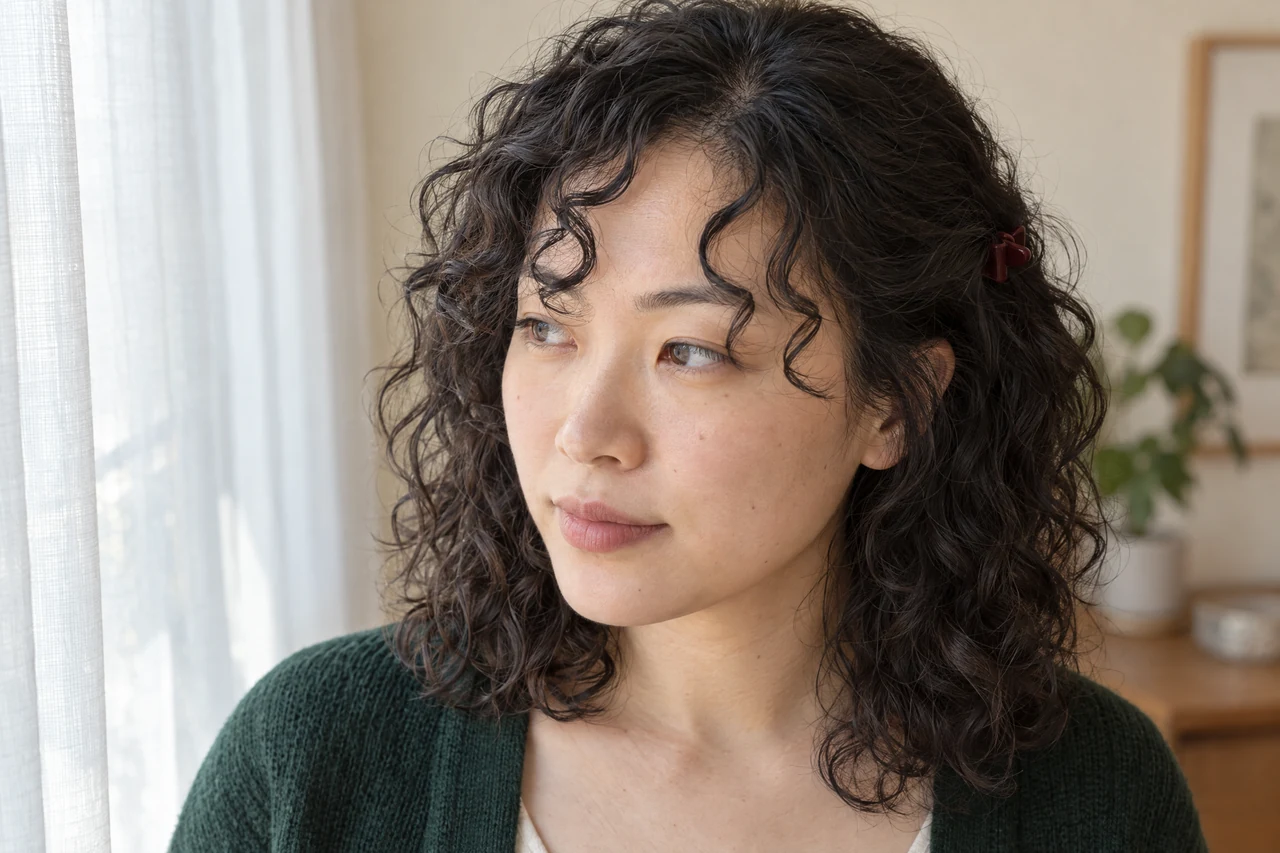
Bring your ordinary routine into the discussion
Explain whether you air-dry or use a dryer and which products are already part of your routine. A photograph taken after heat styling does not show the same demands as a naturally dried fringe. Share a view of your own usual finish and describe what you can repeat, rather than choosing a shape solely from its polished presentation.
Be specific about the front, which may receive different attention from the rest of your hair. Do you set the parting while it is damp, use a diffuser or simply leave it alone? Do you refresh the forehead curls separately after sleeping? Tell the stylist which steps are dependable on a working morning and which belong only to special occasions. This makes the proposed fringe easier to assess against your actual time and tools.
Gentle handling matters when collecting your observations. The American Academy of Dermatology's curly-hair care advice recommends wetting and conditioning curly hair for detangling between washes and avoiding dry brushing to reduce breakage and frizz. There is no need to brush a dry fringe straight for a length record. Observe the curl groups as worn, and mention any detangling or product steps used beforehand.
Air-drying, products and handling the front
Distinguish your least-styled finish from a finish you enjoy creating. Both can be relevant if you regularly alternate between them. Label photographs accordingly instead of presenting a blow-dried image as natural air-drying. For a Hong Kong commute, you might also note whether the fringe looks different after arriving at work. Report your own experience of the change; it is more useful than expecting a photograph taken indoors to represent every part of the day.

Leave room for uncertain changes in the curl
There is no universal amount of extra length that guarantees the same dry result for every curl. Explain the shortest point you do not want to cross and discuss the scope of the change. Cutting, styling and chemical straightening are different choices; a fringe enquiry need not automatically include a chemical service.
In Allure's interviews about curly bangs, hairstylist Wes Sharpton advises considering how curls spring up and starting longer to observe their response through the wearer's own washing and drying routine. Ryan Trygstad also describes longer bangs as offering more parting and pin-back options. These are useful trade-offs to discuss, not reasons to rule out a shorter fringe that you genuinely prefer.
Set priorities in words that can guide a decision: keeping the centre below your preferred dry boundary, preserving side pieces or accepting a more exposed forehead. If you are nervous about the change, ask whether a more conservative starting shape would suit your goal. Confirm how the dry appearance will be considered during the appointment without assuming a named specialist method.
Review women's haircut to check its service scope and the details to share before arranging the related work.
Agree on priorities before shortening
Make clear which inconvenience you are trying to solve. Hair entering the eyes, a centre that feels too heavy and temple pieces that no longer connect are different requests. Shortening everything may sacrifice an option you value without addressing the right area. If you want natural curl preserved, say so directly. Any proposal to change the texture deserves a separate conversation about the intended result, hair history, upkeep and price.
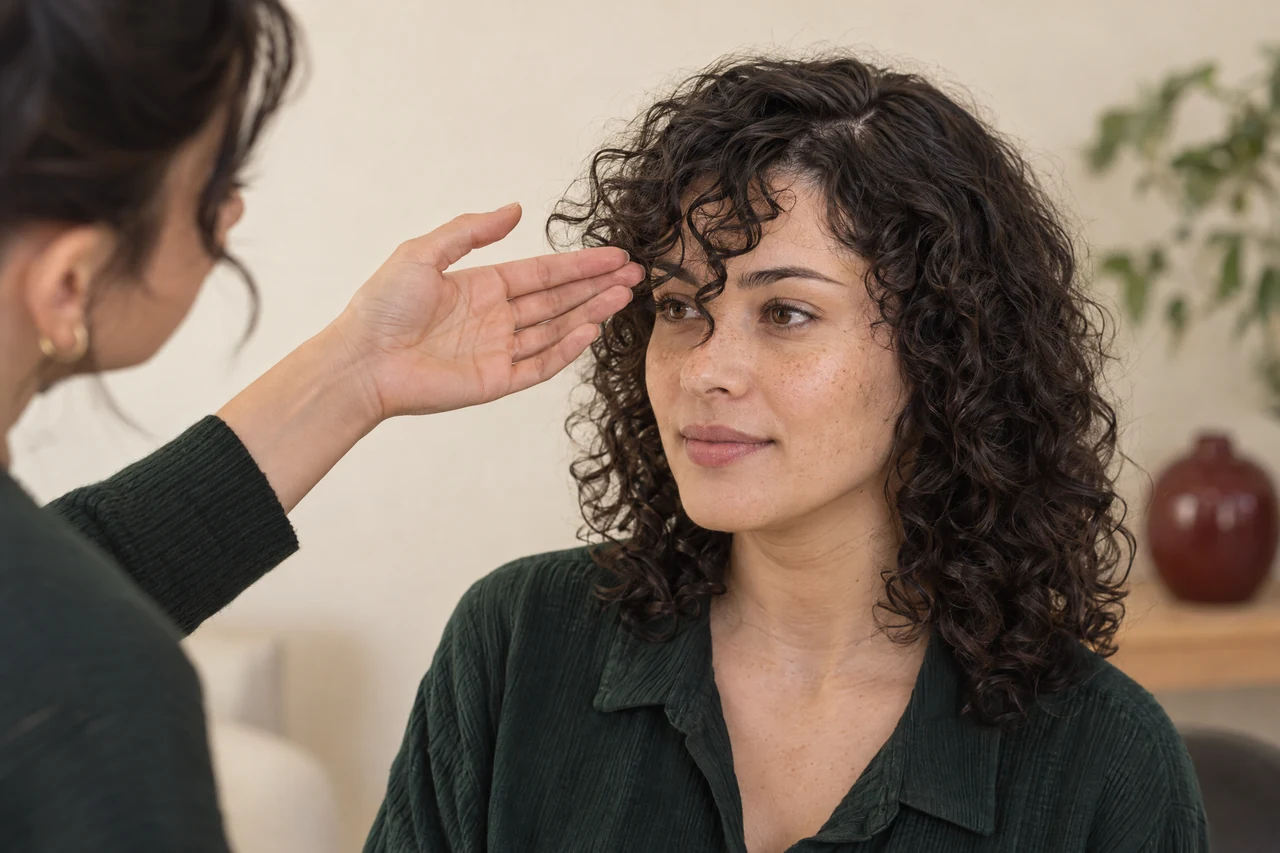
Prepare a useful curly-fringe photo record
Your own photographs can show details that a saved hairstyle image cannot. Include the front and an angled view so the temple connection remains visible. Keep the hairline and eyebrows in frame, and avoid tilting your head to make the fringe appear longer. When comparing haircut reference photos, identify the feature you like, such as the centre opening or longer corners, rather than asking for every detail to be copied.
The 6-step checklist below organises the preparation around your current curl behaviour and the change you want. You do not need a technical curl label or a precise shrinkage calculation. A short note about your ordinary routine, the area that bothers you and the length you wish to protect is enough to make an initial enquiry more focused.
Explain a length boundary without a stretched measurement
A useful request might be: 'I want some forehead coverage, but I do not want the shortest dry centre curl higher than this point. I would like to keep the temple pieces longer.' Point to the boundary on your own photograph and explain why it matters. This expresses a preference rather than promising that every curl will land on a perfectly even line. Ask how that preference relates to your existing front length.

Observe the fringe at home before changing the goal
After a haircut, look at the front under the routine you described. Separate a change in where the hair ends from a change in how the curl groups sit. Note whether the centre opens, the corners turn outward or the fringe enters your eyes during normal movement. If something feels difficult to wear, share a clear photograph and explain the handling used before it was taken.
Maintenance can mean preserving the same shape or gradually moving towards a longer front. Those goals call for different conversations. The guide to how often should i trim my fringe helps you describe what you want maintained or grown out. Avoid treating every uneven-looking day as a reason to shorten more hair; first identify whether the concern is persistent length, parting or a temporary styling change.
Keep the observation tied to comfortable daily wear
Judge the fringe while reading, looking ahead and wearing your usual glasses if applicable, not only while posing for a mirror photograph. A curl can move without the haircut failing your goal. The practical question is whether you can wear the front comfortably with the amount of attention you agreed to give it. For follow-up, describe the specific area and ask about next steps rather than assuming another cut or treatment is automatically needed.

Compare the front in different states before choosing a dry-length priority
| Observation | What it can clarify | What to discuss |
|---|---|---|
| Wet front with the usual parting | Where existing curl groups hang before drying | The visible difference from your ordinary dry finish, not a guaranteed cutting allowance |
| Fully dry centre without stretching | The shortest visible curl and forehead coverage | The dry boundary you want to protect |
| Dry temple pieces from an angled view | Side length and connection to surrounding hair | Whether tucking, pinning or loose face-framing pieces matter |
| Your repeatable product-and-drying routine | The finish you can create on normal mornings | Which styling steps are acceptable and which are not |
| A polished inspiration image | A preferred opening, outline or distribution of curls | Which feature you like and how your own front differs |
Your preparation checklist
- Photograph the existing wet front without pulling it straight, using your usual parting and an upright head position.
- Record the fully dry front after your ordinary routine, identifying the shortest visible centre curl.
- Add an angled view that shows both temple pieces and their connection to the surrounding haircut.
- Describe your regular drying method, products and any separate fringe-refreshing steps you are willing to repeat.
- State your preferred forehead coverage, shortest acceptable dry boundary and any side length you want retained.
- Ask about the cutting approach, appointment scope and quote, including whether you want only the fringe discussed or a wider haircut change.
Frequently asked questions
Does a curly fringe have to be straightened?
No. You can discuss a shape that works with the natural curl. Any chemical service is a separate decision that needs its own assessment and confirmation.
Can one wet measurement predict the dry fringe length?
Not reliably for every curl. Compare your ordinary wet and dry appearance and point out the shortest dry area you are comfortable wearing.
Does this guide confirm a specialist dry-cut service?
No. It helps prepare observations for a haircut enquiry. The actual cutting method and appointment scope should be discussed rather than inferred from the article.
Discuss a curly fringe around your everyday dry shape
Send Vit So your usual dry-front photographs and explain the centre length, temple connection and styling effort you want to keep. For an enquiry in Sheung Wan, ask about the appropriate haircut scope, cutting approach, quote and availability. An enquiry starts the discussion; your appointment is confirmed only after the details are agreed.
Start your WhatsApp enquirySources & further reading
- 6 curly hair care tips from dermatologists
Gentle detangling of curly hair and avoiding dry brushing when recording the usual fringe shape.
- Tips for Great Bangs With Curly Hair
Hairstylist perspectives on curl spring-back, observing a conservative starting length at home and the parting options offered by longer bangs.



