







Vit So and DT HUB have the same owner. The DT HUB links are promotional links to the related brand's own service information, not independent reviews or rankings. Their promotional link treatment is sponsored and nofollow. This article offers purchase-preparation guidance, not verified customer results or a statement of an individual order's terms.
Start custom wig approval checkpoints with an identifiable sample
A showroom sample can help you choose a direction without being a complete specification for your order. Ask which features it represents: cap construction, fibre, colour, density, hairline or finished shape. If you like its fringe but want different coverage, record that distinction. Otherwise, a general comment such as 'this one is good' may leave both sides with different expectations about what should be reproduced.
DT HUB's custom wig hong kong page describes sample selection, measurements and recording design preferences before production. Use that sequence to ask how your selected reference will be identified on your own order. A sample code, agreed photograph or labelled swatch can help, provided the studio confirms what it represents. The public page does not establish a universal sample sign-off form, so request the record rather than assume one exists.
Before approving, divide your notes into features you accept and features still to be decided. Include differences between the reference and the proposed piece. Vit So's guide to custom made wigs is useful for identifying fit and design priorities before this conversation; the approval record then turns those priorities into a specific scope. If the studio cannot explain an important difference, leave that item unresolved instead of authorising it by implication.
A reference photograph needs a stated purpose
With permission, keep front, side and back views where they clarify shape. Mark whether each image shows an accepted feature or inspiration only. A screen image alone cannot settle fibre quality or the feel of a cap, and lighting can affect apparent colour. Ask the studio to identify the physical reference that takes priority if images appear different.
Approve the fitting without approving every design detail
Fitting approval should describe the cap and wearing conditions you actually tried. Record how the piece was positioned, how your own hair was arranged underneath and which adjustment setting was used. Bring your ordinary glasses or other relevant accessories. If the sample feels acceptable only after the consultant changes its position, ask whether the proposed piece will use that same setup or require a different construction.
The wig fitting hong kong page describes private sample trials and discussion of measurements, materials and cap choices at DT HUB in Kwun Tong. Treat the trial as a chance to separate fit observations from design decisions. You might accept the ear position while leaving density or colour open. The page's descriptions of follow-up adjustments vary, so ask what adjustment work your actual order includes and under which conditions.
A fitting note is more useful when it identifies a location and movement than when it says only 'too loose' or 'uncomfortable'. Explain whether an edge moves when you turn your head or whether glasses meet the cap at one side. Ask the fitter to assess the cause before agreeing to a remedy. Removing hair bulk and altering a cap are not interchangeable actions, even if both might change how the area feels.
Repeat an ordinary movement, not a performance test
Check the setup during gentle head turns and a slight downward look, then compare what you notice with the agreed wearing conditions. A brief trial does not establish comfort for every activity or all-day use. If a contact point remains troublesome, pause the fitting decision and ask what can be assessed or adjusted rather than simply tightening the cap further.

Put colour, shape and included work into the quotation
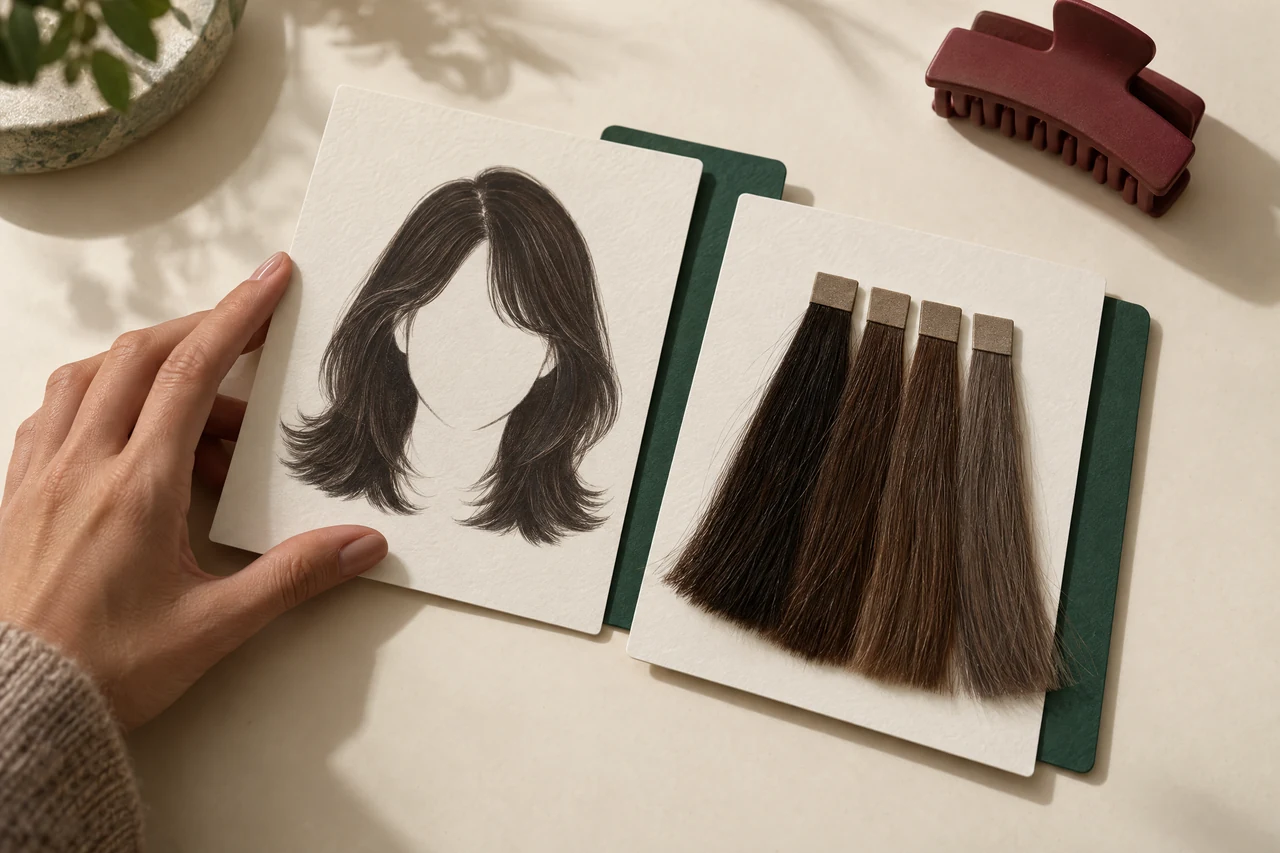
Once the references are clear, connect them to the written quotation. Record the fibre description, base construction and colour reference alongside the intended length and shape. Separate the longest hair from the shortest fringe or face-framing section. For density, ask whether the studio can describe different zones or use an agreed sample, rather than relying on a word such as 'natural' that can mean different things to different people.
DT HUB's wig price hong kong guide discusses material, cap construction, length and custom work as cost factors. Use it to distinguish your original specification from newly quoted changes, not to calculate a final bill from a general price range. Ask whether measurement, initial fitting and the agreed finishing cut are included, and identify later services that are separate. A quotation should explain the work attached to the amount, not just name a product.
For material and shade questions, custom human-hair wig quotes provides a focused preparation guide. Keep the agreed fibre and colour description in your wig production change request records so a later colour request can be compared with the original reference. New Zealand Consumer Protection recommends detailed written quotes or estimates and enough information about the work and other costs. [2] That supports practical record-keeping here; its legal rules are not being presented as Hong Kong purchasing rights.
Give separate permission for styling and cap alterations
A finished hairstyle and a finished cap need different kinds of approval. Before cutting, confirm the shortest acceptable fringe and the length you want preserved at the sides and back. Before cap work, ask which component would change and why. If you have approved the cap but not the fringe, say so explicitly; permission to improve the overall appearance should not leave the extent of either action undefined.
DT HUB's wig styling hong kong page describes trimming, layering and restyling, alongside cap-related alterations and colour services. Its range of services makes it important to name the action you are authorising. Ask whether a proposed cut is part of the original finishing work or a newly charged restyle. If a cap alteration is also proposed, request its scope separately rather than treating both tasks as one unspecified adjustment.
Where you are uncertain about a shorter shape, ask whether a staged cut can preserve room for another check. Hair removed from a wig will not grow back, so do not assume a shorter cut can simply be reversed. Equally, the description 'human hair' is not blanket permission for every colour or thermal process. Ask the studio to assess the actual fibre and construction before approving treatment, and confirm any effect on future care.
Record a correction differently from a new preference
Start a change discussion with the agreed reference and an observation, not a demand for an unspecified fix. A difference from the accepted colour sample needs a different conversation from deciding you now prefer another colour. Ask the studio whether it considers the request a correction to the original work, an included fitting adjustment or additional work. That classification should be discussed before agreeing to charges; a record alone does not settle responsibility.
Write the proposed change against the existing order: what would change, what must remain, who will carry it out and what fresh approval is needed. Ask for any fee and timing impact before authorising the action, including whether it affects other work. If a substitute fibre or base is proposed, request a revised scope rather than allowing a broad 'similar' description to replace the original specification. Keep the previous version so the revision can be understood.
The Hong Kong Consumer Council's renovation study recommends recording work and material specifications, price and work variations, and discourages treating a revised quotation as unnecessary after a change. [1] Renovation is a different sector, but the documentation principle is useful for a custom wig: connect the new instruction to the work already agreed. It does not create a wig-specific cancellation entitlement or prove that a particular seller handles changes well.
A message can be brief and still be specific
For example, a request could read: 'Please assess the right ear contact point against the approved fitting note. Keep the agreed fringe, colour and overall length unchanged. Confirm the proposed action, whether it is included, and any additional charge before proceeding.' This is an illustrative wording aid, not a customer case or a report of DT HUB's procedure.
At handover, compare the record before agreeing to more work
At collection, compare the finished piece with the current specification under the agreed wearing setup. Review cap position separately from colour and shape. If something differs, identify the feature before another cut or alteration is suggested. A useful handover record states what you have checked, what remains unresolved and what action has been proposed. Avoid accepting an undefined solution merely because it can be done during the same visit.
If your search began with best wig shop hong kong, turn that question into criteria you can actually inspect: an identifiable sample, a clear quotation, limited approvals and a documented response to changes. The destination is DT HUB's own shop guide, not an independent ranking. Vit So and DT HUB have the same owner, so the linked information should help you ask questions, not be mistaken for a neutral best-shop award.
Before accepting a later restyle, ask how it will affect your everyday routine. Vit So's wig care guide can help prepare questions about cleaning, drying and storage, while the studio should explain instructions for your actual piece. Approve when the record and observed result are clear; seek clarification when the difference is uncertain; request a revised scope when your preference has changed. None of those choices establishes an automatic refund, free alteration or delivery guarantee.

Choose the next approval action by what remains uncertain, not by pressure to finish the appointment.
| Situation | Useful next action | What to record |
|---|---|---|
| Sample features and quotation agree | Approve the identified scope | Reference, version and accepted features |
| Fit feels acceptable but colour is unresolved | Limit approval to fitting | Wearing setup and outstanding colour question |
| Finished detail differs from the reference | Ask for assessment before more work | Observed difference and proposed correction |
| You now want a different length or shade | Request a revised scope | New preference, preserved features and quoted impact |
| A different fibre or base is proposed | Review the substitution before approval | Revised material, care implications and cost |
Your preparation checklist
- Identify the sample and state which features it represents.
- Record cap fit and ordinary wearing conditions separately from appearance.
- Confirm fibre, colour reference and the lengths that must be preserved.
- Ask whether the amount is a quote or estimate and what work it includes.
- Classify each later request before authorising fees or alterations.
- Keep the accepted version, revision messages and payment records together.
Frequently asked questions
Does approving a showroom sample approve the entire order?
Only if both sides have clearly agreed what that approval covers. Ask which sample features will be reproduced and which will differ. Keep unresolved colour, density or cap decisions explicit instead of relying on a general expression of satisfaction.
Is every fitting adjustment included in the custom-wig price?
Do not assume so. Ask your studio to describe the included adjustment scope and any conditions in your own quotation. Public descriptions may refer to different products or stages, and a later restyle may be separate from an initial fit adjustment.
Can a message replace a formal change form?
A clearly acknowledged message can help preserve instructions, but ask what record the studio uses for production. Identify the order and current version, the change requested, what must remain unchanged and the proposed cost before approving further work.
What if I change my mind after production starts?
Ask what remains technically possible and request the proposed scope, cost and timing impact in writing. Do not assume the original work can be reversed or that cancellation or a refund is available. Your actual terms and the circumstances need to be checked.
Bring the reference and ask for a limited, clear approval
Before your next custom-wig discussion, gather the sample reference, current quotation and any unresolved questions. Ask the studio to confirm exactly what you are approving and what remains open. If an important feature cannot yet be explained, seek clarification before authorising that part of the work.
Start your WhatsApp enquirySources & further reading
- Consumer Council Advocates 4 Recommendations to Enhance Consumer Safeguards in Home Renovation Industry
The Hong Kong Consumer Council recommends recording scope, material specifications, price and work variations in renovation quotations. The article explicitly uses the documentation principle as an analogy, not as wig-specific law or evidence of wig-shop performance.
- Quotes and estimates — New Zealand Consumer Protection
Ask whether the figure is a quote or an estimate and obtain a detailed written scope. The article uses practical documentation advice; New Zealand legal rules, deposits and percentages are not presented as Hong Kong rights.



