






Vit So and DT HUB have the same owner. The DT HUB links in this article are promotional related-brand links, not independent recommendations or evidence of results. Vit So's Sheung Wan services and DT HUB's Kwun Tong services have separate appointment and quotation scopes.
Start perm plans for a broad crown swirl with its natural fall
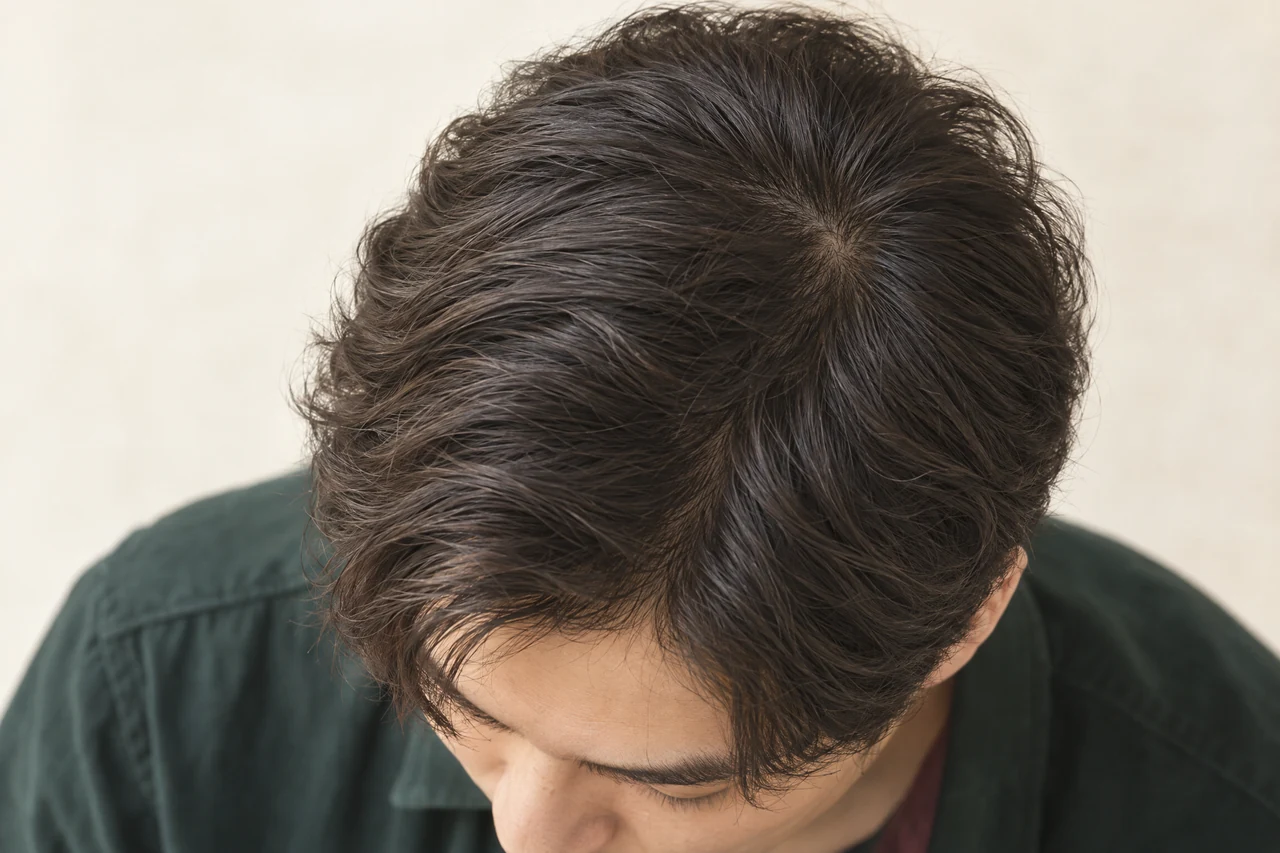
Look at the crown before choosing a curl photograph. Find the centre, then follow the surrounding strands towards the front, sides and back. A broad swirl may involve more than the small visible opening: the hair around it can lift on one side and lie closer on another. Point out the whole area that behaves differently rather than asking a stylist to cover one spot.
Compare your hair after ordinary drying with its appearance after deliberate styling. Wet hair, a strong part and overhead light can each change how much scalp is visible. Use similar lighting and angles when recording your usual shape. These observations help describe a styling concern; they cannot establish whether a change in scalp visibility is hair loss.
Set a practical goal such as a softer rear outline, less abrupt separation or a part that needs less correction. Complete invisibility from every angle is a much less realistic requirement. Vit So and DT HUB have the same owner, so the related-brand pages discussed here are promotional service information, not independent salon recommendations. Use them to prepare specific questions, not as proof that a method suits your crown.
Describe the opening without diagnosing it
Tell the stylist whether the pattern has always looked this way and which strands separate during your normal routine. If scalp visibility is newly increasing, or you notice sudden, patchy or persistent shedding, seek a doctor rather than treating a perm as the answer. Pain, redness or inflammation also belongs in a healthcare conversation before a chemical appointment. A photograph can guide a haircut discussion without becoming a diagnosis.
Choose what the cut retains before choosing what to curl
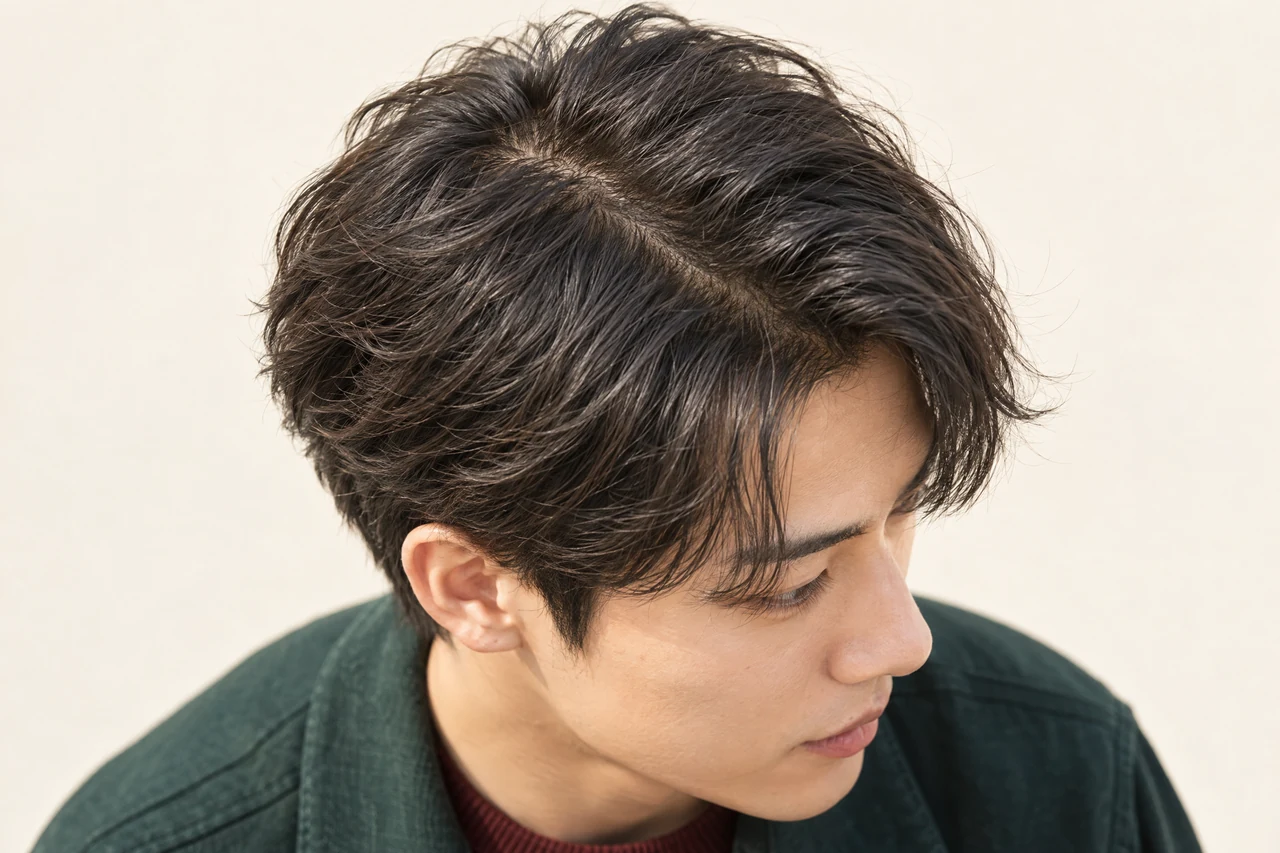
A shorter crown can be a deliberate choice if you prefer a compact outline and accept that the swirl will show. Keeping more length may give surrounding strands room to overlap, but it also creates more hair to position each morning. Ask the stylist to explain the trade-off on your actual dry hair. Longer is not automatically better coverage, and shorter is not automatically easier if the remaining ends stand out.
For a men's shape, DT HUB's mens perm hong kong page describes assessing growth patterns and varying texture between the top and sides. That is relevant when deciding which strands around a swirl should remain long enough to curl. Ask which crown sections would be included, which would stay unwrapped and how the top would join the shorter sides. A men's service name alone does not define that scope.
Vit So's men's perm page provides a place to continue the consultation around your haircut and routine. Bring a rear view as well as a front reference: an appealing fringe says little about the crown behind it. If the front needs movement but the swirl already falls acceptably, ask whether leaving the crown alone is preferable to adding texture there merely for consistency.
Short curls and longer crown strands make different compromises
Very short strands leave less length for a stylist to wrap and less reach across a crown opening. Adding bend can also change where the ends sit when dry. Instead of demanding the same curl size everywhere, ask to see where a short section could realistically begin and end. If retaining the current outline matters more than adding curl, a cut adjustment or a period of growth may be the better first step.
DT HUB's short hair perm hong kong page describes using longer sections for pixie texture while leaving the shortest areas unwrapped. It also discusses curl contraction. Those details support a conversation about placement limits, not a universal minimum length or guaranteed crown coverage. Ask the stylist to assess the shortest strands beside your swirl, rather than judging suitability from the overall length on top.
With longer retained strands, discuss curl placement around crown growth direction as a local design choice. A loose bend that follows one side's fall may belong beside a less-curled section on the other. Conversely, adding curl to strands that already separate into clusters could make that separation more noticeable. Ask where extra movement would help the outline and where keeping the existing fall would be more useful.
Compare the dry outline, not matching rows of curls
Have the consultation distinguish a defined curl from a softer change of direction. Your priority may be how the crown joins the back of the head, not how evenly curls repeat. Request a drying demonstration that resembles your normal routine. If the proposed shape depends on meticulous placement you do not intend to do, choose a different compromise before processing.

Translate method labels into a crown placement plan
Cold, digital, texture and Japanese perm are starting points for questions, not instructions for making every root point the same way. Ask what process is proposed, where the bend would be placed and what should happen when the hair dries. The useful explanation connects the method to your retained length and existing chemical history. It should also identify what the method is not expected to change.
DT HUB's japanese perm hong kong page emphasises soft waves, natural fall and the possibility of leaving sections unwrapped. These are relevant design ideas for a directional crown. They do not mean that the label guarantees gentler processing, an air-dry finish or a uniform root pattern. Ask whether the proposed approach preserves the swirl's direction and how the result would differ from simply reshaping the cut.
Vit So's hair perm page is a relevant starting point when discussing broader curl design and daily handling. Disclose earlier bleach, colour, straightening and perms, including which lengths remain treated. The American Academy of Dermatology warns that appearance-enhancing treatments can leave hair dry and brittle and advises caution with perming and adherence to product instructions.[1] A softness-focused name does not remove those considerations.
- Ask the stylist to explain any strand assessment and how it affects the decision to proceed or postpone.
- Separate the desired visual softness from any claim about chemical gentleness.
- Confirm that leaving part of the crown untreated remains an option.
Compare quotes only after agreeing the crown scope
Define the work before comparing totals. A local curl plan around selected retained strands is not the same job as a full-top perm combined with a new cut. Yet a smaller area should not be assumed to be cheaper: assessment, sectioning and the transition to untreated hair still need attention. Ask for the service boundary in plain language and whether an estimate could change after the in-person assessment.
DT HUB's perm price hong kong guide lists technique, length and additional services as pricing factors, and describes consultation, conditioning, styling and aftercare among the inclusions to check. Use that to ask for a written total for your chosen scope. Confirm whether the cut, any optional preparation and the home-styling demonstration are included; do not assume a published starting price is your final quote.
Keep the decision open if the assessment changes the plan. A cut-only option, retaining more length before perming, or curling the front while leaving the crown unchanged can each be a valid outcome. Compare what you would receive and what you would need to maintain, not merely which quote uses the most elaborate method name. Higher spending cannot promise that a natural swirl will disappear.
Make the appointment boundary clear
Ask which provider and location the quotation covers. Vit So is in Sheung Wan; the DT HUB pages describe services in Kwun Tong. They are not interchangeable menus or branches of the same appointment. Before any chemical work begins, confirm the revised scope if the stylist recommends a different cut or decides that some lengths should remain untreated.
Care for curled lengths without trying to erase the swirl
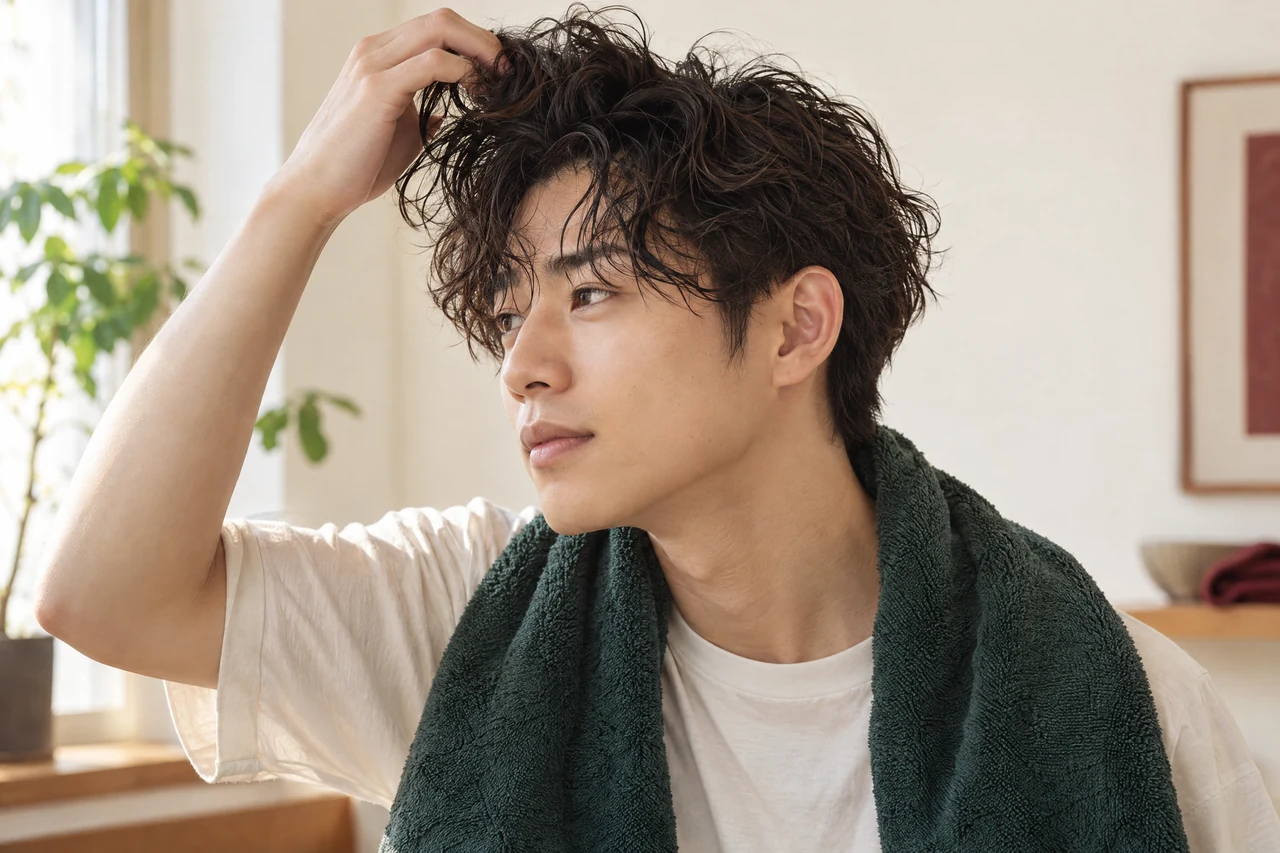
Request aftercare instructions for the exact process used, including the first wash and how to dry the treated crown beside unwrapped sections. Do not borrow a fixed waiting period or repeat-perm schedule from an unrelated style. Vit So's perm aftercare guide is useful for organising questions about washing, everyday styling and changing curls; the appointment should resolve the details for your own hair.
The AAD's guidance for naturally curly or coily hair recommends conditioning and detangling gently with fingers or a wide-toothed comb, rather than brushing dry curls.[2] These are useful handling principles, but its advice for thick natural curls is not a universal wash schedule for short chemically permed hair. Choose cleansing around your scalp and routine, and ask how much conditioning your retained lengths need without assuming heavier products will improve the crown shape.
If the lengths feel rough or tangled, DT HUB's deep hair treatment kwun tong page offers several conditioning and smoothing categories to ask about. Keep that discussion separate from the swirl. Conditioning may change the feel and manageability of strands; it does not remove the natural directional pattern or add actual density. Clarify whether a named treatment changes texture and whether it is compatible with the intended curl, rather than treating all menu items as interchangeable masks.
After the permitted wash, observe the crown under your usual drying conditions before judging it from a highly styled photograph. Note which strands separate, where the outline changes and whether your routine feels manageable. Take those observations back for a review instead of immediately requesting stronger processing. During a perm, excessive stinging or burning requires prompt rinsing and dermatologist advice, as AAD guidance states; alert the stylist immediately rather than waiting for the process to finish.[1]
Crown choices to compare before committing to chemical work
| Option | When to discuss it | Compromise to accept | Question before proceeding |
|---|---|---|---|
| Preserve the swirl with a shorter cut | You prefer a compact outline and do not need the centre hidden | The directional opening may remain visible | Which short ends are likely to lift? |
| Retain longer surrounding strands | You want to explore overlap without forcing uniform roots | More length may need positioning and may still separate | How does it fall after my ordinary drying routine? |
| Assess local curls beside the swirl | Selected retained strands could use additional movement | Untreated sections and asymmetry may remain | Where would curl help, and where could it emphasise separation? |
| Postpone the perm and adjust the cut | Length, past processing or the daily routine makes the proposal uncertain | The texture change is deferred | What should be reassessed before a later decision? |
Your preparation checklist
- Bring clear crown and rear views in similar lighting, including your ordinary dry finish.
- Point out the swirl's centre and the surrounding area that changes direction.
- State whether you accept a visible centre or want to explore longer overlap.
- List previous chemical services and identify which treated lengths remain.
- Confirm included and unwrapped sections, cut scope and the written total.
- Ask for first-wash instructions and a realistic drying demonstration.
Frequently asked questions
Can a perm make a broad crown swirl disappear?
Do not plan on disappearance. A perm concerns the shape of treated strands, while the crown's natural direction remains part of the design. Agree a cosmetic goal such as a softer outline or a more workable fall, and accept that the centre may still show.
Should I grow the crown longer before deciding?
Possibly, if the current short strands cannot support the proposed placement or do not reach where you want them to fall. Ask for a length assessment first. More length can offer different shaping choices, but it is not a guarantee of coverage and may add daily handling.
Does every section need the same curl?
No. A useful plan can vary bend or leave selected areas unwrapped to respect the existing fall. Ask how those choices will connect when dry. Uniform curls are not necessarily the best way to achieve a balanced crown outline.
Is visible scalp at the centre proof that I need more volume?
No. Lighting, separation and the way strands lie can affect visibility, and a styling photograph cannot diagnose its cause. If the appearance has newly changed or shedding persists, seek a doctor's assessment. Do not use stronger curls or conditioning as a substitute.
Bring the crown pattern, not just the curl reference
Prepare your usual dry crown view and say what you want to preserve: a compact outline, longer overlap or selected movement. Ask for a comparison of cut-only and local-curl options before agreeing a written scope. If the proposed finish depends on styling you will not do, keep the natural swirl and choose a more manageable shape.
Start your WhatsApp enquirySources & further reading
- American Academy of Dermatology: Coloring and perming tips for healthier-looking hair
Chemical services can leave hair dry and brittle; follow product instructions. Excessive stinging or burning during a perm requires immediate rinsing and dermatologist advice. This supports safety boundaries, not any salon's efficacy or method superiority.
- American Academy of Dermatology: 6 curly hair care tips from dermatologists
AAD's guidance for naturally curly or coily hair supports conditioning and gentle damp detangling with fingers or a wide-toothed comb. The article explicitly avoids treating its wash schedule as a universal instruction for short chemically permed hair or as proof of a salon service.



