







Vit So and DT HUB have the same owner. The DT HUB links are related-brand promotional links, not independent recommendations or medical endorsements. Their service descriptions are used to frame enquiries, not as evidence that treatment works.
Grey camouflage or medical enquiry: name the result you want
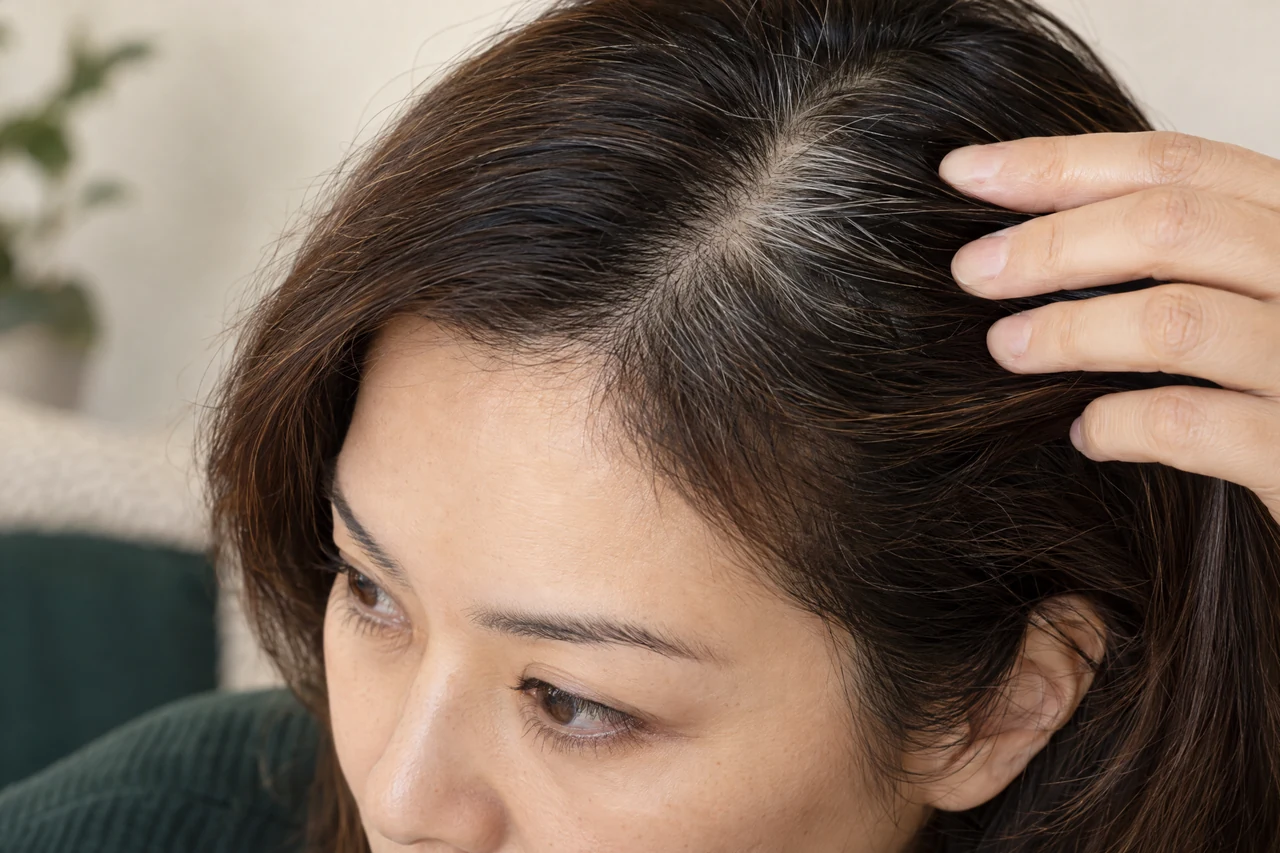
Start with a sentence that describes the problem without naming a treatment. 'The silver at my usual parting looks too stark against my dyed lengths' is a cosmetic request. 'My hair has changed in a way I cannot explain' is a health question. The first needs discussion of visible contrast; the second may need a clinician's history and assessment. A stylist can identify a colour boundary without explaining why a person's hair changed.
The American Academy of Dermatology explains that grey or white hair involves reduced melanin production and is commonly a normal part of ageing. It also says that concerns about an underlying condition belong with a dermatologist or primary-care doctor. That does not mean every silver strand signals a deficiency, nor does it justify choosing supplements from a photograph. Appearance is information to describe, not a diagnosis to make yourself. [1]
If your priority is a more uniform shade, Vit So's grey coverage page provides a starting point for discussing coverage versus blending. Tell the colourist whether visible silver is welcome, tolerable or something you want covered. This defines a design preference; it does not establish medical need or promise that every strand will respond identically. Keeping your natural grey is also a valid choice.
A useful distinction: appearance versus explanation
Ask what success would mean without a mirror. If the answer is understanding an unexplained change, a prettier colour result would not answer the question. If the answer is liking your everyday reflection, a cosmetic consultation may be the relevant first conversation, provided there is no unresolved safety concern.
Choose blending for contrast, not for pigment restoration
Blending changes the relationship between light and dark strands. It may suit someone who wants to retain some silver but dislikes a sharp boundary against a dark colour. More complete coverage may suit someone who prefers a consistent shade and accepts visible regrowth as part of upkeep. Neither preference is inherently better. The useful comparison is between the appearance you want now and the maintenance you can accept later.
For a related-brand colour enquiry, the balayage hong kong destination describes selected lightening alongside other bleaching and colour services. Use it to ask where brightness would start, which dark areas would remain and whether your existing colour limits the proposal. Lightening a dark section can change contrast with nearby silver, but it does not restore pigment production. A hand-painted technique is not automatically the right answer for every grey-root pattern.
Be precise about the view that bothers you. Brightening the lengths may create dimension while leaving the parting almost unchanged. A plan that looks attractive with loose waves may reveal a different boundary when you tie your hair back. Bring a reference for the desired softness, but also show your usual parting and everyday styling. Ask the colourist to explain the proposed placement rather than relying on a technique name.
Confirm the actual area and service scope before booking
A location page helps you find a provider to contact; it does not define a personalised grey-blending service. Your enquiry should specify whether you want attention at the front hairline, the parting, selected lengths or the whole head. Ask what the proposed work leaves untouched. Someone seeking softer roots should not assume that a service described mainly as graduated lightening through the lengths addresses that concern.
The balayage kwun tong page lists DT HUB's colour approaches in Kwun Tong and discusses consultation and colour history. Ask that team which approach, if any, fits your particular root contrast and previously dyed hair. This is an enquiry about its cosmetic service scope, not a medical referral. DT HUB's Kwun Tong destination is separate from Vit So's Sheung Wan location; shared ownership does not make them interchangeable branches.
If you want to stop repeatedly darkening the roots, consider the in-between stage before adding more colour. Vit So's transition from dyed hair to grey guide is relevant to planning that appearance change. Explain how much of the existing dark length you want to retain and whether a gradual visual transition matters more than an immediate overall shade change. Growing out dye and investigating an unexplained change remain separate decisions.
Discuss visible lines and hair history, not a cure
Line width and placement influence how grey reads against the surrounding colour. Fine lines may distribute contrast; more distinct ribbons may make a design deliberately noticeable. Adding brightness can also draw attention to an area rather than conceal it. Ask to see the proposed balance of silver, retained dark hair and coloured sections. A label such as 'natural' is too broad unless the colourist explains what will remain visible.
The highlights hong kong destination describes foil and face-framing options alongside broader colour services. It is useful for asking about line design and whether a limited placement could address your appearance goal. The resulting colour may camouflage a boundary, but it cannot tell you the cause of greying or cure that cause. Avoid interpreting a colour-service photograph as evidence of a change in follicle function.
Vit So's hair highlights page supports a more specific conversation about lines rather than an assumed treatment outcome. Show the hair worn straight as well as in your usual style, and disclose previous permanent dye, lightening and reactions. The colourist needs that history to discuss cosmetic feasibility. The AAD notes that some dye ingredients can irritate the scalp or cause skin allergies, so a gentler-sounding product name is not a safety guarantee. [1]
When to pause the cosmetic plan
If there is unresolved scalp discomfort or a history of a significant reaction, raise it before booking rather than after products have been prepared. Follow the current product instructions and professional safety guidance; do not invent your own test method. A consultation about design can wait while the appropriate healthcare professional assesses a safety concern.

Ask for a colour quote that stands on its own
A useful quote names the work, not just the fashionable colour term. It should make clear whether the proposal covers roots, selected sections or lengths; whether existing colour needs separate attention; and what finishing work is included. Ask how the plan changes if the current hair cannot support the requested lightness. This gives you something concrete to compare without assuming that a larger bill means a better or safer outcome.
The hair colour price hong kong guide discusses technique, coverage, length and multi-visit work as cost factors. Use those categories to request a written, personalised scope rather than treating a published starting price as your final total. The assigned DT HUB pages show different reference figures, so this article does not select one as an agreed tariff. These are DT HUB references, not Vit So prices, and colour inclusions do not establish suitability for medical treatment.
Separate the initial appearance change from ongoing maintenance. Ask what happens when natural silver grows beyond the treated area and whether you can leave that regrowth visible. Clarify whether a future toner refresh, root coverage or correction is a new charge. If medical assessment is also planned, keep its purpose and any associated fees in a separate discussion. A bundled offer should not blur consent to colour work with consent to healthcare.
Take unexplained change and treatment claims to the right questions
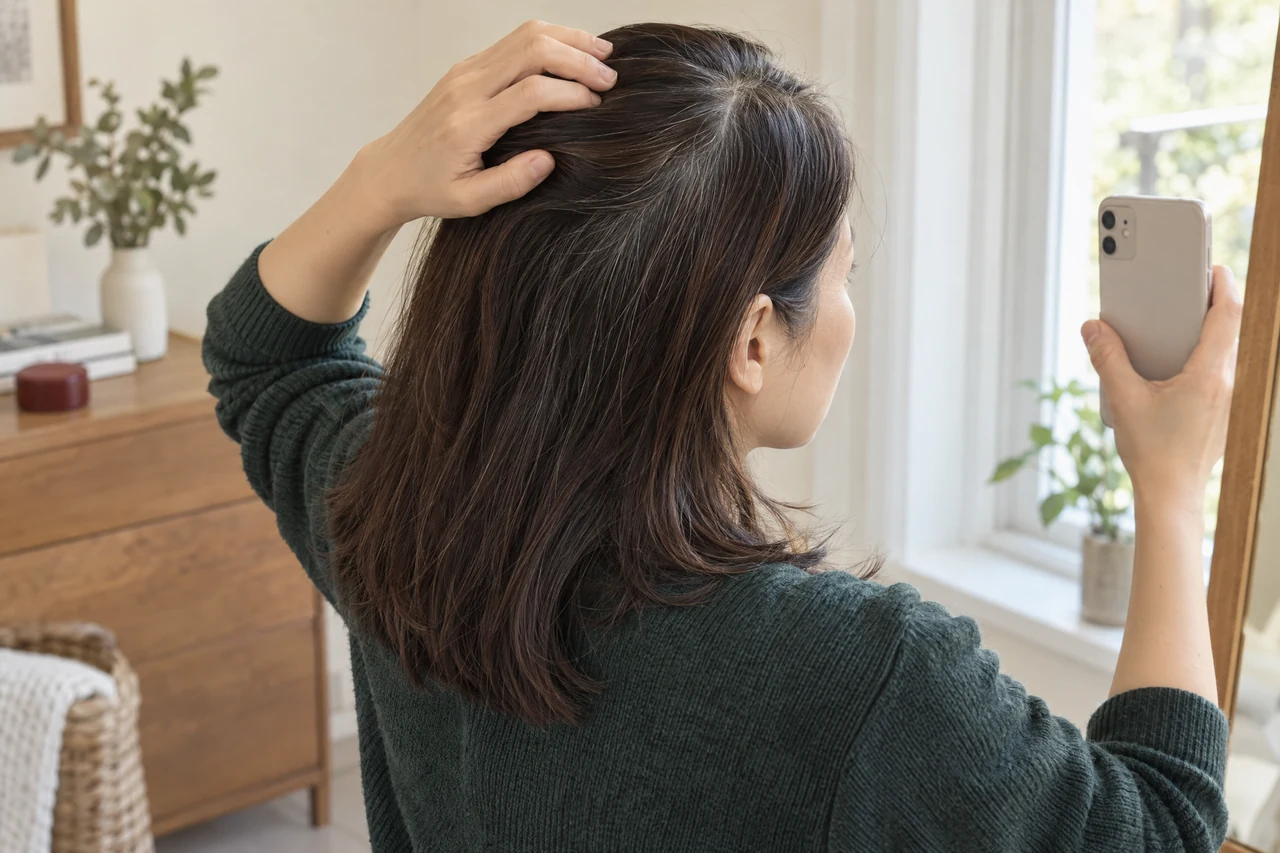
Prepare questions about changing grey hair around what you observed: when it became noticeable, whether the change concerns colour or shedding, and whether there is scalp discomfort. Ordinary daylight photographs can help you explain the location, but they cannot establish a cause. For persistent, sudden or patchy loss, or loss accompanied by pain or inflammation, seek medical assessment first rather than letting camouflage postpone it. A clinician decides whether further investigation is appropriate.
When enquiring about white hair treatment, ask what is being assessed and what relevant human evidence supports the proposed goal. That DT HUB page moves between greying and hair-loss claims; these are not interchangeable outcomes. Ask whether evidence concerns actual pigmentation, hair density or merely appearance, and request identifiable study references. The page's service description is not independent proof of restoration. The AAD's public guidance does not establish an effective medical treatment for adding colour back to grey hair. [1]
NCCIH reports mixed results for Chinese herbal products across medical conditions and notes that poor study quality prevents firm conclusions about effectiveness. Its guidance does not establish grey-hair reversal, and findings concerning pain cannot simply be transferred to pigmentation. It also describes product contamination and complications from improperly delivered acupuncture. 'Natural' therefore cannot stand in for a risk discussion. Ask about the practitioner's identity and verify relevant registration rather than assuming credentials from a brand label. [2]
Discuss any complementary approach with your existing healthcare providers and disclose products or treatments already used. NCCIH advises against replacing or delaying conventional care and calls for particular guidance during pregnancy, breastfeeding or when considering care for a child. During chemotherapy, ask the oncology team about restrictions before scalp-contact services, colouring or complementary care. Do not change prescribed medicines to fit an appointment. This article offers preparation questions, not diagnosis, a prescription or a treatment recommendation. [2]
Match the next conversation to the concern; cosmetic and medical goals can coexist without sharing the same evidence or quote.
| Your concern | Relevant conversation | What it cannot establish | Next question |
|---|---|---|---|
| Silver roots look stark beside dark lengths | Colour placement and blending scope | Why the hair became grey | Which boundary would the design address? |
| You prefer a consistent overall shade | Coverage and regrowth maintenance | Restored natural pigment | What stays visible as roots grow? |
| You notice an unexplained change or concerning loss | Medical history and clinician assessment | A diagnosis from a salon photograph | What should I record before assessment? |
| A service promises to reverse white hair | Evidence, risks and practitioner verification | Efficacy from a commercial label | Does the cited research measure pigmentation? |
| You want to compare costs | Separate written colour and care scopes | Medical suitability from a colour price | What is included, optional or charged later? |
Your preparation checklist
- Write down whether your priority is softer contrast, coverage, growing out dye or understanding a change.
- Show your ordinary parting in daylight; keep styling references separate from observations about symptoms.
- Record when an unexplained change started and arrange medical assessment first for concerning loss or scalp inflammation.
- Disclose previous dye, lightening and reactions before cosmetic processing is discussed.
- Ask a colourist which areas stay untouched and what regrowth maintenance would involve.
- Request relevant human evidence and verify practitioner registration before considering a medical-sounding service.
- Keep colour inclusions, follow-up charges and healthcare decisions in separate written scopes.
Frequently asked questions
Does grey hair alone mean I need medical treatment?
No. Grey hair is commonly a normal part of ageing, and appearance alone does not diagnose illness. Ask a clinician about an unexplained change or associated concerns rather than choosing a medical service solely because silver strands are visible. [1]
Can highlights restore my original natural colour?
Highlights change selected strands and the visible contrast between colours. That cosmetic change is not restoration of natural pigment production. Ask about placement and maintenance rather than expecting a colour technique to alter the cause of greying.
Is a scalp image proof that a white-hair service works?
No. A scalp image may help document an observation, but it does not prove causation or treatment efficacy. Ask what outcome was measured, whether dye or lighting affected the appearance, and what relevant human evidence supports the claim.
Can I discuss colour while waiting for medical advice?
You can describe an appearance goal without committing to processing. Where there is concerning loss, inflammation, an unresolved reaction or treatment-related restrictions, make medical assessment and safety guidance the priority. A cosmetic enquiry must not delay appropriate care.
Bring one appearance goal and a separate health question
For a Vit So colour enquiry, describe the boundary you want softened and provide your colour history. Ask for the cosmetic scope before committing. If your concern is an unexplained change or a proposed medical outcome, take that question to an appropriate clinician rather than asking a colour result to answer it.
Start your WhatsApp enquirySources & further reading
- What causes gray hair, and can I stop it? — American Academy of Dermatology
Grey hair is commonly a normal part of ageing; it concerns melanin production, not a diagnosis from appearance. AAD describes no effective medical treatment to add colour back and directs underlying-condition questions to a dermatologist or primary-care doctor. Dye can irritate the scalp or cause skin allergies. These limits do not substantiate DT HUB pigment-restoration claims.
- Traditional Chinese Medicine: What You Need To Know — NCCIH
Chinese herbal research has mixed results and many studies are poor quality; the page does not establish grey-hair reversal. Herbal contamination and acupuncture-delivery risks preclude calling natural approaches risk-free. Discuss complementary care with healthcare providers, disclose all products, and seek specific guidance for pregnancy, nursing or a child.



