






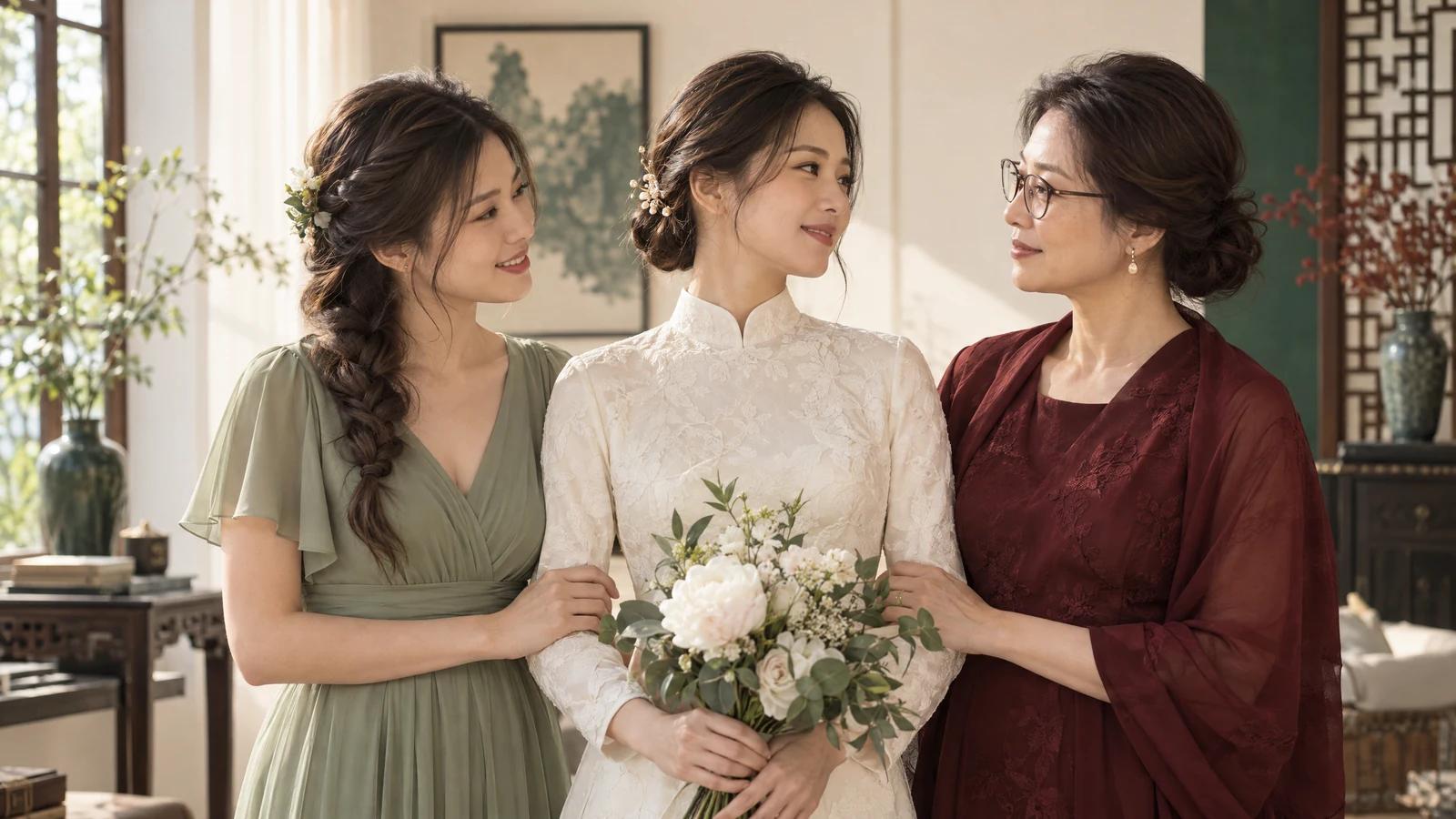
Wedding guest hairstyles should suit the occasion and your comfort
Start with the neckline, earrings and how formal the celebration will be. Decide whether a clearer face, softer movement or an open neckline matters most to you. Your normal styling habits are useful information, especially if you dislike tightly gathered hair. Choose a reference with a similar length instead of assuming a wedding role requires a particular style.
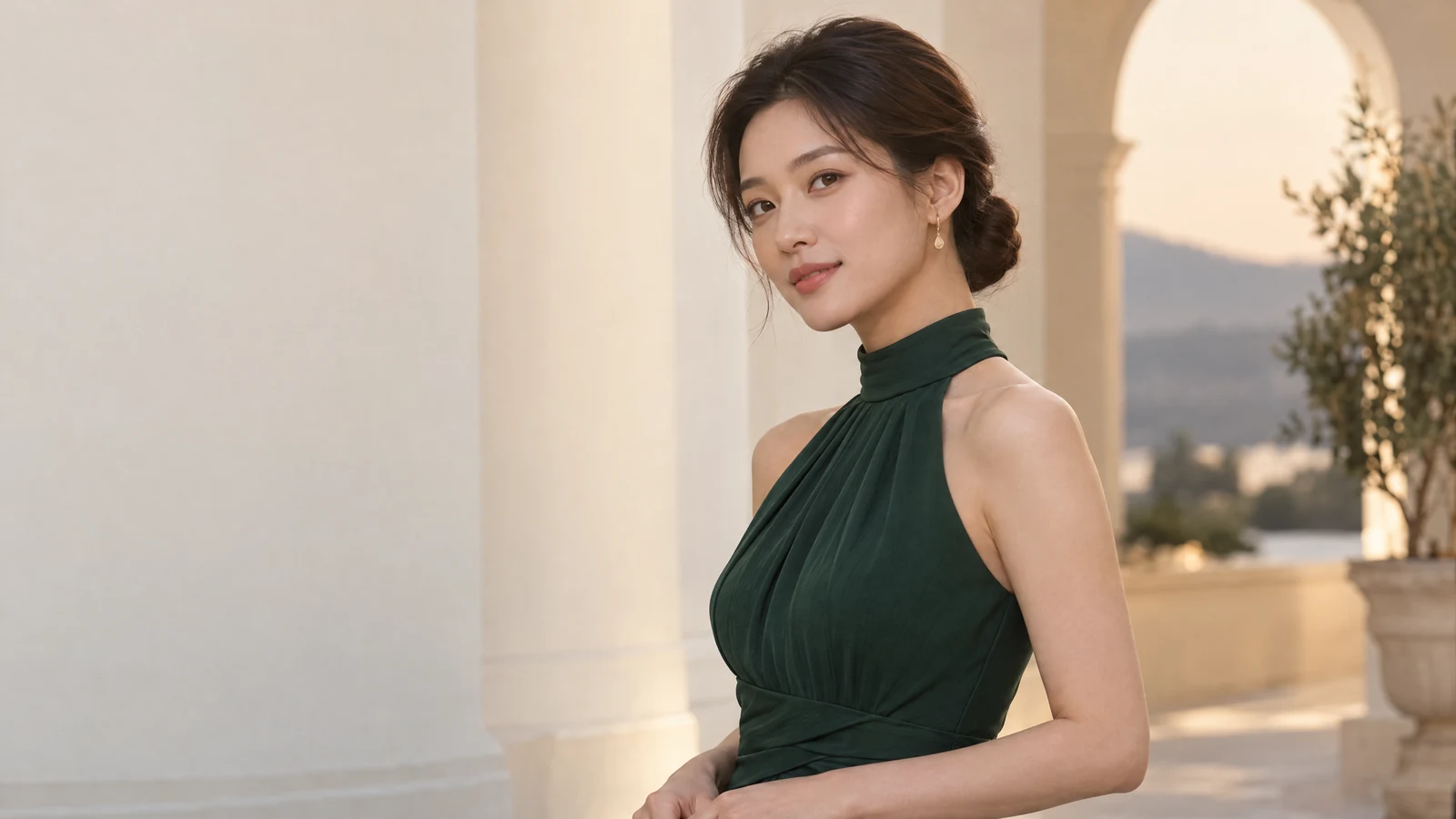
A high or detailed collar gives you a reason to consider gathering hair away from the fabric. An open neckline leaves more room for shoulder-length waves, but an updo can also make the shoulders and jewellery the focus. With an asymmetric dress, decide whether hair will sit on the bare shoulder or away from both sides. These are visual choices, not rules that everyone must follow.
The Rosa Clará wedding guest hairstyle guide recommends considering the haircut, hair type and overall outfit, and highlights keeping an asymmetric neckline visible. Apply that idea to the actual dress rather than choosing from a cropped hair photograph alone. A front view of the neckline and a back view of any fastening or decorative panel make the discussion more useful.
Review event hair styling to check its service scope and the details to share before arranging the related work.
Read wedding guest hairstyles against your outfit
Compare your reference while wearing the earrings and a top with a similar neckline. Look at where the hair ends: a curled bob resting on a collar creates a different outline from a low bun above it. If the dress must go over your head, tell the stylist before the finish is agreed. A wide-necked or front-opening preparation top can make changing clothes less awkward without disturbing the finished hair.
Coordinate a bridal party without identical structures
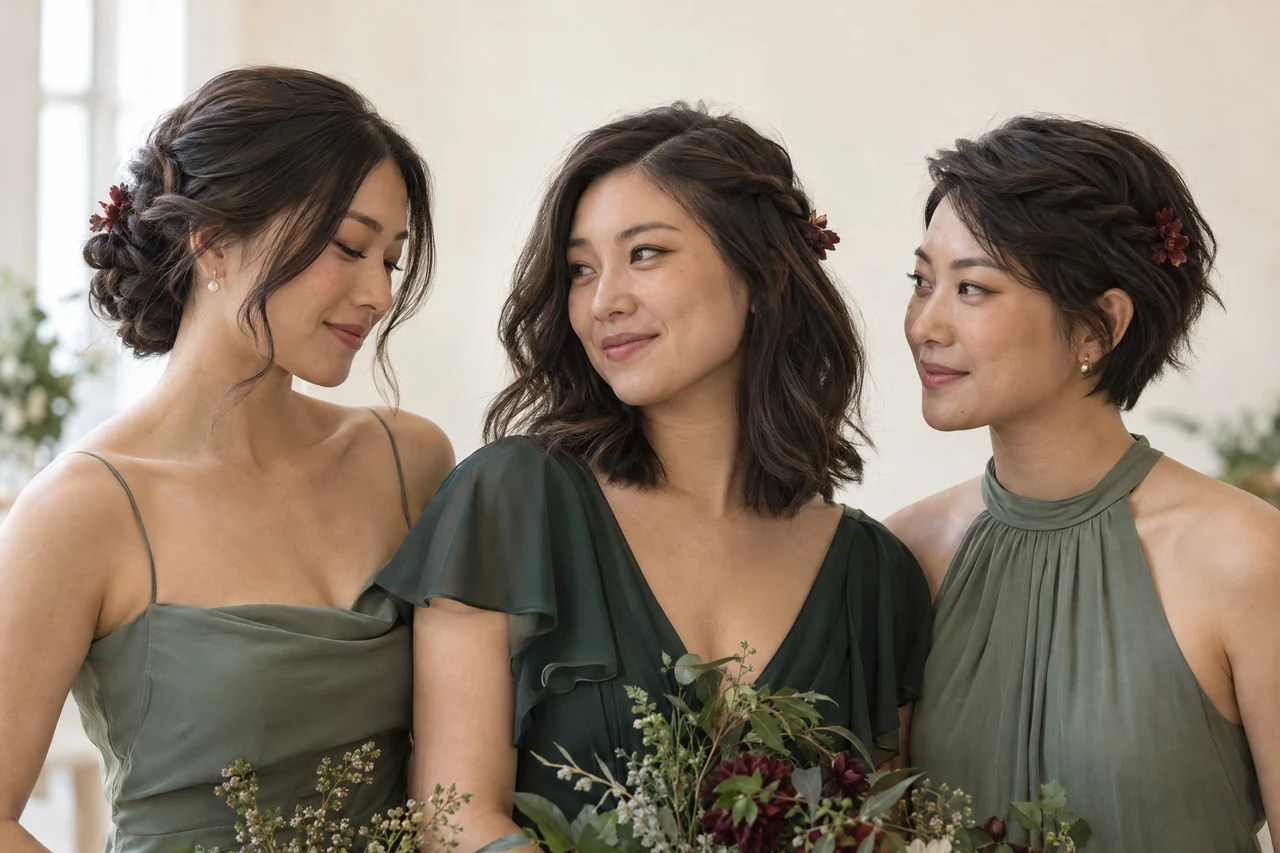
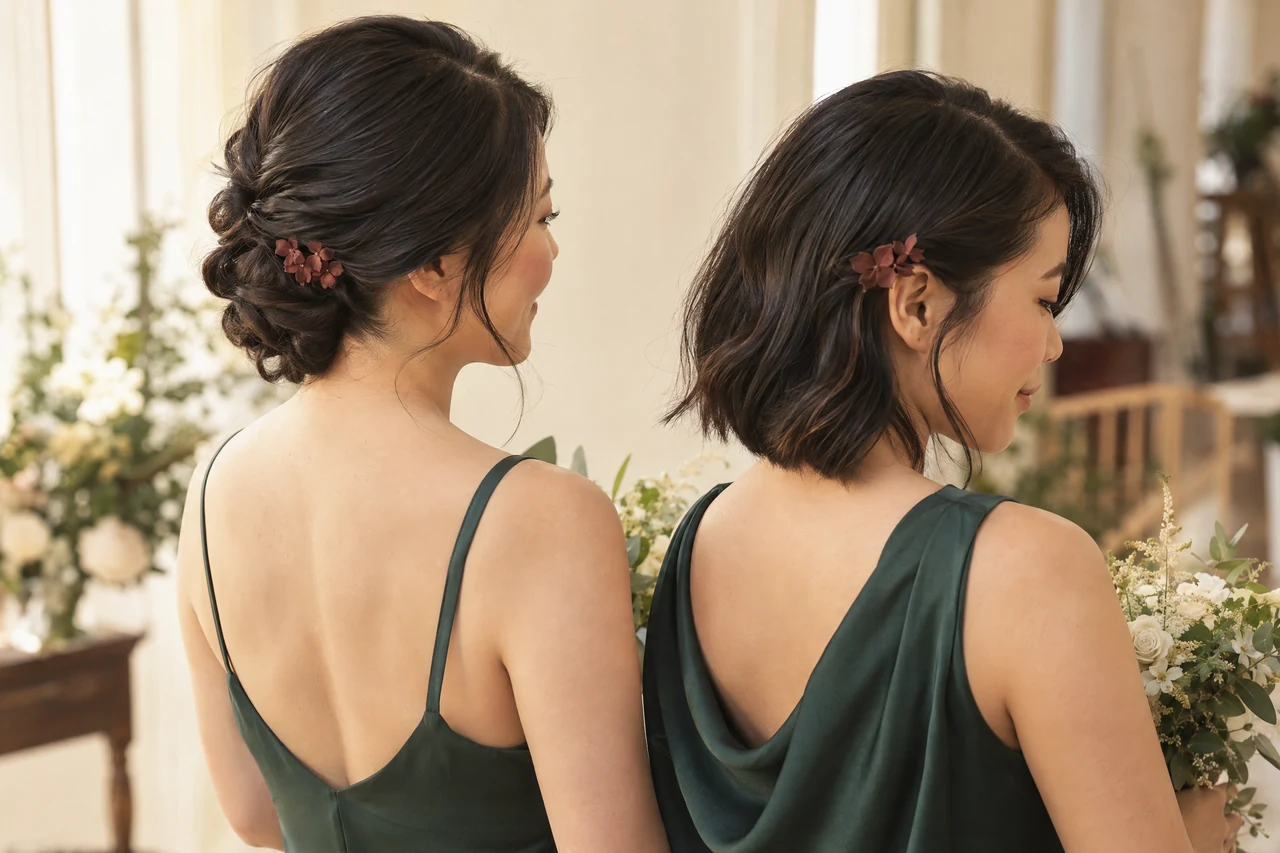
Bridesmaid updo ideas can share a gathering height or a softer face-framing detail without using the same structure on everyone. Different lengths and layers may need different versions. Compare the front and back views for group photographs, and ask which part of the look is intended to coordinate before requesting a specific style.
Agree on the shared feature first. It might be hair away from the face, a low gathering point, a softly waved finish or a small accessory in a common colour. A long-haired bridesmaid could wear a low braided bun while a person with a bob keeps a side twist and loose ends. Both can show the same ear and accessory without pretending their hair has identical length or density.
Avoid asking everyone to grow, cut or add hair simply to match a reference. Short layers may fall out of a low gathering, while a thick braid may need more space than a fine-haired version. For a person whose length will not reach the proposed bun, compare wedding hairstyles for short hair before deciding whether a different outline would serve the group better.
Continue with updo or hair down for wedding for that specific comparison and the preparation questions it raises.
A shared detail can work across different hair lengths
Put the agreed group detail into plain words so that each person can use the same brief. For example, ask for a visible earring on the same side and soft hair around the temples, while allowing different back structures. Confirm who will approve any coordinated change before appointments are arranged. Keep each person's preferred parting unless changing it is genuinely important to the shared design and comfortable for that person.
Family roles have their own priorities
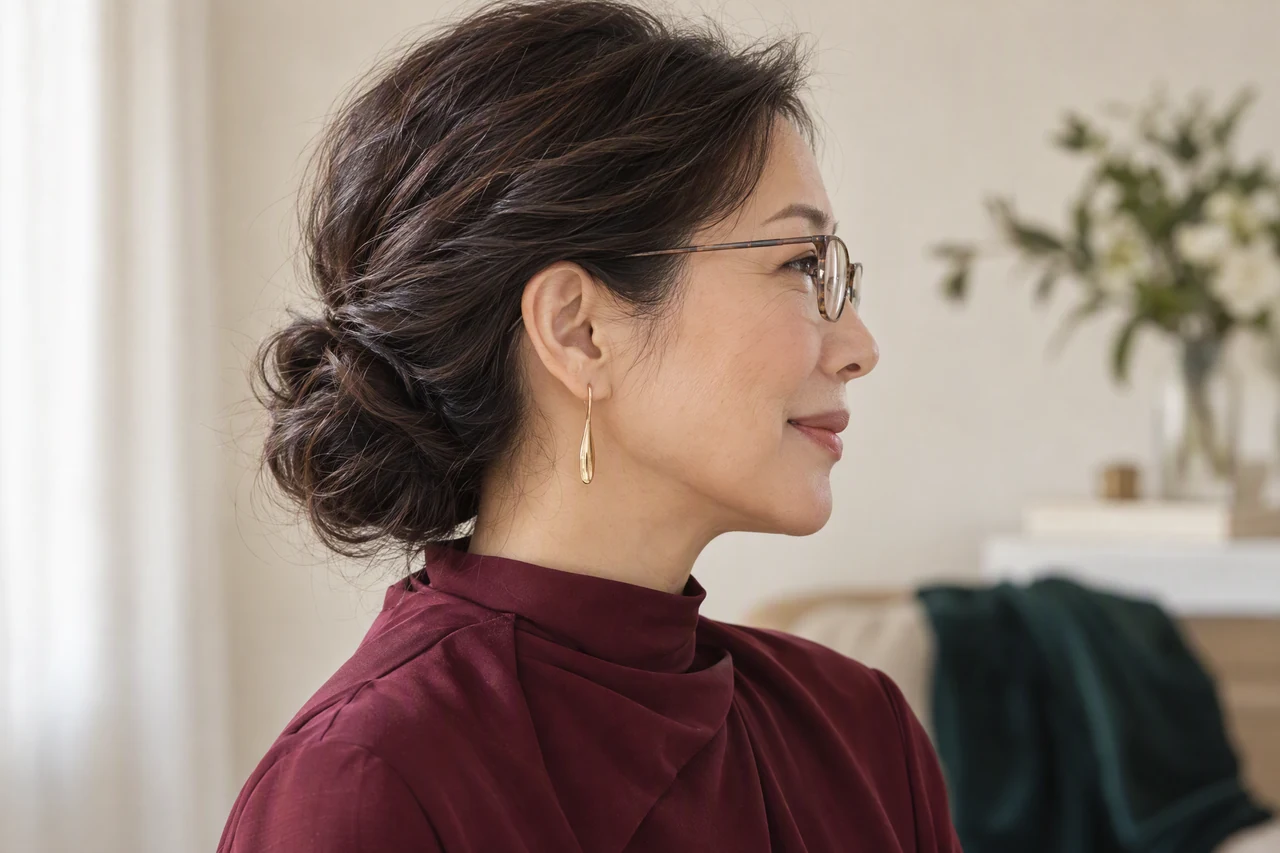
Bridesmaid hair styling may need to follow an agreed group outline, while mother of the bride hair styling can centre on a familiar shape, jewellery and comfort. Ask each person what they want to keep or avoid. A role describes the occasion, not a confirmed service package, team booking or entitlement to the same appointment time.
The mother of the groom and other relatives deserve the same individual conversation. Ask whether they normally wear a fringe, prefer volume above the forehead or feel uncomfortable with both ears exposed. A refined blow-dried shape may be more appealing than a completely unfamiliar updo. Keeping grey or white strands visible is also a personal choice; a family role does not create a need to change colour.
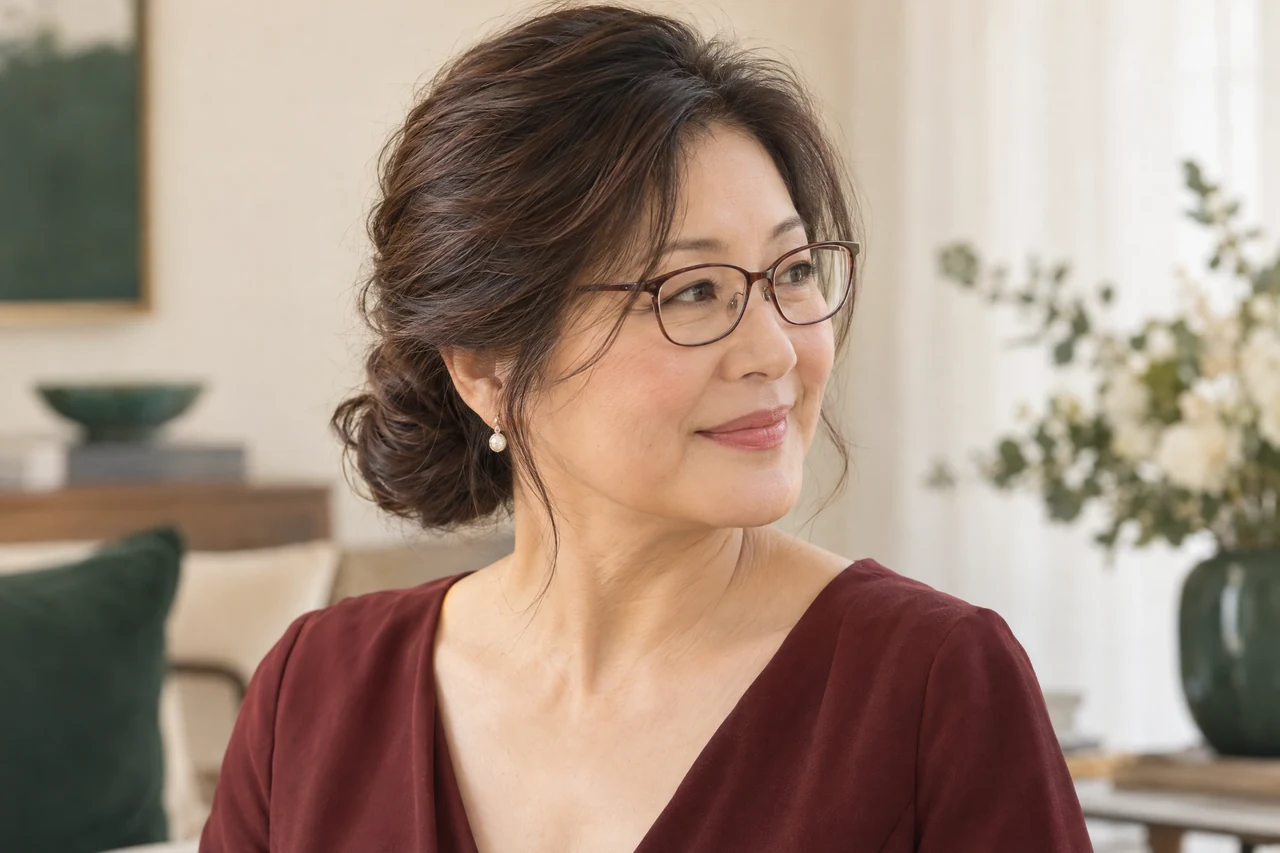
Bring glasses if they will be worn during the ceremony or reception. Check that the arms can slide into place without catching a twist or pushing against pins. Earrings may need a little space around the earlobe, especially if they swing when the wearer turns. A high collar or shawl should also be checked against the lowest part of a bun, rather than judged in isolation.
Keep personal preferences visible in the shared plan
Comfort is something to test, not an instruction to tolerate pulling. The American Academy of Dermatology's advice on tight hairstyles says that a painful hairstyle is too tight and recommends loosening styles to reduce pulling. Speak up if a gathering or pin hurts; ask for an adjustment before leaving. This guidance concerns tension and hair health, not whether a low bun or familiar wave is aesthetically better.
Confirm each person's timing and appointment
Collect the number of people, their current hair photographs and the time each needs to leave. Include travel and dressing in your own schedule. Enquire about availability and the sequence of appointments before coordinating transport; a wedding party enquiry does not establish simultaneous styling, venue attendance or a reserved team.
Work backwards from the earliest obligation, not just the ceremony start. A bridesmaid may need to be ready for family photographs, while a guest may only attend the evening reception. If someone needs to help with dressing or travel to another address first, record that separately. Tell the stylist whether your stated deadline means hair finished, fully dressed or already leaving Sheung Wan.
Ask when to wash and whether to arrive with hair dry. Share recent treatments or scalp sensitivity, and confirm each person's scope and quote rather than dividing an assumed group price.
Use book a hair appointment to send the intended work and possible dates; wait for confirmation before travelling.
Do not turn a shared wedding date into assumed capacity
Keep a named list of the requested work and finish deadline for each person. Once availability is discussed, confirm which appointments are accepted and the order in which people should arrive. If one person's plan changes, update that entry promptly instead of assuming everyone else's timing can move. Any venue styling or later touch-up arrangement needs its own explicit confirmation; it should not be built into the day's transport plan without agreement.
Check the hairstyle in the photographs you expect to take
A rear-view updo reference can hide the part you will see most often in group pictures. Check the front with your head level, then turn slightly to each side. Notice whether a loose strand covers an eye, whether the earring is visible and whether the hair competes with the neckline. The goal is a readable outline that still feels like you, not a requirement to look identical from every angle.
Use the back view to judge how much of an open-back dress remains visible. Long waves may cover a decorative panel even when they look balanced from the front. A half-up finish can clear the temples without fully exposing the neck, whereas an updo may reveal the dress detail more directly. Choose which view matters most before adding more braids, clips or volume.
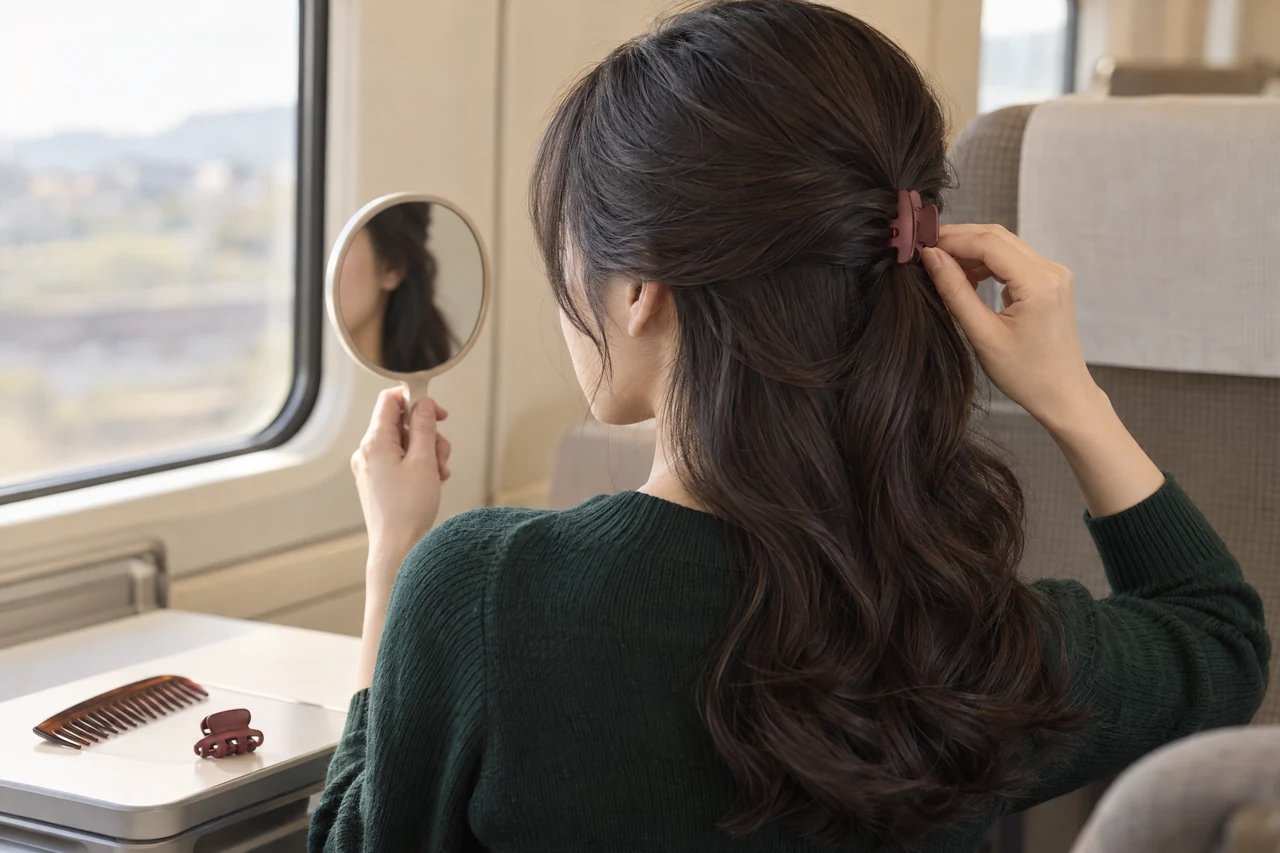
Check the gathering when sitting and turning your head; it may touch a collar or chair. A side accessory can also become hidden in a closely arranged group. Adjust position without treating a concept photograph as a promised result.
Keep the face and chosen details visible
Take simple reference photographs in ordinary light with the actual glasses and earrings in place. Keep the phone at a similar angle for each view so that a change in camera position is not mistaken for a change in hair volume. Identify what you like in words: a clear cheek, a soft fringe or a compact bun. That description is more useful than asking for the whole atmosphere of a professionally lit picture.
Prepare a finish you can manage between the ceremony and reception
A long wedding day can involve outdoor photographs, transport and a change of clothes before dinner. Tell the stylist where you will spend time and which parts of the hairstyle you most want to retain. You might prefer a secure face-clearing section with relaxed ends rather than expecting every wave to stay unchanged. Discuss how to refresh that priority without taking the whole style apart.
If you plan to switch earrings, remove a hair ornament or change a shawl, check how that works with the gathering. An ornament used to help hold hair should not be treated as casually removable decoration. For a ceremony-to-reception plan, compare day to night event hairstyles and decide whether the desired change can be managed without another styling appointment.
Use this 6-point checklist to bring the outfit, individual hair needs and schedule into one practical enquiry. Keep each person's choices clear in labelled photographs rather than merging everyone's preferences into a single picture.
Ask for a manageable touch-up and removal routine
Before leaving, ask which visible section you can gently tidy and which fixed sections should be left alone. Carry only the small items you have been shown how to use. At the end of the celebration, remove accessories and pins carefully rather than pulling a brush through the gathering. If you cannot locate a fastening, pause and find it before trying to release the hair around it.
Compare wedding guest hairstyle directions by what they reveal and what needs checking
| Direction | Useful visual priority | Practical trade-off to discuss |
|---|---|---|
| Low gathered updo | A visible neckline, earrings and dress back | Check collar clearance, pin comfort and contact with a chair. |
| Half-up finish | Clearer temples while retaining visible length | Loose ends still rest on shoulders; confirm which layers can be secured. |
| Loose waves or a shaped blow dry | A familiar outline with movement | Decide how to keep front sections away from the eyes and jewellery. |
| Short hair with a side detail | The existing cut with an exposed ear or coordinated clip | Match accessory scale and support to the available length, not a long-hair bun reference. |
| Coordinated but varied bridesmaid looks | A shared accessory, gathering level or face-framing detail | Agree the common feature while retaining suitable structures for individual hair. |
Your preparation checklist
- State your wedding role and the dress code, then photograph the neckline and any dress-back detail you want visible.
- Send current front, side and back hair photographs, with recent treatments or extensions noted, alongside a realistic styling reference.
- Bring the actual glasses, earrings and hair accessory; identify anything that must stay in place throughout the day.
- For bridesmaids, agree the shared visual detail and record each person's preferred parting, length limits and comfort concerns.
- Give each person's finish and departure deadlines, allowing for dressing, travel and any photographs before the ceremony.
- Confirm individual availability, service scope and charges, then ask about preparation, simple touch-ups and careful removal.
Frequently asked questions
Must all bridesmaids have the same hairstyle?
A shared visual detail can be adapted to different lengths and textures. Discuss what needs to coordinate and which parts can remain individual.
Can a family member choose a familiar everyday outline?
Yes, the planning brief can prioritise a familiar shape and comfort. Explain any desired refinement and confirm the practical finish with the stylist.
Does a bridal party enquiry reserve several appointments?
No. Provide individual details and finish deadlines, then wait for explicit availability and booking confirmation for each person.
Should I choose an updo just because my dress has a high neckline?
Not necessarily. Gathering can reveal the collar, but a short cut or carefully placed loose finish may also leave the important detail visible. Compare the hairstyle with the actual neckline and your preferred amount of face-framing hair.
What if a finished wedding hairstyle feels uncomfortable?
Tell the stylist where it pulls or presses before leaving and ask for an adjustment. Check again with glasses on and while turning your head. Pain is not something to accept as the cost of a formal finish.
Turn your wedding outfit and schedule into a clear styling enquiry
Share your role, current hair photographs, outfit details and departure deadline with Vit So when enquiring about styling in Sheung Wan. For several people, include a separate brief for each person so suitable directions and available appointments can be discussed. An enquiry begins the conversation; your date and service are booked only after confirmation.
Start your WhatsApp enquirySources & further reading
- Hairstyles that pull can lead to hair loss
American Academy of Dermatology guidance on loosening pulling hairstyles and treating pain as a sign that a style is too tight.
- Wedding Guest Hairstyles to Match your Dress
Outfit-based guest styling suggestions, including considering hair type and haircut and keeping an asymmetric neckline visible.



