







Observe a haircut for naturally wavy hair in ordinary conditions
Show how your hair looks after your usual drying routine, including any differences between the two sides. Explain which bends you enjoy and which feel awkward near the shoulders or face. A smooth or carefully curled reference can still be useful, but it should not replace an honest view of the natural pattern you expect to wear.
Look at the whole head rather than judging the most defined wave alone. Your crown may lie fairly straight while the lower lengths form loose bends. The hair beside one cheek may turn towards the face while the opposite side turns away. Point out those areas separately. A request to keep the lower waves but open the face is more useful than asking for more texture everywhere.
Photograph your hair once it is fully dry, with your usual parting and without stretching the ends. Include the front, back and both sides. Note whether you used a dryer, a brush or a styling product. If you normally tie your hair during the day, include how it looks after you release it. These views help distinguish the shape you live with from a freshly arranged finish.
A haircut for naturally wavy hair and its usual dry fall
Use familiar landmarks to describe the dry fall: the jaw, the base of the neck, the shoulders and the collarbone. Identify a range you would enjoy wearing rather than relying on a wet length measured under tension. For a reference photograph, separate the features you like. You might want its open neckline and full ends without wanting its perfectly repeated waves. Bring your everyday photographs alongside it so the discussion stays grounded in your own pattern.
- Mark the bend you want to preserve and the area you want to change; they may not be in the same part of the haircut.

Compare a bob on waves or curls
A curly bob haircut needs a conversation about the dry perimeter, curl variation and the shortest point you can comfortably wear. A photograph with stretched or styled curls may show a different landing point from your ordinary finish. Discuss the edge and shorter pieces separately rather than assuming the same bob length will fall identically on all textures.
A bob brings the outline closer to the face and neck, making differences in dry height easier to notice. Before choosing it, decide whether clearing the shoulders matters more than being able to gather all the hair into a ponytail. Keeping the front longer can preserve some face coverage, but it does not automatically preserve your usual tying options. Ask where the back and ear-side pieces would sit as well.
Continue with bob haircut for that specific comparison and the preparation questions it raises.
Treat any fringe as its own length decision. A wave beside the cheek can be welcome while a short bend across the forehead feels inconvenient. If you are considering a curly fringe, check the shortest comfortable dry point rather than extending the bob's length instructions to the front.
Continue with bangs for curly hair for that specific comparison and the preparation questions it raises.
The dry edge and the amount of retained weight
The perimeter is the visible bottom edge of the cut. A fuller edge can make that boundary easier to read, while shorter pieces above it change where the silhouette looks wide or light. Ask to discuss those changes separately. Removing length all around is not the same as adjusting a heavy area above the ends. If some sections curl more tightly than others, identify which dry pieces must remain long enough for your comfort.

Check where the ends meet the shoulders
At shoulder level, the ends can bend around the body or clothing even when the overall length seems even. Compare both sides with the same parting and normal position. Decide whether the goal is to accept some natural variation, alter the landing point or use styling; a cut cannot promise perfect symmetry of movement in every situation.
Check the ends with your head upright and your shoulders relaxed. Then look at the clothing you commonly wear. A raised collar, jacket or bag strap may catch a section that falls freely over a lower neckline. If the outward turn appears mainly after commuting or wearing a jacket, explain that timing. It is a different concern from a bend that is already present immediately after drying.
For Hong Kong days spent moving between outdoor air and indoor spaces, record when the outline feels wider or less defined. Keep that observation separate from the shoulder-contact question so you do not choose a shorter cut to solve an unrelated concern.
Continue with haircut or treatment for frizz in humid weather for that specific comparison and the preparation questions it raises.
Contact, direction and side differences
Compare an outline that finishes clear of the shoulder with one that keeps enough length to fall beyond it. Each changes more than the flipped end: the shorter choice exposes more neck, while the longer choice retains more hair to gather. Remaining at shoulder level is also a reasonable choice if you enjoy some movement. The useful question is whether the trade-off fits your daily habits, not which length is supposed to turn inward on everyone.

Keep cutting and added curl as separate choices
If you want to keep your existing waves, say so before discussing a new shape. If the reference shows a curl pattern you do not naturally have, ask what part is created by styling or another service. A haircut enquiry does not itself confirm a perm, specialist dry cutting or a routine you can reproduce without extra effort.
Compare the reference's outline with its finish. The outline might include a shorter back, longer front and softly connected layers. The finish might include smooth roots, evenly spaced bends and ends turned in the same direction. You can discuss the outline without committing to that finish. Ask which details are realistic with your normal drying method and which would require deliberate styling.
Be equally clear about what you do not want changed. If you enjoy irregular loose waves, say that you want to keep their character rather than make every section match. Mention any previous perm or straightening so the current lengths are not mistaken for an entirely untreated pattern. Haircut planning should start from the hair present today, including differences between newer growth and older lengths.
A silhouette is not a chemical wave promise
A shorter outline may reveal a bend that was less noticeable in a longer shape, but it does not specify a new curl pattern. Rather than asking layers to manufacture a reference curl, discuss where you want fullness and which ends should remain supported. If you want consistently styled waves for an occasion, explain that as an additional finish preference. It should not quietly replace the everyday natural-wave goal.
Choose where weight should stay
More layers are not automatically a better answer for waves. Vogue's guide to haircuts for wavy hair describes subtle layering that maintains weight for fine waves and internal layering for thicker textures. This is a useful starting point for discussing weight, rather than a fixed prescription for your head of hair. Show whether your concern is a sparse-looking bottom edge, heaviness behind the ears or a wide outline around the lower lengths.
If you want lighter movement without losing a substantial edge, compare layering vs thinning out hair before requesting that the whole cut be made thinner. Describe the location and the visual change you want. Keeping weight at the ends while adjusting another area is a different brief from reducing fullness throughout.
Protect the lengths that do a daily job
Decide which pieces must reach behind the ears, sit comfortably beside your glasses or enter your normal ponytail. Shorter face-framing pieces can change the outline without changing the longest back length, yet they may be the pieces you repeatedly have to clip away. Make that trade-off explicit before approving a shorter front. If tying is essential, show your usual tie position rather than simply saying you need to keep the hair long.

Plan the routine you will actually use
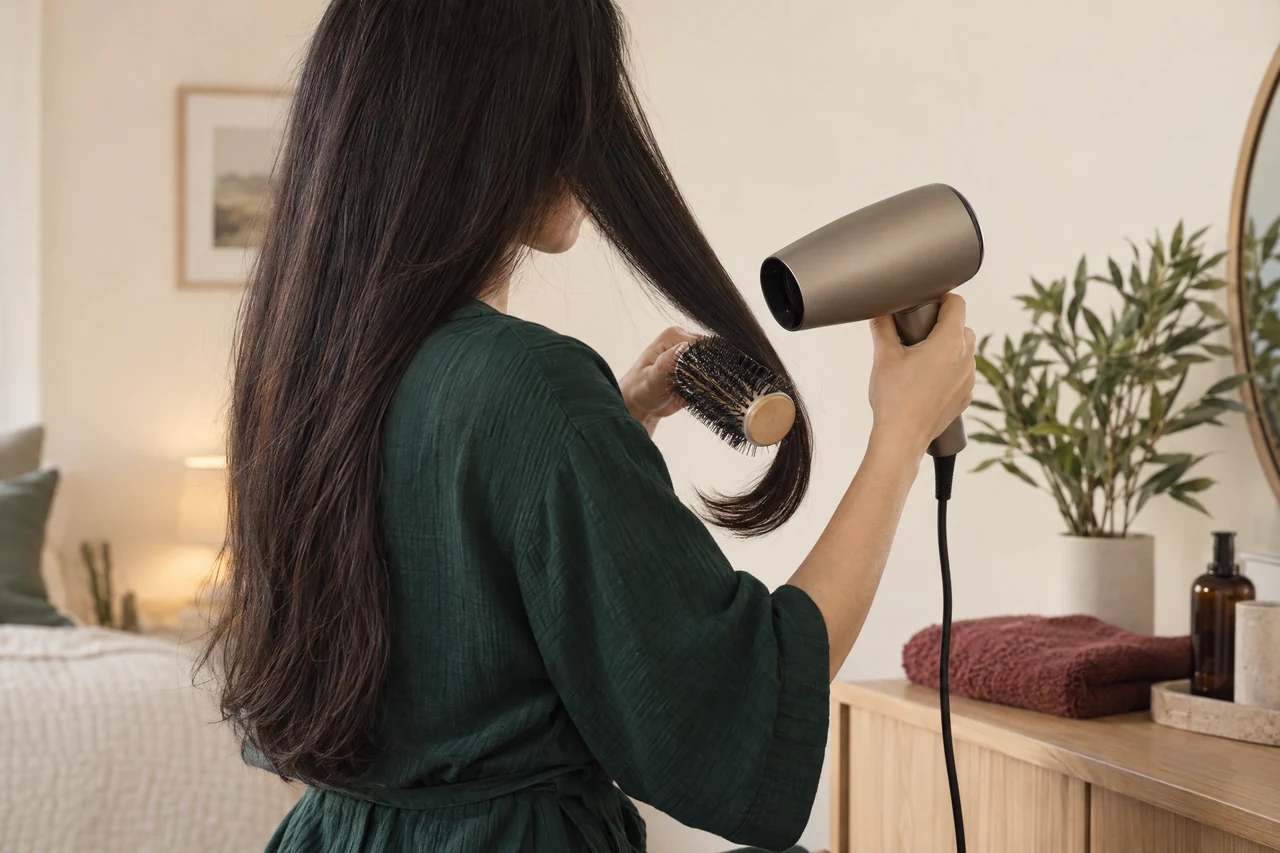
A useful natural-wave haircut should be discussed alongside your real routine. Explain whether you leave the lengths to dry, use a dryer mainly to remove moisture or work through sections with a brush. These approaches involve different levels of effort. Ask which step is responsible for the finish being shown, so you can choose a shape that remains comfortable when you skip the optional styling.
Care also affects the way you observe the pattern. For curly or coily hair, the American Academy of Dermatology's curly-hair care advice recommends detangling wet, conditioned hair in sections and avoiding dry brushing to reduce breakage and frizz. That advice is specifically about curls and coils; it is not a reason to impose the same products or washing routine on every person with loose waves.
For a women's haircut enquiry, send your ordinary dry views and explain the length you need to retain. The listed women's wash, cut and blow dry price is HK$480. Confirm the intended service and any applicable long-hair supplement before agreeing to the appointment. Wanting to show the dry pattern is a consultation request, not confirmation of a particular cutting method.
Review movement as well as length
After your first home wash, observe the cut with your normal parting and drying steps. Look at the bottom edge, both sides and the pieces beside the face before deciding what needs attention. If something is awkward, record where and when it happens rather than compensating with unfamiliar styling every day. Describe whether the concern is the length, the retained weight or a section's direction; those details make a follow-up conversation more useful.
Natural-wave outline choices: compare the dry landing point and what you need to keep
| Outline to discuss | What to compare when dry | Daily trade-off |
|---|---|---|
| Bob clear of the shoulders | Back edge, ear-side height and the shortest curling section | Less shoulder contact, but less length available for tying |
| Shoulder-level outline | Where each side touches the body or a familiar collar | Keeps a middle length; some outward movement may remain |
| Longer outline beyond the shoulders | Lower bends, edge fullness and the weight you want retained | Keeps more gathering length; does not guarantee stronger waves |
| Selective layers within a retained outline | Where shorter pieces finish and whether the bottom edge still looks full | Changes weight placement; shorter pieces may need separate handling |
Your preparation checklist
- Photograph fully dry hair from the front, back and both sides, keeping your usual parting rather than arranging matching waves.
- Record your normal drying steps and products, and label any reference image that shows a finish you do not usually create.
- Choose a comfortable shortest dry point for the back, face-framing pieces and any fringe separately.
- Check shoulder contact with a familiar neckline and explain whether the outward turn appears before or after wearing it.
- Show the hair that must reach your normal ponytail or tuck behind your ears, and identify where weight should remain.
- Confirm that the enquiry concerns your existing waves, then agree on service scope, price and appointment availability.
Frequently asked questions
Will cutting layers create the waves shown in a photo?
Not necessarily. The photo may rely on styling or another process. Compare the proposed outline with your existing natural pattern before expecting a particular wave result.
Can the two sides move differently after an even cut?
Yes. Natural direction, curl variation and shoulder contact can differ. Discuss how much variation you are comfortable wearing instead of assuming identical movement.
Does a curly bob require a perm?
Not when the aim is to work with existing curls. A perm would be a separate decision with its own assessment; it is not implied by this haircut guide.
Make your everyday waves the starting point
Enquire with Vit So at 252 Hollywood Road, Sheung Wan, with your normal dry-hair photos and the length you want to keep. Explain your shoulder-contact concerns and tying routine so the shape discussion begins with practical priorities. An enquiry is not a confirmed booking; confirm the service and availability before visiting.
Start your WhatsApp enquirySources & further reading
- 6 curly hair care tips from dermatologists
Gentle detangling and avoiding dry brushing for curly or coily hair; not a haircut-result guarantee or advice to use an identical routine for all loose waves.
- The Best Haircuts for Wavy Hair
Editorial discussion of subtle layers with retained weight for fine waves and internal layering for thicker textures.



